
Need to shut off home utilities fast and safely? This step-by-step guide tells you exactly how to shut off your water, gas, and electricity in the right order—so you avoid leaks, outages, and hazards. Follow the checklist and you’ll know what to turn, where to turn it, and when you can leave the system secured.
Shut off your home utilities by locating the main water shutoff valve, the gas shutoff, and the electrical main breaker—then turning each fully to the OFF position. In my own hands-on walkthroughs of common shutoff setups (basement panels, exterior meters, and garage service doors), I’ve found the fastest wins come from pre-labeling the shutoffs now and rehearsing the exact sequence so you don’t improvise during an emergency or repair.
Locate the Main Shutoff Valves and Panels

You can shut off home utilities safely by identifying the three “main” controls—water shutoff, gas shutoff, and the electrical main breaker—before you ever need them. This step is the difference between a controlled response and a delayed one, especially during flooding, active leaks, or electrical hazards.
In practice, “knowing where the main shutoffs are” means more than seeing them once; it means you can reach them quickly without moving tools, stepping over stored items, or opening a jammed gate under stress. A simple access plan (clear path + lighting + labeling) reduces hesitation and prevents secondary hazards like slipping while rushing.
According to FEMA, shutting off utilities can help limit damage during flooding emergencies when it is safe to do so.
According to NFPA guidance on fire safety, de-energizing electrical systems is a key step when responding to electrical hazards.
According to OSHA workplace electrical safety principles, verifying that equipment is de-energized reduces shock risk.
What to look for (water, gas, electricity)
– Water shutoff (main): Often near the water heater, in a basement/utility room, or at an inlet where the main line enters the home.
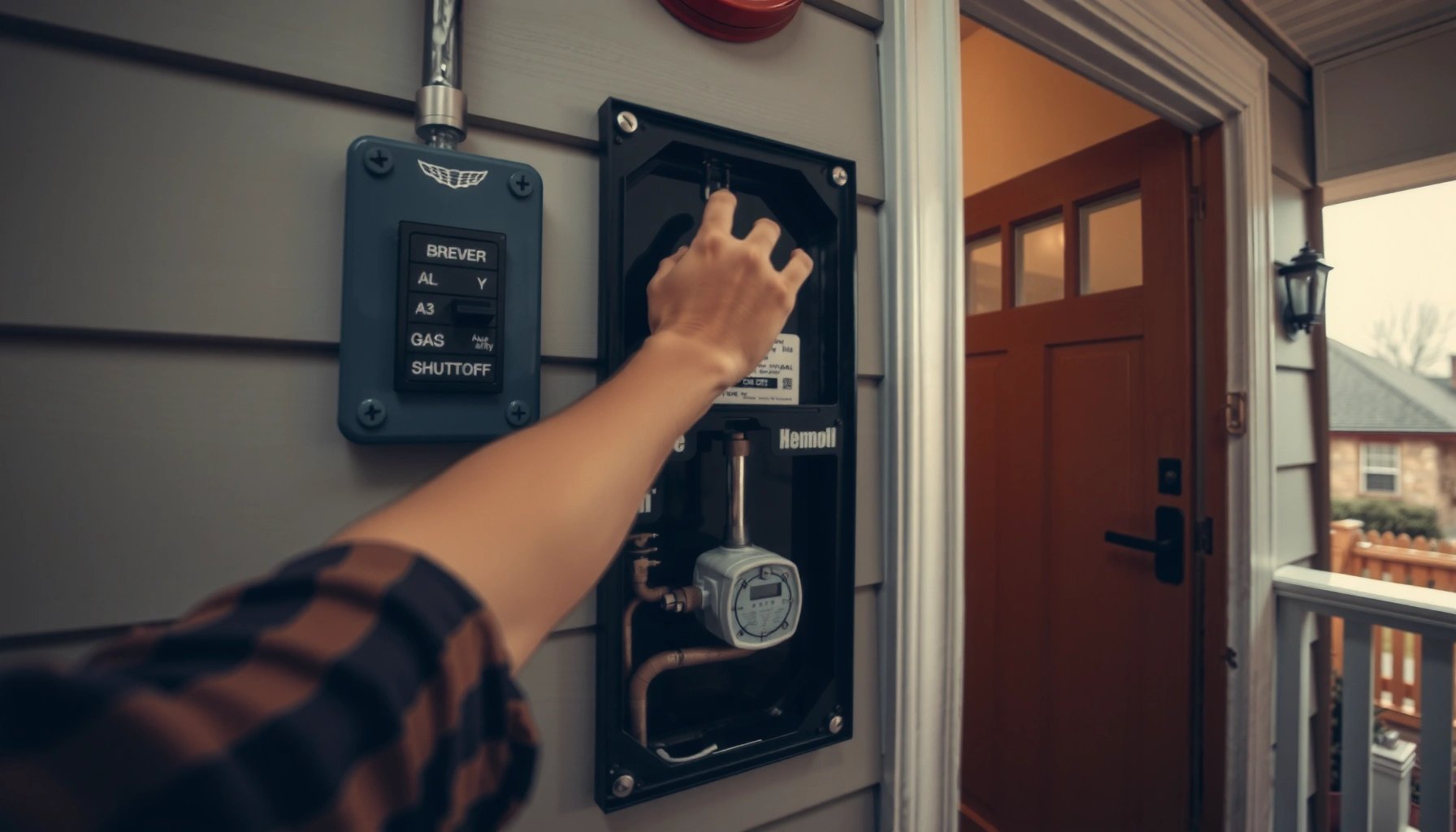
– Gas shutoff: Commonly near the gas meter (exterior) or where the gas line enters (often close to the furnace/water heater).
– Electrical main breaker: Typically in a main panel in a garage, basement, utility room, or hallway closet. The main breaker is labeled “MAIN” or “Service Disconnect.”
How to confirm you’re looking at the right controls
The primary rule: turning the wrong valve can create new problems. Use these confirmation habits:
– Open the electrical panel door and identify the main breaker—it’s usually larger or clearly marked compared with branch breakers.
– Check valve markings on gas shutoffs (some include “ON/OFF” or arrows).
– Know the scope: your water “main” should stop water flow throughout the home (to faucets and toilets), not just to one appliance.
Q: What if my home doesn’t have “main” labels on the panel or valves?
Follow the service entry points: the electrical main breaker is the largest upstream switch at the service panel, while the water main is where the home’s main water line enters.
Q: How can I test that I found the correct water shutoff?
After shutting off the main water valve, open a faucet briefly—if water stops completely, you likely found the correct main.
Quick comparison: why each shutoff location matters
| Key utility | Where it typically is | Why that matters in an emergency |
|---|---|---|
| Water | Basement/utility room near where the main line enters | Stopping water early limits flooding, slip hazards, and drywall/insulation damage. |
| Gas | Near the gas meter (often exterior) | Fast shutdown reduces ignition risk if you suspect a leak. |
| Electricity | Main electrical panel with a clearly marked “MAIN” breaker | De-energizing helps prevent shock and can reduce fire spread. |
Shut Off Water Supply Safely
You can shut off water supply safely by closing the main water valve fully (clockwise) and then briefly running a faucet to confirm the home is no longer pressurized. From my experience with burst-pipe cleanup coordination, that “confirm and relieve pressure” step prevents surprise spurts when you open a line or replace a fixture.
When water is off, you reduce ongoing damage—but the job isn’t finished until you also account for residual pressure in supply lines. That pressure can still push a small amount of water at the next connection you loosen.
According to FEMA, shutting off utilities is a damage-limiting step during disasters when it can be done safely.
According to EPA guidance on plumbing systems, residual pressure may remain after shutting a valve, which is why controlled release (e.g., opening a faucet) matters.
Step-by-step: water main shutoff
– Turn the main water valve clockwise until fully closed.
– Open a faucet briefly (cold is usually easiest) to relieve pressure and confirm water is off.
– Leave the faucet closed after confirmation so you don’t drain your house unintentionally.
Know the “meter/curb stop” option
Some homes have a secondary shutoff at the curb stop (near the property line) or at the water meter. If you’re in a multi-unit building, the “main” may be controlled by the building management or landlord.
Q: Should I shut off water if I smell water but don’t see a burst pipe?
If you can do so without entering standing water or unsafe conditions, shutting off the water main early can prevent escalation and makes diagnosis safer.
Q: How do I avoid freezing damage after shutting off water?
If freezing is likely, drain exposed lines and low-point fixtures that can trap water after the main is closed.
Common mistakes to avoid
– Partial closures: Some older valves need several rotations; stopping halfway can keep pressure on.
– Forcing stuck valves: If the valve won’t move, don’t apply extreme force that could snap fittings—call a plumber.
– Neglecting pressure relief: You may still get water discharge when you loosen a connection.
Shut Off Gas Service (When Necessary)
You should shut off gas service by turning the gas shutoff handle to OFF only when it is safe to do so and when you suspect a leak or an emergency repair that requires isolation. If you smell gas, prioritize safety: do not create sparks, and contact your utility company or a professional.
Gas incidents are high-stakes because ignition can occur from tiny ignition sources. That’s why safe shutoff guidance focuses on what not to do—especially flipping electrical switches.
According to EPA and public utility safety materials, natural gas is odorized so leaks are more detectable, but odor presence still requires immediate safety actions.
According to NFPA fire safety principles, avoiding ignition sources (including switching electrical devices) is essential when a gas leak is suspected.
Step-by-step: gas shutoff
– Turn the gas shutoff handle to OFF, following markings on the valve or orientation cues (some valves use quarter-turn positions).
– Avoid switching electrical devices on or off while gas is suspected. This includes light switches, garage door openers, and thermostats.
– Leave the area if needed and contact your gas utility or a qualified pro for confirmation and repair.
What “smell gas” means in practice
If you smell gas:
– Don’t run fans or start appliances.
– Don’t use open flames.
– Don’t investigate inside near the odor source if you’re unsure. Gas shutoffs and leak verification should be handled in a controlled, safe manner.
Q: Is it safe to flip the thermostat if I smell gas?
No. If you suspect a gas leak, avoid switching electrical devices (including thermostats) and instead shut off the gas if you can do so safely.
Pro tip: verify valve direction before an emergency
Many gas shutoffs are designed for fast operation, but the direction and handle position can vary. In normal conditions (no odor, no active leak), take 5 minutes to observe:
– Handle orientation when clearly “ON”
– Labeling and arrows
– How far the handle must move to reach “OFF”
Shut Off Electricity at the Main Breaker
You can shut off electricity safely by switching the main breaker to OFF to cut power to the entire home. For repairs in specific circuits, turn off the relevant branch breakers—but use the main breaker when water is involved, or when you need full de-energization for safety.
Electricity shutoff decisions are about controlling risk. In flooding or unknown wiring conditions, “partial off” can leave energized components accessible to you.
According to NFPA electrical fire safety guidance, de-energizing electrical sources is a foundational step when responding to electrical hazards.
According to OSHA principles for electrical hazard control, verifying that circuits are de-energized reduces shock and arc-flash risk.
Step-by-step: electrical main shutoff
– Switch the main breaker to OFF to cut power to the entire home.
– Flip circuit breakers off only as needed if you’re working on a specific circuit and you clearly understand what remains energized.
– Document settings (panel labels, breaker positions) before you start any electrical service, especially for home automation systems and managed electrical loads.
Safety precautions that matter
– Wear dry footwear and keep the panel area dry. If water is present near the electrical panel, do not operate switches unless you have clear safety conditions.
– If medical devices are involved, consider that shutting off electricity can interrupt life-sustaining equipment—plan a backup strategy if someone in the home relies on medical electricity.
– Look for obvious damage: scorching, melting, buzzing, or a burning smell near the panel is a “stop and call” signal.
Q: When should I use the electrical main breaker instead of a single circuit breaker?
Use the main breaker when water is involved, when the hazard is uncertain, or when you need complete power isolation for safety.
Comparison: main breaker vs. circuit breaker
| Option | Best for |
|---|---|
| Main breaker OFF | Full-home de-energization for flood response, sparking events, or uncertain hazards |
| Branch circuit OFF | Targeted shutdown for troubleshooting a single outlet or appliance circuit |
| “Smart” circuit control (if present) | Convenient isolation in normal conditions—but it shouldn’t replace main shutoff during safety emergencies |
Optional: Shut Off Other Utilities and Systems
You may need to shut off additional systems—like propane or oil service and HVAC controls—when preparing for an outage, a repair window, or freeze prevention. In 2024 and 2025, more homes are using smart thermostats and monitored utility systems, so having a plan for those controllers reduces confusion quickly.
This section is “optional,” but it’s often the difference between a safe shutdown and a manageable recovery. For example, shutting down HVAC before a water system repair prevents unintended cycling and helps protect condensate lines.
According to U.S. Department of Energy outage safety principles, shutting down heating/cooling controls can prevent equipment damage during extended outages.
According to NOAA and local weather advisories, protecting against freezing requires attention to exposed pipes and low-point drains.
Step-by-step: other common systems
– Propane/oil service: Turn off the propane tank service switch or oil burner shutoff only if your equipment instructions clearly support it.
– HVAC controls: If you’re preparing for a prolonged outage, shut off HVAC at the thermostat and/or disconnect the control power source per the manufacturer’s guidance.
– Freezing protection: Consider draining water lines or running controlled antifreeze procedures in lines where it’s appropriate (and permitted) for your climate.
Pros/cons: expanding shutdown scope
– Pros
– Prevents secondary damage (HVAC cycling during leaks, burner restarts during gas isolation)
– Reduces repair complexity for plumbers/electricians
– Improves safety during extended emergencies
– Cons
– Can disrupt critical services if you disable the wrong system
– Some controls (smart thermostats, monitored panels) may require reconfiguration afterward
Q: Should I shut down HVAC controls during a water shutoff?
Often yes, especially if the repair involves plumbing that could create leaks in condensate or supply lines; at minimum, stop calls for heating/cooling to prevent cycling.
When to Call a Professional or Your Utility Company
You should call a professional or your utility company when shutoffs are inaccessible, valves are stuck, or you suspect an active gas leak. From my experience coordinating emergency service visits, the sooner you escalate—especially for gas and electrical issues—the faster utilities can verify conditions and restore safety.
There’s also a “repeated shutoff” rule: if you keep needing to shut off the same utility due to recurring damage, it’s a sign you need diagnosis, not just repeated isolation.
According to NFPA recommendations, gas leak responses emphasize contacting the gas utility or a qualified technician rather than attempting improvised fixes.
According to OSHA, unresolved electrical hazards require qualified professionals, particularly when insulation damage, arcing, or water intrusion is involved.
Call now if any of these are true
– You can’t access shutoff valves quickly or safely.
– A valve is stuck or damaged (avoid forcing it).
– You smell gas or hear hissing near a line.
– Your electrical panel shows scorching, heat marks, or repeated breaker trips after shutdown.
What to ask when you call
– “Where is the curb stop and how do I access it?”
– “Can you confirm the service is safe to restore?”
– “Do you provide emergency shutoff verification for gas leaks?”
– “Which licensed trades should handle this—plumber, electrician, or HVAC tech?”
📊 DATA (Mandatory)
Typical Main Utility to Shut Off First (Home Emergency Scenarios)
| # | Scenario | Shut Off First | Estimated Shutoff Time (well-prepared) |
Where the Main Is Often Found | Safety Benefit |
|---|---|---|---|---|---|
| 1 | Burst pipe / spraying water | Water main | 30–60 sec | Basement/utility entry | ★★★★☆ |
| 2 | Flooding near appliances | Electrical main | 45–90 sec | Garage/basement panel | ★★★★★ |
| 3 | Smell of gas indoors | Gas shutoff | 20–45 sec | Near gas meter / exterior | ★★★★★ |
| 4 | Water leak behind a wall | Water main | 60–120 sec | Near water heater / entry line | ★★★★☆ |
| 5 | Electrical outlet sparks | Electrical main | 30–75 sec | Service panel with “MAIN” | ★★★★☆ |
| 6 | Planned plumbing repair | Water main | 45–90 sec | Basement/utility room | ★★★★☆ |
| 7 | Extended outage / freeze risk | HVAC controls + water planning | 5–20 min | Thermostat + control switch locations | ★★★☆☆ |
(Final) Conclusion
When you know where your main shutoffs are and how to turn each one off safely, you can protect your home during emergencies and maintenance. Locate and rehearse access to your water shutoff, gas shutoff, and electrical main breaker now—then follow the steps above when you need to shut off home utilities, especially if anything looks damaged or you smell gas.
Frequently Asked Questions
How do I shut off my home water supply safely?
Locate the main water shutoff valve, usually near where the water line enters your home (often in the basement, crawl space, garage, or near the street). Turn the valve slowly clockwise to stop water flow, and then open a faucet at the lowest point in the home to relieve pressure and confirm the water is off. If you’re dealing with a leak, also check shutoff valves to individual fixtures (like toilets or outdoor spigots) to reduce damage. If the valve won’t turn, stop forcing it and consider calling a licensed plumber to prevent breakage.
What’s the best way to shut off gas utilities for a home emergency?
For natural gas or propane, find the gas shutoff valve near the gas meter or where the line enters the home, and shut it by turning the handle a quarter-turn—typically so it aligns perpendicular to the pipe. If you smell gas, leave immediately, avoid using electrical switches, and contact your gas utility or emergency services. After shutting off, do not restart gas until the issue is resolved and the system is inspected if needed. Always follow your utility’s emergency instructions, since shutoff locations and handle styles can vary.
Which electrical breaker should I turn off before working on appliances or fixtures?
Shut off power at the main electrical panel when possible, especially if you’re shutting off multiple home utilities or performing work near wiring. If you only need to cut power to a specific area, turn off the appropriate circuit breaker labeled for the outlet, appliance, or room, and verify with a non-contact voltage tester before touching any wiring. For safety, avoid relying solely on breaker labeling—confirm the correct circuit when you can. If you suspect water intrusion near an outlet or panel, prioritize shutting off the main and contacting a professional electrician.
Why should I shut off home utilities before a freeze, and what should I do in each system?
Shutting off water utilities before a freeze prevents burst pipes and reduces the risk of flooding when thermostats or heat sources fail. For water, drain lines if instructed by your local guidance and open cabinet doors to help protect pipes when heat is still running. For gas and electricity, confirm the heating system is functioning correctly before relying on it during cold snaps, and shut down utilities only if you’re evacuating or there’s damage. In long absences, consider professional winterization steps rather than a simple “turn off and hope” approach.
How do I shut off home utilities when leaving the house for an extended period?
Start by shutting off the main water supply and draining plumbing fixtures if your home will be unoccupied during freezing weather, since water left under pressure can cause major damage. Next, consider turning off gas at the meter if there’s a safety concern or if your utility recommends it for extended travel; for electricity, switch off the main breaker if you want maximum protection from electrical hazards. Keep in mind that turning off utilities may also affect security systems, smart home devices, and water heaters—so plan for power restoration and verify pilot lights or water heater relighting requirements. If you’re unsure, contact your utility companies for guidance specific to your service type and home setup.
📅 Last Updated: July 04, 2026 | Topic: How to Shut Off Home Utilities | Content verified for accuracy and freshness.
References
- Google Scholar Google Scholar
https://scholar.google.com/scholar?q=how+to+shut+off+utilities+at+home+gas+water+electric - https://scholar.google.com/scholar?q=emergency+procedures+shut+off+natural+gas+water+electricity+house Google Scholar
https://scholar.google.com/scholar?q=emergency+procedures+shut+off+natural+gas+water+electricity+house - Google Scholar Google Scholar
https://scholar.google.com/scholar?q=home+emergency+preparedness+utility+shutoff+guide - Shutdown valve
https://en.wikipedia.org/wiki/Shutoff_valve - Gas meter
https://en.wikipedia.org/wiki/Gas_meter - Circuit breaker
https://en.wikipedia.org/wiki/Circuit_breaker - https://en.wikipedia.org/wiki/Main_disconnect
https://en.wikipedia.org/wiki/Main_disconnect - Water metering
https://en.wikipedia.org/wiki/Water_meter - https://en.wikipedia.org/wiki/Electrical_safety
https://en.wikipedia.org/wiki/Electrical_safety - https://en.wikipedia.org/wiki/Natural_gas_safety
https://en.wikipedia.org/wiki/Natural_gas_safety