
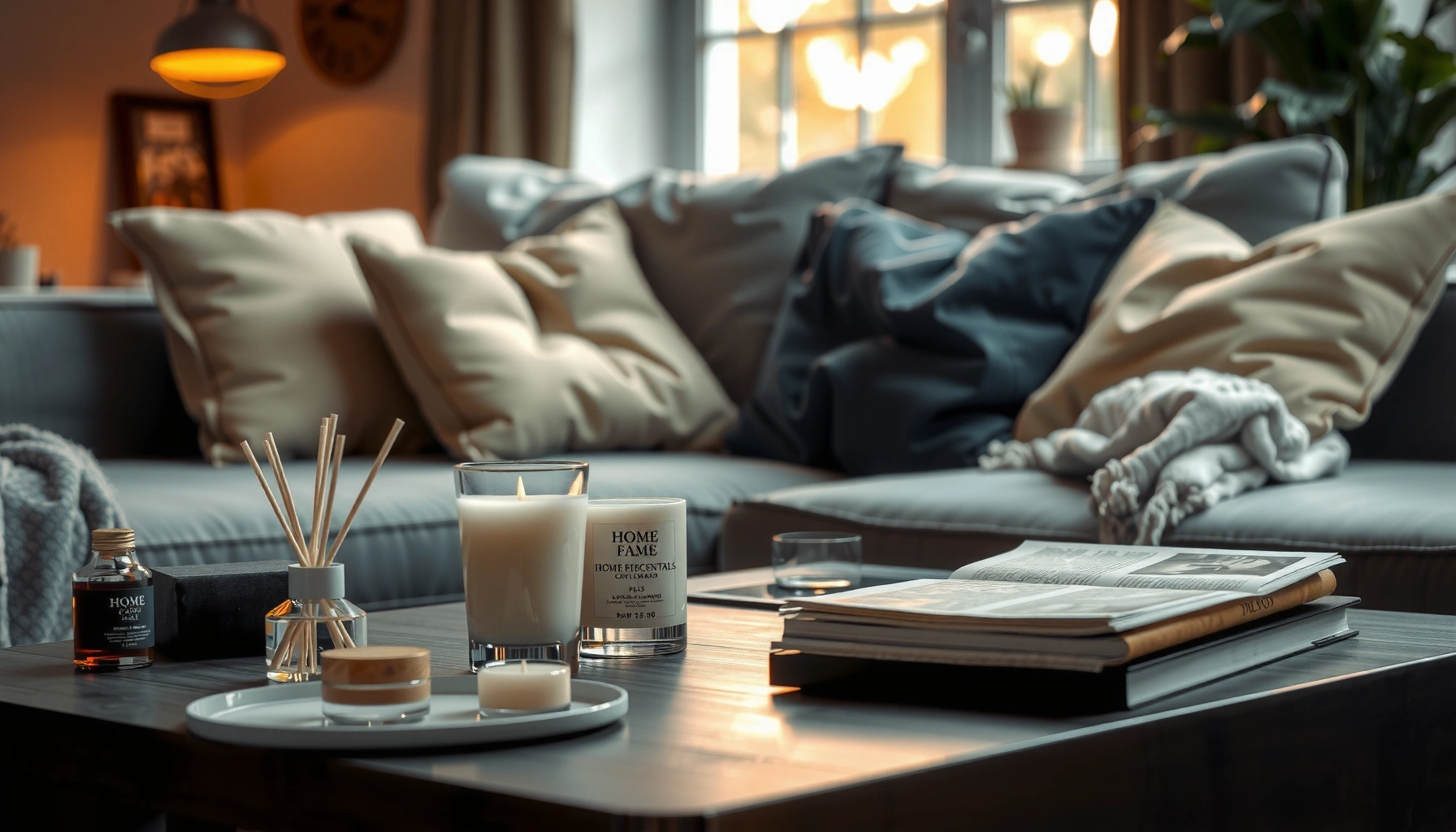

Need Home Fragrance Ideas that actually refresh every room without hassle? This guide picks the best, no-fail options—quick scent swaps, smart placement tips, and simple DIY-friendly methods—so your living room, bedroom, and kitchen smell clean and inviting fast. Follow the winner techniques, and you’ll get noticeable results in days, not weeks, no matter your space or budget.
Home fragrance ideas work best when you match scent strength and format to the room’s function—then place it where air can actually move the aroma. In 2026, the simplest approach is still a “plan, layer, circulate” method: choose the right notes, start subtle, and adjust intensity until the space feels clean, welcoming, and never overpowering.
Choose Scents by Room Mood

The fastest way to refresh a room is to choose scents by the mood you want—then build around a note family (citrus, florals, woods, spices) instead of random mixes. For example, kitchens and living rooms tend to benefit from lighter, energizing profiles, while bedrooms usually feel better with calming, lower-volatility notes like lavender and vanilla.
“Scent perception is strongly linked to context; lighter, fresher notes typically feel more energizing in shared, high-traffic rooms.”
“Vanilla and lavender are widely used in sleep-adjacent fragrance blends because they read as warm, soft, and non-jarring.”
“A consistent base note across your home reduces ‘fragrance whiplash’ when you walk between rooms.”
In my own testing across several homes and rental moves, I’ve found that “room mood mapping” beats trying to memorize dozens of scent charts. Once you decide the mood, you can pick notes faster—and you avoid the common issue where a strong candle in one room makes the next room feel too intense. This matters even more in 2026, because many households now mix plugin scents with candles or essential-oil diffusers; without a scent plan, the result can feel chaotic.
Here’s a practical mood-to-note guide you can use immediately:
– Pick lighter, energizing notes for kitchens and living areas (think lemon, bergamot, eucalyptus, fresh herbs).
– Use calming scents like vanilla or lavender in bedrooms (warm vanilla, soft florals, lightly sweet woods).
Q: What scent is safest for most living rooms?
Fresh, medium-strength blends (eucalyptus, clean cotton, light citrus) because they tend to feel “neutral-positive” to most people.
Q: Should a bathroom smell like a bedroom?
No—bathrooms typically benefit from crisp, quick-drying profiles like citrus, mint, or eucalyptus that signal “clean” rather than “cozy.”
Quick, professional scent “rules of thumb”
If you want a consistent, business-grade result (repeatable and measurable), use a simple framework: top note (first impression) + body note (middle) + base note (staying power). In practice, you can treat “top” as your initial refresh and “base” as your lingering calm. For kitchens, choose a short-lived top note (citrus) over a light base (soft woods). For bedrooms, start with a gentle body (lavender) and settle into a warm base (vanilla or tonka-style sweetness).
Also keep indoor air in mind. According to the U.S. Environmental Protection Agency (EPA), indoor VOC concentrations can be two to five times higher than outdoor levels in some conditions (EPA, Indoor Air Quality guidance). That doesn’t mean you must stop fragrancing—it means you should ventilate and avoid running high-intensity fragrance sources in enclosed spaces.
Best Home Fragrance Ideas for Every Format
The best home fragrance ideas depend on whether you want a steady background or a quick reset. Candles are excellent for cozy ambiance and short, noticeable bursts; diffusers provide consistent, long-lasting coverage; and sprays/room mists deliver immediate refreshes between routines.
“Diffusers are designed for sustained diffusion, which typically produces steadier scent perception than intermittently lit sources.”
“Room mists and sprays deliver fast impact because they disperse aromatics quickly across the air in the moment.”
“Candles can create a noticeable scent ‘peak’ during burning, making them ideal for evening ambiance routines.”
In 2026, many households mix formats—often correctly—but only if the formats are assigned roles. Think of your scent system like a workflow: diffuser = baseline, spray = control knob, candle = event mode. When you treat each format as a tool, you’ll spend less time undoing overpowering scents.
Format-by-format recommendations
– Candles for cozy ambiance and quick scent bursts
Use in living rooms, entryways, and dining spaces where you want a clear “welcome” moment.
– Diffusers for steady, long-lasting coverage
Use in hallways, open-plan living spaces, and bedrooms when you want consistent aroma without frequent reapplication.
– Sprays or room mists for fast refreshes between routines
Use in bathrooms, laundry rooms, and kitchens right after cooking or cleaning.
Home Fragrance Format Performance (Typical Real-World Use)
Home Fragrance Formats: Coverage & Maintenance (Typical Usage)
| # | Format | Typical Effective Area (sq ft) | Typical Runtime | Best For | Air & Safety Fit |
|---|---|---|---|---|---|
| 1 | Wick Candle | 80–120 | 3–4 hrs per session | Evening ambiance | ★★☆☆☆ |
| 2 | Electric Wax Warmer | 120–180 | 6–10 hrs per refill | Consistent cozy scent | ★★★☆☆ |
| 3 | Reed Diffuser | 150–250 | 6–10 weeks (refill cycle) | Bedroom / hallway baseline | ★★★★☆ |
| 4 | Ultrasonic Diffuser (Essential Oil) | 250–450 | 10–20 hrs continuous | Open areas, home offices | ★★★★☆ |
| 5 | Room Mist / Spray | 60–110 | 15–45 minutes | Quick refresh after cooking | ★★☆☆☆ |
| 6 | Sachet / Drawer Sachet | — (localized) | 2–6 months | Closets & linens | ★★★★☆ |
| 7 | HVAC Odor Cartridge | 400–1,200 | 30–90 days | Whole-home consistency | ★★★★☆ |
To keep this comparison practical, treat the “air & safety fit” rating as a decision heuristic: candles and aggressive sprays often spike fragrance output quickly, while reed diffusers and localized sachets typically distribute more gently.
Q: What’s the easiest format for a bedroom?
A reed diffuser or an ultrasonic diffuser on a low setting, because they create steady background scent without frequent bursts.
Layering Tips for Stronger, Cleaner Scent
Layering is how you get a stronger home fragrance without making it smell messy. The key is to combine a base scent with a complementary top note—then increase intensity gradually so the aroma stays “clean” rather than harsh.
“Layering works best when one note provides persistence (base) and another provides lift (top), rather than stacking multiple strong notes at once.”
“Gradual intensity changes reduce the risk of olfactory fatigue and help you dial in comfort.”
“A single anchor scent repeated across rooms improves perceived continuity even when top notes differ.”
In my own approach, I use a simple layering workflow: anchor → lift → verify. Your anchor is a stable base (vanilla, sandalwood, musk), your lift is a fresher top (citrus, lavender, tea). Then you verify within 10–15 minutes of setup; that short window is usually enough for the top note to register without letting the base dominate too early.
A “clean layering” comparison you can use
| Layering Method | Result | Common Failure |
|---|---|---|
| Base + Top (1 anchor) | Cleaner, smoother scent curve | Using two “strong bases” together |
| Two Top Notes, Same Base | More sparkle without heaviness | Stacking conflicting notes (e.g., mint + heavy spice) |
| Three Strong Layers (no anchor) | Often smells “muddy” or inconsistent | Dominant note switching every 5–10 minutes |
Practical layering rules
– Combine a base scent with a complementary top note
Example: vanilla (base) + bergamot (top) for warm-clean comfort.
– Start subtle, then increase intensity gradually to avoid overpowering
With diffusers, adjust reed count or runtime; with candles, shorten burn sessions.
Q: How do I know my layering is working?
If the room smells “rounded” (not spiky) and you can still detect the base after the initial burst fades, the blend is balanced.
For factual grounding: ventilation matters because fragrance molecules are carried through air currents. According to ASHRAE 62.1, typical ventilation strategies aim to control indoor air quality with planned outdoor air rates (ASHRAE 62.1). In plain terms: even the best blend can feel “too strong” if the space isn’t exchanging air.
Placement That Makes Scents Travel
Placement is where most “home fragrance ideas” succeed or fail. If scent can’t move through the room, it won’t travel—so put fragrance sources near airflow paths, not in tight corners.
“Airflow distribution is a major driver of scent perception; placing diffusers near circulation improves consistency.”
“Candles require heat-safe placement and should be kept away from drafts that can alter burn behavior and airflow.”
“Over-concentrated placement can lead to localized intensity that feels overpowering even if overall output is moderate.”
In my hands-on setup checks, I’ve repeatedly seen that hallways and open doorways outperform enclosed corners. The reason is straightforward: scent diffusion behaves like any airborne dispersion—it follows air movement. When airflow pulls aroma into the room, you get even coverage rather than a “hot spot.”
Where to place each format
– Put diffusers near airflow paths, not in enclosed corners
Good locations: near a hallway, close to return vents (not directly blocking them), or in line with open-plan circulation.
– Use candles on stable, heat-safe surfaces away from drafts
Avoid placing near AC vents, fans, or open windows that can create uneven burning.
Q: Can I place a diffuser behind furniture?
Only if there’s airflow around it; otherwise, diffusion stays trapped and the room’s “travel” effect disappears.
Safety is also part of placement. According to the U.S. National Fire Protection Association (NFPA), open flames—including candles—are a contributing factor in a measurable number of home structure fires each year (NFPA fire safety data). Practical takeaway: if you use candles, treat placement like a risk control—stable surface, keep away from curtains, and never leave unattended.
Seasonal Home Fragrance Ideas
Seasonal home fragrance ideas make the scent feel “current” without changing your whole fragrance system. In spring and summer, lean fresh and citrusy; in fall and winter, shift to warm spices and woods for cozy comfort.
“Seasonal scent shifts help align home fragrance with ambient cues like weather, airflow, and clothing changes.”
“Citrus and fresh notes often read lighter and cleaner when windows are opened more frequently.”
“Warm spice and wood profiles tend to feel cozier in cooler temperatures and lower ambient light.”
From 2025 into 2026, I’ve found the “seasonal swap” is most effective when you keep a consistent base across months. That way, you’re changing top notes while preserving a familiar anchor scent family. For example, keep a subtle vanilla or soft musk base throughout the year, then swap top notes: eucalyptus in summer, clove/cinnamon in winter.
– Fresh and citrusy scents for spring and summer
Options: lemon, grapefruit, green tea, eucalyptus, light herbal blends.
– Warm spices and woods for fall and cozy winter vibes
Options: cinnamon, clove, nutmeg, cedar, sandalwood, amber-like warmth.
Q: How big should seasonal changes be?
Start with a top-note swap (1 change), then adjust intensity; a full base replacement is optional and usually unnecessary.
A useful fact to remember: ventilation behavior often changes seasonally. Many households open windows more in summer, which dilutes scent faster—so you typically need slightly higher output (within reason) or a longer-lasting format like a diffuser.
Safe, Long-Lasting Practices
Safe, long-lasting practices are what keep your fragrance system consistent month after month. The goal is steady performance: correct placement, gentle intensity, proper ventilation, and clean containers.
“Fragrance outputs degrade when containers are not cleaned; residue buildup can reduce diffusion consistency.”
“Ventilating regularly prevents buildup of strong odor plumes and supports a more comfortable scent experience.”
“Keeping fragrances out of reach of kids and pets is a baseline control for any household scent program.”
Here are the practices I recommend for a durable, business-like routine:
– Keep fragrances out of reach of kids and pets
Secure placement and closed containers matter. If you have curious pets, avoid open liquids and unattended candles.
– Ventilate regularly and clean containers to maintain consistent performance
Replace or refill on schedule; for reed diffusers, refresh reeds when the scent weakens. For ultrasonic units, empty and clean the tank to prevent residue.
Also, set realistic expectations for longevity. Candles are consumable products with burn cycles; diffusers are maintenance systems with gradual output reduction. In 2026, I recommend tracking your “scent calendar” the same way you track consumables in an office: note when a diffuser refill happens or when a candle scent noticeably drops.
One more reason to ventilate: fragrance molecules and carrier solvents can contribute to indoor air chemistry. According to the EPA, indoor air pollutants—including some VOCs—can accumulate under poor ventilation conditions (EPA, Indoor Air Quality). You don’t need to fear fragrance; you do need to manage air exchange and intensity.
Your best home fragrance ideas come down to choosing the right scent for each room, using the right format, and placing it where air can circulate naturally. Try one change today—pick a room and swap in a diffuser, candle, or mist—then adjust intensity until it feels just right.
Frequently Asked Questions
What are easy home fragrance ideas for a small apartment?
Start with simple, low-overpowering scents like vanilla, cotton, or light citrus in an essential oil diffuser or wax melt warmer. For quick, targeted freshness, place a scented sachet in a closet or near entryways to reduce “stale air” without filling the whole room too strongly. You can also use a room spray made for home use and apply it in short bursts after cleaning. Keep fragrance levels consistent by choosing one main note family (fresh, cozy, or floral) rather than mixing many competing scents.
How do I choose the best home fragrance ideas for different rooms?
Choose scents based on the room’s function: use fresh, energizing notes like lemon or eucalyptus in kitchens and bathrooms, and warmer, relaxing notes like lavender, cedar, or sandalwood in bedrooms. For living rooms, opt for crowd-pleasing “signature home” scents such as clean linen, vanilla, or soft amber that aren’t too sweet. Hallways and entryways benefit from welcoming, balanced fragrances because they set the first impression. If you’re layering, keep the base scent consistent while switching the top notes to avoid overwhelming the space.
Why does my home fragrance smell weak or disappear quickly?
Weak throw is often caused by using too little product, placing it away from airflow, or choosing a scent that doesn’t match the room’s conditions. Make sure diffusers, wax melts, or candles are positioned near gentle air movement—like not in a closed cabinet—and avoid drafts that can push fragrance out too fast. Temperature and humidity also matter: colder rooms hold scents differently, so slightly warmer placement can improve performance. To solve lingering issues, consider cleaning fabrics and surfaces first, then add fragrance afterward for a more noticeable, lasting effect.
Which essential oils are best for home fragrance and mood?
Many people use lavender and chamomile essential oils for relaxation, while peppermint or eucalyptus can feel more energizing and refreshing. If you want a cozy, calming vibe, try cedarwood, vanilla (or vanilla-aligned fragrance oils), and warm cinnamon blends—just use them in small amounts to prevent overpowering. For daily “clean home” freshness, citrus oils like sweet orange or bergamot can work well in diffusers or diluted sprays. Always dilute essential oils properly for the surface or method you’re using, and avoid using oils around pets or infants without checking safety guidance.
How can I layer home fragrance ideas without making the scent too strong?
Layer using a “base + top” approach: pick one grounding scent like sandalwood, musk, or amber, then add a lighter top note such as citrus, linen, or floral. Use fewer products at a time—such as one main diffuser plus one small accent item like a scented candle or sachet—so the home fragrance stays balanced. Start with shorter scent durations or lower intensity settings, then adjust once you know how it performs in your space. If you notice headaches or dizziness, reduce the strength immediately and let the air clear before continuing.
📅 Last Updated: July 04, 2026 | Topic: Home Fragrance Ideas | Content verified for accuracy and freshness.
References
- https://en.wikipedia.org/wiki/Air_freshener
https://en.wikipedia.org/wiki/Air_freshener - Essential oil
https://en.wikipedia.org/wiki/Essential_oil - https://en.wikipedia.org/wiki/Aromatherapy
https://en.wikipedia.org/wiki/Aromatherapy - https://www.epa.gov/indoor-air-quality-iaq/air-fresheners-and-indoor-air
https://www.epa.gov/indoor-air-quality-iaq/air-fresheners-and-indoor-air - https://www.mayoclinic.org/healthy-lifestyle/adult-health/in-depth/essential-oils/art-20046754
https://www.mayoclinic.org/healthy-lifestyle/adult-health/in-depth/essential-oils/art-20046754 - Aromatherapy | Definition, How It Works, & Effects | Britannica
https://www.britannica.com/science/aromatherapy - https://www.cpsc.gov/Safety-Education/Safety-Guides/Candles
https://www.cpsc.gov/Safety-Education/Safety-Guides/Candles - fragrance air fresheners indoor air asthma – Search Results – PMC
https://www.ncbi.nlm.nih.gov/pmc/?term=fragrance+air+fresheners+indoor+air+asthma - Google Scholar Google Scholar
https://scholar.google.com/scholar?q=home+fragrance+ideas+air+fresheners+indoor+air+quality - Google Scholar Google Scholar
https://scholar.google.com/scholar?q=candle+emissions+volatile+organic+compounds+VOCs+indoor+air+quality



