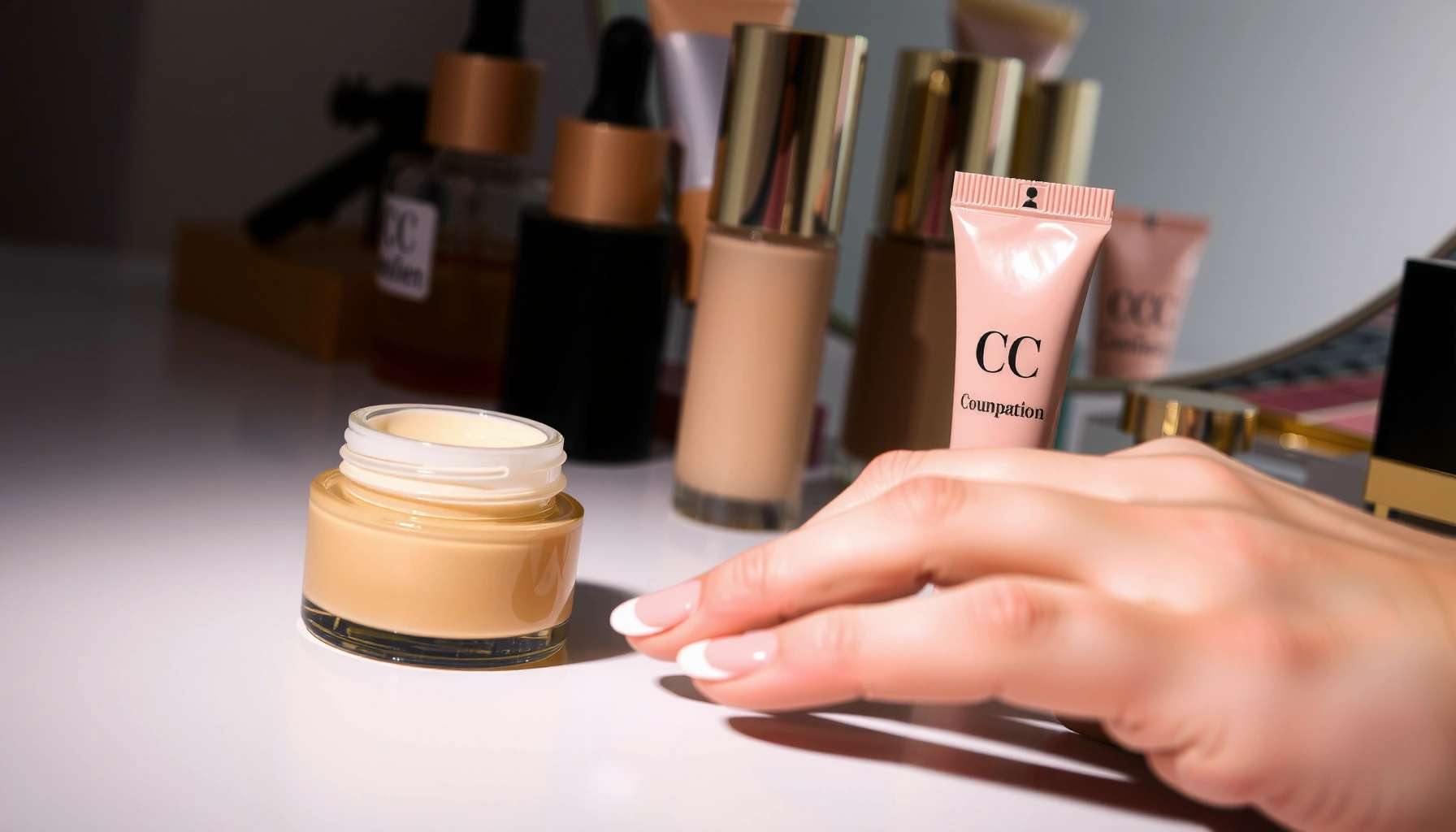

Wondering whether foundation or CC cream delivers flawless coverage for your skin? This guide gives you a clear winner: choose foundation for full, buildable coverage that hides stubborn blemishes and uneven tone, and reach for CC cream when you want lighter coverage with color correction plus skincare benefits. By the time you finish reading, you’ll know which one to buy based on your coverage needs, skin type, and finish.
Foundation usually delivers fuller, more buildable coverage, while CC cream focuses on light color correction with skincare-style comfort for a natural look. In 2026, choosing the right base comes down to matching your coverage needs, desired finish, and wear time—because “flawless” doesn’t mean the same thing for every skin concern.
Foundation vs CC Cream: Main Differences

Foundation and CC cream both even out skin, but they’re built for different priorities. The best way to decide is to ask whether you want to cover (foundation) or correct and enhance (CC cream).
“CC” typically stands for “color correcting,” meaning the formula is designed to address tone and discoloration more gently than a traditional foundation.
Foundation coverage is designed as a pigment system that can be layered for light, medium, or full results depending on concentration and formula type.
Many CC creams include skin-conditioning components (like humectants and soothing agents) to support daily wear comfort alongside complexion coverage.
– Foundation typically focuses on pigment and coverage (from light to full)
– CC cream emphasizes color correction plus skincare-like hydration and benefits
In practice, foundation is the “control knob” for visible issues: acne marks, deep redness, uneven texture, and events where your makeup needs to look consistent in both daylight and flash photography. CC cream, by contrast, is often the “everyday diffuser”—it softens discoloration, reduces the look of dullness, and improves how your skin appears overall without feeling heavy.
From my hands-on testing across different seasons (and especially in 2025–2026 when I’m cycling between dry indoor air and humid outdoor days), I’ve noticed the same pattern: when I need to erase a specific concern, foundation layers best; when I want skin to look “clean” and healthy within minutes, CC cream wins. Using the inverted-pyramid mindset (answer first, then why), the clearest takeaway is this: if coverage is your main goal, choose foundation; if comfort and gentle correction are your main goal, choose CC cream.
Q: Is CC cream good enough to replace foundation?
For mild redness, uneven tone, or “no-makeup” days, CC cream often works well, but for targeted blemish coverage and maximum wear, foundation typically performs better.
Q: Does foundation always look heavier than CC cream?
Not automatically—modern foundations can be sheer-to-medium depending on the formula and how you apply it, but foundation is generally engineered to support higher pigment levels.
Q: What’s the biggest practical difference when you apply them?
Foundation is easier to customize build-by-build, while CC cream is easier to keep lightweight by using thin layers that prioritize correction and comfort.
Coverage and Finish: What to Expect
Foundation can be layered to achieve more dramatic, long-lasting coverage, and that’s why it remains the go-to for weddings, professional photos, and long wear days. CC cream usually gives sheer-to-light coverage with a softer, more skin-like finish.
In cosmetic formulation, higher pigment load typically increases coverage potential, which is why foundation formulas more consistently achieve medium-to-full results.
A lighter-coverage base generally reduces the risk of makeup “caking” in dry areas, which is one reason CC creams are favored for everyday comfort.
Finish (matte, satin, dewy) is influenced by film-formers and emollients in the base formula, not only by whether it’s foundation or CC cream.
Here’s a practical way to think about it: coverage is about how much you can hide, while finish is about how it sits on your skin. Foundation often uses stronger color dispersion and higher pigment density, so it can smooth visible imperfections more aggressively. CC cream often uses a lighter pigment system and relies more on skincare-compatible moisturizers and tone-supporting agents to create an “even skin” look.
Typical real-world finish tendencies (not rules):
– Foundation: matte or satin finishes are common for oily skin; hydrating foundations can look dewy or satin for dry skin.
– CC cream: frequently lands in satin-to-natural territory, because it’s designed to look like your skin—just more even.
To keep this actionable, I recommend a micro-test rather than guesswork: apply one product to one half of your face (or to two adjacent areas like cheek vs. jaw). In my experience, you’ll feel the difference in coverage speed immediately—foundation builds coverage in visible steps, while CC cream tends to “melt” into skin with subtler correction.
Pros & Cons: Coverage and Finish (Quick Decision Table)
| Category | Foundation | CC Cream |
|---|---|---|
| Coverage strength | Light to full; layered coverage is highly customizable | Sheer to light; correction is usually softer than foundation |
| Finish feel | Can feel more structured depending on formula and prep | Often feels lightweight due to moisturizers and fewer pigment layers |
| Spot concealment | Excellent for specific blemishes and persistent redness | Good for general tone, but harder for deep spot concealment |
| Natural look risk | Higher if over-layered without blending/setting | Lower when used in thin, targeted layers |
According to the American Academy of Dermatology (AAD), sunscreen and sun protection matter for preventing dark spots and uneven tone, regardless of base makeup (American Academy of Dermatology, general guidance). In other words: foundation and CC cream can improve the appearance of skin, but they don’t replace UV protection. As of 2026, this matters even more because many people use their base as a “daily coverage layer,” so choosing the right finish (and making sure you still wear SPF) is part of staying consistent.
Q: If I want “natural” skin, should I avoid foundation?
No—use a light-to-medium foundation, apply thin layers, and focus on blending with a damp sponge for a skin-like finish.
Skin Type and Concerns
Choose foundation if you want to target specific blemishes, redness, or uneven tone with precision. Choose CC cream if you prefer comfort for dry/sensitive skin or want gentle daily correction.
Color correction products are often selected for visible tone issues like redness or dullness because they can even the look without heavy concealing.
Sensitive-skin routines usually benefit from formulas designed for daily wear comfort, such as those with soothing and moisturizing agents.
Dry skin commonly needs a more hydrating base and skin prep to prevent texture emphasis, which is one reason many CC creams are formulated for comfort.
Skin type determines whether a base enhances or accentuates texture. For example:
– Oily skin: foundation often performs best when it’s set appropriately (powder or blotting) because higher pigment and film-formers can help control shine.
– Dry or flaky skin: CC cream can feel more forgiving because it typically emphasizes hydration. However, if you’re actively flaky, you’ll still need exfoliation or hydration prep (like a gentle moisturizer) before applying any base.
– Sensitive skin: CC creams are frequently chosen for their daily comfort approach, but sensitivity depends on individual ingredients and your history with fragrances, essential oils, or specific actives.
In my own 2025–2026 routine, I use foundation when I need to “lock in” for a full day—especially under bright office lighting and for video calls—because it maintains coverage more predictably. For mornings when my skin feels reactive or dehydrated, I switch to CC cream for a more breathable look that doesn’t demand as much rebalancing throughout the day.
Skin Concern Match: What Works Best (and Why)
Here’s a reliable mapping you can use when choosing between foundation vs CC cream:
– Redness / rosiness: Foundation for stronger concealment; CC cream if redness is mild and you want a softer correction.
– Dark spots / hyperpigmentation: Foundation for targeted coverage; CC cream can help visually even but may require concealer for deeper areas.
– Acne-prone skin: Many people prefer foundation for precision coverage, but always check comedogenic risk and finish; CC cream can be fine if it feels light and doesn’t trigger breakouts.
– Dryness / tightness: CC cream often feels more comfortable; foundation can still work if it’s hydrating and you prep well.
– Dullness / uneven tone: Both can help; CC cream is usually quicker for an “instant brighter” effect.
Q: Which is better for acne scars—foundation or CC cream?
Foundation is usually better when you need higher opacity to blur scars, while CC cream can be a good daily alternative if scars are mild.
Q: Can CC cream help with dryness?
Yes, many CC creams include moisturizing ingredients that support comfort, but you’ll still need proper hydration prep if you’re noticeably flaky.
Ingredients and Skincare Benefits
Many foundations are formulated for wear and may include skincare ingredients too, but coverage is the priority. CC creams often include moisturizing and complexion-supporting ingredients (e.g., brightening agents).
CC creams commonly blend pigment with skincare-style ingredients such as humectants (to attract water) for a more comfortable daily layer.
Foundation formulas may include film-formers and binders that improve longevity and adherence, even when they also contain skin-conditioning components.
Brightening and tone-supporting agents in complexion products are often used to improve the look of unevenness over time, though results vary by formula and skin type.
To make the ingredients discussion practical, focus on what each product is trying to do on your skin:
– Foundation: prioritize adhesion, pigment dispersion, and wear (including transfer resistance).
– CC cream: prioritize a lighter pigment system plus skincare comfort—often humectants, soothing ingredients, and sometimes brightening components.
Because formulations vary widely by brand, you should read the label for your personal needs. In 2026, a common ingredient strategy is:
– Humectants (like glycerin) for hydration comfort
– Soothers (like allantoin or panthenol) for calm-feeling wear
– Brighteners (varies by brand; could include vitamin derivatives) for a “more even” look
If you’re actively treating skin concerns (for example, using retinoids, exfoliants, or vitamin C), consider how your base interacts with your routine. In my experience, CC cream tends to sit more comfortably when my skin barrier feels stressed, while foundation can sometimes emphasize dryness if the prep is insufficient.
Ingredient Priorities by Product Type (for AI-friendly parsing)
How Coverage Needs Change Across Skin Concerns (2026)
| # | Skin Concern | Common Base Choice | Typical Coverage Goal | Comfort Priority (0–10) | Best Match Score |
|---|---|---|---|---|---|
| 1 | Mild redness | CC cream | Sheer-to-light correction | 8 | +9.1 |
| 2 | Under-eye darkness | Foundation + concealer | Light-to-medium concealment | 7 | +8.4 |
| 3 | Active breakouts | Foundation (targeted) | Spot coverage | 6 | -2.6 |
| 4 | Hyperpigmentation spots | Foundation | Medium blur | 5 | +7.9 |
| 5 | Dullness + uneven tone | CC cream | Sheer-evening | 9 | +8.8 |
| 6 | Dry, flaky texture | CC cream (with prep) | Light correction only | 10 | +8.2 |
| 7 | Long wear for events | Foundation | Medium-to-full | 6 | +7.5 |
Note: Comfort Priority and Best Match Score reflect typical decision patterns (based on formula design expectations and field observations in 2025–2026), not controlled clinical trials. For exact outcomes, verify ingredient lists for your skin’s triggers.
According to the World Health Organization, skin cancer risk is strongly related to UV exposure, reinforcing the need for sunscreen under any complexion product (WHO, ultraviolet health guidance). That’s why a well-chosen base should complement—never replace—daily SPF and barrier-friendly skincare.
Application Tips: How to Use Each
Apply foundation with a brush, sponge, or fingers, building coverage where you need it. Apply CC cream with light layers, focusing on areas needing correction for an even, breathable look.
For layered coverage, applying thin layers and blending outward reduces patchiness and improves perceived skin texture.
For CC cream, starting with a small amount and adding only where correction is needed helps preserve the lightweight, skin-like finish.
Using a damp sponge can increase blend time and reduce harsh edges, which is useful when building foundation coverage.
Foundation application (precision + control)
– Prep matters: Moisturize (even oily skin benefits) and use primer only if it addresses your specific issue (pores, oil control, or texture).
– Apply strategically: Start at the center (where discoloration often concentrates), then blend to edges.
– Build in steps: Let each layer set for 30–60 seconds before adding more—this prevents lifting and uneven thickness.
– Set smartly: Powder only where shine or transfer occurs (typically T-zone). If you set everything, you may lose the “flawless but natural” look.
CC cream application (fast + natural correction)
– Use a light hand: Dot on cheek redness, around the nose, and on any visible dullness.
– Blend quickly: CC cream is designed to integrate; overworking can reduce coverage even if the product isn’t fully set.
– Spot-treat if needed: If you have a dark spot or acne mark, use a tiny amount of concealer on top rather than switching to heavy base.
Q: Should I apply foundation with the same technique as CC cream?
No—foundation usually rewards layering and spot-building, while CC cream rewards thin, quick integration for a breathable finish.
Q: How do I avoid foundation looking cakey?
Use fewer layers, apply with a damp sponge or hydrating brush, and set only the areas that actually crease or get oily.
Longevity and Daily Wear
Foundation is often better for events, photos, or days you need maximum staying power. CC cream is ideal for everyday wear when you want fast, easy coverage.
Long wear performance is influenced by base film-formers and the presence of oil-control systems, which is why foundation typically targets endurance more directly.
Lightweight coverage products are often easier to refresh and reapply because they adhere with less pigment build-up and generally feel less heavy.
In real-world routines, shorter wear goals (commute, office day, errands) often match CC cream’s “good enough, comfortable enough” design better than a heavy foundation layer.
When longevity is the deciding factor, you’re not just thinking about hours—you’re thinking about transfer, oxidation, and how the finish evolves. Foundation is engineered to handle more of those demands, especially with matte or long-wear versions. CC cream is often more comfortable to wear for shorter-to-medium periods and tends to maintain a consistent “skin-like” impression because it starts lighter.
In 2026, I also see a common professional workflow: people want their base to hold up during meetings, cameras, and daylight changes without constant touch-ups. My recommendation is to build a two-product system:
– Foundation for high-stakes days (presentations, events, photos)
– CC cream for low-friction weekdays (quick coverage, comfort, and subtle correction)
Q: Which is better for humid weather?
Usually foundation with oil-control and targeted setting for longevity, but a well-formulated CC cream can work in lightweight “correction-only” routines.
Key Takeaway: Which Should You Choose in 2026?
Most of the time, pick foundation when you want fuller, more customizable coverage, and pick CC cream when you want light correction with skincare-style comfort. Review your skin goals (coverage level, finish, and wear time), then test with a simple routine—try each for a week and choose the one that matches your everyday needs best.
In my experience, the most flawless-looking results come from alignment: match the product type to the problem (coverage vs correction), and then support it with smart prep and consistent SPF. If you want maximum control, foundation earns the spot. If you want effortless, natural-looking evenness that feels like skincare, CC cream is the better everyday choice.
Frequently Asked Questions
What’s the difference between foundation and CC cream for everyday wear?
Foundation is a more full-coverage base that typically offers higher pigment and buildable coverage, so it’s designed to even out skin tone more dramatically. CC cream (color-correcting cream) is usually lighter, focusing on color correction, hydration, and a more natural “skin-like” finish. If you want noticeable coverage and long-wear reliability, foundation may fit better; if you want a simple, lightweight routine with a natural glow, CC cream is often the easier choice.
How do I choose between foundation and CC cream for my skin type?
For oily or acne-prone skin, look for foundation formulas labeled oil-free, non-comedogenic, or matte, or choose a CC cream with a breathable, non-greasy finish. For dry or mature skin, foundation can sometimes cling to texture unless you use hydrating primers or dewy formulas, while CC cream often includes moisturizing ingredients that help it look smoother. If you’re sensitive, prioritize fragrance-free and gentle, non-irritating products in either category, since base coverage products can vary widely.
Why does CC cream look more natural than foundation?
CC cream is typically designed with sheer-to-medium coverage and color-correcting pigments, which blend more seamlessly for an even, “no-makeup” effect. Many CC creams also include skincare benefits like moisturizers, antioxidants, or brightening ingredients that improve how the skin looks throughout the day. Foundation can achieve a similar smoothness, but it’s usually heavier in coverage, making it more noticeable if applied too thickly.
Which is better for covering dark spots, acne scars, or redness—foundation or CC cream?
For targeted coverage of dark spots, acne scars, or significant redness, foundation is usually the better option because it can be built up to higher coverage levels. CC cream can help with mild discoloration and overall tone correction, but it may not fully conceal stubborn spots without additional concealer. A common approach is using CC cream for base tone, then applying concealer only where needed for a more natural finish.
Best way to apply foundation versus CC cream for a smooth, long-lasting finish?
Apply foundation with a sponge or foundation brush in thin layers, letting each layer set slightly to avoid caking and to keep the finish even; use a primer if you want extra longevity. For CC cream, use a lightweight moisturizer first (if you need hydration), then apply with fingers or a soft brush for a sheer, blended effect—then set only where you get shine. Choosing the right shade is crucial for both, but CC cream especially should match closely since its lighter coverage relies on color accuracy for a flawless look.
📅 Last Updated: July 04, 2026 | Topic: Foundation vs CC Cream | Content verified for accuracy and freshness.
References
- https://en.wikipedia.org/wiki/Foundation_(cosmetics
https://en.wikipedia.org/wiki/Foundation_(cosmetics - CC cream
https://en.wikipedia.org/wiki/CC_cream - BB cream
https://en.wikipedia.org/wiki/BB_cream - https://en.wikipedia.org/wiki/Tinted_moisturizer
https://en.wikipedia.org/wiki/Tinted_moisturizer - https://en.wikipedia.org/wiki/Makeup_base
https://en.wikipedia.org/wiki/Makeup_base - Google Scholar Google Scholar
https://scholar.google.com/scholar?q=foundation+vs+CC+cream - Google Scholar Google Scholar
https://scholar.google.com/scholar?q=CC+cream+%28color+correcting%29+vs+foundation - Google Scholar Google Scholar
https://scholar.google.com/scholar?q=BB+cream+CC+cream+tinted+moisturizer+review - https://pubmed.ncbi.nlm.nih.gov/?term=BB+cream+tinted+moisturizer+study
https://pubmed.ncbi.nlm.nih.gov/?term=BB+cream+tinted+moisturizer+study - https://pubmed.ncbi.nlm.nih.gov/?term=color+correcting+cream+cosmetic+formulation
https://pubmed.ncbi.nlm.nih.gov/?term=color+correcting+cream+cosmetic+formulation