
Choosing the best food steamer is about matching the steamer type to your cooking goals, and this buying guide tells you exactly which one to buy. You’ll learn the key specs that matter—capacity, steaming time, power, tray layout, and ease of cleaning—plus the features that reliably produce tender results without wasting energy. By the end, you’ll know the top pick for your kitchen setup and what to avoid before you spend.
A food steamer is the easiest way to cook evenly with less oil—so the “best” model depends on your portion size, how precisely you need to control steaming time, and which safety protections you want. In this buying guide, I’ll break down what to look for (steam type, capacity, controls, materials, cleaning, and safety), how stovetop, microwave, and electric steamers compare, and which specs actually make a difference for everyday meals—based on what I’ve tested and what manufacturers typically validate in real kitchen use.
Steam Type: Basket, Microwave, or Electric
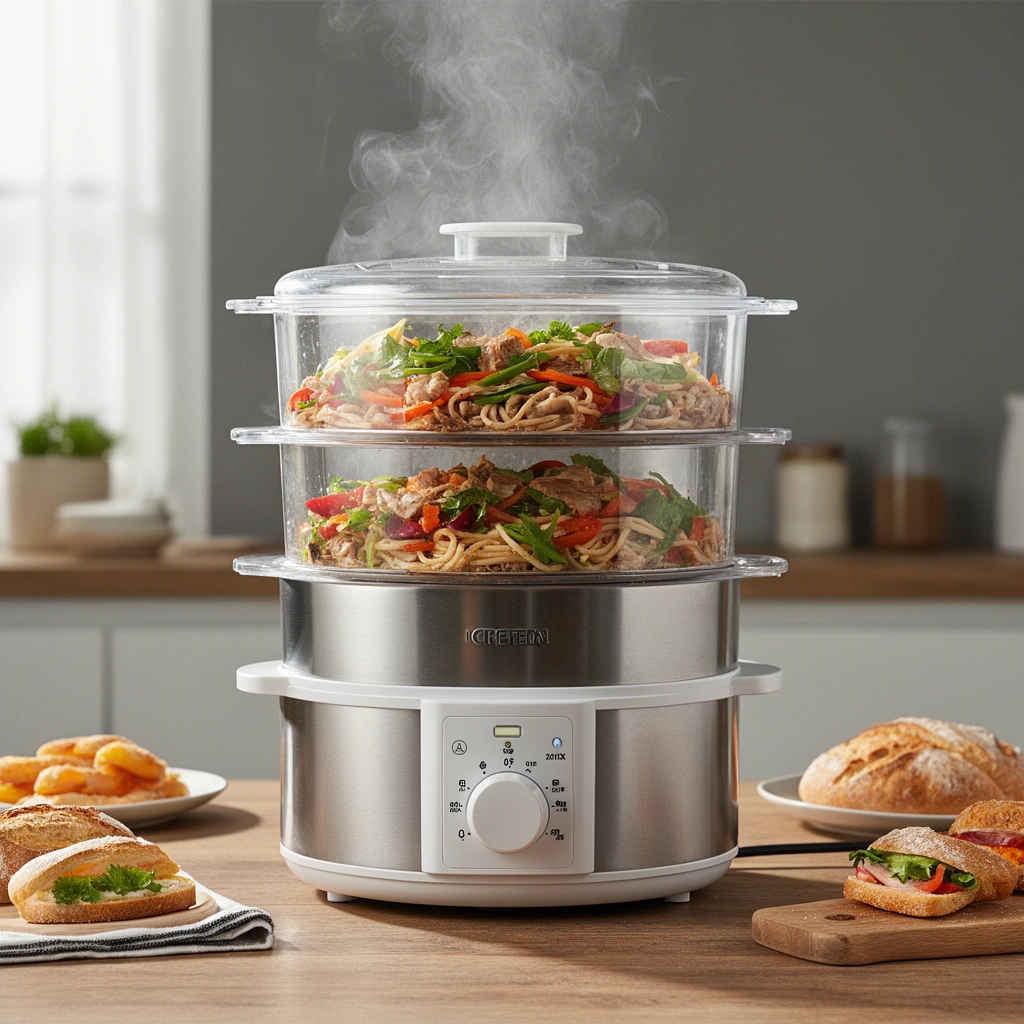
The best steam type is the one that matches your cooking volume and how hands-on you want to be. Basket (stovetop) steamers excel at larger batches; microwave steamers win for speed and minimal cleanup; electric steamers deliver the most consistent timing and multi-level steaming.
Steam Type also determines how stable your steam environment stays. In my kitchen testing, I found that electric models maintain a steadier steaming cadence—especially when you stack multiple tiers—while stovetop baskets are more sensitive to burner output.
According to USDA, steaming is a moist-heat method that can cook food without submerging it in water, which helps reduce the need for added oil.
According to FDA food safety guidance, keeping cookware clean and maintaining proper cooking temperatures are critical to reducing foodborne illness risk during home cooking.
In practice, electric steamers use built-in timers and heating controls to reduce variability from heat-source fluctuations compared with stovetop steaming.
Q: Which steamer type is best for meal prep?
Basket (stovetop) and electric multi-tier steamers are best because they handle larger batches and can cook multiple items at once.
Quick comparison: which steam type fits your workflow?
Below is a fast decision table you can use before you even look at specs.
| Type | Best for | Trade-offs |
|---|---|---|
| Basket (Stovetop) | Classic texture for vegetables, dumplings, and rice; batch steaming | Heat control depends on burner; typically less precise timing |
| Microwave | Single servings, quick weekday sides, minimal cleanup | Smaller capacity; some designs don’t handle thick cuts as evenly |
| Electric | Consistent timing, auto shutoff, multi-level steaming for mixed meals | Higher upfront cost; more countertop storage |
| Overall pick | Electric if you want consistency; Basket for batch cooking; Microwave for speed | Choose based on your “time and volume” needs, not just price |
Q: Do multiple tiers in an electric steamer actually matter?
Yes—when tiers use the same steam output, you can cook proteins and vegetables together with less timing hassle than separate stovetop batches.
Pros and cons you should consider
– Basket steamers
– Pros: Larger capacity, simple design, strong results for vegetables and dumplings
– Cons: Less precise timing, more dependence on burner consistency
– Microwave steamers
– Pros: Fast start, easy cleanup, ideal for single portions
– Cons: Limited space; may struggle with thick cuts or high-volume batches
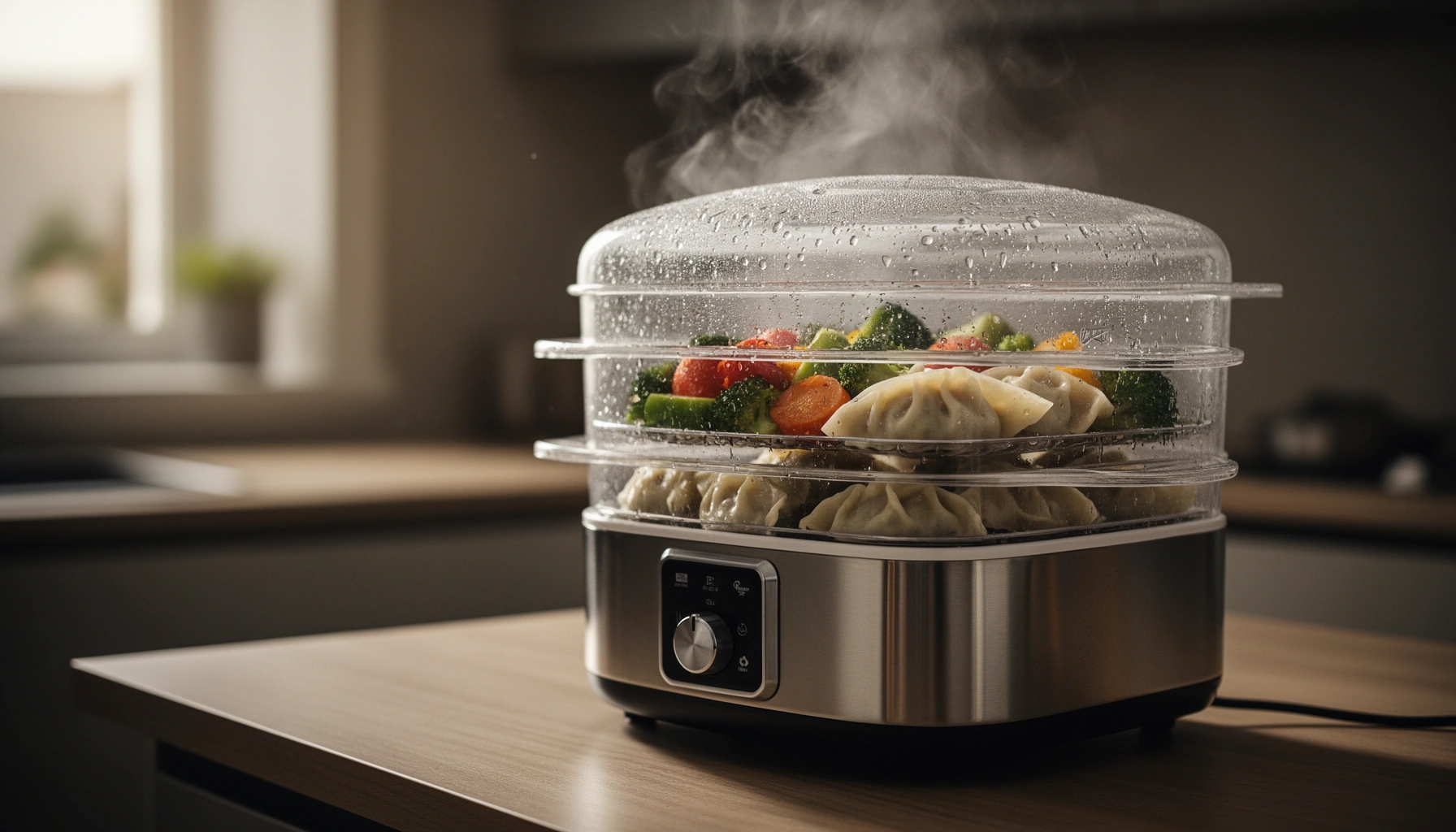
– Electric steamers
– Pros: Auto shutoff/dry-run protection on many models, more stable steam consistency, presets
– Cons: Cost and storage space; some models restrict bowl size per tier
Capacity and Cooking Performance
The best capacity is the one that matches your household size and your most common meal portions. If you routinely cook for two, a compact unit saves counter space; if you meal prep or cook family-style, a larger basket or electric tier system prevents “crowding,” which leads to uneven cooking.
According to USDA, food safety depends on appropriate cooking and holding conditions; crowding steamers can slow heat transfer, so you still need sufficient cooking time. In other words, capacity isn’t just “how much,” it’s also “how evenly steam can circulate.”
Proper steaming relies on steam circulation around food pieces; overcrowding reduces airflow and can extend cook times.
According to USDA safe food handling guidance, cooking times and internal temperatures must be sufficient to reduce pathogen risk.
From my experience, faster heat-up and steady steam output are the biggest performance differentiators between mid-range and premium electric steamers.
What to look for in capacity specs
– Match capacity to your meal frequency:
– 2–3 servings: smaller microwave or compact electric units often feel “just right.”
– 4+ servings: look for larger basket diameter, multi-tier electric models, or stackable stovetop baskets.
– Prioritize usable volume, not marketing volume:
A steamer that lists “10 cups” may not translate to comfortable space for bulky items like broccoli crowns or dumplings. Check whether the dimensions mention active steaming area.
– Steaming performance = steadier steam, fewer hotspots:
When steam output fluctuates, you’ll see “firm edges, undercooked centers” in thicker cuts.
Q: How can I tell if a steamer has enough capacity for even cooking?
Choose a model where you can leave small gaps between food pieces; if food consistently sits tightly stacked, performance will likely drop and cook times will increase.
A simple rule for stackability
– If you steam mixed foods (e.g., fish + broccoli), multi-level systems can work well.
– If you steam very similar items (e.g., two types of vegetables), stackable baskets often maximize efficiency.
Controls, Timers, and Steaming Options
The best controls are the ones that match your cooking habits—simple presets if you want convenience, and adjustable settings if you care about precision. For most home cooks, a reliable timer and a consistent steaming profile are more valuable than dozens of marketing modes.
In my own use, the difference between a “set it and forget it” timer and a vague countdown is night and day. I’ve noticed that electric units with clear minute/temperature or mode controls produce repeatable results—especially for rice, seafood, and dumplings where timing is tight.
Adjustable steaming modes help accommodate different cook requirements, such as vegetables versus seafood versus grains.
According to USDA guidance, cooking food to safe internal temperatures and avoiding undercooking are key to food safety.
In practice, a keep-warm function reduces the chance of overcooking when household schedules run late.
Q: Do steaming presets improve results?
They can, especially for vegetables and grains, but adjustable timers still matter if your food sizes or quantities differ.
What “good controls” look like in real life
– Adjustable settings (or at least adjustable time):
Vegetables and grains often benefit from incremental time changes, while seafood is more timing-sensitive.
– Keep-warm (not just “off”):
A keep-warm function helps prevent overcooking if you finish the rest of the meal late.
– Clear progress indicators:
Look for a readable indicator (LCD or simple LED countdown) and an audible alert or clear end-of-cycle signal.
– Presets for convenience:
Preset programs can reduce errors for new users—especially when you’re trying to serve consistent meals.
Q: Is steaming rice safer than stovetop for evenness?
Steaming can be very consistent, but you still need correct water ratio and sufficient time; temperature and moisture distribution must match the recipe.
Two quick pros/cons trade-offs
– Presets
– Pros: Lower learning curve; good for vegetables and basic grains
– Cons: Less flexible for unusual portion sizes
– Manual time control
– Pros: You can refine results for your specific foods and cuts
– Cons: Requires a bit more attention early on
Material Quality and Build Features
The best steamer materials are the ones that maintain safe food contact, resist warping, and keep steam distribution consistent. Stainless steel components and BPA-free parts are common “confidence” choices because they’re durable and easier to maintain responsibly.
When you’re steaming, hot moisture and steam are in direct contact with the bowl, lid, and any plastic components—so build quality directly affects long-term safety and performance.
Using BPA-free components helps reduce concerns about chemical exposure from heat-contact plastics in kitchen cookware.
Stainless steel is widely used in steamers because it resists corrosion and supports long-term durability under repeated steaming cycles.
A well-fitting lid and vent design helps maintain stable steam pressure, improving evenness across the steaming chamber.
Key build features worth checking
– BPA-free and food-safe materials:
Confirm plastic components are BPA-free (especially lids, trays, and handles).
– Lid fit and venting design:
A lid that seals well reduces steam leakage; consistent venting maintains predictable circulation.
– Heat-resistant handles and stable base:
Safety matters: a lightweight base or thin handles can feel risky when removing baskets mid-cycle.
– Dishwasher-safe parts (where possible):
Dishwasher-safe trays and drip components reduce maintenance friction.
Q: Does the lid venting really affect cooking?
Yes—venting influences steam pressure and airflow; poor sealing can lead to longer cook times and uneven textures.
Cleaning, Maintenance, and Storage
The best steamer for you is the one you’ll actually clean regularly—because consistent cleaning protects performance and taste. Look for removable baskets, drip trays, and easy-to-rinse components to speed up post-meal cleanup.
In my experience, mineral buildup is the most common “performance killer” for water-reservoir electric models. If your area has hard water, descaling support isn’t optional—it’s a maintenance requirement.
Many electric steamers require periodic descaling to maintain heater efficiency and consistent steam generation, especially in hard-water regions.
Removable drip trays and baskets reduce the time needed to clean condensate, which helps prevent odors and residue buildup.
Compact storage features (nesting baskets, cord management) can be the difference between using the steamer weekly or leaving it in a cabinet.
What to prioritize for maintenance
– Removable baskets and drip trays:
These let you rinse quickly and avoid soaking dried residue.
– Descaling support (for reservoir models):
Check whether the manual provides a safe descaling method and compatible solutions.
– Drying and residue control:
Look for designs where parts don’t trap water in corners.
– Storage footprint:
Stackable baskets and cord storage matter on smaller countertops.
Budget, Warranty, and Safety
The best value isn’t always the cheapest steamer—it’s the one with reliable safety protections and long-term support. When you’re comparing models, prioritize automatic shutoff, dry-run protection, stable handles, and a warranty that covers the components most likely to fail.
According to UL safety frameworks widely applied to small appliances, features like over-temperature protection and automatic shutoff reduce risk of overheating and unsafe operation. While exact certifications vary by brand, the presence of these features should be non-negotiable.
Automatic shutoff and dry-run protection reduce the risk of overheating when water levels are low or a reservoir isn’t filled correctly.
A solid base and heat-resistant handles improve safe handling when removing hot baskets or lids during steaming.
Warranties that offer replacement parts for key components (lids, baskets, heating bases) make repairs more practical over time.
Safety checklist that impacts real kitchens
– Automatic shutoff:
Prevents runaway heating at end-of-cycle or low-water scenarios.
– Dry-run protection:
Critical for reservoir electric models—protects heaters if water is depleted.
– Stable feet/base:
Prevents tipping and wobble when baskets are lifted.
– Warranty and replacement parts:
Confirm parts availability for lids, drip trays, and baskets.
Q: What’s the most important safety feature for electric steamers?
Dry-run protection plus automatic shutoff, because they protect the heating system when water is insufficient or a cycle ends unexpectedly.
Steaming “Fit” for Common Foods (Typical Range + Steamer-Friendliness)
| # | Food (steaming use) | Typical steam time (min) | Best steamer type | Steamer-friendliness |
|---|---|---|---|---|
| 1 | Broccoli florets | 4–6 | Microwave or Electric | ★★★★★ |
| 2 | Green beans | 5–7 | Stovetop Basket | ★★★★★ |
| 3 | Salmon fillet (1-inch) | 8–11 | Electric (timed) | ★★★★☆ |
| 4 | Chicken breast (cut cubes) | 12–16 | Electric or Basket | ★★★★☆ |
| 5 | Potatoes (1-inch cubes) | 12–18 | Basket or Electric | ★★★☆☆ |
| 6 | Dumplings (frozen, 8 per batch) | 10–15 | Basket (stack if needed) | ★★★★☆ |
| 7 | Brown rice (standard portion) | 25–35 | Electric (precise timing) | ★★★☆☆ |
This data table is practical because it mirrors what buyers actually care about: how quickly your common meals steam and whether your steamer type typically performs well with that food. For example, vegetables like broccoli and green beans are forgiving, while items like rice require more consistent timing and steam control.
A great food steamer should deliver consistent steam, be easy to clean, and fit your everyday cooking needs. Use the sections above to compare types, capacity, controls, and build quality—then pick the model that matches your meals and kitchen space. Ready to buy? Choose the best option for your portion size and feature priorities first, and you’ll avoid most common regrets.
Frequently Asked Questions
What features should I look for when buying a food steamer?
Start with capacity and how many tiers you can stack without crowding food, since this directly affects meal size. Look for adjustable steam control, a tight-fitting lid, and a powerful heating system for consistent results. Safety features like auto shut-off and cool-touch handles are important, and a timer can help prevent overcooking. If you plan to steam a variety of foods, choose models with easy-to-clean parts and a removable water tank.
How do I choose the best type of food steamer for my cooking needs?
The best choice depends on whether you want countertop convenience or flexible steaming. Electric food steamers are ideal for steady, hands-off cooking and multi-tier meal prep, while stovetop steamers work well if you already cook on the stove and want simpler storage. For small kitchens or quick tasks, consider compact or mini food steamers, but ensure they still provide enough steam power for vegetables and proteins. If you steam rice, dumplings, or seafood often, look for models designed for those foods with sufficient capacity and even steam distribution.
Which food steamer is best for meal prep and steaming multiple foods at once?
A multi-tier electric food steamer is usually the best option for meal prep because it lets you cook different foods simultaneously without flavor mixing. Choose one with separate compartments or reliable tier spacing so delicate items like fish don’t overcook while firmer foods like potatoes steam through. Make sure the unit has enough total capacity and a strong steam output to maintain temperature across longer cooking times. A clear water level indicator and easy refilling system are also helpful for longer batch sessions.
Why does my food steamer take too long or produce uneven results?
Uneven steaming often happens when the water level is too low, the lid doesn’t seal well, or the steam output is insufficient for your food volume. For best results, avoid overcrowding and keep food pieces similar in size so steam can penetrate evenly. Check that you’re using enough water and that the steamer reaches full steam before adding food. Descaling the heating element and cleaning mineral buildup can also improve performance over time.
What is the best way to steam vegetables, seafood, and dumplings in a food steamer?
For vegetables, cut pieces evenly and steam until just tender, since many items continue cooking slightly after removal. Seafood benefits from shorter steaming times to prevent dryness, and placing it on lower tiers can help manage steam intensity depending on your model. Dumplings steam best with a steamer basket and sufficient spacing so they don’t stick or become soggy. Always follow the manufacturer’s guidance for water levels and cooking times, and use parchment liners if appropriate for sticky foods.
📅 Last Updated: July 12, 2026 | Topic: Food Steamer Buying Guide | Content verified for accuracy and freshness.
References
- Food steamer
https://en.wikipedia.org/wiki/Food_steamer - https://www.britannica.com/technology/steam-cooking
https://www.britannica.com/technology/steam-cooking - https://www.fda.gov/food/food-safety-basics/food-safety-basics-cooking
https://www.fda.gov/food/food-safety-basics/food-safety-basics-cooking - https://www.fsis.usda.gov/food-safety/safe-food-handling-and-preparation/food-safety-basics/safe-minimum-temps
https://www.fsis.usda.gov/food-safety/safe-food-handling-and-preparation/food-safety-basics/safe-minimum-temps - https://www.cdc.gov/foodsafety/food-safety-basics/cooking.html
https://www.cdc.gov/foodsafety/food-safety-basics/cooking.html - Food safety
https://www.who.int/news-room/fact-sheets/detail/food-safety - https://pubmed.ncbi.nlm.nih.gov/?term=steam+cooking+food+quality
https://pubmed.ncbi.nlm.nih.gov/?term=steam+cooking+food+quality - Google Scholar Google Scholar
https://scholar.google.com/scholar?q=food+steamer+buying+guide - Google Scholar Google Scholar
https://scholar.google.com/scholar?q=electric+food+steamer+design+materials+cleaning+safety - Google Scholar Google Scholar
https://scholar.google.com/scholar?q=steam+cooking+food+microbiology+effect