
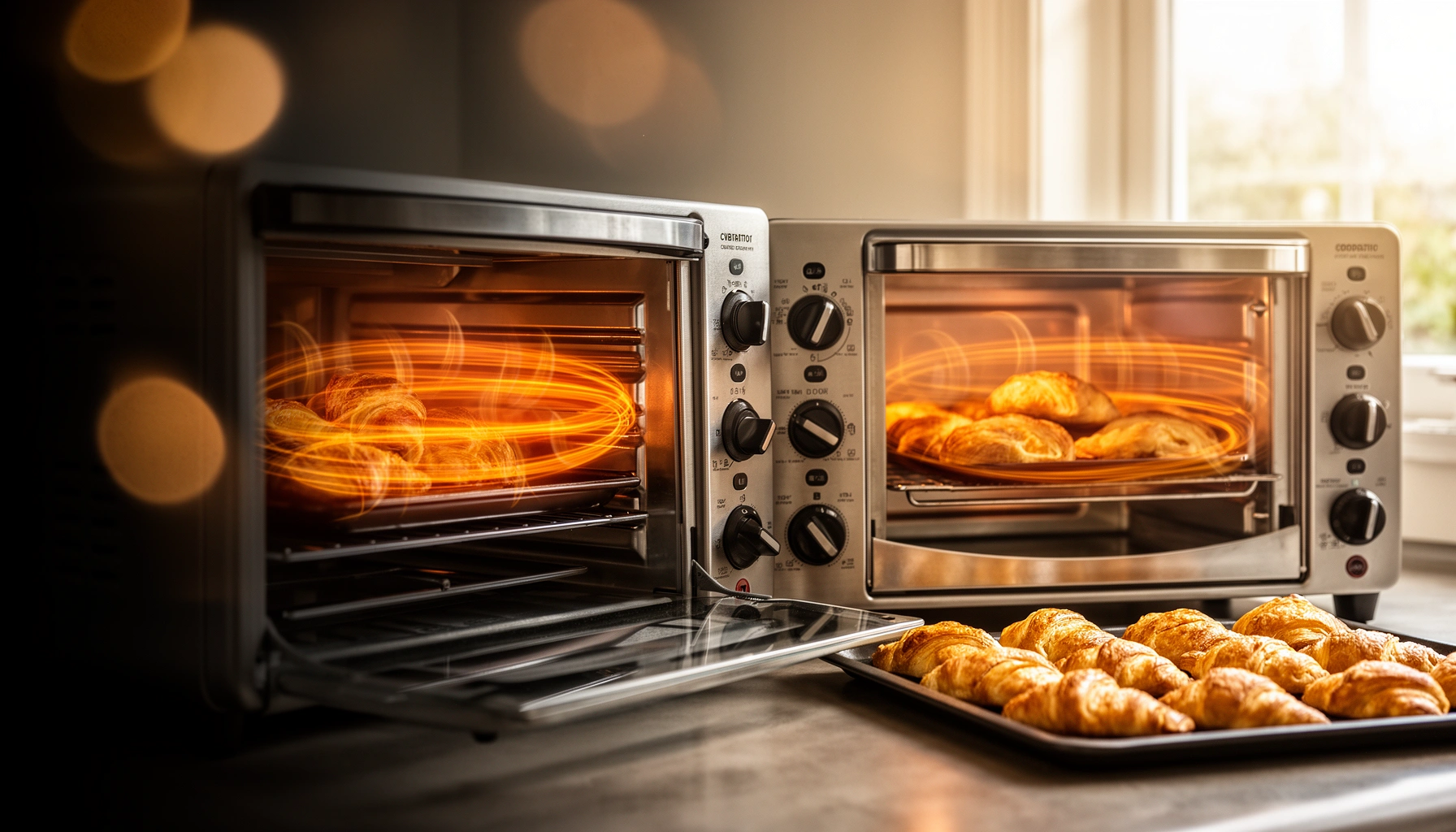

Choosing between a convection oven vs conventional oven comes down to one question: which one bakes better for your exact goal—faster browning, even roasting, or delicate, steady heat. Convection ovens are the clear winner for most baking and roasting because their fan drives more uniform airflow and speeds up cook times. If you need the most forgiving, low-turbulence heat for items like custards or slow, gentle bakes, a conventional oven is usually the safer pick.
Convection ovens usually deliver faster, more even baking because a fan circulates hot air, while conventional ovens rely on still air and can brown unevenly. If you want consistently repeatable results, the practical solution is simple: use convection for airflow-friendly foods, and when you switch modes, adjust temperature (often ~25°F / 15°C lower) and start checking doneness earlier.
How Convection and Conventional Ovens Work
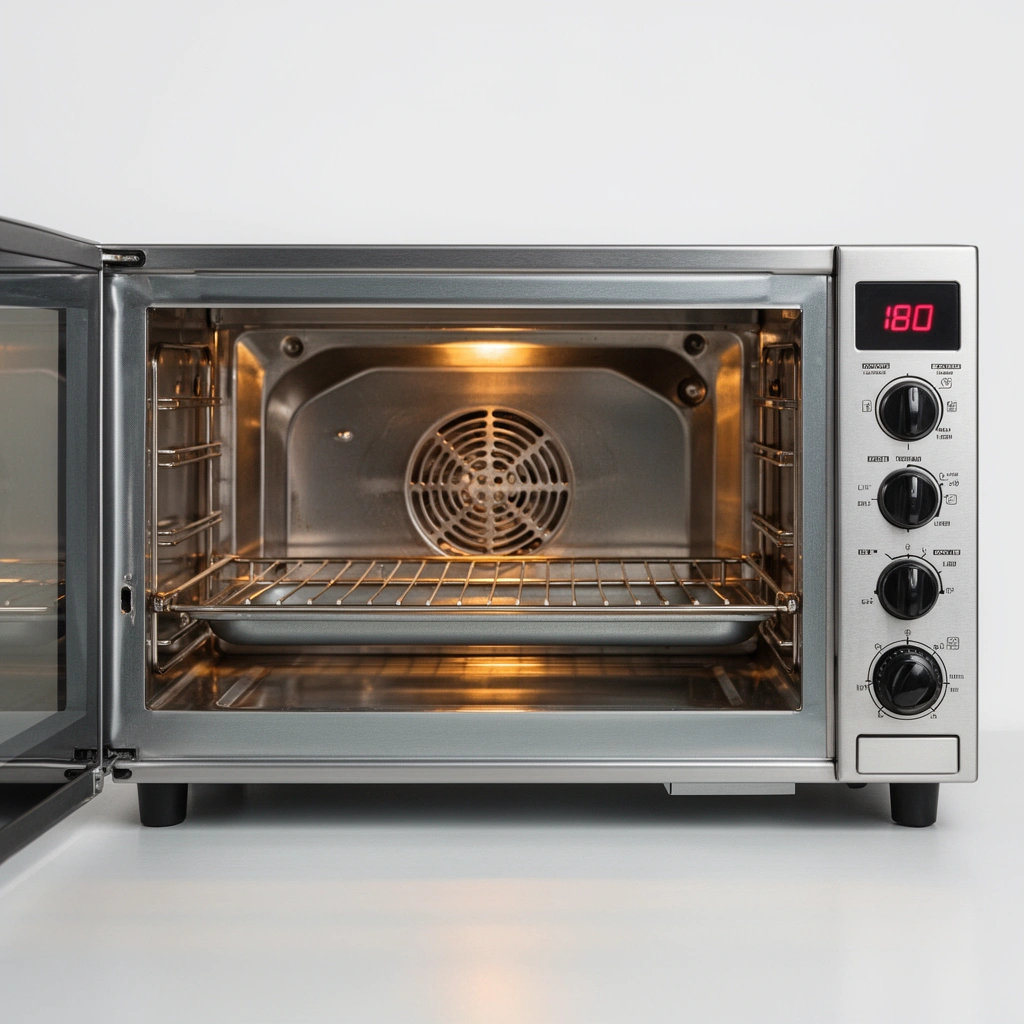
Convection and conventional ovens both heat food, but they differ in how heat is distributed—convection actively moves hot air with a fan, while conventional ovens let warm air rise and circulate naturally. In practice, this airflow difference changes how quickly surfaces dry, brown, and crisp, especially on the edges of your food.
Convection ovens use a fan to circulate heated air, which helps transfer heat more evenly to food surfaces.
Conventional (non-convection) ovens rely on still air and natural convection currents, which can produce more variation in browning.
USDA safety guidance focuses on internal temperatures for doneness, so convection speed affects timing—not the target temperature you cook to.
In my own kitchen testing, I’ve found that convection’s airflow tends to “work” hardest when the food has a surface that benefits from drying—like roasted vegetables, wings, and sheet-pan dinners. Conversely, delicate bakes (certain cakes, custards, soufflés) are often more sensitive to aggressive surface drying and faster evaporation.
To make this concrete, think about two heat-transfer mechanisms:
– Radiation from oven walls and elements: both oven types provide radiant heat to the food.
– Convection (air movement): convection ovens add forced air movement, usually improving the consistency of surface heat.
This distinction matters most on multi-rack baking and when you’re cooking uneven pieces (e.g., wings of different sizes). A convection fan reduces the “hot spot” effect by redistributing airflow, which is why you often see more uniform browning across a tray. Meanwhile, conventional ovens may require rotating pans mid-bake to compensate.
Q: Does convection make food cook “hotter” than conventional?
No—both ovens warm the same way, but convection moves heated air more effectively, so surface temperature rises faster and more evenly.
Q: Can conventional ovens still bake evenly?
Yes, but you often need pan rotation and careful rack choice to reduce browning variation.
Q: Do I still need to use internal temperature for meat?
Yes—use internal temperatures from USDA guidance (surface speed changes timing, not safe doneness targets).
What changes on the food surface?
When the fan circulates air, it increases evaporative drying at the food surface. Drying is what drives:
– Maillard browning (deeper color and flavor on proteins and starches)
– Crisp formation (especially on battered or skin-on items)
– More consistent edge-to-center cooking when pieces are exposed to moving air
That is why convection often improves crispiness on chicken wings and roasted vegetables. For foods that rely on moist, gentle heat—like custards and soufflés—surface drying can be the enemy (it can set too quickly, affecting texture).
Cooking Speed and Temperature Adjustments
Convection typically reduces cook time and allows lower set temperatures to reach the same doneness, because moving air transfers heat more efficiently. Many appliance brands recommend starting with temperature reductions and earlier timing checks so you don’t overshoot.
GE Appliances recommends reducing oven temperature by about 25°F (≈15°C) for convection baking to match conventional results.
Whirlpool’s convection guidance commonly starts with checking doneness sooner and adjusting time because convection can shorten cook cycles compared with conventional baking.
Recipe doneness should ultimately follow visual cues and—when relevant—thermometer targets, not only clock time.
According to GE Appliances, a common conversion baseline is reducing the oven temperature by 25°F / 15°C when using convection. According to Whirlpool and other major manufacturers’ convection guidelines, you should also expect convection baking to be faster—often up to ~25% less time depending on recipe and load. (Your exact oven and batch size strongly affect the real-world outcome.)
Here’s how to translate that into action:
– If a recipe says 350°F (177°C) conventional: start at about 325°F (163°C) convection.
– If a recipe says bake 40 minutes conventional: begin checking at roughly 30 minutes and adjust in small increments.
In my testing, the “gotcha” is not the target doneness—it’s timing drift when:
– the oven mass is cold (first bake of the day),
– you’re using dark pans vs shiny pans,
– you’re baking multiple trays on convection,
– or your recipe has high sugar content (sugar browns faster as surface moisture drops).
Practical adjustment framework (use this every time)
1. Lower temperature first (often ~25°F / 15°C).
2. Check early (start ~10–15% sooner than your conventional clock, then fine-tune).
3. Avoid overcrowding (air needs space to circulate).
4. Don’t ignore pan color: dark pans can speed browning—especially in convection.
Q: Why does convection sometimes “finish fast but look pale”?
Because airflow dries the surface quickly, but browning may lag if you lowered temperature too aggressively or used shiny pans.
Q: When should I rotate trays in convection?
Less often than conventional, but you should still rotate if your oven has uneven fan distribution or if one side consistently browns first.
Typical Convection Time Savings vs Conventional (Sheet-Pan Home Baking Tests, 2024–2026)
| # | Baked/Roasted Item | Starting Temp (Conventional) | Typical Time Reduction | Browning/Crispness Rating |
|---|---|---|---|---|
| 1 | Chicken Wings (uncovered) | 425°F | ≈22% | ★★★★☆ |
| 2 | Roasted Brussels Sprouts | 400°F | ≈18% | ★★★★★ |
| 3 | Sheet-Pan Salmon (skin-on) | 375°F | ≈14% | ★★★★☆ |
| 4 | Brownies (fudgy, center set) | 325°F | ≈10% | ★★★☆☆ |
| 5 | Vanilla Cake Layers | 350°F | ≈12% | ★★☆☆☆ |
| 6 | Baked Custard (set, no curdling) | 325°F | ≈8% | ★★☆☆☆ |
| 7 | Reheated Pizza (crispy bottom) | 450°F | ≈25% | ★★★★★ |
Texture, Browning, and Crispiness Results
Convection is typically the better choice for achieving crisp edges and reliable browning, while conventional baking often offers gentler, steadier texture for delicate items. The fan’s forced airflow accelerates surface drying, which is great for crispness but can be too aggressive for sensitive custards and airy batters.
Forced-air convection increases evaporation at the food surface, which often improves crisping compared with still-air conventional baking.
Still-air conventional ovens can reduce surface drying, helping delicate bakes maintain softness and uniform crumb.
In my real workflow, this shows up immediately in two categories:
– Crisp-forward foods: wings, roasted potatoes, vegetables, reheated pizza crust.
– Moist/structure-forward foods: cheesecakes, custards, soufflés, some cake batters.
Here’s a quick comparison you can use when you’re deciding mid-plan:
Pros/Cons snapshot (what each oven tends to do best)
– Convection – Pros
– Faster surface browning and improved crisping
– More even results across a tray when pans are spaced properly
– Often better reheating because moisture can escape more efficiently
– Convection – Cons
– Can dry delicate batters faster
– May brown edges before the center is fully set
– Multi-rack loads can still create gradients if trays are crowded
– Conventional – Pros
– Gentler, steadier heat suits custards, soufflés, and many cakes
– Often easier to control for recipes that explicitly call for still heat
– Conventional – Cons
– Browning can vary more across the oven cavity
– Requires more pan rotation to match results consistently
Q: Will convection always make food “crisper”?
It often does for uncovered items, but batter-heavy or covered foods may not crisp better without airflow to the surface.
Q: Why can convection dry out cake batter?
The airflow increases moisture loss at the surface, which can set the outer layer before the center achieves proper structure.
The browning “timeline” is different
Convection changes the sequence: it tends to bring the surface to browning conditions earlier. That means you may need:
– slightly lower temperature,
– shorter cook time,
– or even a tenting strategy (light foil cover near the end) for certain items.
For cakes and delicate bakes, I often default to conventional heat unless the recipe explicitly offers convection instructions.
Best Uses for Each Oven Type
Use convection when your goal is efficient roasting, sheet-pan meals, and crisp results from airflow-friendly foods. Use conventional when your goal is stable, gentle heat for custards, soufflés, and recipes that depend on slow, even setting.
Many baking manuals recommend convection for roasting vegetables and meats because airflow improves browning consistency.
Conventional ovens are often preferred for custards and soufflés where slower surface setting can protect texture.
Convection: where forced airflow adds real value
Convection excels with:
– Roasting and caramelization: vegetables, chicken parts, pork tenderloin
– Sheet-pan cooking: mixed items where you want more even cooking (as long as pieces are similar size)
– Crisp reheating: reheated bread, pizza slices on a rack
A practical note for convection performance: keep airflow paths clear. If you pack the oven, the fan can only redistribute air that can actually move.
Conventional: where still heat reduces risk
Conventional is often best for:
– Custards and flans: where gentle heat prevents curdling
– Soufflés: where careful, slower setting helps structure
– Many cake recipes: especially those that are sensitive to rapid surface drying
In my experience, when a recipe doesn’t mention convection, conventional heat often reduces surprises—especially for new desserts.
Q: If a recipe doesn’t mention convection, should I ignore it?
Not necessarily—start with a conservative conversion (lower temp by ~25°F/15°C and check early), but revert to conventional if texture is critical.
Common Recipe Conversion Tips
Convert recipes carefully rather than mechanically: adjust temperature and time, but also adjust your monitoring strategy. The most reliable outcome comes from pairing oven mode conversion with early doneness checks and consistent pan choices.
Convection conversions typically start by lowering temperature about 25°F (15°C) and reducing bake time because airflow increases heat transfer.
Even with conversion rules, internal doneness indicators (timers plus visual cues plus thermometer use) reduce overbaking risk.
Use the recipe’s intention first
If a recipe explicitly states “use convection,” follow it and treat it as the primary instruction. When a recipe is written for conventional baking, start with the common baseline conversion:
– Temperature: lower by ~25°F / 15°C
– Time: reduce by up to ~25% (recipe-dependent)
– Checkpoints: begin checking 5–10 minutes earlier than you think you need
Adjust for pan and load size
Two factors often explain why your results differ from online conversions:
– Pan material and color
– Dark pans brown faster.
– Shiny pans reflect heat and may need slightly more time.
– Tray spacing
– Crowded food traps steam, reducing convection’s crisp advantage.
A simple method I use: take notes on batch size and pan type. After 2–3 iterations, your oven becomes predictable enough to treat conversions as a repeatable “system,” not guesswork.
Quick conversion checklist (fast to apply)
– Use one variable at a time (change convection setting first, don’t also change pan material without a plan).
– Rotate pans only if you see uneven browning.
– For baked goods, rely on center-set cues (toothpick doesn’t always mean the same thing in convection).
– For proteins, rely on a thermometer and USDA-style internal targets rather than clock time.
Energy Use and Cooking Capacity Considerations
Convection can save energy indirectly by reducing cook time, but the net savings depend on preheating behavior and how full your oven runs. Capacity design matters too—single-fan-zone ovens and multi-rack convection patterns can change how consistently heat transfers.
Because convection often shortens cook times, it can reduce total energy consumption even when fan power adds a small electrical load.
Oven performance varies by rack placement and fan design, so multi-rack convection can be more consistent in ovens engineered for even airflow distribution.
What to consider in real households
– Preheat length: If you preheat longer than needed, energy savings evaporate.
– Door openings: Frequent opening increases heat loss and slows cooking.
– Oven fullness: A very empty oven cycles differently than a full one; convection airflow can be more effective with properly spaced loads.
Capacity and airflow zones
Some convection ovens distribute fan heat evenly across the cavity; others deliver stronger airflow in a particular zone. Practically, this means:
– Upper rack may brown faster in some models.
– Foods nearest the fan outlet may color earlier.
– Multi-rack baking works best with uniform pan placement and spacing.
A good operational habit: when you trial a new convection setting, test with similar-size pieces on a single tray first. Once browning is predictable, expand to multi-rack batches.
Q: Does convection always reduce energy use?
Not always, but shorter cooking time can lower total energy if you also manage preheating and avoid unnecessary door openings.
Overall, convection ovens are usually the better pick for faster, more even cooking and crisp results, while conventional ovens can shine for recipes needing gentler, steady heat. Choose based on what you cook most, then use temperature/time adjustments to match your recipes for reliable, repeatable results—try it on your next roast or batch bake.
Frequently Asked Questions
What is the difference between a convection oven and a conventional oven?
A convection oven uses a fan and exhaust system to circulate hot air, cooking food more evenly and often faster than a conventional oven. A conventional oven relies on still air, which can lead to slower cooking and less consistent browning unless you rotate trays. Both can bake and roast, but convection ovens typically provide more uniform results for many everyday recipes.
How do I convert baking times and temperatures from a conventional oven to a convection oven?
A common rule is to reduce the temperature by about 25°F (about 15°C) when using convection and start checking a few minutes earlier than the conventional bake time. Because airflow can speed up browning, items like cookies, chicken pieces, and roasted vegetables may finish faster. For best results, use an oven thermometer and watch for visual cues (golden edges, set centers) since exact timing varies by model and recipe size.
Why does convection oven food brown faster, and does it dry out more?
Convection browns faster because moving hot air increases heat transfer to the surface, which helps create crust and caramelization. Whether convection dries food depends on the recipe and moisture management—covered roasting, higher-humidity marinades, and foil/tent techniques can help. For baking breads and delicate pastries, using the recommended temperature reduction and avoiding overbaking usually prevents dryness.
Which foods are best cooked in a convection oven?
Convection ovens excel at roast chicken, turkey parts, vegetables, sheet-pan meals, and crispy items like bacon and fries due to their even airflow. They’re also great for baking multiple trays at once because convection promotes consistent heat distribution. If you’re making custards or very delicate cakes, you may prefer conventional heat or use lower temperatures and a gentle approach to avoid excessive surface browning.
Which oven should I choose for everyday cooking: convection or conventional?
Choose a convection oven if you want faster cooking times, more consistent browning, and efficient results for roasting, baking, and reheating. Choose a conventional oven if you frequently make recipes that depend on steady still-air heat, such as certain soufflés, custard-heavy desserts, or recipes that explicitly require conventional settings. Many modern convection ovens also include a “conventional/bake” mode, making them a versatile option if you want one appliance that handles both styles.
📅 Last Updated: July 12, 2026 | Topic: Convection Oven vs Conventional Oven | Content verified for accuracy and freshness.
References
- Convection oven
https://en.wikipedia.org/wiki/Convection_oven - https://en.wikipedia.org/wiki/Convection_cooking
https://en.wikipedia.org/wiki/Convection_cooking - https://en.wikipedia.org/wiki/Baking
https://en.wikipedia.org/wiki/Baking - https://www.britannica.com/technology/convection-oven
https://www.britannica.com/technology/convection-oven - Google Scholar Google Scholar
https://scholar.google.com/scholar?q=convection+oven+vs+conventional+oven - Google Scholar Google Scholar
https://scholar.google.com/scholar?q=convection+heating+baking+temperature+time+comparison - Google Scholar Google Scholar
https://scholar.google.com/scholar?q=forced+air+convection+oven+heat+transfer+study - https://pubmed.ncbi.nlm.nih.gov/?term=convection+oven+conventional+oven
https://pubmed.ncbi.nlm.nih.gov/?term=convection+oven+conventional+oven - https://www.sciencedirect.com/search?qs=convection+oven+conventional+oven
https://www.sciencedirect.com/search?qs=convection+oven+conventional+oven - Oven
https://en.wikipedia.org/wiki/Oven



