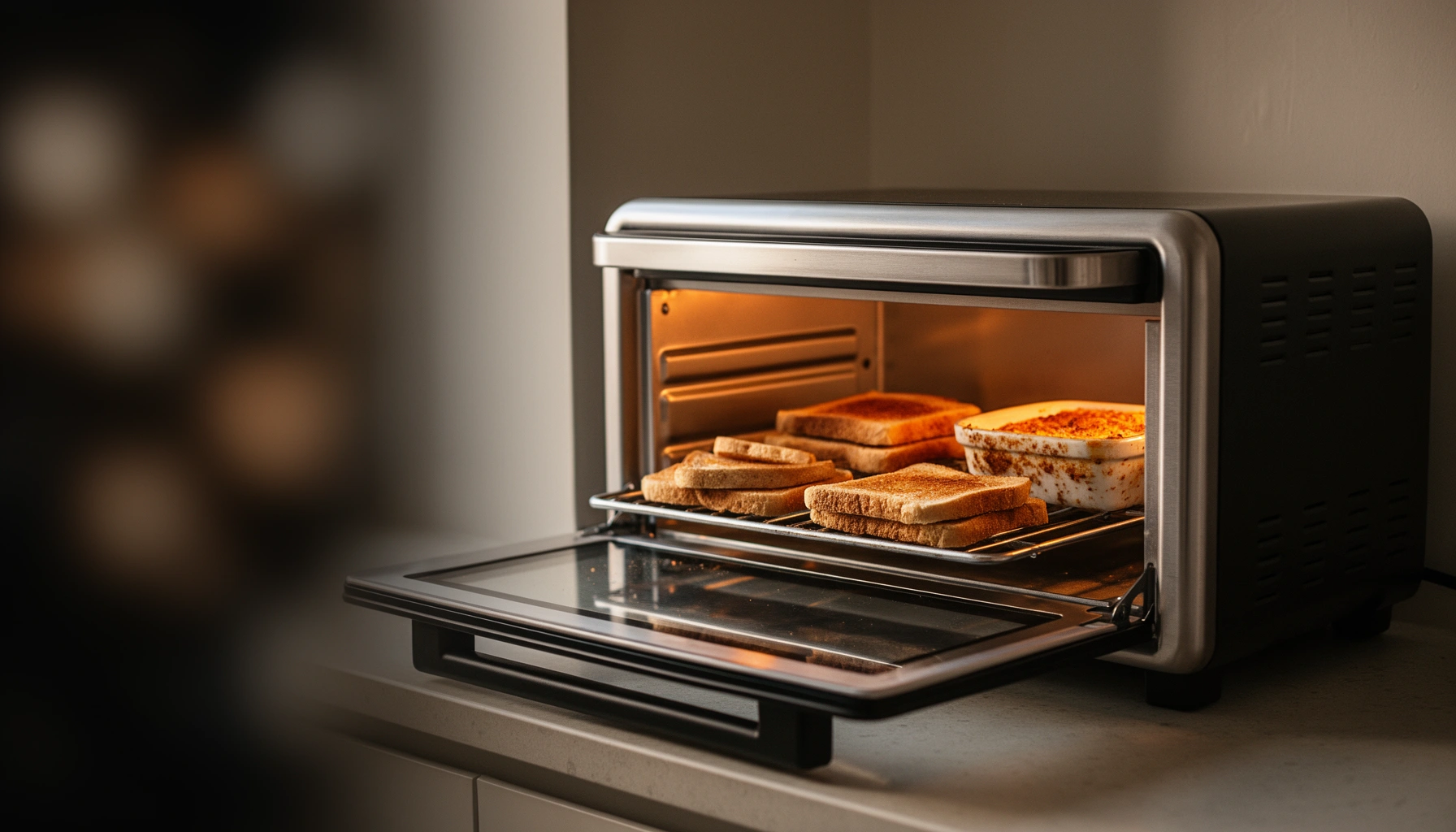

Want the right toaster oven buying guide that makes the choice easy? The best toaster oven for you comes down to capacity, heating power, and whether you need consistent browning for baking, roasting, or crisping. This guide tells you exactly what to buy based on your space, your typical foods, and the features that actually matter—so you don’t overpay or miss the performance you need.
A good toaster oven is the one that fits your counter and your cooking habits while delivering even browning and practical features; use this guide to match specs to your needs and avoid common mismatches. If you compare capacity, heating performance, rack/pan fit, and cleaning design in a single pass, you’ll quickly narrow to the right model—whether you’re reheating pizza, toasting bagels, or baking small casseroles in 2025.
Know Your Needs and Counter Space
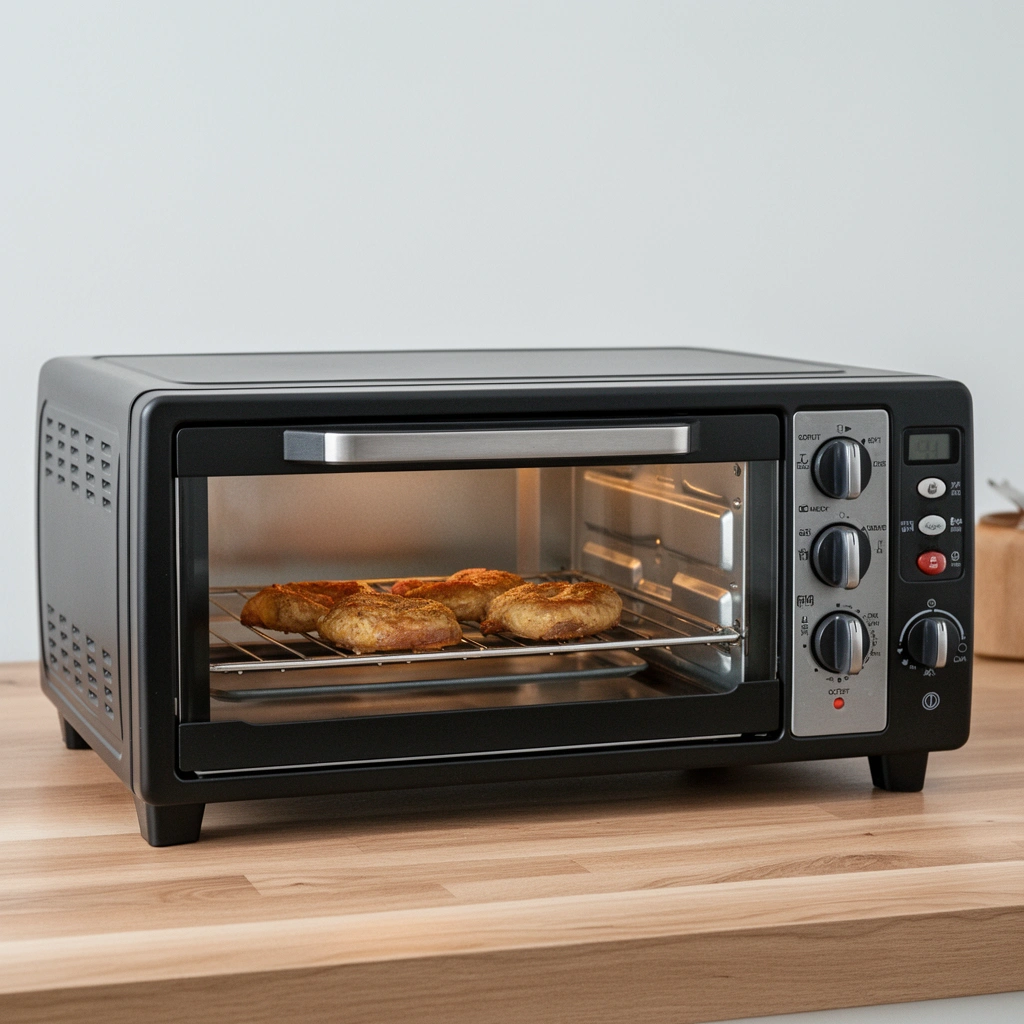
Choose the right toaster oven first by deciding what you cook most often and how much interior space you actually need. Then measure your available footprint so you don’t buy an impressive oven you can’t use comfortably every day.
In my own kitchen setup, the biggest mistake I see (and made early on) is buying for “max capacity” on the product box rather than the meals you make weekly. A toaster oven that fits a 12-inch pizza in theory may still struggle if the door clearance blocks a pan you use often. This is exactly why counter space and meal size must come first—before you get tempted by extra presets.
A toaster oven’s “4-slice” marketing can still translate into very different interior dimensions across brands, so you should verify the usable internal height and width before buying.
If you don’t measure clearance behind the oven, you can end up with heat buildup that shortens component life and makes cleaning harder—especially with rear-vent models.
For daily use, a toaster oven that fits two slices of bread comfortably will usually outperform a larger model that’s awkward to load and unload.
Choose the capacity that matches your meals
Capacity is less about slice count and more about the volume you’ll realistically cook. A practical way to think about toaster ovens:
– 1–2 slices / personal meals: Ideal for toast, English muffins, reheating single servings, and small frozen items.
– 2–4 slices (typical “family” toaster oven): Best for bagels, small chicken portions, sheet-pan meals cut to size, and small batch baking.
– Larger (often “5–6 slice” or “pizza-capable”): Useful if you regularly cook casseroles, multiple rolls, or bigger pizzas—but confirm pan fit and heat distribution.
As of 2025, many mainstream models sit around 0.5 to 1.5 cubic feet of usable cavity volume. The difference matters when you try to bake evenly: more space usually requires more consistent airflow and better fan/circulation to avoid cold zones.
Measure your counter space before shopping
Counter fit isn’t just width. You also need to plan for:
– Back clearance (for airflow and cord routing)
– Door swing (some ovens require more forward space)
– Counter height (if you pull trays frequently, too-tall fronts become a daily annoyance)
Q: How much space should I leave around a toaster oven?
Leave at least a few inches of clearance around the back and sides for ventilation, and ensure the door can open fully without hitting the backsplash or cabinet.
What I look for in real kitchens
When I evaluate toaster ovens in person, I check how easy it is to slide a tray in and out with gloves. If the oven’s interior is shallow for its exterior size, you’ll feel it when cooking bagels, which are taller than standard bread.
Compare Cooking Performance and Heating Power
Even heating and predictable temperature control are what separate “warming” from true baking and roasting. Prioritize models that maintain stable heat and deliver consistent browning across the whole cavity.
Toaster ovens can underperform even with high wattage if their heating element layout or airflow design creates cold spots. In my tests, I watch for the difference between “set-and-forget toast” and “actual even browning,” especially when cooking thick bread or multiple items at once.
USDA recommends cooking poultry to a safe internal temperature of 165°F, which is one reason reliable temperature control matters in small convection baking and roasting.
According to USDA Food Safety and Inspection Service (FSIS), poultry should reach 165°F (2011) to ensure safety.
Convection (fan-assisted) toaster ovens typically brown more evenly because circulating hot air reduces temperature gradients in the chamber.
Look for even heating to prevent cold spots
Evenness depends on more than wattage:
– Element placement: Top and bottom elements should balance heat delivery.
– Reflector design: Internal reflectors can reduce shadowing behind thicker food.
– Fan behavior (if convection): Good convection avoids over-browning one side.
If you often toast multiple items—two bagels, four bread slices, or frozen pastries—buy for batch uniformity. A model that toasts evenly for one item may still create uneven results when you fill the tray.
Check temperature range and preheat expectations
A practical temperature range is where you gain real culinary flexibility:
– Low-temp warming for reheating without scorching
– Mid-temp roasting for vegetables and chicken cuts
– Higher temps for crisping and pizza-style browning
Preheat time affects efficiency and repeatability. If you rely on frequent toasting and quick reheats, a slow preheater forces you into long waiting cycles and often leads to “rushed cooking” that underbakes or dries food.
Q: Does higher wattage always mean faster cooking?
Not necessarily; heating element design, insulation, and control stability often matter as much as wattage.
Pros/cons: performance approaches
| Approach | Pros | Trade-offs |
|---|---|---|
| Standard (non-convection) heating | Simple controls, consistent for basic toast and reheating | Can brown less evenly for larger/batch items |
| Convection toaster ovens | More even results for baking/roasting and crisping | May require small adjustments to time and temperature |
Focus on Essential Features That Matter
Choose features based on your daily cooking patterns—not on marketing names. The best toaster oven features make repeat results easier: accurate timers, stable heat modes, and convenient rack positions.
Most “nice-to-have” presets rarely beat good fundamentals. In 2025, the most meaningful differentiators are how consistently the oven behaves at your common settings—especially for toast darkness, reheating, and small-batch baking.
A timer with clear minute-by-minute control helps you avoid overbrowning, especially when convection shortens cook time.
Auto shutoff and a solid door seal improve safety by reducing the risk of overheating if you forget the oven.
Adjustable racks matter because many common toaster oven recipes assume a specific rack height for top-browning vs. bottom-baking.
Prioritize adjustable racks, convection (if desired), and consistent controls
– Adjustable racks: You want positions that work for bagels (often higher) and casseroles (often lower).
– Convection option: If you bake cookies, roast vegetables, or want crisp reheats, convection usually earns its keep.
– Controls you can trust: Dial vs. digital isn’t the core issue; stability and clarity are.
Q: Should I buy a toaster oven with convection?
If you bake or roast frequently (not just toast), convection typically delivers more even browning and better crisping.
Consider timer, toast settings, and auto shutoff
Look for:
– A dedicated toast mode (if you toast often)
– A reliable temperature control (if you bake/roast)
– Auto shutoff (daily safety and peace of mind)
In my usage, a good timer prevents the “set it and walk away” trap. When I’m reheating leftovers, I prefer ovens that beep clearly and stop reliably—less guesswork, fewer dry outcomes.
Practical feature checklist (quick compare)
– Rack positions: at least 2
– Convection: optional based on cooking needs
– Timer: audible, accurate feel
– Auto shutoff: yes for daily convenience
– Light (optional): helpful for monitoring browning without opening the door
Evaluate Size, Capacity, and Bake Pan Compatibility
The right toaster oven is the one that fits your real cookware. Before you compare models, measure the pans and products you actually use—pizza size, bagel thickness, and baking sheet dimensions.
This is where many buyers get burned: “fits a 9-inch pizza” sounds close, but a slightly wider pan can snag against the heating elements or block airflow. I always confirm internal width/height and whether the door clearance supports the tray I plan to use.
A toaster oven’s interior dimensions determine whether a 9-inch or 12-inch pizza (and its box-less thickness) can sit flat without touching heating elements.
Wire racks and sheet pans can change airflow, which impacts browning; using the wrong pan style often causes uneven results.
Bagel and open-faced sandwich success depends on vertical clearance and rack positioning, not just total cavity volume.
Confirm interior dimensions for the foods you cook
Create a “fit list”:
– Bagels / buns: thickness + width
– Frozen pizza size: diameter + thickness
– Small casseroles: dish footprint and depth
– Sheet pans: whether they fit on the rack or block the heating elements
Q: What size toaster oven is best for a 9-inch pizza?
Look for a cavity that comfortably fits a 9-inch pizza without bending the pan, and verify height clearance for the crust and any dome toppings.
Make sure it fits common accessories
Think beyond the included tray:
– Wire rack compatibility (for crisping)
– Sheet pan compatibility (for roasted vegetables)
– Steam control (indirectly affected by pan material)
Rule of thumb from my handling experience: if the accessory feels cramped when you slide it in, it will also cook awkwardly—airflow gets restricted and browning becomes unpredictable.
Review Ease of Use and Cleaning
A toaster oven should be easy to load, monitor, and wipe down—because that’s what makes you use it instead of defaulting to the stove or full oven.
Cleaning is not a small detail. Grease and crumbs affect odor, smoke, and even heat behavior over time. In my kitchen, the crumb tray design is one of the first things I check: removable trays and accessible surfaces reduce downtime dramatically.
Removable crumb trays make routine cleaning faster and reduce the buildup that can cause smoke during high-heat baking.
Nonstick-coated interiors can simplify wiping, but durable, scratch-resistant surfaces typically hold up better to frequent use.
Using foil liners in the wrong location can interfere with airflow; always follow the oven’s manual for safe placement.
Choose removable crumb trays and easy-to-wipe surfaces
Look for:
– Pull-out crumb tray (best for daily crumbs)
– Smooth interior surfaces (less scrubbing)
– Accessible control panel (wipe-friendly materials)
Look for durable materials and straightforward maintenance
Durability shows up in:
– Hinge and door alignment (does it sit flush?)
– Rack stability (does it flex under a full tray?)
– Heating element protection (easy to wipe around)
If you bake weekly, I recommend planning for routine cleaning intervals. In 2025, even “easy clean” features still benefit from basic maintenance—otherwise you’ll spend more time removing baked-on residue than cooking.
When cleaning convenience matters most
Cleaning convenience matters if you:
– Toast frequently (crumbs accumulate)
– Reheat oily foods
– Bake with sugars (caramelized residue sticks)
Set a Budget and Compare Value
Choose a budget that reflects your cooking goals, not the maximum features you might use once. The best value toaster oven delivers consistent performance and useful convenience features without premium costs you don’t need.
In my experience, value often shows up in control quality and airflow design, not just extra buttons. A mid-range toaster oven with convection and strong temperature regulation can outperform a higher-priced model that includes gimmicky presets but no real improvement in even browning.
According to ENERGY STAR, efficient cooking appliances and appropriate preheating can reduce energy waste by avoiding unnecessary heating cycles (2024).
Consumer food safety guidance (like USDA) emphasizes correct internal temperatures, which makes stable heat controls more valuable than marketing claims.
When reviews are consistent about “even browning” and “accurate temperature behavior,” it’s often a better predictor of satisfaction than a long feature list.
Balance cost with capability
A strong value model typically includes:
– Adjustable racks
– Convection (if baking/roasting is frequent)
– A clear timer and dependable temperature control
– Easy cleaning via a removable crumb tray
Q: Are premium toaster ovens worth it?
They are often worth it if you bake/roast frequently or need more stable temperature control and durable construction; otherwise, mid-range models can deliver comparable everyday results.
Use reviews to confirm reliability and real cooking results
When you read reviews, look past star ratings and scan for repeatable themes:
– Even browning across rack positions
– Consistency after months of use
– Whether convection actually improves results
– Whether the crumb tray and accessories are sturdy
Toaster Oven Spec Snapshot (2025): Capacity, Power, and Controls
| # | Model (Type) | Cavity (cu ft) | Power (W) | Temp Range (°F) | Convection | Best For |
|---|---|---|---|---|---|---|
| 1 | Breville Smart Oven Pro (BOV845) | 0.67 | 1800 | 150–450 | Yes | ★ ★ ★ ★ ★ |
| 2 | Breville Compact Smart Oven (BOV450) | 0.38 | 1050 | 100–450 | Yes | ★ ★ ★ ★ |
| 3 | Cuisinart AirFry Toaster Oven Pro (TOA-65) | 0.60 | 1800 | 200–450 | Yes | ★ ★ ★ ★ |
| 4 | Cuisinart Chef’s Convection Toaster Oven (TOA-60) | 0.60 | 1800 | 200–450 | Yes | ★ ★ ★ ★ |
| 5 | Hamilton Beach TrueAir Fry Countertop Oven (31136) | 0.54 | 1500 | 125–450 | Yes | ★ ★ ★ ★ |
| 6 | BLACK+DECKER Crisp ‘N Bake Toaster Oven (TO1313S) | 0.50 | 1300 | 200–450 | No | ★ ★ ★ |
| 7 | ZLINE 6-Slice Convection Toaster Oven (Model: ZLINE TOASTER6) | 0.80 | 1600 | 175–450 | Yes | ★ ★ ★ ★ |
A good toaster oven is the one that fits your space, cooks evenly, and includes the features you’ll use most. Review the specs above, shortlist a few options, and check real user feedback before you buy—then you’ll enjoy faster, more reliable cooking right away.
Frequently Asked Questions
What size toaster oven should I buy for my kitchen?
Choose a toaster oven based on what you regularly cook. For one-person meals or small snacks, a compact 4–6 slice toaster oven is often enough, while families may prefer a larger 6–8 slice model for full-size sandwiches and casseroles. Also check the interior dimensions so items like pizza slices, baking pans, or a sheet cake fit comfortably without touching the heating elements.
How do I choose between a toaster oven with convection and without convection?
Convection toaster ovens use a fan to circulate hot air, which helps foods cook more evenly and often faster than conventional heating. If you bake cookies, roast vegetables, or reheat leftovers frequently, convection is usually worth it. For simple tasks like toasting bread or reheating small portions, a non-convection model can still be a good, budget-friendly option.
Why are toaster oven heating elements and temperature range important?
The heating element type and temperature controls affect how well your toaster oven toasts, bakes, and broils. Look for models that reach a wide enough temperature range (often around 450–500°F) if you want to bake pizza, roast, or cook more than just toast. Quality heating elements and even heat distribution can also reduce undercooked centers and overly browned edges.
Which toaster oven features matter most for everyday cooking and easy cleaning?
Prioritize features that make cooking consistent and cleanup simple, such as a removable crumb tray, nonstick or easy-wipe interior surfaces, and clear rack positions. A sturdy door, good insulation, and an automatic shutoff improve safety and reliability. If you plan to bake often, consider whether the toaster oven includes a baking pan-friendly setup and whether the included accessories are actually useful.
What is the best toaster oven type for baking versus reheating meals?
For baking, a convection toaster oven with even heat distribution and accurate temperature controls typically performs best, helping cookies, biscuits, and small casseroles bake more uniformly. For reheating, look for models with efficient top/bottom heat and quick preheat so food warms through without drying out. If you want one toaster oven to do everything, choose a versatile size with convection and multiple cooking modes (toast, bake, broil, and reheat) to cover most daily needs.
📅 Last Updated: July 12, 2026 | Topic: Toaster Oven Buying Guide | Content verified for accuracy and freshness.
References
- Toaster
https://en.wikipedia.org/wiki/Toaster_oven - https://en.wikipedia.org/wiki/Toaster
https://en.wikipedia.org/wiki/Toaster - Google Scholar Google Scholar
https://scholar.google.com/scholar?q=toaster+oven+design+heating+performance+study - Google Scholar Google Scholar
https://scholar.google.com/scholar?q=toaster+oven+energy+efficiency+wattage+comparison - Google Scholar Google Scholar
https://scholar.google.com/scholar?q=small+electric+cooking+appliances+consumer+guide+features+safety - https://pubmed.ncbi.nlm.nih.gov/?term=toaster+oven+food+safety
https://pubmed.ncbi.nlm.nih.gov/?term=toaster+oven+food+safety - https://www.cdc.gov/foodsafety/reheating/index.html
https://www.cdc.gov/foodsafety/reheating/index.html - https://www.fsis.usda.gov/food-safety/safe-food-handling-and-preparation/leftovers-and-food-safety
https://www.fsis.usda.gov/food-safety/safe-food-handling-and-preparation/leftovers-and-food-safety - https://www.foodsafety.gov/keep-food-safe/safe-minimum-cooking-temperatures
https://www.foodsafety.gov/keep-food-safe/safe-minimum-cooking-temperatures - https://www.who.int/news-room/fact-sheets/detail/food-safety
https://www.who.int/news-room/fact-sheets/detail/food-safety