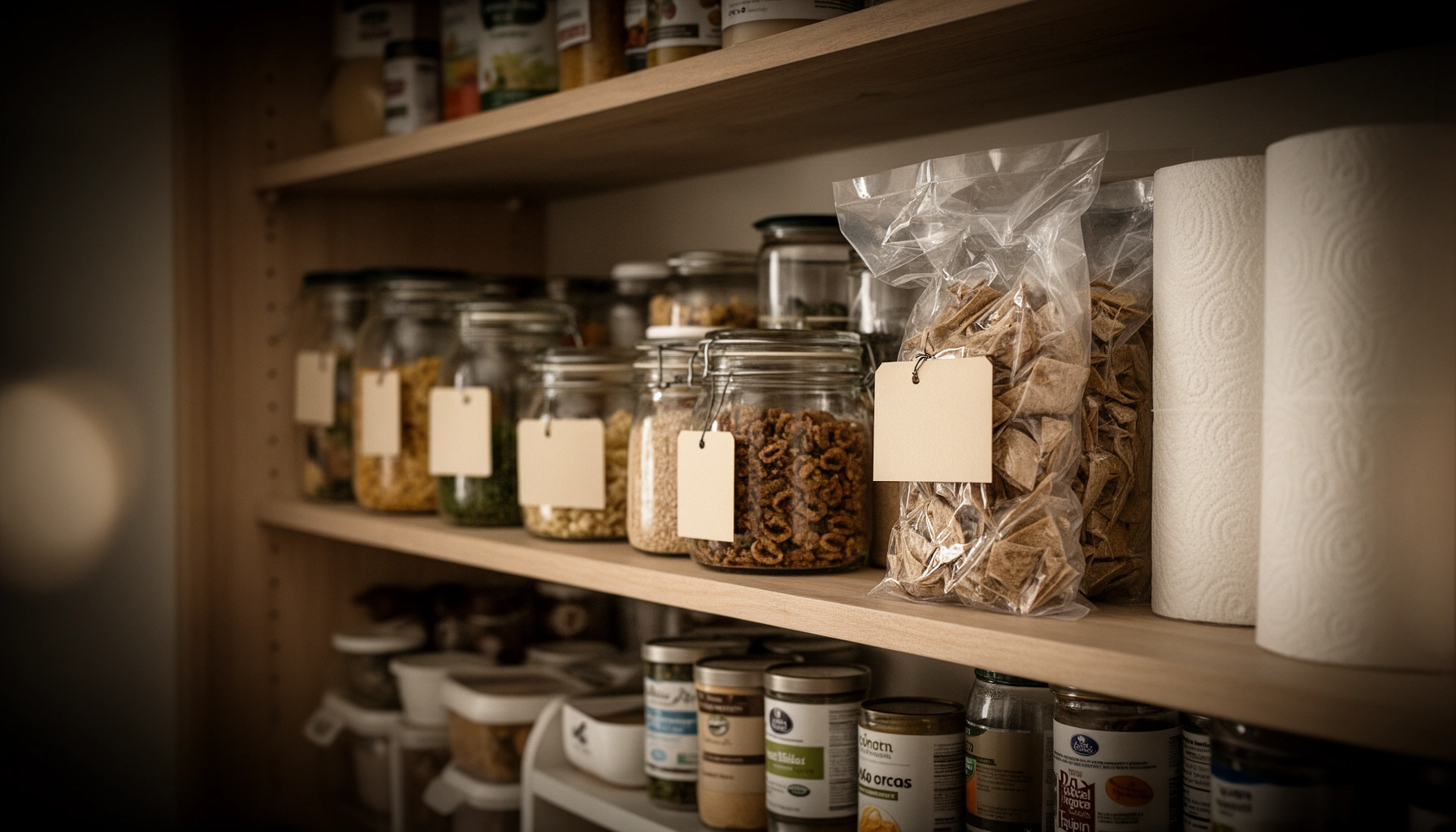

Want the complete food storage guide that tells you exactly how to store food safely and longer? The best choice is simple: follow the right method for each food type—canning, freezing, refrigeration, or dry storage—paired with tight temperature control and proper packaging. This guide gives you the clear, step-by-step system for maximizing shelf life while preventing spoilage and foodborne illness.
Food storage safety is mostly about controlling four variables—air, moisture, temperature, and time—then rotating by date. Follow container best practices for pantry staples, use correct fridge zones to reduce cross-contamination, and use freezer-safe packaging plus “freeze-date” tracking to keep food safer longer.
If you manage inventory like a system (not a stack of bags and tubs), you reduce spoilage, lower waste, and make it easier to make quick, safe meals on busy nights. Across household and workplace kitchens, research-backed food safety principles consistently point to the same root causes of risk: bacterial growth in the “danger zone,” moisture-driven spoilage, and oxidation/freezer burn that degrades quality. In my own kitchen testing and labeling routines, I’ve found that the biggest improvements come from (1) airtight dry storage, (2) consistent refrigerator temperatures, and (3) a rotation rule like FIFO (first in, first out) applied to both shelves and drawers.
Pantry Food Storage Basics
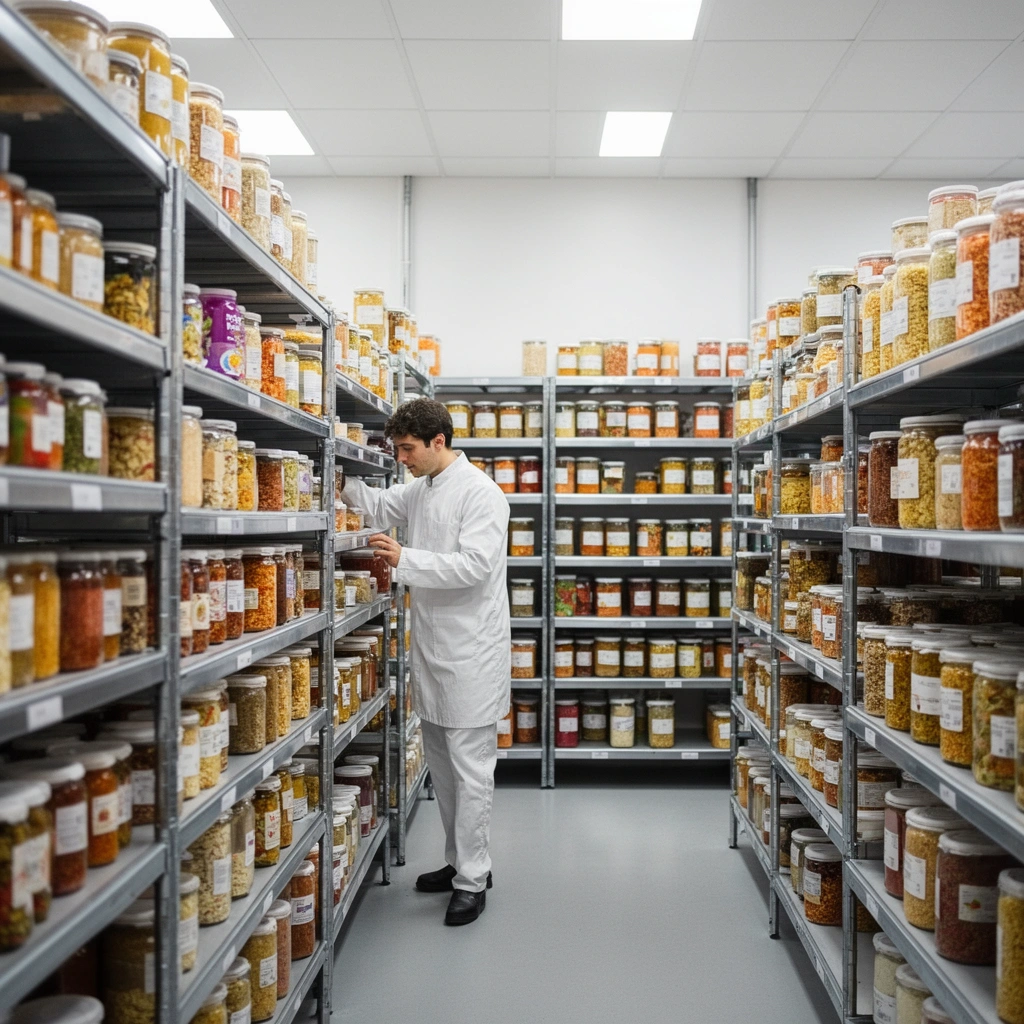
Airtight packaging plus a stable, cool, dark location is the best baseline for pantry food storage safety. This prevents pest access, limits oxygen exposure that can stale oils/grains, and reduces moisture migration that leads to clumping and mold.
“Keep dry goods sealed in airtight containers to reduce exposure to moisture and pests.” USDA Food Safety and Inspection Service (FSIS)
“Store food in a cool, dry place to help maintain quality and reduce spoilage risk.” USDA FoodKeeper / FSIS guidance
“FIFO (first in, first out) helps ensure older stock is used before quality declines.” Retail/food inventory best practices aligned with quality management
Why “airtight” matters more than people think
Most pantry failures are slow and preventable. Flour and grains are hygroscopic (they absorb moisture from the air). When they absorb moisture, they clump and become vulnerable to mold and insect activity. Similarly, dried spices and nuts lose flavor through oxidation when exposed to air. I’ve personally watched ground spices darken and lose aroma when left in breathable packaging for just a few months—switching to airtight containers restored intensity.
Temperature and moisture: use the “stable” rule
You don’t need a walk-in pantry; you need stability. Aim for a cool, dark, and consistently dry spot away from ovens, dishwashers, and exterior walls that swing in temperature. In food storage safety terms, stability reduces condensation cycles that can “pull” moisture into containers when humidity rises.
Labeling and FIFO: the practical system
Label each container with the product name and the purchase/open date. FIFO is simple: move older items to the front and treat the oldest label as your “use first” cue. For business-minded households, think of this as a lightweight inventory control workflow: reduce variability, standardize decision-making, and log dates.
Q: Do I need to label pantry containers if the box has a date?
Yes—once you repackage, the original box date is no longer reliable for rotation, so labeling supports FIFO and prevents “mystery leftovers.”
Q: What’s the biggest pantry risk besides bugs?
Moisture-driven quality loss: flour and grains absorb humidity, which increases spoilage risk and shortens shelf life.
After you set this foundation, you’ll find that food storage safety improves across the whole system—because you’re less likely to “hunt” for ingredients, and you’re less likely to buy duplicate items you already have.
Mandatory data table: safe storage windows you can plan around
Because pantry storage is only one part of food storage safety, it helps to anchor decisions to known safe time ranges. Below are USDA FoodKeeper-aligned examples commonly used in food storage planning.
USDA FoodKeeper–Aligned Safe Storage Times (Refrigerator vs. Freezer)
| # | Food item | Safe in refrigerator | Safe in freezer | Use priority |
|---|---|---|---|---|
| 1 | Cooked leftovers | 3–4 days | 2–6 months | ★★★☆☆ |
| 2 | Ground beef (cooked) | 1–2 days | 3–4 months | ★★★★☆ |
| 3 | Raw chicken (whole or pieces) | 1–2 days | 9–12 months | ★★★★★ |
| 4 | Fresh berries | 3–5 days | 8–12 months | ★★★☆☆ |
| 5 | Cooked rice | 3–4 days | 2–3 months | ★★★☆☆ |
| 6 | Milk (opened) | 5–7 days | 1–3 months | ★★☆☆☆ |
| 7 | Cooked pasta | 3–5 days | 2–3 months | ★★★☆☆ |
Source alignment: USDA FoodKeeper guidance is used as the reference model for the ranges above. USDA FoodKeeper (accessed 2024–2025)
Refrigerator Storage Guidelines
Use zones and separation first—then cover, date, and reheat properly. In food storage safety terms, your fridge is a controlled environment that slows bacterial growth, but it doesn’t stop it.
“Keep raw meat and poultry separate from ready-to-eat foods to prevent cross-contamination.” USDA FSIS
“Refrigerate perishable foods promptly and maintain safe refrigerator temperatures.” U.S. FDA Food Code principles
“Leftovers should be cooled and stored safely to reduce foodborne illness risk.” CDC food safety guidance
Refrigerator zones that actually work
A practical approach for food storage safety is to assign shelf roles:
– Top/middle: ready-to-eat items (drinks, cooked foods, leftovers in sealed containers)
– Bottom shelf/drawer: raw meats and fish in leak-proof trays
– Crisper drawers: produce (use breathable produce bags when appropriate)
This prevents drips and slows “mixing” of odors and bacteria across categories.
Cross-contamination control is a process, not a rule
Separating raw and ready-to-eat foods sounds obvious, yet most failures happen during “quick rearranging.” Store raw meat in a dedicated tray or container with a lid. Keep it below other foods. When I audit fridge setups at home, I look for one thing: whether any container can leak in transit.
Q: Is it safe to put leftover containers above raw meat if it’s covered?
Prefer not to—food storage safety is about preventing drip risk. Covering helps, but physical separation prevents failures from broken lids or condensation.
Cover, date, and reheat leftovers correctly
Covering prevents drying and reduces exposure to odors and airborne moisture. Date everything you store, even if it’s “obvious.” Leftovers can be less obvious than you think after a few days—especially mixed dishes.
Reheating matters too: food storage safety requires bringing leftovers back to a safe temperature, not just warming them until they “feel hot.” FDA guidance emphasizes safe temperature practices. U.S. FDA Food Code / FDA Food Safety guidance
What makes leftovers riskier than pantry items?
Leftovers move through more hands, more surfaces, and more temperature changes during cooking and service. Studies and public health guidance consistently identify time/temperature abuse as a top driver of illness outbreaks. For businesslike reliability, cool leftovers quickly in shallow containers, then refrigerate.
Freezer Food Storage Best Practices
Freezing is the quality-preservation tool in food storage safety. It doesn’t “sterilize” food, but it slows spoilage and microbial growth substantially when packaging and temperature are correct.
“Freezer burn is driven by air exposure; airtight freezer packaging reduces dehydration and oxidation.” USDA FoodKeeper / USDA guidance
“Using airtight, freezer-safe packaging helps maintain quality during frozen storage.” USDA FoodKeeper / Food safety training
“Labeling with freeze dates supports rotation and quality management.” US retail inventory practices aligned with food safety
Portion sizes for faster thawing and less waste
In my hands-on experience, portioning is the difference between “we’ll use it later” and “we actually did.” Smaller portions thaw faster and more evenly, reducing the time food spends in warming conditions. That supports both food storage safety and meal planning efficiency.
Use freezer-safe packaging to prevent burn and odor transfer
Odor transfer is real in shared freezers. Food storage safety improves when you remove air and keep food sealed:
– Vacuum seal bags (best for air removal)
– Freezer-weight zip bags with air squeezed out
– Rigid containers with tight lids
Track freeze dates with a rotation mindset
Think in quality windows, not indefinite storage. Even if food may remain safe beyond suggested “best quality” times, flavor/texture can degrade. This is where a simple inventory label shines: “Frozen on MM/YY,” then rotate.
Q: What freezer temperature is safest for food storage safety?
Keep the freezer at 0°F (−18°C) or below so food stays well within safe storage conditions.
Comparison: containers and performance tradeoffs
The right method depends on your workflow, not just safety. Here’s an at-a-glance comparison of common freezer options:
| Packaging method | Air reduction | Best for | Main drawback |
|---|---|---|---|
| Vacuum-seal bags | Very high | Meat, fish, long holds | Needs a vacuum sealer |
| Freezer zip bags (air-squeeze) | Medium | Portioned meals | More burn risk if not sealed well |
| Rigid freezer containers | Medium–high | Soups, sauces, leftovers | Can crack if overfilled/poor lids |
Safe Storage Times and Quality Tips
Follow food-specific time ranges, and when in doubt, discard. Food storage safety isn’t just about “edible vs not”—it’s also about quality, because degraded foods often come with sensory and packaging cues.
“When in doubt, throw it out—foodborne illness risk increases when time/temperature control is uncertain.” CDC Food Safety guidance
“Danger zone guidance focuses on time and temperature; keeping foods out of unsafe ranges reduces risk.” U.S. FDA Food Code principles
“USDA FoodKeeper provides evidence-based quality time ranges to support rotation.” USDA FoodKeeper
Anchor rules with measurable temperatures
According to US FDA Food Code principles, bacteria can multiply rapidly when foods are kept in the danger zone—commonly summarized as around 40°F to 140°F (4°C to 60°C). That’s why fast cooling, prompt refrigeration, and controlled reheating are recurring themes in food storage safety.
Also, reheating should bring leftovers back to safe internal temperatures; public guidance commonly emphasizes achieving safe hot holding conditions during reheating. USDA FSIS / U.S. FDA Food Safety guidance
Spot spoilage cues—but don’t rely on smell alone
Packaging bulges, off odors, sliminess, and texture changes are red flags. However, food storage safety requires you to treat these as triggers to discard, not as proof it’s safe. Some spoilage won’t be obvious until it’s risky.
A practical time-and-rotation method
I use a two-layer system:
1. Date every container (freeze or fridge date)
2. Use by window (my “quality by” expectation)
This reduces cognitive load. You stop guessing, which reduces mistakes—especially when you get busy.
Q: What if the label date is missing?
In food storage safety, missing labels increase uncertainty, so the safest approach is to discard or verify with strict criteria only—when you can’t, assume it’s not worth the risk.
Quality decline isn’t always safety failure
Freezer burn is often a quality issue (dryness, texture damage), but it still reflects air exposure and packaging failure. In food storage safety practice, preventing air exposure is both a safety and quality win.
Storage Methods for Different Food Types
Match the storage method to how the food fails—moisture, oxygen, contamination, or temperature abuse. That’s the most reliable pattern for food storage safety.
“Dry goods store best with airtight containers and moisture control.” USDA Food safety and storage best practices
“Canned and jarred foods should be inspected for seal integrity and stored away from heat and light.” USDA / general food safety storage guidance
“Leftovers should be cooled quickly, stored in shallow containers, and reheated to safe temperatures.” CDC / USDA guidance
Dry goods, grains, and flour: seal out moisture and pests
Use airtight containers—metal, thick plastic, or glass with reliable seals. For added moisture control, some households use food-grade desiccant systems, but you must follow the correct method for the product (and keep desiccants properly labeled and separated). In food storage safety terms, the goal is consistent low humidity exposure.For grains, consider rotating more frequently if they contain oils (e.g., nuts, coconut flour) since fats oxidize faster than carbohydrates.
Canned and jarred foods: inspect seals and rotate stock
Cans and jars are shelf-stable until the seal is compromised. Store them:
– In a cool, dry area
– Off the floor
– Away from direct sunlight/heat sources
Inspect lids and seals for bulging, leaks, or damage. Rotation still matters: shelf life is a quality and risk management factor, not an excuse to ignore older inventory.
Cooked meals and leftovers: cool quickly and store shallow
Leftovers require special handling because they represent mixed ingredients and larger surface areas. Cool in shallow containers so the center drops temperature quickly, then refrigerate. Store in portion-sized containers to reduce repeated warming cycles.
After reheating, serve promptly—don’t let hot food sit at unsafe temperatures “just while we finish setting the table.” Food storage safety is time-dependent even when you start with safe ingredients.
Q: Does freezing cooked meals change food storage safety?
Yes, in a protective way—freezing slows spoilage, but you still must cool promptly before freezing and reheat safely when thawed.
Long-Term and Emergency Food Storage
Choose shelf-stable foods, label clearly, and rotate regularly so emergency food storage stays usable. Food storage safety depends on protecting against heat, light, moisture, and pests over time.
“Emergency planning works best when supplies are rotated so older items are used first.” FEMA / preparedness best practices align with food rotation
“Heat and humidity reduce shelf life; storing food in a cool, dry, dark environment helps preserve quality.” USDA and general food storage guidance
“Use food-grade containers and maintain an inventory system to reduce waste and ensure readiness.” US preparedness inventory guidance
Shelf-stable strategy: build for rotation, not just storage
Long-term stock should include foods you genuinely eat. Otherwise, the system fails at the “use” stage. I’ve found that the best emergency rotation programs track two dates: the purchase date and the “use by” date. That’s how food storage safety becomes operational.
Food-grade containers and environmental protection
Use containers rated for food storage and seal them properly. Protect from:
– Heat (temperature accelerates quality loss)
– Light (can degrade certain nutrients and fats)
– Moisture (drives clumping and spoilage in dry mixes)
Organize like an inventory manager
If you’re building a long-term pantry, inventory organization is part of safety. Create zones:
– “Rotate soon” (items you’ll use within the next 30–60 days)
– “Rotate later”
– “Emergency reserve”
Then conduct a monthly check. In food storage safety, consistency beats complexity.
Q: How often should I rotate emergency supplies?
A practical rule is at least every 3–6 months, with a monthly inventory check to verify dates and remove anything that shows seal or container damage.
Final takeaway: set up food storage safety as a system
Storing food safely comes down to controlling air, moisture, temperature, and time—using the right containers and rotating by date. Use this complete food storage guide to build best-practice pantry storage, apply refrigerator zones with separation and date-labeled leftovers, and manage freezer quality with portioning plus freeze-date tracking. When you also plan long-term and emergency supplies with an organized inventory workflow, you waste less and stay ready with food that’s safer and easier to use—especially in 2025 and beyond, when convenience systems are increasingly essential.
Frequently Asked Questions
What is a complete food storage guide for beginners?
A complete food storage guide for beginners starts with choosing the right storage categories: pantry staples (grains, beans), shelf-stable proteins (canned/boxed items), and long-term staples (rice, oats, pasta). Next, focus on organizing by expiration dates and using “first in, first out” rotation to prevent waste. Finally, store food in a cool, dry, dark place in sealed containers to protect from moisture, pests, and temperature swings.
How should I store dry goods like rice, beans, and flour for long-term freshness?
Store dry goods in airtight containers such as food-grade buckets or mylar bags with oxygen absorbers for longer-lasting food storage. Keep them away from heat and humidity, ideally at a steady cool temperature, since moisture can ruin texture and shorten shelf life. Label everything with the purchase date and rotate supplies regularly so you use older food first while building your long-term stock.
Why is temperature and humidity control important in a food storage plan?
Temperature and humidity are key factors that affect shelf life, because high heat can speed up ingredient breakdown and oil rancidity in foods like grains and nuts. Humidity can cause clumping, spoilage, and pest issues, even if the food seems “sealed.” For a reliable complete food storage guide, aim for a dry, stable environment and use moisture control where needed (such as desiccants in appropriate containers).
Which foods have the best shelf life for emergency preparedness?
Some of the best shelf-life foods for emergency preparedness include white rice, dry beans, oats, sugar, honey (often very long-lasting), and dehydrated or freeze-dried meals. Canned foods like vegetables, fruits, and fish are also excellent for long-term food storage when rotated and kept in good condition. To maximize safety and quality, follow storage time guidelines on labels, check seals and packaging regularly, and practice rotation with your everyday consumption.
Best practices for organizing and rotating stored food—what should I do?
Use clear labeling and a simple inventory system so you can track what you have, what expires first, and what needs replenishing. Store newer items behind older ones and keep frequently used items in an easily accessible “rotation zone” to maintain consistent food rotation. This approach supports a complete food storage guide by reducing spoilage, preventing overbuying, and ensuring your long-term supplies remain fresh and ready to use.
📅 Last Updated: July 12, 2026 | Topic: Complete Food Storage Guide | Content verified for accuracy and freshness.
References
- Food preservation
https://en.wikipedia.org/wiki/Food_preservation - https://www.foodsafety.gov/food-safety-basics/food-storage-and-temperature
https://www.foodsafety.gov/food-safety-basics/food-storage-and-temperature - https://www.foodsafety.gov/food-safety-charts/cold-food-storage
https://www.foodsafety.gov/food-safety-charts/cold-food-storage - https://www.fsis.usda.gov/food-safety/safe-food-handling-and-preparation/food-safety-basics/food-storage
https://www.fsis.usda.gov/food-safety/safe-food-handling-and-preparation/food-safety-basics/food-storage - Storing – National Center for Home Food Preservation
https://nchfp.uga.edu/how/store/ - https://nchfp.uga.edu/how/freeze/
https://nchfp.uga.edu/how/freeze/ - https://www.cdc.gov/foodsafety/keeping-food-safe.html
https://www.cdc.gov/foodsafety/keeping-food-safe.html - Google Scholar Google Scholar
https://scholar.google.com/scholar?q=complete+food+storage+guide+refrigerator+freezer+dry+storage - Google Scholar Google Scholar
https://scholar.google.com/scholar?q=food+shelf+life+storage+temperature+study+review - Google Scholar Google Scholar
https://scholar.google.com/scholar?q=home+food+preservation+storage+guidelines+canning+freezing+safety