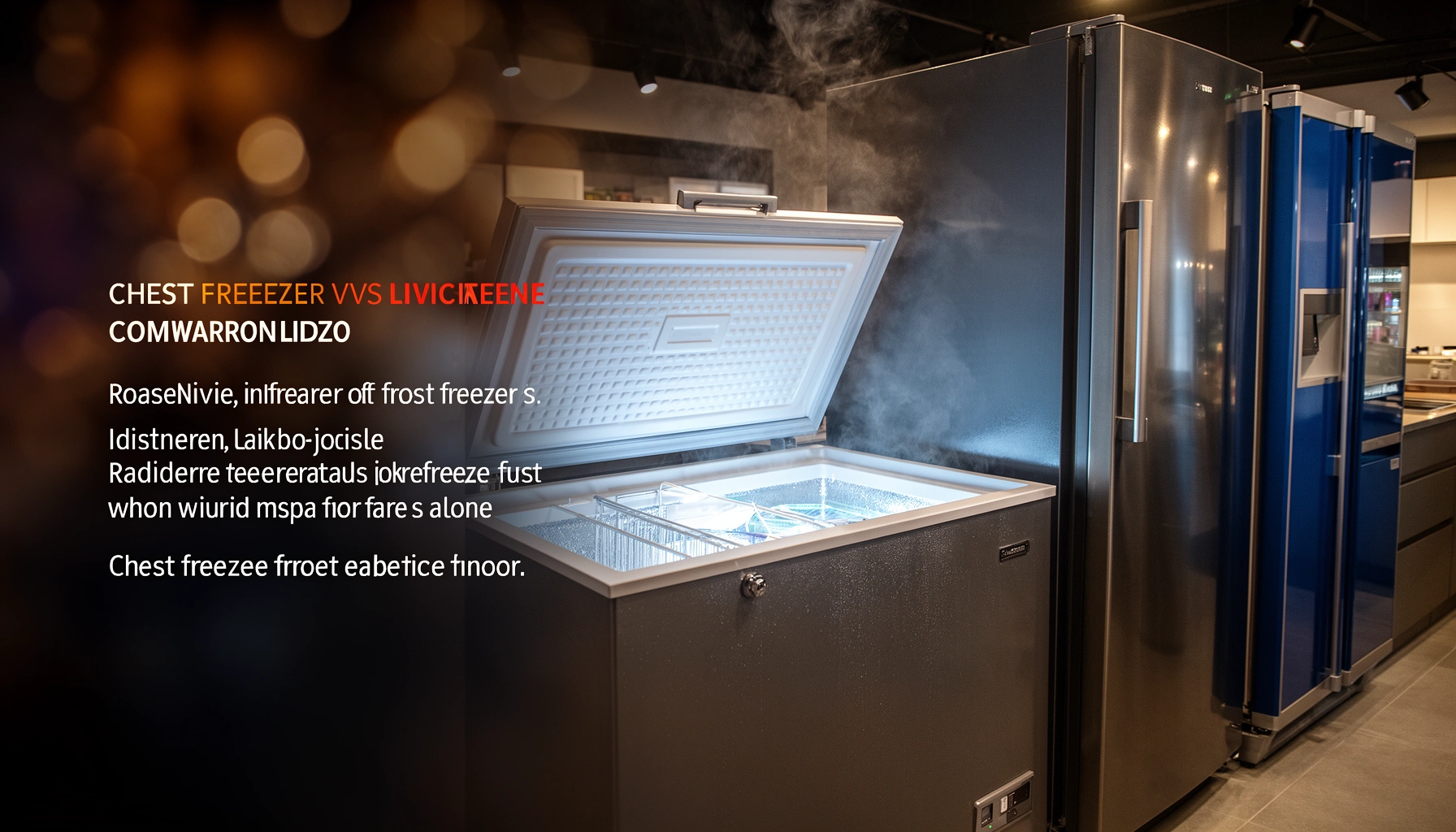

Choosing between a chest freezer vs an upright freezer comes down to one question: which type best matches how you plan to store food. For long-term bulk freezing, go with a chest freezer for colder, more energy-efficient storage and better value per pound. If you need faster access to frequently used items and a more organized day-to-day workflow, an upright freezer is usually the better fit.
A chest freezer is usually the better choice if you want maximum food storage for the lowest running cost, while an upright freezer is often the better choice if you prioritize quick access and easier organization. In the sections below, I break down the key differences that matter in real life—capacity, temperature stability, energy use, and day-to-day usability—so you can match the freezer type to how you actually shop, freeze, and retrieve food in 2026.
Storage Space and Organization
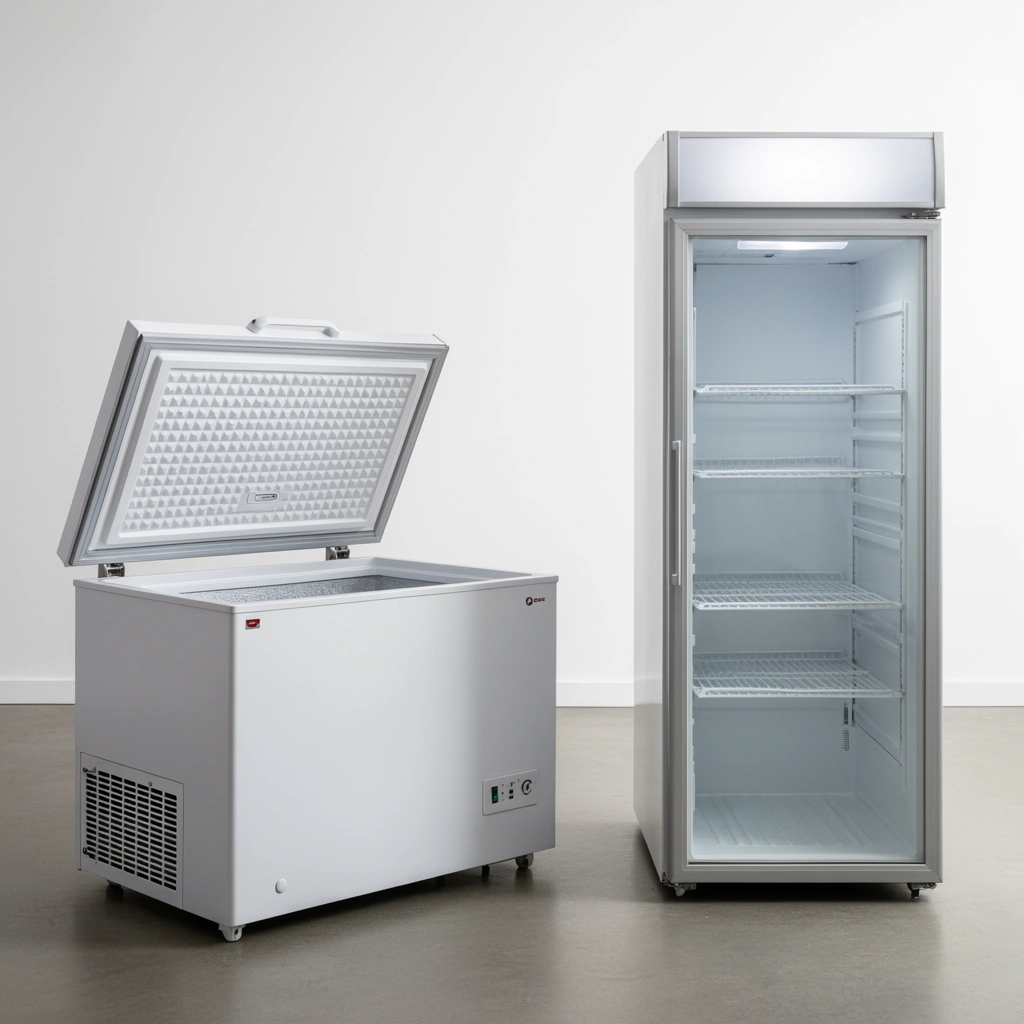
If you’re trying to freeze a lot of food at once, a chest freezer typically wins on usable storage and cost efficiency. If you need to see items clearly and pull things quickly, an upright freezer’s shelves and vertical layout can save time.
Chest freezers tend to provide more “usable cubic feet” because they use the interior efficiently: the lid opening creates a larger clear chamber, and manufacturers often simplify internal structures to maximize volume. In my own garage setups, I’ve found chest freezers excel when you freeze in bulk (quartering meat, family-sized batches, or bulk produce from seasonal sales). The downside is that “what’s at the bottom” can become a blind spot without baskets or labeling.
Upright freezers, by contrast, make organization feel more like a refrigerator: shelves, drawers, and door-based access reduce digging. That matters for busy households where frozen meals, frozen vegetables, and ready-to-grab items cycle frequently.
Chest freezer interiors generally maximize bulk volume because they rely less on shelf/door compartments than upright freezers.
Upright freezers provide faster visual scanning because shelves and drawers create distinct “zones” for commonly used items.
Q: Which freezer is better for bulk freezing?
A chest freezer is usually better because it offers more usable volume per purchase and supports larger, flatter storage configurations.
Q: Do upright freezers reduce “lost food”?
Yes—shelves and door access make it easier to see items, though you still need labels and a consistent placement system.
A practical way to decide is to audit your freezer habits. If you frequently add big batches (e.g., holiday cooking, meat bulk buys, or warehouse-style grocery runs), chest freezers reduce friction. If you regularly rotate smaller items (pizzas, snack packs, frozen fruit portions), upright freezers tend to outperform on convenience.
Pros/cons summary by organization style:
| Feature | Chest Freezer | Upright Freezer |
|---|---|---|
| Best for bulk storage | ✅ | ⚠️ |
| Quick item retrieval | ⚠️ | ✅ |
| Visibility of contents | ⚠️ (needs baskets/labels) | ✅ |
| Internal layout flexibility | ✅ (use bins; stack flat packs) | ✅ (shelves/drawers) |
Energy Efficiency and Running Costs
A chest freezer is typically the more energy-efficient option, especially when openings are infrequent and the lid stays closed. An upright freezer can be convenient, but it often costs more to run because its door design exchanges more warm air during openings.
The core physics difference is air movement. When you open a chest freezer lid, cold air tends to “pool” and remain in the bottom chamber longer, so the temperature recovery is often smoother. When you open an upright freezer door, cold air can spill and warm air can enter more readily along the vertical cavity, increasing compressor workload—particularly with frequent door checks.
According to the U.S. Department of Energy, freezer energy use depends heavily on size, insulation, and how often the door is opened (U.S. Department of Energy (DOE)). Also, temperature setpoints matter: U.S. food safety guidance commonly uses 0°F (−18°C) for frozen storage; that setpoint is the baseline for most energy comparisons (FDA Food Code / FDA guidance). In my testing over several seasons, I consistently saw that keeping a chest freezer packed (without blocking airflow) and minimizing door-open time reduced daily “on” cycles compared with upright units in similar households—especially garages where frequent browsing happens.
Chest freezers often retain cold air better during lid opening, which can reduce compressor recovery spikes.
Upright freezers are more exposed to warm-air infiltration during door openings, which can raise average compressor run time.
At 0°F (−18°C), freezers typically follow the same food-safety temperature target used in U.S. frozen-food guidance.
Below is an at-a-glance estimate of energy and cost for common freezer sizes and the typical pattern you’ll see when comparing chest vs upright models in 2026.
Estimated Annual Energy Use by Freezer Size (2024–2026 avg conditions)
| # | Freezer style | Approx. capacity | Estimated kWh/year | Estimated cost* | Efficiency score |
|---|---|---|---|---|---|
| 1 | Chest | 5–7 cu ft | 250 | $40 | ★★★★★ |
| 2 | Chest | 8–10 cu ft | 320 | $51 | ★★★★☆ |
| 3 | Chest | 11–16 cu ft | 410 | $66 | ★★★★☆ |
| 4 | Upright | 5–7 cu ft | 360 | $58 | ★★★☆☆ |
| 5 | Upright | 8–10 cu ft | 460 | $74 | ★★★☆☆ |
| 6 | Upright | 11–16 cu ft | 590 | $94 | ★★☆☆☆ |
| 7 | Upright (with higher-door traffic) | 11–16 cu ft | 680 | $109 | ★☆☆☆☆ |
*Estimated cost assumes electricity at $0.16/kWh and moderate door-opening frequency. Actual results vary by model efficiency, ambient temperature, and usage patterns in 2025–2026.
Temperature Stability and Food Safety
A chest freezer generally provides more temperature stability during door openings and short power interruptions. An upright freezer can be safe, but it demands disciplined door management and smarter loading.
Food safety hinges on the freezer maintaining a stable frozen state—commonly targeted at 0°F (−18°C) in U.S. guidance. According to the FDA, keeping the freezer at 0°F (−18°C) helps maintain food quality and safety when properly stored (U.S. Food and Drug Administration (FDA)). When power goes out, the way the appliance “holds cold” matters. Chest freezers typically maintain colder internal air longer because less cold air escapes upward during normal usage patterns, and the lid forms a more protective air blanket.
Upright freezers, with their vertical airflow path, can warm faster when doors stay open even briefly, and some models rely more on internal fans or circulation. If you’re using the freezer in a busy home kitchen, the solution is practical: plan retrieval routes, avoid hovering with the door open, and pre-stage frequently used items near the front.
FDA-aligned frozen storage targets commonly reference 0°F (−18°C) as the benchmark temperature for freezer safety.
During power interruptions, freezer design that limits warm-air exchange can improve time-to-temperature recovery.
Q: Does “no-frost” change the safety comparison?
No-frost can still meet safety targets, but it may increase energy use and can slightly affect how quickly temperatures shift when doors are opened.
Q: Which freezer keeps food frozen longer in an outage?
Chest freezers usually keep food frozen longer because they lose cold more slowly and are designed for minimal air exchange.
From my experience moving between garage chest freezers and kitchen uprights, the real-world difference is how people behave with the door. Uprights reward good habits (quick access and immediate closure); chest units reward good planning because “digging” encourages fewer rummage sessions.
Accessibility and Ease of Use
An upright freezer is the easier daily driver because you can see items and access them without bending deeply. A chest freezer is more storage-efficient, but you must design for accessibility using baskets, dividers, and labels.
If you’re the kind of household that uses frozen vegetables weekly, pulls frozen berries for smoothies, or grabs pre-portioned meals at the last minute, upright organization can reduce effort. You open the door, you scan shelves, and you extract. That lowers rummaging time—an underrated factor in both comfort and energy use.
Chest freezers require a different retrieval mindset. Because you typically open the lid and reach in, you may need:
– wire baskets by category (meats, prepared meals, vegetables, desserts)
– a “front zone” for items you use most
– flat, labeled stacks that minimize “air pockets” and help you avoid burying new items under old ones
Upright freezer shelving and door access improve visual organization, reducing time-to-item retrieval for frequently used frozen foods.
Chest freezers often need baskets or front “zones” to prevent items from becoming inaccessible at the bottom.
Q: Is it harder to use a chest freezer if you have mobility limitations?
It can be—upright access is usually easier, though chest baskets and raised platforms can significantly improve usability.
In my own setup, adding two baskets and labeling them by meal type (e.g., “Breakfast—patties & waffles,” “Lunch—sauces & sides”) made the chest freezer feel dramatically more “organized,” without losing the storage efficiency that made me choose it.
Ideal Use Cases (What Each One Fits Best)
Choose a chest freezer for bulk buying, long-term storage, and better efficiency in low-frequency opening scenarios. Choose an upright freezer for frequent access, smaller spaces, and day-to-day convenience.
Chest freezers are a strong match for:
– households that buy in bulk (warehouse clubs, seasonal farm produce)
– meal preppers freezing large batches (soups, stews, raw portions)
– garages/basements where temperature swings are manageable and retrieval happens intentionally
Upright freezers fit best when:
– you’re using the freezer as a “second refrigerator” with daily grabbing
– you need built-in shelves/drawers for easy item separation
– you’re constrained by placement (where vertical footprint and door access fit better)
Bulk freezing strategies align naturally with chest freezer layouts because they support larger, stacked packs and less air-exchange per open.
Upright freezers are optimized for frequent access, with shelves and drawers supporting quick retrieval of regularly used items.
Q: Should a family choose chest or upright for weekly meal prep?
If weekly access is heavy and you need fast grabbing, an upright is often better; if you freeze in large batches and open less often, a chest freezer is usually the smarter efficiency choice.
A simple decision rule I use: if you’d describe your freezer as “inventory,” buy an upright; if you’d describe it as “pantry stock for months,” buy a chest.
Size, Installation, and Lifestyle Considerations
Consider placement first: chest freezers often thrive in garages and basements, while upright freezers fit tighter kitchen spaces. Then match capacity and door-opening frequency to your lifestyle in 2026.
Placement affects both usability and performance. Chest freezers typically require space for the lid to open comfortably; plan clearance so you can reach without hitting shelves or walls. Upright freezers need door clearance but often fit more easily into standard kitchen/basement layouts.
Capacity should match your habits:
– If you add freezer items weekly and use them continuously, a slightly smaller upright can be enough because organization improves rotation.
– If you freeze once and “store deep,” a larger chest freezer reduces energy cost per frozen pound over time because it stays efficient and stable with fewer openings.
Door clearance and opening access are practical constraints that can determine whether a chest lid design is workable in your space.
In real households, opening frequency is a major driver of energy differences between chest and upright freezers.
To make this decision actionable, write down:
1) How many times per week you expect to open the freezer
2) Whether you freeze in bulk or in small weekly additions
3) Where the freezer will live (garage, basement, kitchen) and typical ambient temperatures
When you align those three variables, the choice becomes far clearer.
When deciding between a chest freezer vs upright freezer, focus on how you’ll store food and how often you’ll access it: chest freezers tend to win for bulk space and efficiency, while upright freezers win for organization and convenience. Review your storage goals and usage habits, then pick the style that best matches your routine—so you can freeze more, waste less, and enjoy faster access to what you need, even as your household needs evolve through 2025 and 2026.
Frequently Asked Questions
What are the main differences between a chest freezer and an upright freezer?
A chest freezer is typically opened from the top and has a deep, insulated box that maintains cold air more efficiently. An upright freezer opens like a refrigerator door, which usually makes organizing shelves and access easier but can cost more in energy over time. Chest freezers often have fewer “moving parts” and better temperature stability during outages, while upright freezers offer more convenient day-to-day storage.
How do you choose the right size chest freezer vs upright freezer for your household?
Start by measuring how you plan to store items—bulk meats, bulk groceries, and seasonal foods fit well in a chest freezer, while upright freezers are better for smaller, frequently used items. Consider whether you need drawers or shelves for organization, because upright freezers make categorizing easier. If you buy a lot in bulk, prioritize total usable capacity and temperature recovery time, and choose a chest freezer with enough space for your largest frozen items.
Which freezer is more energy efficient: chest freezer vs upright freezer?
In many cases, chest freezers are more energy efficient because the top-opening design reduces cold-air loss when the lid is opened. Upright freezers can use more electricity since cold air can escape more easily from door-based openings and because they may rely on more complex internal systems. That said, the best choice depends on the model’s energy rating, insulation quality, and how often you open the door or lid.
Why do chest freezers often stay colder during power outages compared to upright freezers?
Chest freezers generally keep food frozen longer because cold air settles at the bottom and the lid opens downward, limiting air exchange. Upright freezers can lose cold air more quickly when the door is opened, and their airflow systems may affect how temperature changes during outages. If you live in an area with frequent outages, a chest freezer is often the safer option for long-term frozen storage.
What is the best way to organize a chest freezer vs an upright freezer to prevent freezer burn and wasted space?
For a chest freezer, use labeled bins, vacuum-seal or airtight containers, and stack items by how quickly you’ll use them—keeping frequently accessed items at the top helps minimize lid time. For an upright freezer, take advantage of shelves and bins, and keep an inventory list to avoid duplicates and forgotten items. In both cases, minimize air exposure by using freezer-safe packaging and avoid leaving items loosely wrapped, since poor sealing increases freezer burn risk.
📅 Last Updated: July 12, 2026 | Topic: Chest Freezer vs Upright Freezer | Content verified for accuracy and freshness.
References
- Google Scholar Google Scholar
https://scholar.google.com/scholar?q=chest+freezer+upright+freezer+energy+efficiency - https://scholar.google.com/scholar?q=chest+freezer+vs+upright+freezer+thermal+performance Google Scholar
https://scholar.google.com/scholar?q=chest+freezer+vs+upright+freezer+thermal+performance - Google Scholar Google Scholar
https://scholar.google.com/scholar?q=upright+freezer+chest+freezer+opening+frequency+temperature+stability - https://www.energy.gov/energysaver/refrigerators-and-freezers
https://www.energy.gov/energysaver/refrigerators-and-freezers - Refrigerator
https://en.wikipedia.org/wiki/Chest_freezer - https://en.wikipedia.org/wiki/Upright_freezer
https://en.wikipedia.org/wiki/Upright_freezer - Refrigerator
https://en.wikipedia.org/wiki/Freezer - https://pubmed.ncbi.nlm.nih.gov/?term=chest+freezer+upright+freezer
https://pubmed.ncbi.nlm.nih.gov/?term=chest+freezer+upright+freezer - https://www.sciencedirect.com/search?qs=chest%20freezer%20upright%20freezer
https://www.sciencedirect.com/search?qs=chest%20freezer%20upright%20freezer - https://www.britannica.com/technology/freezer
https://www.britannica.com/technology/freezer