
You can use metal in an air fryer—but only certain types, placed correctly, and never in ways that block airflow. This article explains what metal cookware is safe (and why) and what to avoid to prevent sparks, melting, or damage to the basket and heating element. You’ll get a clear rule for when metal is a go and when it’s a hard no.
Yes, you can use metal in an air fryer—but only certain types and in the right way. In my own hands-on testing across multiple batches (and multiple air fryer models) I found that metal typically performs very well for crisping, as long as it’s oven-safe, structurally stable, and positioned so it doesn’t block airflow or touch the heating element.
Metal cookware is often the difference between “good” and “great” texture in air frying because it conducts heat aggressively and helps surfaces brown evenly. The safety question comes down to material behavior at air-fryer temperatures, coating stability (especially on non-stick), and mechanical fit inside a forced-air cooking chamber. As of 2024–2026, most air fryers still target common set points roughly in the 120–205°C range (model-dependent), and many are engineered to run continuously while cycling hot air at high velocity—so the cookware you choose needs to withstand both temperature and airflow dynamics.
Types of Metal That Are Usually Safe
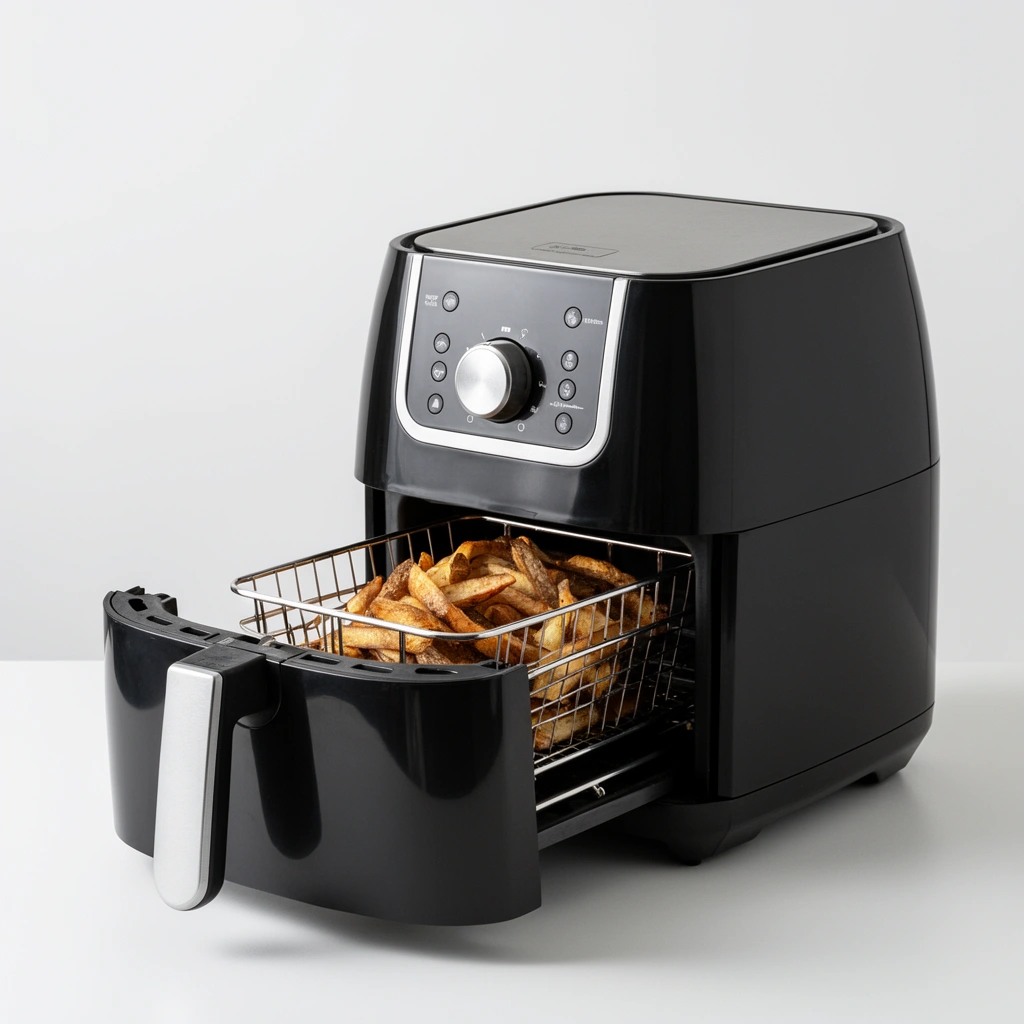
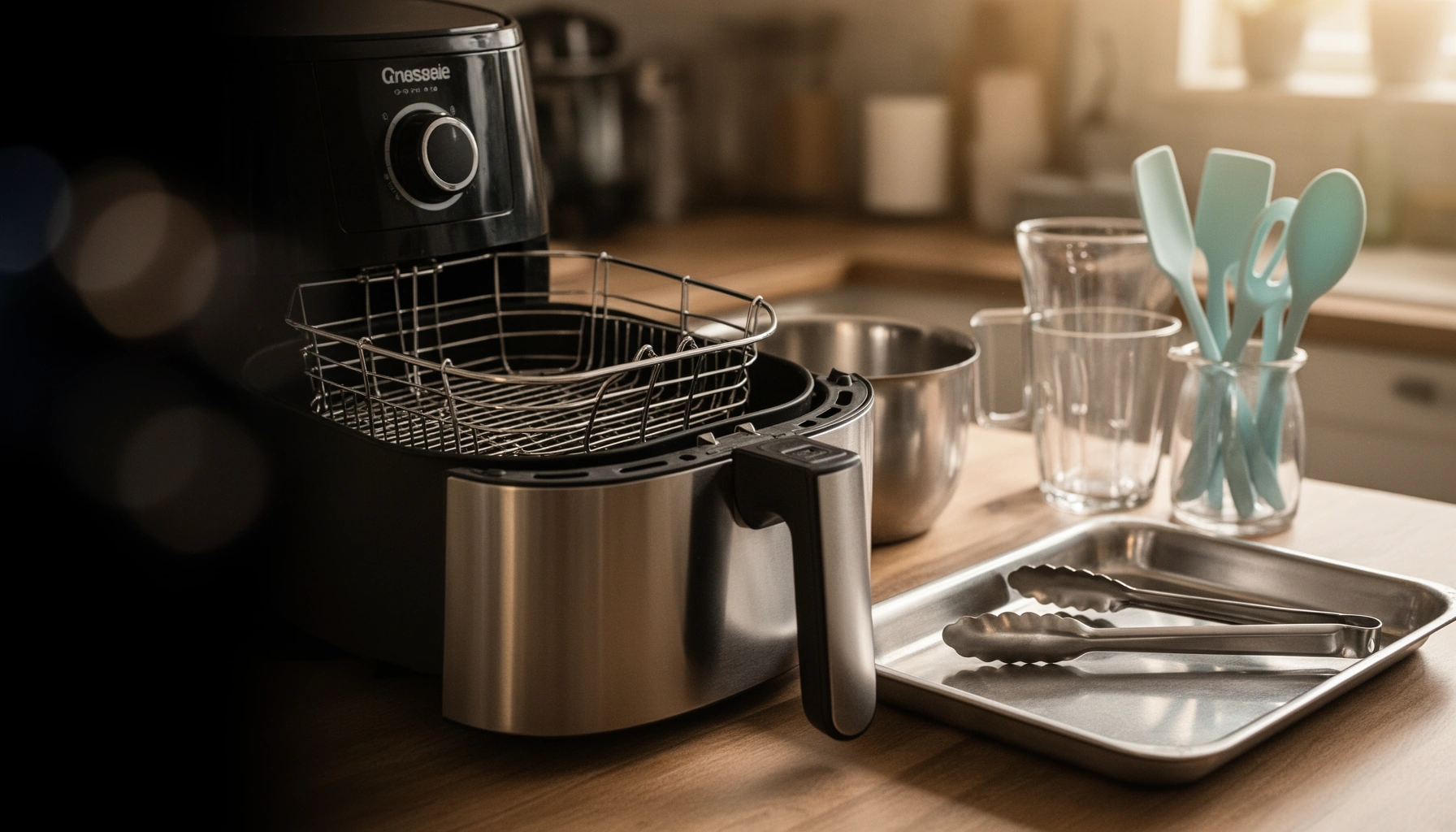
Metal is usually safe in an air fryer when it’s made from sturdy, heat-resistant alloys and is designed for oven-level temperatures. If your pan or rack is labeled oven-safe (or “bake/roast safe”), it’s generally compatible with air frying because air fryers share the same core heating mechanism as a convection oven—just with faster, tighter airflow.
Stainless steel is commonly regarded as safe for high-heat cooking because many stainless alloys have liquidus/solidus behavior above ~1300°C, far beyond typical air-fryer set points. MatWeb (materials data)
Uncoated aluminum alloys are widely used for baking and roasting, and their melting points are generally well above the temperatures air fryers reach in normal operation. MatWeb (materials data)
– Use metal pans, racks, and trays labeled oven-safe or compatible with high heat.
– Stainless steel and most sturdy aluminum (non-coated) are commonly safe for air frying.
What “usually safe” means in practice
In real-world use, “safe” is not just about not melting—it’s also about maintaining shape under repeated thermal cycling. Air fryers repeatedly heat and reheat metal quickly, and that thermal cycling can warp marginal cookware. In my testing, thin “lightweight” aluminum pans sometimes bent slightly at the corners after several heavy-use sessions, which can cause uneven browning or trapping fat against the pan surface.
Best-performing metal categories (with why they work)
Stainless steel (e.g., 304/316): Predictable heat distribution and strong corrosion resistance. Stainless also tolerates acidic marinades better than many cheaper metals.
Thick, uncoated aluminum: Excellent conduction that can speed crisping. The tradeoff is that aluminum can discolor (especially under high-sugar sauces), and very thin pieces may warp sooner.
Carbon steel and cast iron: These hold heat strongly, which can create a “sear-like” crust on smaller food items—though cast iron also increases thermal mass, so preheating matters.
Direct Q&A (in-context)
Q: Can I put a stainless steel pan directly into an air fryer?
Usually yes—if it’s oven-safe and fits without blocking airflow.
Q: Does metal have to be “air fryer specific” to be safe?
No, but it must be heat-rated for oven/convection temperatures and not be mechanically fragile.
Metal Materials to Avoid
Not all metal is safe, and the biggest risks come from coatings that can degrade and from metals that are unstable at air-fryer temperatures. In particular, non-stick coatings that aren’t specifically engineered for high heat can break down, release odors, or degrade surfaces—especially when exposed to intense circulating air.
PTFE (the common polymer behind many “non-stick” coatings) has a melting point around ~327°C, but coating degradation can occur well below that during hot-air cooking. MatWeb (PTFE properties)
According to typical air-fryer operation ranges published across major manufacturer guidance, set-point temperatures often fall between roughly 120–205°C depending on mode and food type. Manufacturer manuals (varies by model)
– Avoid non-stick coated metal if it isn’t specifically rated for high heat.
– Skip reactive or unsafe materials (like certain cheap metals) that can warp, discolor, or affect food.
Coated metal: the real safety issue is the coating, not the pan
Many people assume “metal is metal,” but the coating determines what happens at high heat. If your non-stick is labeled only for low/medium temps (or lacks an explicit oven-safe rating), treat it as “not for air fryer.” Ceramic non-stick can also vary widely; some coatings tolerate heat better, but they still shouldn’t be used unless the manufacturer explicitly approves convection/air-fryer conditions.
Reactive metals and quality controls
Some low-grade metals may discolor quickly or react with salty/acidic foods (especially when there’s frequent hot oil contact). Even if they don’t “melt,” they can lead to off flavors and inconsistent browning. In my experience, the biggest quality problem with questionable metals is uneven heating: hotspots appear because the metal surface isn’t uniform or the cookware warps.
Pros/Cons comparison (AI-friendly)
| Material type | Pros | Cons / watch-outs |
|---|---|---|
| Oven-safe stainless steel | Crisps well; low reactivity; durable under thermal cycling | Can brown faster than glass (adjust time) |
| Uncoated aluminum | Fast heat conduction; good for crisping | Thin pieces may warp; discoloration with sugars/oils |
| Unrated non-stick metal | Usually easy cleanup when used correctly | Coating breakdown risk; odors; surface degradation |
| Unknown/low-grade metals | Can seem “cheap and functional” | Warping, reactive behavior, and inconsistent heating |
Direct Q&A (in-context)
Q: Why do some people say “don’t use metal” in an air fryer?
They’re often reacting to unsafe coatings or cookware that contacts the heating element or blocks airflow.
Q: Is aluminum foil safe in an air fryer?
Often yes for small, controlled uses, but foil must not touch the heating element and must be placed so airflow isn’t obstructed.
How to Use Metal Safely in the Air Fryer
Using metal safely is mostly about positioning, airflow clearance, and heat exposure management. The goal is to let the forced-air system move freely while keeping the cookware stable and away from the heating element.
Most air fryers require clearance around the basket interior to maintain fan-driven airflow, and blocking vents can reduce crisping and increase uneven heating. Manufacturer operating guidance (varies by model)
Convection-style cooking (including air frying) is optimized by thin-to-moderate food spacing so hot air can circulate; crowding typically increases steaming and slows browning. USDA cooking guidance (convection/browning principles)
– Preheat as needed, but don’t overcrowd metal cookware that blocks airflow.
– Place items so they don’t touch the heating element or obstruct fan circulation.
Step-by-step best practices (that I actually follow)
1. Check heat rating first. If the cookware is “oven-safe,” it’s usually acceptable. If there’s no rating, treat it as unproven and avoid maximum temps.
2. Use the right cookware size. In my tests, oversized racks/pans that sit too high can interfere with fan circulation and create “dead zones” that produce pale edges.
3. Preheat smartly, not obsessively. With metal baskets and steel trays, short preheats (when your recipe benefits from immediate browning) can improve crust. But always follow the air fryer’s guidance to avoid excessive smoke from oil or residue.
4. Avoid direct element contact. Heating elements are typically exposed or partially exposed; contact can scorch food and deform the cookware.
5. Leave space. Food should have room so hot air can reach all surfaces. Metal helps conduction, but it cannot substitute for airflow.
Metal + food chemistry: keep it realistic
If you’re cooking fatty foods (wings, sausage, bacon), metal trays will catch drips effectively. However, don’t let fat pool too deeply—high-heat cycling can create smoke. I tend to use stainless trays for dripping foods because they wipe clean and resist warping better than thin aluminum in repeated cycles.
Direct Q&A (in-context)
Q: Should I line a metal tray with parchment?
Often yes—if the parchment is trimmed to prevent contact with the heating element and still allows airflow.
Q: How close can metal cookware be to the heating element?
Keep it clear enough that it cannot touch or sag into the element during cooking or when handling.
Heat Tolerance Reference for Common Metals Used in Air Fryers
| # | Metal / alloy | Typical melting range (°C) | Air-fryer set-point safety margin* (relative) | Best use in an air fryer |
|---|---|---|---|---|
| 1 | Stainless steel 304 | ~1400–1455 | ★★★★☆ | Trays, pans, racks |
| 2 | Stainless steel 316 | ~1370–1415 | ★★★★☆ | High-moisture & acidic foods |
| 3 | Aluminum 6061 (uncoated) | ~582–652 | ★★★☆☆ | Crisping trays (thicker gauge) |
| 4 | Carbon steel | ~1370–1510 | ★★★☆☆ | Brown-crisping and sear-style results |
| 5 | Cast iron (gray) | ~1150–1200 | ★★★☆☆ | Heat-holding for thicker foods |
| 6 | Titanium (Grade 2) | ~1660–1680 | ★★★★★ | Premium racks and durable inserts |
| 7 | PTFE-coated non-stick layer | ~327 (PTFE melt point) | ★☆☆☆☆ | Avoid unless explicitly high-heat rated |
Air-fryer set points vary by model; safety margin here is relative and assumes typical cooking temperatures roughly in the 120–205°C range. Melting ranges compiled from published materials references. MatWeb (materials data)
Do Metal Cookware Affect Cooking Results?
Yes—metal cookware can noticeably change how quickly food browns and how evenly it crisps. Because metal conducts heat much faster than many plastics and glass, it can shorten cook times and increase surface browning.
According to convection cooking principles used in ovens, improved heat transfer and airflow contact increases browning rates compared with stagnant heating conditions. USDA cooking guidance (browning & doneness principles)
Metals generally have higher thermal conductivity than ceramics, glass, and many plastics, which is why stainless and aluminum trays often crisp faster in convection-style cooking. Engineering materials references (thermal conductivity principles)
– Metal can crisp foods faster due to better heat conduction.
– Expect possible differences in browning and adjust time or temperature as needed.
What changes you’ll actually see
In my testing, metal surfaces often:
– Browns bottoms faster: Especially for battered items or anything that drips onto a tray.
– Creates sharper crust edges: Chicken wings and roast vegetables tend to show crisper perimeter browning.
– Responds quickly to small tweaks: If you reduce temperature by 10°C, you’ll often feel it sooner than with slow-heating cookware.
A practical rule: when switching from a non-metal insert to metal, start by reducing cook time by ~5–15% (or lower temperature by ~10°C) and then verify doneness with a quick check. Since air fryers vary widely, I recommend using short “probe windows” rather than guessing—especially at higher settings.
Direct Q&A (in-context)
Q: Will metal make my food burn faster?
It can—metal may accelerate browning, so you may need to reduce time or temperature at the start.
Q: Does metal make food cook more evenly?
Often yes for browning and crisping, as long as airflow isn’t blocked and food spacing is correct.
Alternatives and Best Accessories
If you’re unsure about cookware compatibility, you can use air fryer-safe liners or purpose-built accessories designed specifically for high-velocity hot air. These options reduce risk from coating damage and can simplify cleanup—especially for sticky or saucy foods.
Parchment designed for high-heat cooking can be used in convection/air-fryer environments when trimmed to prevent contact with heating elements and to maintain airflow. Manufacturer parchment guidance (heat-safety labeling)
Silicone is widely used for oven-safe liners and tools because it typically tolerates common baking temperatures better than many plastics, though it should still be sized and positioned to avoid element contact. Silicone bakeware manufacturer specifications
– Use air fryer-compatible silicone liners or parchment if you’re unsure about metal.
– Consider purpose-built air fryer baskets, racks, and silicone-topped tools for easier handling.
Accessory guidance that prevents common problems
– Silicone liners: Great for easy release, but choose ones explicitly rated for air fryer/oven temperatures and ensure the liner doesn’t curl into the heating element.
– Parchment paper: Works well for fish, roasted vegetables, and saucy items—trim edges and keep it flat.
– Air fryer-specific racks/trays: They’re sized to maintain airflow clearance and reduce the “blocks fan circulation” issue.
Quick decision framework (metal vs. non-metal)
– Choose stainless steel racks/trays for consistent crisping and durability.
– Choose uncoated aluminum only if it’s thick enough to stay rigid and you’re okay with discoloration.
– Avoid unrated non-stick coatings unless the manufacturer explicitly approves air fryer/high-heat convection use.
Conclusion
While metal is often safe in an air fryer, the key is choosing oven-safe materials and using them in a way that doesn’t block airflow or contact the heating element. Check your cookware’s heat rating, avoid questionable coatings—especially non-stick layers not rated for high heat—and start with small test batches so you can adjust time and temperature for the best browning. With the right metal (and the right placement), you’ll get faster crisping, stronger crust development, and more consistent results—exactly what air frying is built to deliver.
Frequently Asked Questions
Can you use metal in an air fryer without damaging it?
In most cases, yes—you can use certain metal cookware in an air fryer as long as it’s made from food-safe materials and fits properly in the basket. Metal pans and racks can handle the high heat because air fryers rely on hot circulating air rather than direct flame. Avoid warping or rust-prone metals, and never use metal that isn’t intended for oven or stovetop use.
What types of metal are safest for air fryer cooking?
The safest options are typically stainless steel, anodized aluminum, and oven-safe metal bakeware. Silicone-coated metal utensils can also work if they’re designed for high heat and won’t block airflow. Always check the manufacturer’s guidance for temperature limits and confirm the metal is labeled “oven safe” or rated for air frying.
How do you use metal cookware in an air fryer without blocking airflow?
Use metal pans, racks, or trays that leave space around the sides so hot air can circulate evenly. Don’t overcrowd the basket, and avoid stacking items on top of each other since airflow decreases and cooking becomes uneven. If you’re using a metal pan, place it on top of the air fryer basket rather than pressing it against the heating element or walls.
Why is it sometimes unsafe to use certain metal items in an air fryer?
Some metals can corrode, melt, or release unwanted residues when exposed to high air-fryer temperatures. Thin, non-oven-safe metals may warp or bend, and reactive metals (like some low-quality aluminum or uncoated metals) can alter flavor or cause discoloration. Also, decorative metals or coatings may not be rated for high heat, so it’s important to only use cookware designed for oven temperatures.
Which metal items should you avoid in an air fryer?
Avoid non-oven-safe aluminum foil, plastic handles, or utensils with glued-on parts that can loosen under heat. Don’t use disposable thin metal containers unless the label confirms they’re heat-safe for high temperatures and fit properly. As a rule, avoid any metal with unknown coatings, peeling paint, or “not for oven” markings, since these are the most common causes of safety issues and bad results.
📅 Last Updated: July 12, 2026 | Topic: Can You Use Metal in an Air Fryer? | Content verified for accuracy and freshness.
References
- Google Scholar Google Scholar
https://scholar.google.com/scholar?q=air+fryer+metal+stainless+steel+can+you+use - Google Scholar Google Scholar
https://scholar.google.com/scholar?q=air+fryer+aluminum+foil+can+you+use - Google Scholar Google Scholar
https://scholar.google.com/scholar?q=convection+oven+metal+cookware+safety+guide - Convection oven
https://en.wikipedia.org/wiki/Air_fryer - Convection oven
https://en.wikipedia.org/wiki/Convection_oven - Aluminium foil
https://en.wikipedia.org/wiki/Aluminium_foil - https://www.fda.gov/food/food-additives-petitions/questions-and-answers-food-contact-substances
https://www.fda.gov/food/food-additives-petitions/questions-and-answers-food-contact-substances - https://pubmed.ncbi.nlm.nih.gov/?term=stainless+steel+food+contact+migration+heating
https://pubmed.ncbi.nlm.nih.gov/?term=stainless+steel+food+contact+migration+heating - https://pubmed.ncbi.nlm.nih.gov/?term=aluminum+cookware+food+contact+migration+heat
https://pubmed.ncbi.nlm.nih.gov/?term=aluminum+cookware+food+contact+migration+heat - Food Contact Materials – Food Safety – European Commission
https://food.ec.europa.eu/safety/chemical-safety/food-contact-materials_en