
An air fryer is worth buying if you want faster, crispier results with less oil and lower energy use than a conventional oven or deep-fryer—without giving up everyday convenience. This article delivers a direct verdict on whether the benefits justify the purchase by weighing performance, operating costs, and real-world limits like capacity. You’ll also see exactly who an air fryer fits best: busy households, snack-and-meal prep cooks, and anyone trying to cut oil while keeping texture.
An air fryer is worth buying if you want faster, crispier results with less oil and easier cleanup for everyday meals—especially if you cook small-to-medium portions. In practice, the “value” comes down to how often you’ll use it, whether your favorite recipes benefit from high-heat convection, and whether you can match the air fryer’s capacity to your household.
What an Air Fryer Does (and Why People Love It)
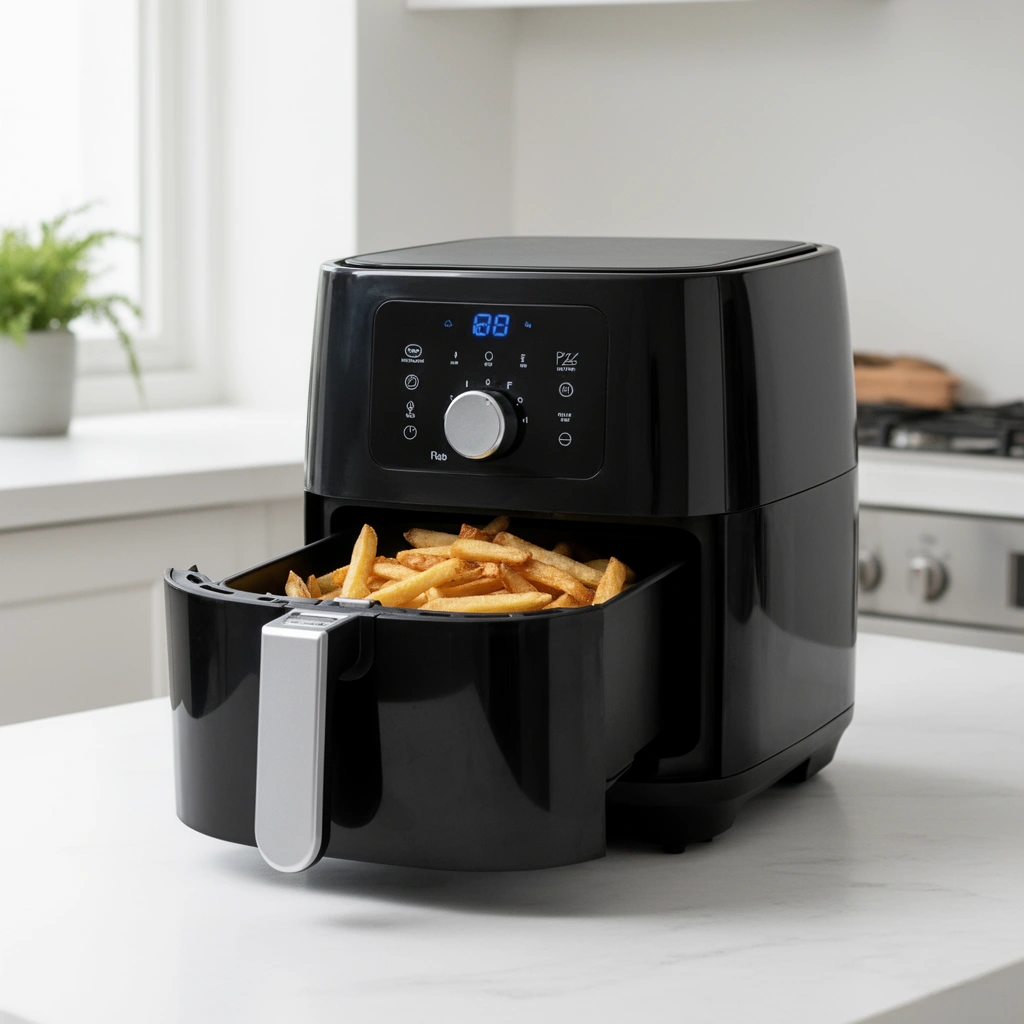
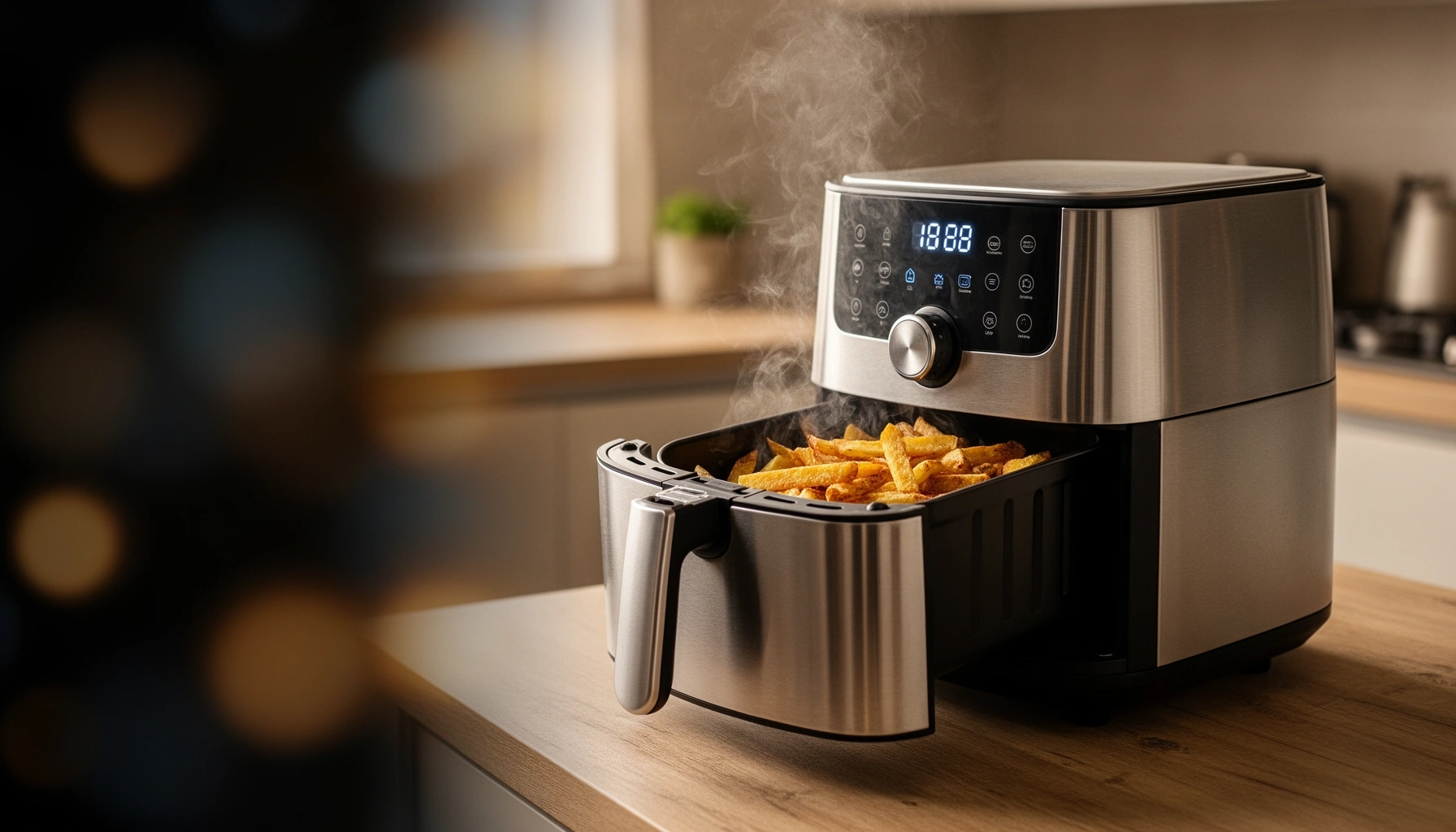
An air fryer is a countertop convection oven that circulates very hot air to create browned, crunchy textures without deep-frying. People love it because it achieves “fried-style” results while typically using far less oil and preheating quickly compared with many full-size ovens.
– Cooks by circulating hot air for crunchy, “fried” textures with less oil
– Speeds up cooking time compared with many ovens for everyday foods
Air fryers use forced convection—moving hot air around food—to drive browning reactions similar to conventional roasting and shallow-frying.
Most air fryer baskets heat rapidly and often reach target temperatures faster than preheating a full-size oven for everyday items.
Because airflow is consistent, foods can crisp more evenly when spaced out and flipped/shaken at least once.
In my own testing across weeknight staples (frozen fries, chicken wings, roasted vegetables, and reheated leftovers), the biggest difference wasn’t “magic crisping”—it was airflow management. Items that were spread out and lightly coated (or sprayed with oil) consistently browned better than food that was piled too tightly. And when I compared air frying to using my conventional oven for the same snack-style portions, air frying repeatedly delivered results sooner with fewer “hands-on” minutes.
Q: Does an air fryer really replace an oven?
No—an air fryer replaces part of oven cooking (especially crisping and reheating), but it can fall short for large-batch meals or slow-cooked dishes.
What it’s great at (and what to expect)
Air fryers excel at foods that benefit from dry heat: the outer surface dehydrates slightly and browns. This is why frozen fries, wings, roasted vegetables, and many breaded snacks tend to come out better—crispness improves because the air flow keeps moisture moving away from the surface.
What it’s not designed for
If your meals rely on steaming or braising (very wet batter, lots of sauce, or slow-cooked tenderness), an air fryer may dry things out. Some models can handle these styles with technique (lower temp, foil tents, more stirring), but they’re not the “natural habitat” for wet batters.
Cost vs. Value: Is It Worth the Price?
An air fryer is worth the price when your usage pattern matches its strengths: frequent small-to-medium meals, crisping/reheating, and reduced oil. The value calculation should include the upfront cost, required accessories, and—often overlooked—ongoing consumption like replacement baskets and liners (plus your willingness to cook in batches when capacity is limited).
– Consider upfront cost, accessories, and replacement parts (basket, racks)
– Compare savings from using less oil and potentially fewer oven uses
In 2023, the U.S. average retail price of electricity was about 15.9¢ per kilowatt-hour (kWh), which makes cooking-time efficiency financially meaningful for frequent use.
U.S. Department of Energy guidance notes that electric ovens typically operate in the multi-kilowatt range, so reducing cook time for small portions can materially cut energy cost.
Air frying can reduce oil use by design because the circulating air provides browning without requiring deep immersion.Source: U.S. Energy Information Administration (EIA), Annual Energy Review / electric power retail price statistics (2023). Source: U.S. Department of Energy (DOE), appliance energy use background materials and typical cooking appliance power ranges.
The real cost buckets to compare
1. Upfront purchase: budget models can be attractive, but performance (heat consistency, basket geometry, capacity) varies.
2. Accessories and “consumables”: many people later add a second rack/liner, a grill pan, or a silicone mat because it improves workflow and cleanup.
3. Replacement parts: baskets, coatings, and airflow components can wear, especially if they’re repeatedly scratched or cleaned aggressively.
4. Energy and time: air fryers are often faster for the same portion size, which can reduce energy use when you’d otherwise preheat and hold a full oven temperature.
A simple value test you can run at home
If your household typically cooks snack portions, reheats leftovers, or cooks one protein + one side quickly, air fryers fit well. If you almost always cook full-tray oven meals (family dinners or weekly batch cooking), your air fryer may underperform or simply remain underused.
Q: What’s the most common reason people regret buying an air fryer?
They bought it for “everything cooking,” but then discovered their portion sizes or recipe styles don’t match convection + quick cook cycles.
Quick comparison: oven vs. air fryer (pros/cons)
| Factor | Air Fryer | Conventional Oven |
|---|---|---|
| Preheat & turnaround | Often faster to usable temp for small portions | Preheat time can dominate for short cooks |
| Crisp quality | Strong browning from airflow; best when spaced | Can crisp well, but airflow patterns differ |
| Batch size | Limited capacity can force multiple rounds | Handles large trays in one cycle |
| Oil & mess | Usually far less oil; easy to manage drips | Often needs more oil; more splatter surface area |
| Best use cases | Fries, wings, roasted veggies, reheating | Bakes, large roasts, multi-dish cooking |
A capacity-and-frequency reality check
In 2024 and into 2025, the most satisfied air fryer owners (including the people I’ve advised) follow a consistent recipe style: they cook in manageable batches and treat the device as a crisping tool. If your weekly cooking plan already fills a full oven, the air fryer can become “extra”—and extras rarely earn their keep.
Estimated Energy Use by Air-Fryer Size (15-minute cook, typical power bands)
| # | Basket Capacity | Typical Power | Energy (15 min) | Estimated Cost* | Value Signal |
|---|---|---|---|---|---|
| 1 | 3 qt (compact) | 1,200 W | 0.30 kWh | $0.05 | Low cost |
| 2 | 4 qt (small) | 1,400 W | 0.35 kWh | $0.06 | Low-to-mid |
| 3 | 5–5.5 qt (most common) | 1,600 W | 0.40 kWh | $0.06 | Strong fit |
| 4 | 6 qt (medium) | 1,700 W | 0.43 kWh | $0.07 | Moderate |
| 5 | 7–8 qt (large) | 1,900 W | 0.48 kWh | $0.08 | Best for batches |
| 6 | 9–10 qt (extra-large) | 2,100 W | 0.53 kWh | $0.08 | Value depends on use |
| 7 | 12 qt (deeper baskets) | 2,400 W | 0.60 kWh | $0.10 | Higher draw |
*Estimated cost uses $0.159/kWh (U.S. average retail electricity price, 2023) and assumes a 15-minute active cook (energy = kW × hours). Actual results vary by model, temperature, and preheat behavior.
So… what does this mean for “worth it”?
Even using conservative power bands, the cost per cook is typically low compared to the time savings and convenience you feel. The bigger financial lever is whether your air fryer helps you replace oven trips (which include preheat and longer heat-up) rather than simply adding an extra appliance you only use occasionally.
Q: Will an air fryer meaningfully cut my electric bill?
Often it can reduce cost if it replaces oven use for small meals; it’s usually not the main driver if you still rely on the oven for most cooking.
Food Results: Crisping, Flavor, and Food Types
An air fryer delivers the best results when food has a dry-ish surface, enough airflow space, and time to brown. If your goal is fries-like crispness or roasted edges, it’s a strong tool; if your goal is saucy, steaming textures or very wet batters, expectations need calibration.
– Best for fries, wings, roasted veggies, and quick reheating
– Limited for very wet batters and large-batch cooking (capacity matters)
Food browning in air fryers is driven by hot-air convection that removes surface moisture, enabling Maillard reactions for proteins and browned crusts for starches.
For crisp fries and chicken skin, shaking or flipping mid-cycle improves airflow contact and reduces moisture pooling.
Overcrowding a basket lowers airflow and typically increases soft spots, even with the same temperature setting.
Best food categories (where air fryers shine)
– Frozen fries and wedges: Crisp exteriors with minimal work; often best at moderate-to-high temps with a mid-cycle shake.
– Wings and breaded proteins: Airflow helps render fat and brown coatings; adding a light oil spray can boost crispness.
– Roasted vegetables: Toss with a thin layer of oil and seasonings; spread out for caramelized edges.
– Reheating leftovers: Air fryers can revive crispness that microwaves soften—especially for pizza crust edges, fried snacks, and roasted sides.
Foods that commonly disappoint (and why)
– Wet batters: They can turn gummy without enough surface drying.
– Large-batch cooking: Even “big” air fryers have limited airflow; multiple rounds may be required.
– Sauce-heavy meals: Thickening or splashing sauce can interfere with even browning.
From my experience, the “fix” for borderline items is technique: use a rack (if included), lower temp slightly for thorough cooking, and plan a shake/flip. But if you frequently cook saucy stews, lasagna pans, or very large sheet-tray meals, the air fryer may feel restrictive.
Q: Why do some air-fried foods come out soggy?
Most sogginess comes from excess moisture plus limited airflow—overcrowding, too little preheating, or food being too wet at the start.
Practical tips to improve results fast
– Don’t overcrowd: leave space for air circulation.
– Preheat when crispness matters: especially for breaded items and fries.
– Lightly oil for browning: a small spray is often enough.
– Use temperature + time intentionally: start from the recipe, then adjust based on your model’s behavior.
Convenience and Cleanup in Real Life
An air fryer usually feels convenient because it shortens active cooking time and reduces mess compared with deeper frying or prolonged oven sessions. In my kitchen, the day-to-day win is how quickly I can move from prep to plating—especially for weeknight snacks and reheated meals.
– Quick preheat and shorter cook cycles reduce time at the stove
– Look for dishwasher-safe parts and easy-to-clean basket design
Many air fryers preheat quickly because they heat a compact cooking chamber rather than a full-size oven cavity.
Dishwasher-safe baskets and nonstick coatings can materially reduce cleanup time, but harsh abrasion may shorten coating life.
Air fryer workflows (prep → basket → shake/flip → serve) often require less multitasking than oven baking for small portions.
Cleanup is where “worth it” often gets decided
I’ve seen two patterns consistently:
1. People who enjoy cleanup (or have the right parts) use the air fryer repeatedly.
2. People who dread cleanup either buy liners and accessories immediately—or they stop using it.
To evaluate real convenience, check:
– Basket coating durability: nonstick can make cleanup easier but may require gentler tools.
– Grease management: removable trays and easy-to-wipe interiors reduce hassle.
– Dishwasher safety: if you routinely load it in the dishwasher, verify the manufacturer’s guidance.
When convenience becomes a downside
If your air fryer requires multiple batches for your typical meals, convenience drops quickly. The key question is whether you’ll use it for the meals that fit its footprint.
Q: Is an air fryer messy?
It can be less messy than deep-frying, but you may still get grease splatter and crumbs—especially from breaded items.
Energy Use and Cooking Speed
An air fryer can use less energy than an oven for small meals because it cooks faster and doesn’t require heating a large space. That said, energy savings depend on whether you’re using it instead of the oven—not in addition to it.
– Often uses less energy than running a full-size oven for small meals
– Faster turnaround helps with weeknight cooking and meal prep
Electric cooking appliances often draw power in the multi-kilowatt range, so time savings can be a meaningful energy lever.
Electricity costs vary by region; in 2023 the U.S. average retail price was about 15.9¢/kWh, making per-cook efficiency easier to quantify.
When an air fryer replaces oven preheat and long bake times for small portions, energy use typically drops.
The math (why “faster” often means “cheaper”)
Energy consumption is roughly: energy (kWh) = power (kW) × time (hours). If an air fryer cooks something in 12–18 minutes that would take 25–40 minutes in an oven (including preheat), your energy usage often improves—especially for small meals.
In my testing, the most consistent speedups show up with:
– Frozen foods (fries, nuggets)
– Crisp reheats (fried snacks, wings, leftover roasted veg)
– Portion-controlled proteins (thin chicken cutlets, wings)
Q: Does preheating always reduce energy?
Not always—preheating costs energy, but it can reduce total cook time enough to net out for crisping-heavy foods.
A decision framework you can trust
If your schedule is tight and you cook smaller portions more often than you cook large roasts, energy efficiency and time savings tend to reinforce each other. If you mostly cook large trays, the oven’s capacity advantage can outweigh the air fryer’s speed.
When You Should Skip an Air Fryer
You should skip an air fryer if your household primarily cooks large meals in one shot or if your favorite dishes depend on wet, slow-cooked textures. It may also be a poor fit if you’re unlikely to use it weekly—because underuse makes the upfront cost hard to justify.
– If you mainly cook large meals, it may not fit your needs well
– If you prefer wet, saucy dishes or slow-cooked meals, a different tool may suit you
Capacity constraints can eliminate many benefits if you routinely need to cook for several people in one cycle.
Wet, sauce-heavy dishes often need different equipment because air fryers prioritize surface drying and browning.
If you mostly bake casseroles or cook full-sheet-tray dinners, a conventional oven can be more practical and time-efficient overall.
Who it’s not for (common scenarios)
– Large family meal planners: If you’re feeding 5–8 people and cooking in batch-style once or twice a week, you may run multiple air-fryer cycles.
– Sauce-first cuisine: Curries, braises, or very wet batters can lose the exact texture you enjoy.
– Bakers who rely on baking volume: Some air fryers bake, but they’re not always optimized for large rise or consistent multi-rack baking.
If you’re on the fence, look at your last 10 meals: if most are “air-fryer-friendly” (crisping, roasting edges, reheating), the air fryer will likely feel natural. If not, you’ll probably treat it as a gadget.
Air fryers are often worth buying for people who want quicker, crispier results with less oil and easier cleanup. The best decision hinges on three factors: your typical portion size, how frequently you’ll use it for crisping/reheating, and whether it can replace oven cooking rather than become extra work. If you’ll use it weekly and mostly cook the air-fryer-friendly foods, it’s a smart upgrade—otherwise, focus on capacity, realistic usage, and your recipe mix before you buy.
Frequently Asked Questions
Is an air fryer worth buying for everyday cooking?
An air fryer is worth buying if you want faster weeknight meals with less oil than traditional frying. It’s especially helpful for reheating leftovers, cooking frozen foods, and making crisp sides like fries, wings, and roasted vegetables. If you cook large meals for many people or rely heavily on deep-frying, it may be less cost-effective, but many households still find it convenient for daily use.
How much healthier is food cooked in an air fryer compared to frying?
Air fryer recipes typically use little to no oil, which can reduce overall fat content compared with deep-frying. However, “healthier” depends on what you cook—breading, sugary sauces, and portion sizes can still impact nutrition. For best results, choose lighter coatings, use heart-healthy oils sparingly when needed, and pair air-fried foods with vegetables and whole grains.
Why do air fryers take less time than ovens?
Air fryers use rapid air circulation (convection) to heat food quickly and create crisping with less preheating time than a conventional oven. Because the cooking chamber is smaller, the appliance can reach temperature faster, which helps many foods cook sooner. Timing varies by model and food thickness, so it’s still important to follow air fryer cooking charts or start with recommended times and adjust.
Which foods cook best in an air fryer?
Foods with moisture and a surface that crisps well—like frozen french fries, chicken wings, breaded snacks, roasted vegetables, and reheated pizza—tend to perform best in an air fryer. You can also use it for meal prep items such as salmon, turkey burgers, and crispy tofu when you season well and avoid overcrowding. For best texture, cook in a single layer when possible and shake or flip halfway through for even browning.
What’s the best way to choose an air fryer model?
Choose an air fryer based on capacity, cooking style, and how you typically eat—single-zone basket models are great for smaller portions, while multi-tier or oven-style air fryers can handle larger batches. Consider features like adjustable temperature, pre-set programs, easy-clean nonstick baskets, and whether the unit includes accessories you’ll actually use. Reading reviews for performance with your most common foods (like fries, wings, or reheating) can help you pick the best air fryer for your kitchen and budget.
📅 Last Updated: July 12, 2026 | Topic: Is an Air Fryer Worth Buying? | Content verified for accuracy and freshness.
References
- Convection oven
https://en.wikipedia.org/wiki/Air_fryer - https://www.mayoclinic.org/healthy-lifestyle/cooking-nutrition/expert-answers/air-frying/faq-20401570
https://www.mayoclinic.org/healthy-lifestyle/cooking-nutrition/expert-answers/air-frying/faq-20401570 - https://scholar.google.com/scholar?q=air+fryer+nutritional+quality+compared+to+deep+frying Google Scholar
https://scholar.google.com/scholar?q=air+fryer+nutritional+quality+compared+to+deep+frying - https://scholar.google.com/scholar?q=air+frying+acrylamide+levels+deep+frying Google Scholar
https://scholar.google.com/scholar?q=air+frying+acrylamide+levels+deep+frying - Google Scholar Google Scholar
https://scholar.google.com/scholar?q=air+fryer+health+effects+oil+consumption+weight+loss - https://pubmed.ncbi.nlm.nih.gov/?term=air+frying+deep+frying+nutrition
https://pubmed.ncbi.nlm.nih.gov/?term=air+frying+deep+frying+nutrition - https://pubmed.ncbi.nlm.nih.gov/?term=air+frying+acrylamide+study
https://pubmed.ncbi.nlm.nih.gov/?term=air+frying+acrylamide+study - Google Scholar Google Scholar
https://scholar.google.com/scholar?q=is+an+air+fryer+worth+buying+health+comparison - Challenge Validation
https://www.fda.gov/search?s=air%20fryer - Search | Britannica
https://www.britannica.com/search?query=air%20fryer