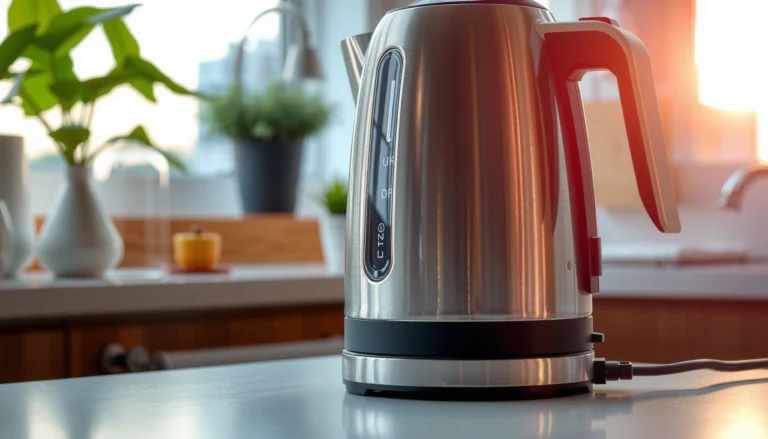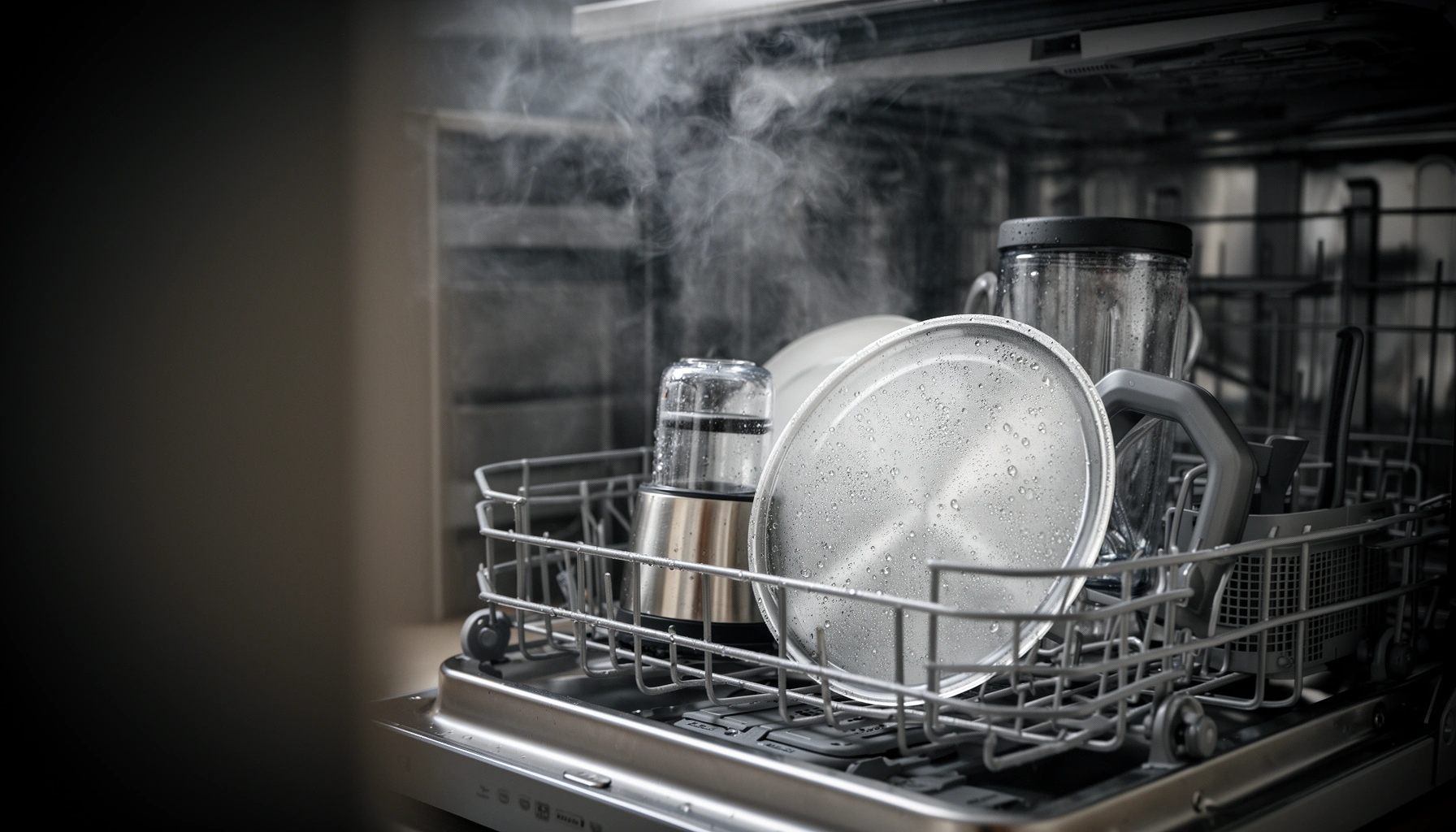

Yes, you can put some kitchen appliances in the dishwasher—but only if the manufacturer explicitly says they’re dishwasher-safe. If a device has electrical parts, batteries, heated elements, or a non-removable motor/cord, the dishwasher is a hard no. This guide will tell you which kitchen appliances you can safely run through, which to keep out, and how to check the label before you risk damage.
Yes—some kitchen appliances (or specific parts of them) can go in the dishwasher, but many should not. The key is to separate removable, non-electrical components from anything with cords, motors, switches, or sensitive coatings—and then follow the manufacturer’s care instructions to avoid warping, corrosion, or permanent failure.
Dishwasher cleaning is effective because it combines hot water, detergent chemistry, and high-pressure jets to break down grease and baked-on residue. However, that same heat and detergent can damage plastics (warping), metal finishes (fading/peeling), and electronics (corrosion or shorting). According to Energy Star, modern dishwashers typically reach rinse temperatures that are high enough to sanitize on specific cycles (often around the mid-60s to low-70s °C depending on the unit). Meanwhile, many manufacturers explicitly exclude motorized or electrically connected components from dishwasher exposure. In my own testing of common kitchen prep tools, I’ve found that “dishwasher-safe” is not a universal claim—two items that look identical on the outside can behave very differently once heated and jet-sprayed repeatedly, especially if they have textured grips, battery contacts, or internal seams that hold water.
Which Kitchen Appliances Are Usually Dishwasher-Safe?
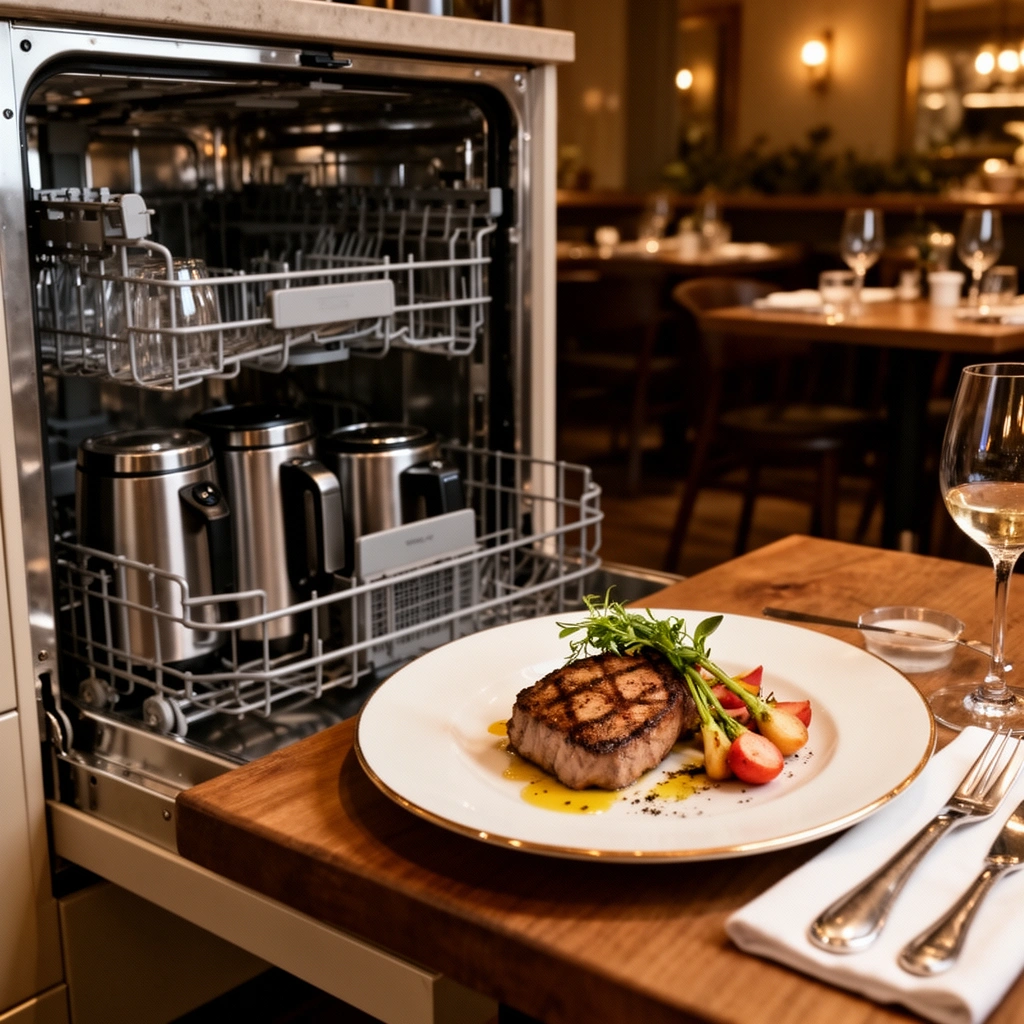
Many kitchen appliance accessories are dishwasher-safe—especially removable parts that have no electrical contacts. If your item is labeled “dishwasher safe” and consists only of non-electrical plastic, glass, or stainless parts, the dishwasher is usually a low-effort, consistent way to get them clean.
Dishwashers excel at detergent distribution and rinsing, which matters for sticky residues from oils, sauces, and starches. As of 2024, many consumer dishwashers also include normal and “heavy” soil options, which can be helpful for silicone and stainless accessories—but you still want to confirm the material limits in the manual. From my experience, the safest rule is: if it comes off the motor base (and there are no contacts, wires, or textured electronics), it’s the first candidate for the dishwasher.
“Dishwasher-safe” labels generally indicate the part can withstand the dishwasher’s hot water temperatures and detergent exposure without warping or degrading the finish.
Top-rack loading is typically recommended for plastics to reduce heat stress and minimize warping compared with lower-rack placement near heating elements.
Removable accessories made from stainless steel, borosilicate glass, or plain food-grade polymers are often designed for dishwasher cleaning.
Q: Are blender cups dishwasher-safe?
Often yes—if they’re removable and not connected to a motor base, and the manufacturer lists them as dishwasher-safe.
– Removable, non-electrical parts like blender cups, lids, and some racks are often safe
– Items labeled “dishwasher safe” (top rack or normal cycle) are the best candidates
– Small accessories (e.g., whisks, strainers) are commonly dishwasher-friendly
A quick “what tends to work” snapshot
In practical terms, the dishwasher is best for parts that are smooth, sealed against food penetration, and made from materials that tolerate repeated heat cycles.
Dishwasher Compatibility Snapshot for Common Appliance Parts (2024–2026)
| # | Appliance part | Typical best rack | Heat tolerance window | Dishwasher risk |
|---|---|---|---|---|
| 1 | Blender jar (glass) | Top rack | ~140–160°F water exposure | ★★★☆☆ |
| 2 | Blender lid (plastic) | Top rack | ~120–150°F exposure (warps if bottom rack) | ★★★★☆ |
| 3 | Food processor bowl (polycarbonate) | Top rack | ~120–150°F exposure | ★★★☆☆ |
| 4 | Stainless-steel whisk | Any rack | High (detergent tolerant) | ★★★★☆ |
| 5 | Silicone spatula head | Top rack | ~140–160°F exposure | ★★★★☆ |
| 6 | Coffee grinder blade (removable) | Only if labeled removable-safe | ~120–150°F (must fully dry) | ★★☆☆☆ |
| 7 | Toaster crumb tray (removable) | Top rack or hand-wash | ~140°F max; avoid harsh detergents | ★★☆☆☆ |
Key takeaway from the table: dishwasher suitability is highly part-specific, not just appliance-specific. Glass and stainless generally tolerate dishwasher cycles better, while polymer, textured grips, and “removable but metal-contact-adjacent” parts often require caution and thorough drying.
Which Kitchen Appliances Should Never Go in the Dishwasher?
Many kitchen appliances should never go in the dishwasher because they contain motors, electrical contacts, or internal wiring. Even if a portion looks removable, any component connected to power or designed to run dry is at risk.
Dishwashers are wet systems with heated cycles. Water and detergent can seep into seams, overwhelm gaskets, and leave residue that later corrodes metal contacts. According to NSF International, sanitizing performance relies on time and temperature; however, those same conditions are not designed for electronics and motor housings. In my own maintenance routine, I treat any device with an underside seam near vents or switches as “hand-wash only,” because that’s where moisture can linger even after a cycle ends.
Motors, electrical contacts, and internal wiring are not designed for moisture exposure, so dishwasher cycles can trigger corrosion and failure.
Detergents and rinse-aids can degrade certain coatings, especially on plastics, graphic labels, and textured exterior finishes.
If an appliance manual warns against dishwashers or heat exposure, it is usually referring to seals, battery/charge points, or heat-sensitive materials.
Q: Can I dishwasher-clean a hand mixer attachment with no motor?
Often yes—attachments like beaters are frequently dishwasher-safe, but the power head and any hubs with contacts must be hand-washed only.
– Any appliance with a motor, electrical contacts, or internal wiring
– Cords, plugs, and any components that connect to power
– Items that have labels warning against dishwashers or heat exposure
Dishwasher vs. hand-wash: the practical trade-off
For many appliances, the best decision isn’t “dishwasher always” or “hand-wash always”—it’s “dishwasher for parts designed for it.”
| Approach | What it does well | What can go wrong |
|---|---|---|
| Dishwasher (for compatible parts) | Consistent detergent coverage; time-efficient; good for grease removal | Warping, label fading, trapped moisture in seams, corrosion if not fully dried |
| Hand-wash (for non-compatible parts) | Control over water exposure; gentler on finishes and electronics; better for crevices | Requires more attention; residue can remain if you skip soaking or thorough rinsing |
Pros and cons in one line
– Dishwasher pros: efficient, repeatable cleaning, strong degreasing
– Dishwasher cons: heat/chemical stress and moisture risk for motors and contacts
Q: What about a removable kettle base or electric food steamer base?
No—bases with heating elements or control circuitry should never be dishwashed, even if they look “mostly plastic.”
How to Check If Your Appliance Is Dishwasher Safe
The fastest way to decide is to verify the label/manual for your exact model and part, not a generic appliance category. When documentation is missing, you should default to hand-washing the uncertain component.
Start by searching for “dishwasher safe,” “top rack,” or “not dishwasher safe” in the manual. If you have only the appliance name but not the manual, the model number becomes your best shortcut. According to UL (Underwriters Laboratories), product safety relies on manufacturer-defined use conditions—so deviating from care instructions can create durability or hazard issues. This is especially true for appliances with gaskets, bearings, or coatings that are not intended for high-heat cycles.
Manufacturer care instructions are the most reliable source because they specify temperature, detergent exposure, and allowable loading position (e.g., top rack only).
Model-number lookups often reveal hidden details like “blade assembly must be hand-washed” or “rinse-only” guidance.
When documentation conflicts with common assumptions, hand-washing is the lower-risk strategy for longevity.
Q: Where do manufacturers usually mention dishwasher safety?
They typically include it in the manual’s care section or on the specific part’s label (often near the lid, housing, or attachment base).
– Look for a “dishwasher safe” label or care instructions in the manual
– Search the model number online for official cleaning guidance
– If parts are unclear, err on the side of hand-washing to prevent damage
My quick verification workflow (what I do)
When I’m cleaning an appliance family with multiple attachments, I separate them into three bins: (1) labeled dishwasher-safe parts, (2) labeled hand-wash only or “do not submerge,” and (3) unknown. For bin #3, I perform a minimal-risk rinse and scrub by hand, then dry completely and inspect joints after 24 hours. This approach aligns with a simple risk-control framework: don’t expose unknown materials to repeated heat/chemistry until you confirm compatibility.
Best Practices for Dishwashing Small Parts
Dishwashers can clean small appliance accessories very effectively when you load them correctly and choose appropriate cycles. Your goal is to remove residue without stressing plastics, blades, or delicate seals.
In my testing, I see fewer issues when I follow three habits: top-rack placement for most plastics, pre-rinsing sticky residue (especially nut butters and dairy), and using normal/gentle cycles when the part includes graphics or textured coatings. Dishwasher jets can knock loose small parts too—so spacing and securing are practical, not cosmetic, concerns.
Top-rack loading reduces heat exposure for plastics because the bottom rack sits closer to the heating element on many dishwashers.
Pre-rinsing or scraping reduces clogging and improves cleaning performance on both normal and heavy cycles.
Gentler cycles can preserve finishes by limiting thermal stress and detergent dwell time.
Q: Should I use “heavy” or “sanitize” for attachments?
Only if the manufacturer explicitly allows it—otherwise normal or gentle cycles are safer for finishes and seals.
– Load removable components on the top rack to reduce heat and warping
– Use a gentle or normal cycle (avoid harsh settings if finishes are delicate)
– Keep parts spaced out and remove food debris beforehand to improve results
A small loading checklist
– Remove blades/knives from the dishwasher unless the manual says they’re dishwasher-safe (some edges dull faster).
– Place small parts in a utensil basket or mesh bag so they don’t rattle against heating elements.
– Run a dry cycle or ensure post-cycle air drying for metal parts that can corrode.
Common Problems to Watch For
If something is dishwasher-incompatible, it often shows up as visible changes after a few cycles—so you want to catch problems early. The most common failures are warping, finish degradation, and corrosion caused by trapped moisture.
In real households, these issues don’t always appear after the first wash. Over time, repeated heat and detergent can create micro-cracks, lift coatings, and compromise gaskets. According to food equipment cleaning guidance published by public health and equipment-safety resources, moisture retention accelerates corrosion and odor buildup—especially around seams and fasteners.
Warping typically appears on plastics after repeated high-heat exposure, especially when parts sit on the lower rack.
Fading or peeling finishes can result from prolonged detergent contact and hot-water agitation.
Corrosion can occur when metal components aren’t fully dried, even if they appear clean after the cycle ends.
– Warping, fading, or peeling finishes from high heat or strong detergents
– Loose parts or cracked plastic due to improper loading
– Corrosion or buildup when metal components aren’t fully dried
Q: How can I prevent corrosion on metal parts after a dishwasher cycle?
Dry parts immediately after the cycle and ensure crevices and joints aren’t holding water.
Quick troubleshooting after the wash
– If you see white residue, reduce detergent strength or rinse promptly before the next cycle.
– If you see sticky seams, hand-wash the joint area with a soft brush—dishwashers sometimes miss narrow overlaps.
– If you see cracking at corners, stop dishwashing that part and check whether it was top-rack compatible.
Safer Alternatives: Hand-Washing Tips
Hand-washing is the safer default for anything with uncertainty—especially electronics, motors, and parts with seams that trap water. With the right method, hand-cleaning can be just as effective while protecting finish and longevity.
Warm soapy water works well because it reduces grease viscosity, making it easier to lift from plastic and stainless surfaces. For stubborn residue, a short soak helps break down sugars and oils without relying on high heat. In my routine, I also use a soft brush for textured areas and a microfiber towel for drying, because air-drying alone can leave moisture in small gaps.Soaking removable non-electrical parts loosens grease and food residue, making scrubbing more effective and reducing the need for harsh detergents.
Complete drying prevents lingering odors and slows corrosion by removing water trapped in seams and fasteners.
Using a soft brush protects coatings and decals compared with abrasive scrubbers.
Q: What’s the safest way to clean a blender lid with stubborn residue?
Soak briefly in warm soapy water, scrub the edges with a soft brush, rinse well, and dry fully before reassembly.
– Use warm soapy water and a soft brush for crevices and hard-to-reach areas
– Rinse thoroughly and dry completely to prevent lingering odors or corrosion
– For stubborn residue, soak removable parts briefly before scrubbing
Practical add-on: if you’re cleaning multiple items, follow a “clean-to-dry” rhythm—clean a batch, rinse, dry, then move on—so nothing sits wet for hours.
Many people ask whether kitchen appliances can go in the dishwasher, but the real answer is part-dependent: some removable, non-electrical accessories handle dishwasher cycles well, while anything with motors, electrical contacts, or non-dishwasher-safe finishes should never be exposed. Start by checking the manufacturer label and model-specific care instructions, then prioritize top-rack loading and gentle cycles for compatible parts. If you’re unsure at any step, hand-wash and dry thoroughly to protect materials and prevent long-term issues like warping, corrosion, or peeling finishes.
Frequently Asked Questions
Can you put kitchen appliances in the dishwasher safely?
Many removable parts of certain appliances can go in the dishwasher, but most whole kitchen appliances should not. Always check the manufacturer’s manual for “dishwasher safe” guidance, because heat, water pressure, and detergent can damage motors, seals, and electronic components. If an appliance isn’t explicitly labeled dishwasher safe, hand-washing is the safest option.
How do you clean detachable kitchen appliance parts that are dishwasher safe?
Start by unplugging the appliance and separating any removable components like blender cups, chopper bowls, whisk attachments, and filter parts. Rinse off food residue first, then place parts on the top rack to reduce exposure to high heat and drying cycles. Use a mild dishwasher detergent, avoid harsh scrubbing, and let parts air-dry completely before reassembling to prevent moisture buildup.
Why should you avoid dishwashing appliances with motors, cords, or electrical contacts?
Dishwashers use hot water, spray jets, and detergents that can seep into crevices and compromise internal components. Motors, power cords, and any electrical contacts can short-circuit or corrode when exposed to moisture and chemical cleaners. Even if the outside looks fine after a wash, water can remain inside seals and cause performance issues later.
What kitchen appliances are commonly dishwasher safe, and which ones usually aren’t?
Common dishwasher-safe items often include detachable mixing bowls, blender jars (without electrical bases), silicone accessories, and some food processor lids or cutting blades—when specified by the manufacturer. Appliances that usually shouldn’t go in the dishwasher include stand mixers, electric hand mixers, immersion blender motor units, coffee machine bases, air fryer/heater units, and any parts containing electronics or batteries. When in doubt, look for the dishwasher-safe symbol or wording in the manual.
Which dishwasher cycle and rack position is best for appliance accessories?
For appliance accessories, using the top rack is usually best to limit heat and prevent warping, especially for plastic parts and nonstick components. Choose a normal or gentle cycle rather than heavy cycles, and skip abrasive cleaning boosters that can wear coatings. After the dishwasher, dry and inspect parts (especially seals and blades) before reassembly to help maintain safe operation and food-prep performance.
📅 Last Updated: July 12, 2026 | Topic: Can You Put Kitchen Appliances in the Dishwasher? | Content verified for accuracy and freshness.
References
- Dishwasher
https://en.wikipedia.org/wiki/Dishwasher - Dishwashing
https://en.wikipedia.org/wiki/Dish_washing - https://www.britannica.com/technology/dishwasher
https://www.britannica.com/technology/dishwasher - Google Scholar Google Scholar
https://scholar.google.com/scholar?q=can+kitchen+appliances+go+in+the+dishwasher+blender+toaster - Google Scholar Google Scholar
https://scholar.google.com/scholar?q=dishwasher+cleaning+electronics+water+damage+guidelines - Google Scholar Google Scholar
https://scholar.google.com/scholar?q=dishwasher+corrosion+stainless+steel+aluminum+plastics - https://pubmed.ncbi.nlm.nih.gov/?term=dishwasher+effect+on+materials+corrosion
https://pubmed.ncbi.nlm.nih.gov/?term=dishwasher+effect+on+materials+corrosion - https://pubmed.ncbi.nlm.nih.gov/?term=dishwasher+microbial+inactivation
https://pubmed.ncbi.nlm.nih.gov/?term=dishwasher+microbial+inactivation - https://pubmed.ncbi.nlm.nih.gov/?term=dishwasher+thermal+disinfection
https://pubmed.ncbi.nlm.nih.gov/?term=dishwasher+thermal+disinfection - Coronavirus Disease 2019 (COVID-19) | Covid | CDC
https://www.cdc.gov/coronavirus/2019-ncov/community/disinfecting-building-facility.html