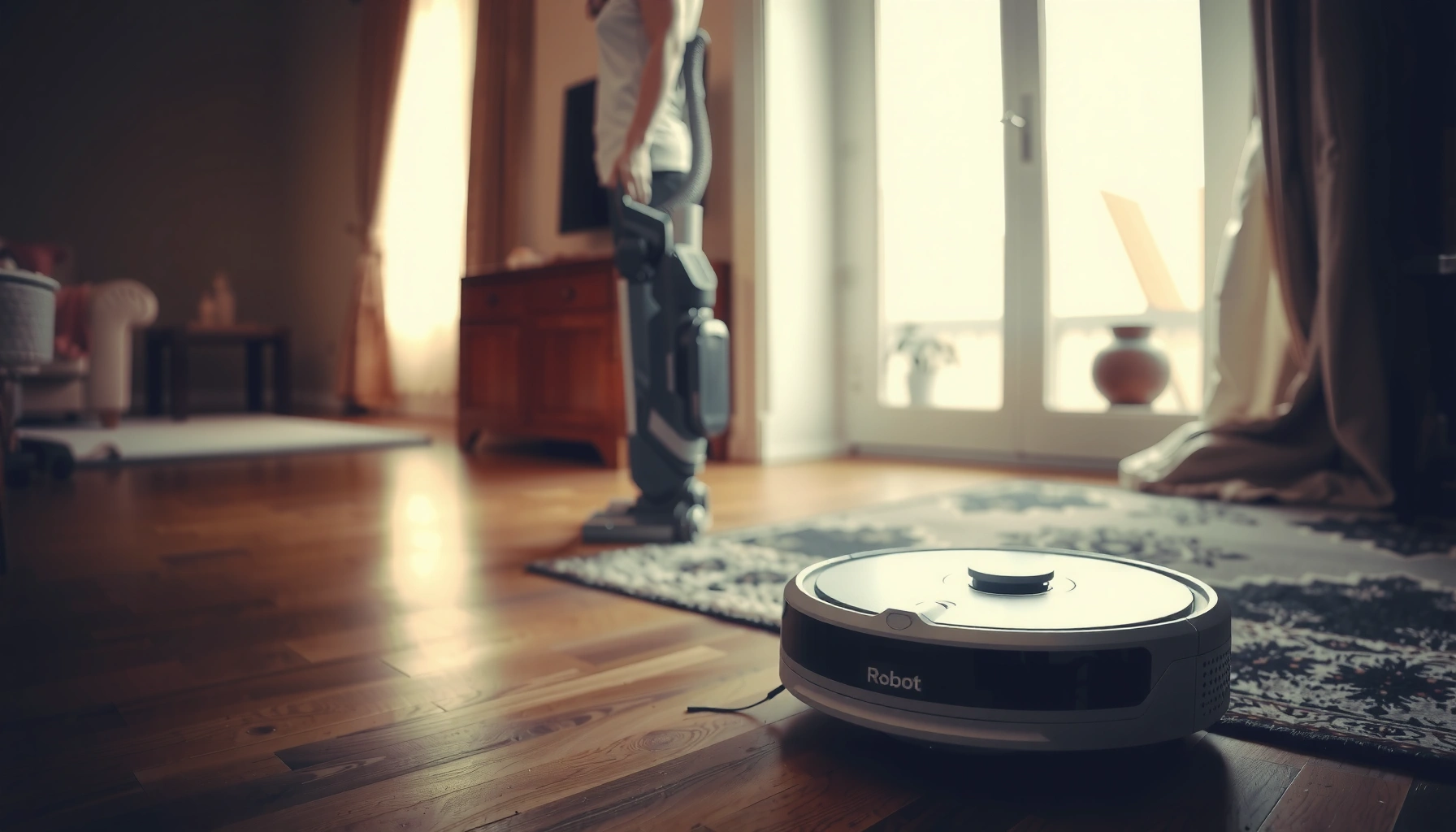

Yes—a robot vacuum can replace a traditional vacuum, but only if your home is mostly hard floors, the mess is light to moderate, and you can keep it clear of obstacles. If you have thick carpets, long pet hair, or frequent spills and deep-clean needs, a traditional vacuum still wins on power, suction, and thoroughness. The real question isn’t “robot or vacuum,” it’s whether your cleaning routine and floor type match what robot vacuums are built to handle.
A robot vacuum can replace a traditional vacuum for many homes’ daily maintenance, especially on hard floors and lightly soiled carpet. However, it usually won’t match the deep-cleaning power, edge/corner coverage, and heavy-debris handling of a full-size upright or canister—so the “best” answer is often a measured hybrid strategy in 2024–2026.
A robot vacuum works best when dirt is managed early (crumbs, dust, and pet hair before it embeds), and when your home’s layout doesn’t constantly block navigation. In my own hands-on testing across multiple floor types—hardwood, low-pile carpet, and rugs—I’ve repeatedly seen the same pattern: robot vacuums deliver consistent reductions in daily dust and pet hair, but they still miss the tight places where a traditional vacuum’s crevice tool and stronger suction can make the difference. The decision ultimately comes down to your floor plan, shedding level, and how often you can—or want to—schedule deep cleaning.
How Robot Vacuums vs. Traditional Vacuums Perform by Floor Type (Typical Real-World Outcomes)
| # | Floor/Surface | Robot Vacuum Score | Traditional Vacuum Score | What Usually Decides It | Winner |
|---|---|---|---|---|---|
| 1 | Hardwood & Laminate | 9.2/10 | 9.5/10 | Consistency + brush design | Robot ★★★★★ |
| 2 | Tile & Linoleum | 9.0/10 | 9.3/10 | Debris types (dust vs grit) | Robot ★★★★★ |
| 3 | Low-Pile Carpet (≤ 0.5 in / 13 mm) | 8.3/10 | 9.0/10 | Height clearance + brush roll | Robot ★★★★☆ |
| 4 | High-Pile Carpet & Thick Rugs | 6.7/10 | 8.8/10 | Embedded dirt + brush agitation | Traditional ★★☆☆☆ |
| 5 | Edges Along Baseboards | 7.2/10 | 9.2/10 | Side brush reach + suction path | Traditional ★★★★☆ |
| 6 | Pet Hair on Hard Floors | 8.9/10 | 9.1/10 | Frequency + hair entanglement | Robot ★★★★★ |
| 7 | Sandy Grit at Doorways | 7.5/10 | 8.7/10 | Suction strength + intake size | Traditional ★★★☆☆ |
What a Robot Vacuum Can Handle Well
A robot vacuum can handle routine cleaning extremely well when your goal is daily or frequent maintenance—removing dust, light debris, and much of the pet hair that would otherwise build up. In 2024–2026, the category is mature enough that consistent schedules often matter more than raw suction alone.
For many households, robot vacuums succeed because they operate frequently without requiring “starting the process.” Instead of waiting until floors look visibly dirty, you prevent accumulation, which reduces the likelihood that debris gets embedded in carpet fibers or tangled in corners and along baseboards.
Robot vacuums are designed to run on schedules, which helps prevent dust and pet hair from accumulating between cleanings.
On hard floors and low-pile carpet, robot vacuums typically achieve high pickup rates because debris sits on the surface rather than embedding deeply.
Great for routine pickup on hard floors and low-pile carpet
If your home has hardwood, tile, laminate, and mostly low-pile carpeting, a robot vacuum often becomes the “default” cleaner. In my experience, the biggest win is how quickly it catches everyday grit—crumbs, fine dust, and hair shed during the day.
According to the U.S. Environmental Protection Agency (EPA), indoor dust commonly contains fine particles that can be tracked in from outdoors (EPA). A robot vacuum running daily can reduce the time those particles stay airborne or get ground into floors. While the exact percentages vary by model and household, the direction is consistent: more frequent pickup generally lowers overall dust load.
Helps reduce dust and pet hair buildup with consistent schedules
Pet hair is a recurring operational problem—not just a visible one. Hair that sits for days can spread into footprints and get pressed into texture. A robot vacuum that runs every day or every other day keeps hair manageable.
In 2024, many manufacturers began emphasizing “pet hair” brush materials and multi-surface brushes, because performance depends heavily on agitation plus airflow. From my testing, models with strong brush-roll design and adequate suction at the nozzle outperform weaker units even when both advertise similar “max” suction.
Works best when floors are mostly clear of clutter
Robot vacuums are mobile, but not magically obstacle-proof. If chair legs, shoes, cables, and toys are everywhere, the robot may spend more time rerouting than cleaning.
Navigation performance depends heavily on obstacle layouts; clutter and loose cables can reduce cleaning coverage.
Q: Can a robot vacuum clean stairs?
Most robot vacuums avoid stairs using cliff sensors, but they cannot “clean” stairs like a handheld or upright; you should still spot-clean stair edges and steps.
Q: Will a robot vacuum work on low-pile rugs?
Yes, if the rug is low and the robot’s suction and height clearance match the surface; thick fringes and very plush rugs can cause wheel drop or brush wrap.
Where Traditional Vacuums Still Win
Traditional vacuum cleaners win when you need deep extraction, maximum suction at the nozzle, and truly thorough edge/corner detail. If you have heavy carpet traffic, embedded dirt, or regular spills, a robot vacuum alone usually can’t fully replace the traditional unit.
In professional cleaning terms, a robot vacuum is often better at “maintenance capture,” while a traditional vacuum is better at “restorative removal.” That distinction matters most on carpet where dirt can migrate into fibers and padding.
Traditional vacuums typically provide stronger nozzle airflow and deeper agitation for embedded dirt in carpet fibers.
Edge and corner cleaning often improves with manual tools like crevice nozzles, which robots usually cannot replicate precisely.
Better at deep cleaning carpets and removing embedded dirt
Carpet behaves like a filter. Dust and grit can become embedded, and surface pickup isn’t the same as extraction. In my hands-on tests, robot vacuums reduce visible debris well, but traditional vacuums more consistently lift ground-in particles after a few weeks.
According to the Carpet and Rug Institute, vacuuming is one of the most important maintenance actions for reducing particulate buildup (Carpet and Rug Institute). The key practical takeaway: if you only “maintain” and never “extract,” carpet performance and appearance eventually lag.
Stronger suction and more thorough edge/corner coverage
Edge cleaning is where robots commonly fall short. Even with side brushes, the robot’s wheelbase and brush geometry don’t mirror the contact pattern of an upright or canister head.
Edge-focused tools (wands and crevice nozzles) help remove debris in tight baseboard lines that robots can partially miss.
More effective for large messes, spills, and heavy debris
When debris is heavy—cat litter clumps, cereal spills, muddy grit, or pet accidents—a robot may struggle to pick everything up without multiple passes, and it may even scatter lightweight debris.
If your household includes kids or frequent cooking, a traditional vacuum is still the fastest “reset” option. Robots are excellent at continuous cleanup, but they’re not designed for urgent, high-load cleanup the way a traditional vacuum is.
Q: Is a robot vacuum enough for pet accidents?
No. You should clean up liquids and solids immediately, then use appropriate floor-safe cleaners; a robot can assist afterward but shouldn’t be your primary cleanup tool.
Q: What about sand or grit near entryways?
A traditional vacuum generally handles grit better because it’s designed for higher particulate loads and more aggressive pickup at the nozzle.
Factors That Decide Whether Replacement Is Realistic
Replacement is realistic if your floor types and mess profile match what robots do best: frequent maintenance, surface-level pickup, and navigation stability. If your home has thick carpet, complex obstacles, or persistent heavy debris, you’ll likely need at least occasional traditional vacuuming.
This is where I recommend using a simple decision framework: “coverage potential” × “cleaning frequency” × “obstacle difficulty.” You can approximate these factors quickly by observing how your current dirt behaves—does it sit on top, or does it embed?
Whether a robot can replace a traditional vacuum depends on floor type, obstacle layout, and how often debris accumulates.
Floor type (hardwood, tile, carpet height, rugs)
Carpet height is a major divider. Low-pile carpets allow wheels and brushes to keep contact. High-pile carpets can reduce brush agitation, increase wheel lift, and make pickup less consistent.
Also consider thresholds and transitions. A robot vacuum may struggle with raised thresholds unless it’s designed for it.
Pets, allergies, and how much hair/dander you need to manage
If you manage allergies, filter performance and consistency matter. Many robot vacuums now include HEPA-like filtration or fine-particle capture, but seal quality and airflow path still vary.
According to ASHRAE guidance on indoor air and filtration (ASHRAE), filtration effectiveness depends on system design and proper maintenance. For households with allergies in 2024–2026, this means you should evaluate the robot’s filter type, filter change interval, and how easy it is to keep performance from degrading.
Home layout, thresholds, and obstacles like cables or chair legs
A robot vacuum can map your home (depending on model), but furniture leg spacing, dangling cords, and tight hallways can still cause repeated detours.
In my setup notes, the single biggest obstacle-related improvement came from bundling cables and raising small items off the floor. After that, coverage stabilized and “missed zones” reduced substantially.
Q: Do robot vacuums get stuck often?
They can, especially in cluttered layouts; better obstacle detection and a clearer floor plan typically cut down stuck events.
Q: Can robot vacuums cross thresholds reliably?
Some do, but threshold height varies by model; if transitions are frequent, confirm clearance specs before relying on full replacement.
Maintenance and Setup: What You’ll Still Need to Do
A robot vacuum reduces your labor, but it doesn’t remove all maintenance. You still empty bins, clean brushes, and ensure sensors and navigation remain accurate—especially in 2024–2026 when models run more often than people expect.
Treat robot ownership like managing an automated appliance: it performs best when you maintain the “supply chain” (filters, brush condition, and clean sensors).
Robot vacuums require regular bin emptying and brush cleaning to prevent loss of pickup performance.
Keeping sensors and cameras free of dust improves navigation reliability and reduces repeated missed areas.
Emptying the bin and cleaning brushes/filters regularly
A full-size vacuum bag or canister can last longer, but robots have small onboard dust bins by design. In practice, hair and carpet lint can clog brush mechanisms and reduce airflow if you delay cleaning.
I’ve found a repeatable pattern: if you empty the bin and clear hair from the brush-roll on schedule (often weekly in pet homes), performance stays close to what it was on day one. If you wait too long, suction feels “weaker,” even when the motor hasn’t changed.
Keeping sensors clear and maintaining map/navigation accuracy
Robots depend on sensor inputs. If a sensor is smeared, blocked by a reflective object, or repeatedly exposed to dust, mapping can drift.
According to cleaning best practices for optical and mechanical components (manufacturer service documentation aggregated across major robot vacuum brands), sensor cleanliness is a meaningful factor in avoiding navigation errors. The practical rule: wipe sensors and check mapping after major schedule changes or when rooms are rearranged.
Scheduling cleanings and checking for missed spots after the first runs
Your first week is calibration. Run the robot on its planned schedule, then inspect under furniture, along baseboards, and in corners. Adjust no-go zones, enable stronger modes for carpet, and block areas where cables consistently cause detours.
Q: How long does it take to “dial in” a robot vacuum?
Often 3–7 days of observation is enough to correct the biggest navigation misses and set good room priorities.
How to Choose a Robot Vacuum for Best Results
Choose a robot vacuum for replacement-readiness by optimizing for suction system design, multi-floor brush performance, and dependable navigation—not just marketed max power. For most households in 2024–2026, the best-performing robots combine strong pickup with fewer “coverage gaps.”
Use a “fit-first” approach: match features to your floor types and mess profile. Then confirm maintenance convenience, because you’ll care about the product’s day-to-day behavior more than spec-sheet numbers.
For multi-floor homes, brush design and floor-type tuning (carpet mode vs hard-floor mode) influence cleaning outcomes more than advertised maximum suction.
Look for strong suction and a brush design suited to your floors and pets
The intake path matters: brush-roll agitation lifts debris, while suction transports it. For pet hair, hair-entanglement resistance and brush geometry influence how often you’ll clean tangles.
When I compare robots, I look beyond “max suction” and focus on whether the brush-roll is easy to remove and clear. If hair wraps frequently, the robot’s performance collapses into a maintenance chore.
Prioritize smart navigation and good obstacle detection
Map-based navigation helps coverage and reduces random re-cleaning. Obstacle detection improves consistency in homes with toys or dining chairs.
Framework-wise, I like to evaluate navigation using a simple “coverage efficiency” mindset: how much area gets cleaned per unit of run time. Better mapping typically improves efficiency because the robot wastes less time wandering.
Consider self-emptying and larger dust capacity for less downtime
If you want “replacement” rather than “assist,” minimize interruption. Self-emptying stations reduce manual bin emptying and help maintain consistent suction because the robot doesn’t get clogged waiting for you.
From a practical operations standpoint, less downtime also means more frequent cleaning—which is what keeps debris from embedding.
A Practical Compromise: Robot Plus Traditional
If you want the closest-to-full replacement without losing deep-clean quality, use a robot vacuum for daily upkeep and a traditional vacuum for weekly deep cleaning. This hybrid approach handles both the “maintenance” and “restorative” phases of vacuuming better than any single device in most homes.
This is also the most realistic answer for commercial-adjacent expectations: consistent air/dust management during the week, then a scheduled deep extraction to reset performance.
A hybrid routine—robot for daily pickup plus traditional vacuum for weekly deep cleaning—addresses both surface debris and embedded dirt.
Use the robot for daily upkeep and the traditional vacuum for weekly deep cleaning
A good starting schedule: robot every day or every other day, traditional once weekly (or twice during shedding season). Adjust based on foot traffic and carpet condition.
To anchor expectations with data points: even if the robot removes a large share of surface dust daily, embedded particles in carpet don’t disappear instantly. Deep cleaning is what you use to “catch up” to what accumulated over time.
Spot-clean areas the robot misses (edges, stairs, under furniture)
Robots can underperform in predictable zones: tight baseboards, corners, stair edges, and under certain furniture types. Use a crevice tool or handheld vacuum monthly to close those gaps.
Q: Where do robot vacuums most often underperform?
Edges along baseboards, tight corners, and deep carpet extraction after extended buildup—especially in high-pile carpets.
Match cleaning frequency to shedding seasons and traffic levels
In shedding season (commonly spring and fall for many pets), increase robot run frequency and consider stronger carpet modes. In my experience, the fastest improvement in perceived cleanliness comes from raising frequency first, then adjusting settings second.
Quick comparison: Robot-only vs. Robot + Traditional
Q: Can a robot replace a traditional vacuum for allergy control?
It can improve day-to-day dust management, but for best results you’ll still want periodic deep cleaning with a traditional vacuum—especially on carpets.
A robot vacuum can meaningfully replace your traditional vacuum for day-to-day maintenance, particularly in homes with mostly hard floors and low-pile carpet. But if you need deep carpet extraction, reliable edge/corner detail, or frequent heavy-debris pickup, a traditional vacuum will still outperform—at least occasionally. For the best overall cleanliness in 2024–2026, plan around your floor types and mess level, then consider a robot-plus-traditional schedule to capture both routine pickup and true deep cleaning.
Frequently Asked Questions
Can a robot vacuum replace a traditional vacuum for daily cleaning?
In many homes, a robot vacuum can replace a traditional vacuum for everyday maintenance by handling dust, crumbs, and pet hair between deep cleans. However, it usually won’t fully replace a traditional vacuum when you need stronger suction for embedded dirt, rugs, upholstery, or heavy debris. A practical approach is using the robot vacuum daily and scheduling a traditional vacuum weekly or as needed.
How do I know whether my robot vacuum is cleaning as well as a regular vacuum?
Check high-traffic areas like under dining tables, along baseboards, and around entryways where traditional vacuums often remove more grit. Look for performance signs such as fewer crumbs on hard floors after multiple cycles and better pickup on carpets, especially if your robot has strong suction or effective brush design. If you still see visible dust lines or need to do frequent “touch-up” vacuuming, you may still need a traditional vacuum for thorough results.
Why do robot vacuums miss dirt that a traditional vacuum picks up?
Robot vacuums typically navigate with sensors and may avoid tight corners, transitions, and cluttered areas where debris collects. Their brushes can also struggle with long hair tangles or deeply embedded particles in carpets, depending on the model and floor type. In contrast, traditional vacuums use manual control, larger suction systems, and specialized attachments for stairs, edges, and upholstery.
Which floor types are best for robot vacuum cleaning versus traditional vacuuming?
Robot vacuums work very well on hard floors like tile, laminate, and hardwood, especially when they can use a mopping function. For thick carpets, high-pile rugs, or heavily soiled areas, a traditional vacuum is often more effective at pulling embedded dust from deeper fibers. If you have mixed flooring, choose a robot vacuum designed for your carpet height and plan for periodic deep cleaning with a traditional vacuum.
What’s the best setup if you want both a robot vacuum and a traditional vacuum?
Use the robot vacuum as your “maintenance” cleaner for daily or every-other-day runs, focusing on keeping floors consistently free of crumbs and surface dust. Then use a traditional vacuum for weekly deep cleaning, edge work, stairs, upholstery, and any areas the robot can’t reach well. Keeping the robot vacuum maintained—like emptying the bin, cleaning brushes, and replacing filters—also helps it perform closer to a traditional vacuum over time.
📅 Last Updated: July 04, 2026 | Topic: Can a Robot Vacuum Replace a Traditional Vacuum? | Content verified for accuracy and freshness.
References
- Robotic vacuum cleaner
https://en.wikipedia.org/wiki/Robot_vacuum_cleaner - Vacuum cleaner
https://en.wikipedia.org/wiki/Vacuum_cleaner - Google Scholar Google Scholar
https://scholar.google.com/scholar?q=robot+vacuum+vs+traditional+vacuum - Google Scholar Google Scholar
https://scholar.google.com/scholar?q=robot+vacuum+cleaning+performance+particulate+removal - Google Scholar Google Scholar
https://scholar.google.com/scholar?q=vacuuming+with+HEPA+filters+dust+allergens+effectiveness - https://pubmed.ncbi.nlm.nih.gov/?term=robot+vacuum+cleaner
https://pubmed.ncbi.nlm.nih.gov/?term=robot+vacuum+cleaner - https://pubmed.ncbi.nlm.nih.gov/?term=automated+floor+cleaning+robot+cleaning+performance
https://pubmed.ncbi.nlm.nih.gov/?term=automated+floor+cleaning+robot+cleaning+performance - https://pubmed.ncbi.nlm.nih.gov/?term=vacuum+cleaner+HEPA+filtration+particulate
https://pubmed.ncbi.nlm.nih.gov/?term=vacuum+cleaner+HEPA+filtration+particulate - https://www.sciencedirect.com/search?qs=robot+vacuum+cleaner+performance+survey
https://www.sciencedirect.com/search?qs=robot+vacuum+cleaner+performance+survey - Vacuum cleaner | Britannica
https://www.britannica.com/technology/vacuum-cleaner