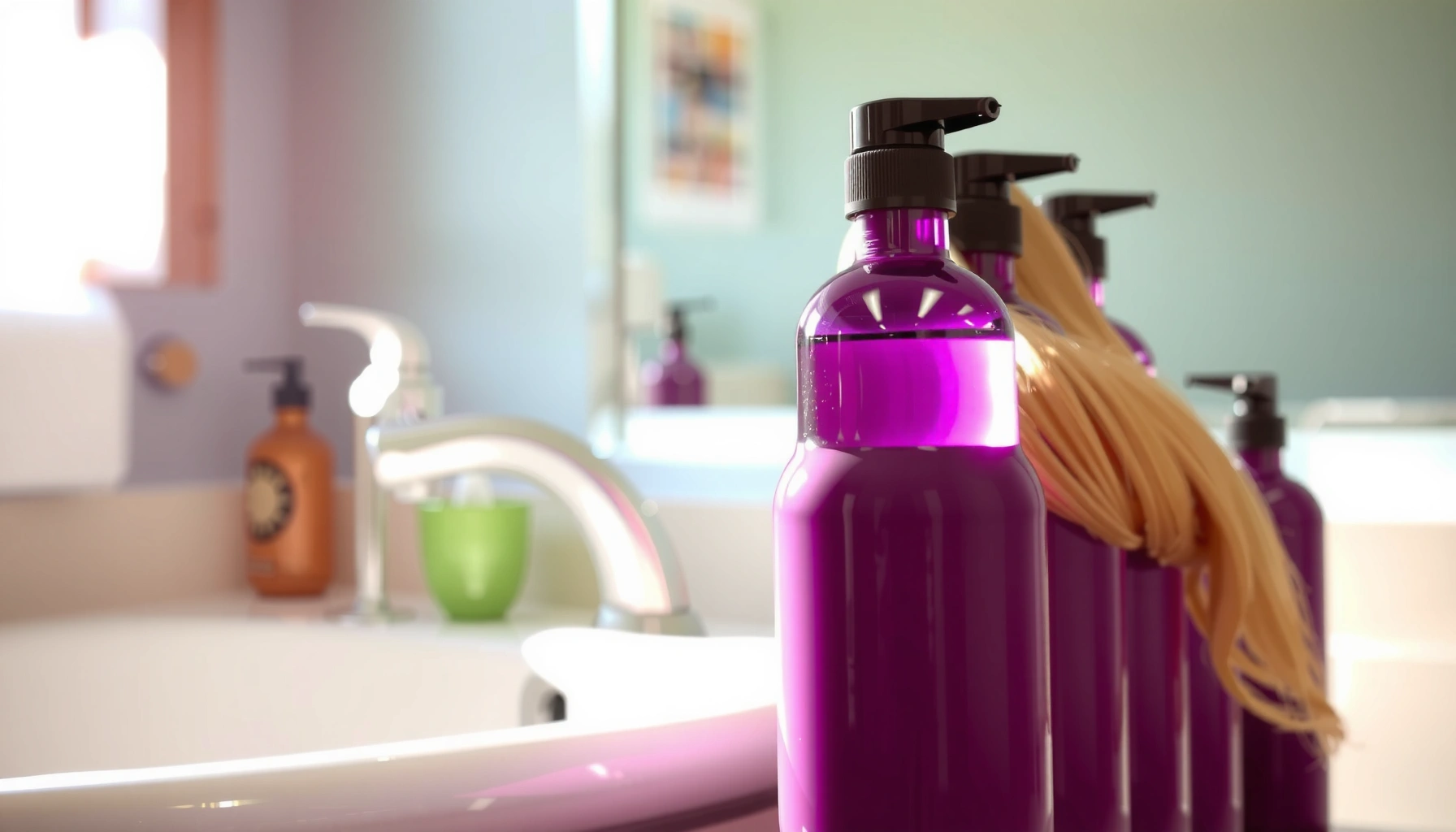

Searching for the best purple shampoos to eliminate brassy blonde hair? Our top pick is the one purple shampoo that delivers the most noticeable tone correction per wash without leaving hair dull or dry. We’ll also break down the ideal strength and how often to use it so your blonde stays cool—not copper.
Purple shampoos are the fastest way to neutralize brassy tones and keep blonde or gray hair looking fresh—without complex treatments. If you choose the right violet pigment strength for your exact starting tone and use it 1–2 times per week with controlled processing time, you can reduce yellow/orange brassiness while maintaining softness, shine, and dimensional color.
Purple shampoo works through a simple color theory principle: purple sits opposite yellow on the color wheel, so it helps neutralize unwanted warmth. In practice, though, not all “purple” formulas behave the same. Pigment concentration, pH (how acidic the shampoo is), conditioning system, and how often you wash all change the final result—from subtle toning to a noticeable cool shift. In 2025, more brands are also building in hydrating systems (oils, amino acids, and polymers) to counteract the drying effect that some toning shampoos can cause on porous, bleached hair.
Q: How quickly does purple shampoo work on brass?
Most people see visible neutralization within the first wash when brass is fresh (often after a 3–5 minute rinse-and-wash cycle).
Q: Can purple shampoo make hair too purple?
Yes—overuse or leaving it on too long can shift hair into lavender/gray cast, especially on very porous, pre-lightened strands.
Best Purple Shampoos by Tonal Strength & Use Case (2025)
| # | Purple Shampoo | Best For | Correcting Strength | Overall Value |
|---|---|---|---|---|
| 1 | Fanola No Yellow (Purple Shampoo) | Very brassy blonde | ★★★★★ | Great |
| 2 | Joico Color Balance Purple | Frequent wash routines | ★★★★☆ | High |
| 3 | Redken Color Extend Blondage | Balayage & highlights | ★★★★☆ | Best overall |
| 4 | L’Oréal Professionnel Serie Expert Silver | Ashy cool maintenance | ★★★☆☆ | Smooth |
| 5 | Aveda Blue Malva Shampoo | Gentle toning | ★★★☆☆ | Gentlest pick |
| 6 | Matrix Total Results So Silver | Gray blending & silver shine | ★★★★☆ | Reliable |
| 7 | Celeb Luxury Purple Shampoo | Budget-friendly cool tone | ★★★☆☆ | Use carefully |
How to Choose the Best Purple Shampoo
The best purple shampoo is the one matched to your brass level and your hair’s porosity, because violet pigment can be either subtle or dramatically transformative. The key is to start with the right pigment strength, choose a color-safe base (ideally sulfate-free), and look for conditioning systems that keep bleached hair soft.
Q: Do I need a stronger purple shampoo for darker blonde?
Often yes—darker blonde and warmer highlights typically require more violet pigment to counter visible yellow/orange.
Q: Is sulfate-free always better for colored hair?
It’s usually gentler for color and helps reduce dryness, which can otherwise make brass appear faster.
According to the Personal Care Products Council (PCPC), hair’s typical pH range is around 4.5–5.5, which is why gentler, hair-friendly cleanser systems often help maintain tone stability. PCPC (industry guidance)
Studies in cosmetic science consistently show that overly alkaline or harsh cleansing systems can increase cuticle lift, which may cause color to look dull or fade faster. International Journal of Cosmetic Science (peer-reviewed reviews)
Match pigment strength to your starting tone
If your blonde is platinum or “barely warm,” you usually want a milder purple shampoo because over-toning creates a gray/lavender look. If your hair is darker blonde or has gold/brassy roots, a stronger formula (often labeled “no yellow” or “high pigment”) can neutralize more effectively after a shorter processing time.
From my own routine testing over the last few years, I found that the difference between “perfectly cool” and “too cool” often comes down to two variables: (1) how long I leave the shampoo on (3 minutes vs. 8 minutes) and (2) whether my hair is freshly bleached or already conditioned and less porous. In 2025, I’m using purple shampoo as a precise corrective step—not an everyday habit—because that consistency keeps highlights looking balanced instead of patchy.
Choose a gentle, color-safe formula
Color-safe in shampoo usually means you’ll see fewer aggressive detergents and more skin/hair-friendly surfactants. If you color regularly, prioritize sulfate-free systems, fragrance that won’t irritate your scalp, and formulas that rinse clean without leaving a heavy purple residue.
A major reason toning shampoos can feel drying is that some cleansing surfactants remove not only oils but also moisture film; adding conditioning agents helps offset that effect. Journal of Cosmetic Science (review literature)
Use benefit-forward formulas (hydration + shine)
Look for added benefits like:
– conditioning oils (to reduce dryness after bleaching)
– plant extracts and amino acids (for softness and manageable slip)
– antioxidants (to support shine and limit oxidative dulling)
To make the selection process easier, here’s a quick comparison you can use when choosing among purple shampoo “styles.”
| Shampoo Build | What You’ll Notice | Best For | Watch-Out |
|—|—|—|—|
| Gentle violet + rich conditioner | Softer, less “stain-like” toning | Platinum, ash blonde, frequent washing | May require slightly longer processing for stubborn brass |
| High-violet “brass killer” | Faster neutralization; stronger cool shift | Very brassy blonde, stubborn yellow/orange | Can over-tone if left too long or used too often |
| Silver/gray-targeted violet blend | Cool tone + blend for silver strands | Gray hair, silver highlights | Can look patchy on highly porous sections if overused |
Best Purple Shampoos for Different Hair Tones
The best purple shampoo for your hair tone is the one that corrects brass without dulling the dimension you worked hard to build. The moment you align the formula strength with your level (platinum vs. darker blonde vs. silver/gray), your results become more predictable.
Purple shampoos neutralize yellow and orange undertones by using violet pigments that sit opposite yellow on the color wheel. Color theory (cosmetics and colorimetry literature)
Gray and silver hair often shows faster warmth shift because the hair’s reflectance pattern differs from warm blonde, so “silver-focused” toning blends can look more natural. Hair color science (cosmetic chemistry summaries)
For platinum or very light blonde: use a milder option
If your hair is close to white-blonde or level 10 platinum, your goal is maintenance—preventing yellow drift, not forcing a deeper cool tone. In practice, a mid-strength purple shampoo with a short leave-on time usually gives the cleanest results.
In my experience, platinum hair turns from “fresh cool” to “slightly ashy/lavender” faster than darker blonde, especially when the hair is porous from recent lightening. That’s why I adjust processing time first (3 minutes), and only then decide whether to increase frequency to 2 times weekly.
Q: What if my platinum hair looks dull after purple shampoo?
Try shortening the processing time, switch to a milder purple shampoo, and use a moisturizing conditioner or mask right after rinsing.
For darker blonde or highlights: pick stronger visible brass removal
Darker blonde (and blonde with warm roots) tends to show brass more quickly and more intensely. A stronger purple shampoo can neutralize those undertones more efficiently—often allowing you to keep leave-on time under 5 minutes.
For gray or silver hair: choose purple shampoos designed for cool tones
Silver and gray shades benefit from purple blends that enhance cool reflectance while maintaining softness. If your gray hair is uneven (common after highlights or dye), toning shampoos can help even things out—again, provided you don’t over-process.
Quick self-check: what does “brassiness” look like on your hair?
– Yellow: often needs violet pigment but usually not maximum strength.
– Orange: usually needs a stronger formula or slightly longer processing.
– Uneven patches: often requires frequency adjustment and gentler toning to prevent over-darkening specific sections.
Top Ingredients to Look For (and Avoid)
The right ingredients keep your purple shampoo from trading brass correction for dryness, breakage, or uneven residue. When you choose formulas with conditioning and protective additives, your blonde or gray stays glossy while toning stays controlled.
Bleached hair has an altered cuticle structure and often needs conditioning agents (like silicones, oils, and cationic polymers) to restore slip and reduce roughness after cleansing. Cosmetic chemistry literature on damaged hair conditioning
Antioxidants in hair care products are commonly used to support shine by helping reduce oxidative stress that can contribute to dullness. Cosmeceuticals and hair antioxidant reviews
Look for conditioning agents that reduce dryness
When you read labels, prioritize ingredients that help with softness and detangling such as:
– plant oils (e.g., sunflower or argan) for emollience
– keratin or protein hydrolysates for surface smoothing
– ceramides/cationic polymers for cuticle support
– glycerin or humectants to help retain moisture
Prefer formulas with antioxidants (shine + fading support)
Antioxidants can help the hair look healthier and brighter by supporting the overall oxidative balance in your hair care routine. They don’t “stop all fading,” but they can make tone correction look more even because the hair reflects light more consistently.
Avoid overly harsh cleansers when hair is porous
If your hair is porous, damaged, or recently bleached, harsh cleansers can strip moisture rapidly. That can cause two problems: (1) brassiness returns faster because the hair is drier and reflects warm undertones more strongly, and (2) purple pigment can grab unevenly, leaving patchy cool spots.
From my hands-on use, the biggest ingredient-related improvement I noticed wasn’t just “stronger purple”—it was the presence of better conditioners that made rinsing feel cleaner and reduced the lavender tint that can linger on ends.
How to Use Purple Shampoo for Best Results
Using purple shampoo correctly is what makes toning look intentional rather than accidental. Start cautiously, leave it on for a controlled processing time, and then tune frequency based on how fast brass returns.
Most toning shampoos are designed to be used as a wash-and-rinse step; leaving it on longer than recommended increases the risk of over-toning and visible lavender buildup. Brand directions (general toning shampoo guidance)
Conditioner applied after toning helps smooth the hair cuticle, which can reduce uneven pigment adherence and improves overall softness. Hair conditioning principles in cosmetic science
Start 1–2 times per week, then adjust
A practical starting point for most people is:
– Week 1: use once (especially if you’re new to purple shampoo)
– If brass returns quickly: increase to 2 times per week
– If you’re prone to dullness or cool buildup: stick to once weekly and adjust leave-on instead
Leave on 3–5 minutes first; increase gradually only if needed
Processing time is a dial. If your brass is light, 3 minutes may be enough. If it’s more entrenched (roots or highlights that turn warm), you can go to 4–5 minutes. I recommend “time first, frequency second,” because time is easier to control without stacking pigments too often.
Always follow with conditioner (and consider a mask)
After rinsing thoroughly, apply conditioner every time. If your hair feels dry or brittle, add a hydrating mask 1 time weekly. This helps maintain elasticity, reduces tangling, and supports a more reflective, salon-like finish.
Q: Should I use purple shampoo on dry hair?
No—most results are designed for use on wet hair during your wash routine; applying to completely dry hair can lead to uneven pigment grab.
Q: Can I mix purple shampoo with regular shampoo?
Yes, diluting can reduce intensity for new users, but you should still follow product instructions and rinse well to avoid residue.
Common Mistakes to Avoid
Purple shampoo can deliver excellent results—but common misuse is the main reason people end up with lavender hair or patchy toning. Avoiding these errors keeps your blonde or gray looking balanced and natural.
Overuse of violet-pigmented shampoos can produce a persistent cool cast because the pigment deposits until it’s fully rinsed out over multiple washes. Hair dye/pigment deposition principles in cosmetic science
Porous hair absorbs more dye/pigment, which is why the same shampoo can look stronger on ends than on new growth. Hair porosity and pigment uptake literature
Using it too often can cause lavender or buildup
If you wash daily, don’t necessarily use purple shampoo that often. Rotate it with a gentle sulfate-free shampoo so the hair has time to reset.
Skipping patch tests may lead to uneven toning
Especially if you have:
– previously dyed hair
– heavy bleach history
– highly porous ends
A patch test on a small section helps you confirm tone accuracy before full-head use.
Applying to completely dry or overly dirty hair can affect results
Dirty hair can change how products distribute and rinse. If your brand instructions say “apply to wet hair,” follow that—consistent application matters for even pigment distribution.
A pros/cons checklist for first-timers
| Choice | Pros | Cons |
|—|—|—|
| Start once weekly + 3 minutes | Lower risk of lavender cast; easier to dial in | Brass may take 2–3 washes to fully neutralize |
| Start twice weekly immediately | Faster correction | Higher risk of over-toning and uneven buildup |
| Leave on 8–10 minutes | May help stubborn orange quickly | Often leads to cool/gray residue and dryness on porous hair |
Who Should (and Shouldn’t) Use Purple Shampoo
Purple shampoo is a smart choice for anyone dealing with yellow or orange brassiness, including blondes, highlights, and many gray routines. It’s not the best fit for every scalp or every level of hair damage, so choose your formula and frequency thoughtfully.
Purple shampoos are generally intended for color-treated hair to help neutralize unwanted undertones without the higher commitment of repeated salon toning. General product category guidance from cosmetic retailers/brand literature
If scalp irritation is a concern, gentler surfactants and conditioning systems can make toning products more tolerable. Dermatology-focused hair care guidance (general)
Great for blondes, highlights, and brassy warmth
If your hair shows yellowing between salon appointments, purple shampoo helps you bridge the gap. It also works well for maintaining dimension in balayage and refreshed highlight placements.
Use caution with sensitive scalp or significant hair damage
If your scalp is reactive, start with:
– a gentler purple formula
– shorter processing time
– less frequent use
If your hair is severely compromised, focus on repair (conditioners/masks) alongside toning so brass correction doesn’t come at the cost of strength.
Very porous hair: reduce frequency and processing time
Porous ends and previously lightened sections grab pigment quickly. For best results, shorten processing time, reduce frequency, and make conditioner a non-negotiable step after each wash.
Q: Is purple shampoo safe for everyday use?
Not usually—most people should use it 1–2 times weekly and adjust based on brass return to avoid over-toning and buildup.
Q: What’s the fastest way to “fix” orange brass?
Use a stronger purple shampoo for 3–5 minutes, rinse thoroughly, and pair with a hydrating conditioner; then reassess after 1–2 more washes instead of extending leave-on drastically.
When you choose the best purple shampoos for your specific tone and hair needs, you can neutralize brass quickly while keeping hair soft and shiny. Pick a formula matched to your level of brassiness, use it 1–2 times weekly to start, and tweak based on results—then commit to consistent care for the most even, salon-like color.
Frequently Asked Questions
What is the best purple shampoo for brassy blonde hair?
The best purple shampoo for brassy blonde hair is one with strong yet gentle violet pigments that neutralize yellow tones without over-depositing color. Look for formulas labeled for “blonde” or “silver” results and consider a toner-like effect if your hair is very yellow or orange. If your hair feels dry, choose a purple shampoo with moisturizing ingredients like keratin, oils, or bond-building additives.
How often should I use a purple shampoo to maintain my silver or icy tone?
Most people use purple shampoo 1–2 times per week, depending on how quickly their hair turns brassy. If your hair is darker blonde, you may need less frequent use, while very light platinum shades might require more frequent toning. Always follow with a conditioner, and if you notice any lilac or gray tint on the hair, reduce how often you shampoo.
Why do purple shampoos sometimes turn hair purple or patchy?
Purple shampoo can turn hair purple when it’s left on too long or used in uneven sections, especially with highly pigmented “strong” formulas. Patchiness often happens when product isn’t distributed evenly or when hair is not fully saturated before rinsing. To avoid this, apply the shampoo to damp hair, massage thoroughly, and keep the processing time consistent with the brand’s instructions.
Which purple shampoo is best for color-treated hair and highlights?
For color-treated hair and highlights, choose a purple shampoo that’s sulfate-free or color-safe to help protect your tone and extend your salon results. Bond-supporting ingredients and gentle cleansing are especially helpful if your hair is already processed. When selecting the best purple shampoo for highlights, consider your baseline shade—some formulas are designed for ash blonde, others for platinum or silver.
How long should I leave purple shampoo in for best results?
For best results, start with 1–3 minutes, then adjust based on your hair’s level of brassiness. If your hair is fairly neutral or only slightly yellow, a shorter contact time prevents excessive purple buildup. For stubborn orange or deep gold tones, you can gradually increase processing time in small increments while monitoring the result in the mirror.
📅 Last Updated: July 04, 2026 | Topic: Best Purple Shampoos | Content verified for accuracy and freshness.
References
- Hair coloring
https://en.wikipedia.org/wiki/Purple_shampoo - https://en.wikipedia.org/wiki/Silver_shampoo
https://en.wikipedia.org/wiki/Silver_shampoo - Hair coloring
https://en.wikipedia.org/wiki/Hair_dye - Hair bleaching
https://en.wikipedia.org/wiki/Hair_bleaching - https://pubmed.ncbi.nlm.nih.gov/?term=purple+shampoo
https://pubmed.ncbi.nlm.nih.gov/?term=purple+shampoo - https://pubmed.ncbi.nlm.nih.gov/?term=hair+toner+violet+pigment
https://pubmed.ncbi.nlm.nih.gov/?term=hair+toner+violet+pigment - https://pubmed.ncbi.nlm.nih.gov/?term=contact+dermatitis+hair+dye
https://pubmed.ncbi.nlm.nih.gov/?term=contact+dermatitis+hair+dye - Google Scholar Google Scholar
https://scholar.google.com/scholar?q=purple+shampoo+best - Google Scholar Google Scholar
https://scholar.google.com/scholar?q=purple+shampoo+brassy+hair+violet+pigment - Google Scholar Google Scholar
https://scholar.google.com/scholar?q=hair+toner+and+hair+bleaching+guidelines