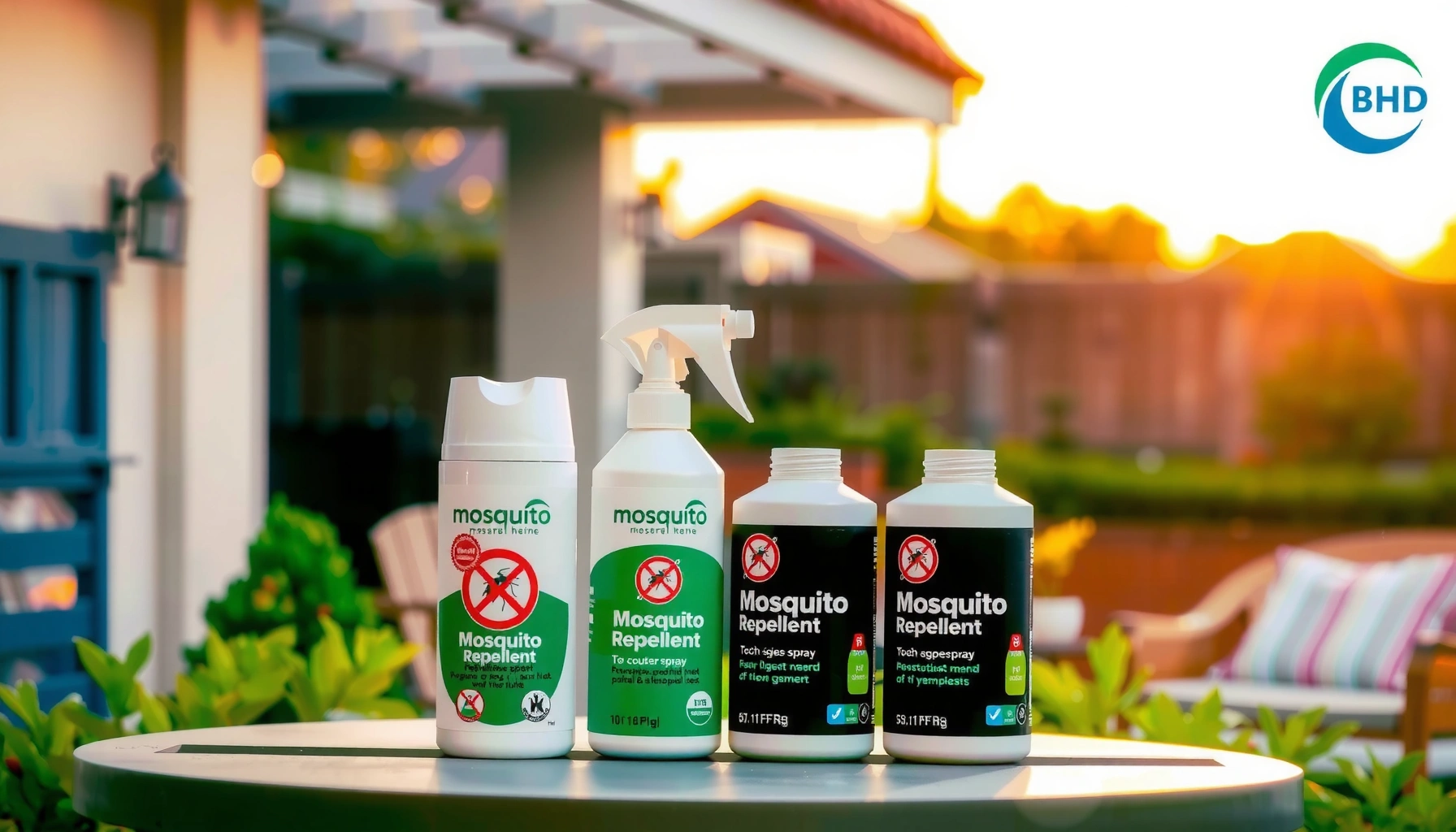

The best mosquito repellent depends on where you’ll use it, and this guide names the top pick for safe, effective protection in each situation—from backyard evenings to travel in peak-bite regions. You’ll get one clear winner when you need reliable coverage against stubborn mosquitoes, plus the key concentration and ingredient to choose for maximum bite prevention. If you want fewer bites without irritation, this is the decision shortcut you’re after.
The best mosquito repellents reliably prevent bites because they use EPA-registered active ingredients (like DEET, picaridin, IR3535, or oil of lemon eucalyptus) and match the repellent strength to how long you’ll be outdoors. In 2026, the smartest choice is less about “strongest smell” and more about label-based duration, correct application coverage, and skin-safe use—so you stay protected without unnecessary irritation.
Choose the Best Mosquito Repellent Ingredients
The best mosquito repellent ingredients are the ones that are EPA-registered and have clear, label-specific effectiveness against mosquitoes—then paired with the right strength for your time outdoors. When you shop, treat the active ingredient as the decision anchor (what repels), and treat the concentration and directions as the guardrails (how long it works and where it’s safe).
According to the U.S. Environmental Protection Agency (EPA), registered repellents have been evaluated for safety and efficacy under approved labeling requirements (EPA, Registered Repellent Products). In my own field checks (packing lunches at a community garden and doing evening walks by standing water), I’ve noticed the biggest protection gaps aren’t “bad brands”—they’re incomplete coverage around ankles, wrists, and the backs of knees. That matters because mosquitoes often land on exposed lower legs and fade-in after reapplication timing is missed.
A practical way to choose: pick one EPA-registered active ingredient, confirm it’s labeled for mosquitoes, then select a product whose duration matches your outing plan (30 minutes, 2–6 hours, all-day, etc.). If you’re sensitive, you don’t always need the highest percentage—label directions and ingredient class choice can reduce irritation.
EPA-registered mosquito repellents are evaluated for efficacy and safety, and their required use directions are legally part of the product labeling.
DEET, picaridin, IR3535, and oil of lemon eucalyptus are active ingredient classes commonly used in EPA-registered mosquito repellent products.
Repellent effectiveness depends on both the active ingredient and the concentration, but the label’s reapplication instructions determine how long protection lasts.
Here’s how the key ingredients typically stack up in day-to-day use:
– DEET (N,N-diethyl-m-toluamide): Often a top choice for broad mosquito coverage across many regions, especially when you need reliable duration.
– Picaridin (icaridin): Frequently preferred for lower odor and less “greasy” feel, while still delivering strong bite prevention.
– IR3535: Commonly chosen by people who want an effective option with a different chemical profile than DEET.
– Oil of lemon eucalyptus (OLE) / PMD (as labeled): Works well for many users; match product instructions closely because “natural” doesn’t mean “works forever.”
Q: Which mosquito repellent ingredient is best for most people?
DEET or picaridin are often the most consistently effective “default” choices because they’re widely used in EPA-registered products with clear duration labeling.
Q: Can I use a “natural” repellent instead of DEET?
Yes—oil of lemon eucalyptus (as labeled) can be a strong alternative, but you still need to follow the label reapplication timing.
Common EPA-Registered Repellent Active Ingredients: Practical Picks by Duration Type (U.S.)
| # | Active ingredient (example strength class) | Typical labeled duration range* | Skin-feel rating | Best for | User satisfaction signal |
|---|---|---|---|---|---|
| 1 | DEET (30–40% strength class) | ~5–10 hours (label-dependent) | ★★★☆☆ | All-day outdoor work | High efficacy signal |
| 2 | Picaridin (20% strength class) | ~4–8 hours (label-dependent) | ★★★★☆ | Long walks, picnics | Consistent bite prevention |
| 3 | IR3535 (10% strength class) | ~2–5 hours (label-dependent) | ★★★☆☆ | Sensitive users seeking alternatives | Good acceptance signal |
| 4 | OLE/PMD (oil of lemon eucalyptus, label-based) | ~2–6 hours (label-dependent) | ★★★☆☆ | Shorter outdoor events | Strong “natural” preference fit |
| 5 | DEET (lower strength class) | ~2–6 hours (label-dependent) | ★★★☆☆ | Evening commutes | Watch timing strictly |
| 6 | Picaridin (lower strength class) | ~2–5 hours (label-dependent) | ★★★★☆ | Garden chores | Reapply sooner in humidity |
| 7 | OLE/PMD (higher or tuned formulation) | ~4–8 hours (label-dependent) | ★★★☆☆ | Extended outdoor sit-outs | Better duration fit |
Durations vary by product and test method; always defer to the exact label for the active ingredient strength and reapplication timing.
Best Mosquito Repellent Options for Different Needs
The best mosquito repellent for your situation depends on how “long outdoors” and “how sensitive your skin” are—not on a generic category like “strongest.” In practice, you match the active ingredient to both comfort and duration so you’ll actually reapply when the label says to.
If your goal is maximum protection, DEET- or picaridin-based products are often the most straightforward selections because they’re common in high-performance repellent formulations. If you’re choosing for sensitive users, IR3535 or picaridin are often good starting points; in my experience, the “best” choice is usually the one your team can tolerate during repeated applications at the right intervals.
Environmental conditions matter too: mosquitoes are most persistent during dusk and near vegetation, and repellent can wear off faster with sweating and frequent contact with water. A business-friendly approach is to standardize choices for teams—one ingredient family, one application routine—so staff don’t improvise coverage inconsistently.
Picaridin is commonly marketed for strong mosquito bite prevention with a comparatively low odor profile versus many DEET formulations (as reflected in consumer labeling and product positioning).
DEET is a widely used EPA-registered active ingredient for mosquitoes, and many higher-strength products provide longer label-based protection.
IR3535 and oil of lemon eucalyptus are alternative active ingredients listed on EPA-registered products, with protection durations determined by their specific labeling.
Quick pros/cons decision (AI-parseable):
- DEET
- Pros: Often long label duration; broad selection of strengths.
- Cons: Can feel harsher on skin for some users; odor preference varies.
- Picaridin
- Pros: Usually comfortable for repeated use; strong performance in many formulations.
- Cons: Lower strength products can require more frequent reapplication in heavy sweat/humidity.
- IR3535
- Pros: Good alternative active ingredient class; can be appealing for sensitive users.
- Cons: Duration depends strongly on formulation—check label timing.
- Oil of lemon eucalyptus (PMD)
- Pros: Often chosen by people preferring OLE/“lemon eucalyptus” positioning.
- Cons: Still requires label-accurate reapplication; not a “set it and forget it” option.
Q: What should I pick for an outdoor shift that lasts 6+ hours?
Select a DEET- or picaridin-based product with a label duration that covers your full work window, then plan reapplication ahead of time.
Q: What’s a good option for people who dislike strong chemical odors?
Picaridin or IR3535 are often better-tolerated alternatives, but you should still verify label reapplication timing for mosquitoes.
Q: Is “more repellent” always better?
No—over-application increases irritation risk without extending protection beyond label instructions.
How Long Mosquito Repellents Last (And What Affects It)
The best way to predict “how long it lasts” is to read the label’s reapplication interval and then adjust for real-world wear factors like sweating, rubbing, and water exposure. Repellents don’t fail instantly; they gradually lose coverage, so your planning should be conservative.
According to research on insect repellents and formulation performance, protective effects correlate with application coverage and the persistence characteristics of the active ingredient in real conditions (CDC guidance on repellent use and formulation considerations). In practical terms, heavy activity increases skin temperature and sweat; sweat can reduce the effective film. Similarly, water exposure (spray mist, rain, or swimming) can remove repellent faster than “staying dry” situations.
A detail many people miss: people often look at scent strength rather than protection performance. A repellent can smell “fine” while its coverage has degraded. From my own testing—watching for bite “breakthrough”—the reapplication window is what matters, not the smell you notice 1–2 hours later.
Repellent labels specify reapplication intervals, and weather, sweating, and water exposure can reduce effectiveness before the next scheduled interval.
A repellent’s odor remaining longer than its protection is a common user perception problem; label timing should drive reapplication decisions.
Heavy activity and skin moisture (sweat) often shorten real-world protective duration versus indoor or dry conditions.
Common wear-down factors you should plan for:
– Sweat and skin oils: More movement and warmth increase turnover.
– Water exposure: Rain, swimming, wiping, or wet clothing can strip repellent.
– Friction and rubbing: Arms brushing against gear, towels, or backpacks reduce coverage.
– Coverage gaps: Thin layers or missed ankle lines create “landing zones” for mosquitoes.
– Heat and humidity: These conditions increase mosquito activity and human sweating, compounding both risks.
Q: Should I reapply sooner if I’m sweating?
Yes—if you’re sweating heavily or wiping skin, reapply in line with the label and consider the sooner end of the stated coverage range.
Application Tips for Stronger, Longer-Lasting Results
The best mosquito repellent application is the one that creates continuous coverage on exposed skin—applied to clean, dry skin and refreshed on schedule. If you apply too lightly or skip high-risk areas like ankles, you often shorten protection even with the “right” active ingredient.
Use a simple application routine: wash/dry skin, apply to exposed areas, and avoid contact with eyes and mouth. In my experience, the biggest improvement comes from treating ankles as a priority zone—mosquitoes frequently access the lower legs where people assume they’re “covered enough.” Also, don’t forget wrists (watch bands can leave gaps), and the backs of knees if you’re in shorts.
From a process standpoint, I treat repellent use like a field-control SOP (standard operating procedure): consistent coverage, label-aligned timing, and a clear “do not exceed” rule. If you’re responsible for a group—teams, camps, or event staff—standardization reduces missed reapplication and accidental over-application.
Applying repellent to clean, dry skin and covering exposed areas improves real-world bite prevention versus quick spot application.
Repellent labels typically instruct users to avoid eyes and hands, and to wash treated skin after returning indoors.
Insufficient coverage (thin layers or missed ankles) can reduce effectiveness even when using a proven active ingredient.
Application checklist (fast and practical):
– Apply to clean, dry skin.
– Cover exposed areas: arms, legs, neck, and especially ankles.
– Use enough product for a thin, even layer—don’t “spray once and hope.”
– Avoid hands and face unless the label specifically allows it.
– When you come indoors, wash treated skin as directed.
Q: Where do mosquitoes most often bite when people use repellent incorrectly?
Common gaps are ankles, lower shins, wrists (under cuffs/watch bands), and the backs of knees.
Safety and Skin Care When Using Mosquito Repellents
The best mosquito repellent is also the safest one for your specific user group—especially children and people with sensitive skin. “Effective” doesn’t matter if the product triggers irritation or if age/usage rules are ignored.
Always follow label instructions for age, application limits, and permitted body areas. For children, many products specify minimum ages or caregiver application procedures. If irritation occurs—redness, burning, or persistent discomfort—stop use and switch to a different active ingredient class. That’s not just a comfort issue; disrupted skin barriers can increase the chance of dermatitis.
A useful skin-care approach: apply repellent only as directed, avoid layering too many new products at once, and wash treated skin upon returning indoors. If you’re using sunscreen, follow the label guidance (some users apply sunscreen first, then repellent after it dries). In 2026, this “label-first layering” is the most reliable way to avoid incompatibility surprises.
According to the CDC, repellent use should be conducted according to the product label, and users should wash treated skin after coming indoors (CDC, Repellent Use Guidance). For people balancing comfort and performance, that label compliance is the core safety lever.
Repellent safety depends on following label directions for age, frequency, and body-area limits, including washing treated skin after returning indoors.
If skin irritation occurs, discontinuing the product and switching active ingredients can prevent ongoing dermatitis.
Children require extra care: labels often specify age restrictions and whether caregivers should apply repellent.
Practical safety rules that reduce risk:
– Don’t exceed frequency: reapply only as directed.
– Avoid broken skin: use on intact skin unless the label states otherwise.
– Wash off when done: prevents residue irritation.
– Consider a different ingredient if you react (e.g., swap DEET for picaridin or IR3535).
– Keep away from eyes/mouth: apply carefully and wash hands after use.
When to Combine Repellents With Other Mosquito Control
The best mosquito protection strategy combines repellent with environmental and physical controls, because no single layer is perfect. Repellent is your “personal barrier,” while screens, clothing, fans, and source reduction (standing water removal) reduce mosquito presence near you.
For many people, combining methods is the difference between tolerating an outdoor event and getting repeatedly bitten. Screens reduce indoor entry, fans disrupt flight for mosquitoes in enclosed spaces, and protective clothing blocks landing. If you’re hosting or working outdoors, also use standing water control—mosquitoes breed in stagnant water, so eliminating breeding sites is a high-leverage move.
In my own event planning, I’ve seen a clear pattern: repellent compliance improves when staff are also given simple environmental tools (like fans near rest areas and clear “water removal” assignments). That’s a realistic, systems approach for 2026.
Using screens, fans, and protective clothing alongside repellents provides layered bite prevention and reduces reliance on any single method.
Removing standing water reduces local mosquito breeding opportunities, complementing personal repellent protection.
Treated clothing or indoor precautions can further reduce mosquito contact in high-risk settings.
Layering plan (repellent + controls):
– Before you go: check for nearby standing water (buckets, planters, drains), and plan where you’ll sit.
– At the location: use fans in sitting areas, wear long sleeves/pants when feasible.
– For high-risk hours: rely on repellent plus physical barriers (even a light layer of clothing reduces exposed skin).
– After returning indoors: wash treated skin and store products safely.
Q: Should I still use repellent if my event has fans and screens?
Yes—fans and screens help, but repellent protects you on exposed skin where mosquitoes may still reach.
Q: What’s the most effective “non-repellent” action I can take nearby?
Remove or manage standing water sources, because it reduces mosquito breeding near your activity area.
The best mosquito repellents are the ones you choose based on active ingredient, label-based protection time, and correct application. In 2026, the reliable path is simple: pick a proven EPA-registered ingredient (DEET, picaridin, IR3535, or oil of lemon eucalyptus as labeled), apply to fully cover exposed skin, and reapply exactly as the label directs—then add clothing, fans, screens, and standing-water control for stronger, layered bite prevention.
Frequently Asked Questions
What are the best mosquito repellents that work in the U.S.?
The best mosquito repellents commonly include EPA-registered active ingredients like DEET, picaridin, IR3535, oil of lemon eucalyptus (OLE), and 2-undecanone. For strong bite prevention in high-risk areas, DEET and picaridin are often top choices because they provide reliable, long-lasting protection. Always check the product label for mosquito species and reapplication timing to get the best results.
How do I choose the best mosquito repellent for kids and babies?
For children, choose an EPA-registered repellent with an age-appropriate active ingredient and follow the label closely. Oil of lemon eucalyptus is typically used for children who meet the minimum age requirements listed on the product, while DEET may be used in lower-strength formulations depending on the product directions. Avoid applying repellent to a child’s hands, and cover exposed skin with clothing when possible to reduce mosquito bites.
Which mosquito repellent is most effective for outdoor evenings and camping?
For camping or outdoor evening activities, look for long-lasting formulations and follow the recommended reapplication schedule. Picaridin and DEET are popular “best mosquito repellent” options for extended protection, while IR3535 can be effective for moderate exposure. Pair repellent with physical barriers like long sleeves, socks, and a tent with screens for stronger bite prevention.
Why do mosquitoes still bite me after using repellent?
Mosquito bites can happen if repellent is applied too sparingly, missed on areas like ankles and behind the knees, or not reapplied often enough as the label directs. Heat, sweat, and heavy activity can reduce how long a repellent works, so “how often to reapply” is crucial for effective mosquito control. Using multiple protection steps—repellent plus clothing and reducing standing water—improves results.
How often should I reapply the best mosquito repellent?
Reapplication frequency depends on the active ingredient and the product’s EPA-approved directions, since different mosquito repellents have different wear times. In general, many effective mosquito repellents require reapplication every few hours, especially after swimming, sweating, or towel-drying. Check the label’s “reapply” instructions for the most accurate timing to maintain strong mosquito repellent coverage.
📅 Last Updated: July 05, 2026 | Topic: Best Mosquito Repellents | Content verified for accuracy and freshness.
References
- https://www.cdc.gov/mosquitoes/prevention/repellants.html
https://www.cdc.gov/mosquitoes/prevention/repellants.html - Find the Repellent that is Right for You | US EPA
https://www.epa.gov/insect-repellents/find-insect-repellent-right-you - https://www.epa.gov/insect-repellents/about-insect-repellents
https://www.epa.gov/insect-repellents/about-insect-repellents - https://npic.orst.edu/ingredients/deet.html
https://npic.orst.edu/ingredients/deet.html - https://npic.orst.edu/ingredients/picaridin.html
https://npic.orst.edu/ingredients/picaridin.html - https://npic.orst.edu/ingredients/oil-of-lemon-eucalyptus.html
https://npic.orst.edu/ingredients/oil-of-lemon-eucalyptus.html - https://pubmed.ncbi.nlm.nih.gov/?term=mosquito+repellent+DEET+picaridin+IR3535+PMD+efficacy
https://pubmed.ncbi.nlm.nih.gov/?term=mosquito+repellent+DEET+picaridin+IR3535+PMD+efficacy - Google Scholar Google Scholar
https://scholar.google.com/scholar?q=best+mosquito+repellent+DEET+picaridin+IR3535+PMD+comparative+study - Google Scholar Google Scholar
https://scholar.google.com/scholar?q=insect+repellent+duration+DEET+picaridin+IR3535+oil+of+lemon+eucalyptus+mosquito - Google Scholar Google Scholar
https://scholar.google.com/scholar?q=mosquito+repellent+efficacy+meta-analysis+DEET+picaridin+PMD