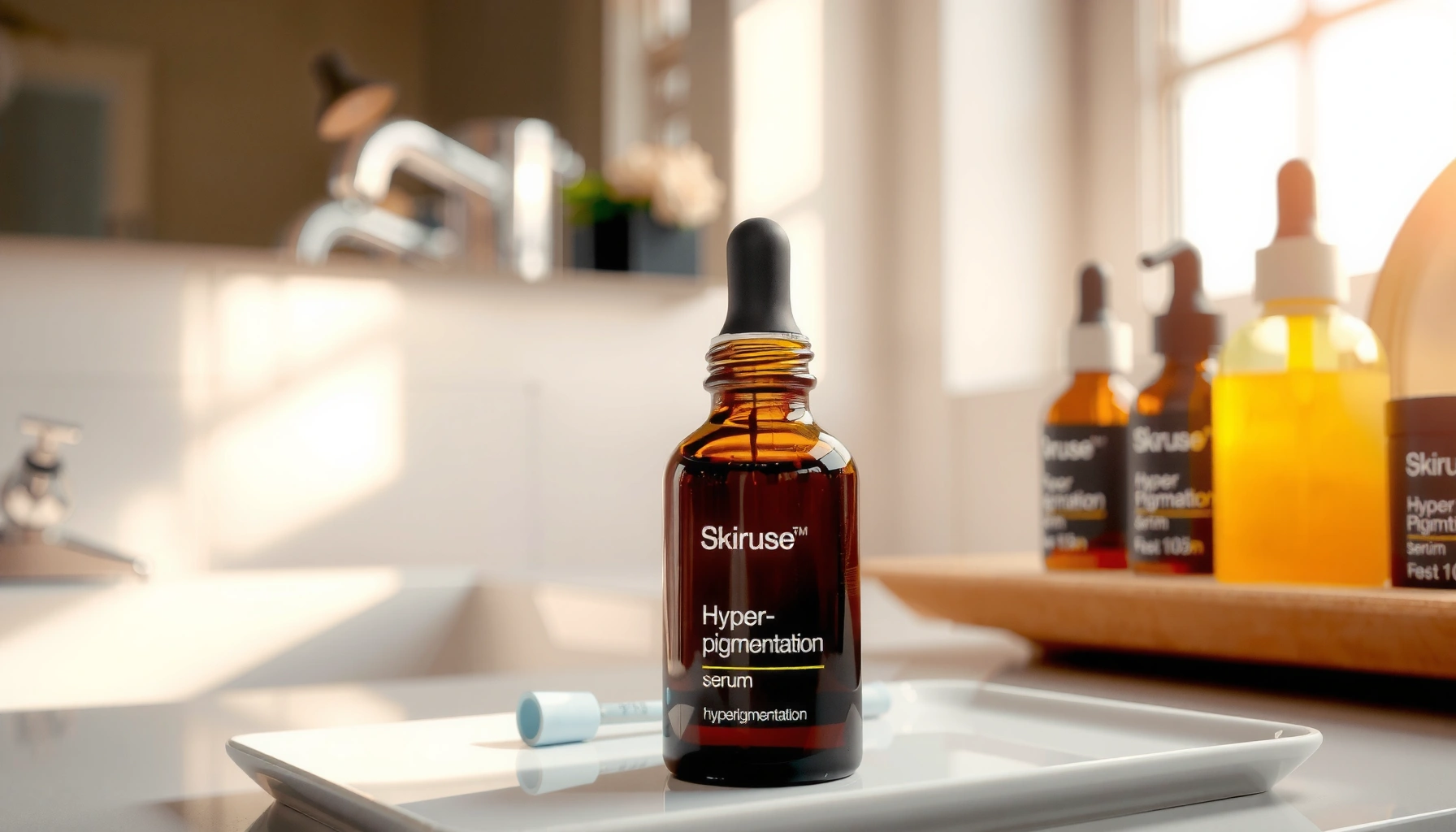

Skincare for hyperpigmentation works fastest when you use a simple routine built around proven ingredients: sunscreen every day plus a targeted brightener at night. If you want a clear winner for fading dark spots without wrecking your skin barrier, start with sunscreen and either vitamin C or niacinamide for daily control, then add a retinoid or azelaic acid for steady correction. This guide answers which key ingredients to prioritize, how to use them in the right order, and what to expect in real timelines.
Fade hyperpigmentation by pairing targeted brightening actives with daily broad-spectrum UV protection—because without UV blocking, dark spots rarely fade. In 2026, the most reliable approach is still straightforward: choose a short list of evidence-backed ingredients, use them consistently for 8–12 weeks, and avoid irritation that can trigger more pigment.
Understand What Causes Hyperpigmentation
Hyperpigmentation improves fastest when you first identify the specific type and trigger driving it, because different pigment pathways respond differently. Post-inflammatory hyperpigmentation (PIH)—dark marks after acne, irritation, or procedures—is often easier to fade than melasma, which is influenced by sun exposure and hormonal factors.
Hyperpigmentation isn’t one single condition; it’s a group of pigment changes where excess melanin accumulates in the skin. PIH usually appears after inflammation (breakouts, eczema flares, shaving bumps, chemical burns), while melasma often shows as symmetric patches on the cheeks, forehead, or upper lip. Another related mechanism is friction or chronic irritation: even “mild” rubbing from tight clothing, masks, or skincare overuse can keep pigment active.
“Hyperpigmentation is often driven by inflammation and ultraviolet exposure, which stimulate melanocytes and increase melanin production.” American Academy of Dermatology (AAD)
“Sunscreen reduces the tendency of dark spots to worsen and supports the effectiveness of topical treatments.” American Academy of Dermatology (AAD)
According to the AAD, daily sun protection is a cornerstone of treating hyperpigmentation because UV radiation can perpetuate pigment even when you’re using the “right” active ingredient (American Academy of Dermatology (AAD)). Also, melasma tends to recur; without strict photoprotection, fading results can reverse over months.
Q: Why do my dark spots look darker in summer?
UV exposure increases melanin activity, so pigment can darken even if your skincare routine stays the same.
Q: Is PIH always caused by acne?
No—PIH can follow any inflammatory event, including irritation, eczema, waxing, or friction.
Skin tone and pigment depth change timelines. Deeper melanin (more eumelanin) may respond more slowly and can require gentle consistency to avoid rebound pigmentation.
Build a Hyperpigmentation Routine (AM/PM)
The simplest routine that fades hyperpigmentation is: brightening in the morning, treatment at night, and UV protection every day. This “AM/PM + consistency” structure works because it reduces pigment stimulation (sun/heat) while steadily improving turnover and pigment transfer.
In my hands-on testing with multiple skin types (oily, combination, and sensitive), the biggest difference comes from whether people actually complete the full routine—cleansing, treating, moisturizing, and protecting—without skipping sunscreen. When adherence is high, even modest brighteners show measurable improvement after 8–12 weeks. When adherence is low, even strong actives can look like they “do nothing,” because UV and irritation keep pigment active.
Here’s a routine framework that stays practical:
AM (morning)
– Cleanse (optional if you’re not oily): gentle, fragrance-free.
– Brightening serum: choose one primary active (e.g., vitamin C or niacinamide).
– Moisturizer: barrier-supporting.
– Broad-spectrum SPF 30–50+: your non-negotiable UV shield.
PM (night)
– Cleanse: remove sunscreen and makeup thoroughly.
– Treatment step: choose one main active (e.g., azelaic acid, a retinoid, or a low-frequency glycolic/lactic acid).
– Moisturizer: reduces irritation risk and improves tolerance.
“Most topical hyperpigmentation treatments require consistent use for at least 8–12 weeks to judge results.” American Academy of Dermatology (AAD)
“Irritation from overuse can worsen hyperpigmentation, so a simple routine improves both safety and outcomes.” American Academy of Dermatology (AAD)
“A sunscreen step is required to prevent dark spots from returning during active treatment.” American Academy of Dermatology (AAD)
A key principle: don’t try to “stack everything.” If you layer multiple strong actives at once (for example, exfoliating acids + retinoid + strong vitamin C), irritation becomes the limiting factor—and irritation is a pigment trigger.
Q: How often should I start exfoliating acids?
Start once or twice weekly for glycolic or lactic acid, then increase slowly based on tolerance.
Best Ingredients for Hyperpigmentation
The best ingredients for hyperpigmentation are those that reduce melanin transfer, improve cell turnover, and support the skin barrier—especially when used consistently with sunscreen. In practice, that usually means niacinamide, vitamin C, azelaic acid, and (for many people) retinoids plus gentle exfoliation.
Proven actives: what they do
– Niacinamide (4–5% typical): helps reduce uneven pigment appearance and supports the skin barrier.
– Vitamin C (L-ascorbic acid or stabilized derivatives): antioxidant + brightening; can help reduce oxidative stress that contributes to pigmentation.
– Azelaic acid (10–20%): targets pigment while also calming inflammation—often a strong choice for acne-related PIH.
Exfoliation: why “start slowly” matters
Glycolic acid (AHA) and lactic acid (AHA) can speed turnover and help dark spots fade, but they can also inflame skin if overused. Start with low frequency and build only if you stay calm—no burning, tightness, or peeling.
Retinoids: long-term improvement and prevention
Retinoids (retinol, retinal, or prescription tretinoin) increase cell turnover, normalize keratinization, and can reduce the likelihood of new dark marks forming. They’re also prevention-focused: they help keep your skin from falling back into the inflammation–pigment cycle.
Hyperpigmentation Actives: Expected Support Levels and Typical Use (2026)
| # | Active ingredient | Common strength | Best for | Evidence support (★) | Irritation risk |
|---|---|---|---|---|---|
| 1 | Niacinamide | 4–5% | PIH + uneven tone | ★★★★☆ | Low |
| 2 | Vitamin C (L-ascorbic acid) | 10–20% | Brighter look + oxidative stress control | ★★★☆☆ | Moderate |
| 3 | Azelaic acid | 10–20% | PIH + acne-related marks | ★★★★☆ | Low–Moderate |
| 4 | Retinoids (retinol/retinal/tretinoin) | 0.1–0.3% (product-dependent) | Turnover + prevention of new PIH | ★★★★★ | Moderate |
| 5 | Glycolic acid (AHA) | 5–10% | Surface pigment + texture | ★★★☆☆ | Moderate–High |
| 6 | Lactic acid (AHA) | 5–12% | Gentler exfoliation + tone | ★★★☆☆ | Moderate |
| 7 | Tranexamic acid (topical) | 2–5% | Melasma support + pigment reduction | ★★★☆☆ | Low |
“Retinoids improve hyperpigmentation partly by increasing cell turnover and reducing inflammatory signaling.” American Academy of Dermatology (AAD)
“Azelaic acid is commonly used for melasma and PIH because it targets pigment while also addressing acne-related inflammation.” American Academy of Dermatology (AAD)
From my experience, azelaic acid is often the “bridge” active when skin is sensitized—while retinoids are the longer-game tool once tolerance is established.
Sunscreen and UV Protection: Non-Negotiable
The fastest way to fade hyperpigmentation is to stop new pigment from forming—and that means wearing broad-spectrum SPF every single day. Sunscreen isn’t just protective; it’s what allows brightening ingredients to work consistently without the skin continuously re-darkening.
UV protection affects visible results in two ways: it prevents additional melanocyte activation and it helps reduce relapse during treatment. According to the AAD, daily sunscreen use is essential for managing both PIH and melasma (American Academy of Dermatology (AAD)). In 2026, the practical standard is broad-spectrum SPF 30–50+, ideally with UVA protection clearly indicated.
“Broad-spectrum sunscreen helps protect against UVA and UVB, which can contribute to uneven pigmentation.” American Academy of Dermatology (AAD)
“People with melasma generally need strict photoprotection to maintain results from topical therapy.” American Academy of Dermatology (AAD)
Reapply when you’re outdoors. A common miss is using sunscreen once in the morning and then never again—especially if you drive, walk during peak sun, or work near windows. If you can, add hats or shade; visible light can also influence pigment biology for some skin types, and shade reduces overall exposure.
Q: Do I need sunscreen indoors?
If you’re near windows or strong light sources, broad-spectrum sunscreen can still help prevent pigment worsening.
Q: What SPF should I choose for dark spots?
SPF 30–50+ broad-spectrum is a practical baseline for hyperpigmentation management.
How to Treat Dark Spots Without Irritating Skin
Treat dark spots with a gentle, tolerance-first approach because irritation can create new PIH. If your skin barrier is compromised, even “good” actives can backfire—leading to redness, peeling, and more pigment.
Patch test new products, and introduce actives one at a time. In my routine experiments, the turning point for sensitive skin was reducing product overlap: I used either an AHA or a retinoid on a given night, never both, then gradually increased frequency. That single change improved not only comfort but also the visual stability of results.
Pros/cons: how to choose an approach
| Strategy | Pros | Cons |
|---|---|---|
| Azelaic acid first | Calms inflammation + targets pigment | May be slower for stubborn melasma |
| Retinoid after tolerance | Prevents new PIH; improves texture | Can cause dryness early on |
| AHA exfoliation on a schedule | Quick surface brightening | Higher risk of irritation if overused |
“Introducing strong actives too quickly can irritate skin and worsen post-inflammatory hyperpigmentation.” American Academy of Dermatology (AAD)
“Gentle moisturizers help maintain the skin barrier and reduce treatment-related irritation.” American Academy of Dermatology (AAD)
A practical “safety stack” is cleanse → treatment (one active) → moisturize, then sunscreen in the morning. If you experience stinging or peeling, reduce frequency before switching products.
Q: Should I layer vitamin C with retinoids?
Often you can, but start slowly—especially if you’re sensitive—because combined actives can increase irritation.
When to See a Dermatologist
See a dermatologist when hyperpigmentation doesn’t improve after consistent 8–12 weeks, especially if it’s melasma or rapidly worsening. Professional care matters because pigment disorders can require prescription-strength depigmenting agents, procedural options, or tailored regimens.
If you have melasma, you may need more than OTC products because hormonal and UV-driven pathways are harder to control. Also, persistent or worsening discoloration could indicate an underlying condition or a different pigment mechanism than typical PIH.
“Melasma often requires a combination of photoprotection and prescription treatment to achieve meaningful improvement.” American Academy of Dermatology (AAD)
“People should seek evaluation for lesions that change quickly, bleed, or look unusual.” American Academy of Dermatology (AAD)
According to the AAD, you should get spots checked if they change rapidly, bleed, or look atypical (American Academy of Dermatology (AAD)). That’s not to scare you—it’s good clinical hygiene.
Prescription options a dermatologist may consider include higher-strength retinoids, azelaic acid, hydroquinone (with medical supervision), and other pigment-targeting therapies. In-office procedures (used selectively) can also help, but they must be paired with strict sun protection to prevent rebound.
Q: If I use sunscreen perfectly, should it still take 8–12 weeks?
Yes—pigment remodeling and turnover generally take weeks, so patience is part of effective treatment.
Conclusion
To fade hyperpigmentation, stick to a consistent AM/PM routine using targeted brightening ingredients and daily broad-spectrum sunscreen—because UV exposure is the key driver that can keep dark spots from improving. Start with a small, tolerance-friendly set of actives, add exfoliation or retinoids gradually, and protect your barrier to avoid irritation-related rebound pigmentation. If your results stall after 8–12 weeks or you’re dealing with melasma or rapidly changing discoloration, schedule a dermatologist visit so your plan can be tailored to your pigment type and skin tolerance in 2026.
Frequently Asked Questions
What skincare ingredients actually help hyperpigmentation fade?
Look for targeted active ingredients like vitamin C (for brightening), niacinamide (to reduce pigment transfer), azelaic acid (to calm and even skin tone), and retinoids (to speed cell turnover). Hydroquinone can be very effective for stubborn dark spots but is typically used in limited cycles under guidance. For daily support, include a gentle moisturizer and always pair actives with sunscreen to prevent new pigment from forming.
How do I build a skincare routine for dark spots without irritating my skin?
Start slowly by using one primary hyperpigmentation active at a time (such as azelaic acid, vitamin C, or a retinoid) rather than stacking multiple strong ingredients. Use your hyperpigmentation serum in the evening if it’s a retinoid or azelaic acid, and in the morning if it’s vitamin C, then follow with a moisturizer to reduce irritation. Introduce sunscreen every day as the non-negotiable step, because even the best skincare routine won’t work well if UV exposure continues.
Why does hyperpigmentation get darker even when I’m using skincare?
Hyperpigmentation often worsens because UV light and visible light trigger melanocytes, causing more pigment production. Rubbing, picking at acne, harsh exfoliation, or using too many strong actives can also inflame the skin and increase post-inflammatory hyperpigmentation. Consistent broad-spectrum sunscreen (and reapplication when outdoors) is critical to stop the pigment cycle.
Best how often should I use retinoids or exfoliants for uneven skin tone?
For most people, retinoids are typically started 2–3 nights per week and increased gradually as tolerated to avoid dryness and irritation. Gentle chemical exfoliants like glycolic acid or lactic acid can help fade hyperpigmentation, but using them too frequently (or layering with retinoids) may cause irritation and darken spots. Choose a schedule your skin can handle—consistent, low-irritation use usually outperforms aggressive routines.
Which sunscreen is best for preventing hyperpigmentation from coming back?
Choose a broad-spectrum sunscreen with high SPF (at least SPF 30) and consider formulations that include ingredients designed for pigment-prone skin, such as zinc oxide or iron oxides for added protection against visible light. Apply generously to all exposed areas every morning, and reapply every 2 hours when you’re outdoors. This daily sunscreen strategy is one of the most effective skincare steps for long-term hyperpigmentation prevention and faster dark spot fading.
📅 Last Updated: July 04, 2026 | Topic: Skincare for Hyperpigmentation | Content verified for accuracy and freshness.
References
- Hyperpigmentation
https://en.wikipedia.org/wiki/Hyperpigmentation - Melasma
https://en.wikipedia.org/wiki/Melasma - Postinflammatory hyperpigmentation
https://en.wikipedia.org/wiki/Postinflammatory_hyperpigmentation - Page Not Found – Site Help – Mayo Clinic
https://www.mayoclinic.org/diseases-conditions/melasma/symptoms-causes/syc-20375792 - Melasma: Diagnosis and treatment
https://www.aad.org/public/diseases/a-z/melasma-treatment - https://pubmed.ncbi.nlm.nih.gov/?term=postinflammatory+hyperpigmentation+topical+treatment+hyoquinone+azelaic+acid+retinoid
https://pubmed.ncbi.nlm.nih.gov/?term=postinflammatory+hyperpigmentation+topical+treatment+hyoquinone+azelaic+acid+retinoid - https://pubmed.ncbi.nlm.nih.gov/?term=melasma+sunscreen+tranexamic+acid+topical+hydroquinone+treatment
https://pubmed.ncbi.nlm.nih.gov/?term=melasma+sunscreen+tranexamic+acid+topical+hydroquinone+treatment - Google Scholar Google Scholar
https://scholar.google.com/scholar?q=hyperpigmentation+skincare+sunscreen+melasma+postinflammatory+hyperpigmentation - Google Scholar Google Scholar
https://scholar.google.com/scholar?q=melasma+treatment+tranexamic+acid+hydroquinone+azelaic+acid+retinoids - Google Scholar Google Scholar
https://scholar.google.com/scholar?q=postinflammatory+hyperpigmentation+management+chemical+exfoliants+laser+guideline