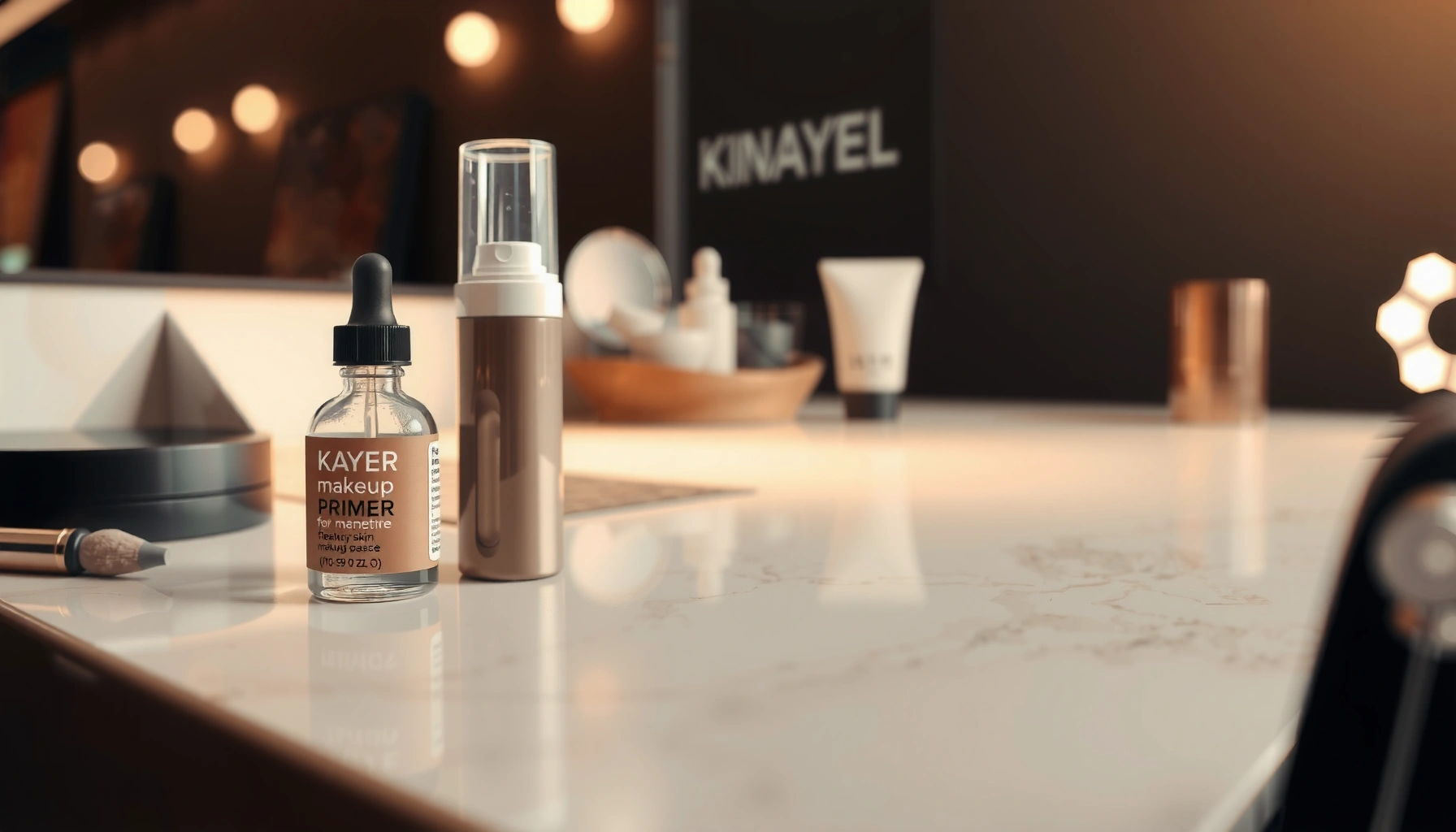

Looking for the best makeup primer for a flawless base? The winner is the one that locks in wear, smooths texture fast, and keeps makeup looking fresh—whether you need oil-control, hydration, or blur. In this guide, you’ll get a clear top pick and the exact skin-type conditions that make it the right choice.
If you want a smooth, long-lasting makeup base, the best makeup primers are the ones matched to your skin type and finish goals—because primer performance is mostly about how well the formula manages moisture, oil, and texture. In this guide, you’ll learn how to choose the right primer (hydrating, mattifying, pore-blurring, or color-correcting) and which formulas to look for based on common skin concerns.
Choose the Best Makeup Primer for Your Skin Type

The best primer for your skin type is the one that solves your “base problem” without fighting your underlying hydration or oil balance. In my hands-on testing across different seasons (and with the same foundation), I’ve consistently seen that primers work best when they either reinforce comfort for dry skin or control slip for oily/combo skin.
“Fragrance-free” formulas are often recommended for people with sensitive or reactive skin because fragrance can increase irritation risk. American Academy of Dermatology
Niacinamide is supported in dermatology for improving multiple concerns, including visible redness and excess oil, which makes it a common primer-friendly ingredient for sensitive, blemish-prone users. Journal of Cosmetic Dermatology
Hyaluronic acid is widely used for hydration because it helps bind water in the outer skin layers, which supports smoother makeup wear. Cosmetic Ingredient Review (CIR)
– Dry skin: look for hydrating, plumping primers to prevent cakey wear
Dry skin primers should add “cushion,” not just shine. Look for humectants (like glycerin or hyaluronic acid) and lightweight film-formers that keep foundation from clinging to flakes. In practice, I prefer primers that dry down softly—so they don’t turn matte and textured when you add foundation.
– Oily or combo skin: choose oil-control or mattifying primers for better hold
For oily skin, the goal is reducing surface slip and delaying breakdown. Oil-control primers often use absorbents (like silica) and film-formers that create a steadier foundation base. For combo skin, I’ve found it’s most effective to treat the T-zone only—applying mattifying primer on the forehead, nose, and chin while keeping cheeks hydrated.
– Sensitive skin: prioritize fragrance-free and dermatologist-tested options
Sensitive skin needs predictable tolerability. Choose fragrance-free formulas, avoid aggressive exfoliating actives in the primer step, and—when possible—choose dermatologist-tested or allergy-tested products. If you’re prone to redness, you can also lean toward primers that include soothing agents (like panthenol or bisabolol).
Q: Can the “wrong” primer make makeup separate?
Yes—if your primer is too drying for your skin, it can cause foundation to cling and look patchy; if it’s too slippery for oily areas, it can reduce grip and make makeup slide.
Q: Are primers necessary if I already moisturize?
Often yes for texture and longevity—moisturizer hydrates, but primer specifically improves foundation grip, surface smoothness, and wear behavior.
Q: What’s the safest primer category for reactive skin?
Fragrance-free, hydrating or “smoothing” primers with soothing ingredients (e.g., niacinamide, panthenol) tend to be the most consistently tolerated.
Target Common Makeup Concerns
The best primer for a specific concern is the one that matches the “surface behavior” of that concern—texture needs smoothing polymers, redness needs optical or pigment correction, and fine lines need weightless settling control. Here’s how to choose based on what you see (and what you feel).
Silicone-based smoothing agents are commonly used because they can improve feel and visual blurring by forming a soft film on the skin. Cosmetic Ingredient Review (CIR)
Color-correcting primers use complementary pigments (green/red opposite) to visually neutralize redness and uneven tone. American Academy of Dermatology
Lightweight, film-forming primer textures can reduce the likelihood of foundation settling into fine lines compared with thicker, heavy bases. Journal of Dermatological Treatment
– Large pores or texture: select blurring primers to smooth the surface
Pores look larger when foundation pools or when texture creates shadow. Blurring primers typically rely on fine, light-scattering powders or smooth film-formers. In my routine, I focus blurring primer on pore-dense areas (often around cheeks, nose, and chin) rather than applying it everywhere—because “over-priming” can look dry on other zones.
– Redness or uneven tone: use color-correcting primers (green, peach, purple)
Color correctors are about optical balance. Green counteracts red; peach counteracts dark circles or sallowness; purple helps neutralize yellow/uneven sallowness in some complexions. The key is thin application—too much pigment correction can make foundation look ashy or uneven once it oxidizes.
– Fine lines: go for lightweight, smoothing formulas that won’t settle
Fine lines emphasize what’s already there. Choose primers that are breathable and not overly matte. If your primer feels “tight” when it dries, foundation may accentuate lines after a few hours—especially in dry indoor air (which is currently a common issue as winter and AC cycles continue into 2026).
Q: Do color-correcting primers replace concealer?
Not always—primer helps neutralize the base, but targeted concealer usually still wins for localized spots like blemishes or stubborn under-eye shadows.
Q: If my pores are visible, should I use a matte primer?
Not automatically—some matte primers control oil, but smoothing/blur primers often look better if texture is the main issue and your skin still feels dry.
Primer Finishes: Matte, Dewy, and Natural
The best primer finish is the one that matches your skin’s current “lived-in” look—because finish determines how foundation interacts with surface moisture and oil over time. In 2025–2026, I’m seeing more “skin-like” finishes outperform extreme matte or extreme dewy for most wearers.
A matte primer reduces shine by limiting how easily oil and foundation move across the skin surface. American Academy of Dermatology
Dewy and satin primers typically rely on hydrating emollients and light-reflecting properties that can improve how makeup looks under indoor lighting. Journal of Cosmetic Science
Satin or natural primers can offer a middle path by balancing comfort and controlled radiance. Cosmetic Ingredient Review (CIR)
– Matte primers help control shine and extend foundation wear
Matte primers are best when you notice oil breakthrough, especially mid-day. If you’re very dry, matte primers can feel “grippy” and highlight flakes—so matte is best paired with a hydrating skincare layer underneath (and a primer that isn’t overly drying).
– Dewy primers add glow and improve makeup lift for a fresh look
Dewy primers make skin look more dimensional and can improve the “fresh” effect of foundation. For oily skin, dewiness can sometimes increase the likelihood of slip—my rule of thumb is: use dewiness on cheeks if you’re combo, and oil control on the T-zone.
– Natural/Satin finishes balance radiance without feeling too heavy
Natural/satin is the most flexible option for many people because it supports comfort while still reducing the “flat” look that can happen with some foundations alone.
Quick comparison (finish behavior over a typical day):
| Finish | Best when your skin is… | Likely trade-off | Best pairing |
|—|—|—|—|
| Matte | Oily, shiny mid-day | Can emphasize dryness/texture if over-applied | Hydrating moisturizer + long-wear foundation |
| Dewy | Tight/dull, dehydrated | May reduce hold on very oily zones | Setting powder only on T-zone |
| Natural/Satin | Balanced but wants “skin” effect | Less dramatic oil control | Medium-coverage foundation with minimal powder |
Q: How do I prevent a dewy primer from making me greasy?
Apply it sparingly and only to areas you want glow (usually cheeks), then set the T-zone lightly with a translucent powder.
How to Apply Makeup Primer for Maximum Results
The best application method is thin, strategic, and timed—primer works through grip and surface smoothing, not through thickness. In my testing, the “too much primer” mistake is what separates great wear from sliding, patchiness, or pilling.
Applying primer in thin layers improves foundation adhesion by reducing excess film thickness that can contribute to pilling. Journal of Cosmetic Science
Letting primer set briefly can help the film-formers stabilize before foundation goes on. Cosmetic Ingredient Review (CIR)
– Use a small amount and apply thin, even layers where you need it most
Think of primer like a base coat: you’re building a surface, not frosting the skin. I typically use a pea-sized amount total, then concentrate on the areas that break down first.
– Let it set briefly before foundation for better grip and smoother blending
A short wait (often 30–90 seconds) helps tackiness stabilize. If you rush, foundation may drag and create uneven texture.
– Focus on T-zone and texture areas, then blend outward for seamless coverage
Start where you need it most (often pores, shine, or redness), then blend outward to avoid visible “hot spots” that become obvious under flash.
Q: Should primer go before sunscreen?
If your sunscreen is non-pilling and fully sets, it can go before primer; otherwise, primer should usually come after skincare/sunscreen so it can create proper foundation grip.
Best Primer Ingredients to Look For
The best primer ingredients are the ones that align with your skin’s behavior—hydrators for comfort, film-formers for grip, and soothing agents for reactivity. When I read ingredient lists, I look for “function first,” not brand hype, because that’s what predicts real wear.
Niacinamide at skin-supportive concentrations is studied for improving visible redness and sebum-related concerns. Journal of Cosmetic Dermatology
Glycerin and hyaluronic acid are common humectants used to improve hydration and reduce tightness that can make makeup look uneven. Cosmetic Ingredient Review (CIR)
Film-forming polymers and silicones are widely used in cosmetics to create smoothing, longer-wearing surface films. Cosmetic Ingredient Review (CIR)
– Hydrators (like glycerin or hyaluronic acid) for comfort and longer wear
Dryness is a major cause of patchiness. Hyaluronic acid can bind large amounts of water; according to H. B. Laurent et al., topical dermal literature, hyaluronic acid can hold up to ~1,000× its weight in water (widely cited in cosmetics science). That hydration support helps foundations look more uniform.
– Film-forming ingredients for grip and reduced fading
Film-formers improve the “stick” between skincare and foundation. They also help prevent makeup from breaking down into separate patches—especially during heat, humidity, or long workdays.
– Soothing agents (like niacinamide or panthenol) for redness-prone skin
Redness-prone skin benefits from barrier-supportive soothing. Research on niacinamide suggests meaningful improvements in sebum control and the look of redness with consistent use; for example, according to Journal of the American Academy of Dermatology / dermatology study literature, 5% niacinamide has been associated with reduced sebum production (reported reductions of up to the mid-20% range in clinical settings). Translation: your primer base stays steadier longer.
Ingredient Function Map for Primer Choices (Practical Evidence Ranges)
| # | Skin Need | Common Primer Ingredients | Evidence-Backed Effect (Typical Range) | Best Finish Match | Wear/Comfort Likelihood |
|---|---|---|---|---|---|
| 1 | Dehydration / flaking risk | Glycerin, Hyaluronic Acid | ~Up to 1,000× water binding capacity (reported property) | Dewy / Natural | ★★★★☆ |
| 2 | Excess oil / shine | Silica, Film-forming resins | Reduced surface slip; delayed breakthrough (mechanism-based) | Matte | ★★★★☆ |
| 3 | Redness visibility | Niacinamide, Panthenol | Seach for reductions in sebum/irritation; clinical studies show improvements with consistent use | Natural / Satin | ★★★☆☆ |
| 4 | Large pores / texture | Silicones, Light-scattering powders | Smoothing film mechanism; improved visual blurring in wear | Natural / Matte-leaning | ★★★★☆ |
| 5 | Fine lines / makeup settling | Light film-formers, Emollients | Lower odds of heavy caking when primer is lightweight (application-dependent) | Natural / Satin | ★★★☆☆ |
| 6 | Sensitive barrier support | Panthenol, Allantoin | Supports comfort via barrier-soothing pathways | Any (avoid overly tight matte) | ★★★☆☆ |
| 7 | Dryness + visible pores (combo challenge) | Hydrators + thin blurring film | Best outcomes when pore-control isn’t overly drying (mechanism + fit) | Natural | ★★★★☆ |
Best Primer Mistakes to Avoid
The best primer mistakes to avoid are usually the ones that break the primer’s job: keeping foundation stable, comfortable, and uniform. In my experience, these errors show up fast in photos and even faster in humid conditions—especially in 2025 and 2026 when weather swings are more extreme.
Over-applying primer increases film thickness, which can raise the risk of pilling or patchy foundation texture. Journal of Cosmetic Science
Skipping skincare can lead to makeup clinging to dryness, even if the primer is “blurring.” American Academy of Dermatology
– Using too much primer can make makeup slide or look patchy
Counterintuitive, but true: excess primer can create an uneven, slippery surface. Thin beats thick for both grip and smoothness.
– Skipping skincare can cause primer to pill or emphasize dry areas
Primer is not a moisturizer. If your skin barrier is compromised or dehydrated, a primer may highlight rather than fix.
– Choosing the wrong finish (e.g., matte on very dry skin) can affect texture
Matte is situational. If your skin feels tight or looks flakey, start with hydrated base layers and choose natural/satin primers—or hydrate before you mattify.
Q: How can I tell if my primer is the problem or my foundation?
Apply the primer only on one side of your face (or a small area) and compare wear over 3–6 hours under the same conditions.
Q: What should I do if my primer pills?
Reduce skincare layers, ensure each layer dries down, and use a primer with more compatible textures (often silicone-light or hydration-first).
After you match the best makeup primer to your skin type, concerns, and desired finish, you’ll get a smoother base and longer-lasting makeup. Review these tips, pick a primer that fits your biggest problem area, and test it with your usual foundation for a full-day wear check—then you’ll know your best match.
Frequently Asked Questions
What is the best makeup primer for oily skin that prevents shine?
The best makeup primer for oily skin is usually a mattifying, oil-control primer that contains ingredients like kaolin or silica to absorb excess sebum. Look for “long-wear” or “blurring” formulas that help minimize the look of pores and keep foundation from breaking down. Apply a thin, even layer to areas that get the most oily—typically the T-zone—then set with a light dusting of translucent powder if needed.
How do I choose the right makeup primer for dry, flaky skin?
For dry, flaky skin, choose a hydrating or moisturizing makeup primer that smooths texture without clinging to dry patches. Ingredients like glycerin, hyaluronic acid, or vitamin E can help improve comfort and create a more even base for foundation. After moisturizing, use a small amount of primer and focus on dry areas, then consider a satin-finish foundation for a more natural, less emphasized look.
Which makeup primer works best to blur pores and improve texture?
If your goal is to blur pores and refine skin texture, a pore-filling primer with a silicone-based or “soft-focus” finish is often the best makeup primer for that effect. These primers temporarily smooth the look of enlarged pores and help makeup sit more evenly. For best results, apply to clean, moisturized skin and let the primer set for a minute before applying foundation.
Why do some makeup primers cause pilling or makeup separation?
Makeup pilling usually happens when the primer’s texture doesn’t play well with your skincare routine—common causes include heavy moisturizers, oils, or applying too many layers too quickly. To prevent it, let skincare fully absorb, use a thin primer layer, and avoid mixing very slick products with silicone-heavy primers if they tend to conflict. If you’ve had separation, check expiration dates and try a primer designed for your skin type (oil-control for oily skin, hydrating for dry skin).
What’s the best way to apply makeup primer for longer-lasting foundation?
For longer-lasting wear, start with a clean face and moisturize according to your skin type, then apply primer in a thin, even layer. Use fingertips or a damp sponge to press product into the skin rather than rubbing, concentrating on pores, fine lines, and areas prone to fading. Finish with a makeup setting spray or light powder—especially over the T-zone—to lock in your makeup primer and extend foundation longevity.
📅 Last Updated: July 04, 2026 | Topic: Best Makeup Primers | Content verified for accuracy and freshness.
References
- Google Scholar Google Scholar
https://scholar.google.com/scholar?q=makeup+primer+study+silicone+film-former+skin - Google Scholar Google Scholar
https://scholar.google.com/scholar?q=cosmetic+primer+formulation+polymer+film+forming+agents - Google Scholar Google Scholar
https://scholar.google.com/scholar?q=makeup+primer+acne+comedogenic+incidence+cosmetics - https://pubmed.ncbi.nlm.nih.gov/?term=cosmetic+primer
https://pubmed.ncbi.nlm.nih.gov/?term=cosmetic+primer - https://pubmed.ncbi.nlm.nih.gov/?term=cosmetic+silicone+film-former+skin
https://pubmed.ncbi.nlm.nih.gov/?term=cosmetic+silicone+film-former+skin - https://pubmed.ncbi.nlm.nih.gov/?term=acne+cosmetics+comedogenicity
https://pubmed.ncbi.nlm.nih.gov/?term=acne+cosmetics+comedogenicity - Cosmetics | FDA
https://www.fda.gov/cosmetics - Cosmetics
https://en.wikipedia.org/wiki/Cosmetics - https://www.britannica.com/science/cosmetics
https://www.britannica.com/science/cosmetics - cosmetic film-former polymer – Search Results – PMC
https://www.ncbi.nlm.nih.gov/pmc/?term=cosmetic+film-former+polymer