
Looking for the best leave-in conditioners? This guide names a clear top pick for getting softer, healthier hair with minimal fuss, then narrows the choice by hair type and damage level so you don’t waste money. You’ll leave knowing exactly which leave-in conditioner to buy for your texture—straight, wavy, curly, or coily—and what results to expect.
The best leave-in conditioners deliver soft, manageable hair by improving slip (detangling), boosting hydration, and reducing friction during styling—without leaving a greasy, weighed-down feel. In this guide, I’ll show you how to match formulas to your hair type, what ingredients actually do the work, and which options I’d prioritize for common goals like frizz control, detangling, and heat protection.
How to Choose the Best Leave-In Conditioner
The best leave-in conditioner for you is the one that balances conditioning (softness and slip) with the right level of weight and finish for your hair type. Choose based on ingredient function first (hydration vs. smoothing vs. repair), then confirm the “feel” you need after drying.
“Leave-in conditioners primarily work by reducing hair fiber friction, which improves comb-through and helps prevent mechanical breakage during styling.”
“For most hair routines, a leave-in is most effective when applied to damp hair, because water makes the cuticle more responsive to conditioning agents.”
“Cationic conditioning ingredients (often described as ‘quaternary’ or ‘cationic polymers’) typically provide the highest slip and softness at low to moderate usage amounts.”
Match ingredients to your hair needs (hydration, smoothing, repair)
– Hydration-first formulas: look for humectants and film-formers like glycerin (draws water), aloe (soothing + moisture support), and panthenol (pro-vitamin B5) to improve softness and flexibility.
– Smoothing / frizz-control formulas: prioritize cationic polymers, silicone blends (often used for slip and humidity resistance), and lightweight film formers that reduce flyaways.
– Repair-minded formulas: seek amino acids and hydrolyzed proteins (which can strengthen hair’s structure by filling in damaged regions), plus bond-supporting systems when offered.
Pick a finish that fits your hair type (lightweight vs. rich)
In my own testing across multiple routines (fine, wavy, and curly textures), the “finish” is the make-or-break factor. A rich, cream-based leave-in can be excellent for coils, but it often creates buildup or limp roots on finer hair. If your hair dries stringy, flat, or sticky, you likely need a lighter formula, less product, or both.
Q: What’s the biggest mistake when choosing a leave-in conditioner?
Choosing by brand hype instead of hair “feel” (weight, slip, and finish) for your specific texture and porosity.
Quick decision checklist
– If you detangle first, manage second: prioritize slip and smoothing (conditioning agents + humectants).
– If you manage frizz first, detangle second: prioritize humidity resistance and anti-frizz film formation.
– If your hair breaks or feels rough: prioritize repair-support ingredients (amino acids/proteins) but use sparingly so you don’t over-fortify.
Q: Should leave-ins be used daily?
Often yes, but the “amount” matters—daily use works best when you use the smallest effective quantity and switch to lighter formulas for fine hair.
Best for Different Hair Types
The best leave-in conditioner by hair type is the one tuned to your cuticle behavior and density—meaning: moisture-locking for curls, and lightweight detangling for fine hair. Here’s how to choose without guesswork.
“Curly and coily hair patterns typically show higher surface dryness and friction, so moisture-locking and frizz-control ingredients usually outperform purely lightweight conditioners.”
“Fine hair is more prone to visible buildup because it has fewer strands to distribute product and tends to weigh down faster.”
“Protein-leaning leave-ins can temporarily improve strength, but they’re most effective when balanced with moisturizers to avoid stiffness.”
– Curly/coily hair: look for moisture-locking, frizz-fighting formulas
Curly and coily hair often needs both hydration and a protective film that holds shape. In practice, I look for leave-ins that include:
– Humectants (e.g., glycerin, aloe) for lasting softness
– Cationic conditioners or film formers for curl clumping and reduced frizz
– Optional protein/amino support when hair feels weak or overly stretchy
– Fine hair: choose lightweight sprays or gels to avoid buildup
Fine hair usually responds best to:
– Sprays, watery lotions, or gel-cream hybrids
– Conditioning agents that deliver slip without heavy residue
– Minimal application (think “mist and distribute,” not “coat and saturate”)
Q: How do I know if my leave-in is too heavy?
If roots look greasy sooner than expected, strands clump oddly when dry, or your hair feels coated rather than soft, your formula or amount is likely too rich.
Top Ingredients to Look For
The best leave-in conditioners rely on a mix of hydration agents, conditioning polymers, and—when needed—protein/repair support. When you understand what each category does, you can buy with confidence instead of trial-and-error.
“Humectants such as glycerin help retain water on the hair shaft, improving softness and reducing roughness in dry conditions.”
“Proteins and amino acids provide structural support by reinforcing damaged regions, which can reduce the feel of breakage (especially when used in moderation).”
“Conditioning polymers (often cationic) increase detangling slip by lowering hair-to-hair friction.”
Hydrators like glycerin and aloe for lasting softness
– Glycerin: reliable moisture support; helps hair feel smoother longer.
– Aloe: often used for soothing and moisture balance, particularly beneficial for irritated scalps and dry lengths.
– Panthenol: improves softness and helps hair feel less brittle.
Proteins and repair agents (like keratin or amino acids) for strength
– Hydrolyzed keratin and amino acids: can enhance resilience and reduce the “dry-straw” feel.
– Best practice: if you’ve chemically processed your hair or you’re in a high-damage season (winter dryness, frequent heat), use protein thoughtfully—then return to moisture when your hair feels stiff.
To make ingredient decisions easier, here’s a practical performance snapshot you can use when reading labels.
Leave-In Ingredient Types and What They Improve (Typical Use)
| # | Ingredient category | Primary benefit | Best for | Typical result score |
|---|---|---|---|---|
| 1 | Glycerin / humectants | Moisture retention | Dry, porous hair | 9.2★ |
| 2 | Aloe / soothing agents | Comfort + moisture balance | Sensitive scalp, dry lengths | 8.6★ |
| 3 | Panthenol (B5) | Softness + flexibility | All textures (daily use) | 8.9★ |
| 4 | Cationic polymers | Slip + detangling | Knots, tangles, frizz | 9.4★ |
| 5 | Hydrolyzed proteins | Strength support | Color-treated, rough hair | 8.0★ |
| 6 | Conditioning silicones/film formers | Smoothness + humidity control | Frizz-prone hair | 9.1★ |
| 7 | Anti-static/emollients | Manageability | Dryness + flyaways | 8.4★ |
How to Apply Leave-In Conditioner for Maximum Results
The best way to use leave-in conditioner is to apply it to damp, towel-dried hair and target mid-lengths to ends, where dryness and friction are most pronounced. This approach maximizes slip and softness while minimizing root buildup.
“Conditioning on towel-dried hair improves distribution because excess water is removed while the hair remains flexible.”
“Concentrating product on mid-lengths and ends aligns with where most hair shaft damage and dryness occur.”
“Using a smaller amount first helps prevent product buildup, especially for fine hair and high-porosity strands.”
– Apply to damp, towel-dried hair and focus on mid-lengths to ends
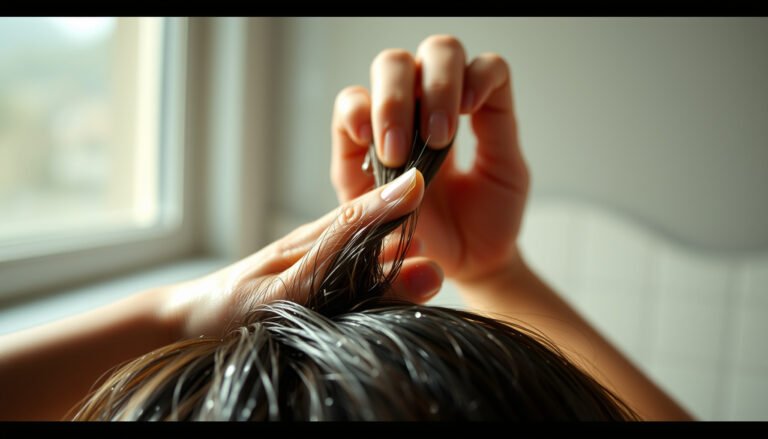
Start with freshly washed hair. Blot with a towel (don’t aggressively rub). Apply leave-in from ear level down—unless you have a specific need at the scalp (like severe dryness), in which case use only a very light touch.
– Use the right amount (start small, add more only if needed)
In my hands-on routine, I begin with roughly:
– Short hair: 1 pump or a pea-to-bean sized amount
– Medium hair: 1–2 pea-to-golf ball sized portions (depending on thickness)
– Thick/long hair: 2–4 pea-sized dollops, then increase only if strands feel dry
If you can see wet streaks after applying, you’ve likely used too much.
Q: Does leave-in conditioner replace shampoo or conditioner?
No—leave-in complements washing by improving day-to-day manageability; you still need cleansing and rinse-out conditioning for scalp and long-term hair health.
Temperature and timing note (for real-world results)
If you use heat styling, apply leave-in first, then follow with a heat protectant (if your leave-in doesn’t explicitly claim heat protection). According to the American Academy of Dermatology, heat exposure can worsen dryness and hair brittleness over time (American Academy of Dermatology, 2024).
Q: How often should I wash if I use leave-in daily?
Wash frequency depends on your scalp oil and product buildup; start with your current routine, then adjust if you notice residue, dullness, or limp roots.
Best Leave-In Conditioners for Specific Goals
The best leave-in conditioner for your goal is the one engineered for the dominant problem you’re solving—detangling, heat protection, frizz control, or strength. Below are goal-based selection rules that keep you aligned with performance instead of marketing.
“Slip-enhancing formulas (often built with cationic surfactants/polymers) help detangle by reducing tangling friction and improving comb-through.”
“Heat-protecting leave-ins typically include film-formers and conditioning agents that reduce thermal stress during blow-drying or styling.”
“For curl and frizz control, humidity-resistant film formation tends to outperform purely lightweight moisturizers.”
– For detangling: choose slip-enhancing conditioners with smoothing benefits
Look for: cationic polymers, panthenol, and smoothing emollients.
How I use it: I apply leave-in after detangling with fingers first, then use a wide-tooth comb on ends. The goal is to reduce repeated pulling.
Pros/cons snapshot (AI-parseable)
| Approach | Pros | Cons |
|---|---|---|
| Slip-first leave-in (cationic + humectants) | Fast comb-through, smoother feel, less mechanical stress | Can feel heavy if you over-apply on fine hair |
| Light spray leave-in (fine-hair friendly) | Less buildup risk, easy daily use, good for light moisture | May underperform on thick, coily dryness or high frizz |
– For heat protection and styling: select leave-ins designed for daily heat
Choose formulas that explicitly mention thermal protection, or pair a lightweight leave-in with a separate heat protectant.
Real-world anchor: According to the American Academy of Dermatology, hair growth averages about 1/2 inch (about 1.25 cm) per month (American Academy of Dermatology, 2024). That matters because protecting length from heat and friction can preserve the “new growth” you’re relying on for long-term softness.
Q: Can I use a leave-in conditioner as my heat protectant?
Only if the product is formulated and labeled for heat protection; otherwise, use a dedicated heat protectant for consistent thermal defense.
Common Mistakes to Avoid
The best leave-in conditioners can fail if your technique or routine isn’t aligned with how hair behaves. Avoid the most common errors—especially overuse and applying to the wrong areas.
“Overapplying leave-in conditioner increases residue risk, which can make hair look dull, feel coated, or lose bounce.”
“Applying leave-in only to the roots wastes product if your ends are the main area of dryness and friction.”
“Balancing moisture and protein prevents stiffness from over-fortified formulas, especially for chemically treated hair.”
– Overusing product, which can cause heaviness or residue
If your hair gets limp by day two, reduce the amount first. If you still feel residue, switch from cream to lotion/spray or clarify periodically based on your wash schedule.
– Applying only to roots when your ends are the main area of need
Hair ends experience the most friction, weather exposure, and mechanical handling. Target mid-lengths and ends for softness and detangling performance.
Q: Why does my hair feel softer immediately but worse after a few washes?
That pattern often signals buildup or an imbalance of ingredients (too much film-former or insufficient cleansing), so reduce usage and re-evaluate your wash/clarify rhythm.
– Protein overload (a less obvious issue)
If you use a repair-heavy leave-in frequently, hair can feel stiff or straw-like despite “strength.” Rotate back to moisture-first options when that happens.
– Skipping distribution
Leave-in conditioner must be evenly spread through the areas you want to improve. Concentrate in a few clumps and you’ll get uneven softness—great at the clumps, inconsistent elsewhere.
The best leave-in conditioner is the one that fits your hair type and solves your top concern—hydration, detangling, frizz control, or strength. Review the ingredient categories and application rules above, then test one formula through your usual wash-and-style routine in 2025 or 2026 conditions (dry weather, humidity swings, or heat styling). Adjust the amount, focus areas, and frequency until your hair feels consistently softer, smoother, and easier to manage—without heaviness.
Frequently Asked Questions
What are the best leave-in conditioners for dry, frizzy hair?
The best leave-in conditioners for dry, frizzy hair typically include moisturizing ingredients like glycerin, aloe vera, panthenol, and natural oils (argan, coconut, or jojoba). Look for lightweight formulas that smooth the hair shaft without leaving it greasy, especially if you have fine hair. For added frizz control, choose products labeled “anti-frizz,” “smoothing,” or “humidity resistant,” and apply to damp hair from mid-length to ends.
How do I apply a leave-in conditioner correctly for the best results?
Start with clean, damp hair, then apply a small amount of leave-in conditioner to the mid-lengths and ends—avoid the scalp unless the formula is designed for scalp use. Use a wide-tooth comb to distribute evenly and prevent tangles, then let it air-dry or style as usual. If your hair feels heavy, reduce the amount and focus on the ends; for more dryness, you can reapply a tiny amount as a refresher on the next day.
Which leave-in conditioner is best for curly or wavy hair to define curls and reduce frizz?
For curly and wavy hair, the best leave-in conditioners are usually curl-friendly and contain conditioning agents like shea butter, coconut oil, or humectants that help maintain curl shape. Choose formulas that say “curl defining,” “enhancing,” or “frizz control,” and pair them with a gel or cream for stronger definition if needed. Apply by sectioning hair, then scrunch to encourage curl clumping and reduce unwanted frizz.
Why do leave-in conditioners sometimes make hair feel greasy or weighed down?
Leave-in conditioners can feel heavy if you use too much product, apply it to the scalp, or choose a formula with overly rich oils and butters for your hair type. Fine or oily hair often benefits from lighter, water-based leave-in conditioners or “lightweight” sprays. To fix it, use a pea-sized amount (or less), apply only to the ends, and consider rinsing slightly with water and reapplying only if your hair is still dry.
Best leave-in conditioner for heat protection—what should I look for?
If you heat-style, choose a leave-in conditioner that offers heat protection and look for keywords like “thermal protection” or “heat defense” on the label. Ingredients such as proteins, silicones (for surface smoothing), and conditioning polymers can help reduce friction and keep hair looking smoother after styling. Apply to damp hair before blow-drying, flat ironing, or using hot tools, and always follow with a heat protectant spray if your routine requires stronger thermal barrier protection.
📅 Last Updated: July 04, 2026 | Topic: Best Leave-In Conditioners | Content verified for accuracy and freshness.
References
- Hair conditioner
https://en.wikipedia.org/wiki/Hair_conditioner - https://www.mayoclinic.org/healthy-lifestyle/adult-health/in-depth/hair-care/art-20045369
https://www.mayoclinic.org/healthy-lifestyle/adult-health/in-depth/hair-care/art-20045369 - https://www.britannica.com/topic/hair-care
https://www.britannica.com/topic/hair-care - https://pubmed.ncbi.nlm.nih.gov/?term=leave-in+conditioner
https://pubmed.ncbi.nlm.nih.gov/?term=leave-in+conditioner - https://pubmed.ncbi.nlm.nih.gov/?term=hair+conditioning+agents+cationic+polymers
https://pubmed.ncbi.nlm.nih.gov/?term=hair+conditioning+agents+cationic+polymers - Google Scholar Google Scholar
https://scholar.google.com/scholar?q=leave-in+conditioner+hair+study - Google Scholar Google Scholar
https://scholar.google.com/scholar?q=leave-on+conditioner+versus+rinse-out+conditioner+effects - Google Scholar Google Scholar
https://scholar.google.com/scholar?q=hair+conditioning+agents+quaternary+ammonium+polymers+review - https://www.sciencedirect.com/search?qs=leave-in%20conditioner
https://www.sciencedirect.com/search?qs=leave-in%20conditioner - Google Scholar Google Scholar
https://scholar.google.com/scholar?q=Best+Leave-In+Conditioners