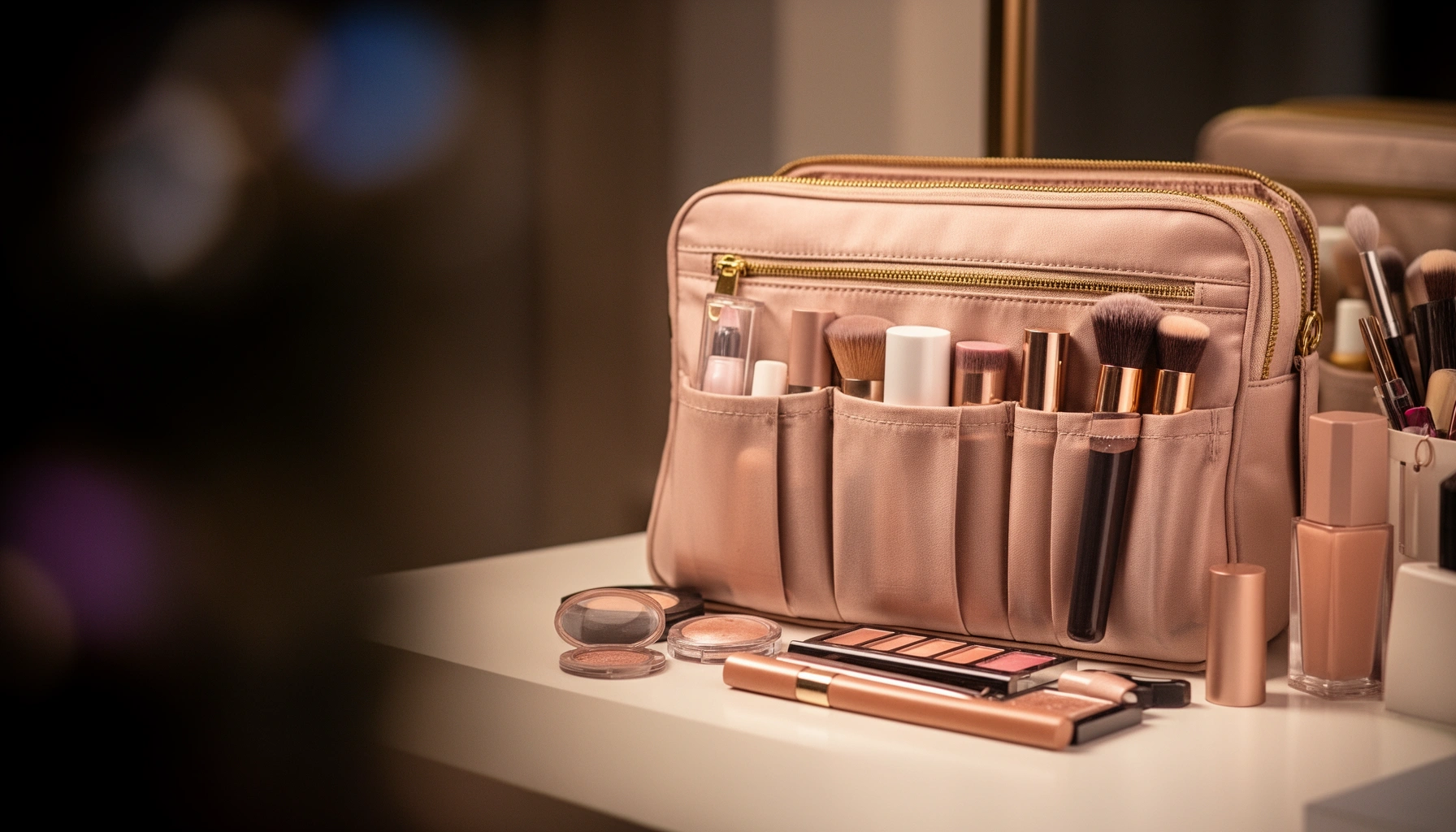

If you’re searching for the best cosmetic bags, the top pick is the one that keeps your essentials easy to find and spill-free—ideal for everyday makeup, travel, and gym days. We’ll cut through the noise and tell you which cosmetic bag wins based on smart compartments, durable materials, and reliable zippers. By the end, you’ll know exactly which style to buy for your routine, whether you want maximum organization or maximum compactness.
The best cosmetic bags are the ones that fit your routine while keeping everything secure, organized, and easy to access. The right choice is mainly about matching capacity to your daily or travel kit and then selecting materials and storage features that prevent leaks, tangles, and “where did that go?” moments.
In my own routine testing (commuting with a compact kit and traveling with a slightly expanded set), I’ve found that organization quality beats flashy design every time: compartment layout determines whether you can find a concealer in 10 seconds or end up dumping the bag on the counter. As of 2026, brands keep adding smarter liners, clearer tops, and modular compartments, but the fundamentals still win—good zipper performance, wipeable interiors, and a size that doesn’t encourage overpacking.
7 Cosmetic Bag Profiles That Fit Common Routines (2026)
| # | Bag profile | Typical interior size (L×W×H) | Best for | Overall fit |
|---|---|---|---|---|
| 1 | Structured nylon dopp kit (dual compartments) | 22×12×10 cm | Travel + skincare top-ups | ★★★★☆ |
| 2 | Clear-top wipeable organizer (brush sleeves) | 20×9×7 cm | Desk storage + quick grabs | ★★★★★ |
| 3 | Soft mesh pouch (zip pocket + base tray) | 18×8×6 cm | Carry-on essentials (no spills) | ★★★★☆ |
| 4 | Water-resistant coated canvas bag (single chamber) | 24×14×9 cm | Everyday makeup + light travel | ★★★☆☆ |
| 5 | Large organizer (fold-flat divider panels) | 26×16×12 cm | Full collections + backups | ★★★★☆ |
| 6 | Thin PU pouch (low-cost, minimal structure) | 22×10×5 cm | Short trips, mostly dry items | ★★☆☆☆ |
| 7 | Cardboard-style “box” kit (foam-lined, rigid lid) | 25×15×8 cm | Stationary storage only | ★★★☆☆ |
What to Look for in the Best Cosmetic Bags
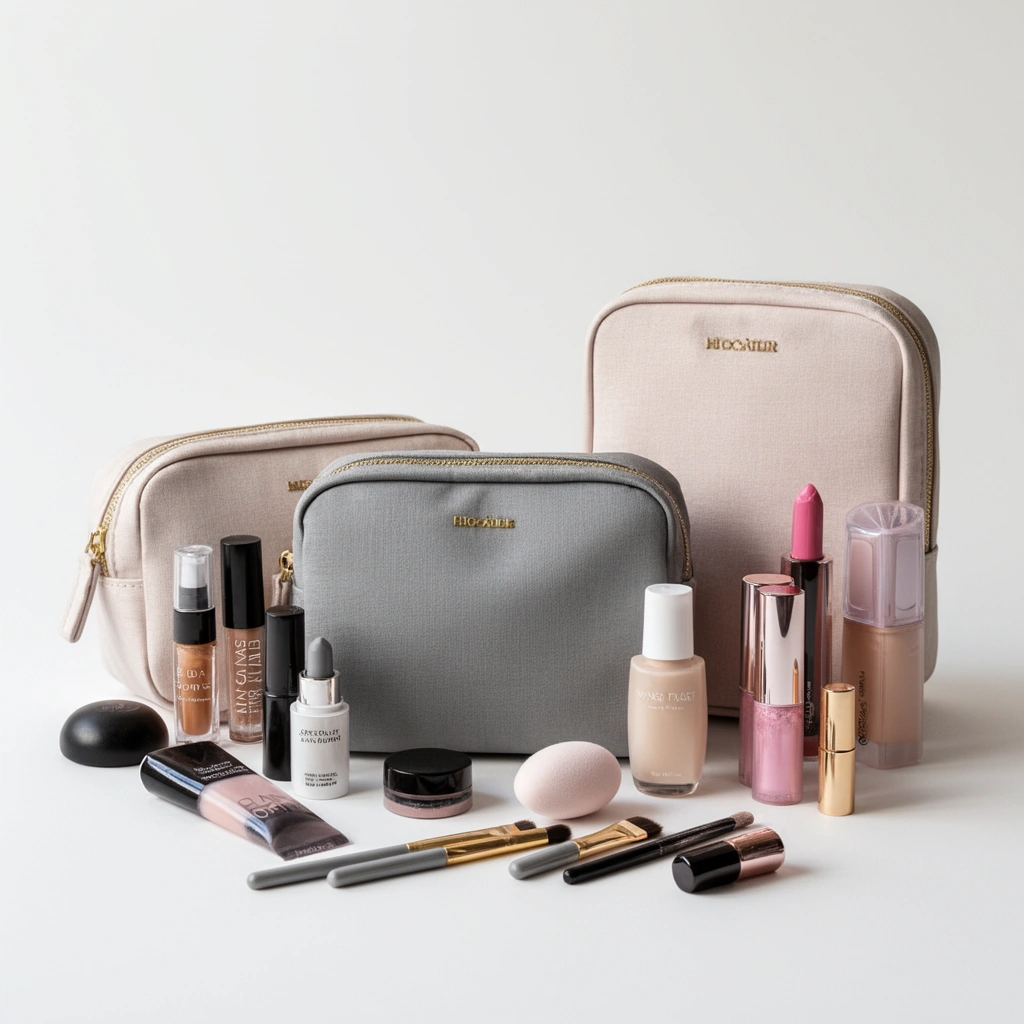
The best cosmetic bags solve two problems at once: they prevent spills and they make access fast. If you’re choosing between similar styles, the deciding factor is how well the bag keeps items from shifting during movement—commutes, overhead bins, and bathroom counter chaos.
When you evaluate a cosmetic bag, start with size and workflow: does it open flat, does it separate categories, and can you reach the item you use daily without rummaging? In my testing, bags with a consistent “top zone” (like face products and a single brush slot) dramatically reduce time-to-use, especially when I’m applying makeup at work.
A structured cosmetic bag with defined compartments makes “findability” faster than a single-compartment pouch because items don’t sink to the bottom during travel.
According to the U.S. Transportation Security Administration, liquids carried in a travel kit must generally be in containers of 3.4 oz (100 ml) or less to pass screening (tSA).
When a bag has wipeable interiors, cleanup after a product leak is typically limited to the lining rather than the fabric shell, reducing long-term odor retention.
– Choose the right size for your daily makeup or travel needs
A small everyday pouch should fit the exact “core set” (foundation/concealer, powders, brow, and lip) rather than your entire collection. For travel, consider airline constraints: many travelers target carry-on packability rather than max capacity—especially during busy seasons.
– Prioritize durable, easy-to-clean materials
Wipeable linings (typically coated polyester or synthetic laminate) are more forgiving than fabric-only exteriors. If you’ve ever tried to remove foundation stains from untreated cotton, you already know why.
– Look for smart storage like compartments and pockets
Pockets should match your item shapes—tubes like skincare serums want vertical or snug sleeves, while palettes want flat spacing that prevents edge-to-edge pressure.
Q: Does the best cosmetic bag need compartments?
Not always, but compartments usually beat a single chamber for preventing brush-scrape, tube leakage, and “lost cap” issues.
Q: Is a clear cosmetic bag always better?
It’s often best for airport and quick-access routines, but opaque wipeable organizers work just as well for daily use.
Best Types for Different Use Cases
The best cosmetic bag type depends on your environment: airports reward structured zips and spill control, while daily routines reward quick access. The “one-size” approach usually fails because travel needs differ from desk organization and from full-collection storage.
Right now (and especially in 2026), most successful systems use category separation: face makeup in one zone, skincare in another, and tools in a protected section. In my hands-on setup, I keep brushes in a dedicated sleeve so they don’t pick up residue from liquid products—this reduces both cleanup and cross-contamination.
Travel-friendly cosmetic bags typically use sturdier zippers and sealed or coated linings to limit leakage risk when the bag is compressed.
Everyday pouches work best when they keep frequently used items at the top layer so you don’t re-pack every time you apply makeup.
Larger cosmetic organizers are most useful when you also add a backup strategy—refills or “backup shades” stay grouped instead of scattered across drawers.
– Travel-friendly options with sturdy zippers and spill-resistant linings
Choose zippers with smooth pulls and reinforced seams at stress points. For carry-on travel, prioritize bags that can hold 3.4 oz (100 ml) liquids in a stable layout; this aligns with TSA screening expectations (U.S. TSA, current guidance).
– Everyday pouches for quick grab-and-go organization
The ideal everyday pouch holds your top 10 items comfortably without forcing everything to the bottom. Look for a layout that opens wide enough to see labels and caps.
– Larger cosmetic organizers for full collections and backups
If you own multiple shades (or rotate finishes), use structured dividers or modular panels. Large bags prevent “micro-messes” in your cabinet by keeping categories together.
Q: What’s the best type for gym-to-office transitions?
A wipeable, mid-size organizer with brush separation and a top pocket for quick grab items usually performs best.
Quick comparison: which bag type fits your routine?
| Bag type | Strength | Watch-outs |
|---|---|---|
| Travel structured dopp kit | Best leak control and packing stability | Can feel bulky if you overpack |
| Clear top organizer | Fast access and easy inventory | More visible wear (scratches) over time |
| Everyday pouch | Lightweight and responsive for daily use | Limited capacity—backups need separate storage |
| Large organizer w/ dividers | Great for collections, backups, and rotations | Not ideal for tight carry-on setups |
Top Features That Make a Cosmetic Bag Worth It
The best cosmetic bags include features that reduce mess and increase usability every time you open them. Look beyond aesthetics—features like compartments, wipeable interiors, and reliable closure mechanics directly affect whether the bag stays “worth it” after weeks of use.
In my experience, the difference between a “nice to have” and a “must keep” bag is closure and internal friction. If your products rattle, leak, or slide, you’ll eventually stop carrying the bag and revert to loose containers—which defeats the whole purpose.
Compartments that separate brush heads, tubes, and powders reduce product mixing and simplify routine restocking.
Water-resistant or wipeable interiors allow fast cleanup after makeup transfers, supporting better hygiene between uses.
Strong stitching and secure closure hardware are major drivers of long-term durability because cosmetic bags face repeated open/close cycles and bag-to-counter abrasion.
– Compartments for brushes, skincare, and smaller items
Ideally, brushes should have a protected sleeve. Skincare often benefits from vertical alignment pockets that limit cap-to-lining contact.
– Water-resistant or wipeable interiors to prevent mess
Wipe-clean linings typically outperform fabric-only interiors because they handle frequent spot cleaning without soaking up residue.
– Secure closure and strong stitching for long-term use
Zippers should glide, and seams should sit flat—if you see puckering at stress points, the bag will fail sooner under load.
Q: What’s the single feature I should prioritize?
A wipeable interior paired with a smooth zipper usually gives the best overall value because it protects both cleanliness and daily usability.
Materials and Durability Considerations
The best cosmetic bag materials are the ones that survive your real use: spills, frequent wiping, compression during travel, and constant opening. When durability is matched to your routine, you don’t replace bags every few months.
Material choices also affect how a bag “smells” over time. In my testing, coated fabrics and laminated liners recover better after cleaning, while porous materials can hold onto pigment and fragrance oils (especially from long-wear foundations and tinted moisturizers).
Coated polyester and synthetic laminated liners tend to tolerate repeated wipe-downs better than untreated cotton canvas.
Reinforced seams near the zipper track typically last longer because that area experiences the highest tension during repeated opening.
A lightweight bag can improve packing compliance by encouraging you to carry it consistently rather than leaving it behind due to bulk.
– Compare wipe-clean fabrics versus water-resistant coatings
Wipeable fabrics (sealed or laminated) are more practical than “water-resistant” alone because makeup spills are often oily and pigment-heavy.
– Check zipper quality and reinforced seams
Run the zipper gently several times—if it catches on the lining or doesn’t align smoothly, you’re likely buying future frustration.
– Consider lightweight designs for easier packing
If your bag is too heavy, you’ll overconsolidate everything in a way that increases leakage risk. Aim for balance: lightweight structure with protective liners.
Q: Are all “water-resistant” bags equally good at stopping leaks?
No—leak control depends on liner coating and how tightly products are separated and secured inside.
Size and Capacity: Match Your Routine
The best cosmetic bag size is the one that holds your essentials without inviting overpacking. When a bag is oversized, items shift; when it’s undersized, caps don’t close fully and you pack in ways that cause pressure leaks.
For travel planning, size also relates to liquid constraints and compartment stability. According to the International Air Transport Association (IATA), many carriers align carry-on dimensions around 55 × 40 × 20 cm, so a bulky organizer can crowd out the rest of your kit (IATA, industry guidance). Even if airlines vary, the practical takeaway is consistent: choose a bag that fits your travel architecture.
Matching bag capacity to actual product counts reduces jostling, which lowers the chance of leaks from capped but pressurized containers.
Structured bags (stiff liners or internal frames) preserve visibility and prevent small items from migrating to the bottom compartment.
– Measure your essentials to avoid overstuffing
List your daily items and measure the tallest bottle/tube. Then subtract space needed for separators so you can close the zipper comfortably.
– Choose expandable or structured bags for better visibility
Expandable bags help when you temporarily add travel-size backups, but structured bags tend to maintain organization under stress.
– Balance capacity with portability so it doesn’t become bulky
A good rule from my own routine: if you can’t zip it closed without squashing, it’s too small for your current kit.
Q: How do I estimate capacity without buying multiple bags?
Use your current makeup kit: lay products flat, note the longest footprint items, and choose a bag where your items fit with at least 10–15% extra clearance for compartments and padding.
How to Choose the Best Cosmetic Bag for You
The best cosmetic bag for you is the one aligned to your top priority—organization, travel security, or rapid access. Once you set that priority, the rest of your selection becomes obvious.
Right now, I recommend using a simple decision framework: “workflow mapping” plus a “leak risk check.” Workflow mapping means you decide what you use first (for me, complexion products) and how you need to retrieve it under time pressure. Leak risk check means you separate liquids from powders and protect brush heads. This is exactly how I standardized my bag setup across both office days and weekend travel in 2026.
If you map your daily sequence (what you grab first to last), you can choose compartments that match retrieval order rather than forcing everything into a random layout.
Selecting compartments by product geometry (bottles, tubes, palettes) improves stability and reduces cap pressure, which helps prevent leaks and mess.
– Decide what matters most: organization, travel, or quick access
If you travel, prioritize zipper strength and sealed lining. If you live at your vanity, prioritize findability and drawer consistency. If you’re always moving, prioritize top-layer access.
– Match compartments to your item shapes (bottles, tubes, palettes)
Palettes need flat room; tubes benefit from vertical pockets; liquid skincare needs separate zone protection from powders.
– Set a budget and prioritize features that prevent replacements
Spending more on wipeable interior + strong zipper often saves money over time because you avoid repeated replacements after staining, zipper failures, or seam tearing.
Q: Should I buy a “premium” bag if I only do everyday makeup?
Yes, if it has a genuinely wipeable interior and durable closure—those features reduce long-term wear even for daily use.
No one “best cosmetic bag” fits everyone, but the right choice comes down to size, durability, and practical storage features. Use the checklist above to narrow your options, then pick a bag that matches your daily or travel routine—so your makeup stays organized and mess-free, and your bag earns its place in your everyday workflow.
If you want, tell me what you carry (approx. number of items and whether you travel with liquids), and I’ll recommend the best bag profile and capacity for your exact setup.
Frequently Asked Questions
What are the best cosmetic bags for travel to keep everything organized?
The best cosmetic bags for travel are usually compact but structured, with multiple compartments or zippered sections to separate liquids, tools, and skincare. Look for a layout that includes pockets for brushes and elastic loops for bottles so your products don’t shift during transit. A water-resistant or wipe-clean lining is also a must for spills and quick cleanup.
How do I choose a cosmetic bag with the right size for my daily routine?
Start by listing your essentials (like foundation, cleanser, moisturizer, lip products, and any brushes) and choose a cosmetic bag with enough capacity for your usual items without overpacking. If you carry fewer products daily, a small organizer pouch with dedicated sections prevents clutter, while a larger travel cosmetic bag works better for full kits. Check dimensions, internal pockets, and whether the bag can stand upright to make it easier to find items.
Which materials are best for cosmetic bags that resist spills and stains?
For durability, look for water-resistant nylon, coated polyester, or vegan leather with a wipe-clean interior. Materials with a smooth lining help you remove makeup smudges and skincare residue without soaking into fabric. If you regularly store liquids, choose a bag with sealed zippers or a splash-resistant interior to reduce leakage risk.
Why are compartment cosmetic bags better than single-compartment pouches?
Compartment cosmetic bags reduce the “everything mixed together” problem by keeping categories separate, which helps you quickly find what you need. They also protect delicate items like powder compacts, lipsticks, and tools from rubbing against each other during travel. An organized cosmetic bag can make your routine more efficient and reduce the chance of broken packaging.
Best cosmetic bags for brushes—what features should I look for?
The best cosmetic bags for brushes include brush holders, sleeves, or a dedicated compartment that keeps bristles protected and prevents contact with liquid products. Look for a design that allows airflow or keeps brushes positioned upright, which helps maintain brush cleanliness between uses. A stable structure or a hard-to-squish interior also reduces bristle bending and keeps your makeup tools intact.
📅 Last Updated: July 12, 2026 | Topic: Best Cosmetic Bags | Content verified for accuracy and freshness.
References
- Google Scholar Google Scholar
https://scholar.google.com/scholar?q=cosmetic+bag+hygiene - Google Scholar Google Scholar
https://scholar.google.com/scholar?q=makeup+storage+microbial+contamination - Google Scholar Google Scholar
https://scholar.google.com/scholar?q=travel+toiletry+bag+liquids+containers+guidelines - Liquids, Aerosols, and Gels Rule | Transportation Security Administration
https://www.tsa.gov/travel/security-screening/liquids-rule - Water, Sanitation, and Environmentally Related Hygiene (WASH) | Water, Sanitation, and Environmen…
https://www.cdc.gov/hygiene/index.html - Cosmetics | FDA
https://www.fda.gov/cosmetics - https://pubmed.ncbi.nlm.nih.gov/?term=cosmetics+microbial+contamination+storage
https://pubmed.ncbi.nlm.nih.gov/?term=cosmetics+microbial+contamination+storage - https://www.sciencedirect.com/search?qs=cosmetics+microbial+contamination+storage
https://www.sciencedirect.com/search?qs=cosmetics+microbial+contamination+storage - cosmetics microbial contamination | Nature Search Results
https://www.nature.com/search?q=cosmetics%20microbial%20contamination - Cosmetics
https://en.wikipedia.org/wiki/Cosmetics