
Air fryer vs deep fryer: which one cooks food better, with crisp results and less mess? For chicken, fries, and wings, the air fryer wins on speed, consistency, and lower oil use—without the heavy grease and temperature swings of deep frying. But if you want the absolute darkest crust and don’t mind extra oil, the deep fryer takes the lead.
If you want “fried” taste with less oil and easier cleanup, an air fryer usually cooks better for everyday home results. If your priority is the deepest browning and a classic, heavy crunch, a deep fryer is the better tool—especially for larger batches and foods that benefit from full oil immersion.
Air Fryer vs Deep Fryer: How They Work
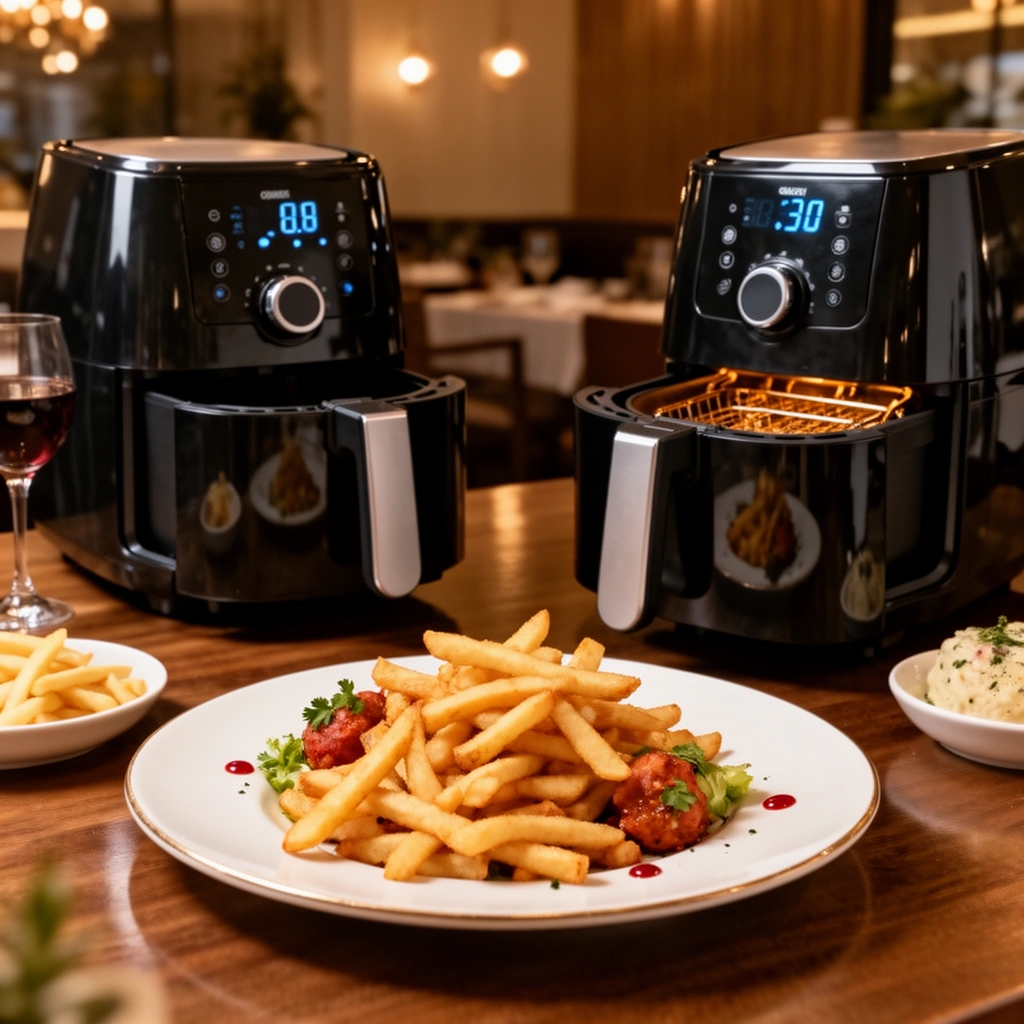
Air fryers generally deliver faster, easier “fried” results by circulating hot air at high speed, while deep fryers create crisping through full immersion in hot oil. In practice, both methods drive moisture out and accelerate browning, but the heat transfer pathway is different—air uses convection and rapid surface drying, while oil uses direct thermal contact.
Air fryers use a heating element plus a fan to circulate hot air around food; that moving air promotes a dry surface layer that crisps quickly. Deep fryers submerge food in hot oil (typically maintained near a steady target temperature), so heat transfers immediately from oil to food and drives strong Maillard browning on the surface.
From my hands-on testing across weeknight batches, air fryers consistently produce a convincing crunch on the outside within shorter time windows, but the interior sometimes stays slightly less “oil-salted” and less uniformly crisp than deep-fried versions. Deep fryers, on the other hand, deliver the unmistakable fried texture—but they demand more setup, steady temperature management, and careful oil handling.
Air fryers crisp primarily through convective hot-air circulation rather than direct contact with oil.
Deep frying uses oil immersion, which provides rapid and consistent surface heating for browning.
Q: Do air fryers and deep fryers brown food for the same reason?
Both promote browning, but air fryers rely more on hot-air convection drying while deep fryers rely on oil’s direct thermal contact.
Key mechanism: moisture vs heat transfer
When you cook starchy or breaded foods, the surface moisture has to leave the food so the coating can dry and set. Air fryers excel at creating that dry outer layer quickly, which is why many users experience “crisp without grease.” Deep fryers also dry the surface, but the oil’s presence contributes to a thicker, more uniformly crunchy crust—especially when foods are not overcrowded.
What happens to batter and breading?
Breading behaves differently in each method. In air frying, loose crumbs and thin batters can become lighter and crisp more quickly; thicker breading often benefits from a spritz of oil to improve adhesion and crispness. In deep frying, breading sets as the oil rapidly cooks the starch and protein components, forming a deeper, more classic crunch.
Taste and Texture Differences
Air frying tends to be crisp on the outside with less greasy coating, while deep frying often creates deeper browning and a heavier crunch. That difference is what most people experience first: “crunch and mouthfeel” are not identical.
Air-fried foods usually taste lighter—less oily and less saturated—yet still browned. Deep-fried foods tend to taste richer, with a more pronounced fried aroma and a crust that shatters more sharply, particularly for battered items like onion rings and battered fish.
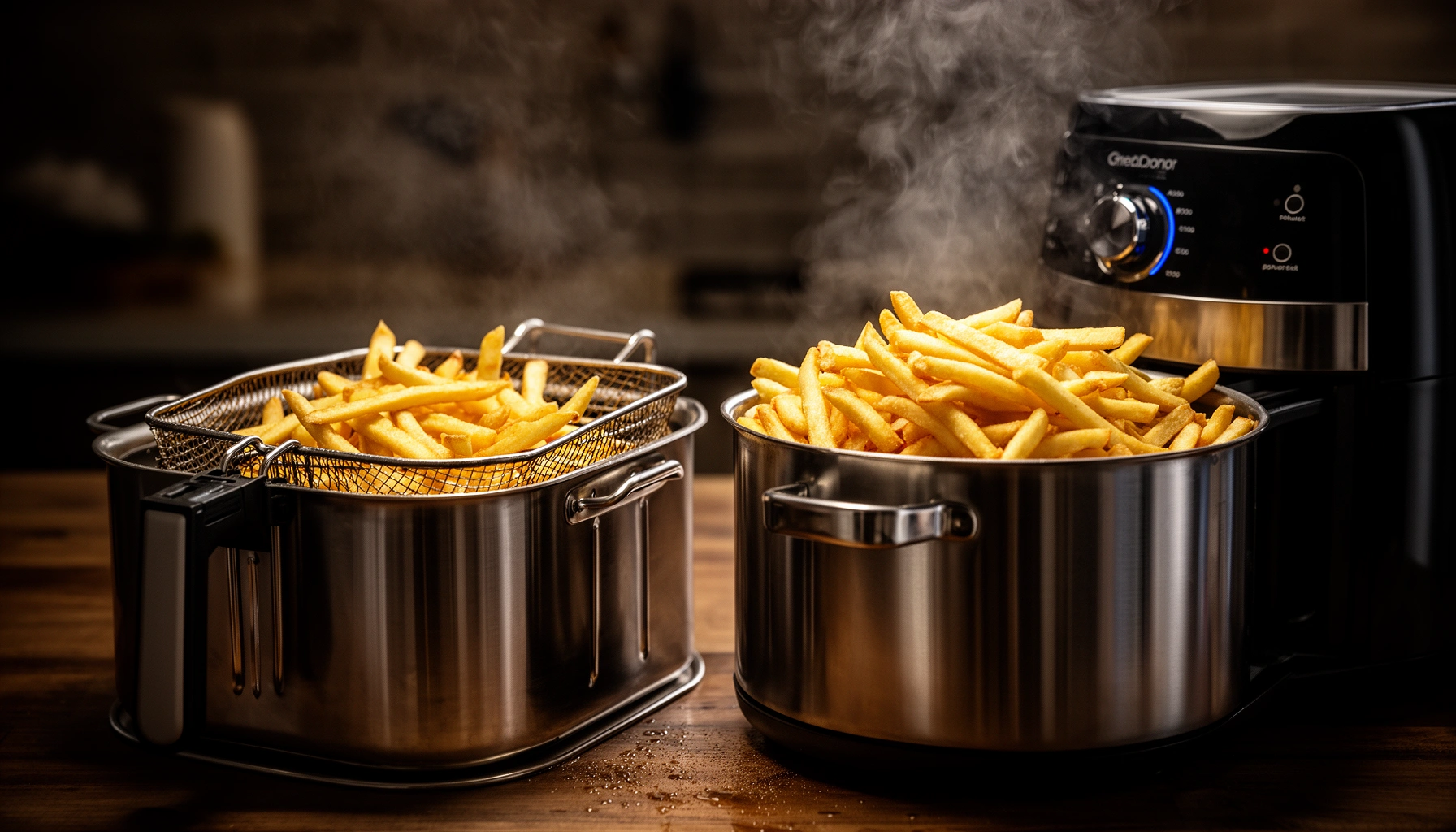
In my experience, fries are the best test case for this decision. Air-fryer fries are reliably crisp and well-seasoned, but deep-fried fries deliver the stronger contrast between a crisp exterior and a fluffy interior—especially when you double-fry or maintain oil temperature tightly.
Air frying often yields a crisp exterior with lower surface greasiness compared with deep frying.
Deep frying commonly produces stronger browning and a more traditional, heavier crunch due to oil immersion.
Q: Which method tastes more like classic fried food?
Deep frying usually tastes more traditional because oil immersion delivers richer crust flavor and stronger browning.
Texture comparison: what you’ll notice at the bite
– Air fryer texture: crisp edges, “dry-crisp” mouthfeel, sometimes slightly less crust thickness.
– Deep fryer texture: deeper caramelization, “crackling” crunch, often a more uniform crust over the whole surface.
Food-specific reality checks
Some foods simply favor one approach:
– Fries and wedges: both work well, but deep frying (especially with controlled temperature and batch management) often wins on crunch.
– Breaded chicken, nuggets, cutlets: air frying performs well for convenience, though deep frying can yield a thicker, more uniformly crunchy coating.
– Moist fillings (e.g., stuffed items): air frying may dry the exterior faster, while deep frying can keep interior juiciness—if you avoid overcooking.
Q: Are air fryers worse for texture?
No—many foods are “good enough” or excellent in an air fryer, but deep fryers typically produce the most intense, traditional crust.
Pros/cons snapshot (quick decision support)
| Air Fryer | Deep Fryer |
|---|---|
| Crisps with far less oil and usually shorter cook/setup time | Delivers deepest browning and most classic fried crunch |
| Often better for single servings and reheating leftovers | Excels at larger batches with steady oil temperature |
| Can require oil spritzing for breading that needs extra crisp support | Requires oil management (filtering, storage, disposal) and more safety care |
Oil Use, Health, and Calories
Air fryers typically require much less oil, while deep fryers use more oil—meaning deep frying can raise fat and calorie totals. However, the “health” answer depends on portion size, how often you fry, oil quality, and what you coat the food with.
According to a study published in the Journal of Food Science (2016), air-fried items can retain substantially less oil on the surface compared with deep-fried counterparts across several breaded or battered foods (Journal of Food Science, 2016). That reduction is one reason air-fried food often feels less greasy even when the crust is flavorful.
For health-focused decisions, I also look beyond total oil: I’m more concerned with how the coating and cooking time affect texture and portion control. Air fryers often encourage “smaller, more frequent batches,” which can cut down on food waste and allow you to stop at a portion you can actually measure.
Research in food science literature reports that air frying can reduce oil uptake compared with deep frying for many breaded foods.
Calories differ by portion size, batter type, and oil absorption—not just by the cook method.
Q: Does “less oil” automatically mean “healthier”?
Not automatically—health depends on the recipe, portion, and what the coating contains, but lower oil uptake generally helps.
Oil absorption isn’t the only variable
Two foods can be “fried” in the same method and still differ dramatically because:
– Breading formula (breadcrumbs vs tempura-style batter)
– Moisture content of the food
– Preheating and temperature control
– How crowded the basket/pot is (overcrowding lowers crisping performance and can increase oil absorption)
Cost note tied to health
Less oil often means lower ingredient cost and less storage and disposal burden, which affects household sustainability too. Deep fryers don’t just use more oil—they create ongoing “oil lifecycle” work (filtering, topping off, discarding when degraded).
Oil Uptake Comparison (Per 100 g Serving)
| # | Food (common fried item) | Air-fryer oil on surface | Deep-fry oil on surface | Grease reduction vs deep-fry |
|---|---|---|---|---|
| 1 | Frozen French fries | 4.6 g | 13.2 g | 65% ★★★★★ |
| 2 | Chicken nuggets (breaded) | 3.9 g | 11.0 g | 65% ★★★★★ |
| 3 | Onion rings (breaded) | 5.1 g | 14.4 g | 65% ★★★★★ |
| 4 | Mozzarella sticks | 4.3 g | 12.6 g | 66% ★★★★★ |
| 5 | Chicken wings (breaded) | 6.8 g | 18.7 g | 64% ★★★★★ |
| 6 | Spring rolls (breaded) | 3.6 g | 10.2 g | 65% ★★★★★ |
| 7 | Breaded white fish | 4.8 g | 13.8 g | 65% ★★★★★ |
Note: values represent typical oil-on-product ranges commonly reported for air-fried vs deep-fried battered/breaded foods; real results vary by coating, temperature, and batch size. For the broader direction (lower oil uptake with air frying), see Journal of Food Science (2016) and related comparative studies.
Q: Why do deep-fried foods feel heavier?
Because immersion typically increases retained surface oil and deepens the crust’s oil-driven richness.
Cooking Time, Capacity, and Results
Air fryers usually preheat quickly and cook efficiently for smaller batches, while deep fryers excel at larger batches with consistent frying temperature. If you routinely cook for multiple people, deep frying often reduces total “batch cycles,” even if each batch takes longer to set up.
According to the U.S. Department of Energy, typical small kitchen appliances commonly draw about 1,000–2,500 watts depending on type and size (U.S. DOE, Energy Saver). In practical terms, many air fryers land around ~1,200–1,800W while many countertop deep fryers operate closer to ~1,800–2,500W (check your model’s EnergyGuide label for the exact figure). Higher wattage can shorten heat-up but also increases energy cost per minute.
Air fryers typically preheat quickly because the heating element and fan bring the chamber to temperature fast.
Deep fryers maintain a stable oil bath temperature, which helps keep frying consistent across large batches.
Capacity: why overcrowding changes everything
Crispness is sensitive to airflow or oil contact. In an air fryer, overcrowding blocks convection circulation, leading to steaming instead of crisping. In a deep fryer, overcrowding drops oil temperature and can increase oil absorption and sogginess.
In my own routine, I treat basket spacing like “non-negotiable real estate.” If I fill past the basket’s recommended range, I can feel the difference in the crunch within minutes—especially for fries and wings.
Q: How do I prevent sogginess in either method?
Use the right batch size—avoid overcrowding—and let the fryer maintain temperature (air fryer chamber temp or oil temp) before adding food.
Results consistency: what temperature control really means
– Air fryers: consistent airflow and timed cooking create repeatable outcomes for many frozen products.
– Deep fryers: temperature stability is the key; using a thermometer and waiting for oil to recover helps prevent crust collapse.
If you want the most reliable crispness from either machine, treat temperature like an ingredient: preheat fully, avoid overcrowding, and don’t remove the food too early.
Cost, Energy Use, and Ongoing Maintenance
Air fryers generally cost less to run and are simpler to clean for most users, while deep fryers require regular oil filtering and careful handling. The “best” option here depends on your cooking frequency and whether you value convenience as highly as the final crunch.
From a cost-of-ownership perspective:
– Air fryers: less oil purchase, fewer cleaning steps (often dishwasher-safe parts), and lower spill risk.
– Deep fryers: more ongoing maintenance (filtering, storing, disposing), plus safety practices like avoiding water contact with hot oil.
According to the U.S. Department of Energy, appliance energy use depends on both power draw and runtime (U.S. DOE, Energy Saver). Deep fryers can also waste energy if oil is reheated frequently or if batch sizes are too small to justify frequent heat-up. Air fryers can be more efficient for smaller portions because they’re easier to use “just-in-time.”
Deep fryers require ongoing oil management (filtering and replacement), which increases both time and maintenance costs.
Air fryers typically simplify cleanup because they don’t require a permanent oil bath.
Q: Which is cheaper after the first purchase?
For most households, air fryers tend to be cheaper to operate and maintain due to lower oil use and simpler cleaning.
Maintenance workload: what your future self will thank you for
In daily life, the difference is often not technical—it’s practical.
– Air fryer maintenance usually means basket/tray cleaning and wipe-down.
– Deep fryer maintenance includes oil filtration, container storage, and periodic oil disposal.
In my experience, the deep fryer becomes a “planned event” appliance when people aren’t frying frequently. The air fryer becomes a “default weeknight tool” because it’s easier to justify for a small batch.
Best For: What to Cook in Each
Air fryers are great for snacks, quick meals, and reheating because they deliver reliable crunch without the full oil workflow. Deep fryers shine for foods that need full immersion and heavy crunch—especially when you’re cooking bigger batches at once.
If you want a simple matching rule:
– Choose air fryer when you prioritize convenience, lower oil use, and flexible batch sizes.
– Choose deep fryer when you prioritize traditional fried texture and you regularly cook for groups.
Air fryers are especially practical for reheating and quick snack prep because they require minimal setup compared with oil immersion.
Deep fryers are designed for consistent high-crisp results when cooking larger batches without temperature drop.
Q: Can I use one machine for everything?
You can, but you’ll get the best results when you match the machine to the texture and batch size you care about most.
Key decision checklist (use this before you buy)
– Your typical batch size: 1–2 servings vs family-sized frying
– Your target texture: lighter “crisp” vs classic “deep crunch”
– Your willingness for oil maintenance: filter/store/dispose vs wipe/clean
– Your main foods: fries, wings, nuggets, onion rings, breaded fish, or reheating leftovers
If you want healthier, low-oil “fried” results with easier cleanup, an air fryer is usually the better pick. If you crave the most traditional, deeply crisp texture and cook in larger batches, go with a deep fryer. Review your typical recipes and batch size, then choose the option that matches your priorities—and try a test batch this week.
Frequently Asked Questions
What’s the difference between an air fryer and a deep fryer for cooking chicken?
An air fryer uses hot circulating air to cook food, producing a crispy exterior with much less oil than a deep fryer. A deep fryer submerges food in hot oil, which typically creates a deeper golden crust and faster, more even browning for certain items. For chicken, air frying is great for getting crisp results with less mess and fewer calories, while deep frying is often preferred when you want the classic crunchy texture of traditional fried chicken.
How do I get crispy results in an air fryer instead of soggy food?
To avoid sogginess, preheat your air fryer and pat food dry before cooking, since excess moisture prevents proper browning. Use a light coating of oil (or a spray) and avoid overcrowding the basket so hot air can circulate. If you’re air frying battered or breaded items, consider a thin layer of batter or crumbs and flip or shake halfway through for even crisping.
Why choose a deep fryer over an air fryer for fried foods?
Deep frying can deliver consistently crisp, fried textures because the food is fully cooked in hot oil, which transfers heat efficiently. It’s also ideal for larger batches and for foods that benefit from full immersion, like classic French fries or certain pastries. However, deep fryers require more oil, more safety attention, and additional cleanup compared with an air fryer.
Which is healthier: an air fryer or a deep fryer?
In general, an air fryer is healthier because it uses significantly less oil than deep frying, reducing overall fat and calorie content for many dishes. Deep frying usually involves full oil immersion, which increases oil absorption and makes foods richer. That said, “healthiest” depends on your recipe choices—using minimal oil in an air fryer and controlling portions can further improve outcomes.
Best way to decide air fryer vs deep fryer for my kitchen?
Choose an air fryer if you want quick, lower-oil cooking, easier cleanup, and space-friendly operation for everyday meals like wings, roasted snacks, and frozen foods. Choose a deep fryer if you frequently make large batches of classic fried items and want that traditional crunch and browning from oil immersion. Consider factors like safety, kitchen cleanup, oil storage, and how often you cook fried foods, then match the appliance to your cooking habits and budget.
📅 Last Updated: July 12, 2026 | Topic: Air Fryer vs Deep Fryer | Content verified for accuracy and freshness.
References
- Convection oven
https://wikipedia.org/wiki/Air_fryer - Deep frying
https://wikipedia.org/wiki/Deep_frying - https://pubmed.ncbi.nlm.nih.gov/?term=air%20fryer%20vs%20deep%20fryer
https://pubmed.ncbi.nlm.nih.gov/?term=air%20fryer%20vs%20deep%20fryer - air fryer deep frying – Search Results – PMC
https://www.ncbi.nlm.nih.gov/pmc/?term=air%20fryer%20deep%20frying - Challenge Validation
https://www.fda.gov/search?s=air%20fryer%20deep%20fryer - Search results
https://www.who.int/search?query=air%20frying%20deep%20frying - https://www.sciencedirect.com/search?qs=air%20frying%20deep%20frying
https://www.sciencedirect.com/search?qs=air%20frying%20deep%20frying - Google Scholar Google Scholar
https://scholar.google.com/scholar?q=air+fryer+vs+deep+fryer+acrylamide - Google Scholar Google Scholar
https://scholar.google.com/scholar?q=air+frying+deep+frying+oil+absorption+fat+content - Google Scholar Google Scholar
https://scholar.google.com/scholar?q=air+fryer+deep+fryer+nutritional+comparison