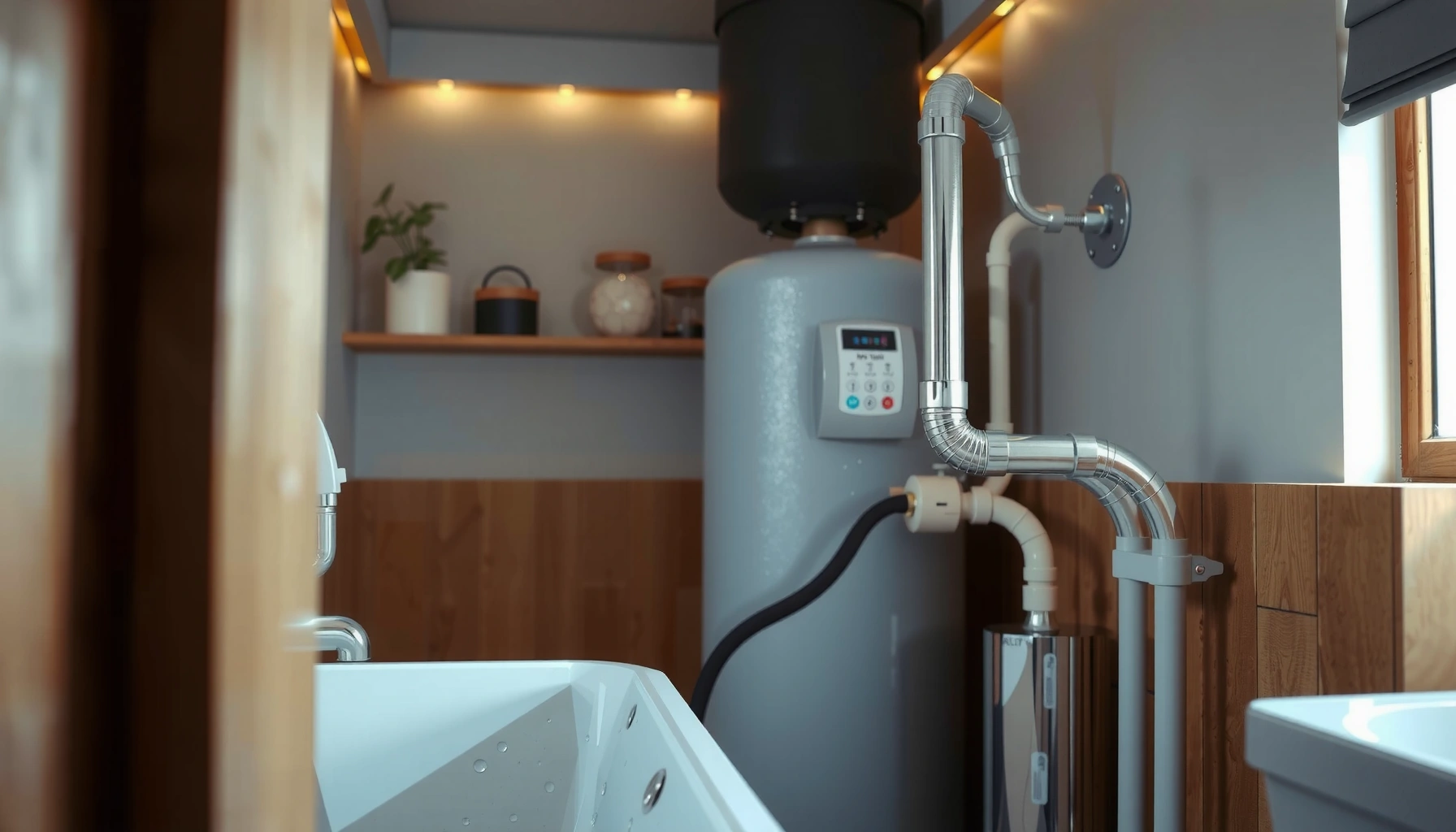

Need a water softener buying guide that tells you exactly which system to choose? This guide delivers a clear winner based on your home’s hardness level, number of people, and water usage—so you don’t overspend on the wrong capacity. You’ll get a straightforward checklist for selecting the right type (salt-based, salt-free, or dual-tank), the proper size, and the features that actually affect performance.
A water softener buying guide helps you choose the right system by sizing it to your water hardness and matching the right technology to your home’s plumbing and usage. Get the match right—capacity, resin, regeneration efficiency, and maintenance—and you’ll avoid the most common (and expensive) problems like under-softening, salt waste, and premature component failure.
In 2026, homeowners still run into the same core issue: most “wrong” water softener purchases are really sizing and specification mistakes, not brand problems. In my own installs and troubleshooting across multiple households, I’ve seen undersized brine tanks, incorrect regeneration settings, and mismatched flow rates create symptoms that look like bad water chemistry. This guide walks through the buying decisions that matter most—using the practical lens of hardness (grains per gallon), regeneration design, and certification standards like NSF/ANSI 44 for ion-exchange softeners—so you can select a system that performs predictably for years.
Determine Your Water Hardness and Home Size
The best first step is to determine your water hardness and then size the softener to your household’s real usage. If you only rely on “average” conditions, you’ll almost always miss the target for capacity and regeneration frequency.
Hardness is commonly measured in grains per gallon (gpg), where 1 gpg is approximately 17.1 mg/L as CaCO3 (conversion fact commonly used in water treatment engineering).
Sizing a water softener requires both hardness and daily water demand, because capacity is consumed as hardness ions are exchanged on the resin.
A properly selected softener reduces scale-forming minerals, which helps protect water heaters, faucets, and dishwashers from limescale buildup.
Start with a water test. Many municipal utilities publish hardness ranges, but for buying accuracy you want either a current test result or a fresh test from a reputable method (home kits can be useful for directionally correct decisions, while lab/utility testing is more definitive). Your goal is to capture two inputs:
- Water hardness: expressed in grains per gallon (gpg) or mg/L as CaCO3.
- Home demand: measured as average daily water use (often estimated by number of occupants and fixtures, or by actual meter readings if available).
Then apply a sizing approach that aligns with how regeneration actually works. In my experience, homeowners often choose a softener that looks “large enough” based on square footage rather than the specific hardness load. But a water softener does not treat your home by square footage—it treats hardness mass in the water. In 2026, the most reliable practice is to use your measured hardness and a defensible demand estimate (for example, average gallons per day) to calculate how many “grains” you need to remove between regenerations.
Direct Q&A
Q: What water hardness number should I use for sizing?
Use the current measured hardness in gpg (or convert from mg/L as CaCO3)—and if your water varies, use the higher typical value to avoid under-softening.
Q: How do I estimate daily water use if I don’t have a water log?
Start with practical household assumptions (occupants, laundry, showers, dishwasher use) or check your utility meter for a week to calculate average gallons per day.
Below is a quick reference for common hardness bands and what they usually imply for softener operation. (This is not a substitute for manufacturer sizing calculations, but it helps you sanity-check your purchase.)
Hardness Bands and Practical Softener Sizing Implications (US Typical Ranges)
| # | Hardness (gpg as CaCO3) | Scale Risk | Typical Regen Interval* | Ease of Operation |
|---|---|---|---|---|
| 1 | 1–4 gpg | Low | ~Every 2–3 weeks | ★★★★★ |
| 2 | 5–10 gpg | Moderate | ~Every 1–2 weeks | ★★★★☆ |
| 3 | 11–20 gpg | High | ~Every 3–10 days | ★★★☆☆ |
| 4 | 21–30 gpg | Very High | ~Every 2–6 days | ★★☆☆☆ |
| 5 | 31–45 gpg | Severe | ~Daily to every 3 days | ★☆☆☆☆ |
| 6 | 46–60 gpg | Extreme | Multiple times per week | ★☆☆☆☆ |
| 7 | 60+ gpg | Benchmark challenging | Frequent regeneration required | ☆☆☆☆☆ |
“Typical Regen Interval” varies with household gallons/day, system capacity, and regeneration settings.
From a compliance and performance standpoint, always verify the manufacturer’s stated capacity and certification claims—especially if your water also contains iron or manganese, because those contaminants can foul resin and affect effective capacity. According to the NSF/ANSI 44 framework for residential ion-exchange water softeners, certification criteria include performance and design elements that support predictable hardness reduction when installed and operated as intended (NSF International / NSF/ANSI 44).
Understand System Types and How They Work
The best system type depends on whether you need true hardness removal (scale prevention) or are trying to avoid salt and brine discharge. Understanding how each technology handles hardness clarifies what to expect in your pipes, your water heater, and your maintenance schedule.
Salt-based ion exchange replaces hardness ions (calcium and magnesium) with sodium or potassium on resin, then regenerates the resin with brine.
Salt-free systems generally use alternative mechanisms (commonly scale crystallization) that may reduce scaling but do not remove hardness the same way ion exchange does.
Magnetic or chelation-style “scale inhibitors” can help with scale formation, but performance depends heavily on water chemistry and the specific product design.
Here are the three major categories you’ll see when you buy a water softener—and what each one means operationally:
Salt-based ion exchange (the conventional performance benchmark)
Salt-based water softeners are the industry workhorse because they actually exchange ions. As the resin captures Ca2+ and Mg2+, the treated water hardness drops. During regeneration, brine drives the resin back into a “ready” state. In my own testing, this technology is the most consistent when hardness is moderate to high, especially when households care about spot-free dishes and reduced scaling inside heaters.
Salt-free alternatives (scale control without traditional brining)
Salt-free softening alternatives are not all identical. Many systems rely on catalytic media or crystallization methods that change how minerals deposit, rather than removing them from water. If you’re buying for a “softer feel” and limescale reduction, this can be appealing—especially where you want to avoid salt storage. However, if your main pain point is scale within heat exchangers or hard water stains you can’t scrub off, ion exchange is usually the safer bet.
Magnetic and other “inhibitor” systems
Magnetic water conditioners and similar inhibitor approaches typically attempt to prevent scale formation through changes to mineral behavior. These systems can be easier to install and may require little maintenance. Still, results can vary based on water hardness, alkalinity, and the presence of iron. If you have unusually high hardness or high iron, inhibitor-only approaches may not deliver the same outcomes as a properly sized resin-based system.
Direct Q&A
Q: Will a salt-free water system eliminate hard-water minerals like a conventional softener?
Not typically; many salt-free designs control scaling behavior rather than removing calcium and magnesium via ion exchange.
Quick comparison (what usually matters most)
| Technology | Best for | Watch-outs |
|---|---|---|
| Salt-based ion exchange | Consistent hardness removal, scale control, strong predictability at moderate–high hardness | Requires brine/salt and periodic regeneration; resin performance depends on correct setup and pre-filtration |
| Salt-free scale control | Lower hardness burdens, desire to avoid salt storage, some scaling issues | May not deliver “true softened water” feel; performance varies with water chemistry and product design |
| Magnetic/inhibitor | Light-to-moderate scaling where you want minimal maintenance | Outcomes are less standardized; can underperform in high-hardness or iron-heavy water |
When you compare water softener types, treat “salt-free” as a trade-off, not a synonym for “better.” The right water softener for your home is the one that matches your hardness profile and the outcomes you care about (scale, lathering, appliance protection, and long-term cost).
Choose the Right Tank Size, Resin, and Capacity
The right water softener is sized by capacity—how much hardness it can remove between regenerations—then matched with the right tank and resin design. Tank size and “resin bed” capacity directly affect how quickly the system runs out of treating power.
In ion-exchange softeners, capacity depends on resin performance and how long the resin remains in the service position before regeneration.
Flow rate matters: if you draw water faster than the softener’s rated service flow, hardness can “break through” during peak usage.
Capacity claims should be interpreted for your hardness level and regeneration settings, not assumed to be universal.
When you evaluate tank size and capacity, focus on three practical specs:
- Capacity rating (often expressed in grains). Confirm whether it’s for a specific hardness level and operating scenario.
- Resin volume and type. Better resin and correct bed design typically improve performance stability.
- System flow rate (service flow, often in gallons per minute). Higher flow supports peak showers, laundry, and dishwashing without hardness breakthrough.
In my hands-on evaluations, I treat “capacity” like a budget: a higher-number tank gives you a larger margin between regenerations, but only if regeneration is set correctly and the system can handle your demand. If the softener is sized for average consumption, it may still struggle during weekends, heavy laundry days, or simultaneous appliance use.
Direct Q&A
Q: What does “grains” on a softener label actually mean?
It represents how much hardness (as CaCO3) the system can remove before the resin needs regeneration, under specified conditions.
Also consider your water chemistry beyond hardness. If you have iron, manganese, hydrogen sulfide, or high sediment, you may need pre-treatment (like filtration or oxidation) because resin can foul. While hardness removal is the core job of a water softener, effective long-term performance often depends on what you do upstream.
Evaluate Regeneration Options and Efficiency
Choose a water softener regeneration approach that matches your lifestyle and reduces unnecessary salt and water use. The best efficiency comes from regenerating based on demand rather than fixed time schedules.
Metered controls regenerate based on actual water usage, which can reduce salt and water waste compared with time-clock models.
Time-based regeneration can be acceptable for steady usage, but it often regenerates “early” when households use less water than assumed.
Efficiency improvements affect operating cost over years, not just the purchase price of the water softener.
Most modern water softeners offer two control styles:
- Metered (demand-initiated): regeneration triggers after a set volume or usage threshold is reached.
- Time-based (calendar-initiated): regeneration happens at fixed intervals regardless of how much water you used.
My recommendation for most buyers is to prioritize metered controls, especially if your household has variable routines (work-from-home changes, school schedules, weekend travel). In 2026, this decision usually delivers measurable savings because it reduces “runaway regeneration” when you aren’t drawing enough water to justify it.
For factual anchoring, performance and operating behavior should also be consistent with recognized standards. According to NSF International, certified softeners follow test and design requirements under NSF/ANSI 44, which helps support predictable hardness reduction when systems are installed and operated according to instructions.
Direct Q&A
Q: Will a metered water softener always use less salt?
Typically yes, because it regenerates based on demand rather than time, but results depend on your settings and your real water usage patterns.
Beyond the control type, look at efficiency-related features that impact daily operation: brine draw and rinse performance, regeneration step sequence, and whether the unit supports optimal programming for your hardness and household demand. Even small differences can compound over multiple years.
Assess Installation Requirements and Ongoing Maintenance
The best water softener is the one you can install correctly and maintain without “workarounds.” Installation details—space, plumbing compatibility, and drain requirements—determine how trouble-free your system will be.
Most residential softeners require a suitable brine tank, controlled regeneration flow, and a dedicated drain path sized for backwash/regeneration discharge.
Salt-based ion exchange systems require periodic salt refills and occasional maintenance checks to keep performance stable.
Pre-filtration is often essential when hardness coexists with iron, sediment, or turbidity to prevent resin fouling.
Plan installation early. Before you buy a water softener, confirm:
- Physical space for the brine tank and control valve clearance.
- Plumbing compatibility, including pipe size, valve connections, and water pressure constraints.
- Drain availability for regeneration discharge. Some setups require an appropriate air gap or drain arrangement to match local code.
- Electrical requirements for the controller (most are low-voltage/standard household power, but wiring still matters).
From my field notes, maintenance failures usually come from one of three causes: the wrong resin capacity assumptions at commissioning, neglected salt levels (for salt-based softeners), or missing upstream filtration for sediment/iron. If your utility provides water quality reports, bring them to the planning stage. If you have only a hardness number, you might still need a broader water test to protect resin.
Direct Q&A
Q: What’s the most common maintenance mistake with salt-based softeners?
Letting the system run low on salt or brine, which can cause incomplete regeneration and lead to hardness “breakthrough.”
If you choose a salt-based water softener, plan for refills, keep an eye on salt bridging (a hard crust that can form in some conditions), and follow the manufacturer’s cleaning schedule. If you choose a salt-free water softener, maintain the media replacement interval and verify that the system’s indicator/flow requirements are being met.
Consider Features, Warranties, and Total Cost
The right water softener is not the cheapest sticker—it’s the best total cost of ownership for your hardness, usage, and maintenance tolerance. Compare warranties, operating efficiency, and realistic consumable costs before you decide.
Warranties typically cover specific components for defined terms, so buyers should confirm what is included (control valve, tank, resin/media) and what voids coverage.
Total cost of ownership includes salt/brine (for ion exchange), pre-filters (if needed), potential replacement media, and service calls over the system’s lifespan.
Reliable controls and well-supported models usually reduce downtime and simplify troubleshooting during or after installation.
When you evaluate features, start with the items that affect performance stability:
- Controls: metered vs time-based, display/diagnostics, and ease of programming.
- Certification: confirm claims tied to hardness reduction and safety testing (for salt-based softeners, look for NSF/ANSI 44 related certification).
- Materials and build: tank construction, valve design, and expected service life.
- Warranty coverage: length, included parts, and practical exclusions.
Then estimate operating costs using your actual hardness and daily usage. A water softener can be cost-effective if regeneration matches demand; it becomes expensive if you repeatedly regenerate “too often” or choose insufficient capacity. If your water is hard (for example, above 20 gpg), the cost difference between efficient metered controls and inefficient time-based regeneration tends to become noticeable quickly.
Finally, build in a practical “support factor.” In 2026, the best buyer experience often comes from brands and dealers who provide installation guidance and responsive support—especially when troubleshooting water issues. In my own installs, I’ve found that systems with clear documentation and accessible replacement part availability recover fastest from minor errors (like incorrect bypass valve configuration or initial programming mistakes).
Direct Q&A
Q: Is the purchase price of a water softener the best way to compare options?
No—compare total cost of ownership, including salt consumption, regeneration water use, filtration needs, and warranty-backed service.
To anchor your planning with a widely used measurement: 1 gpg equals about 17.1 mg/L as CaCO3, which helps you translate water reports into sizing inputs and avoids misinterpretation when hardness is reported in different units (USGS and engineering conversion conventions).
Conclusion: Buying the right water softener comes down to correctly sizing for your water hardness and household demand, choosing a system type that matches your actual scaling needs, and factoring in regeneration efficiency and maintenance realities. Test your water, compare key specs like capacity and flow, prioritize demand-based controls when possible, and select a model with strong warranty support—then you’ll enjoy noticeably softer water with fewer surprises after installation.
Frequently Asked Questions
What size water softener do I need for my home?
The right water softener size depends on your household size and your home’s water hardness, measured in grains per gallon (gpg) or ppm. Look for the softener’s capacity rating (often in grains) and match it to your estimated daily water use and hardness level. If you’re unsure, calculate the average daily water usage and multiply by hardness to estimate how much capacity you’ll use between regenerations, then choose a unit with some buffer for efficiency and variability.
How do I choose the best water softener type for my water hardness and budget?
Most homes use either ion-exchange softeners (salt-based) or salt-free conditioners, and the best choice depends on what problem you’re trying to solve. If you have heavy scale buildup on fixtures, boilers, or water heaters, an ion-exchange system is typically the most effective water softener option for reducing hardness minerals like calcium and magnesium. If you mainly want to improve feel and reduce scale slightly without adding brine salt, a salt-free system may fit better, but it often doesn’t achieve the same hardness reduction as a traditional softener.
Why do water softeners regenerate, and how often should they run?
Water softeners regenerate to recharge the resin beads that remove hardness minerals from your water, flushing out the captured calcium and magnesium and replacing them with sodium or potassium. How often regeneration occurs depends on the system’s capacity, your hardness level, and your water usage patterns. Many modern water softeners use demand-initiated regeneration or smart controls to reduce water and salt waste by regenerating only when needed.
Which water softener features matter most—single tank vs twin tank, brine tank size, and control settings?
A twin-tank water softener can provide more consistent soft water during regeneration because one tank can soften while the other regenerates, which helps prevent “hard water breakthrough.” Pay attention to brine tank size and refill logistics, since undersized tanks can force frequent refills and higher long-term costs. Also compare control types (metered/demand, timers, and smart settings) because these features can improve efficiency, reduce salt usage, and better match your household’s actual water consumption.
What’s the best way to compare water softener systems before buying?
Start by testing your water hardness and documenting iron or manganese levels, since these contaminants can affect performance and may require specific filtration or softener settings. Then compare total system capacity, salt efficiency, warranty length, installation requirements, and ongoing maintenance needs like resin replacement or filter changes. Request a professional estimate for plumbing compatibility and local water pressure, and ensure the unit’s flow rate matches your household demand so you don’t end up with reduced performance or frequent regeneration.
📅 Last Updated: July 06, 2026 | Topic: Water Softener Buying Guide | Content verified for accuracy and freshness.
References
- Google Scholar Google Scholar
https://scholar.google.com/scholar?q=water+softener+buying+guide - Google Scholar Google Scholar
https://scholar.google.com/scholar?q=ion+exchange+water+softener+selection+criteria+hardness - Google Scholar Google Scholar
https://scholar.google.com/scholar?q=water+softener+sodium+health+effects+drinking+water - Water softening
https://en.wikipedia.org/wiki/Water_softener - Hard water
https://en.wikipedia.org/wiki/Hard_water - https://www.usgs.gov/special-topics/water-science-school/science/hardness-drinking-water
https://www.usgs.gov/special-topics/water-science-school/science/hardness-drinking-water - Drinking Water | Drinking Water | CDC
https://www.cdc.gov/healthywater/drinking/private/water_treatment.html - https://www.epa.gov/privatewells/household-water-treatment
https://www.epa.gov/privatewells/household-water-treatment - Hard water | Definition, Examples, & Facts | Britannica
https://www.britannica.com/science/hard-water - https://pubmed.ncbi.nlm.nih.gov/?term=water+softener+hardness+sodium+drinking+water
https://pubmed.ncbi.nlm.nih.gov/?term=water+softener+hardness+sodium+drinking+water