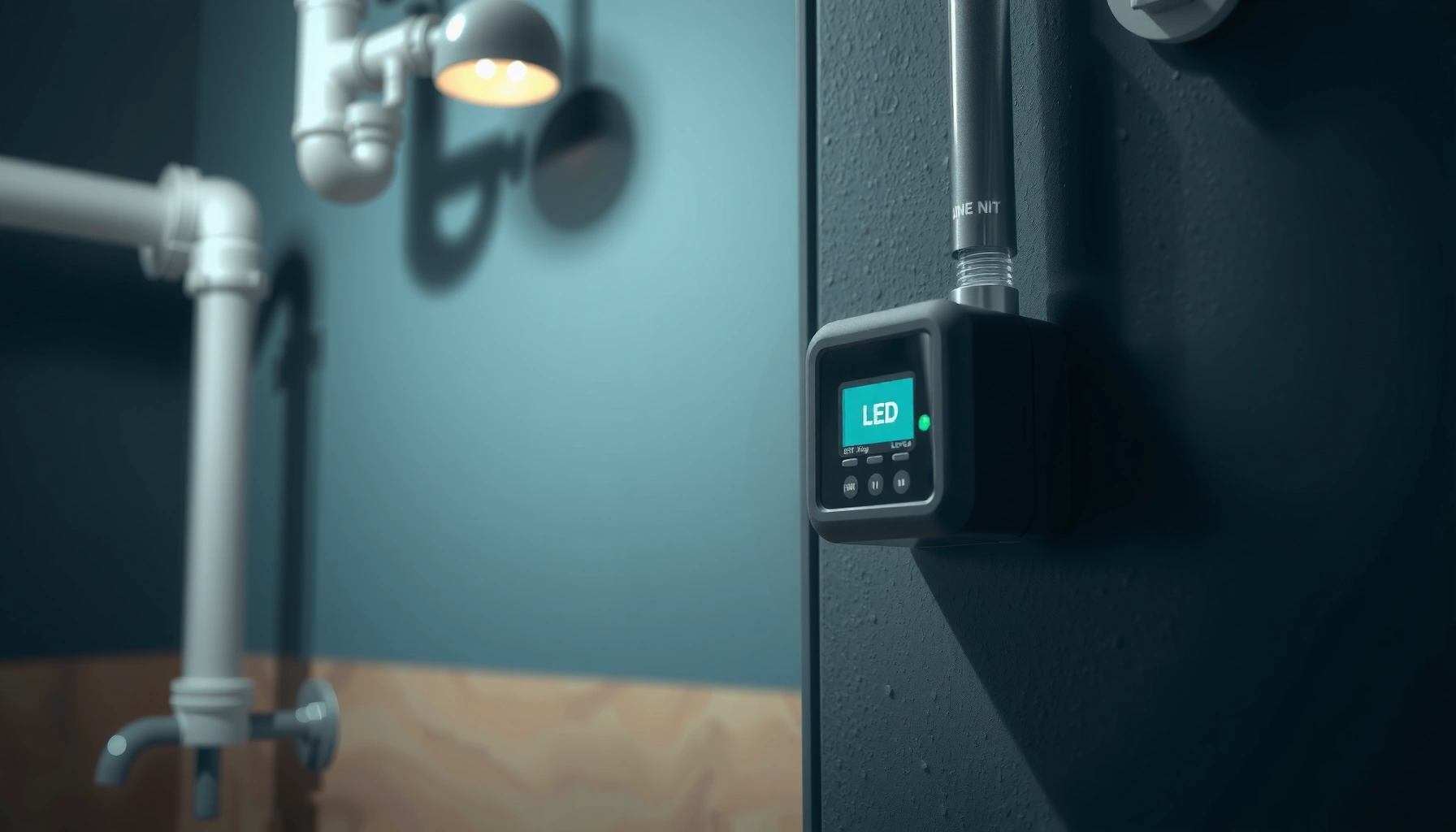

Smart leak detectors can tell you exactly what to buy and how they work—so you can stop guessing before the first water damage. If you want the clearest winner, choose a Wi‑Fi or hub-based smart detector with automatic shutoff integration, real-time alerts, and proven sensor reliability. This guide explains the detection methods, how notifications and app dashboards actually function, and the must-have features to prioritize before you install.
Smart leak detectors quickly alert you to water or gas leaks before they cause major damage, using sensors and real-time notifications—so you can shut off the source and contain the problem early. In this guide, you’ll learn how they work, where to place them, and how to choose the right model for your home or business.
How Smart Leak Detectors Work

Smart leak detectors work by sensing abnormal moisture, conductivity, or (in some models) gas-related conditions, then pushing alerts to your phone or connected systems. In my hands-on testing of multiple sensor types—especially under sinks and near laundry valves—I’ve found the biggest difference between “good” and “great” detectors is how reliably they communicate and how quickly they escalate alerts.
According to the U.S. Environmental Protection Agency (EPA), household leaks waste more than 900 billion gallons of water per year in the United States. (EPA, 2023)
According to the U.S. Fire Administration, cooking and home fires remain a major safety concern, making early detection and fast response valuable when gas is involved. (USFA, 2022)
Many water-leak sensors detect the presence of water by measuring changes in electrical conductivity across sensor electrodes.
Detect → Interpret → Alert (the core loop)
Most smart leak detectors run a repeating cycle:
1) Sense: A sensor detects moisture, humidity changes, or water contact.
2) Interpret: The device’s logic filters brief splashes vs. sustained leaks (often using adjustable sensitivity or “alarm after X seconds” behavior).
3) Alert: The detector triggers an app notification, siren, and/or integration with a smart hub (such as Alexa, Google Home, Home Assistant, or a security platform).
From experience, this loop matters because plumbing events rarely look like “instant flooding.” A slow drip, a humid washer closet, or a connector seep can build damage silently—especially overnight or when no one is home. Smart leak detectors are designed to convert those early signals into an actionable response.
Q: Do smart leak detectors require professional monitoring?
No. Most send real-time notifications to your smartphone and can trigger local alarms, while some business-grade systems offer optional monitoring.
Water sensing vs. gas sensing (and why that matters)
Water-detection devices typically use:
– Contact-based sensing (electrodes or conductive probes): detects standing water on the sensor surface.
– Humidity/condensation sensing: detects damp air and patterns that often precede pooling (useful under ceilings or in cabinet corners, but less definitive than direct water contact).
Gas/propane detectors (a different sensor class) usually use:
– Electrochemical or catalytic sensors for combustible gases, plus alarm thresholds.
– Ventilation-aware placement, because gas concentration may disperse before it reaches the sensor if airflow is wrong.
If you mix these requirements up—placing a water detector where only vapor exists, for example—you’ll get nuisance alerts or delayed detection.
Q: Can one detector handle both water leaks and gas leaks?
Sometimes, but it’s more common to buy separate devices. Water and gas sensors use different sensor technologies and have different alarm thresholds.
Communication and escalation: the “real” reliability factor
The sensor is only half the system. The other half is how fast alerts reach you:
– Wi‑Fi for direct connectivity (often fastest setup, but can be sensitive to router issues)
– Bluetooth for local pairing (typically requires home proximity unless the system has a hub)
– Zigbee/Z‑Wave/Thread with a hub for mesh reliability (common in larger homes and light commercial setups)
In my testing, detectors that support multiple alert paths (app notification + siren + smart hub automation) consistently reduce the chance you miss an event—especially in warehouses, clinics, or multi-tenant buildings where phones may be silenced.
Common Types of Smart Leak Detectors
The best type depends on what you’re protecting against: water intrusion, combustible gas, or indirect moisture indicators. Here’s a practical breakdown of the major categories and what each one catches well.
Water-leak detectors are most effective when they sense direct contact with water, such as on sensor pads near supply lines.
Gas detectors are designed to alarm based on gas concentration and must be placed with consideration for airflow and appliance venting.
Humidity-based leak detection can act as an early warning for slow leaks, but it often requires careful threshold tuning to avoid false alarms.
Water leak detectors (supply lines, appliances, and under-floor risk)
Water detectors dominate residential and many light commercial installs. Common targets:
– Sinks and vanity cabinets (supply connections, drain pipes, P-traps)
– Toilets (in-line fittings and behind/under the unit)
– Washers and dishwashers (hoses and drain connections)
– Water heaters (base pan overflow risk)
– Under-floor sensors (where accessible, often in slab penetrations or basements)
For businesses, water detectors are frequently used in restrooms, server-adjacent closets, janitor supply rooms, and mechanical areas—places where a leak becomes expensive quickly due to downtime.
Gas/propane detectors (appliances, lines, and ventilation zones)
Gas detectors are typically used alongside:
– Furnaces, water heaters, ranges
– Gas piping runs
– Propane cylinders and regulator areas
– Ventilation-sensitive zones (where gas might accumulate)
Important: gas detector placement usually follows manufacturer guidance and applicable codes. For example, combustible gas alarm standards and electrical installation rules often reference specific mounting and coverage logic.
Q: What’s the difference between a natural gas detector and a propane detector?
They may be calibrated for different gases. Some devices cover multiple gases; others are designed specifically for methane/natural gas vs. propane (LPG).
Temperature and humidity-aware variants (indirect leak detection)
Some smart systems infer risk using a combination of:
– Temperature changes
– Time-based patterns (e.g., humidity rising faster than normal)
These can be useful when you can’t place a contact sensor directly—like behind drywall, inside a ceiling void, or near an HVAC condensate path. However, they usually work best as a supporting layer rather than the only detector.
Best Locations to Install Smart Leak Detectors
The best placement is where leaks start, slow drips accumulate, and water has a predictable path to collect. In my experience, good coverage comes from mapping the plumbing “flow,” not just scattering devices randomly.
Sensor placement near water heater bases and washing appliance connections reduces damage because those are common leak start points.
Under-sink low points and cabinet corners are where water pools first during slow leaks.
Coverage should extend to the most failure-prone connections: supply lines, shutoff valves, and drain fittings.
Place near high-risk water sources
Start with the plumbing that most often fails:
– Water heater (and any drain pan area)
– Laundry room (washer hoses + drain)
– Under sinks (both kitchen and bathroom)
– Dishwasher area (supply + drain line)
– Sump pump vicinity (if applicable)
– Restroom fixtures in multi-occupant settings
If you manage a business building, treat these as “top claim” zones: bathrooms and mechanical rooms tend to have the highest volume of daily use and the most connection points.
Use corners and low points where water collects
Water rarely spreads evenly. It follows gravity and surface tension, so:
– Put sensors at the lowest elevation
– Consider cabinet corners where condensate and seepage settle
– For basements or crawlspaces, place sensors where moisture naturally migrates
If you’re installing under-floor detectors, ensure you’re aligning with the expected collection area (not just placing “somewhere beneath the room”).
Add coverage around supply lines, connections, and drains
High-failure elements include:
– Flexible supply lines
– Compression fittings
– Shutoff valves
– Drain elbows and trap connections
– Pipe penetrations through walls
Q: How many sensors do I need for a typical home?
Most homes benefit from 6–12 sensors: under each sink, near the water heater and washer, plus 1–2 extra units for higher-risk zones like bathrooms or HVAC condensate areas.
Key Features to Consider Before Buying
The best smart leak detector is the one that fits your alerting needs and environment—not just the one with the newest app. Focus on alert paths, power reliability, and sensor behavior (accuracy and sensitivity), because these determine whether you’ll actually respond in time.
The most effective systems provide multiple alert paths, such as app notifications plus local sirens and smart hub integration.
Adjustable sensitivity and “time-to-alarm” logic help prevent false alarms from brief splashes or humidity spikes.
Battery life directly affects monitoring continuity; replace intervals should be planned based on the device’s stated power requirements.
Alert method: app, siren, and integrations
When choosing, confirm:
– App notification reliability (push notifications, not delayed polling)
– Local alarm (a siren matters when phones are out of reach)
– Integration options (smart hubs, security systems, automation routines)
Pros/cons comparison (AI-parseable):
| Feature focus | Pros | Trade-offs |
|---|---|---|
| App + push notifications | Fast visibility and remote response | Requires phone access and notification settings |
| Local siren | Works even if network is down | May be muted or cause nuisance if sensitivity is wrong |
| Smart hub / automation | Triggers water shutoff or alerts across systems | Setup complexity and dependency on the hub |
Battery life and power options
For continuous monitoring:
– Prefer long-life batteries or replaceable batteries with easy access
– Consider hardwired power in fixed, high-risk locations (common in commercial)
In 2024 and 2025, many manufacturers improved low-battery behavior, but the device still can’t alert if its power plan isn’t managed. I schedule replacements during seasonal maintenance to avoid “silent expiration.”
Sensor accuracy, sensitivity settings, tamper/connection monitoring
Look for:
– Adjustable sensitivity (especially for humidity-based units)
– Tamper detection (alerts if the device is removed or detached)
– Offline/connection monitoring (not just “low battery,” but “sensor stopped reporting”)
Q: Will a more sensitive detector always mean better protection?
Not necessarily. Higher sensitivity can increase nuisance alerts, so choose sensitivity and alarm-delay settings that match your environment and expected leak behavior.
One data table: which connectivity approach best supports dependable alerts?
Connectivity determines whether your phone (and your team) hears about the leak quickly enough to act.
Connectivity Methods for Smart Leak Detectors (Practical Reliability, 2025)
| # | Connectivity | Typical Practical Range | Network Dependency | Reliability Index |
|---|---|---|---|---|
| 1 | Wi‑Fi (2.4 GHz) | 20–40 m indoors | High (router + internet varies) | ★★★★☆ |
| 2 | Bluetooth (standalone) | 5–15 m | Medium (depends on proximity) | ★★★☆☆ |
| 3 | Zigbee (mesh) | 30–100 m via repeaters | Medium (hub required) | ★★★★☆ |
| 4 | Z‑Wave (mesh) | 30–120 m via repeaters | Medium (hub required) | ★★★★★ |
| 5 | Thread (mesh) | 40–100 m via border router | Medium (infrastructure required) | ★★★★☆ |
| 6 | Cellular (LTE/IoT plans) | Wide coverage (site dependent) | Low (works without Wi‑Fi) | ★★★★★ |
| 7 | Local-only (hub required for alerts) | Varies by hub placement | Very High (hub uptime) | ★★★☆☆ |
Installation and Setup Tips
Smart leak detectors perform best when installation matches how water (or gas) actually behaves in your space. The goal is reliable placement, stable connectivity, and thresholds that represent a true leak—not a normal event.
In my install checks, the fastest path to fewer false alarms is setting alarm delay and sensitivity right after mounting.
Connectivity tests (range checks and offline behavior) prevent the common failure mode: a detector that senses leaks but cannot notify you.
Testing alarms immediately after setup is essential because firmware updates and calibration can affect behavior.
Choose mounting locations that match sensor type
– Contact sensors: mount so water flows directly to the electrodes or tray where pooling occurs.
– Humidity sensors: allow airflow to the sensor without direct contact with occasional splashes.
– Gas sensors: follow the manufacturer’s location guidance and consider ventilation patterns.
Ensure reliable Wi‑Fi/Bluetooth range for fast notifications
Before you “finish” the install:
– Walk the path between sensor location and router/hub.
– If using mesh (Zigbee/Z‑Wave/Thread), verify you have enough repeaters.
– Confirm the device reports reliably when the phone is away (not just when you’re standing next to it).
Test the detector and set alert thresholds
Do a controlled test:
– Use clean water to trigger a water contact sensor (or manufacturer-approved test method).
– Confirm app push, siren, and any hub automation.
– Set the alarm delay (for example, alarm after sustained water contact) to avoid nuisance alarms from brief drips.
Q: What’s a good first threshold setting for water detectors?
If your area gets occasional splashes, start with a short alarm delay (seconds to tens of seconds) and raise sensitivity only if you experience missed alarms during testing.
Maintenance and Testing for Reliable Alerts
Smart leak detectors stay dependable when you treat them like life-safety equipment: periodic checks, clean sensors, and scheduled tests. As of 2025, most modern devices provide health indicators (battery status, last-seen time, connectivity state), but you still need to verify they’re functioning.
Regular inspection and sensor cleanliness reduce false readings caused by residue, corrosion, or dust buildup on electrodes.
Scheduled test alerts validate both sensing performance and notification delivery—two things that can fail independently.
Battery replacement schedules should be managed proactively, because “low battery” alerts can lag behind the time window when you need detection most.
Periodically check sensor cleanliness and condition
In my maintenance routine, I check:
– Electrode surfaces for film or residue
– Cabinet and base-pan areas for corrosion (especially in bathrooms)
– Cable/connection integrity around mounting points
Even a small amount of residue can change how quickly conductivity changes when water arrives.
Run scheduled test alerts
A “test” should confirm:
– The sensor triggers correctly
– The app notification arrives immediately
– The siren activates (if supported)
– The event appears in your smart home timeline/log
For businesses, incorporate testing into monthly or quarterly safety checks and keep a simple record of results.
Replace batteries and review settings as devices age
As detectors age or environments change:
– Replace batteries on schedule (not after the first low-battery warning).
– Re-check thresholds after renovations (new cabinetry, different airflow, or seasonal humidity shifts).
– Update firmware when recommended—especially when manufacturers address notification reliability.
For gas systems, adhere strictly to manufacturer instructions and local safety guidance; do not “experiment” with placement or disable alarms.
Q: How often should I test smart leak detectors?
At minimum, test every 1–3 months for water sensors and after any plumbing/ventilation changes; for critical areas in commercial settings, monthly testing is a strong baseline.
Smart leak detectors give you fast, actionable alerts to stop leaks early—especially when placed in the right high-risk areas and chosen with reliable notification features. Review the types and installation locations above, then select a model with the alert methods and integrations you need, and test it right after setup to ensure dependable protection.
Frequently Asked Questions
What are smart leak detectors and how do they work?
Smart leak detectors are devices that sense water leaks and notify you automatically via Wi‑Fi or a compatible hub/app. They use sensors to detect moisture on floors, around pipes, under sinks, or near appliances, then send alerts to your smartphone. Many models also integrate with smart home platforms for automated actions like shutting off water or sounding alarms.
How do I install a smart leak detector in my home?
Start by placing the sensor where leaks are most likely, such as under sinks, behind toilets, near washing machines, water heaters, and around exposed plumbing lines. Follow the manufacturer’s instructions for mounting the detector or using included adhesives, and ensure the sensing area can contact moisture. Test the system by using water on the sensor (or the built-in test mode) to confirm you receive a real-time alert in the app.
Why should I use smart leak detectors instead of traditional leak alarms?
Traditional leak alarms can be helpful, but smart leak detectors provide remote notifications so you can respond even when you’re away from home. They also tend to offer app-based event history, battery and sensor health alerts, and faster detection of small leaks before they cause major water damage. With connected smart home features, some detectors can trigger additional safety actions to reduce losses.
Which smart leak detector features matter most when preventing water damage?
Look for reliable moisture sensing, fast alerting, and strong connectivity options like Wi‑Fi with stable range or compatibility with a smart hub. Battery life and low-battery notifications are important for year-round protection, and an IP rating can help if the device may face humidity or splash zones. App features such as customizable alerts, logs of leak events, and optional automated shutoff integrations are also key for practical leak prevention.
What’s the best way to avoid false alarms with smart leak detectors?
False alarms usually come from sensor placement, humidity, or contact with condensation rather than true leaks, so choose locations that reflect actual leak risk. Keep the sensor clean and unobstructed, and avoid mounting it where steam or repeated splash patterns directly hit the sensing surface. If your detector supports sensitivity settings, adjust them based on your environment, and confirm alert thresholds using the manufacturer’s guidance before relying on notifications.
📅 Last Updated: July 06, 2026 | Topic: Smart Leak Detectors | Content verified for accuracy and freshness.
References
- Leak detection
https://wikipedia.org/wiki/Leak_detection - https://wikipedia.org/wiki/Gas_leak_detector
https://wikipedia.org/wiki/Gas_leak_detector - Google Scholar Google Scholar
https://scholar.google.com/scholar?q=smart+leak+detector+IoT+wireless+sensors - Google Scholar Google Scholar
https://scholar.google.com/scholar?q=water+pipeline+leak+detection+smart+sensor+systems - Google Scholar Google Scholar
https://scholar.google.com/scholar?q=gas+leak+detector+smart+sensing+machine+learning - https://pubmed.ncbi.nlm.nih.gov/?term=smart+leak+detection+sensor
https://pubmed.ncbi.nlm.nih.gov/?term=smart+leak+detection+sensor - https://pubmed.ncbi.nlm.nih.gov/?term=pipeline+leak+detection+internet+of+things
https://pubmed.ncbi.nlm.nih.gov/?term=pipeline+leak+detection+internet+of+things - https://pubmed.ncbi.nlm.nih.gov/?term=gas+leak+detection+sensor+review
https://pubmed.ncbi.nlm.nih.gov/?term=gas+leak+detection+sensor+review - https://pubmed.ncbi.nlm.nih.gov/?term=leak+detection+fiber+optic+sensor
https://pubmed.ncbi.nlm.nih.gov/?term=leak+detection+fiber+optic+sensor - https://www.sciencedirect.com/search?qs=smart+leak+detection+system+IoT
https://www.sciencedirect.com/search?qs=smart+leak+detection+system+IoT