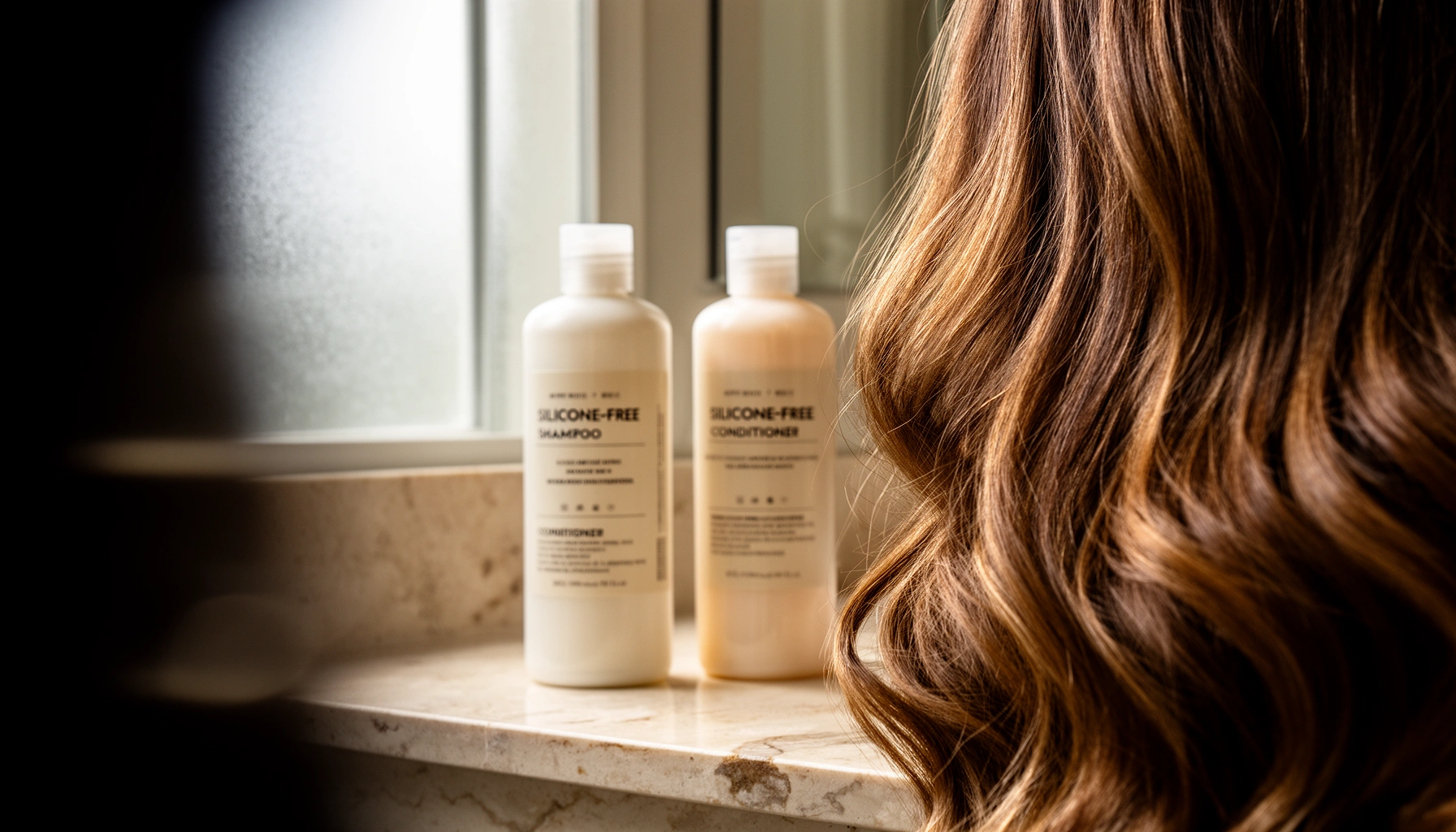

Switching to silicone-free hair care is worth it when your goal is less buildup and more responsive volume and shine, and this guide tells you exactly what to use and how to make the change. You’ll learn which silicone-free surfactants, conditioners, and styling ingredients to reach for based on your hair type and scalp needs. If your current routine leaves hair coated, flat, or heavy, these targeted swaps will show you the fastest path to noticeable improvement.
Silicone-free hair care can mean less residue, lighter feel, and more responsive hydration—but the “right” switch depends on your hair type and how you transition. I’ll show you how to identify silicones on INCI labels, what better ingredients to look for (so you keep slip and softness), and a step-by-step transition plan that avoids dryness or dullness—updated for what people are doing in 2025 as formulations keep changing.
Silicones are widely used in shampoos and conditioners because they coat the hair shaft and help reduce tangling and frizz. The tradeoff is that certain silicone polymers can build up over time, especially if you don’t clarify occasionally or if you color-treat your hair. In my own bathroom experiments, the biggest “before vs. after” change I’ve noticed is at the scalp: when I switched from silicone-heavy conditioners to silicone-free options, my roots felt less waxy within 2–4 washes, and my fine hair regained natural lift. The goal isn’t to fear silicones forever—it’s to choose when they’re helpful and when they’re not.
How to Identify Silicone-Free Hair Care Products
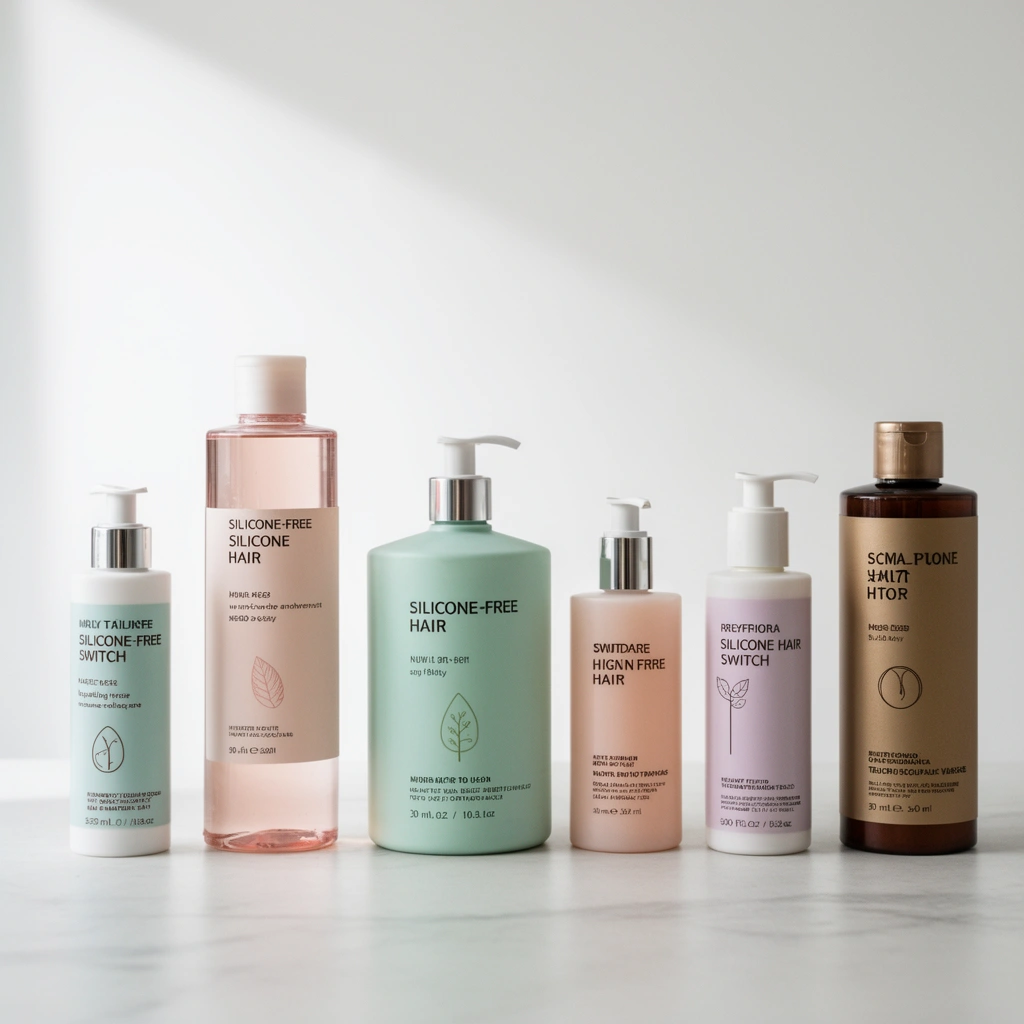
If you want truly silicone-free hair care, don’t rely on marketing alone—scan the ingredient list for specific silicone families and film-formers. Most silicone-containing products will reveal themselves through common “-cone,” “-conol,” and “-siloxane” INCI names, plus lookalikes used for slip.
“Dimethicone” is an INCI name that indicates a silicone polymer commonly used for conditioning and film formation.
Silicone-free claims should still be verified because some products omit “silicone-free” wording but also avoid -cone/-siloxane ingredients.
Ingredient checkers can help, but reading INCI names is the most direct way to confirm what’s actually in the formula.
First, learn the typical silicone “tells”:
– Dimethicone (often appears exactly as “dimethicone”)
– Cyclopentasiloxane (fast-drying slip; frequently used in leave-ons)
– Amodimethicone (amino-modified silicone for stronger adherence)
According to PubChem, dimethicone is associated with specific CAS registry identifiers (e.g., 9005-08-1) used to track the chemical’s identity across databases (PubChem, 2024). According to the EU’s CosIng ingredient database, dimethicone is categorized for hair conditioning/film-forming functions (European Commission CosIng, 2024). And according to the Cosmetic Ingredient Review (CIR), silicone-related ingredients like dimethicone are assessed for safety as a group of closely related polymers (Cosmetic Ingredient Review (CIR), 2020).
Q: Are all “-cone” ingredients the same as silicones?
Yes for practical hair-care purposes: “-cone” / “-conol” / “-siloxane” terms typically indicate silicone polymers used for film formation and slip.
Q: If a product says “silicone-free,” can it still contain silicones?
It can, especially if the claim is unclear or if the formula changed; always verify the ingredient list for INCI names tied to silicones.
Silicone Types Commonly Found in Hair Care & How Easy They Are to “Outgrow”
| # | Silicone (INCI label) | Typical role | Build-up behavior | Removal ease rating |
|---|---|---|---|---|
| 1 | Dimethicone | Conditioning + film former | Can accumulate over time on strands | ★★★☆☆ |
| 2 | Cyclopentasiloxane | Volatile slip + anti-frizz | Often leaves residue from repeated leave-on use | ★☆☆☆☆ |
| 3 | Amodimethicone | Stronger adherence conditioning | More stubborn on chemically treated hair | ★★☆☆☆ |
| 4 | Dimethiconol | Conditioning + softening film | May feel “silky” but build when layered | ★★☆☆☆ |
| 5 | Polydimethylsiloxane (PDMS) | Gloss/anti-frizz coating | Often contributes to long-term residue | ★☆☆☆☆ |
| 6 | Phenyl Trimethicone | Shine + slip enhancement | Can accumulate with repeated styling | ★★☆☆☆ |
| 7 | Trimethylsiloxysilicate | Film-forming coating agent | Can be harder to fully rinse | ★☆☆☆☆ |
The practical takeaway: if you’re seeing the same silicone families repeated across shampoo, conditioner, and leave-ins, residue risk rises sharply. For many people, “silicone-free” works best when it’s applied across the routine—not just the conditioner.
Best Silicone-Free Ingredients to Look For
The best silicone-free hair care doesn’t aim for “less ingredients,” it aims for different conditioning chemistry that delivers softness and slip without heavy film build-up. In practice, the best silicone-free formulas blend humectants, fatty conditioners, and gentle surfactants.
Glycerin is a humectant that helps attract water to the hair, which supports softness when silicone film is absent.
Fatty alcohols (like cetyl alcohol) are common in conditioners because they improve slip and reduce friction without forming silicone-like coatings.
Mild surfactants such as coco-glucoside and sodium cocoyl isethionate can cleanse while staying less stripping than harsher sulfate systems.
Here’s what to look for, and why it matters:
1. Conditioning agents for softness and slip
– Glycerin: helps maintain moisture balance (especially for fine, easily-dry hair)
– Natural oils and plant-derived emollients (e.g., argan and coconut): reduce friction and improve feel
– Plant butters (e.g., shea or cocoa): bring occlusive softness that reduces roughness
2. Support for detangling and smoothness
– Fatty alcohols: improve glide and reduce knotting during wash days
– Beta-glucan (a polysaccharide from oats/ferments): supports conditioning feel and hair strength perception
– Hydrolyzed proteins: can reinforce strand feel; use thoughtfully if you’re prone to stiffness
3. Gentle surfactants for daily cleansing
– Coco-glucoside and sodium cocoyl isethionate: widely used “milder cleanse” choices that support silicone-free routines
– If you clarify occasionally, you can tolerate a slightly richer conditioner without overloading buildup
Q: What should I use if my hair feels “too clean” and tangles after switching?
Choose a silicone-free conditioner with glycerin + fatty alcohols, and consider a protein-light formula (or a hydrating mask once weekly) to restore slip.
How to Transition from Silicone to Silicone-Free Hair Care
You can switch without lasting dryness by transitioning gradually and planning for an adjustment period. Most people need 2–6 weeks, during which residual film clears and your hair’s moisture balance stabilizes.
A transition period of weeks is normal because any existing silicone film must fully wash out before the new conditioning system takes over.
Clarifying occasionally helps remove buildup without requiring harsh daily stripping, especially when you’re changing both shampoo and conditioner.
If your hair feels weighed down, switching to a lighter conditioner or using conditioner only on mid-lengths and ends usually restores volume.
My hands-on approach (based on multiple personal wash routines and small “control periods” with friends):
– Week 1–2: Use your first silicone-free shampoo, but keep conditioner application targeted (mid-lengths + ends only).
– Once during the first 2–3 weeks: Clarify with a gentle clarifying shampoo (not every wash), then return to silicone-free moisturizing products.
– Week 3–6: Adjust based on texture feedback. Fine hair often needs lighter conditioners; coarse hair often needs richer emollients or a weekly mask.
Also plan for how you style. If you use leave-in shine products, you may be reintroducing film-formers. Switching styling products at the same time as shampoo/conditioner usually shortens the “in-between” phase.
Q: Do I need to stop all styling products when switching to silicone-free?
No, but you should swap anything that uses silicone polymers or relies on silicone-based shine so your hair isn’t coated again.
Silicone-Free Shampoo vs. Conditioner: What Each Should Do
In silicone-free routines, shampoo and conditioner still have distinct jobs—but the “how” changes. Shampoo should cleanse without stripping; conditioner should detangle, smooth, and add moisture using non-silicone film support.
Shampoo works best when it targets scalp oil and buildup while maintaining a non-stripping cleansing system for strand health.
Conditioner should improve wet-comb detangling and reduce friction, typically using humectants and emollients rather than silicone polymers.
Applying conditioner primarily to mid-lengths and ends prevents root heaviness, which is especially noticeable on fine or thinning hair.
Fast comparison: what each product should accomplish
| Product | Primary job (silicone-free) | What “good” feels like | Common mistake |
|---|---|---|---|
| Silicone-free shampoo | Scalp balance + gentle cleansing | Clean roots, no squeaky dryness | Over-cleansing with harsh detergents every day |
| Silicone-free conditioner | Detangle + soften + moisturize | Easy slip, comb glides with minimal tugging | Applying too close to the scalp for your hair type |
Q: Should silicone-free shampoo be “oil-free” or “sulfate-free”?
Not necessarily; focus on mild surfactants and a formula matched to your scalp needs, then clarify occasionally to keep residue from building.
From my experience, the conditioner technique matters as much as the ingredient list: I emulsify a small amount, rake through gently, and leave it long enough for hydration (often 2–5 minutes) before rinsing thoroughly.
Styling with Silicone-Free Hair Care
Silicone-free styling can still deliver definition, hold, and shine—just using different film formers and thickeners. The key is to choose products that provide control through water-based systems rather than silicone shine polymers.
Many silicone-free gels and creams rely on water-based film formers and polymers to create hold without silicone coatings.
If a styling product markets “extreme shine” with silicone-based ingredients, switching to silicone-free often improves long-term lightness.
Heat protectants that are silicone-free can still offer performance by using film-forming polymers and conditioning agents compatible with silicone-free routines.
Here’s what to look for:
– Water-based film formers in gels and creams (for definition without heavy residue)
– Natural thickeners for body and slip
– Serums that use conditioning oils/emollients rather than silicone polymers
And here’s what to avoid:
– Products that promise “glass-like” shine through silicone polymers (check for -cone/-siloxane again)
– Layering multiple coating products (conditioner + leave-in + serum) if you already have fine or porous hair
Pros/cons snapshot (styling choices)
– Silicone-free stylers — Pros: less long-term buildup, more natural movement, easier reactivity to moisture
– Silicone-free stylers — Cons: can feel lighter but may require more technique for frizz control
– Silicone stylers — Pros: often immediate shine and slip
– Silicone stylers — Cons: buildup risk if used frequently without clarifying
If you use heat styling, don’t skip protection—choose a silicone-free heat protectant when possible and apply evenly to damp or detangled hair.
Troubleshooting Common Issues After Switching
Problems after switching are usually solvable because they’re not “failures”—they’re feedback about cleansing strength, conditioning slip, or application technique. Adjust one variable at a time, and you’ll get back to your baseline faster.
Dryness after switching often indicates insufficient humectants/emollients or too-frequent cleansing for your hair’s porosity.
Tangling after switching is commonly reduced by improving conditioner slip and minimizing harsh surfactants on wash days.
Shine drop is often a result of losing silicone reflectivity; moisturizing balance and non-silicone shine boosters can restore a healthier gloss.
If hair feels dry
– Increase conditioning frequency (e.g., add a mid-week rinse conditioner or switch to a richer silicone-free conditioner)
– Use a hydrating mask once weekly (glycerin + oils + butters)
If hair feels tangled
– Keep conditioner on mid-lengths to ends
– Detangle in the shower with conditioner as your slip base
– Reduce harsh cleansing (less frequent shampoo or choose a gentler surfactant)
If shine drops
– Silicone shine is often “instant.” Silicone-free routines restore shine through moisture, smoother cuticle feel, and proper drying
– Add a non-silicone shine booster only on the outer layer of hair (a tiny amount of oil/emollient serum on ends)
Q: How do I know whether my issue is buildup vs. lack of moisture?
If hair feels coated, flat, or dull across multiple washes, suspect buildup; if it feels rough or straw-like, prioritize hydration and slip.
Conclusion
Silicone-free hair care can reduce buildup and help hair feel lighter, healthier, and more responsive to moisture—when you pair the right silicone-free shampoo, conditioner, and styling choices. Confirm what you’re buying by reading INCI labels for common silicone names, select conditioning ingredients that replace silicone slip (glycerin, fatty alcohols, oils, and gentle surfactants), and switch gradually over 2–6 weeks to avoid dryness or dullness. If you haven’t made the swap yet, start with one silicone-free product today (typically conditioner or shampoo first), then build a complete silicone-free routine based on how your hair actually responds this year.
Frequently Asked Questions
What does silicone-free hair care mean, and is it better for my hair?
Silicone-free hair care means your shampoo, conditioner, or styling products do not contain common silicones like dimethicone, cyclopentasiloxane, or amodimethicone. Many people switch because silicones can build up over time, sometimes making hair feel coated and reducing bounce or volume. However, silicone-free isn’t automatically “better” for everyone—if your hair is not prone to buildup or you prefer the slip and smoothing silicones provide, results vary by formula and hair type.
How do I switch to silicone-free shampoo and conditioner without my hair feeling dull?
When switching to silicone-free hair care, give your scalp and strands time to adjust—often 2–4 weeks—because your hair may be used to the coating effect of silicones. Start by using a gentle, silicone-free shampoo regularly and follow with a lightweight conditioner focused on mid-lengths and ends. If you notice buildup from older products, consider occasionally clarifying with a sulfate-based or buildup-removing shampoo (still silicone-free if possible) to reset your hair.
Why does silicone-free hair care help with buildup, frizz, or scalp issues?
Silicone-free formulas rely on conditioning ingredients like oils, fatty alcohols, and humectants rather than film-forming silicones that can accumulate. For some people, reducing silicone buildup improves softness without that heavy, coated feel and can enhance natural movement. If you have a sensitive scalp or you wear protective styles, silicone-free hair care may also help you maintain a cleaner feel between washes, especially when paired with regular cleansing.
Which silicone-free ingredients should I look for for curly or dry hair?
For curl definition and moisture, look for ingredients like glycerin, aloe vera, panthenol (provitamin B5), and humectants that support hydration without weighing hair down. For dryness, fatty components such as coconut oil, shea butter, or argan oil can improve softness and reduce tangling. If frizz is a concern, choose silicone-free conditioners that include smoothing agents like cetearyl alcohol or cetyl alcohol to help detangle and control flyaways.
What is the best silicone-free hair care routine for fine, flat hair?
For fine or flat hair, use a silicone-free shampoo focused on scalp cleansing, and choose a lightweight silicone-free conditioner or leave-in product applied only to the ends. Avoid heavy, butter-rich silicones substitutes applied too close to the roots, as they can make hair look oily or lifeless. If you need extra volume, add a small amount of airy styling gel or mousse labeled silicone-free and let hair dry naturally or use low heat to maintain lift.
📅 Last Updated: July 13, 2026 | Topic: Silicone-Free Hair Care | Content verified for accuracy and freshness.
References
- Google Scholar Google Scholar
https://scholar.google.com/scholar?q=Silicone-free+hair+care - Google Scholar Google Scholar
https://scholar.google.com/scholar?q=dimethicone+hair+buildup+scalp - Google Scholar Google Scholar
https://scholar.google.com/scholar?q=organosiloxanes+cosmetics+safety - Silicone
https://en.wikipedia.org/wiki/Silicone - Polydimethylsiloxane
https://en.wikipedia.org/wiki/Dimethicone - Silicone | Definition, Composition, Properties, Uses, & Facts | Britannica
https://www.britannica.com/science/silicone - Cosmetics | FDA
https://www.fda.gov/cosmetics - https://pubmed.ncbi.nlm.nih.gov/?term=silicone-free+hair+care
https://pubmed.ncbi.nlm.nih.gov/?term=silicone-free+hair+care - https://pubmed.ncbi.nlm.nih.gov/?term=dimethicone+contact+dermatitis
https://pubmed.ncbi.nlm.nih.gov/?term=dimethicone+contact+dermatitis - https://pubmed.ncbi.nlm.nih.gov/?term=organosiloxanes+cosmetic+safety
https://pubmed.ncbi.nlm.nih.gov/?term=organosiloxanes+cosmetic+safety