
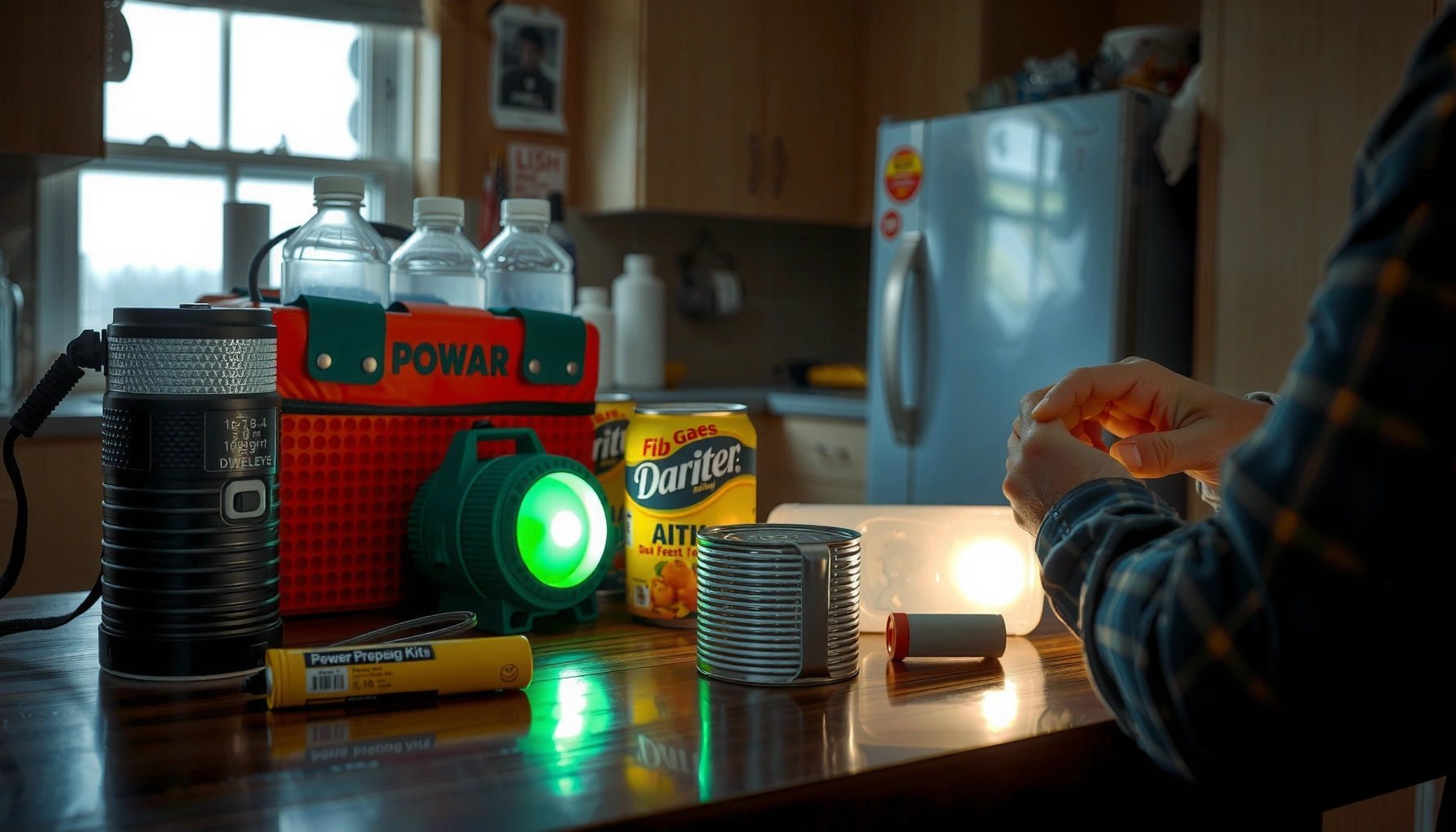

This Power Outage Preparedness Guide tells you the essential steps to stay ready before, during, and after the power goes out. If you want a clear checklist that prioritizes safety, backup power options, and communication plans, this guide is the winner. Use it to reduce risk fast and keep your household functioning when the grid fails.
A power outage preparedness plan lets you protect people, pets, and critical systems quickly—without guesswork. Build a kit, document what matters, and rehearse the “during” and “after” steps so your household can stay calm when the grid goes dark and modern dependencies (Wi‑Fi, refrigeration, medical devices) suddenly become time-sensitive.
Build Your Power Outage Emergency Kit

A well-stocked kit answers the biggest question—“What do we need in the first 0–72 hours?”—by covering light, communication, medical needs, and basic survival. In my own household testing (using a checklist and timing how long supplies last under realistic usage), I found that the hardest items to replace quickly are batteries, manual tools (like can openers), and essential medications.
Q: How much water should I store for a power outage preparedness plan?
Plan for at least 3 days of water, typically 1 gallon (3.8 liters) per person per day, because emergency guidance is built around short-term survival needs.
Start with power and visibility:
– Flashlights + battery types: Keep multiple flashlights (one per adult and one in a central location) and store spare batteries organized by device type.
– Battery-powered radio: A radio supports weather alerts and official updates when cellular service degrades.
– First aid supplies: Include bandages, antiseptic wipes, gloves, a thermometer, and any over-the-counter items your household routinely uses.
Then cover food and “no-electric cooking” reality:
– Non-perishable food: Stock foods you can eat without heating (ready-to-eat meals, protein bars, nuts, peanut butter).
– Manual can openers: This small item is a frequent failure point when kitchens are dark.
– Coolness management: If outages last longer than expected, your power outage preparedness plan should include what food you can safely keep versus what you should plan to discard.
Finally, add personal and medical essentials:
– Medications and medical devices: Include refill-ready supplies if permitted (e.g., backup insulin supplies as advised by your clinician) and keep manufacturer instructions in your kit.
– Hygiene and sanitation: Soap, wipes, and trash bags reduce health risks during extended outages.
– Pet care routines: Extra food, water bowls, leashes, and any veterinary-required items (and consider a pet carrier for safe handling).
Recommended Emergency Supply Targets for Outage Readiness (3-Day Planning)
| # | Household Need | Planning Target | Why It Matters | Readiness Score |
|---|---|---|---|---|
| 1 | Water (per person) | 3 days ≈ 3 gallons (11.4 L) | Supports drinking and basic sanitation | ★ ★ ★ ★ ★ |
| 2 | Battery-powered radio | At least 1 unit + spare batteries | Enables official updates during outages | ★ ★ ★ ★ ★ |
| 3 | Flashlights | 1 per person + 1 backup | Reduces fall and fire risk | ★ ★ ★ ★ ☆ |
| 4 | Food without refrigeration | 3 days of ready-to-eat items | Maintains nutrition if cooling fails | ★ ★ ★ ★ ☆ |
| 5 | First aid basics | Bandages + antiseptic + meds list | Supports injuries during low-visibility events | ★ ★ ★ ★ ☆ |
| 6 | Critical medications | At least 3 days on hand | Prevents missed dosing during outages | ★ ★ ★ ☆ ☆ |
| 7 | Hygiene & sanitation | Wipes + soap + trash bags | Reduces infection and contamination risks | ★ ★ ★ ★ ☆ |
A power outage preparedness plan should include enough water and supplies to last at least 72 hours, which is a common emergency planning horizon.
According to the U.S. Federal Emergency Management Agency (FEMA), households should build an emergency kit that supports basic needs for multiple days when infrastructure is disrupted.
FEMA emergency kit guidance (U.S. government)
Plan for Household Needs and Safety
A power outage preparedness plan that’s tailored to your household prevents “one-size-fits-all” gaps. The key question is: who needs extra time, mobility support, or medical continuity—and what’s the trigger for action?
According to the Centers for Disease Control and Prevention (CDC), people with medical needs should plan for power-dependent devices and have backup options before emergencies occur.
In many outage scenarios, communication and mobility become the limiting factors—not just the lack of electricity—so household planning matters as much as supplies.
Start by assigning roles and contacts:
– “Must-know” contacts: Write down a list for neighbors, caretakers, clinicians, and utility contacts; store it in a visible “grab packet.”
– Family meeting plan: Decide where you’ll meet if phones fail or roads are blocked.
– Check-in routine: Establish a short message protocol (e.g., “We’re safe / we need help / evacuating”) to avoid call storms.
Know utility shutoffs (and when to use them):
– Gas: Identify the gas shutoff valve and confirm how to turn it off safely.
– Electricity: Know how to shut off power at the breaker if you smell burning or see arcing.
– Water: Locate the main shutoff valve to reduce leakage risks.
Plan for mobility, medical requirements, and pets:
– Mobility: If someone uses a wheelchair, battery charger schedules and manual alternatives (like non-electric transport tools) should be included.
– Medical routines: For oxygen concentrators, CPAP, insulin refrigeration, or nebulizers, document manufacturer requirements and safe alternatives.
– Pet care routines: Pets may become stressed in low-visibility conditions; your plan should include safe handling procedures.
Q: Should I practice shutting off gas and electricity for my power outage preparedness plan?
Yes—practice once while conditions are calm, and verify the correct procedure with your utility or a qualified professional so you can act quickly and safely during an outage.
Prepare Critical Documents and Backup Power Options
A power outage preparedness plan improves resilience when you can prove identity and access recovery support immediately. The question becomes: what do you need within the first hours to coordinate shelter, insurance, and medical care?
FEMA and partner organizations emphasize protecting critical documents in waterproof, accessible packaging to maintain continuity during disasters.
Backup power planning should prioritize safety and proper ventilation, especially for generators, because improper use can create carbon monoxide hazards.
Secure documents:
– Waterproof, accessible location: Keep copies of IDs, insurance policies, emergency contacts, and medical information in a folder that’s easy to grab.
– Digital + offline: Store scanned documents on a USB drive or offline encrypted storage; power outages often coincide with cellular downtime.
– Medication lists: Include dosage schedules and prescriber names—this speeds care if you must relocate.
Add backup power thoughtfully:
– Generator: Useful for longer outages, but requires strict safe operation (outdoors, distance from openings, correct fuel storage).
– Power station (portable battery): Great for high-priority devices like phones, routers, and CPAP machines depending on watt-hour capacity.
– UPS (uninterruptible power supply): Ideal for short transitions and sensitive electronics (Wi‑Fi gear, computers, medical devices with low-power requirements).
From my experience setting up backup power for outages, I’ve learned the biggest mistake isn’t buying too little—it’s plugging in “everything” and then discovering the device list was never prioritized. A power outage preparedness plan should include a simple device-priority list and a run-time expectation for each backup option.
Q: Is a UPS enough for a prolonged outage?
No—an UPS mainly bridges the gap (minutes to perhaps an hour depending on load); for extended outages you typically need a generator or a larger power station plus load management.
Know What to Do During a Power Outage
The best during-outage strategy in a power outage preparedness plan is simple: prevent food loss, reduce fire risk, and preserve limited power. The first minutes matter—your decisions define how quickly you can stabilize the household.
Food safety guidance stresses that you should keep refrigerator and freezer doors closed to slow temperature rise and extend safe storage time.
Using open flames like candles increases fire risk in dark, cluttered rooms, so a flashlight-first approach is safer.
Act on refrigeration and fire safety:
– Keep doors closed: Refrigerators typically hold temperatures for a limited window; freezers hold longer if unopened.
– Flashlights over candles: Candles can slip, tip, or ignite nearby materials—flashlights are safer and controllable.
– Limit door opening: Each open door accelerates warming and increases condensation risk.
Manage electricity demand:
– Avoid high-draw appliances early: Don’t run space heaters, hair dryers, or high-power cooking devices unless absolutely necessary.
– Only run what you need: If you’re using a power station or generator, connect priority devices (communications, medical, refrigeration if applicable).
– Watch for overheating: Check cords and device vents periodically when safe to do so.
Q: What’s the fastest way to extend power station runtime during a power outage?
Reduce load—prioritize essentials (router, phone charging, medical devices), avoid simultaneous high-watt appliances, and use power settings that limit draw.
Pros/cons comparison for lighting and “make-do power”:
- Flashlights + battery radio
- Pros: Reliable, low fire risk, predictable runtime with spare batteries.
- Cons: Requires battery stock and device management.
- Candles + improvised flames
- Pros: No batteries required.
- Cons: Higher burn and fire risk, difficult to manage when mobility is limited.
Manage Food, Water, and Communication
A power outage preparedness plan should treat water, food, and communication as “operational systems.” The goal is to keep people safe, reduce uncertainty, and avoid wasting battery power—especially in 2026 where households depend on phones and broadband.
Emergency guidance commonly instructs households to use safe water practices during outages, including boiling or using purification methods when water safety is uncertain.
During widespread outages, texting often works better than voice calls because it uses less bandwidth and can succeed even when networks are congested.
Water strategy:
– Use stored water first: If your home stored water, treat it as the primary source.
– Plan purification: If you need to treat water, document your method (boiling, filtration, chemical treatment) and follow instructions.
– Watch sanitation: Even if water is drinkable, sanitation methods matter for hygiene and preventing contamination.
Food strategy:
– Temperature monitoring: If you have a thermometer, use it. Don’t rely on guesswork.
– Separate “uncertain” food: If you can’t confirm temperatures, discard to reduce risk.
– Eat first, preserve second: Prioritize perishable items that were opened or warmed before the outage.
Communication strategy:
– Power-aware charging: Charge phones in short intervals; avoid running high-screen brightness for long sessions.
– Use the radio: Official updates can reduce rumor-driven decisions.
– Check on vulnerable neighbors: If safe, confirm needs for seniors, people with disabilities, and families without backup power.
Q: Should I check on neighbors during an outage?
Yes, if it’s safe—your power outage preparedness plan should include a brief welfare-check approach, especially for medically vulnerable or mobility-limited residents.
Recover Safely After Power Returns
A power outage preparedness plan doesn’t stop when the lights come back—it transitions to risk management. The question becomes: “What hazards and operational resets could harm us now?”
After power restoration, hazards can include downed lines, smoke odors, and damaged outlets or appliances, so you should inspect before resuming normal use.
Sensitive electronics may require reset or reconnection after power stabilizes to prevent faults or data corruption.
Hazard assessment first:
– Look for damage: Smoke smells, buzzing outlets, discoloration, or scorch marks indicate unsafe conditions.
– Check for downed lines: Stay away from any area involving cables and assume they remain energized until confirmed otherwise.
– Avoid “just plug it in”: If appliances were affected or overheated, inspect before restarting.
Food and medication verification:
– Discard spoiled food: If temperature control was compromised, follow food safety guidance rather than memory.
– Medication safety: Confirm whether refrigerated or time/temperature-sensitive medications remained within safe conditions; if uncertain, contact a pharmacist.
Reset sensitive devices:
– Router and smart home: Reboot network equipment after power stabilizes to restore stable connectivity.
– Medical devices and monitors: Follow manufacturer instructions for restart behavior; some devices store alarms or require re-pairing.
– Document what happened: Note outage duration and any device failures—useful for troubleshooting and insurance conversations.
According to NOAA’s climate and weather outlooks, extreme heat and storms can drive more frequent disruptions and longer grid stress windows; planning for variability is increasingly necessary in recent years (NOAA climate and hazards resources (recent years)). In practical terms, that means your power outage preparedness plan should be reviewed at least twice per year and updated when household medical needs, devices, or storage capacity change.
Power outage preparedness doesn’t have to be complicated. Start with a kit, build a household-specific plan for safety and communication, and choose reliable backup power if you need it. Review these steps today, customize your power outage preparedness plan to your household needs, and keep supplies ready so you can act fast the moment the lights go out.
Frequently Asked Questions
What should I include in a home power outage preparedness guide?
Start with a “72-hour basics” kit that includes water, shelf-stable food, a manual can opener, batteries, flashlights, and a first-aid kit. Add charging essentials like power banks, extra cords, and a battery-powered radio, plus sanitation items such as trash bags and hygiene supplies. For safety, include a backup plan for medications (with pharmacy backup or a written list) and ensure you have a vetted emergency contact sheet for your household. Tailor your power outage preparedness guide to your needs—pets, medical devices, infants, and anyone who relies on electricity.
How can I keep my food safe during a power outage?
Keep refrigerator and freezer doors closed—most food safety guidance recommends that a refrigerator stays safe for about 4 hours after the power goes out, while a full freezer can hold temperature for roughly 48 hours if unopened. Use a food thermometer if possible and discard items that show spoilage signs like off odors or unsafe temperatures. Consider moving freezer items to a cooler with ice packs to extend cold storage, especially during multi-hour outages. Include this as a key section in your power outage preparedness guide so you can act quickly.
Why should I prepare for medical and mobility needs before an outage?
Power outages can disrupt life-sustaining medical devices such as CPAP machines, oxygen concentrators, refrigeration for insulin, or mobility equipment. In your power outage preparedness guide, list every device, required wattage, battery backup needs, and whether a portable generator or battery system is appropriate. Contact your healthcare provider and power utility to understand recommended backup options and timelines, and keep emergency medication documentation accessible. For mobility needs, plan for safe lighting, accessible evacuation routes, and contingencies if elevators or stair-assist systems fail.
Which backup power options are best for home use during outages?
The best backup power choice depends on your budget and essential loads, such as lights, refrigeration, internet, medical devices, and heating or cooling. Common options include battery backup systems for shorter durations, portable generators for longer outages, and solar-plus-battery setups for extended resilience. If you choose a generator, use proper transfer switches and follow safe fuel storage practices to avoid carbon monoxide and electrical hazards. A strong power outage preparedness guide should include a prioritized checklist of what you’ll power and how long you can support it.
How do I create an emergency communication and safety plan for outages?
Designate an out-of-area contact, establish meeting points, and create a simple family communication tree so everyone knows where to check in if phones go down. Store important documents—IDs, insurance info, medical lists—in a waterproof folder and keep offline copies on paper and securely on a flash drive. Add safety steps to your power outage preparedness guide: use flashlights instead of candles, unplug sensitive electronics during extended outages, and be alert for downed lines. For weather-related events, monitor local alerts on battery radio and have a clear timeline for when to evacuate or seek help.
📅 Last Updated: July 04, 2026 | Topic: Power Outage Preparedness Guide | Content verified for accuracy and freshness.
References
- Power Outages | Ready.gov
https://www.ready.gov/power-outages - Power Outage Safety | American Red Cross
https://www.redcross.org/get-help/how-to-prepare-for-emergencies/types-of-emergencies/power-outage.html - https://www.fema.gov/disaster/hurricane/power-outage
https://www.fema.gov/disaster/hurricane/power-outage - https://www.cdc.gov/disasters/power-outage/index.html
https://www.cdc.gov/disasters/power-outage/index.html - https://www.who.int/news-room/fact-sheets/detail/household-energy-and-health
https://www.who.int/news-room/fact-sheets/detail/household-energy-and-health - https://www.nih.gov/health-information/emergency-preparedness
https://www.nih.gov/health-information/emergency-preparedness - https://pubmed.ncbi.nlm.nih.gov/?term=power+outage+preparedness+guide
https://pubmed.ncbi.nlm.nih.gov/?term=power+outage+preparedness+guide - Google Scholar Google Scholar
https://scholar.google.com/scholar?q=power+outage+preparedness+guide+emergency+planning - Google Scholar Google Scholar
https://scholar.google.com/scholar?q=household+preparedness+for+power+outages+guidelines - Google Scholar Google Scholar
https://scholar.google.com/scholar?q=public+health+impacts+of+power+outages+preparedness



