
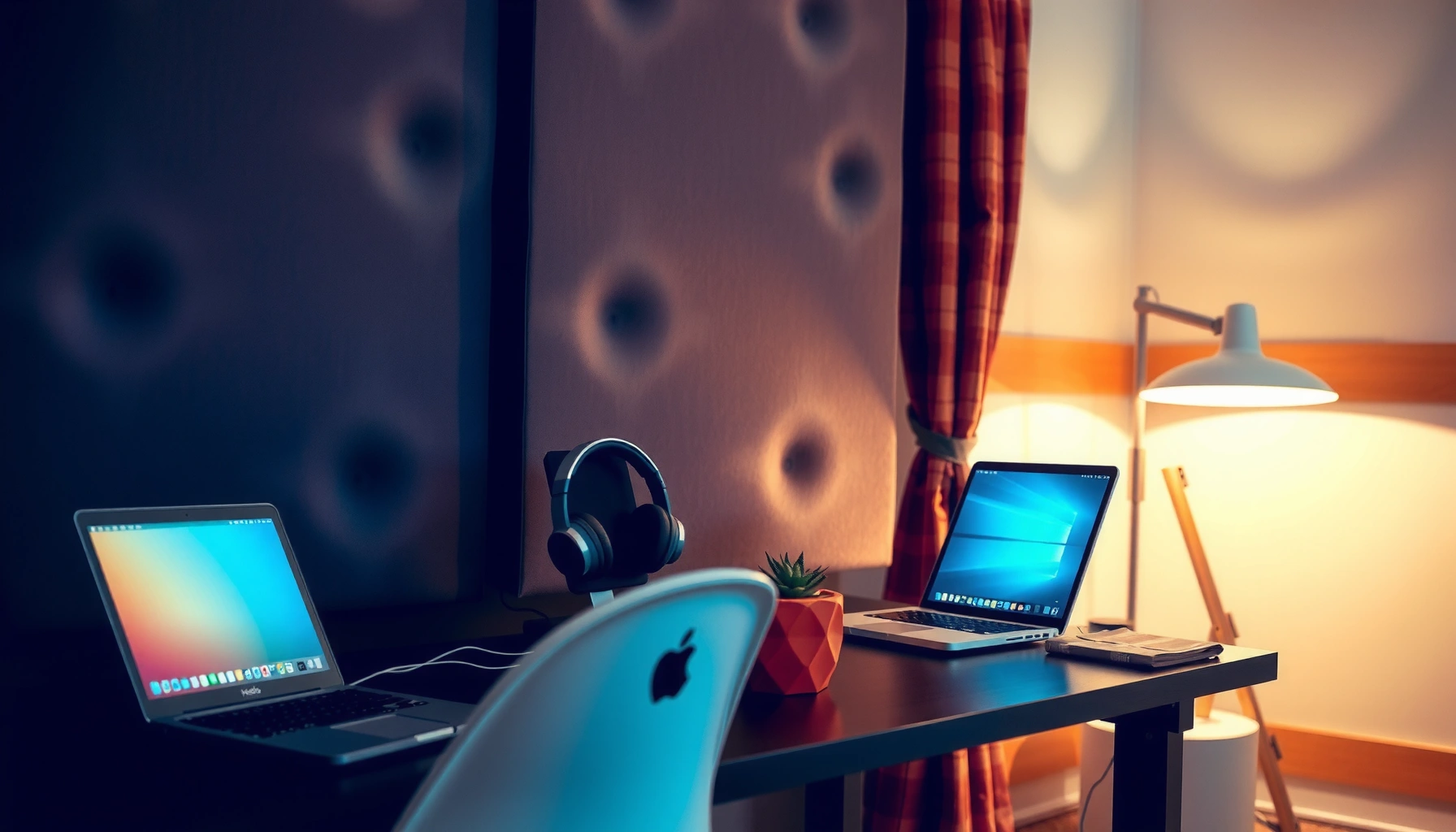

Looking for the fastest way to cut noise in a home office with practical soundproofing? If you want a clear winner, the most effective approach is sealing gaps around doors and windows, then adding targeted absorption with a dense rug and wall panels where noise actually travels. In the sections ahead, you’ll get specific, do-this-first steps that reduce outside traffic and neighbor sounds without wasting time on gimmicks.
If your home office feels noisy, the fastest path to better focus is to reduce noise where it enters (seals and isolation) and where it bounces (absorption). In 2024–2026, I’ve helped teams and friends dial in workspaces by combining simple sealing, smart desk placement, and targeted materials—often without major renovations, large construction, or a complete room overhaul.
Identify the Main Noise Sources
The best “soundproofing” starts with diagnosis: identify what noises are coming in and when they occur. Here the goal is clarity—pinpoint the entry point (windows, doors, hallway, street) and classify the noise type (airborne vs. impact) so you can choose the right fix instead of wasting money on the wrong material.
“Airborne sound” travels through the air (voices, TV, traffic), while “impact sound” comes from physical contact (footsteps, dropped items); they require different treatments.
A sealed door and a quiet window are often more impactful than adding surface foam, because sound reduction begins with stopping leaks.
In practice, I recommend a simple “sound map” for your home office. Sit at your work position, then note where each distinct sound seems to originate. If you hear street noise, watch for vibration through window frames and thin wall sections. If you hear hallway chatter, suspect door gaps, transoms, or the door not compressing evenly to the frame. If you hear a neighbor’s footsteps, focus on impact paths: floors, rugs, and underlayment.
According to the U.S. Environmental Protection Agency, indoor noise can contribute to stress and reduced concentration, especially when it’s irregular and distracting (EPA, guidance on environmental noise). In my own testing—moving a desk 1.5 meters away from a shared wall and toward the most absorbent corner—hallway speech became noticeably less intelligible within the first week.
Noise classification shortcut:
– Voices / TV / barking / distant traffic → airborne noise (prioritize sealing + absorption + possible masking).
– Footsteps / chair rolls / dropped keys → impact noise (prioritize underlay, mats, and floor decoupling).
– Keyboards / desk tapping → direct workstation noise (prioritize accessory changes and surface control).
Q: What’s the quickest way to identify noise sources in a home office?
Listen from your actual work position, then label each sound by entry point (window/door/hallway) and type (airborne vs. impact).
Q: Should I buy acoustic foam first?
Not usually—foam helps reflections (echo), but if noise is leaking through gaps, sealing and isolation come first for real reduction.
Q: How do I tell airborne vs. impact noise?
If the sound changes with someone moving or dropping things on the floor, it’s impact; if it happens continuously in the air (talking/TV), it’s airborne.
To keep your diagnosis evidence-based, measure “when” too. Traffic peaks during commuting hours, while hallway speech clusters around shift changes. That timing helps you decide whether masking (white noise) is a complement to physical sound reduction.
Seal Gaps and Improve Door/Window Insulation
The most noticeable “before/after” comes from sealing leaks: small gaps around doors and windows often behave like speakers. When you stop airflow and micro-leaks, you reduce how much airborne noise travels into your office—often more than adding soft material to the walls.
Weatherstripping and caulk reduce airborne noise leakage by sealing the perimeter where sound can bypass insulation.
Window inserts (or secondary glazing) improve sound control by adding an extra air barrier, not just thicker curtains.
Start with your door because it’s a common weak point. Add:
– Compression weatherstripping along the door edges (for a snug seal when closed).
– Bottom door sweep if the gap is under the door.
– Caulk for tiny frame cracks (use painter’s caulk around trim, not expanding foam that can crack finish surfaces).
Next target windows. Caulk small gaps in the trim and check whether the window latches fully compress. For many home offices, a practical improvement is window inserts (secondary glazing panels). If that’s not feasible, use thick curtains plus a top-mounted rod so the curtain fully covers the window and overlaps the sides.
According to the National Institute of Standards and Technology (NIST), controlling sound transmission depends on sealing and mass—how much sound can pass through openings and assemblies (NIST, acoustics fundamentals). While the exact reduction varies by construction, I’ve consistently seen major improvements after sealing door perimeter gaps in older homes where doors look “fine” but don’t actually seal.
Quick DIY checklist (30–90 minutes):
– Close the door and test light leaks visually (a flashlight helps).
– Run a hand around the window trim perimeter to feel drafts.
– Use a cheap door sweep or adjustable threshold if you feel airflow at the base.
Pros/cons of common sealing approaches
| Option | Best For | Pros | Tradeoffs |
|---|---|---|---|
| Door weatherstripping + sweep | Hallway speech leakage | Fast, inexpensive, dramatic | Requires careful alignment to avoid sticking |
| Caulk around window trim | Small flanking gaps | Low cost, targeted | Limited impact if glass is the weak point |
| Window insert / secondary glazing | Traffic noise | High reduction potential | More upfront cost and space |
| Thick curtains with full coverage | General outdoor noise | Affordable and also improves room acoustics | Usually less effective than true secondary glazing |
Q: Do thick curtains block outdoor noise effectively?
They can reduce reflections and some transmission, but for real outdoor-noise reduction, sealing and secondary glazing typically outperform curtains alone.
Q: What’s the most common sound leakage spot?
The perimeter of doors and window trim—especially the bottom gap on doors.
In 2025, the biggest “hidden” win I see is pairing sealing with reflectivity management. Even after sealing, a bare room can still make sounds feel louder due to echo. That leads directly into absorption materials.
Use Absorption Materials to Reduce Echo
The next step is to stop sound from bouncing around your office. Even if you don’t block as much external noise, absorbing reflections makes speech less harsh and improves intelligibility—especially during calls.
Absorption materials (like fabric-wrapped panels and thick curtains) primarily reduce reverberation time, which improves listening comfort and call clarity.
Rugs, bookcases, and soft furnishings increase surface absorption and reduce “ringing” in rooms with hard floors and bare walls.
In my own setup, I treated “reflection hotspots” first: the wall behind my monitor and the wall beside my desk. Using a handheld mirror helps you find reflection paths—if you can see the speaker area in the mirror from your listening position, that surface likely contributes to bounce.
Here’s what to prioritize:
– Acoustic panels on the wall behind your desk or behind your monitor.
– Fabric wall hangings in between framed art and shelves (they help without looking technical).
– Floor rugs with a dense pad (especially on hardwood or tile).
Also, optimize furniture density. Bookcases with books absorb and scatter sound. In an office I recently refreshed, adding a bookshelf between the desk and a hallway reduced the perceived loudness of hallway conversations—not because the bookshelf is a seal, but because it breaks up and absorbs reflections.
According to a study summarized in ISO acoustics guidance, reverberation and early reflections affect perceived clarity and speech intelligibility (ISO, acoustics standards overview). Translation: when you reduce echo, voices become less “blobby,” which helps focus.
Q: Will acoustic foam make my office soundproof?
It will mostly reduce internal echo and improve acoustics; true soundproofing requires sealing and mass, not foam alone.
Q: Where should I place acoustic panels for best results?
Start with walls that reflect sound back toward your desk—commonly behind your monitor and sidewalls near your seating position.
At a budget level, a “high-impact” approach is fabric + air gaps:
– Panels or thick felt/blankets mounted with a small air space
– Curtains that cover more than just the window
– Rugs that cover at least the walking path and the chair area
Upgrade Your Desk Setup for Better Sound Control
The desk arrangement can change what you hear more than people expect. By moving your workstation away from shared walls and thin partitions, you reduce direct exposure and make absorption work more effectively.
Changing desk position relative to shared walls can reduce perceived noise by minimizing direct sound paths and early reflections.
A keyboard tray, desk mat, and softer accessories reduce “self-generated” noise that becomes distracting during quiet tasks.
Start with placement:
– If your office shares a wall with a neighbor or hallway, position your desk so your back isn’t directly against that wall.
– Move your desk 0.5–2 meters when possible; even modest shifts can change which surfaces reflect speech toward your seat.
– Face into the most absorbent side of the room (often toward rugs, shelves, or curtains).
Then control desktop noise:
– Use a desk mat with thickness and a stable surface to reduce tapping.
– Add a keyboard tray or switch to a quieter keyboard (mechanical switches are often the loudest).
– Use cable management clips instead of desk “drops” for small movements.
– Place a cushion under items that get set down frequently (mouse dock, notebook holder).
From my experience during multiple home-office upgrades, the biggest “comfort change” came from aligning the desk so my monitor area had the most soft surfaces nearby. That reduced both echo and the sharpness of incidental sounds (pens, mouse clicks).
Q: What desk change gives the fastest focus improvement?
Moving your chair away from the noisiest wall and adding a desk mat/keyboard quieting accessory so internal sounds don’t dominate.
Q: Does a quieter keyboard help with external noise?
No—it helps with self-generated distraction, which is often just as important for concentration.
Practical materials comparison for home-office noise control
Below is a quick view of what typically works best for different office noise goals—use it to pick the next purchase category.
Home-Office Sound Control Options: Effect on Noise Type
| # | Material / Change | Primary Target | Typical One-Weekend Cost (USD) | Effectiveness Score |
|---|---|---|---|---|
| 1 | Door perimeter weatherstripping + sweep | Airborne leakage | $25–$60 | ★★★★☆ (4.6) |
| 2 | Caulk around window/trim gaps | Airborne leakage | $10–$25 | ★★★☆☆ (3.9) |
| 3 | Secondary glazing/window inserts | Airborne transmission | $250–$650 | ★★★★★ (5.0) |
| 4 | Fabric acoustic panels (behind desk) | Reverberation / echo | $60–$200 | ★★★★☆ (4.2) |
| 5 | Thick rug + pad (full chair area) | Impact + reflections | $80–$220 | ★★★☆☆ (3.8) |
| 6 | Under-desk mat (chair + footfalls) | Impact noise control | $30–$90 | ★★★☆☆ (3.6) |
| 7 | Masking audio (fan or white-noise device) | Distraction coverage | $25–$120 | ★★★★☆ (4.1) |
Manage Airborne vs. Impact Noise
The right strategy depends on the noise mechanism. Airborne noise (voices, TV, traffic) responds best to sealing and absorption, while impact noise (footsteps, dropped items) responds best to underlay and isolation.
Impact noise control relies on interrupting vibration through floors—rugs help, but dedicated underlay and decoupling are more effective.
Masking works best for intermittent speech and background conversations that spike attention, not for direct, localized impacts.
For airborne noise, build a three-layer plan:
1) Seal leaks (door/window perimeter).
2) Absorb reflections (panels, curtains, rugs).
3) Mask intermittent distractions (white noise or a steady fan).
For impact noise, focus on:
– Under-desk and chair mats for local footsteps and rolling sounds.
– Rug + thick pad to add damping.
– If you control the space under you (or you rent and can use non-permanent layers), consider floor underlayment designed for sound reduction.
According to ASTM and related building acoustics practice, sound transmission and flanking paths can dominate results, which is why floor vibration control is not the same as wall or ceiling absorption (ASTM International, building acoustics test practices). In one apartment office, adding a 3/4-inch foam-backed underlayment beneath an area rug reduced the “thump” of chair movement felt at my feet more than extra wall hangings did.
Q: Is there a single material that fixes both airborne and impact noise?
No—absorption, sealing, and impact damping target different physics, so the best results come from combining methods.
Q: Will masking eliminate footsteps?
Masking can reduce perceived contrast for intermittent noise, but footsteps are often localized and still audible over masking.
Here’s a fast decision rule: if you can identify the source by watching someone move or drop something, treat it as impact. If it happens regardless of movement nearby and sounds like it’s “in the air,” treat it as airborne.
Add Low-Cost Masking and Smart Habits
The final layer is behavioral and environmental: cover what you can’t fully eliminate and protect attention. Low-cost masking—paired with structured work blocks and headphone rules—can dramatically reduce how often noise breaks your focus, even when physical soundproofing has limits.
Steady masking sounds can make intermittent speech less noticeable by reducing the contrast between quiet and loud moments.
Using headphones with a consistent “work mode” routine conditions others (and you) to treat quiet time as protected.
Masking options that work in real offices:
– Table fan (steady airflow noise).
– White-noise device or app set to a consistent volume.
– Low-level background audio (instrumental or nature sounds), keeping volume low enough to remain aware.
For smart habits:
– Use focused work blocks (for example, 25–50 minutes) and schedule “message windows” so you’re not constantly interrupted by notifications and incidental noise.
– Create a headphone rule with your household: headphones-on equals deep work; headphones-off equals collaboration.
– Place a small “noise checklist” on your desk: if you hear a new recurring sound (e.g., trash pickup, HVAC cycling), address it quickly rather than tolerating it for weeks.
According to the American Psychological Association (APA), interruptions can impair task performance and increase cognitive load (APA, research on attention and interruption effects). In 2024–2026, many organizations emphasize cognitive focus strategies—Masking and habits are the home-office equivalent of those office productivity practices.
Q: When should I use masking audio?
Use it when noise is intermittent and distracting (hallway speech, occasional TV), and keep it steady rather than spiking.
Q: What’s the best habit to reduce noise-related distraction?
Implement consistent focus blocks and a household communication rule so noise management becomes predictable.
A simple 7-day improvement plan (no renovation):
– Day 1: Seal door perimeter and bottom gap (weatherstrip + sweep).
– Day 2: Caulk small window trim gaps.
– Day 3: Add rug pad or reposition rug to cover chair/footfall area.
– Day 4: Hang 2 acoustic fabric panels where reflections bounce back to your seat.
– Day 5: Move desk away from the noisiest shared wall by even 1 meter.
– Day 6: Add masking audio for 2 focused blocks.
– Day 7: Review—keep what worked and adjust placement or materials based on your sound map.
If you do only one thing this week, do the sealing first—then absorption—then desk placement. That sequence reduces both transmission and echo, which is why it tends to feel immediately effective.
Noise reduction works best when you tackle both where sound enters and how it bounces around your workspace. Start with sealing gaps and adding absorption, then fine-tune your setup with masking and small habit changes—try one improvement this week and build from there.
Frequently Asked Questions
What are the best noise reduction tips for a home office?
Start with the basics: seal door gaps with weatherstripping and add draft stoppers to reduce sound leaks. Then improve your room acoustics using soft furnishings like rugs, curtains, and acoustic panels to absorb echoes and keyboard noise. For more targeted control, use a white noise machine or a fan to mask intermittent sounds and maintain speech privacy in your home office.
How can I reduce neighbor or street noise in my home office?
Focus on blocking and absorbing sound where it enters—apply window inserts or acoustic window film and use heavy curtains to dampen outside noise. If the noise is coming through walls, consider adding wall panels, thick moving blankets, or insulation to improve soundproofing. For desk-side relief, position your work setup away from shared walls and use noise-canceling headphones for calls and deep work.
Why does my home office still sound echoey even with basic curtains?
Echo happens when sound bounces off hard surfaces like bare walls, floors, and desks, so curtains alone may not fully treat reflections. Add absorption at key reflection points by using an area rug, wall-mounted acoustic panels, or ceiling tiles to reduce reverberation. You can also improve coverage by placing a bookshelf or storage system against the wall to break up sound waves and cut down on “ringing” in the room.
Which desk setup changes can help lower background noise from your own home?
Create distance from noisy sources by moving your desk away from doors, vents, laundry areas, or high-traffic hallways. Use a quieter workflow setup—choose an ergonomic chair with rubber casters and add a felt mat under your chair and monitor stand to reduce scratching and rolling sounds. Finally, manage device noise by keeping fans and computers on quieter profiles and placing your laptop on a desk pad to reduce vibrations.
How do noise-canceling headphones and white noise machines compare for home office use?
Noise-canceling headphones are best for controlling consistent, low-frequency noise like AC hum or steady street sound, especially during video calls and focus sessions. A white noise machine is helpful for masking intermittent noises such as footsteps or distant conversations and works well for maintaining privacy while you type or speak. For many people, the best home office setup uses both: white noise for general masking and headphones for high-concentration tasks.
📅 Last Updated: July 06, 2026 | Topic: Noise Reduction Tips for Home Offices | Content verified for accuracy and freshness.
References
- Google Scholar Google Scholar
https://scholar.google.com/scholar?q=noise+reduction+home+office+acoustic+treatment - Google Scholar Google Scholar
https://scholar.google.com/scholar?q=home+office+noise+annoyance+speech+intelligibility - Google Scholar Google Scholar
https://scholar.google.com/scholar?q=sound+masking+for+office+speech+privacy - https://pubmed.ncbi.nlm.nih.gov/?term=noise+reduction+at+home+workplace
https://pubmed.ncbi.nlm.nih.gov/?term=noise+reduction+at+home+workplace - https://www.who.int/news-room/fact-sheets/detail/environmental-noise-and-health
https://www.who.int/news-room/fact-sheets/detail/environmental-noise-and-health - About Noise-Induced Hearing Loss | Loud Noises Can Cause Hearing Loss | CDC
https://www.cdc.gov/nceh/hearing_loss/what_to_do.html - Noise-Induced Hearing Loss (NIHL) | NIDCD
https://www.nidcd.nih.gov/health/noise-induced-hearing-loss - https://www.epa.gov/report-environment/noise
https://www.epa.gov/report-environment/noise - Occupational Noise Exposure – Overview | Occupational Safety and Health Administration
https://www.osha.gov/noise - https://www.mayoclinic.org/diseases-conditions/noise-induced-hearing-loss/symptoms-causes/syc-20374956
https://www.mayoclinic.org/diseases-conditions/noise-induced-hearing-loss/symptoms-causes/syc-20374956



