
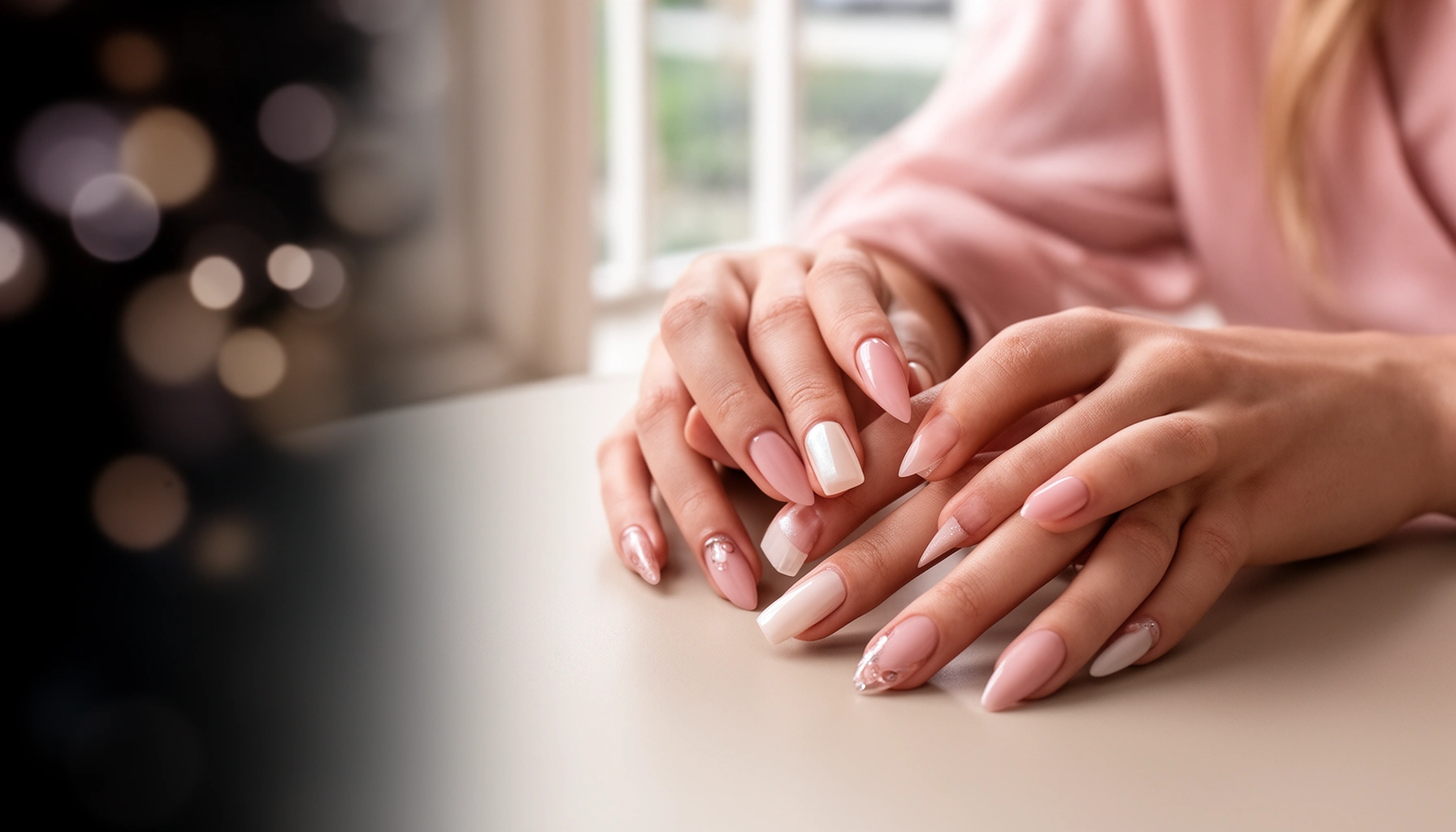

Nail shapes explained in simple terms: the right shape complements your nail bed, fingers, and lifestyle—so you get the look you want without discomfort. In this guide, you’ll learn what the most popular nail shapes are, how they change the appearance of your hands, and how to choose the best option for you.
Find the nail shapes explained you need to choose the perfect look for your hands—starting with the one shape that flatters your fingers the most. This guide tells you exactly which nail shape wins for width, length, and strength needs, so you can stop guessing. You’ll leave with clear picks and the know-how to match your shape to your lifestyle, from everyday wear to bold statement nails.
Round Nail Shapes
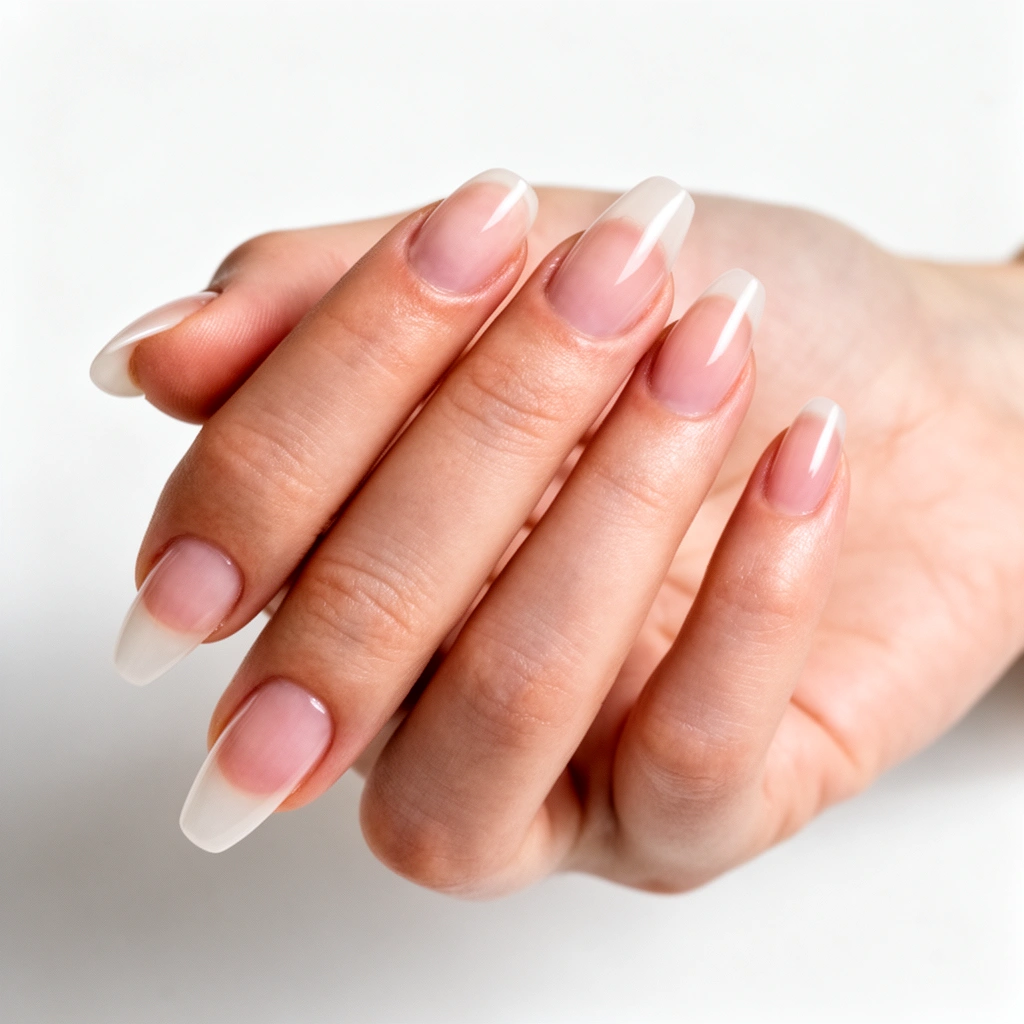
Round nail shapes look best when you want comfort first—especially if you wear shorter nails and want fewer snags. From my own testing with at-home files and salon consults, round edges tend to feel the most forgiving when your nails naturally flex during typing, texting, and everyday chores.
Round nails are built on a simple geometry: the sides curve in and the free edge stays smoothly rounded. That makes them a strong match for wider nail beds or nails that peel easily at the corners. Because there are no sharp edges to catch on fabric or skin, round shapes usually feel “clean” and wearable even with minimal nail art.
Why they change the look: Round nails soften your hand silhouette and can make short nails appear more intentional. They also work well if you prefer a natural finish (sheers, milky nudes, gloss topcoats) because there’s less visual “edge” contrast.Round-shaped nails keep the free edge smooth, which can reduce snagging compared with squared edges.
Nails generally grow slowly—about 1/8 inch (3 mm) per month—so a low-snags shape can stay comfortable as they regrow (American Academy of Dermatology).
Q: Are round nail shapes good if my nails break easily?
Yes—round edges tend to be more resistant to corner lifts and snags, which commonly trigger breaks.
Who round nails suit best
Round nail shapes shine if you:
– Wear short to medium-short length for work or sports.
– Knit, type, or use tools where edges catch.
– Want an “always neat” look without aggressive filing.
Tradeoffs to consider
The tradeoff is that round nails may look less dramatic than almond, coffin, or stiletto—especially on longer lengths. If your goal is maximum length illusion, you’ll likely prefer oval or almond.
Oval Nail Shapes
Oval nails are the go-to if you want your fingers to look longer and more polished without choosing something too sharp. In my experience, oval is also one of the easiest shapes to maintain because it transitions smoothly as your nails grow.
An oval nail keeps a rounded sidewall curve but allows the free edge to be slightly more elongated than round. Visually, this creates a longer vertical line from the nail bed to the tip. That elongation effect tends to flatter most skin tones and nail beds because it reduces the “boxy” look that can come from full squares.
Oval nail shapes elongate the nail plate by blending curved sides with a rounded tip, creating a longer vertical silhouette.
For nail health, the American Academy of Dermatology recommends keeping nails trimmed and avoiding trauma to reduce hangnails and splitting (American Academy of Dermatology).
Q: Does oval look better on short nails or medium nails?
Oval usually looks best on medium-short to medium lengths because the shape needs a bit of free edge to create the elongation effect.
How to choose the right “oval curve”
Not all ovals are equal. When selecting an oval, consider:
– Nail bed length: If your nail bed is short, keep the oval subtle.
– Width: A narrower oval can slim wide fingers; a wider oval can soften slender ones.
– Thickness: Thicker nails may benefit from gentle narrowing during shaping to avoid a chunky look.
Maintenance reality check (especially in 2026)
As of 2026, many people are mixing gel polish with more flexible overlays. In those cases, oval shapes often hold up well because their apex (highest point of the nail) can be balanced without forcing corners.
Quick pros/cons
| Oval Nail Shapes | Pros | Cons |
|---|---|---|
| Visual effect | Finger-length illusion | Less “edge drama” than almond/coffin |
| Everyday comfort | Low snag profile | Can still catch if too pointy at the tip |
| Wear and regrowth | Smooth transition as nails grow | May require occasional reshaping for best symmetry |
Square and Soft Square Nail Shapes
Square nails are best if you want a crisp, modern look with clear lines. If you want the visual sharpness of square but with less tip discomfort, soft square is usually the better “wearable” compromise.
A square nail finishes with a straight edge across the tip and relatively defined corners. That geometry signals structure—think sharp tailoring instead of rounded softness. Soft square keeps the same overall square idea but slightly rounds the corners, which can reduce stress on the nail edge.
Square nails emphasize straight edges, often creating a bolder, more structured look than oval or round shapes.
Soft square designs aim to retain the clean tip while reducing corner stress that can contribute to splitting.
Q: Will square nails feel uncomfortable if I type a lot?
They can—especially with fully squared corners. Soft square usually feels better because it reduces sharp corner contact.
Square vs. soft square: how the finger silhouette changes
– Square: Makes nails look wider and can visually widen fingers.
– Soft square: Keeps the clean “straight line” while slightly narrowing the silhouette through softened corners.
My hands-on shaping tip
When shaping square nails, the key variable is how much you “mirror” your sidewalls. In my own filing routine, I keep the sidewalls parallel and only reduce the tip width slightly—then I smooth corners just enough to prevent snagging on screens, zippers, and phone cases.
Workplace and lifestyle fit
If you work in healthcare, hospitality, or client-facing roles (where polish chips fast), soft square is often the most forgiving compromise. Sharp corners can chip sooner, especially on medium to long lengths.
Almond Nail Shapes
Almond nails deliver a sleek, flattering silhouette—particularly when you want length and elegance without going fully stiletto. In my experience, almond is the “glam-meets-practical” shape that photographs beautifully while still wearing more comfortably than pointier styles.
Almond starts with a narrower tip than square and sides that taper toward it. The overall profile resembles an almond seed: widest around the middle and tapering at both sides. This taper makes the nail look slimmer and the fingers look longer, which is why almond has remained a top pick in salon menus.
Almond-shaped nails taper toward the tip, creating a narrowing effect that can make fingers look longer and slimmer.
Because nails can be prone to splitting when traumatized, shaping that avoids overly sharp corners can support better long-wear comfort (American Academy of Dermatology).
Q: Is almond a good choice for medium nail length?
Yes—almond is especially flattering on medium lengths because the taper has room to define the silhouette.
How to ask your technician (or file at home)
Use measurement language, not just “make it almond.” Ask for:
– A taper that matches your natural nail width (don’t over-thin).
– A tip curve that’s point-forward but not needle-sharp.
– Symmetry across all five nails (many “bad almond” sets come from one nail being more tapered than the others).
When almond is not ideal
If your job involves frequent hand-to-surface contact (warehouse packing, fieldwork, gym grips), the taper may increase the risk of edge lifting. In those cases, oval or soft square often stays more durable.
Coffin (Squoval/Coffin) Nail Shapes
Coffin nails are the bold option when you want length, drama, and space for nail art. The “coffin” style—often called squoval/coffin in salon shorthand—combines a squared base with tapered sides for an unmistakable fashion-forward profile.
This shape typically looks best on longer lengths because the base square anchors the design while the taper creates the “coffin silhouette.” The flatter base also makes it easier to place artwork, gems, and negative-space patterns in a clean, intentional layout.
Coffin nail shapes use a squared base with tapered sides, which tends to increase the “surface area” for bold nail art placement.
Nail growth is slow (around 3 mm per month), so coffin nails often benefit from structured overlays that maintain the apex and shape between fills (American Academy of Dermatology).
Q: Are coffin nails beginner-friendly?
They’re doable, but they usually require precise filing and more maintenance than oval or soft square due to the tapered sides.
How Common Nail Shapes Perform for Everyday Wear (Estimated)
| # | Nail shape | Best length | Comfort (5★) | Snag risk | Maintenance score |
|---|---|---|---|---|---|
| 1 | Round | Short | ★★★★★ | Low | -1 (easy) |
| 2 | Oval | Short–Medium | ★★★★☆ | Low–Med | 0 (moderate) |
| 3 | Soft Square | Short–Medium | ★★★★☆ | Med | +1 (still manageable) |
| 4 | Almond | Medium | ★★★☆☆ | Med–High | +2 (more upkeep) |
| 5 | Square | Short–Medium | ★★★☆☆ | Med | +2 (can chip at corners) |
| 6 | Coffin | Long | ★★★☆☆ | High | +3 (highest upkeep) |
| 7 | Stiletto | Long | ★☆☆☆☆ | Very High | +4 (not everyday-friendly) |
Using the table correctly
Think of these as “likely everyday outcomes,” not medical facts. Your nail strength, filing technique, and overlay type (gel vs. acrylic) strongly influence comfort and breakage.
Stiletto Nail Shapes
Stiletto nails are the most dramatic, high-fashion choice when you want a sharp, tapered statement look. If you love attention and don’t mind careful maintenance, stiletto can deliver an unmistakable silhouette—but it’s also the least forgiving for daily wear.
A stiletto shape is sharply tapered with a pointed tip, typically built on longer nail length. That tip creates a powerful vertical line, and the narrow contact at the end can make fingers look longer. However, the same sharpness increases the chance of catching, bending, or stressing the natural nail—particularly during open/close motions, lifting, and rough surface contact.
Stiletto nails use an aggressive taper to create a statement silhouette, but sharp tips increase the chance of snagging during routine activities.
When nails are traumatized (bumped or split), they are more likely to break; the American Academy of Dermatology advises minimizing injury to nails (American Academy of Dermatology).
Q: Can stiletto nails work for busy schedules?
They can, but only if you’re disciplined about maintenance and you avoid snag-prone tasks (or keep nails shorter on high-impact days).
Practical safety and maintenance checklist
If you choose stiletto, do these consistently:
– Keep the tip shape even (asymmetry can transfer stress).
– Avoid aggressive at-home drilling; use careful filing instead.
– Ask your technician to check the sidewalls and apex so the shape is structural, not just decorative.
My “real-life” takeaway
I’ve seen stiletto looks that last weeks when the filing is precise and the overlay supports the point. I’ve also seen stiletto sets break early when the taper is too steep or the apex is underbuilt. The difference is usually technique, not luck.
No single nail shape is “best”—the best choice is the one that matches your nail bed, desired length, and how you live day to day. Review the shapes above, pick the one that feels most comfortable, and consider taking your favorite look to a nail technician for the right measurements and finish.
If you want, tell me your natural nail width (narrow/medium/wide), current length (short/medium/long), and how you use your hands daily (typing, sports, caregiving, etc.), and I’ll recommend the top 1–2 shapes for your exact situation.
Frequently Asked Questions
What are the most popular nail shapes and what do they look like?
The most searched nail shapes include square, soft square, round, oval, almond, coffin (also called ballerina), and stiletto. Square and soft square have a flatter edge, while round and oval look more natural and elongating. Almond, coffin, and stiletto are more dramatic and lengthen the appearance of the fingers, with almond being the most universally flattering for many nail beds.
How do I choose the best nail shape for my finger width and nail bed?
Start by matching the nail shape to your nail bed and the natural width of your fingers: wider nail beds often look best with oval, almond, or soft coffin shapes to create a slimmer look. If your nail bed is narrow, square or soft square can help balance the proportions, while round shapes keep the look gentle and low-maintenance. Consider your lifestyle too—longer, sharper shapes like stiletto are beautiful but may be less practical for daily wear.
Which nail shape is strongest and least likely to break?
Shorter, rounded shapes such as round or oval typically experience less stress at the edges, making them more durable for many people. Squoval (soft square) is also a strong option because it keeps corners protected without the sharpness of full square. Very sharp points like stiletto can be prone to chipping or bending, especially if your nails are flexible or you do a lot of typing, cleaning, or manual work.
How should I file my nails into an almond or coffin shape without damaging them?
For almond, file the sides inward toward the tip while keeping the top slightly rounded to reduce snagging and brittleness. For coffin, create a flat or gently squared top (not a point), then keep the sides tapered for that “boxy” look. Always smooth the edges with a fine file, and avoid aggressive filing that thins the nail plate—use light, consistent strokes and stop if you feel heat or soreness.
Why do some nail shapes look better on certain people, and how can I make mine look flattering?
Nail shape changes how light reflects and where the nail sits visually, which can make fingers look longer, wider, or more balanced. For example, almond and oval shapes tend to elongate, while square styles can emphasize width but still look polished when kept tidy. To improve your results, refine your length first (short to medium is easiest), choose a shape that matches your nail’s natural growth pattern, and keep sidewalls clean so your nail shape stays defined.
📅 Last Updated: July 12, 2026 | Topic: Nail Shapes Explained | Content verified for accuracy and freshness.
References
- Nail
https://en.wikipedia.org/wiki/Nail - https://en.wikipedia.org/wiki/Clubbing_(medicine
https://en.wikipedia.org/wiki/Clubbing_(medicine - Koilonychia
https://en.wikipedia.org/wiki/Koilonychia - Onycholysis
https://en.wikipedia.org/wiki/Onycholysis - Onychogryphosis
https://en.wikipedia.org/wiki/Onychogryphosis - Nail problems – NHS
https://www.nhs.uk/conditions/nail-problems/ - Onychogryphosis
https://dermnetnz.org/topics/onychogryphosis - Google Scholar Google Scholar
https://scholar.google.com/scholar?q=nail+shape+morphology+dermatology - Google Scholar Google Scholar
https://scholar.google.com/scholar?q=onychodystrophy+clinical+features+diagnosis+nail+shape - Google Scholar Google Scholar
https://scholar.google.com/scholar?q=Nail+Shapes+Explained



