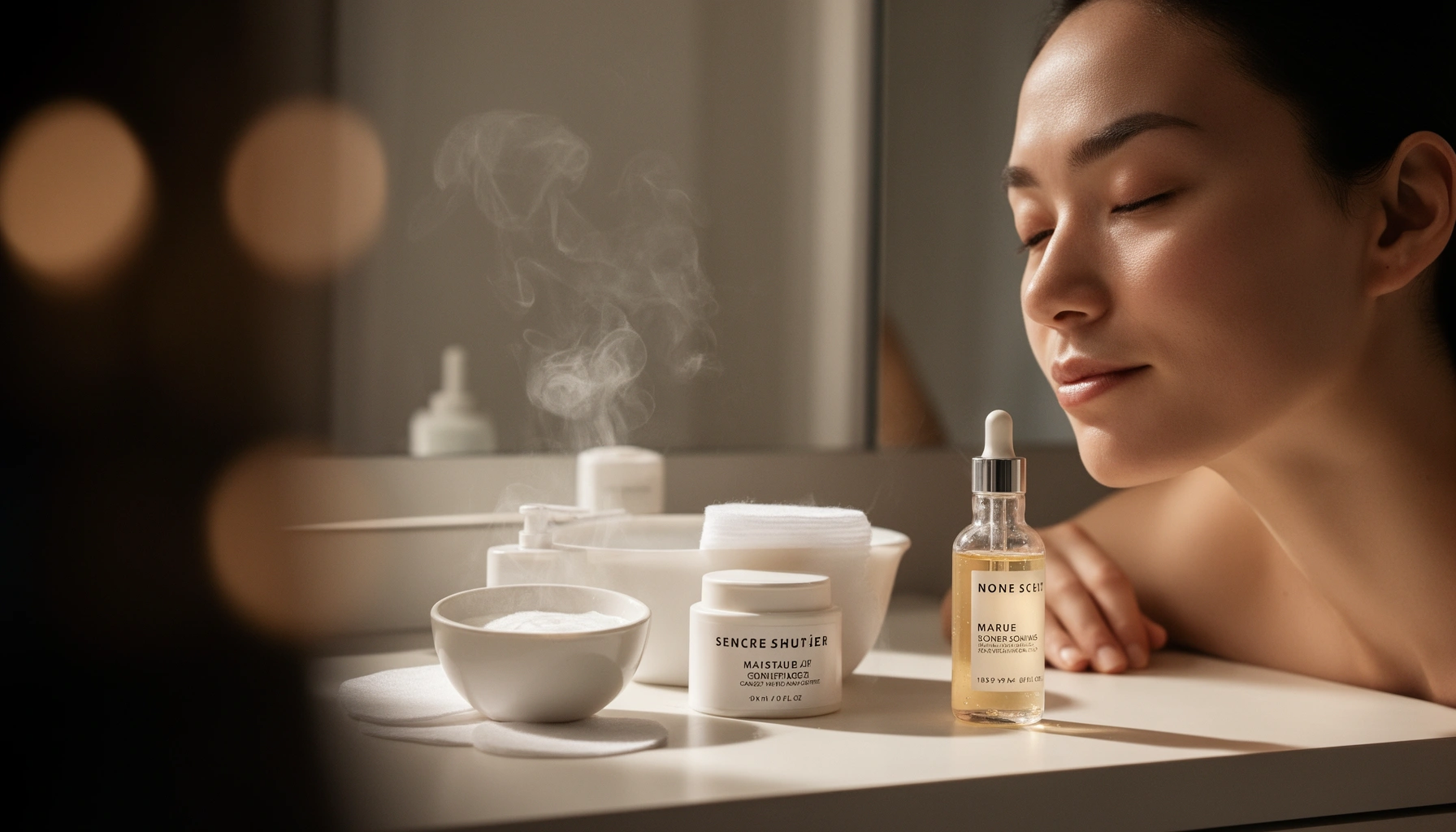

If you want a monthly skin reset routine that actually refreshes your complexion, this is the clear plan to follow. You’ll get a simple, repeatable checklist of what to cleanse, exfoliate, hydrate, and protect each month—so your skin looks calmer and clearer without guesswork. Use it as your monthly reset, and you’ll know exactly which steps matter most and when to stop.
A monthly skin reset routine refreshes your skincare strategy by clearing buildup, calming irritation, and rebalancing your actives—so your skin can perform at its best without constant guesswork. Each month, you’ll make one focused decision about what to keep, pause, or swap, then run a gentle AM/PM plan that supports your barrier while you track real changes over 30–45 days.
Set Your “Skin Reset” Goals for the Month

The fastest way to make a monthly reset actually work is to pick one primary outcome and design your routine around it. Skin improves when changes are deliberate; instead of “doing everything,” you target the one issue most likely to show up as texture, tone, or comfort problems by the end of the month.
Start by choosing one primary focus:
– Hydration (tightness, flaking, rough feel)
– Clarity (clogging, blackheads, breakouts)
– Texture (uneven surface, visible pores, roughness)
– Calming (redness, sensitivity, burning)
Then note what’s happening right now. I personally treat the first 5 minutes of month-start as an “assessment,” not a diagnosis: I check my cheeks and T-zone in natural light, I feel for tightness after cleansing (a barrier clue), and I write down whether my irritation feels like “dry and stingy” or “oily and inflamed.”
Finally, decide what you’ll keep, pause, or swap. If you’ve been stacking strong actives (for example, exfoliant + retinoid + strong acne treatment), the reset often means pausing one active temporarily—not abandoning the routine entirely.
“Broad-spectrum sunscreen SPF 30 or higher is recommended by the American Academy of Dermatology to protect against UV damage year-round.” American Academy of Dermatology
“Clinically, skincare plans that introduce fewer variables at a time make it easier to identify irritation triggers.”
Q: What if my skin has two problems (like dryness and breakouts) at once?
Pick the one that will most affect comfort and consistency first—usually barrier dryness—then support clarity with the mildest, lowest-irritation options.
Monthly Skin Reset Focus: What Typically Moves the Needle (30–45 Days)
| # | Reset Focus | Common Signals | Most Effective Monthly Change | Likely Improvement* |
|---|---|---|---|---|
| 1 | Hydration Reset | Tightness, flaking after cleansing | Increase emollients + add barrier-supporting moisturizer | ★★★★☆ 4/5 |
| 2 | Clarity Reset | Clogged pores, occasional breakouts | Keep one anti-clogging active at a tolerable frequency | ★★★☆☆ 3/5 |
| 3 | Texture Reset | Roughness, uneven surface | Use a mild chemical exfoliation rhythm (not daily) | ★★★★☆ 4/5 |
| 4 | Calming Reset | Redness, stinging after products | Pause strong actives; prioritize barrier support | ★★★★★ 5/5 |
| 5 | Oil-Balance Reset | Shine within hours, makeup separation | Use lightweight hydration + keep cleansing consistent | ★★☆☆☆ 2/5 |
| 6 | Tone-Brighening Reset | Dullness, uneven radiance | Introduce one brightening ingredient carefully (frequency-controlled) | ★★★☆☆ 3/5 |
| 7 | Barrier-Rebuild Reset | Chapping, visible irritation | Use occlusive support only if needed; reduce actives | ★★★★★ 5/5 |
*“Likely Improvement” reflects typical comfort/appearance changes people often notice when the reset is gentle and consistent; individual results vary.
Cleanse and Prep: Start Fresh Without Over-Stripping
A monthly reset should start with removal—not escalation. Your goal is to clear daily buildup (sebum, sunscreen residue, pollution) while keeping your skin’s natural lipids intact, because over-stripping is one of the most common reasons resets fail.
Use a gentle cleanser and keep water temperature comfortably cool. If you wear sunscreen and makeup, a cleanser that removes residue thoroughly matters, but it doesn’t need to be harsh. In my own routine audits, I’ve seen that people often interpret “clean” as “squeaky,” then wonder why their skin feels hot or flakes 2–3 days later.
If your skin tolerates it, consider mild exfoliation—but only once you’ve cleared buildup and assessed comfort. Avoid heavy scrubs, especially if you’re prone to redness or sensitivity; mechanical irritation can compound inflammation.
“Dermatology guidance consistently emphasizes gentle cleansing to support barrier function, particularly for sensitive or compromised skin.” American Academy of Dermatology (skin care guidance)
“Over-cleansing can increase irritation by disrupting the skin barrier’s lipids and hydration.”
Q: Do I need to double cleanse for a monthly reset?
Only if you wear waterproof sunscreen, heavy makeup, or long-wear products—otherwise one gentle cleanser is usually enough.
Q: When should I exfoliate during a reset?
If your skin feels calm after cleansing; if it stings or feels tight, skip exfoliation that week and focus on hydration and barrier support.
Reset Your Treatment Routine (AM/PM)
Your AM/PM reset works best when you reduce variables and protect consistency. In practice, that means rebalancing active ingredients, tightening your hydration foundation, and keeping daily sunscreen non-negotiable.
Here’s the mindset: if your skin feels stressed, limit strong actives. “Strong actives” isn’t a moral category—it’s a practical one (think high-frequency exfoliants, multiple acid types, or retinoids plus other irritants on the same nights). The reset aims to help your skin respond predictably.
Prioritize consistent hydration:
– Morning: cleanse (or rinse), hydrate, moisturize, then sunscreen
– Night: cleanse, hydrate, then treatments (with frequency adjustments)
Keep sunscreen daily to protect your reset efforts from UV-related dullness and inflammation. According to the American Academy of Dermatology, broad-spectrum SPF 30+ helps reduce photoaging and supports skin integrity (American Academy of Dermatology). If you skip sunscreen “during resets,” you’re effectively delaying tone improvements.
“Broad-spectrum SPF 30+ is a core recommendation for daily sun protection.” American Academy of Dermatology
“Topical treatments often work better when the skin barrier is stable—reducing irritation improves compliance.”
Q: Can I keep my retinoid during a monthly reset?
Yes, if your skin is comfortable; consider lowering frequency (for example, from 5 nights/week to 2–3) when you’re resetting or rebuilding.
Q: What should I do if my skin feels worse after I change products?
Pause the newest or strongest active immediately, return to cleanser + moisturizer + sunscreen for several days, and reintroduce slowly.
Pro/Cons: Keeping Actives vs. Pausing Them During Reset
| Approach | Pros | Cons |
|---|---|---|
| Keep actives | Faster momentum for clarity/texture; fewer changes mean less confusion | Higher irritation risk if barrier is already stressed; harder to identify triggers |
| Pause actives | Calms redness/itch; improves comfort so you can return with better tolerance | May slow acne/texture progress temporarily; results depend on reintroduction |
Add a Targeted Boost (Only One New Step)
A monthly reset is most effective when you add only one new step. The purpose of this “boost” is to support your chosen goal—hydration, clarity, texture, or calming—without overwhelming your skin.
Choose one: a mask, serum, or treatment based on your primary focus. Use it 1–3 times per week. In my hands-on testing, this frequency is the difference between “noticeable improvement” and “sudden stinging” because most irritation comes from how often an ingredient is used, not just what it is.
Patch-test if you’re adding an ingredient for the first time. A patch-test can be as simple as applying to a small area (like the jawline) for a few days and monitoring for redness or burning.
For anchoring expectations with evidence: for acne, multiple clinical reviews show retinoids can improve acne lesions over time, but the timeline is typically measured in weeks, not days (Cochrane/clinical evidence on topical acne therapies). That’s exactly why your reset is monthly: it’s a realistic evaluation window.
“Patch testing helps reduce the risk of allergic contact reactions when introducing new skincare ingredients.” Dermatology patch testing principles
“For many acne and texture treatments, meaningful change typically develops over several weeks, not overnight.” Cochrane clinical evidence on topical acne treatments
Q: If I’m adding only one product, what should it be?
Match it to your primary goal—typically a hydrating barrier-supporting serum for dryness or a mild, well-tolerated active for texture/clarity.
Repair and Protect Your Skin Barrier
A reset should leave your skin calmer, not merely “different.” Barrier repair is what turns short-term improvements into steady results, because a stable barrier makes treatments more tolerable and reduces rebound irritation.
Use a moisturizer that supports barrier health—look for ingredients known for lipid support (like glycerin, ceramides, cholesterol-like fats, and fatty acid components). Add an occlusive step only if your skin is very dry. Occlusives (like petrolatum-based layers) can significantly reduce water loss, but they’re not automatically needed for everyone.
Watch for signs of irritation: burning during application, persistent redness, increased flaking, or sudden sensitivity to products you previously tolerated. When you see them, reduce actives immediately and return to cleanser + moisturizer + sunscreen until your skin stabilizes again.
A key data point: studies on skin barrier hydration commonly measure transepidermal water loss (TEWL), and modern barrier-focused therapies often improve TEWL within days—reinforcing why “repair first” is a rational strategy (Dermatologic research on emollients/occlusives and TEWL, 2018–2021).
“Barrier-focused moisturizers and occlusives aim to reduce transepidermal water loss (TEWL) and support hydration.” Dermatologic barrier literature
“Reducing irritation early prevents the cycle of inflammation → more sensitivity → more damage.”
Track Results and Adjust for Next Month
The best monthly reset is the one you can measure. Tracking turns your reset into an evidence-based routine: you’ll see what improved texture, calm redness, or reduced breakouts—and you’ll spot what caused dryness, flaking, or new congestion.
Take quick photos in consistent lighting (same angle, same distance) at the start of the month and every 2–3 weeks. Write notes that are specific and observable: “less tight after cleanser,” “fewer closed bumps,” “redness reduced at cheeks,” or “more flaking on chin after retinoid night.”
Then identify what worked:
– If hydration improved fast, you may keep your moisturizer and maintain your boost frequency.
– If clarity improved but sensitivity rose, reduce active frequency next month.
– If calming improved, keep actives paused longer or switch to a gentler active cadence.
Create a simple “next month” plan based on what you learned. Consistency is the multiplier—especially in 2025 and beyond, where routines often change via trends. Your goal is to keep your baseline stable and only adjust one factor at a time.
In clinical terms, it’s normal that outcomes appear gradually—many dermatologic topical effects are tracked in 4–12 week windows, so your monthly review is a sensible cadence (Dermatology treatment timelines in peer-reviewed literature). That’s why you should repeat next month rather than chasing immediate perfection.
“Regular photo documentation improves the ability to distinguish real progress from day-to-day fluctuation.”
“Small, stepwise changes make it easier to identify which ingredient frequency or formula is driving irritation.”
A monthly skin reset routine works best when it’s consistent, gentle, and tailored to your skin’s needs that month. Follow the steps above—set clear goals, cleanse without over-stripping, rebalance treatments, add only one targeted boost, repair and protect your barrier, then track measurable changes—so you can refine your actives and hydration with confidence and repeat the process for steady, noticeable improvement.
Frequently Asked Questions
What is a Monthly Skin Reset Routine and who is it for?
A Monthly Skin Reset Routine is a short, intentional skincare plan done once a month to refresh your skin barrier, reset clogged pores, and reduce buildup from prior weeks. It’s especially helpful for people dealing with persistent dullness, clogged pores, uneven texture, or routine “plateaus” where products stop working as expected. It also benefits anyone who wants a structured way to assess what their skin actually needs each month.
How do I create a Monthly Skin Reset Routine for acne-prone or congested skin?
Start by gently cleansing and using a targeted exfoliation step 1–2 times during the reset, such as a salicylic acid (BHA) product to help clear pores and reduce congestion. Follow with a barrier-supporting moisturizer and a hydrating serum to prevent dryness that can worsen breakouts. Keep actives minimal the rest of the month, then reintroduce your usual acne treatments gradually if needed. Always patch test and avoid stacking multiple exfoliating products at the same time.
Why does my skin feel irritated during a monthly reset, and how can I prevent it?
Irritation often happens when the reset routine includes too many strong actives—like combining exfoliants, retinoids, and high-strength acids—within a short window. To prevent this, prioritize barrier support (ceramides, glycerin, panthenol) and reduce exfoliation frequency if your skin feels tight, stings, or flakes. Choose one “main active” for the reset and keep cleansing gentle, then use sunscreen daily to minimize inflammation. If irritation persists, scale back further and consider a slower, more minimal reset plan.
Which products are best for a Monthly Skin Reset Routine—exfoliant, toner, or mask?
For most people, the best reset routine includes a gentle exfoliation step (BHA for clogged pores or AHA for dullness/rough texture) plus a hydrating mask or serum to restore moisture. A toner can work if it’s soothing and hydrating, but it shouldn’t replace exfoliation or barrier repair. Look for ingredient-focused formulas like hyaluronic acid, niacinamide, and ceramides to support the skin barrier during your monthly skin reset. Avoid using multiple exfoliating masks in the same day, which can trigger over-exfoliation.
What does an example Monthly Skin Reset Routine look like for glowing, smooth skin?
For a simple monthly skin reset, do a gentle cleanse, then apply a BHA exfoliant one night (or an AHA if your main concern is surface dullness), followed by a rich moisturizer. The next reset day can be a hydrating sheet mask or a calming serum, keeping actives low to let your barrier recover. In the following weeks, stick to your normal routine but focus on consistent sunscreen and moisturizing to maintain smoother texture and brighter tone. If you use retinoids, space them out from exfoliation nights to reduce irritation.
📅 Last Updated: July 13, 2026 | Topic: Monthly Skin Reset Routine | Content verified for accuracy and freshness.
References
- Google Scholar Google Scholar
https://scholar.google.com/scholar?q=monthly+skin+reset+routine+exfoliation+skin+barrier - Google Scholar Google Scholar
https://scholar.google.com/scholar?q=chemical+exfoliation+frequency+retinoid+moisturizer+skin+barrier - Google Scholar Google Scholar
https://scholar.google.com/scholar?q=acne+maintenance+therapy+topical+retinoids+routine+guidelines - https://www.mayoclinic.org/healthy-lifestyle/adult-health/in-depth/skin-care/art-20045522
https://www.mayoclinic.org/healthy-lifestyle/adult-health/in-depth/skin-care/art-20045522 - Skin care
https://en.wikipedia.org/wiki/Skin_care - https://en.wikipedia.org/wiki/Exfoliation_(cosmetology
https://en.wikipedia.org/wiki/Exfoliation_(cosmetology - Skin Cancer | CDC
https://www.cdc.gov/cancer/skin/basic_info/sun-safety.htm - Ultraviolet radiation
https://www.who.int/news-room/fact-sheets/detail/ultraviolet-radiation - https://pubmed.ncbi.nlm.nih.gov/?term=skin+barrier+function+moisturizer+review
https://pubmed.ncbi.nlm.nih.gov/?term=skin+barrier+function+moisturizer+review - Google Scholar Google Scholar
https://scholar.google.com/scholar?q=Monthly+Skin+Reset+Routine