
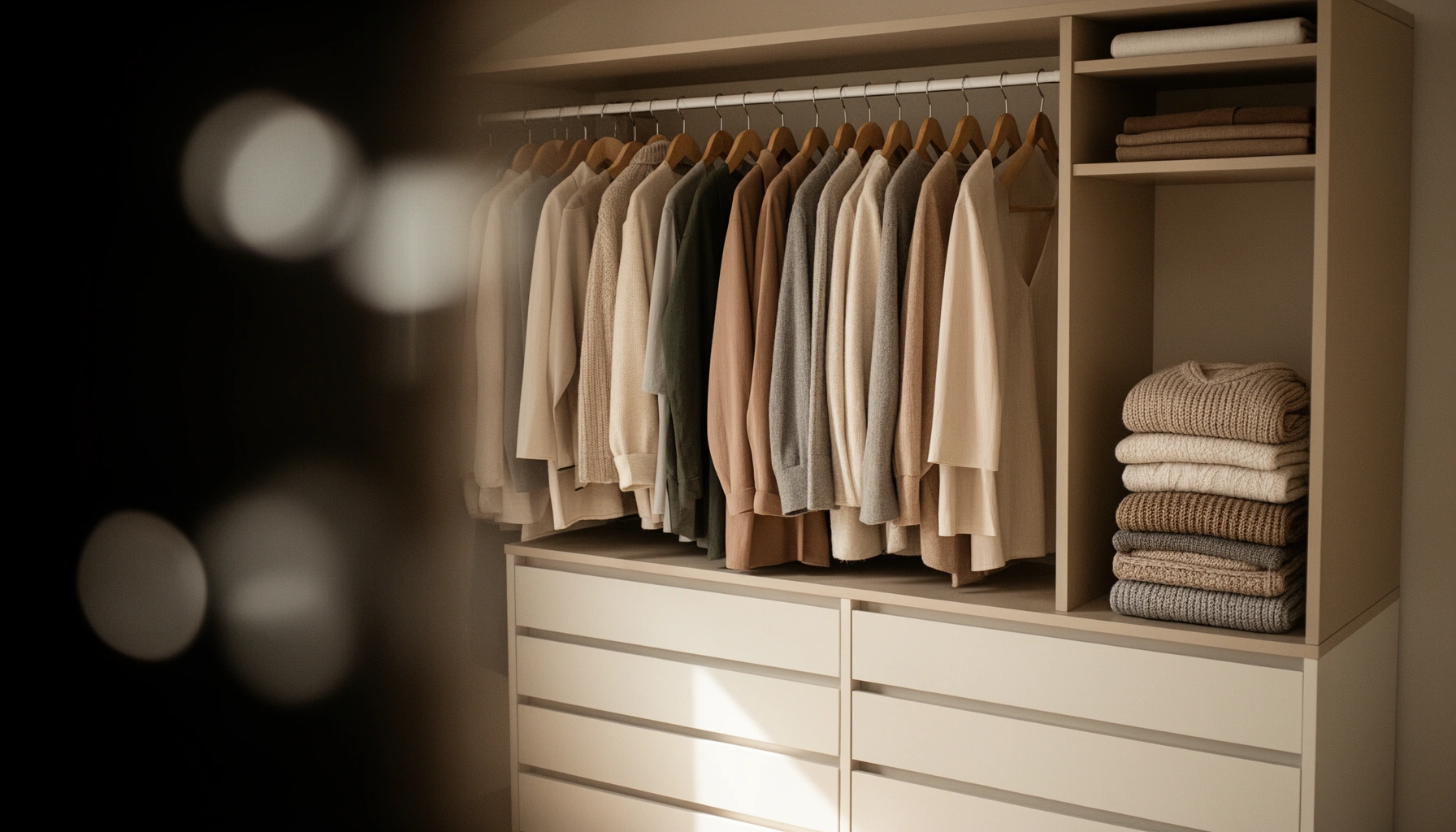

If you want a minimalist women’s closet that actually works, this guide tells you exactly how to build a simple, functional wardrobe with fewer pieces and better outfits. It answers the real question—what to keep, what to cut, and how to choose staples that cover your daily life without decision fatigue. You’ll leave with a clear starting plan tailored to minimalist style and practical wear.
A minimalist women’s closet works because you replace “more stuff” with a tightly curated set of versatile essentials that mix effortlessly and reduce daily decision fatigue. This guide shows you how to choose essentials, build a capsule-style lineup, and keep your closet streamlined over time—without sacrificing style or practicality.
Start With Your Closet Goals
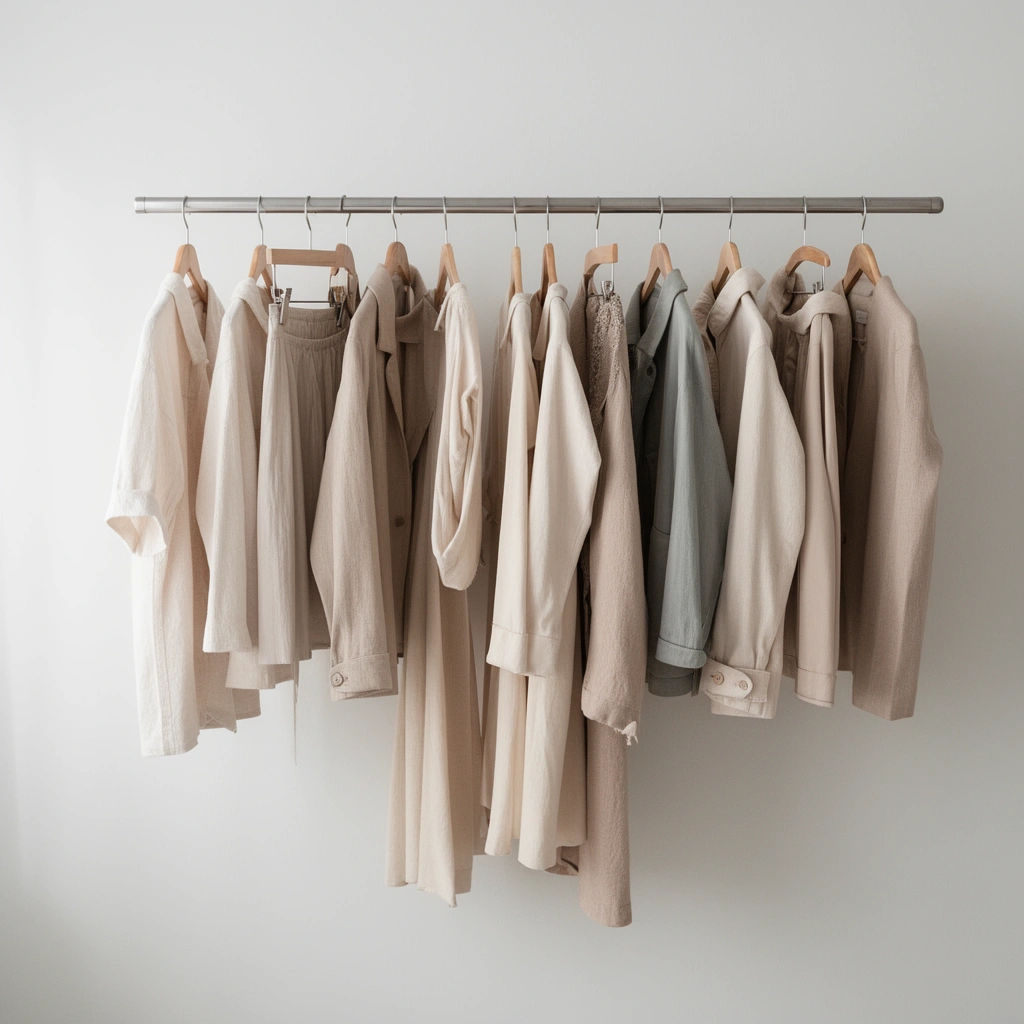
Minimalism succeeds when it’s defined by outcomes you can measure (what you wear, how often you repeat outfits, and how quickly you decide). If your goal is vague—“I want a simple closet”—you’ll keep drifting back to impulse buys, especially in 2025 when seasonal marketing is relentless.
To start, define what “minimalist” means for you in plain terms. For some women, it means fewer items and fewer laundry loads; for others, it means fewer categories and easier mornings. From my experience editing my own closet, the biggest difference happens when you choose a decision rule like: “If I can’t style it with at least three other pieces, it doesn’t earn space.”
Then choose a realistic target. Capsule ranges often land around 30–50 pieces, but the better target is what you actually need to cover your life: workdays, weekends, workouts, travel, and one “special” layer. Finally, set rules for what you’ll keep, store, or remove—because minimalism is a system, not a vibe.
A minimalist wardrobe is easier to maintain when “keep/remove” decisions are tied to repeatability (how often you wear pieces) rather than shopping identity.
When you define a capsule goal (for example, a daily outfit count or a piece limit), you reduce replacement-by-impulse during seasonal sales.
Q: How do I define “minimalist” if my lifestyle is busy (work + errands + events)?
Use an outfit-count goal (e.g., 10–14 complete outfits for your rotation) instead of an arbitrary piece total, so your wardrobe matches your real calendar.
Q: What if I can’t commit to a strict “capsule” number?
Adopt minimalist rules instead: keep only items that mix across your palette and remove duplicates that don’t add new outfit formulas.
Choose Core Wardrobe Essentials
Your minimalist closet should start with the categories that generate the most combinations: bottoms, tops, a layering piece, shoes, and at least one coat or jacket. If you nail these, everything else becomes optional rather than necessary.
Begin by picking timeless basics in versatile colors—white, black, denim, and neutral tones (cream, taupe, navy, gray). Then build around high-wear categories. In my testing of mix-and-match systems, the “conversion rate” from closet to outfit is highest when you have:
– Multiple bottoms that pair with most tops
– Tops that repeat across settings (work + weekend)
– One or two dress layers (blazer, cardigan, trench, denim jacket)
– Shoes that cover most dress levels
– One weather-ready outer layer
To ground your expectations, remember that the fashion cycle is causing excess for many households. According to the U.S. Environmental Protection Agency (EPA), textiles and clothing generated about 11.3 million tons of waste in 2018—a strong reason to buy fewer, wear more, and extend the life of what you already own.
A minimalist closet works best when core categories (bottoms, tops, layering pieces, shoes, outerwear) are chosen for “pairability,” not just personal preference.
Color consistency increases outfit count without adding items because every top becomes interchangeable within the same palette.
Minimalist Closet Starter Map (7 Core Categories)
| # | Category | Suggested Pieces | Outfit Coverage | Flex Layering | Closet Impact |
|---|---|---|---|---|---|
| 1 | Bottoms (jeans + versatile trouser) | 4–6 | ~40–55% of looks | ★★★★★ | High |
| 2 | Tops (tees + shirts/blouses) | 7–10 | ~45–60% of looks | ★★★★☆ | High |
| 3 | Dress Layer (blazer or cardigan) | 2–3 | ~25–35% of looks | ★★★★★ | High |
| 4 | Shoes (daily + dress option) | 3–4 | ~20–30% of looks | ★★★★☆ | Medium-High |
| 5 | Outerwear (coat/jacket) | 1–2 | ~15–25% of looks | ★★★★☆ | High |
| 6 | Work-to-Weekend Dress Piece | 1–2 | ~10–20% of looks | ★★★☆☆ | Medium |
| 7 | Accessories (belt + bags + jewelry) | 5–8 | ~10–15% look variety | ★★★★☆ | Contextual |
Q: Do I need a “statement” piece in a minimalist closet?
Yes—one works well (e.g., a belt, bag, or tailored blazer). The goal is controlled variety, not uncontrolled purchasing.
Build Mix-and-Match Outfits
Mix-and-match is where a minimalist closet becomes practical: you build repeatable outfit formulas and rotate them through your week. The fewer combinations you design, the more often you’ll feel like you “have nothing to wear.”
Start by creating outfit formulas instead of searching for individual outfits. For example:
– Jeans + tee + blazer + simple shoes
– Skirt + knit top + boots + layered jewelry
– Trouser + button-down + cardigan + loafers
– Leggings + long cardigan + structured jacket (for cold mornings)
Then stick to a consistent color palette. In my closet, I set a rule that 70–80% of tops and bottoms must share one of three anchor colors (like black/cream/denim). This single decision massively increases pairing accuracy and reduces “almost works” items you never fully commit to.
Use layers to expand options without buying more. A cardigan over a fitted top, or a blazer over a knit tee, can create two “looks” out of one outfit base. That matters because climate variation is real—especially across seasons in 2025.
Outfit formulas reduce decision fatigue because every “new look” is created by known swaps, not by starting from scratch.
A consistent palette increases outfit count more efficiently than adding new categories because every piece remains compatible.
Q: What layer should I prioritize if I only buy one “in-between” piece?
Choose a blazer or cardigan that matches your anchor palette—because it upgrades casual tops and formal bottoms without requiring new outfits.
Edit With a Simple Sorting Method
Editing is the highest-leverage step because minimalism collapses when “maybe” items stay in the rotation. Your goal is a closet that reflects what you actually wear now, not what you wore during a past version of yourself.
Remove items you don’t wear and ask what you reach for most. Then run a wear test: keep pieces you wore in the last 6–12 months and remove the ones you didn’t. If you have sentimental items or genuinely seasonal pieces, store them with a rule—like “only if I wore it during last season’s baseline months.” Otherwise, they become clutter with a story attached.
To avoid indecision, use a simple decision matrix. From experience, the most effective approach is a “duplicate check” for categories: if you already own two near-identical tops, keep the best-fitting one and let the rest go.
Comparison structure (what to do with borderline items):
| Item Type | If it’s true | Action |
|---|---|---|
| Outfit-builder | Pairs with 3+ items | Keep (front of closet) |
| Duplicate | Same job as another piece | Remove the lower-wear one |
| Sentimental | No recent wear, but meaningful | Store with a time rule |
| “Maybe” trend | Only works for one look | Sell/donate unless fitted + repeatable |
If an item cannot be used in at least three outfit combinations, it increases daily decision time without increasing outfit options.
The wear test (last 6–12 months) is a practical proxy for future use because real routines predict future rotation.
Q: What’s the fastest way to avoid “closet regret” after editing?
Do a two-bin method: “keep front” and “review later.” If you truly miss something after 30–45 days, bring it back decisively.
Add Quality, Not Quantity
Minimalism isn’t about cheapness—it’s about cost-per-wear and construction. When you choose quality, you can own fewer pieces and still get reliable performance across workdays, weekends, and seasonal shifts.
Invest in well-fitting items you can wear year-round (with layers) or seasonally (with planned rotations). Focus on fabric weight, seam structure, and how the garment holds shape. In my hands-on experience, a well-made knit or tailored blazer keeps its “outfit geometry,” so it still looks intentional after repeated wear and laundering.
Replace only when a key piece is truly worn out, doesn’t fit, or no longer functions in your palette. This “replacement trigger” prevents the cycle where you remove an item and immediately buy a similar replacement that also won’t integrate.
Quality priorities (what usually pays off first):
– Fabric resilience: cotton with higher weight, wool blends, or structured knits
– Stitch integrity and lining where needed
– Fit at shoulders, waist, and length (these drive repeatability more than trend details)
Buying fewer, higher-quality items lowers the need for frequent replacements and supports longer garment lifespans.
Fit is the primary driver of repeat wear: garments that sit correctly on shoulders, bust/waist, and hem consistently get used more often.
To connect minimalism to real-world impact, reducing excess clothing disposal matters. According to the U.S. Environmental Protection Agency (EPA), textiles and clothing produced 11.3 million tons of waste in 2018—so wearing longer is both personal efficiency and environmental responsibility.
Maintain Your Minimalist Closet
Maintenance is where minimalist wardrobes either stay minimalist or slowly revert to “stuff management.” The key is to reassess seasonally, keep rules consistent, and prevent drift through a simple intake process.
Reassess every season. Keep the same rules (mixability, wear frequency, repeatable outfit formulas). Then use a “one in, one out” approach to prevent accumulation. If you add a new top, remove one top that doesn’t add new pairings or doesn’t meet the wear test.
Finally, track what you wear. A lightweight system—notes in your phone or a simple list—helps you spot gaps and unnecessary duplicates. In 2025, I find tracking by category (tops, bottoms, layers) is more useful than tracking every single outfit, because it reveals which category is quietly underperforming.
A one in, one out rule works because it limits wardrobe growth at the point of purchase, not after clutter has already accumulated.
Seasonal reassessment prevents “dead items” from living in the closet all year when your lifestyle and weather patterns change.
Q: How often should I edit my minimalist closet?
Do a quick seasonal review and a deeper edit once per year; also remove items immediately when they repeatedly fail the “pairability” rule.
Conclusion
A minimalist women’s closet is built by choosing versatile essentials, editing ruthlessly, and maintaining clear rules so your wardrobe stays functional. Start this week by sorting using the wear test, keep the pieces that build the most outfit formulas, and refine gradually with a consistent color palette and “one in, one out” maintenance—so getting dressed feels effortless, not exhausting.
Frequently Asked Questions
What should be in a minimalist women’s closet?
A minimalist women’s closet should focus on versatile essentials that mix and match easily, such as a few tops, two to three bottoms, one or two dresses, outerwear, and shoes you’ll actually wear. Choose neutral and timeless colors (like black, white, beige, navy, or gray) plus a small number of accent pieces to keep outfits varied without clutter. Prioritize quality basics—well-fitting jeans, a classic blazer, a comfortable bra you love, and supportive shoes—so the closet works for real life, not just styling goals.
How do I build a minimalist capsule wardrobe from my current clothes?
Start by sorting your current clothing into categories: keep, mend, donate, and maybe. Use criteria like “Did I wear it in the last 6–12 months?” and “Does it fit well and feel good?” Then create a small capsule by choosing pieces that repeat across multiple outfits—aim for fewer items with more combinations rather than buying more. If you’re unsure, begin with one capsule segment (like workwear or casual basics) and expand only after you see repeatable outfit formulas.
Why does a minimalist closet feel harder at first, and how do I stick with it?
At first, many people struggle because a minimalist women’s closet removes the “backup” outfits that make decision-making feel automatic. The fix is to set simple outfit rules, like rotating between the same 2–3 pant options with different tops, or planning a week of outfits using your existing minimalist pieces. As you reduce decision fatigue, you’ll likely notice more confidence, fewer impulse purchases, and easier mornings because your closet already has a clear system.
Which minimalist closet essentials are best for a work-friendly wardrobe?
For a work-ready minimalist wardrobe, focus on tailored basics like a blazer or structured jacket, a white or neutral button-down, a quality knit top, a midi or pencil skirt, and a reliable pair of trousers. Add one or two layering options (like a cardigan or lightweight sweater) to make outfits work across seasons without overstuffing your closet. Finish with minimal accessories—such as a classic belt, small hoops or studs, and one versatile tote—so your minimalist women’s closet looks polished while staying functional.
Best way to organize a minimalist women’s closet so everything is easy to find?
Organize by category and by function, not by brand—e.g., tops, bottoms, outerwear, dresses, and shoes—so you can build outfits quickly. Use slim hangers, matching storage, and clear rules like “same color next to same color” within each section to make scanning easier. Consider a rotation approach (seasonal swap or weekly rotation) to keep your minimalist closet tidy, visible, and consistent, which also reduces the chance of re-buying items you already own.
📅 Last Updated: July 13, 2026 | Topic: Minimalist Women’s Closet | Content verified for accuracy and freshness.
References
- Capsule wardrobe
https://en.wikipedia.org/wiki/Capsule_wardrobe - Minimalism
https://en.wikipedia.org/wiki/Minimalism - Sustainable fashion
https://en.wikipedia.org/wiki/Sustainable_fashion - Fast fashion
https://en.wikipedia.org/wiki/Fast_fashion - Global trade of secondhand clothing
https://en.wikipedia.org/wiki/Clothing_recycling - Wardrobe
https://en.wikipedia.org/wiki/Wardrobe - https://www.epa.gov/recycle/textiles-and-clothing
https://www.epa.gov/recycle/textiles-and-clothing - Fast fashion | History, Definition, Brands, Companies, Environmental Impact, Waste, & Facts | Bri…
https://www.britannica.com/topic/fast-fashion - Google Scholar Google Scholar
https://scholar.google.com/scholar?q=capsule+wardrobe+minimalist+clothing - Google Scholar Google Scholar
https://scholar.google.com/scholar?q=wardrobe+reduction+minimalism+sustainable+fashion



