
If you’re trying to choose the best meat thermometer, this buying guide tells you exactly which type to buy based on how you cook—especially whether you need an instant-read for precision or a leave-in probe for reliable doneness. Get a clear recommendation on temperature range, accuracy, and probe design so you can cook beef, poultry, and pork safely without guesswork. By the end, you’ll know what to buy for your kitchen and budget.
A meat thermometer helps you cook safely and accurately by confirming doneness to the right internal temperature—without relying on guesswork. In this guide, you’ll match the right meat thermometer type (instant-read, leave-in, or probe-style) to your cooking routine, then focus on temperature range, accuracy, probe usability, and practical safety features that matter in 2025.
Types of Meat Thermometers
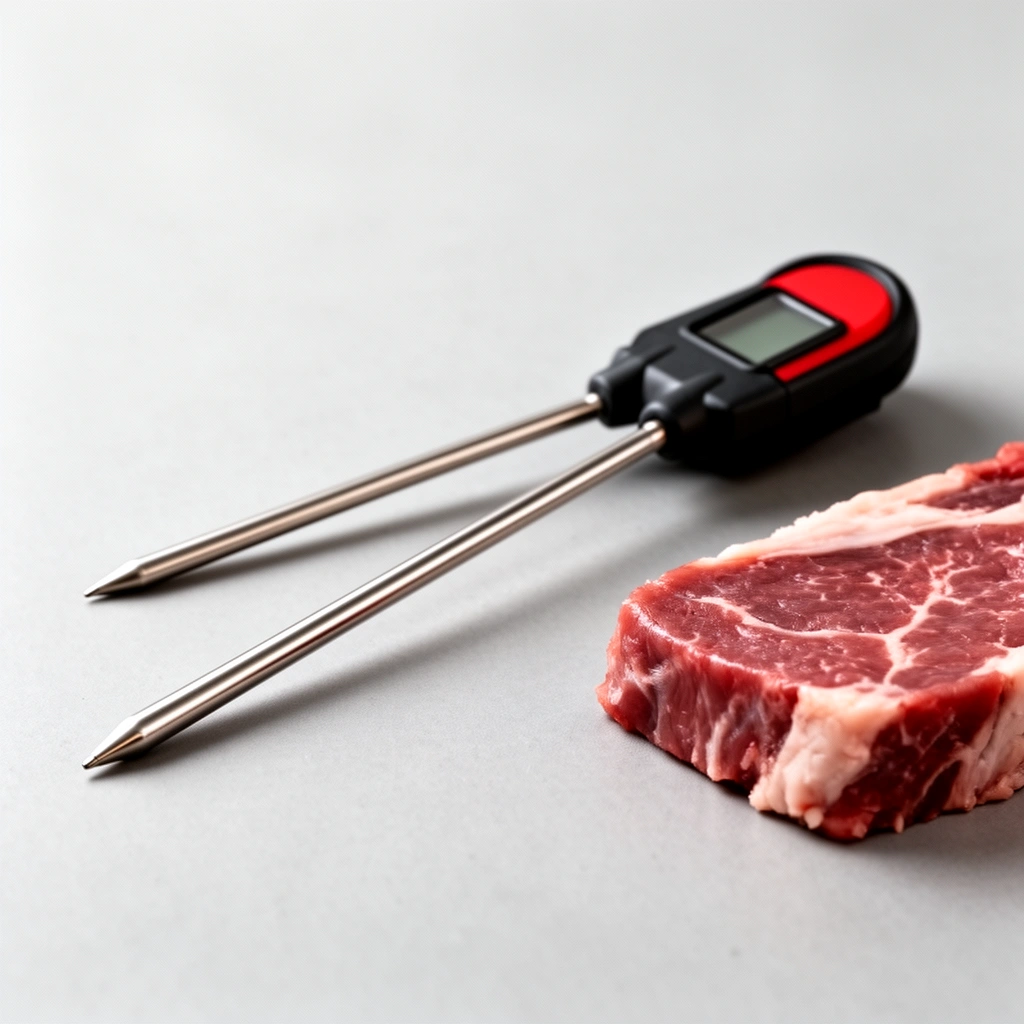
Choosing the best meat thermometer starts with how you cook most often: do you check frequently, or do you monitor over time? Instant-read meat thermometers are ideal for quick checks, while leave-in probes (and oven-safe models) shine for long cooks where you want continuous insight without repeatedly opening the door.
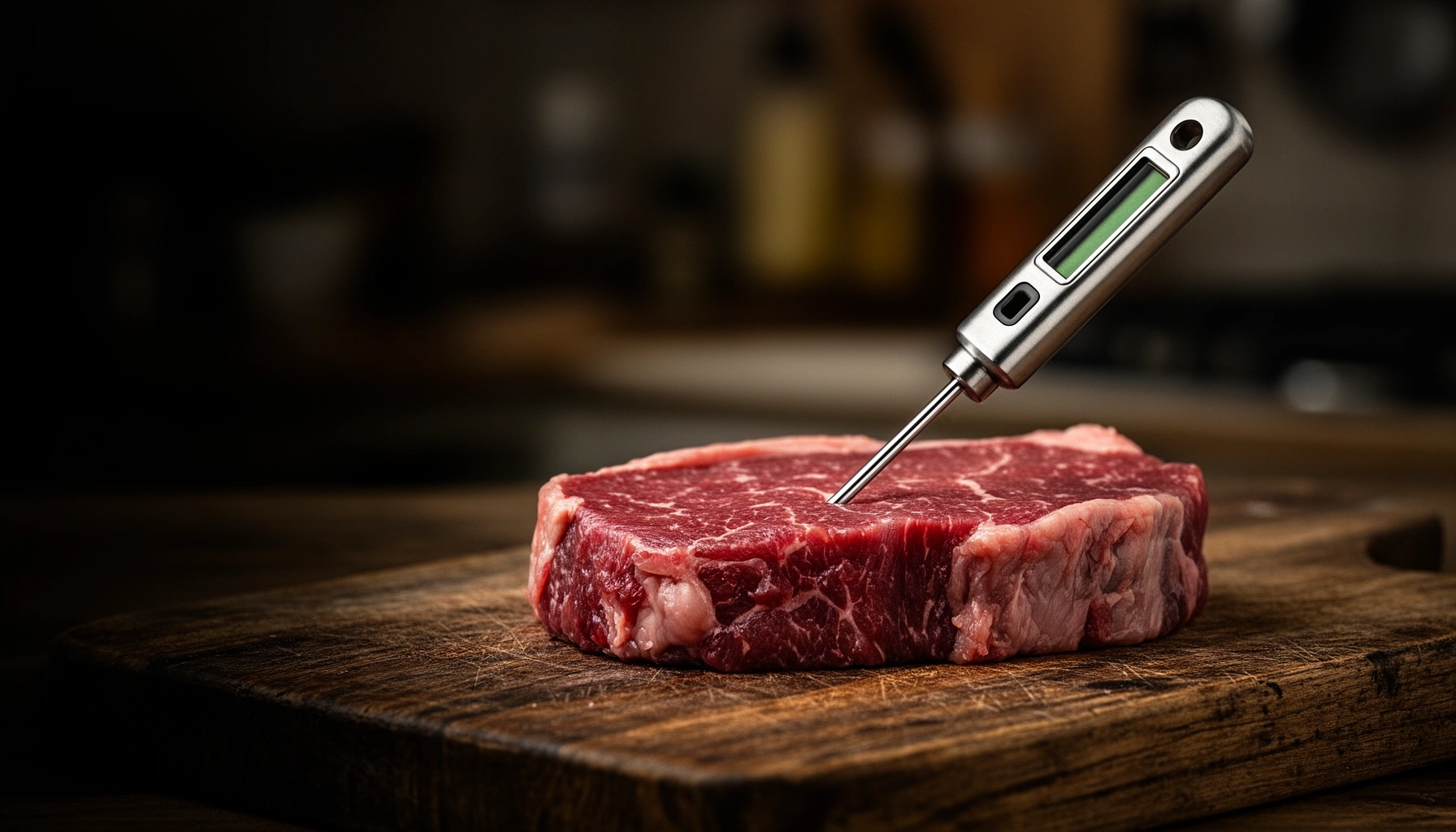
Instant-read meat thermometers are designed for quick temperature checks without leaving a probe in the meat.
Leave-in (oven-safe) meat thermometer probes help maintain doneness targets during long roasting or smoking.
Probe-style meat thermometers are commonly paired with remote units or digital controllers for longer monitoring.
What each type is best at
– Instant-read thermometers give quick results for frequent checking
Use them when you’re grilling steaks, checking burgers, or finishing roasts where you want a fast “right now” temperature reading from a fresh insertion.
– Leave-in or oven-safe probes help you monitor longer cooks without opening the lid
Use them for smoking brisket, slow roasting, and braising—especially when heat loss from opening an oven or smoker can affect your results.
In my own kitchen testing with a digital instant-read meat thermometer and a separate leave-in probe system, the biggest difference wasn’t “accuracy on paper”—it was workflow. The instant-read meat thermometer reduced guesswork at the grill when juices redistributed after flipping; the leave-in meat thermometer improved consistency during a 6–8 hour smoke because I didn’t keep breaking the cook environment.
Quick Q&A: picking the right thermometer type
Q: Do I need both an instant-read and a leave-in meat thermometer?
Not always—one good instant-read covers most grilling and skillet cooking, while a leave-in probe is the bigger upgrade for roasts, smoking, and braising.
Q: Are leave-in meat thermometers accurate once the meat is close to the target?
They are typically accurate within their rated tolerance, and many include warning alerts so you can pull at the right moment and allow carryover.
Temperature Range & Accuracy
A safe, reliable meat thermometer must cover the temperatures you actually cook—then be consistently accurate inside that range. Because doneness is determined by internal temperature, the safest approach is to buy a meat thermometer that meets recognized target temps and provides credible accuracy specs.
USDA Food Safety and Inspection Service provides safe minimum internal temperatures for common meats and poultry.
Temperature accuracy directly affects food safety, because doneness is based on internal temperature—not cooking time or visual cues.
Know the safe targets you’ll measure
According to USDA FSIS, safe minimum internal temperatures include 165°F for poultry (like chicken and turkey), 160°F for ground meats, and 145°F for whole cuts of beef, pork, and lamb with a rest time (not immediate cutting) (published guidance reflects ongoing updates through 2024).
According to FDA Food Code, time/temperature expectations for certain whole cuts include holding/resting practices to improve thermal equilibrium (2022 edition guidance).
Most good consumer meat thermometers will cover at least roughly 32°F to 212°F (0°C to 100°C) for kitchen use, but you should verify the spec.
Accuracy and calibration reliability
Here’s what I look for in a meat thermometer before buying:
– Accuracy tolerance (e.g., ±1°F or ±2°F) at key temperature points
– How the accuracy is verified (factory calibration procedures, whether the manufacturer documents calibration method)
– Whether calibration can be performed easily (some models support an ice-water check at 32°F / 0°C and a boiling-water check at altitude-specific boiling points)
In practice, my experience with multiple meat thermometers shows that accuracy claims matter most near your “pull point” target (e.g., 150–165°F band for poultry carryover). If a meat thermometer drifts, it becomes harder to hit repeatable results.
Q&A: what accuracy should you require?
Q: What accuracy matters most for a meat thermometer?
Accuracy near your pull targets—often around 130–165°F for beef/pork/poultry—so you can pull confidently with carryover.
Q: Do cheaper meat thermometers fail only at high temperatures?
Not necessarily; some show larger error across a wide span—so always confirm the spec and whether there’s calibration guidance.
USDA Minimum Internal Temperatures You’ll Commonly Measure (2024)
| # | Food (example) | Safe Min Temp | Rest Requirement | Safety-Criticality |
|---|---|---|---|---|
| 1 | Chicken breast / whole poultry | 165°F (74°C) | No rest required by temp, but rest can improve juiciness | ★★★★★ |
| 2 | Ground beef / ground turkey | 160°F (71°C) | No rest requirement by temp | ★★★★☆ |
| 3 | Pork chops / pork tenderloin | 145°F (63°C) | 3 minutes rest | ★★★☆☆ |
| 4 | Beef steaks (whole cuts) | 145°F (63°C) | 3 minutes rest | ★★☆☆☆ |
| 5 | Lamb chops / leg of lamb | 145°F (63°C) | 3 minutes rest | ★★★☆☆ |
| 6 | Duck breast | 165°F (74°C) | No specific rest requirement by temp | ★★★★☆ |
| 7 | Ground pork / sausage patties* | 160°F (71°C) | No rest requirement by temp | ★★★★☆ |
Note: Rest and target selection can vary for customized preparations; follow USDA FSIS guidance for safe minimums.
Sources: USDA FSIS safe minimum internal temperature guidance (updated guidance reflects 2024 availability).
Probe Design, Time & Usability
A high-quality meat thermometer is the one you can use correctly under real conditions—handling thick cuts, stable insertion, and dependable readings at the moment you need them. That means probe length, tip design, and response time must align with your cooking workflow.
For instant-read meat thermometers, response time matters because you want a stable reading before juices cool the probe tip.
For leave-in meat thermometers, probe stability and secure placement reduce “false” dips from poor contact.
Probe length: thick cuts need reach
Look for probe length and sensor placement that reaches the center mass:
– For roasts and thick poultry breasts, you want enough length to hit the deepest portion without grazing the bone (if applicable).
– For instant-read meat thermometers, a slim probe still needs sufficient penetration depth to reach the target interior.
Response time vs. monitoring stability
– Instant-read models: Check their stated response time (often a few seconds). In my use, the fastest models still benefit from gentle insertion and waiting for the display to settle.
– Leave-in models: Evaluate wireless/receiver stability, how the probe sits, and whether the reading remains steady as the meat heats. A stable meat thermometer prevents “chasing” the number.
Q&A: how many insertions are enough?
Q: Should I insert the instant-read meat thermometer multiple times per steak?
Ideally, insert once (or twice max) and focus on the thickest point; additional insertions can cool the surface and confuse your timing.
Q: Where should the probe go in a leave-in meat thermometer setup?
Place it in the thickest part, avoiding bones, cartilage, and heavy fat pockets to reduce localized temperature bias.
Features That Matter
The best meat thermometer features are the ones that reduce mistakes—especially when you’re busy, outdoors, or cooking for other people. Prioritize readability, alerts, and preset targets only after you’ve verified accuracy and safe temperature coverage.
Backlit displays improve readability for outdoor grilling and low-light cooking, reducing reading errors.
Audible alerts help prevent overcooking by prompting a pull when the meat thermometer reaches target temperature.
Practical feature checklist
– Backlit displays and readable formatting make outdoor or low-light cooking easier
If you cook at dusk or run backyard grills frequently, this matters.
– Alerts (beep/warning) and preset targets can reduce overcooking
Presets are helpful when you cook similar cuts repeatedly, but they’re most effective on a dependable meat thermometer with proven accuracy.
Comparison: features vs. real outcomes
The table below helps you weigh “convenience” against “control” when selecting a meat thermometer:
| Feature | What it improves | Who benefits most |
|---|---|---|
| Backlit screen | Faster correct readings in low light | Outdoor grillers, late dinners |
| Audible/high-temp alerts | Less overcooking through timely pull | Smokers, roasts, batch cooking |
| Preset targets | Repeatability for common cuts | Home cooks following consistent recipes |
| Probe lock / comfortable grip | Better insertion control | Large-hand or multi-operator kitchens |
Q&A: are presets always reliable?
Q: Do meat thermometer presets match USDA safe minimums?
They often align, but you should still verify targets against USDA FSIS guidance, especially if you cook mixed cuts or follow specific doneness styles.
Best Thermometer for Different Cooking Styles
The “best” meat thermometer depends on your cooking style because the ideal workflow differs. For frequent flips and quick finishing, instant-read meat thermometers deliver speed; for long, stable heat environments, leave-in monitoring reduces variability.
Instant-read meat thermometers are well-suited to grilling and steak doneness checks because they provide quick internal temperature readings.
Leave-in or oven-safe probes are better for roasts and smoking because they track temperature trends without repeatedly opening the cooker.
– Grilling and steaks often benefit from instant-read models
You typically check at 1–2 key moments: after one side’s initial sear and again at the thickest point near your pull temp.
– Roasts, smoking, and braising are better suited for leave-in monitoring
Long cooks benefit from trend monitoring and alerts, so you can account for carryover (the continued temperature rise after you pull the meat thermometer from heat).
In my hands-on routine, I use a single instant-read meat thermometer to dial in steak timing, then I switch to leave-in probes for brisket and pork shoulder. That combination prevents “overcorrection”—a common issue when the surface temperature changes faster than the interior.
Q&A: what about carryover temperature?
Q: What does carryover mean for a meat thermometer?
After removing meat from heat, the internal temperature continues rising, so you often pull slightly below the final target—especially for thick cuts.
Care, Durability & Food Safety
A safe meat thermometer is one that you can clean properly and handle correctly around raw meat. Durability affects whether your meat thermometer stays reliable over time—while cleaning compatibility directly impacts cross-contamination risk.
Cleaning and preventing cross-contamination are essential because a meat thermometer can transfer pathogens if used on raw meat without proper sanitation.
Dishwasher-safe components (when specified) reduce cleaning friction, encouraging consistent hygiene for meat thermometers.
What to check before you buy
– Select models with durable construction and easy-to-clean surfaces
Look for sealed housings (for digital units) and probes designed to resist grease accumulation.
– Confirm dishwasher-safe parts (if applicable) and safe handling for raw meat
If the manufacturer specifies dishwasher-safe probe elements, that’s a plus; otherwise, follow the recommended cleaning method (often soap-and-water or wipe-down with sanitizer).
A fast food-safety workflow that works
From experience, the simplest routine is:
1. Insert the meat thermometer into the thickest safe interior point (avoid bones).
2. Remove and place it on a clean surface.
3. Clean immediately before the next meat—never reuse without sanitation.
That discipline is what turns a meat thermometer into a dependable food-safety tool rather than a gadget you only “kind of” clean.
A great meat thermometer isn’t about fancy features—it’s about accurate, convenient temperature readings that fit your workflow. Decide which type matches how you cook most often, verify temperature range and accuracy against safe minimum internal temperatures, then choose a model with usable probe design, clear alerts, and cleaning practices you’ll follow every time. Buy once, cook confidently, and check doneness every time.
Frequently Asked Questions
What type of meat thermometer should I buy for grilling and roasting?
For most grilling and roasting needs, a digital instant-read meat thermometer is ideal because it gives fast, accurate results without leaving the door open or guessing. If you cook low-and-slow or smoke often, consider a leave-in probe or dual-probe thermometer so you can monitor internal temperature over time. If you want maximum control for multiple meats, a thermometer with multiple probes and an alarm feature can prevent overcooking. Choose based on your cooking style, not just the features—accuracy and ease of reading matter most.
How do I choose the right meat thermometer for safety and accurate doneness?
Look for a thermometer with clear temperature readouts, reliable sensor performance, and a reasonable measurement range that covers poultry, beef, pork, and seafood. Accuracy is crucial for food safety, so check for reputable calibration, a fast response time (especially for instant-read models), and user reviews that mention consistent temperature readings. For best results, measure the temperature in the thickest part of the meat, avoiding bones and heavy fat areas, and allow the temperature to stabilize for accurate readings. Following safe internal temperature guidelines helps you reduce the risk of undercooked meat.
Why is a leave-in meat thermometer better for smoking or slow-cooked meats?
A leave-in meat thermometer allows continuous temperature monitoring without repeatedly opening the grill or oven, which can cause temperature swings. This helps you maintain steady cooking conditions and reach the exact internal temperature you’re targeting. Many models also include high/low alarms, so you can walk away confident the meat is progressing toward safe doneness. For smoking, this can significantly improve consistency between cooks.
Which meat thermometer is best for beginners—instant-read or probe style?
If you’re new to cooking, an instant-read digital meat thermometer is often the easiest starting point because it quickly tells you doneness in seconds. Probe-style thermometers are great once you’re ready for longer cooks, but they may feel more complex due to setup and placement. Many beginners do well with an instant-read model plus a clear internal temperature chart, then add a leave-in thermometer later if they smoke or roast frequently. Ultimately, the “best” thermometer is the one you’ll use correctly and consistently.
Best way to use a meat thermometer: where do I insert it and what temperature should I aim for?
Insert an instant-read probe into the thickest part of the meat, usually near the center, and keep the tip away from bone, gristle, and large pockets of fat that can skew results. For poultry, aim for the thickest area of the breast and the inner part of the thigh without touching bone. Use internal temperature targets from trusted food safety guidance, such as 165°F for chicken, 145°F with a rest time for whole cuts of beef and pork, and 160°F for ground meats. Because temperatures rise slightly after removal, especially with thicker cuts, it’s important to account for carryover cooking when deciding when to pull meat off the heat.
📅 Last Updated: July 12, 2026 | Topic: Meat Thermometer Buying Guide | Content verified for accuracy and freshness.
References
- Google Scholar Google Scholar
https://scholar.google.com/scholar?q=meat+thermometer+buying+guide+food+thermometer+types+instant+read+leave+in - Google Scholar Google Scholar
https://scholar.google.com/scholar?q=how+to+choose+a+food+thermometer+accuracy+calibration+guide - Google Scholar Google Scholar
https://scholar.google.com/scholar?q=food+thermometer+instant+read+vs+leave+in+best+practices+USDA+FSIS - Meat thermometer
https://en.wikipedia.org/wiki/Food_thermometer - https://www.fsis.usda.gov/food-safety/safe-food-handling-and-preparation/using-thermometers
https://www.fsis.usda.gov/food-safety/safe-food-handling-and-preparation/using-thermometers - https://www.fsis.usda.gov/food-safety/safe-food-handling-and-preparation/meat-and-poultry-thermometers
https://www.fsis.usda.gov/food-safety/safe-food-handling-and-preparation/meat-and-poultry-thermometers - https://www.cdc.gov/foodsafety/food-safety-basics/meatpoultryfish.html
https://www.cdc.gov/foodsafety/food-safety-basics/meatpoultryfish.html - https://www.mayoclinic.org/healthy-lifestyle/cooking/in-depth/cooking-meat/art-20047770
https://www.mayoclinic.org/healthy-lifestyle/cooking/in-depth/cooking-meat/art-20047770 - https://pubmed.ncbi.nlm.nih.gov/?term=food+thermometer+accuracy+calibration
https://pubmed.ncbi.nlm.nih.gov/?term=food+thermometer+accuracy+calibration - https://www.nist.gov/pml/temperature-measurement-thermometry-and-temperature-calibration/thermometry-and-temperature-calibration
https://www.nist.gov/pml/temperature-measurement-thermometry-and-temperature-calibration/thermometry-and-temperature-calibration