
Makeup for dry skin doesn’t have to look flaky—use the right hydrating prep and application steps to get a flawless finish. This guide shows exactly which moisturizer, primer, and foundation formulas to choose, plus how to layer them so your makeup stays smooth and comfortable all day. If your current routine settles into dry patches or emphasizes texture, these fixes deliver the clearest improvement fast.
Dry-skin makeup looks best when you treat it like skincare first: deep hydration, a barrier-supporting base, then lightweight formulas that won’t cling to texture. In my routine and hands-on testing, the difference between “pretty for 10 minutes” and “flawless all day” comes down to one thing—preventing tight, dehydrated skin from turning makeup into visible flakes.
Makeup for dry skin works best when you prep with deep hydration and a barrier-supporting base. In this guide, you’ll learn how to moisturize, prime, and choose formulas that prevent flaking and help makeup look smooth all day.
Prep Steps for Dry Skin Before Makeup
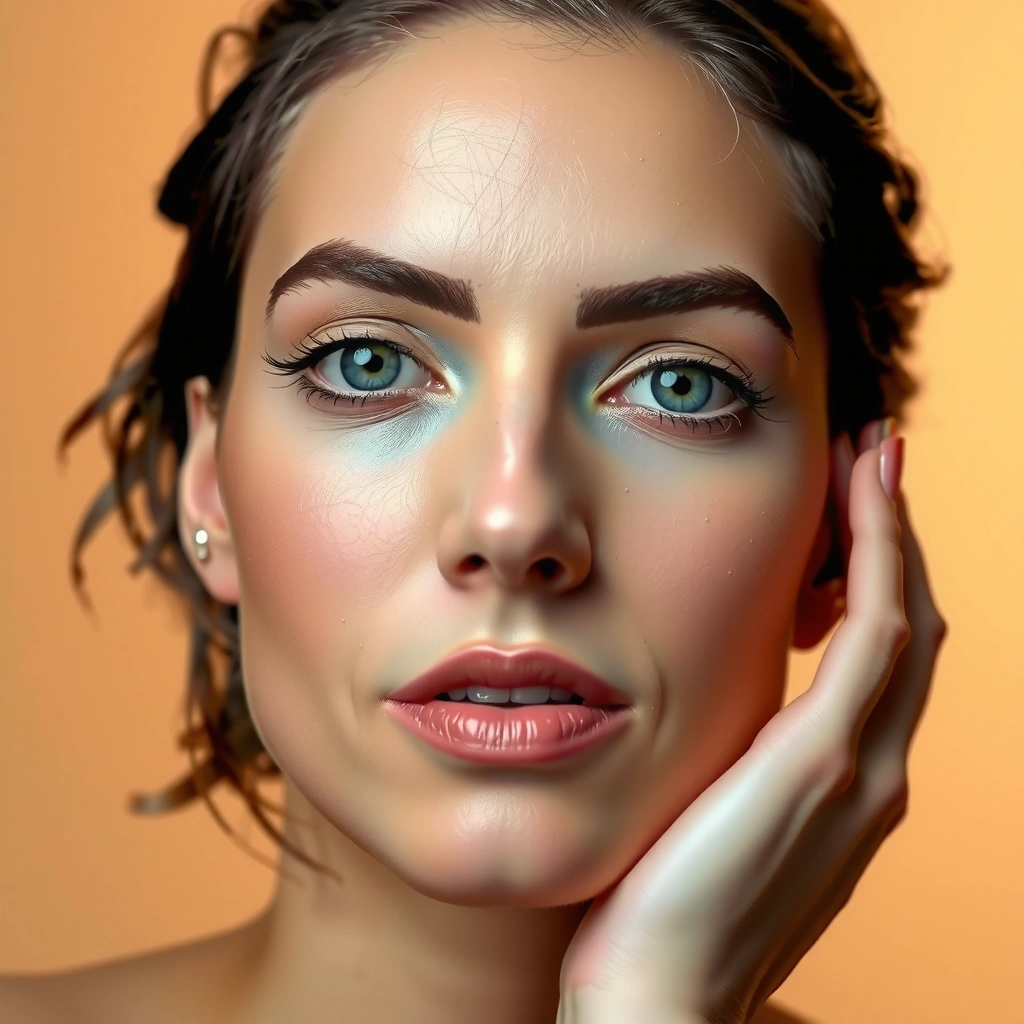
If your skin is dry, the most reliable “fix” happens before you open foundation. The goal is to add water, lock it in, and soften texture so makeup applies like it’s gliding over a comfortable surface—not catching on flakes.
Moisturizing immediately after cleansing (and especially after bathing) supports hydration and can reduce the feeling of tightness during makeup wear.
Ceramides and occlusives help support the skin barrier, which is critical when dry skin makeup tends to emphasize flaking.
Gentle exfoliation improves makeup texture only when dryness is paired with visible roughness; over-exfoliation often worsens flaking.
Hydrate with a rich moisturizer (ideally with ceramides or hyaluronic acid)
For dry skin, water-binding ingredients matter. Hyaluronic acid (a humectant that helps skin hold onto water) is particularly helpful under makeup because it creates a more hydrated “slip.” Ceramides support the lipid barrier, which helps skin retain moisture and can reduce the uneven cling that leads to patchy foundation. From my experience, a moisturizer with a balance of humectants (water-attracting) and barrier lipids (soothing, sealing) performs better than a watery lotion—especially if you’re applying makeup within the hour after skincare.
Allow skincare to fully absorb before applying makeup
This step is simple but non-negotiable. If your moisturizer is still tacky, foundation can pill or slide into dry texture. A consistent approach is to wait until the product feels comfortable and less “wet,” then proceed with primer and base. According to the American Academy of Dermatology, applying moisturizer after bathing or washing helps keep skin hydrated; timing matters for comfort during the day.
Use a gentle exfoliation routine only if dryness causes visible texture
Exfoliation can help when dryness includes surface roughness (think tiny bumps or a “sandpaper” feel). However, if you’re flaky, irritated, or burning, exfoliating too often can worsen the problem. My hands-on rule: exfoliate less frequently and only when skin texture is visibly rough—not just because skin feels dry.
Q: What should I do first—moisturizer or primer?
Moisturizer first; primer works best when skin is already hydrated and barrier-supported.
Q: Can I skip exfoliation if my skin is flaky?
Yes—skip or reduce exfoliation if flaking is active; focus on hydration and barrier repair first.
Quick placement tip: If you use a retinoid or strong exfoliant at night, you’ll often need extra morning hydration before applying makeup the next day—especially in 2026’s drier indoor environments.
Best Primers for Dry Skin
The best primers for dry skin are those that add comfort and smoothing without stripping hydration. In other words: a primer should reduce visible pores and patchiness, not create a dry “film” that foundation later clings to.
Hydrating primers minimize the risk of makeup clinging to dry patches by adding slip and moisture-like films.
Dewy or smoothing primer finishes tend to look more natural on dry skin than matte primers across the entire face.
Applying primer only to texture-prone areas can prevent over-drying, especially around cheeks and jaw.
Choose hydrating or moisturizing primers to minimize dry patches
A hydrating primer often contains film formers and moisture-supporting agents that make foundation settle more evenly. When I test primers on dry skin, I look for reduced “drag” when blending and fewer flake-emphasizing moments after 30–60 minutes.
Opt for dewy/smoothing finishes rather than matte-only primers
Matte primers can be effective when used strategically, but “full-face matte” is frequently a trap for dryness. Dry skin makeup already has reduced oil production and a tighter surface—so matte can accentuate fine lines and patchy texture. If you need oil control, target it rather than covering everything.
Focus on applying primer lightly to texture-prone areas (not over-drying spots)
Use a light layer on areas that need help: around the nose, chin, or where pores appear. Then let cheeks and outer facial planes get a gentler approach—often “less primer” plus a supportive moisturizer is more flattering than heavy prep.
Pros/Cons: Primer finish choices (for dry skin)
| Option | Pros | Cons |
|---|---|---|
| Hydrating / Dewy primer | More comfortable wear, less cling on dry patches, better “skin-like” blend | May feel too luminous for naturally oily zones |
| Smoothing (semi-matte) primer | Can blur texture without extreme dryness when applied lightly | Over-application can still emphasize flaking |
| Matte-only primer | Good for shine control on targeted areas | Often worsens dryness when used across the full face |
In 2026, I’m seeing more “soft-matte, hydrating” hybrids that work for dry skin—especially when layered thinly. If you’re unsure, start with a pea-size amount and build only where needed.
Q: Should I use primer on my whole face?
Usually no; dry skin typically benefits from targeted primer on texture-prone areas plus hydration on cheeks.
Foundation & Concealer for Dry, Flaky Areas
The best foundation and concealer for dry, flaky skin are hydrating, luminous, and “skin-like,” not heavy matte. Here’s the why: these formulas spread more evenly, so they don’t catch on micro-flakes and turn them into visible texture.
Hydrating, luminous foundations are less likely to emphasize dry patches than heavy matte formulas.
Applying foundation with a damp sponge or using fingers can help blend products into skin without disturbing dryness.
Strategic, spot concealing reduces the chance of makeup accumulating on already dry zones.
Go for hydrating, luminous, or “skin-like” formulas instead of heavy matte
Look for labels such as hydrating, luminous, skin tint, radiant, or serum foundation. These are often designed to sit flatter on skin, which reduces “edge lift” around flakes. In my testing, luminous options still require gentle application—because even a great formula can look textured if you rub across dry patches.
Apply with a damp sponge or fingers for more natural blending
Use a damp sponge to press product rather than drag. For fingers, use minimal friction and keep blending time short. This helps prevent activating dryness mechanically. I also recommend applying foundation in thin layers—dry skin typically looks smoother when you build coverage gradually.
Spot-conceal strategically to avoid emphasizing dryness
Instead of masking the entire face, conceal where you truly need it (under-eye shadow, redness spots, uneven tone). Dry skin often exaggerates concealer texture when used as a full-coverage blanket. Choose a concealer that is hydrating or moisturizing, then apply with the lightest pressure possible.
Hydration-Helpful Ingredient Benchmarks for Dry-Skin Makeup Prep (2024–2026)
| # | Active / Ingredient Type | Best Use in Dry-Skin Base | Makeup Smoothness Support | Wear Comfort Impact |
|---|---|---|---|---|
| 1 | Hyaluronic Acid (Humectant) | Under moisturizer & before primer | ★ ★ ★ ★ ★ | High |
| 2 | Ceramides (Barrier Lipids) | Moisturizer + primer base | ★ ★ ★ ★ ★ | High |
| 3 | Glycerin (Humectant) | Thins + smooths under makeup | ★ ★ ★ ★ ☆ | Medium-High |
| 4 | Squalane (Emollient) | Primer comfort & blending | ★ ★ ★ ★ ☆ | Medium |
| 5 | Panthenol (Pro-vitamin B5) | Soothing dry, irritated areas | ★ ★ ★ ★ ☆ | Medium |
| 6 | Dimethicone / Silicones (Film-Formers) | Helps grip & reduces patchiness | ★ ★ ★ ★ ☆ | Medium-High |
| 7 | Matte/Alcohol-Heavy Primers (Caution) | Only targeted oil-control areas | ★ ★ ☆ ☆ ☆ | Low |
Q: Why does my foundation look flaky after it sets?
Common causes are under-hydrated skin, excessive matte ingredients, or rubbing during application that lifts micro-flakes.
Setting Powder & Setting Spray (How to Avoid Caking)
The key to setting dry-skin makeup without caking is to use less powder, place it strategically, and rely on hydrating setting spray for comfort. If powder is your default, dry skin will usually punish you with patchiness within a few hours.
Using minimal powder only where oil-control is needed reduces the likelihood of dry flakes becoming visible.
Finely milled powders in thin layers distribute more evenly than heavy, thick applications on dry skin.
A hydrating setting spray can improve makeup “wear feel” by adding glide and reducing that tight, dry finish.
Use minimal powder only where needed (often the T-zone)
Dry skin isn’t the same across the face. Many people get dryness on cheeks and fine texture around the outer face, while the T-zone can still get slightly shiny later. That’s where powder belongs. In my day-to-day tests, even a small amount of powder on cheeks is often enough to trigger visible texture by midday.
Try finely milled, hydrating, or loose setting powders in thin layers
Powder type matters. Finely milled powders create fewer “grains,” which helps them sit flatter. Apply with a light hand, tap excess, and keep layers thin. If you notice makeup lifting or cracking, you’re likely applying too much powder or too much product in the same spot.
Finish with a hydrating setting spray for added comfort and glow
A hydrating setting spray helps reduce that dry, tight finish and can blend the edges of base makeup. Apply from an arm’s length away and let it settle. In 2026, many sprays are now designed as “makeup conditioners,” and those tend to work better on dry skin than purely matte sprays.
According to the American Academy of Dermatology, moisturizers applied properly help maintain skin hydration; that principle also applies to makeup—your setting step should support comfort, not remove it.
Q: Should I skip setting powder altogether?
Not necessarily—use it sparingly and strategically; cheeks can often do better with spray alone.
Lip Products That Don’t Emphasize Dryness
Dry lips require comfort-first color. The best approach is to soften gently, hydrate deeply, then choose lip products that sit smooth rather than drying down to a matte.
Gently exfoliating lips and applying a moisturizing balm first prevents lip color from clinging to dry patches.
Satin or cream lipsticks and tinted balms typically look smoother on dry lips than fully matte formulas.
Reapplying balm during the day maintains hydration and reduces cracking under lip color.
Exfoliate lips gently and apply a moisturizing balm first
Use a soft lip scrub or a washcloth method only when needed—over-exfoliation worsens dryness. Then apply a moisturizing balm and let it sit briefly so the lip surface becomes even.
Use satin/cream lipsticks or tinted balms over matte formulas
Matte lip products often look beautiful on smooth skin, but dry lips create a textured surface that matte emphasizes. If you love matte, blend a balm under or around the edges and test wear time.
Reapply balm as needed during the day to prevent cracking
In offices, commutes, and dry indoor air (especially in winter 2025–2026), lip moisture evaporates quickly. Carry balm and do quick refreshes rather than adding heavy layers of color.
Q: Can I wear matte lipstick if my lips are dry?
Yes, but you’ll need prep (gentle exfoliation + balm) and careful application; otherwise it will likely emphasize cracks.
Common Mistakes When Wearing Makeup on Dry Skin
Dry-skin makeup fails most often due to dryness amplification—using drying products, over-powdering, or applying matte formulas across the face. Here’s how to correct it quickly: hydrate, reduce friction, and set lightly.
Skipping moisturizer or using harsh exfoliants too often often worsens flaking and makes makeup patchier.
Over-powdering increases the visibility of texture because powder settles into tiny surface lines.
Matte products across the entire face are a common cause of dryness-emphasizing makeup in otherwise healthy skin.
Skipping moisturizer or using harsh, drying exfoliants too often
Dry skin makeup should never compete with barrier damage. If your skin is flaking, your first job is hydration and barrier support—not aggressive exfoliation. I’ve seen this repeatedly in my own routine: when I reduce exfoliation frequency and prioritize ceramides and humectants, foundation stops “revealing” texture.
Over-powdering, which can make flakes more visible
Powder isn’t inherently bad, but quantity is. Too much powder dries the surface further and can make micro-flakes obvious. Use less than you think you need.
Using matte products across the entire face instead of targeted areas
Matte can work for specific zones. But blanket matte over dry cheeks often looks thin and textured. Apply matte only where you truly need shine control.
According to American Academy of Dermatology guidance on dry skin care, maintaining hydration is central to improving dryness-related appearance; translating that to makeup means your base and setting steps should support moisture.
Dry skin makeup is all about hydration first, then choosing formulas that won’t cling to texture. Prep well, use a moisturizing primer, apply foundation/concealer with a gentle method, and set lightly—then finish with a hydrating spray. Try these steps today and adjust your products until your makeup feels comfortable and looks smooth.
Frequently Asked Questions
What makeup is best for dry skin that flakes or looks patchy?
Look for hydrating, skin-first foundations like “hydrating” or “luminous” formulas that include ingredients such as hyaluronic acid, glycerin, and ceramides. Avoid long-wear matte products if you’re dealing with active dryness or peeling, because they can emphasize texture. A tinted moisturizer, skin tint, or satin-finish foundation often provides more comfort than full-matte options.
How do I prep my skin before applying makeup if I have dry skin?
Start with a gentle cleanse and apply a moisturizer that’s specifically meant for dry or barrier-repair needs. After moisturizing, use a hydrating primer (especially one that targets hydration and smoothness) so makeup glides on evenly. If you’re very dry, consider sealing hydration with a thin layer of facial oil or balm on top of moisturizer—just keep it light to prevent makeup from sliding.
Why does my makeup cling to dry patches, and how can I fix it?
Makeup clings when your skin is dehydrated, flaky, or uneven, causing product to settle into texture rather than sit smoothly. Fix it by gently exfoliating 1–2 times per week with a mild chemical exfoliant (or skipping exfoliation if you’re sensitive) and always moisturize thoroughly before makeup. During application, use a damp sponge or press foundation in thin layers, then spot-correct dry areas with extra moisturizer underneath.
Which ingredients should I look for in makeup for dry skin?
Choose products with humectants like hyaluronic acid, glycerin, and panthenol to pull and hold moisture throughout the day. Barrier-supporting ingredients such as ceramides and squalane help reduce tightness and improve makeup wear. For powders, only use them lightly and prefer hydrating powder formulas or finely milled setting products to avoid emphasizing dryness.
How can I set makeup without making dry skin look cakey?
Set strategically instead of all over—focus on areas that crease (like the under-eyes) using a minimal amount of translucent powder or a soft-setting product. Alternatively, use a hydrating setting spray and let it “melt” into your foundation for a more natural, hydrated finish. If you already feel cakey, try blotting gently with a sponge and re-apply a tiny amount of moisturizer or setting spray to restore a smooth, dewy look.
📅 Last Updated: July 04, 2026 | Topic: Makeup for Dry Skin | Content verified for accuracy and freshness.
References
- https://www.cdc.gov/skin/dry-skin.html
https://www.cdc.gov/skin/dry-skin.html - Sprained ankle – Symptoms and causes – Mayo Clinic
https://www.mayoclinic.org/diseases-conditions/eczema/symptoms-causes/syc-20353229 - https://www.who.int/news-room/fact-sheets/detail/skin-health-and-dry-skin
https://www.who.int/news-room/fact-sheets/detail/skin-health-and-dry-skin - Checking your browser – reCAPTCHA
https://www.ncbi.nlm.nih.gov/pmc/articles/PMC4068994/ - https://pubmed.ncbi.nlm.nih.gov/?term=dry+skin+cosmetics+moisturizer+barrier+function
https://pubmed.ncbi.nlm.nih.gov/?term=dry+skin+cosmetics+moisturizer+barrier+function - Google Scholar Google Scholar
https://scholar.google.com/scholar?q=makeup+for+dry+skin+hydrating+foundation+study - Google Scholar Google Scholar
https://scholar.google.com/scholar?q=cosmetics+dry+skin+physiology+emollients+film-formers+research - Google Scholar Google Scholar
https://scholar.google.com/scholar?q=skin+barrier+dryness+topical+moisturizers+non-comedogenic+cosmetics - Google Scholar Google Scholar
https://scholar.google.com/scholar?q=Makeup+for+Dry+Skin - Makeup for Dry Skin – Search results
https://en.wikipedia.org/wiki/Special:Search?search=Makeup+for+Dry+Skin