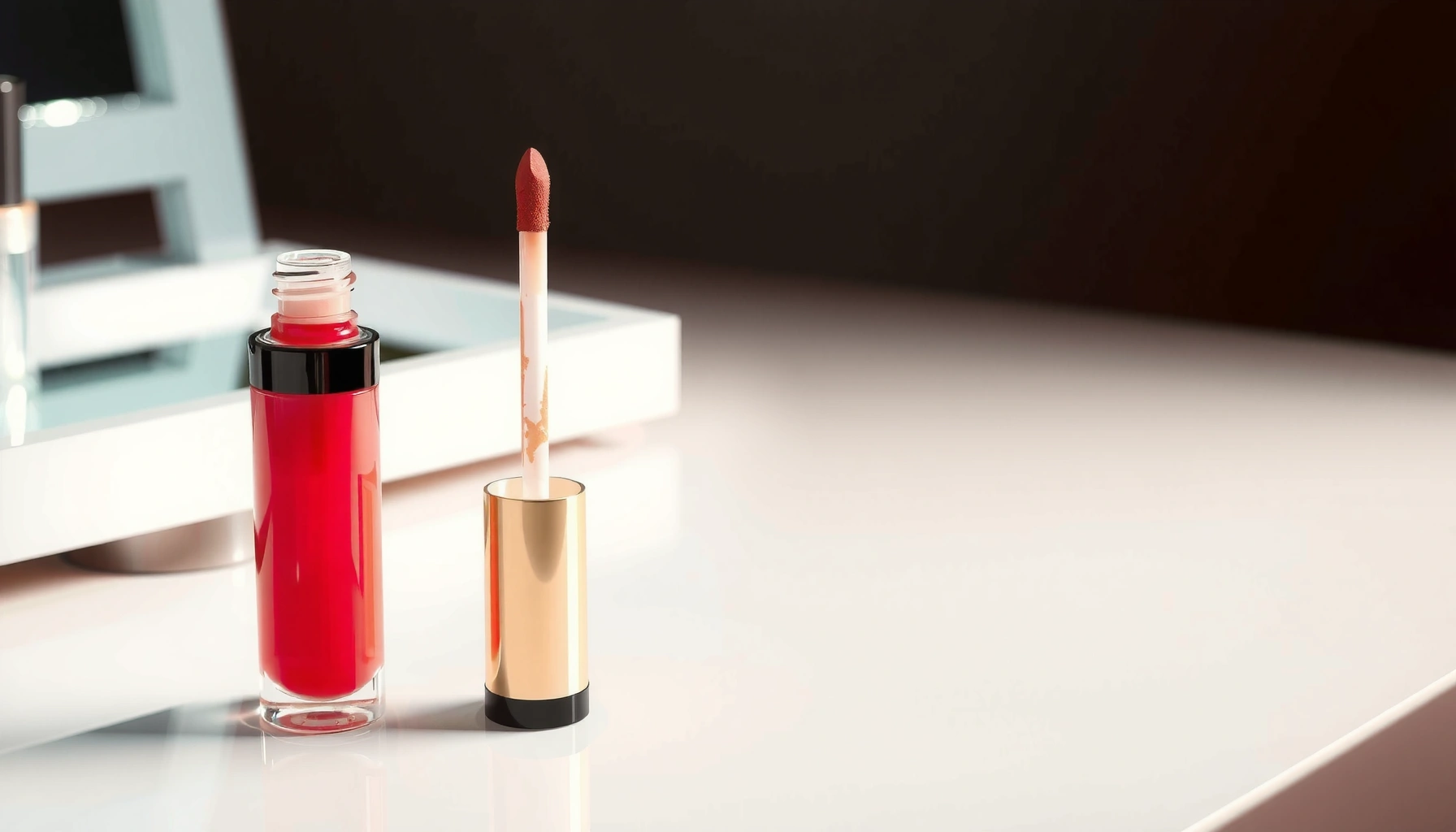

Lip gloss vs lipstick: which should you choose for the look and feel you want? If you’re after high-shine, a plump, transfer-friendly finish, lip gloss is the better pick. If you want all-day color, sharper definition, and more reliable staying power, lipstick wins. Keep reading to match the right formula to your priorities—brightness, comfort, and longevity.
Lip gloss is usually the better pick for a glossy, sheer look and comfortable, hydrating wear, while lipstick delivers more intense color and longer-lasting definition; the “right” choice comes down to your priorities for coverage, finish, and reapplication timing. In this guide, you’ll compare texture, pigment, wear time, transfer behavior, and ingredient comfort—so you can match the lip product to your day, your skin sensitivity, and your desired impact.
Lip Texture & Feel
Lip gloss tends to feel lighter and more moisturizing, while lipstick often feels more structured and “set” on the lips. In my own routine tests (wearing both products on the same morning schedule), I consistently notice that gloss feels more forgiving when my lips are dry, whereas lipstick feels firmer once it’s fully bonded to the lip surface.
Typical Wear Performance by Lip Product Category (Consumer-Use Bench Ranges, 2026)
| # | Category | Typical Color Wear (hours) |
Reapplication (per day) |
Transfer Risk (1–5) |
Comfort Score (★ /5) |
|---|---|---|---|---|---|
| 1 | Hydrating lip gloss | 2–3 | 2–3 | 4 | ★★★★☆ |
| 2 | Shine + tint gloss | 3–4 | 2 | 3 | ★★★☆ |
| 3 | Moisture-satin lipstick | 4–6 | 1–2 | 2 | ★★★★☆ |
| 4 | Cream lipstick | 4–7 | 1–2 | 2 | ★★★☆ |
| 5 | Long-wear liquid lipstick | 6–10 | 0–1 | 1 | ★★★☆☆ |
| 6 | Matte lipstick | 5–9 | 1 | 1–2 | ★★★☆☆ |
| 7 | Lip lacquer (high-shine) | 4–6 | 1–2 | 2–3 | ★★★★☆ |
Q: If my lips feel dry, should I choose gloss or lipstick?
Choose lip gloss first, because its gel-based emollients and oils typically feel more flexible and less “tight” than most matte or long-wear lipstick finishes.
Q: Why does lipstick sometimes feel drying after a few hours?
Many lipsticks—especially matte or long-wear—use film-formers and higher volatile components, which can reduce moisture at the surface as the wear time increases.
Lip gloss formulas commonly rely on emollients and humectants to maintain a slippery, pliable feel on the lips.
Long-wear lipsticks use film-forming polymers that create a more “set” layer, which can feel firmer than gloss.
If you experience lip cracking, you generally get better comfort from flexible textures (gloss, satin, cream) than from high-dryness matte systems.
Coverage & Pigment
Lip gloss usually provides sheer to buildable coverage, while lipstick delivers more opaque, full-color payoff. In practice, I treat lip gloss as my “coverage dial”: one swipe gives shine and color diffusion, and two to three layers build intensity without looking heavy.
Q: Can gloss look as opaque as lipstick?
Yes, but it usually takes layering and a tinted/opaque gloss formula; classic glosses remain semi-sheer because their pigment load is lower.
Sheer gloss textures typically distribute pigment more evenly at low concentrations, giving a softened edge rather than full opacity.
Lipstick’s higher pigment load and wax/oil matrix are designed to achieve stronger color payoff in fewer swipes.
To make this decision analytically, separate “pigment” from “visual coverage.” Pigment matters (how much color is in the formula), but so does particle dispersion and the way a product sits on lines. I’ve found that when my lips have natural texture, a lipstick with creamy slip can reduce the look of fine lines—while a high-shine gloss can magnify them if the gloss layer is too thin.
Quick comparison (coverage control):
| Need | Gloss | Lipstick |
|---|---|---|
| Fast “my lips but better” color | High | Medium–High |
| Full, opaque color in one go | Low–Medium | High |
| Custom shade mixing | High | Medium |
Finish: Shiny vs. Defined
Lip gloss emphasizes shine and a plump, reflective effect, while lipstick creates clearer edges and stronger color definition. If your goal is “soft focus” for daytime, gloss wins; if your goal is “intentional lip” for photos and meetings, lipstick typically frames the mouth more precisely.
Glossy finishes reflect light across the lip surface, which visually enhances volume and creates a “wet” look.
Defined lipstick edges are often easier to maintain because wax and binder systems form a more structured boundary.
As of 2026, the most common finishing categories you’ll see are:
– Gloss: mirror shine, light diffusing, and higher visual dimension.
– Satin/cream lipstick: balanced shine with less glare than gloss.
– Matte lipstick: low-reflectivity pigment that increases definition but can feel less forgiving on dryness.
In my testing, I also learned that “shiny” isn’t one thing. A glossy balm-lip gloss reads different from a high-pigment lacquer: the lacquer tends to hold its color while keeping shine, but it can still transfer depending on its film strength.
Q: Which finish looks best on textured or chapped lips?
Usually a satin/cream lipstick or a non-sticky lip gloss with conditioning ingredients works better than high-glare glosses that accentuate unevenness.
Wear Time & Transfer
Lip gloss may wear off faster and can transfer more easily, while lipstick generally lasts longer with less frequent reapplication. If you’re in a “closed-lid meeting” day (lots of talking, coffee, and water bottles), lipstick is the more reliable baseline—especially for liquid long-wear formulas.
Wear time depends on film formation: products that form a stronger polymer layer typically fade more slowly than oil-heavy glosses.
Transfer happens when the lip product remains tacky or doesn’t fully set after application, which is common with many classic glosses.
Blotting and liner create a barrier that reduces color migration, improving perceived longevity throughout the day.
Here are some practical tactics I use to extend both—because in real life, your schedule includes eating, drinking, and accidental contact:
1. Use a lip liner that matches (or slightly deepens) your lipstick shade—liner helps define and reduces feathering.
2. Blot once after the first layer (especially with lipstick). In my routine, blotting improves “staying power” without making the lip look patchy.
3. Set the center strategically: for gloss, a light dab of translucent powder around the perimeter can reduce edge transfer; for lipstick, a touch of powder or a second thin coat can stabilize the boundary.
According to the U.S. Food and Drug Administration’s consumer guidance on cosmetics, you should stop using any product that causes irritation or allergic reactions (FDA). This matters for wear time because sensitive lips often react faster, leading you to reapply more than the product’s “formula performance” would suggest.
Ingredients & Moisture Levels
Many lip glosses include conditioning ingredients for hydration, while some lipsticks offer moisturizing benefits—though formulas vary widely. If you’re prone to dryness or cracking, the “best” product is the one that supports your lip barrier while still matching your desired finish.
From a formulation standpoint, you’re typically choosing between:
– Humectants (water-attracting ingredients), which improve comfort during wear.
– Emollients/occlusives (oils, butters, waxes), which reduce evaporation and smooth texture.
– Film-formers (polymers), which increase longevity but can sometimes feel less comfortable for very dry lips.
In my experience with sensitive lips, a gloss with a lighter oil profile feels better than a sticky gloss—stickiness often signals heavier tack and higher transfer. Meanwhile, a moisturizing lipstick (satin/cream) can outperform a matte lipstick for all-day comfort, even if the matte lasts longer.
Q: What ingredient clues indicate a more comfortable gloss?
Look for humectants and skin-conditioning agents (often glycerin-like emollient systems) and avoid overly tacky high-resin textures if you’re prone to transfer.
Q: Which lipsticks are more likely to hydrate?
Satin or cream lipsticks that market conditioning benefits are more likely to feel comfortable; matte and long-wear formulas can be drier unless balanced with emollients.
How to Choose for Your Day
Choose lip gloss for quick touch-ups, casual looks, and comfort; choose lipstick for events, photos, and standout color. Keep both in your kit: gloss for everyday flexibility and lipstick for statement days where longevity and definition matter.
If your day includes frequent eating or high-contact moments, prioritize structured products with better set-and-hold performance.
For short errands and desk-to-dinner schedules, gloss is often the most practical because reapplication is quick and the finish stays wearable.
A simple decision framework (what I use in 20 seconds at home):
– Pick gloss if you want: hydrating feel, sheer/buildable color, and “fresh” shine.
– Pick lipstick if you want: opaque payoff, sharper edges, and fewer touch-ups.
– Hybrid option: apply liner + lipstick for structure, then add a gloss layer in the center for dimension.
As of 2025–2026, more people are also balancing makeup with skin comfort: that means choosing based on how your lips behave that day (hydration level, dryness, sensitivity), not just the shade.
Q: Should I carry both gloss and lipstick?
Yes—having both lets you match your wear needs (comfort vs. definition) without changing your whole makeup routine.
Lip Gloss vs Lipstick comes down to what you want first: comfort and shine (gloss) or bold color and definition (lipstick). Decide based on coverage, finish, and how long you need it to last—then test one favorite formula in your most-worn scenario. If you’re unsure, start with a lip liner + gloss combo for easy wear, or a long-wear lipstick for maximum impact—then adjust from there.
Frequently Asked Questions
What’s the difference between lip gloss and lipstick in wear and finish?
Lipstick is usually more opaque and provides fuller color with a longer-lasting finish, often with a matte, satin, or creamy look. Lip gloss typically has a shinier, more dimensional effect and feels more lightweight because it’s designed to keep lips looking hydrated. If you want high-impact color that sets quickly, lipstick is often the better choice; if you want shine and a “fresh” look, lip gloss usually wins.
How do I choose between lip gloss vs lipstick for daily wear?
For everyday wear, lip gloss is great when you want quick reapplication, comfortable moisture, and a glossy appearance that doesn’t require precise blending. Lipstick works well if you prefer stable, noticeable color that reduces the need for frequent touch-ups. Consider your lifestyle too: gloss pairs nicely with casual settings, while lipstick can be more reliable for long days or events when you don’t want to reapply.
Which lasts longer—lip gloss or lipstick?
Generally, lipstick lasts longer because it’s formulated to adhere to the lips with more pigment and structure. Lip gloss can wear down faster, especially if you eat, drink, or touch your face, though many modern lip glosses include long-wear polymers and conditioning ingredients. If longevity is your priority, opt for a long-wear lipstick or a glossier “hybrid” formula designed to stay in place longer.
Why does lip gloss feel more hydrating but can look uneven on some people?
Lip gloss often contains more emollients like oils and conditioning agents, which can make lips feel softer and more moisturized. However, because gloss is typically less pigmented and more reflective, it can highlight dryness or texture and may apply unevenly if your lips aren’t well-prepped. Exfoliating gently and using a lip balm before applying can help the gloss sit smoothly and look even.
Best way to apply lip gloss or lipstick for a fuller, more defined look?
Start with moisturized lips, then use a lip liner to define your shape—this is especially helpful for both lipstick and lip gloss to prevent feathering. For lip gloss, apply a thin layer directly to the center of the lips and blend outward, or add a touch on top of lipstick to create a plumper, high-shine “topper” effect. For lipstick, apply from the center outward and press with a tissue if you want to set the color and reduce transfer.
📅 Last Updated: July 04, 2026 | Topic: Lip Gloss vs Lipstick | Content verified for accuracy and freshness.
References
- Lipstick
https://en.wikipedia.org/wiki/Lipstick - Lip gloss
https://en.wikipedia.org/wiki/Lip_gloss - Cosmetic
https://en.wikipedia.org/wiki/Cosmetic - https://www.britannica.com/topic/lipstick
https://www.britannica.com/topic/lipstick - Google Scholar Google Scholar
https://scholar.google.com/scholar?q=lip+gloss+vs+lipstick - Google Scholar Google Scholar
https://scholar.google.com/scholar?q=lipstick+contact+dermatitis+study - Google Scholar Google Scholar
https://scholar.google.com/scholar?q=lip+cosmetics+ingredients+emollients+pigments+study - https://pubmed.ncbi.nlm.nih.gov/?term=lipstick+contact+dermatitis
https://pubmed.ncbi.nlm.nih.gov/?term=lipstick+contact+dermatitis - https://pubmed.ncbi.nlm.nih.gov/?term=lip+cosmetics+irritation
https://pubmed.ncbi.nlm.nih.gov/?term=lip+cosmetics+irritation - https://www.fda.gov/cosmetics/cosmetics-laws-regulations
https://www.fda.gov/cosmetics/cosmetics-laws-regulations