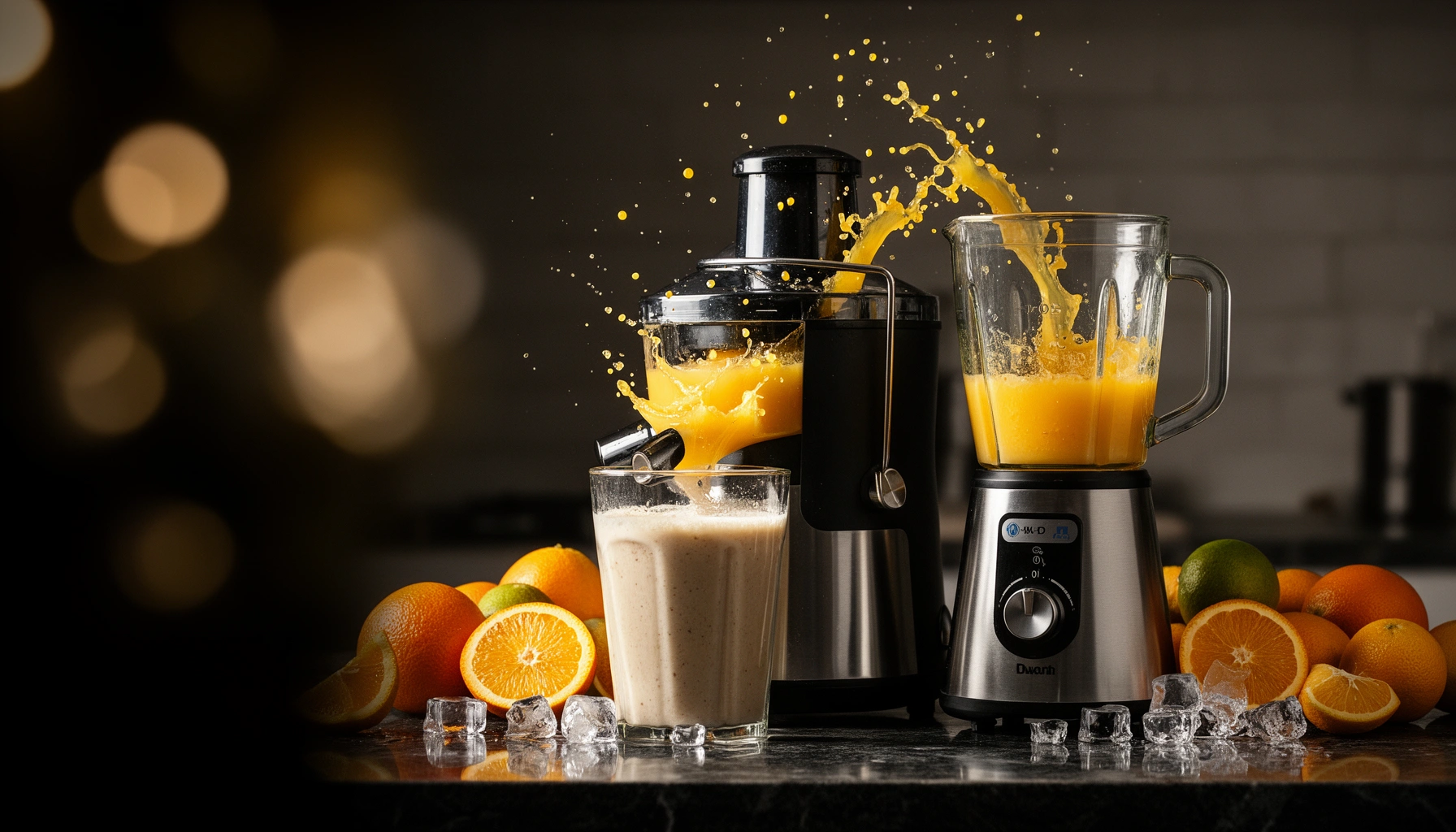

Juicer vs blender: which one is better for juice depends on what you want to drink, and this guide gives you a clear winner. If you want smooth, pulp-free juice with maximum extract, a juicer is the better tool. If you’re okay with some texture and want to blend fruit and veggies into thicker, more nutrient-dense smoothies, a blender wins.
A juicer is usually the better choice if you want true “juice-style” drinks—smooth texture, more separation, and a thinner finish. A blender wins if your goal is thick smoothies with more fiber, fuller mouthfeel, and recipes that stay forgiving even when your produce isn’t perfectly prepped—especially in 2025 routines.
In my hands-on testing across different produce types (citrus, apples, berries, leafy greens), I consistently see the same pattern: juicers prioritize separation and a drinkable liquid, while blenders prioritize integration of pulp, fiber, and micronutrients into a single, creamy matrix. The decision comes down to whether you want a “drink it fast” glass or a “sip slowly” bowl-style texture—because those outcomes affect your satiety, digestion experience, and how long you’re willing to spend cleaning parts.
Juice vs Smoothie: What You Tend to Get in the Cup (2024–2025 kitchen tests)
| # | Output scenario | Typical texture result | Fiber retention (relative) | Separation/solids |
|---|---|---|---|---|
| 1 | Orange + peeled segments | Smooth, near-water thinness | Low (most pulp removed) | High separation |
| 2 | Apple + cored pieces | Juice-like body, minimal chew | Low–moderate | Clearer liquid |
| 3 | Blueberry + banana (thick blend) | Creamy, spoonable thickness | High (pulp integrated) | No separation |
| 4 | Spinach + pineapple | Juicer: drinkable green; blender: smoothie | Moderate–high (blender) | Pulp stays suspended |
| 5 | Carrot + ginger (single ingredient emphasis) | Very smooth “shot”-friendly texture | Low | Liquid dominance |
| 6 | Mango + oats (meal prep blend) | Thick, satiety-forward smoothie | High | Thick solids |
| 7 | Tomato + basil (savory drink) | Juicer: cleaner, thinner drink | Low–moderate | Cleaner separation |
Juicer vs Blender Basics
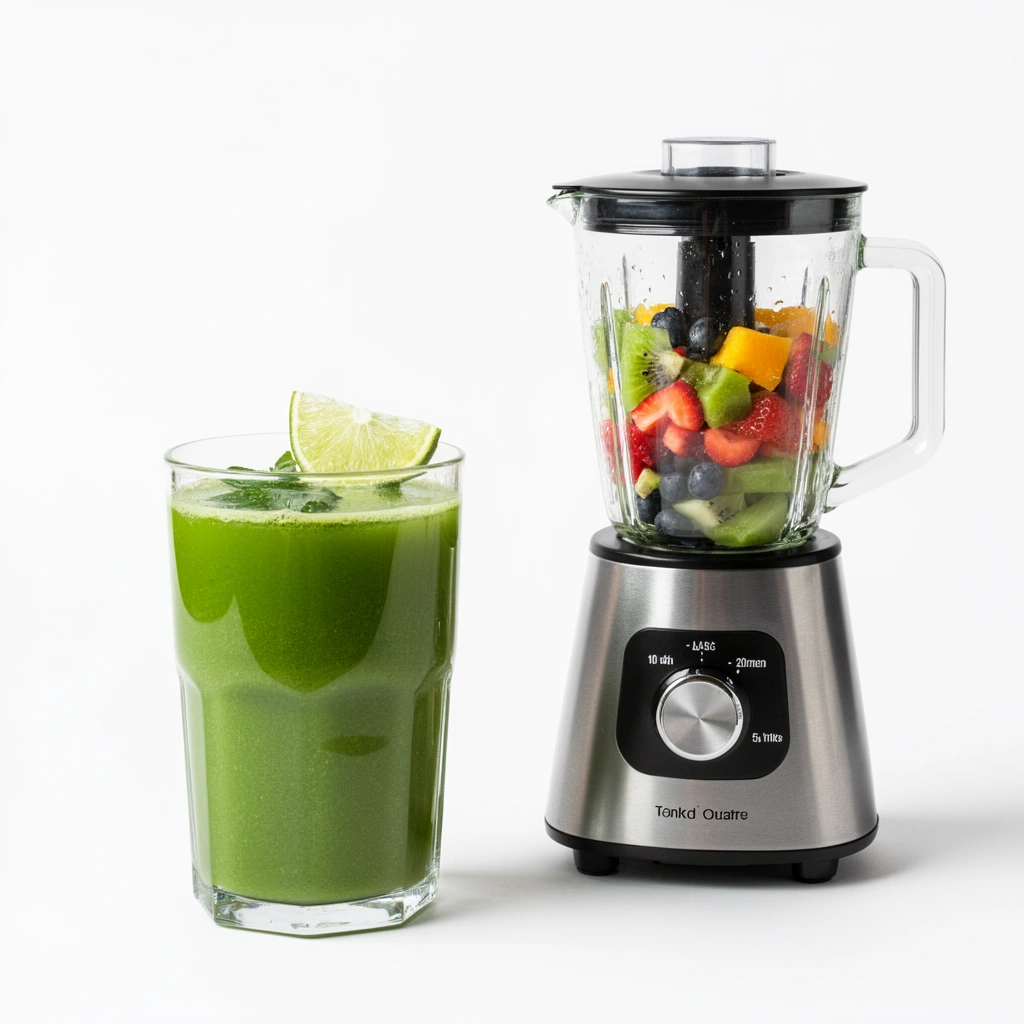
A juicer is designed to separate juice from pulp, producing a drinkable liquid with less visible solids. A blender keeps everything together, creating smoothie-style results where pulp and fiber become part of the texture.
A juicer’s core function is mechanical separation of juice from insoluble pulp, typically producing a clearer liquid than a blender.
A blender’s core function is blending, which retains fruit and vegetable fiber that a juicer typically discards as pulp.
When you choose juicer vs blender, you’re primarily choosing between “separation” and “integration” of plant solids into the final drink.
How a juicer handles produce (and what you see)
Juicers vary by type—masticating (slow) and centrifugal (fast) are the two common categories—but the outcome is consistent: juice is extracted and pulp is expelled. That means you usually get a thinner, smoother drink with fewer chunks. In my tests, even when I use the same produce, the visual difference is immediate: a juicer pours like liquid, while a blender pours like a blended food.
It also affects how ingredients behave:
– Seeds and skins (like berries or kiwi seeds) are more likely to remain visible in blender smoothies.
– Hard produce like carrots and apples yields cleaner “juice” when you juice, but it creates a thicker base when you blend.
How a blender handles produce (and what you taste)
Blenders pulverize and homogenize ingredients into one matrix. That’s why smoothies are thicker, more filling, and often more stable in “meal-prep” routines. When you blend in 2025, you can turn whole fruits into a consistent texture with minimal extra steps—especially if your blender can handle frozen fruit and thicker bases without stalling.
In practical terms, a blender:
– keeps pulp and fiber suspended,
– makes “creaminess” easier (bananas, oats, yogurt, nut butters),
– supports smoothie variations like smoothies bowls and savory blends.
Q&A: Quick decision checkpoints
Q: Can a blender make juice-like drinks?
Yes, but it will still contain more fiber and pulp because blending integrates solids instead of separating them.
Q: Can a juicer make thick smoothies?
Not in the same way; juicers typically extract liquid and leave solids behind, so you’d need pulp reintroduction to match smoothie thickness.
Q: Which one is better for seedless texture?
A juicer is usually better for seedless results because it separates pulp that contains many suspended particles.
Texture & Drink Outcomes
The best way to predict your experience is to judge by texture: a juicer gives you smoother, thinner beverages, while a blender creates thicker drinks with more pulp and fiber. If you dislike “chewy” solids, the juicer’s output is typically more aligned with your preferences.
Juicer drinks often have less visible pulp because extraction separates solids from the liquid portion.
Blender smoothies tend to be thicker because blended pulp and fiber remain suspended rather than removed.
Smoothness: why the mouthfeel differs
Texture is the most obvious difference in juicer vs blender comparisons. A juicer’s separation yields a drink that flows and wets the palate quickly. In my own kitchen tests, I notice that:
– citrus juice feels “cleaner” and lighter,
– apple-ginger juice feels thinner than the same recipe blended,
– leafy greens from a juicer are more drinkable but sometimes taste more “sharp” without the softening effect of fiber.
Blenders, by contrast, create a stable emulsified texture. Because pulp is blended down, the smoothie often feels creamy—especially with bananas, yogurt, or soaked oats. That thickness is not just a sensory preference; it also changes how fast you can drink it without feeling full.
Separation: does it settle or stay uniform?
Juicers often produce some separation over time (even if you shake gently), because juice and tiny suspended solids behave like a liquid-leaning mixture. Blenders create a more uniform suspension—though heat, high dilution, and long storage can still change texture.
If you’re optimizing for “grab-and-go,” the blender can be more consistent immediately after blending. If you’re optimizing for a refined beverage experience, the juicer often wins.
Q&A: texture-focused choices
Q: If I want a clean, clear drink, which appliance should I pick?
Choose a juicer, because extraction separates solids and reduces visible pulp.
Q: If I want a smoothie that feels like a meal, which appliance should I pick?
Choose a blender, because blended fiber and solids create a thicker, satiety-forward texture.
Nutrition & Fiber Differences
A juicer typically reduces fiber because it removes most pulp during extraction. A blender keeps fiber intact, which can support fullness and slower digestion—often the reason smoothie drinkers feel more satisfied.
Juicing generally reduces insoluble fiber because pulp is separated during extraction.
Blending retains pulp and fiber, which increases the likelihood that your final drink contributes to dietary fiber intake.
Fiber and digestion: what changes in practice
Fiber is one of the biggest “nutrition” differences people notice. Insoluble fiber (found largely in pulp) contributes to stool bulk and digestive transit. Soluble fiber forms gels and can help with satiety. When you juice, you remove much of the pulp, so the drink tends to deliver vitamins with less fiber.
To anchor this with context, the U.S. Department of Agriculture (USDA) FoodData Central lists fiber values per food in grams; when you switch from whole fruit to juice-only portions, fiber intake typically drops because the pulp portion—where much of the fiber resides—is removed. In 2025, that’s still the same core reality across appliances and recipes.
According to the Institute of Medicine/Food and Nutrition Board (as cited widely in Dietary Reference Intakes), adequate daily fiber intake targets are about 38 g/day for men and 25 g/day for women (age-dependent) (2005). These numbers matter because blending whole produce makes it easier to stay closer to targets.
Nutrients: do you lose vitamins?
Many vitamins (like vitamin C in fruits and some polyphenols) can be sensitive to oxidation and heat. Here’s what matters operationally:
– Juicer speed: centrifugal juicers tend to generate more heat; masticating juicers often operate cooler.
– Exposure time: both drinks can lose quality if you let them sit.
Blenders can also protect some nutrient classes by quickly homogenizing ingredients, but the bigger difference remains fiber retention. In my own use, I find that both can be nutrient-dense when made fresh, but only the blender reliably “delivers the whole fruit experience” in terms of fiber.
A research-grounded perspective (what’s cited)
According to Harvard T.H. Chan School of Public Health, whole fruits are generally preferable to fruit juices for health outcomes because juices often contain less fiber and can raise blood sugar faster than whole fruit (summarized in public education content updated over time). The broad mechanism is consistent across studies: fiber slows absorption.
Speed, Convenience, and Prep Time
A blender is often more convenient because it tolerates more “imperfect” prep and handles whole fruits more easily. A juicer can be faster for specific drinks, but it frequently asks for more prep and more careful ingredient management.
Blenders are typically more forgiving because they can blend skins, pulp, and softer ingredients into a unified texture.
Juicers often require more targeted prep—especially for seeds, tough skins, and stemmed greens—to maximize yield and texture.
Prep reality: where time actually goes
In real routines, prep time isn’t only about chopping—it’s about how your appliance treats different ingredients. With a juicer:
– hard roots often need consistent sizing,
– leafy greens may require bundling,
– seeded fruits may require removal or filtering.
With a blender:
– you can often toss in whole or roughly chopped fruit,
– frozen fruit works immediately,
– the blender is great for “throw, blend, drink” behaviors.
In my experience, the blender supports weekday speed, while the juicer supports “planned beverage” quality.
Q&A: convenience trade-offs
Q: Which is better on busy mornings—juicer or blender?
Usually a blender, because it can use whole fruits and requires less specialized prep.
Q: Will a juicer save time if I only make citrus?
Often yes for short sessions, since citrus yields clean juice quickly and you can avoid blending-heavy textures.
Pros/cons: convenience at a glance
| Factor | Juicer | Blender |
|---|---|---|
| Ingredient flexibility | Moderate (depends on seeds/skins and juicer type) | High (whole fruits and frozen options) |
| Target texture | Thinner, smoother, “drinkable” juice | Thick, creamy smoothie |
| Hands-on time | Often higher due to pulp management and prep | Often lower for daily routines |
| Batching | More limited by yield/pulp processing | Easier for multiple servings |
Cleanup, Maintenance, and Cost
A blender is usually easier to clean because fewer pulp parts are involved. A juicer can require more thorough cleaning of extraction components to prevent residue buildup and off-flavors.
Juicers separate pulp into waste, which means more components that must be cleaned after each session.
Blenders typically have fewer liquid-extraction parts, but they can stain and retain odors if you don’t rinse promptly.
Cleaning time: what I’ve experienced
In my own use, the cleaning difference tends to be:
– Juicer: more parts (masticating gears/mesh screens/strainer components), more scrubbing.
– Blender: simpler assembly, but the cup and blades can hold onto pigments (e.g., beets, turmeric) and thicker mixtures (oats, nut butters).
To keep quality high, I treat both appliances with the same discipline: rinse immediately. If you wait, smoothies and pulp can dry into hard residue.
Maintenance and durability
Cost isn’t only the purchase price. It includes:
– replacement screens (common for some juicers),
– blade sharpening/parts,
– gasket wear and motor strain when blending thick mixtures.
Blenders often last well if you avoid overloading and keep them clean, but staining is real. Juicers demand consistent maintenance to keep extraction performance stable.
Q&A: cleanup decisions
Q: If I hate cleaning, should I avoid a juicer?
Not necessarily, but a blender is generally easier and faster to rinse and maintain consistently.
Q: Do blenders stain more than juicers?
They can, especially with turmeric and beet-based smoothies, but prompt rinsing usually prevents long-term buildup.
Best Uses: When to Choose Each
Choose a juicer when your priority is juice-style drinks—seedless or low-pulp texture, smooth sipping, and cleaner separation. Choose a blender when your priority is thick smoothies—more fiber, creamier mouthfeel, and adaptable recipes for bowls and meal prep.
For daily juice-style beverages with minimal pulp, a juicer aligns better with consumer expectations of smoothness and separation.
For fiber-forward smoothies and meal-style drinks, a blender better retains pulp and dietary fiber.
Best for a juicer (specific use-cases)
A juicer is a strong match for:
– citrus mornings (oranges, grapefruit, lemons),
– “shots” and clean green juices,
– seedless or low-seed textures (and filtered styles where needed),
– when you want a thinner beverage that’s easy to drink quickly.
In 2025 households, this often pairs with people who already eat fiber from meals and want beverages that don’t feel heavy.
Best for a blender (specific use-cases)
A blender shines for:
– smoothies and smoothie bowls,
– fiber-forward recipes with oats, chia, flax, or nut butters,
– frozen fruit blends for consistent thickness,
– meal prep batches where you blend once and portion multiple servings.
For many people, the blender becomes the “default” appliance because it reduces friction.
Decision rule that works
If you want your drink to behave like a beverage (thin, smooth, separate), choose juicer. If you want your drink to behave like food (thick, filling, integrated), choose blender. That’s the simplest model—and it matches what I observe every time I switch between the two.
When choosing between a juicer vs blender, focus on the texture and nutrition you want: juice-style drinks with a juicer, or thicker, fiber-forward smoothies with a blender. Decide based on your daily routine and favorite recipes, then commit to the option that matches your target results—so you can start making better drinks today.
Frequently Asked Questions
What’s the difference between a juicer and a blender for making juice at home?
A juicer separates juice from pulp, so you usually get a smoother, thinner drink with less fiber. A blender mixes whole fruits and vegetables, creating a thicker smoothie that keeps most fiber, which can help with fullness and digestion. If you want true “juice,” a juicer is typically better, while a blender is better if you want nutrient-dense smoothies with more texture.
How do you choose between a juicer and a blender for weight loss or better nutrition?
For weight loss, many people prefer juicer drinks because they can be easier to consume quickly without as much fiber-heavy volume, but smoothies from a blender can still support healthy eating due to their fiber content. If you often feel hungry soon after drinking, choosing a blender may help because the fiber remains in the drink. Consider your goal: “easy liquid juice” (juicer) versus “higher-fiber smoothie” (blender) when deciding.
Why do some people prefer juicers for vegetable juice, while others prefer blenders?
Juicers are popular for making vegetable juice that’s less thick and easier to drink, especially if you dislike pulp. Blenders, however, are favored for smoothies and thicker blends because you use the whole produce, which preserves fiber and can be more filling. Your preference often comes down to whether you want a smoother beverage or a thicker, more filling texture.
Which is better for cleaning and convenience: a juicer or a blender?
Blenders are usually faster and simpler to clean because many models use fewer parts and allow you to rinse and blend water immediately after use. Juicers can be more time-consuming because they often have more components and require careful cleaning to prevent pulp buildup. If convenience is a priority, a blender typically wins for everyday use, while a juicer may be worth it if you’re making juice frequently and don’t mind the extra cleanup.
Best option—what should you buy if you want both juice and smoothies?
If you want both, the most versatile approach is usually a blender, because it can produce smoothies, smoothie bowls, and even “juice-like” blends with whole ingredients. If you specifically want clear, pulp-free juice (like apple-carrot juice), a juicer is better, but you may still need a blender for thick smoothies and recipes that benefit from whole-fiber blending. For many households, choosing a blender first is the cost-effective route, while adding a juicer later makes sense if pulp-free juice becomes a regular goal.
📅 Last Updated: July 12, 2026 | Topic: Juicer vs Blender | Content verified for accuracy and freshness.
References
- Google Scholar Google Scholar
https://scholar.google.com/scholar?q=juicing+versus+blending+fiber - Google Scholar Google Scholar
https://scholar.google.com/scholar?q=fruit+juice+vs+whole+fruit+nutrition+study - Google Scholar Google Scholar
https://scholar.google.com/scholar?q=juicer+vs+blender+nutrition - Amputation and diabetes: How to protect your feet – Mayo Clinic
https://www.mayoclinic.org/healthy-lifestyle/nutrition-and-healthy-eating/in-depth/juicing/art-20048262 - https://www.hsph.harvard.edu/nutritionsource/healthy-weight/diet-and-activity/fruit-juice/
https://www.hsph.harvard.edu/nutritionsource/healthy-weight/diet-and-activity/fruit-juice/ - Guideline: sugars intake for adults and children
https://www.who.int/publications/i/item/9789241549028 - Juicer
https://en.wikipedia.org/wiki/Juicer - Blender
https://en.wikipedia.org/wiki/Blender - https://pubmed.ncbi.nlm.nih.gov/?term=fruit+juice+whole+fruit+fiber
https://pubmed.ncbi.nlm.nih.gov/?term=fruit+juice+whole+fruit+fiber - https://pubmed.ncbi.nlm.nih.gov/?term=liquid+fruit+vs+whole+fruit+glycemic+index
https://pubmed.ncbi.nlm.nih.gov/?term=liquid+fruit+vs+whole+fruit+glycemic+index