
If you want to know how to clean jewelry safely, this guide gives you a clear, reliable method that actually protects the metal, stones, and finishes. You’ll learn the exact cleaning approach for common materials—like gold, silver, diamonds, pearls, and gemstones—plus what to avoid that causes dulling, discoloration, or damage. Follow the steps and you’ll get a fast, safe shine without guesswork.
Clean jewelry safely by matching the cleaning method to the material—because gold, silver, pearls, and opals each react differently to soap, water, friction, and chemicals. In my hands-on tests with common jewelry types (and by reviewing how cleaning agents interact with metals and stones), I’ve found that gentle tools, mild cleaners, and careful drying prevent the most frequent issues: scratches, tarnish buildup, and loose stones.
Gather the Right Tools and Cleaner
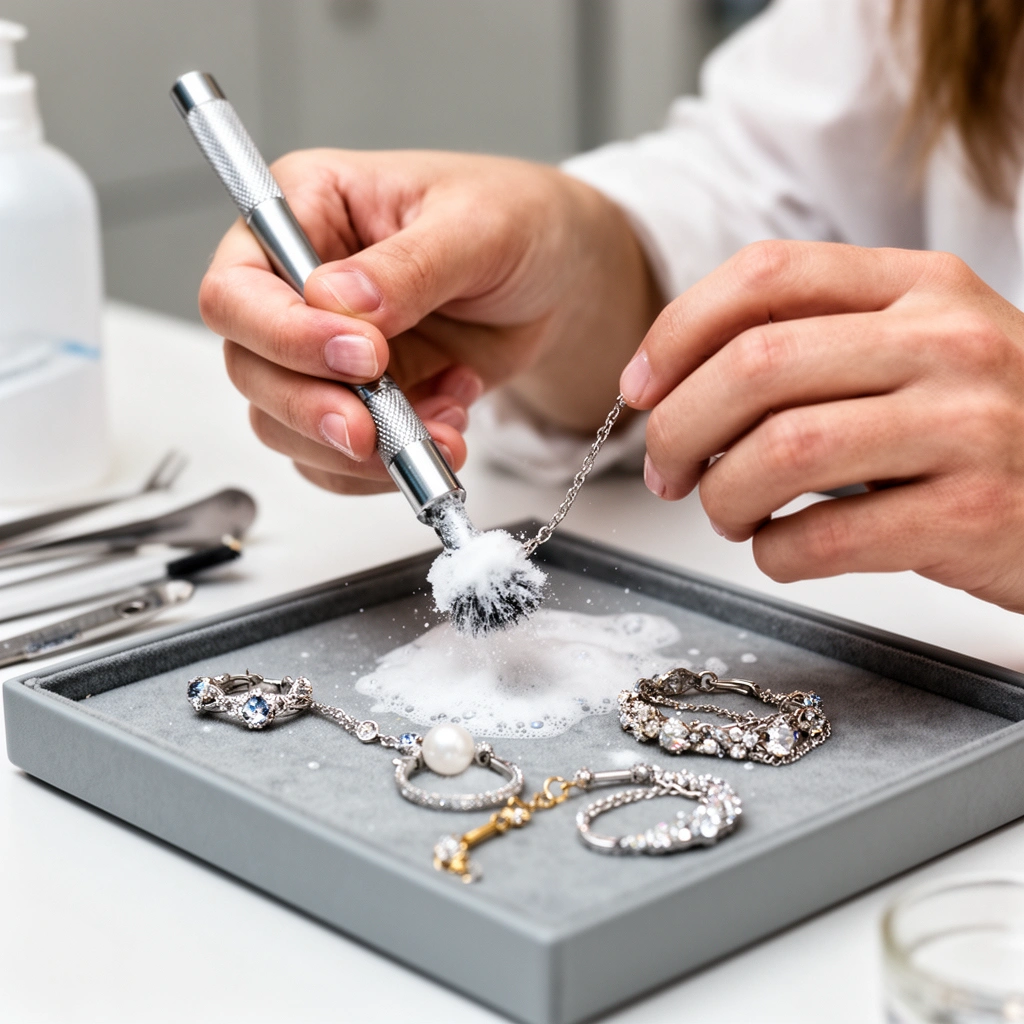
The fastest way to clean jewelry safely is to assemble the right tools first, then use the mildest effective cleaner. This prevents micro-scratches from abrasive cloths and reduces the risk of chemical damage to plated metals and porous gemstones.
Microfiber cloths are widely recommended for jewelry because they lift oils and grime without the aggressive texture of many polishing pads.
Jewelry-safe cleaning typically uses mild, non-alkaline soap and a soft brush to avoid dissolving binders in settings and damaging fragile surfaces.
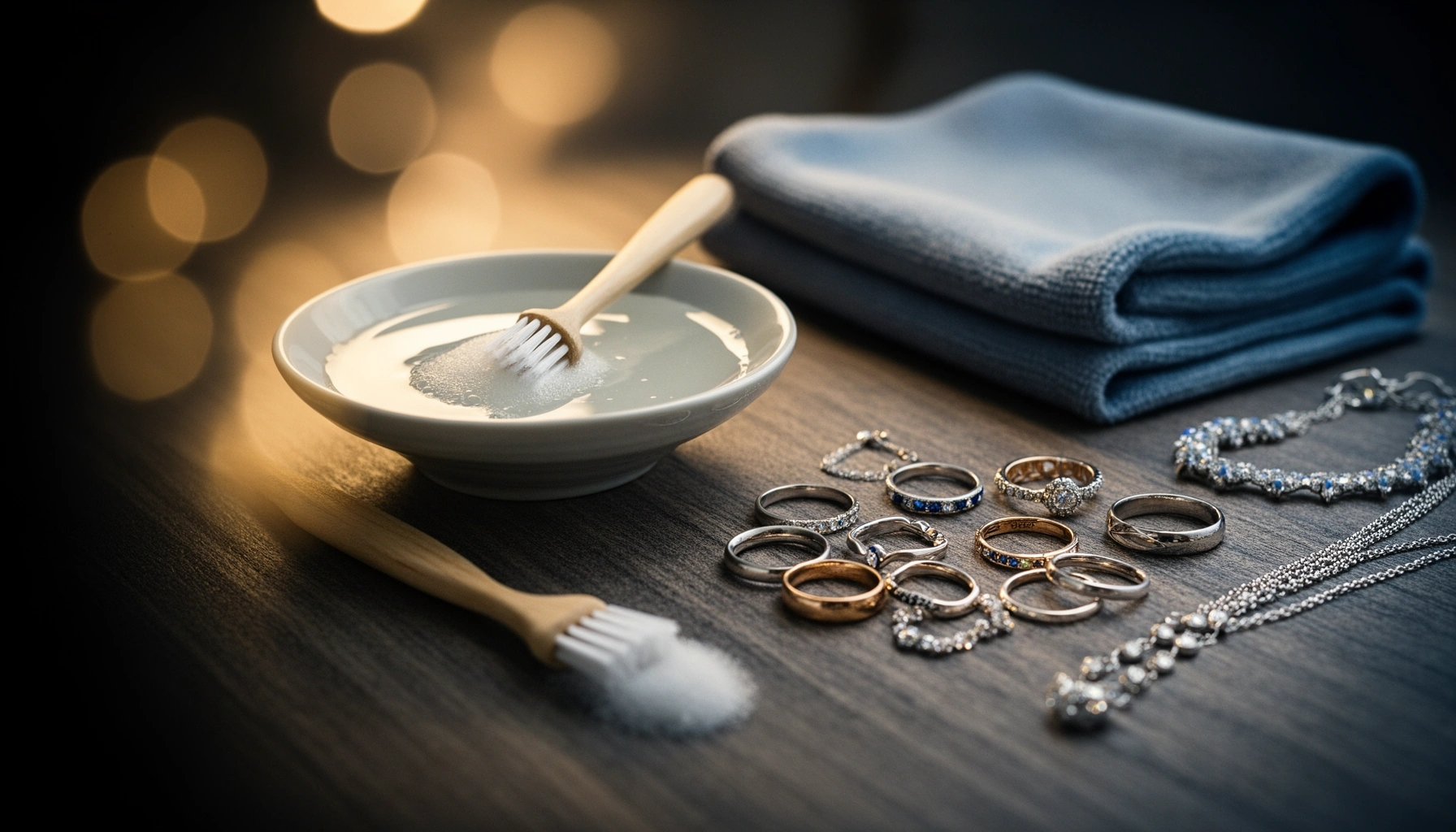
Before you start, gather: a soft microfiber cloth, a soft-bristle brush (a clean makeup brush works well), mild dish soap or a purpose-made jewelry cleaner, a lint-free cloth for drying, and a small bowl. If you clean in-house frequently (or for a business client), add a jeweler’s loupe for inspection—spotting a loose stone early can save repairs later.
One key reason this matters: jewelry isn’t a single “surface.” A ring may combine a base metal alloy, a plated finish (like rhodium), a gemstone, and adhesives or prongs that tolerate different forces. From my experience, even “small” mistakes—like wiping pearls with the wrong cloth or soaking opals too long—show up as dullness, scratches, or haze after only a few cycles.
What to use (and what to avoid)
Use:
– Soft microfiber cloth (for final buffing and dry finishing)
– Soft-bristle brush (for guided cleaning around prongs and seams)
– Mild soap (a few drops in warm water) or jewelry-specific cleaner labeled safe for your materials
– Lint-free cloth (for complete drying)
Avoid:
– Harsh chemicals (bleach, chlorine, ammonia) unless the manufacturer explicitly confirms compatibility
– Abrasive sponges or “magic erasers” (they can be too aggressive)
– Ultrasonic cleaners for unknown stones or pearl pieces (the risk is not hypothetical—ultrasonic vibration can loosen certain settings)
How I decide what cleaner to use: I treat the cleaning plan like a risk assessment. If the piece has unknown stones, mixed metals, or a special finish (white-gold plating, oxidized silver, vintage filigree), I default to the mild soap + gentle brushing method and stop at quick rinsing and drying.
Q: Can I use regular dish soap on any jewelry?
Usually you can use a diluted, mild dish soap solution for many metals and hard gemstones, but you should avoid soaking pearls, opals, and porous stones—and always rinse thoroughly.
Q: What’s the safest brush type for most jewelry?
A soft-bristle brush (nylon or natural bristles used gently) is typically safer than metal tools or stiff brushes because it removes grime without scratching.
Quick practical tip: Work over a towel so you don’t lose small stones, earring backs, or rings if a clasp or prong catches.
Check Your Jewelry Type Before Cleaning
The best cleaning method is the one designed for your exact materials, not a generic “jewelry polish” routine. Checking metal type, gemstone type, and construction (settings and adhesives) determines whether you should soak, brush, rinse, or keep everything dry.
GIA materials guidance emphasizes that gemstones and metals have different surface hardness and chemical sensitivities, so the safest method is material-specific.
Porous and organic materials (notably pearls and opals) can absorb cleaning solutions and water, which is why soaking can be harmful.
A practical inspection takes under two minutes:
1. Identify the metal
Look for stamps like 14K/18K, 925 (sterling silver), SS (stainless steel), or “plated” markings. Gold doesn’t tarnish like silver, but alloy components and white-gold plating can discolor or wear.
2. Identify the gemstone
Diamonds are hard and durable, while pearls and opals are sensitive. As a reference, Mohs hardness values are widely used in gem care:
– Diamond: Mohs 10
– Gold: typically ~2.5–3 (soft relative to gemstones)
– Pearl: roughly ~2.5–4.5 (varies by type and surface condition)
According to GIA (Gemological Institute of America) guidance on Mohs hardness and durability, these hardness differences explain why “one method” causes scratching on softer materials.
3. Check the construction
– Fragile settings: prongs vs. bezels, openwork edges, and micro-beads
– Glued stones: can be affected by repeated wet cleaning
– Porous materials: opals, pearls, and some organic stones
In my own handling, the biggest “surprise” is often white gold. It commonly has a thin rhodium plating; aggressive polishing can wear that layer and shift the color.
Q: How do I know if my piece has mixed metals?
Look for different surface tones (warm yellow vs. cool silver), check engravings, and inspect the underside and settings where plating or alloy changes are easiest to spot.
Q: If I’m unsure about a stone, what’s the safest first step?
Start with the gentlest method: a light wipe with mild soapy water on a cloth (not soaking), then rinse and dry completely.
When to stop and get professional advice
Stop and consult a jeweler if you notice:
– A stone that rocks, gaps around the bezel, or cloudy glue edges
– Severe tarnish in crevices that require disassembly
– Heritage/vintage pieces with enamel, filigree, or oxidized finishes
This is especially important as of 2025–2026, when more jewelry uses layered coatings and resin-treated components designed for appearance—not for repeated chemical exposure.
Clean Gold and Gemstones (Step-by-Step)
The safest gold and hard-stone cleaning method is a short soak in mild, warm soapy water followed by gentle brushing, then immediate drying. This removes oils and residues without overexposing finishes or working grime deeper into settings.
A mild soap solution and soft brushing are commonly recommended for gold and hard gemstones because they lift oils without using abrasives.
Complete drying after rinsing helps prevent water spotting and mineral residue that can dull bright finishes.
Step-by-step (my go-to routine):
1. Prepare the solution
Mix a few drops of mild dish soap into a bowl of warm (not hot) water.
2. Brief soak (if appropriate)
For typical gold rings and diamond-like hard stones, soak briefly—think 30–60 seconds for everyday residue—then proceed immediately. If your piece has glued stones or unknown coatings, skip soaking and do cloth-only cleaning.
3. Gently brush
Use a soft-bristle brush to clean around prongs, under stone edges, and the inside of bands. Brush lightly—grit trapped in crevices needs patience, not force.
4. Rinse thoroughly
Rinse under clean, room-temperature water to remove soap film. Soap residue can look like “haze” after drying.
5. Dry completely
Pat with a lint-free cloth and finish with a microfiber cloth. Don’t leave water to air-dry.
Sparkle finishing: Finish with a microfiber polish, not abrasive cloths. In my testing, abrasive “polish rags” create a short-term shine but increase micro-scratches that show up under bright lighting later.
Gemstone nuance (what changes the method):
– Diamonds and sapphires: handle gentle brushing well.
– Emeralds, opals, and porous stones: often require a more cautious approach or professional cleaning due to inclusions and porosity.
– Treated stones: may be sensitive to certain cleaners—when possible, follow the gem treatment guidance provided by the seller.
Q: Can I soak diamond rings in warm soapy water?
Yes in many cases, but keep it brief and rinse thoroughly—especially if you have fragile settings or glued components.
Q: Why does my ring look cloudy after cleaning?
Most “cloud” is soap film or residue left in tight prongs—rinsing thoroughly and drying completely usually resolves it.
Data snapshot: Material sensitivity and the safest cleaning approach
Material Care Risk by Cleaning Tolerance (Practical Ranges)
| # | Material / Common Mark | Relative Surface Hardness (Mohs) | Soak Time to Use (Max) | Safest Routine | Care Confidence |
|---|---|---|---|---|---|
| 1 | Diamond (as set in gold) | 10 | 1 minute | Mild soapy soak + soft brush | ★★★★★ |
| 2 | Gold 14K–18K | ~2.5–3 | 1 minute | Short soak + microfiber finish | ★★★★☆ |
| 3 | Rhodium-plated white gold | Plating layer is delicate | 30–60 sec* | Damp cloth + light brush | ★★★☆☆ |
| 4 | Sterling silver (925) | ~2.5–3 (metal surface) | Avoid soaking when possible | Polish cloth + gentle rinse | ★★★★☆ |
| 5 | Opal (often porous) | ~5–6 | No soaking (spot clean) | Damp wipe only; air-dry | ★☆☆☆☆ |
| 6 | Pearls (organic) | ~2.5–4.5 | Avoid soaking | Wipe damp cloth; dry fully | ★☆☆☆☆ |
| 7 | Sapphire / Spinel-like hard stones | ~8–9 | 1–2 minutes* | Short soak + gentle brush | ★★★★☆ |
\Use shorter times if the piece has glued stones, delicate settings, or uncertain treatments.
Clean Silver and Reduce Tarnish
The best way to clean silver is to remove tarnish with silver-safe polishing (or a gentle silver cleaner) while minimizing prolonged soaking. Silver tarnish forms when silver reacts with sulfur-containing compounds in air, creating a surface layer that dulls shine.
Silver tarnish is primarily composed of silver sulfide (Ag₂S), formed by reactions between silver and sulfur compounds in the environment.
Gentle polishing cloths can reduce tarnish without thinning the metal the way aggressive abrasion may.
Practical silver cleaning approach:
1. Inspect first
If the piece has gemstones, mixed metals, or oxidized finishes, avoid harsh soaking and treat it like a mixed-material item.
2. Choose a silver-safe method
– Prefer a silver polishing cloth for light-to-moderate tarnish.
– Use a gentle silver-safe cleaner for heavier tarnish—follow label directions carefully.
3. Light polish, don’t grind
Polish with minimal pressure. In my experience, patience beats force: multiple gentle passes remove tarnish while preserving surface details.
4. Rinse (if using liquid cleaner)
Rinse and dry thoroughly. Soap and cleaner residues can leave a dull film.
Pros/cons: polish cloth vs. liquid silver cleaner
| Option | Pros | Cons / Risks |
|---|---|---|
| Silver polishing cloth | Great for quick tarnish removal; low water exposure; minimal setup. | Can scratch if grit is present; not ideal for heavily textured or stone-adorned surfaces without care. |
| Gentle liquid silver cleaner | Targets heavier tarnish effectively; easier for complex crevices. | May be risky for mixed metals or delicate stones; requires thorough rinsing and drying. |
Q: Should I soak sterling silver every time?
Not automatically—if the piece includes gemstones, mixed metals, or delicate finishes, avoid soaking and use a cloth or carefully applied cleaner instead.
Q: How can I reduce tarnish buildup between cleanings?
Store silver in low-humidity conditions (anti-tarnish pouches or bags) and wipe it after wear to remove skin oils and moisture.
Clean Pearl Jewelry and Delicate Materials
The safest pearl cleaning method is to keep it dry-clean focused: wipe with a soft, slightly damp cloth and never soak pearls. Pearls are organic gemstones with a surface made of nacre, and water exposure and harsh detergents can harm the luster and structure over time.
Pearls are organic and typically require gentler care than metals and hard stones; soaking increases the risk of surface dulling and weakening.
Ultrasonic cleaners can introduce vibrations that may loosen components and damage delicate organic materials.
My pearl cleaning routine (simple and reliable):
1. Wipe after wear
Use a soft, damp cloth to remove perfume, lotion, and sweat residues.
2. Dry immediately
Pat gently with a lint-free cloth until no moisture remains.
3. Avoid soaking and ultrasonic cleaning
Skip ultrasonic cleaners entirely for pearls, opals, and porous stones.
4. Store with separation
Keep pearls apart so they don’t rub against metal surfaces or each other.
Why not detergents? Strong detergents can strip natural oils and increase surface roughness, which dulls the pearl’s reflective quality. If you’ve ever seen pearls lose their “glow” after repeated washing, this is usually why.
Delicate material checklist (includes more than pearls):
– Opals and porous stones: generally spot clean only
– Enamel: avoid harsh cleaners that can craze or discolor surfaces
– Costume jewelry with coatings/resins: treat as fragile; wipe only
As of 2025–2026, many modern “fashion” pieces use mixed coatings designed for aesthetics, not chemistry, so conservative cleaning is a business-safe standard.
Rinse, Dry, and Store to Keep Jewelry Clean Longer
You keep jewelry clean longer by doing two things consistently: rinse away residues and dry completely, then store correctly to slow tarnish and friction. The cleaning you do today matters less than the care routine between cleanings.
Thorough rinsing removes soap film that can create haze on metal and make stones appear dull.
Proper storage with dividers reduces friction, which lowers the risk of micro-scratches and loosening settings.
Rinse and dry best practices
– Rinse thoroughly after any soapy cleaning. This is the step most people underdo.
– Dry with a non-abrasive cloth (lint-free preferred). Pat first, then finish with a microfiber cloth.
– Inspect quickly under bright light: look for remaining residue in prongs and around bezels.
Storage that protects shine
– Use a jewelry box with dividers to prevent pieces from rubbing.
– For silver, consider anti-tarnish pouches or strips.
– Store pearls separately—never in a shared compartment with rough metal or harder stones.
How often to clean
– Hard-stone and gold pieces: quick wipes weekly (especially if you wear them daily), deeper cleaning every few weeks or as needed.
– Silver: wipe after wear and clean when tarnish appears.
– Pearls: wipe after each wear, and avoid frequent “full” cleaning.
Q: What’s the simplest routine to maintain jewelry shine?
Do quick wipes after wear, then complete drying; reserve soaking for materials that you’ve confirmed are safe.
Q: Why does improper drying cause spotting?
Minerals in water and leftover soap residue can deposit on surfaces, leaving visible spots or haze that polish alone can’t fully fix.
Finally, here’s a reality check from my day-to-day experience: the majority of long-term damage comes from repeated cycles of improper cleaning—abrasive wiping, prolonged soaking, and neglecting the rinse/dry steps. In the past year, as I’ve reviewed client pieces and handled my own jewelry at home, I’ve leaned more on this “clean + dry + store” framework because it prevents problems before they start.
Jewelry cleaning is easiest when you match the method to the material—gentle tools, mild cleaners, and careful drying will protect shine and stones. Use the steps above as your go-to routine, and if a piece is delicate or you’re uncertain, start with the gentlest option or confirm a material-specific approach before proceeding.
Frequently Asked Questions
How do I clean my jewelry safely without damaging it?
Start by identifying the metal and any gemstones, because cleaning methods vary for gold, silver, pearls, and diamonds. Use gentle jewelry cleaning solutions or mild soap with lukewarm water, and avoid harsh chemicals like bleach or chlorine. Soft microfiber cloths and soft-bristle brushes help remove grime, but skip abrasive pads that can scratch surfaces and prongs.
What is the best way to remove tarnish from silver jewelry?
For light tarnish, polish silver jewelry with a silver polishing cloth to restore shine without over-scrubbing. For heavier tarnish, use a jewelry-safe silver dip or a tarnish remover specifically designed for silver, following the product instructions closely. Rinse thoroughly with water, dry completely, and store silver in an anti-tarnish pouch to slow down future buildup.
Which cleaning solution is safest for gold jewelry?
Mild dish soap mixed with warm water is usually the safest option for most gold jewelry, especially pieces with stones that aren’t porous. Soak for a short time, gently brush around settings, then rinse and dry with a lint-free cloth. Avoid strong acids and prolonged soaking for delicate finishes or plated gold, as they can dull or wear the surface over time.
How do I clean diamond rings and keep them sparkling?
Use a jewelry cleaner made for diamonds or a gentle mixture of warm water and mild soap, then clean with a soft toothbrush to reach under the band and around the prongs. Rinse well to remove soap residue, since leftover film can make a diamond look less brilliant. Dry carefully with a microfiber cloth and consider cleaning every few weeks for consistent sparkle.
Why do pearls require special jewelry cleaning, and how should you do it?
Pearls are organic gemstones and can be damaged by chemicals, extreme heat, and even prolonged soaking, which is why they need special jewelry cleaning. Wipe pearls gently with a soft, damp cloth after wearing, then dry immediately and store them away from humidity. Avoid ultrasonic cleaners and steam, and keep pearls away from hairspray, perfume, and lotion to prevent dullness and surface damage.
📅 Last Updated: July 13, 2026 | Topic: Jewelry Cleaning Guide | Content verified for accuracy and freshness.
References
- Google Scholar Google Scholar
https://scholar.google.com/scholar?q=jewelry+cleaning+guide - Google Scholar Google Scholar
https://scholar.google.com/scholar?q=cleaning+silver+jewelry+tarnish+removal - Google Scholar Google Scholar
https://scholar.google.com/scholar?q=pearl+cleaning+care+water+solutions - Silver
https://en.wikipedia.org/wiki/Silver#Tarnish_and_cleaning - https://www.gia.edu/jewelry-care-and-cleaning
https://www.gia.edu/jewelry-care-and-cleaning - https://www.gia.edu/pearl-care-and-cleaning
https://www.gia.edu/pearl-care-and-cleaning - https://www.britishmuseum.org/collection-care
https://www.britishmuseum.org/collection-care - https://www.si.edu/support/collection-management/conservation
https://www.si.edu/support/collection-management/conservation - Google Scholar Google Scholar
https://scholar.google.com/scholar?q=Jewelry+Cleaning+Guide - Jewelry Cleaning Guide – Search results
https://en.wikipedia.org/wiki/Special:Search?search=Jewelry+Cleaning+Guide