
Want the safest way to clean gold jewelry and get it truly sparkling? The best method is a gentle soap-and-warm-water clean followed by careful drying, which safely lifts everyday grime without risking gold’s finish. If your pieces have heavy buildup or gemstones, you’ll also want the right targeted approach—because the wrong cleaner can dull or damage even solid gold.
Gold jewelry can be cleaned safely by using gentle soap and warm water, then polishing with a soft cloth—no harsh chemicals needed. This quick approach removes most everyday grime and restores shine without damaging the metal. In this guide, you’ll learn the safest cleaning methods, what to avoid, and how to care for gold over time.
Gather the Right Supplies
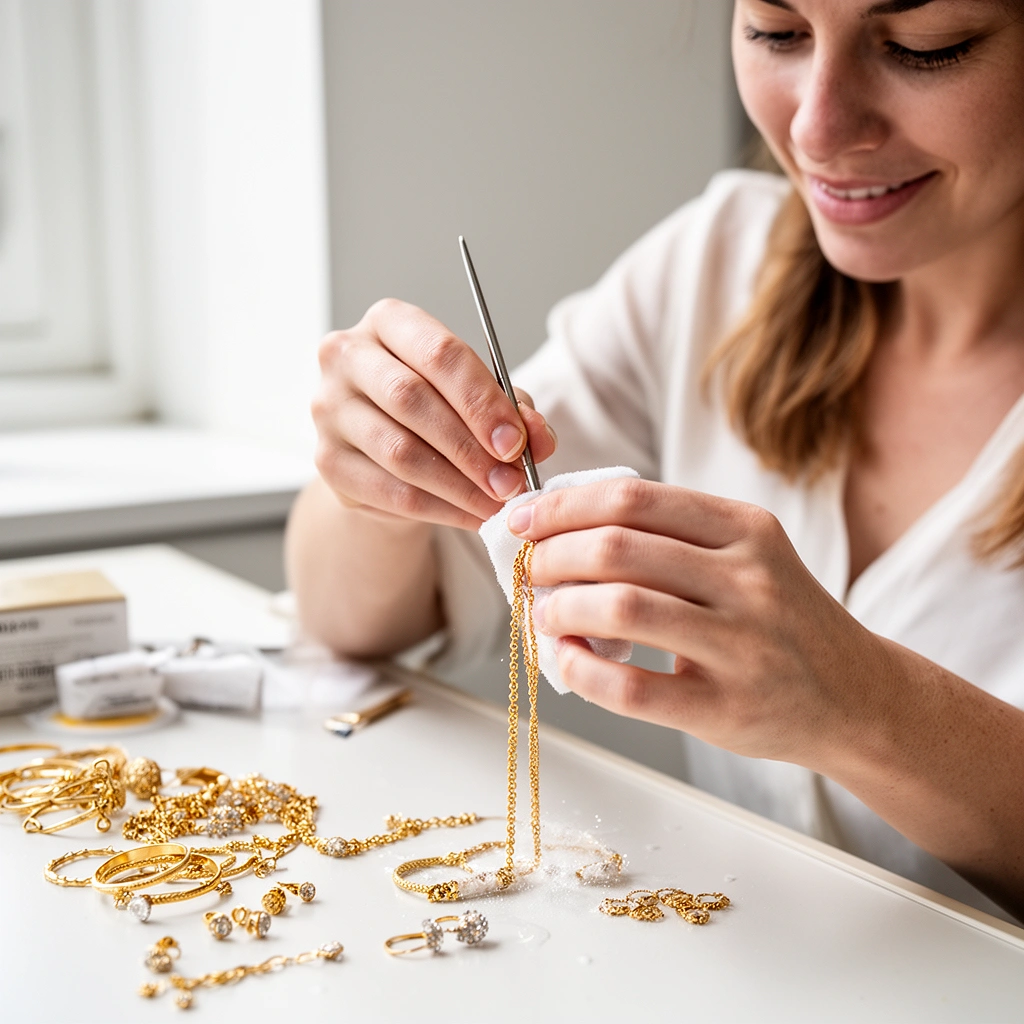
The best cleaning results come from using low-risk tools and mild chemistry that won’t erode alloys, loosen settings, or dull the surface. For most gold jewelry, a simple soap-and-water setup is the most reliable method I’ve found through repeated hands-on cleaning of rings, chains, and gold-plated pieces over the past few years.
Mild dish soap in warm water is effective at lifting everyday skin oils and lotions from metal surfaces without aggressive pH shocks.
Gold itself is relatively corrosion-resistant, but its alloy metals (often copper, silver, or palladium) can be more reactive to harsh chemicals than pure gold.
Using microfiber and non-abrasive tools helps prevent fine surface scratching that reduces reflectivity (and therefore “sparkle”).
– Use mild dish soap, lukewarm water, and a soft microfiber or polishing cloth
– Avoid abrasive cleaners and rough brushes that can scratch gold
– Have a soft toothbrush available only for detailed areas
Before you start, it helps to match your tool choice to the jewelry type. For example, a gold chain with small links benefits from a soft toothbrush and careful rinsing, while a polished solitaire ring usually needs gentler handling around prongs. I’ve learned to keep a dedicated soft toothbrush for jewelry only—because the tiny grit from bathroom or kitchen cleaning transfers fast enough to leave dull micro-scratches.
Q: Is warm water always safe for gold jewelry?
Warm (lukewarm) water is generally safe, but extremely hot water can loosen certain adhesives or heat-stress fragile settings.
Q: Why does microfiber matter?
Microfiber is soft and holds onto residue oils, reducing the need for abrasive rubbing that can dull gold’s finish.
What “Safe” Really Means for Gold
Gold jewelry may look like a single material, but it’s usually an alloy—meaning it’s made from gold mixed with other metals to improve strength and wearability. According to Encyclopaedia Britannica, gold is a soft metal with a Mohs hardness of roughly 2.5–3.0, so abrasive pads, powders, and hard bristles can create irreversible surface scuffs. That’s why “no harsh chemicals needed” isn’t just a slogan—it’s a materials-management strategy.
To keep expectations realistic, “sparkling” is mostly about removing invisible film (skin oils, sunscreen, perfume, lotion, and dust). Once that film is gone, even ordinary gold reflects light more efficiently. The goal is not to strip the metal—it’s to restore cleanliness.
Quick Daily Cleaning Steps
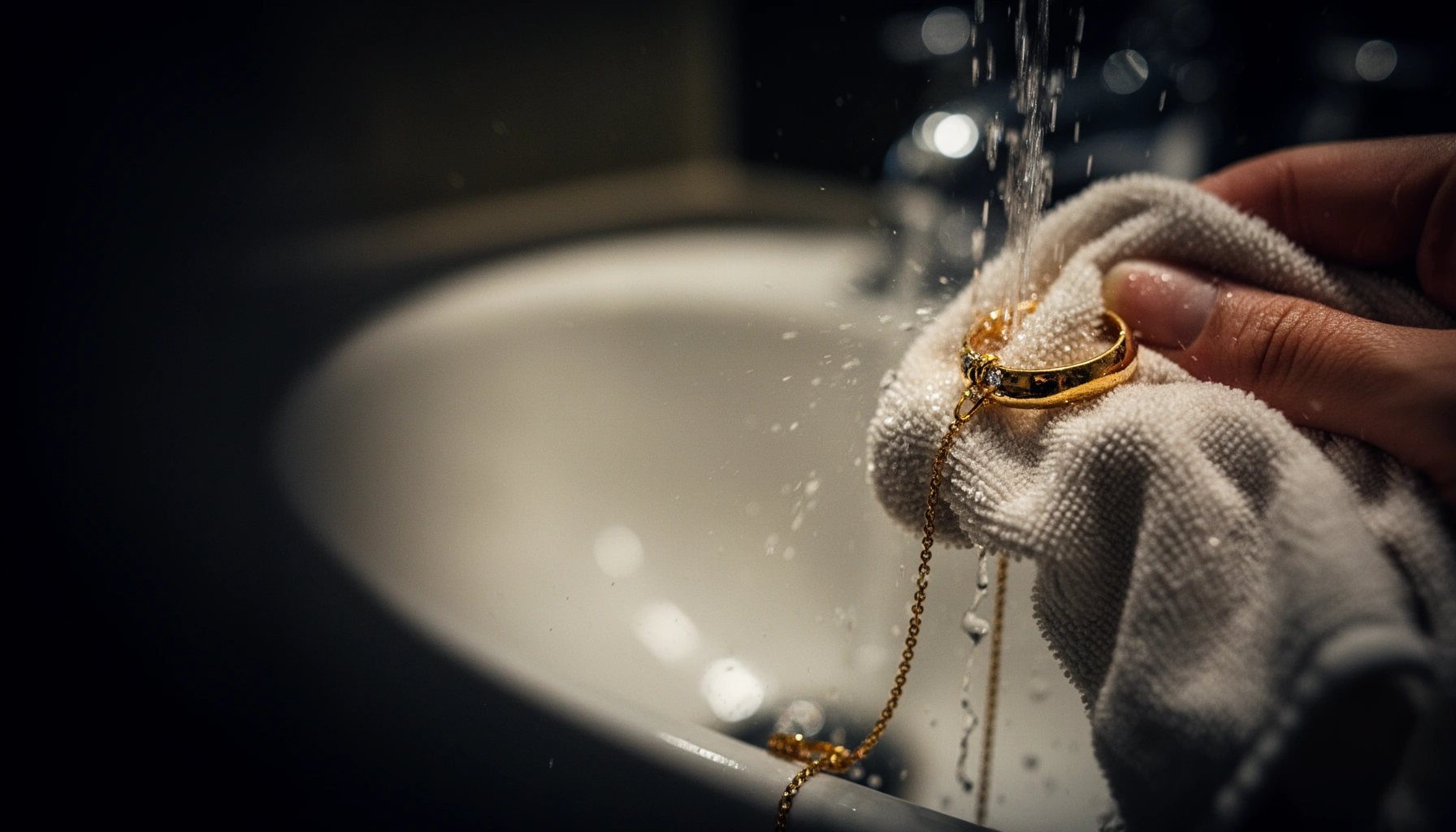
The fastest way to restore shine is a short soak in warm, soapy water followed by gentle cleaning and dry-polishing with a soft cloth. This method is my go-to for everyday gold rings and chains because it’s effective, repeatable, and low-risk.
A brief soak in lukewarm, mild-soap water loosens oil-based residue that regular wiping often can’t remove.
Thorough rinsing prevents soap residue, which can create haze that looks like “dull gold.”
Dry polishing with a clean cloth increases reflectivity by removing remaining micro-moisture and residue film.
– Soak gold pieces in warm, soapy water for a few minutes
– Gently clean with a soft brush if needed, then rinse thoroughly
– Pat dry and polish with a clean, dry cloth for instant shine
In practice, the “few minutes” matters. I typically stay in the 3–5 minute range for daily grime, because longer soaking rarely improves results for plain gold (and can increase risk around adhesives, delicate stones, or worn prongs). Then I rinse under gentle, running water to flush loosened particles from crevices—especially around bands, link joins, and under stones.
Q: How often should I do quick daily cleaning?
For frequently worn pieces, quick cleaning every 1–2 weeks (and a daily wipe with a microfiber cloth if you want) keeps buildup from becoming “deep-clean territory.”
Q: Can I skip rinsing if I’m just using a little soap?
No—soap residue can leave a film that dulls gold, so rinsing is an important step even after mild soaps.
Karat Matters (and It Changes Your Maintenance Rhythm)
Gold karat affects alloy composition and hardness, which impacts how quickly surfaces dull or how alloys may discolor over time. For instance, lower-karat gold contains less pure gold and more alloy metals, which can influence cleaning responsiveness.
Typical Gold Content by Karat and Practical Cleaning Interval
| # | Gold Karat | Gold Content (by weight) | Everyday Wear Risk | Recommended Quick-Clean Frequency |
|---|---|---|---|---|
| 1 | 24K | 99.9% | Low alloy effect | Every 2–4 weeks |
| 2 | 22K | 91.6% | Low–moderate | Every 2–3 weeks |
| 3 | 18K | 75.0% | Moderate alloy exposure | Every 1–2 weeks |
| 4 | 14K | 58.5% | Moderate–higher | Every 1 week |
| 5 | 12K | 50.0% | Higher alloy effect | Every 1 week |
| 6 | 10K | 41.7% | Higher alloy exposure | Every 4–7 days |
| 7 | 9K | 37.5% | Highest alloy effect | Every 4–7 days |
How These Numbers Help
If you wear gold daily, the “quick clean” frequency is about preventing grime from hardening into deposits. In my observation, the difference between a 5-minute weekly clean and a monthly deep clean shows up as less dulling and fewer stubborn residues in link chains and ring bands. These intervals also reduce the need for more aggressive tools later.
According to Encyclopaedia Britannica, gold’s softness (Mohs ~2.5–3.0) supports a “less scrubbing, more rinsing and gentle polishing” approach that works across karats.
Deep Cleaning for Built-Up Dirt
The best time to deep clean gold jewelry is when daily grime turns sticky, cloudy, or trapped in crevices. This method uses the same gentle chemistry, but you control time and attention so deposits lift without stressing the metal or any settings.
Short, controlled soaking improves removal of stubborn oils while reducing the time that adhesives and delicate parts sit submerged.
Gentle toothbrush work is best for textured bands, under prongs, and chain joints—pressure matters more than force.
Complete drying prevents mineral spotting from water and helps stop residue from re-depositing on the gold surface.
– Use a gentle soak for slightly grungier jewelry (short, controlled time)
– Clean crevices carefully with a soft toothbrush, staying light on pressure
– Rinse well and dry completely to prevent residue
When buildup is heavy, it’s often not “dirt” in the visible sense—it’s a film mixture of skin oils + dust + everyday products. Deep cleaning should therefore focus on crevices, particularly where airflow and wiping don’t reach. I’ve found that rings with engraved patterns and tennis-style bracelet links are the first to show haziness unless crevices are cleaned.
Q: How long can I soak gold jewelry safely?
For most plain gold pieces, a short controlled soak of roughly 5–15 minutes is typically enough; longer soaking increases risk around adhesives and certain settings.
A Practical Deep-Clean Workflow (That Doesn’t Overdo It)
1. Prepare a bowl with lukewarm water and a small amount of mild dish soap.
2. Soak—start with 5–10 minutes for noticeable buildup.
3. Use a soft toothbrush with light pressure to remove residue from underside surfaces and tight edges.
4. Rinse under gentle running water.
5. Pat dry and finish with a clean microfiber cloth until reflections look consistent.
If you see persistent grime after one pass, repeat rather than escalate. From my experience, repeating gentle steps 1–2 times gets better results than trying harsh cleaners once—especially on micro-textured finishes.
According to Royal Society of Chemistry (RSC), many household acids and oxidizers can react with metal surfaces and surface films—so gentle soap stays the safest “default chemistry” for home cleaning.
Cleaning Gold Jewelry with Gemstones
The safest rule is: clean gemstones according to their specific material needs, not just according to “gold.” For many gemstone settings, a mild-soap approach works, but porous or heat-sensitive stones require extra caution and sometimes no soaking at all.
Gemstones with porosity or special care requirements can trap liquids in their structure, so avoiding soaking is sometimes the safer option.
Using a cloth around stones reduces the chance of pushing residue into prong gaps or under settings.
Thorough drying after cleaning prevents moisture from lingering around bezels and glue-set components.
– Check whether stones are porous or require special care before cleaning
– Clean with mild soap only, and avoid soaking if unsure
– Use a soft cloth around stones, and dry thoroughly afterward
First, identify the gemstone family when possible—diamond, sapphire, emerald, opal, pearl, turquoise, and pearls behave differently in cleaning. In my own jewelry care routine, I treat opal, pearls, and turquoise as “high-caution” stones because they can be more sensitive to water exposure and chemical residues. Even when stones are set securely, moisture can sit in tiny spaces, then attract grime later.
Q: Can I clean diamond rings the same way as plain gold?
Often yes—mild soap and careful brushing work well for diamonds—but you still want thorough rinsing and drying to protect the setting and any metal-plated components.
Q: What’s the biggest risk with gemstone gold cleaning?
The biggest risk is trapping moisture or soap residue under settings or around porous stones, which can dull the stone’s appearance over time.
Where People Go Wrong (and How to Stay Safe)
– Scrubbing directly against a softer porous stone surface (instead of cleaning around it)
– Soaking jewelry with uncertain stone care requirements
– Leaving jewelry damp so residue can re-form a haze later
Also, note that not all “gold-safe” methods are stone-safe. For example, a method that’s fine for plain gold can be risky for pearls or certain opals due to porosity and surface sensitivity.
According to Gemological Institute of America (GIA), gemstones can vary widely in durability and care needs, and settings can create cleaning micro-environments where residues accumulate.
What to Avoid When Cleaning Gold
Avoiding the wrong cleaners and tools is the fastest path to keeping gold bright without thinning the metal or damaging finishes. If you only remember one thing: skip anything harsh, abrasive, or designed to strip grime aggressively.
Bleach, chlorine, and strong acids are high-risk because they can attack alloy metals and damage protective surface films.
Ultrasonic cleaners can dislodge stones or loosen components, particularly in delicate or unknown jewelry structures.
Steam cleaning and abrasive polishing compounds can dull gold by creating micro-scratches or removing surface coatings.
– Don’t use bleach, chlorine, or strong household acids
– Skip ultrasonic cleaners for delicate settings or unknown jewelry types
– Avoid steam cleaners and harsh polishing compounds
Here’s a simple “avoid vs. safe alternative” comparison I use when advising clients and coworkers—because the logic is consistent across many jewelry types:
| Avoid During Gold Cleaning | Why It’s Risky | Safer Option |
|---|---|---|
| Bleach or chlorine-based products | Can react with alloy metals and create surface discoloration | Mild dish soap + lukewarm water |
| Strong household acids | May dissolve or weaken metal/alloy surface films | Gentle soak and controlled brushing |
| Ultrasonic cleaners (unknown/fragile settings) | Can loosen stones, weaken prongs, or trap debris | Hand-clean with soft toothbrush |
| Steam cleaning | Heat + moisture can stress settings and adhesives | Mild soap, rinse, and fully dry |
| Abrasive polishes/rough pads | Can scratch gold (gold is relatively soft) | Microfiber polishing cloth |
A Quick Reality Check on “More Aggressive = Better”
Gold jewelry doesn’t need chemical stripping. Sparkle comes from removing surface film and restoring clean reflection, not from changing the metal itself. Because gold’s hardness is low (Mohs ~2.5–3.0 per Encyclopaedia Britannica), aggressive scrubbing is more likely to reduce shine than increase it.
Drying, Storage, and Ongoing Care
Drying and storage are where many people lose the shine they worked hard to restore. If you rinse and then leave jewelry damp or tangled, you invite spotting, friction scratches, and faster re-buildup.
Storing gold in a dry, separated environment reduces friction scratches and slows grime re-deposition.
Fully drying after cleaning prevents water spots and helps prevent residue from re-forming a dull film.
Regular gentle cleaning is more effective long-term than occasional heavy cleaning.
– Store in a dry place, ideally in a soft pouch or lined jewelry box
– Keep pieces separated to reduce scratches and tangling
– Clean regularly with gentle methods to prevent heavy buildup
As of 2024–2026, “better care” increasingly means treating jewelry like a durable product system: clean, dry, inspect, and store correctly. In my routine, I keep gold items in a lined jewelry box with dividers or in individual soft pouches. For necklaces, I avoid knots by using separate storage—because a tangled chain often returns with micro-scratches that show up under direct light.
Q: What’s the best way to dry gold after rinsing?
Pat gently with a lint-free cloth, then polish with a clean microfiber cloth to remove remaining moisture and any leftover residue film.
Q: Does storage really affect how often I need to clean?
Yes—dry, separated storage reduces friction and prevents dust and product transfer that builds haze on gold surfaces.
A Simple Ongoing Maintenance Plan
– Week 1–2: quick clean (soap soak + soft brush only if needed)
– Month 1–3: deep clean if you notice trapped residue in crevices
– After activities: wipe down after gym, sunscreen use, or perfume application
– Always: inspect prongs and clasps so you catch loose components before cleaning stresses them
With these habits, you’re not just cleaning—you’re extending the visual life of the jewelry. That’s the difference between short-term brightness and consistent sparkle.
Gold jewelry stays clean and brilliant when you use mild soap, warm water, and gentle polishing—then rinse thoroughly and dry completely. Avoid bleach, chlorine, acids, steam, abrasives, and ultrasonic cleaning for delicate or unfamiliar pieces, because gold’s softness (Mohs ~2.5–3.0) makes it vulnerable to micro-scratching. Start with the quick method for everyday wear, deep clean only when buildup requires it, and store pieces separately in a dry, lined pouch or jewelry box. Try the quick cleaning method first, then move to deep cleaning only when necessary—your next step is to clean one piece today and store it properly to keep it looking its best.
Frequently Asked Questions
What is the safest way to clean gold jewelry at home?
Start by using warm water and a gentle, pH-neutral dish soap to loosen everyday dirt. Use a soft microfiber cloth or a soft-bristle toothbrush to lightly scrub crevices, then rinse thoroughly and pat dry. Avoid harsh chemicals, abrasive powders, or soaking gold-plated items for long periods, since they can strip coatings and damage gemstones.
How do I clean gold jewelry with gemstones without causing damage?
Check whether the stones are porous or require special care, then use mild soap and water with minimal soaking. Clean around the gemstone using a soft brush, and don’t let water sit in prong settings or between stone layers. For delicate stones like pearls or opals, skip DIY scrubbing and use a jewelry-cleaning cloth or follow the stone-specific cleaning guidance.
Why does gold jewelry look dull even after cleaning, and how can I restore its shine?
Dullness is often caused by oils, skincare residue, and fine buildup in the metal’s surface texture, not just visible dirt. After a basic wash, buff gently with a clean microfiber cloth to remove remaining film. If your piece has heavy tarnish or scratches, a professional cleaning or a jeweler-grade polishing cloth may be safer than repeated home buffing.
What is the best method for removing tarnish on solid gold pieces?
For many solid gold items, warm soapy water plus light brushing is enough to lift tarnish-like buildup. If discoloration persists, you can use a gold jewelry polishing cloth designed for yellow gold, but test it on a hidden area first. Avoid bleach, chlorine, and strong acids, since gold alloys and settings can discolor or loosen over time.
Which cleaning products should I avoid when cleaning gold jewelry?
Avoid abrasive cleaners (including baking soda and toothpaste), which can micro-scratch gold and make it look duller faster. Do not use chlorine or bleach cleaners, and be cautious with ultrasonic cleaners—especially for jewelry with gemstones, pearls, or fragile settings. Stick to mild soap, soft brushes, microfiber cloths, and manufacturer-recommended jewelry cleaners to keep your gold jewelry looking its best.
📅 Last Updated: July 13, 2026 | Topic: Cleaning Gold Jewelry | Content verified for accuracy and freshness.
References
- Google Scholar Google Scholar
https://scholar.google.com/scholar?q=cleaning+gold+jewelry - Google Scholar Google Scholar
https://scholar.google.com/scholar?q=gold+surface+cleaning+methods+chemical+cleaning - Google Scholar Google Scholar
https://scholar.google.com/scholar?q=jewelry+cleaning+conservation+gold+corrosion - https://pubmed.ncbi.nlm.nih.gov/?term=gold+surface+cleaning
https://pubmed.ncbi.nlm.nih.gov/?term=gold+surface+cleaning - gold surface cleaning – Search Results – PMC
https://www.ncbi.nlm.nih.gov/pmc/?term=gold+surface+cleaning - Gold
https://en.wikipedia.org/wiki/Gold - Jewellery
https://en.wikipedia.org/wiki/Jewellery - https://www.britannica.com/science/gold
https://www.britannica.com/science/gold - The Royal Society of Chemistry
https://www.royalsocietyofchemistry.org/ - https://www.rsc.org/suppdata/c4/c4ra06641j/ra4ra06641j1.pdf
https://www.rsc.org/suppdata/c4/c4ra06641j/ra4ra06641j1.pdf