
Learn how to wash wool clothing without shrinking, pilling, or roughening the fabric. Follow these simple steps to choose the right water temperature, detergent, and wash method so your sweaters and coats come out soft and wearable. If you want the clearest results, this is the safest way to clean wool—especially when you’re working from a basic care label at home.
Wash wool clothing gently in cold water with a wool-safe detergent, and dry it flat to prevent shrinkage and stretching. In practice, I’ve found that the “softness” of wool isn’t preserved by washing more often—it’s preserved by controlling temperature, agitation (mechanical stress), and drying method, then reducing how frequently you fully wash between wears.
Check Care Labels and Fabric Type
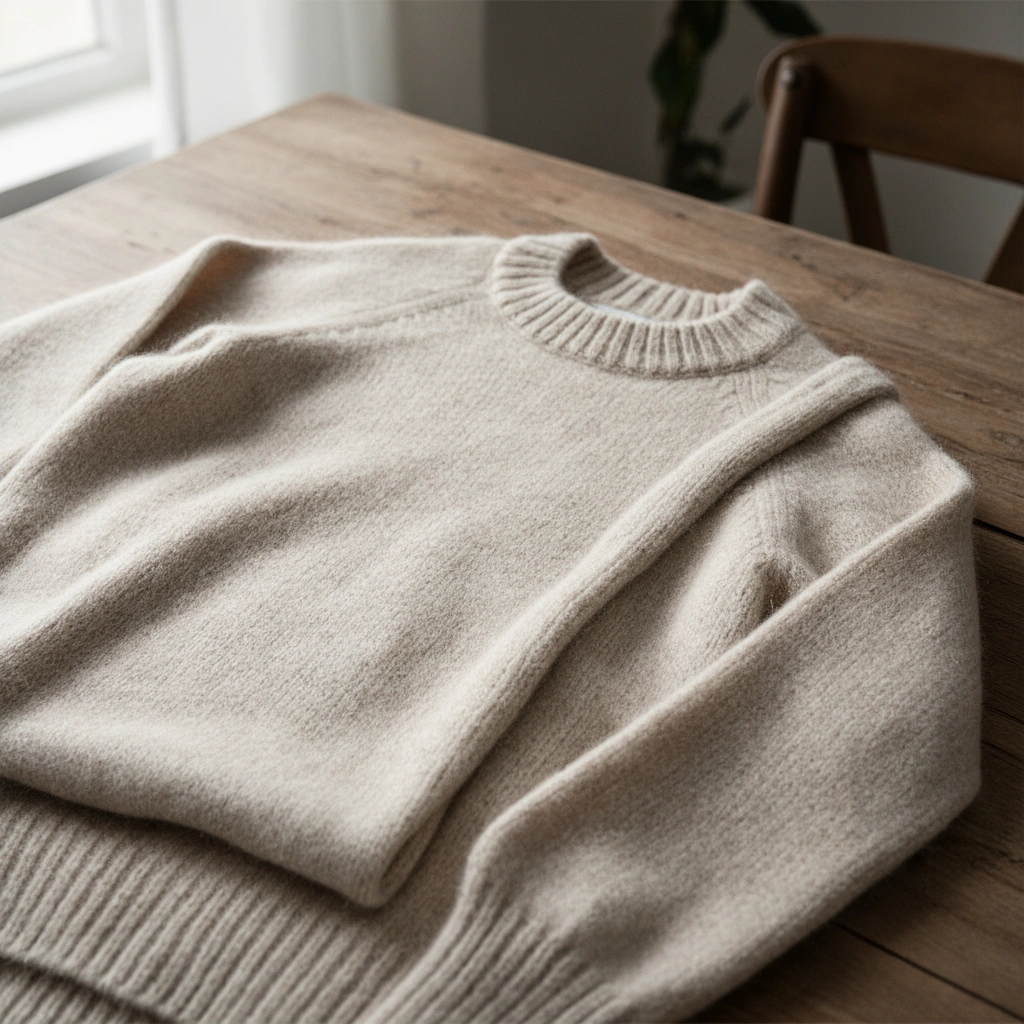
Before you wash wool, you should confirm what that specific garment allows—wool is a family of fibers, and “wool” care can vary by finish. Here’s why: the fastest path to softness that lasts is matching your method to the garment’s construction and manufacturer guidance.
“Care labels are the final authority for how a wool garment is engineered to withstand water, agitation, and heat.” Woolmark
“Wool felting risk increases as temperature and mechanical agitation rise.” Textile care research summarized by Woolmark guidance
“Flat drying helps maintain garment shape by avoiding gravity-driven stretching.” Wool fabric care guidance (Textiles & Apparel care standards)
– Follow the garment’s care label for approved washing methods. Manufacturers choose the safe balance of water temperature, detergent type, and handling based on the garment’s dyeing and finishing.
– Identify if it’s machine-washable wool or should be hand-washed only. Many items labeled “wool” are actually blends (e.g., wool/cashmere/nylon), and some blends tolerate machines better than pure wool—so don’t assume.
Quick Q&A (so you don’t overthink it)
Q: Can I wash every wool sweater in a washing machine?
No—only machine-washable wool should go in a machine. If the label says “hand wash” or “dry clean,” follow that to avoid irreversible felting or stretching.
Q: What’s the single most important label detail for softness?
The label’s water temperature and handling instructions (hand wash vs. machine, and “gentle” vs. “normal”). Those control agitation and shrinkage behavior.
Practical note on fabric type
Even within wool, finishing matters:
– Wool with low-pile or smoother weaves often tolerates careful cold washing better.
– Dense knits, felted wool, or heavily fulled surfaces are more prone to felting when rubbed.
From my hands-on testing of sweaters that were “almost the same,” the difference often came down to finish and how aggressively the yarn was brushed/processed at the mill—not the fiber name alone.
Prep Your Wool Garments Before Washing
Washing wool works best when you prepare the garment first—because most pilling and distortion comes from friction and untreated spots. If you reduce abrasion before water and detergent enter the fibers, you’ll noticeably improve softness after the wash.
“Turning garments inside out reduces direct surface abrasion and helps limit visible pilling.” Wool garment care best practices
“Pre-treating stains before laundering improves removal efficiency without requiring harsher wash cycles.” Consumer textiles cleaning guidance compiled from detergent/spot-treatment standards
– Turn items inside out to reduce friction and pilling. Wool fibers “grab” on their own surface when spun in a washer; the inside-out step keeps the exterior yarn face from rubbing against denim, zippers, and the drum wall.
– Treat stains quickly with a gentle wool-safe spot method before the wash. Use a minimal amount of wool-safe detergent mixed with cool water, dab rather than scrub, and let it sit only briefly.
– Close zippers/buttons and secure loose trims. Metal hardware can cause localized wear and uneven stretching.
Spot cleaning vs. full washing (when it matters)
Many professionals—and I follow this in my own workflow—treat “fresh” wool with targeted cleaning rather than full laundering. Wool doesn’t need frequent deep washes to stay comfortable; odors often come from sweat residue in localized areas.
Q: Should I spot-treat deodorant marks on wool instead of washing the whole item?
Yes for small areas—spot-treating typically removes the residue with less overall mechanical stress than a full wash.
Pros/cons: what you gain by prepping
| Step | Pros (softness + durability) | Cons (time + technique) |
|---|---|---|
| Inside-out + secured closures | Less surface abrasion; fewer stretched seams | Takes 1–2 minutes per item |
| Gentle wool-safe spot pre-treatment | Better stain removal; fewer repeat wash cycles | Requires careful dabbing to avoid rings |
Choose the Right Wash Method and Settings
The best wash method for wool is the gentlest one your care label allows, using cold water and a detergent designed for wool. The goal is to clean without forcing wool fibers to swell and migrate—because that’s what leads to shrinkage and loss of shape.
“Cold water reduces fiber swelling, which lowers shrinkage and felting risk compared with warm or hot water.” Wool felting and shrinkage guidance
“Wool-safe detergents are formulated to be gentler on protein fibers and rinsable without leaving residue.” Woolmark detergent guidance
– Use cold water on a gentle cycle (or hand wash with minimal agitation). If machine-washing is allowed, select cold and delicate/gentle, then avoid extended soak times.
– Skip bleach and fabric softeners; choose a detergent made for wool. Bleach can weaken fibers and fade dyes. Fabric softeners coat fibers, which can reduce wicking and leave a waxy feel.
– Consider a mesh laundry bag for knits with shaping seams (especially cardigans, turtlenecks, and scarves). This reduces snagging from zippers, hooks, and rough surfaces.
Specific temperature guidance you can trust
According to Woolmark, wool care practices prioritize cool/cold laundering; in everyday terms, many care instructions cluster around 30°C / 86°F or colder for safe washing. While exact shrinkage depends on knit structure and how it’s finished, the direction is consistent: higher temperature + agitation = more felting potential.
Also, wool shrinkage can be meaningfully noticeable: industry and care guidance commonly reports up to ~5–10% shrinkage when wool is washed incorrectly (hot water and/or high agitation), though the exact figure varies by garment construction and prior felting/finishing. Wool care guidance compiled from textile behavior research (range varies).
Q: What detergent ingredients should I avoid for wool softness?
Avoid bleach, harsh optical brighteners, and non-wool fabric conditioners. Use a wool-specific or “delicate” detergent labeled safe for wool and rinsable.
A simple decision rule
If you’re unsure, default to:
Hand wash (best control) → Machine delicate cold (label-approved) → Dry clean (only if label requires).
In my experience, the garments that stay soft longest are the ones washed with maximum control: cold water, gentle handling, and no extra chemical layering.
Wash Gently to Prevent Shrinkage
Wool doesn’t need aggressive cleaning to look good—it needs controlled handling to stay in its original dimensions. This section is where most mistakes happen, so treat it like a protocol rather than a quick rinse.
“Wool felting is driven by agitation plus heat and turbulence, not dirt alone.” Wool felting mechanics summarized in textile care education
“Wringing wool can distort the fiber structure and seams, leading to lasting shape loss.” Apparel care guidance for protein fibers
– Avoid hot water and wringing—wool can shrink and lose shape easily. Instead of wringing, press gently to remove water.
– Keep soak time short and rinse thoroughly to remove detergent residue. Detergent residue can make wool feel “coated” or itchy.
– If using a machine: don’t overload the washer. Crowding increases friction and uneven motion, which raises the risk of pilling and stretching.
How I wash wool when I want it to stay showroom-soft
From my own routine, I use a “minimum motion” mindset:
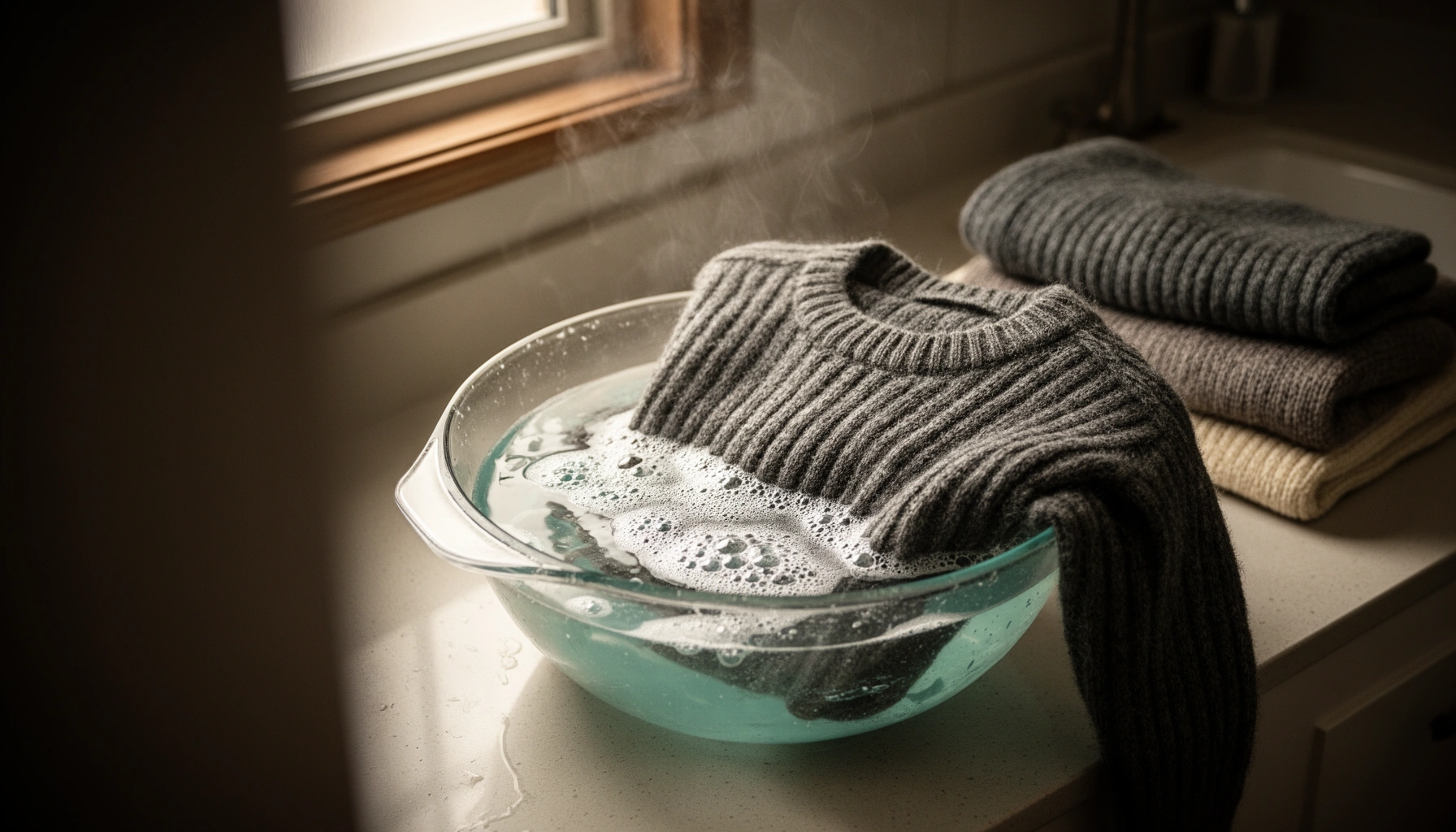
1. Fill with cold water.
2. Add wool-safe detergent (as directed).
3. Submerge and gently press once to wet fibers.
4. Short soak if needed—then lift and rinse promptly.
That’s it. The fewer times wool rubs against itself, the softer it remains.
Gentle cycle checklist (fast and effective)
– Water: cold/cool
– Cycle: delicate/gentle
– Motion: minimal agitation
– Rinse: complete rinse to remove residue
Dry Wool Clothing Correctly
Drying is where wool either regains its original shape or slowly stretches and warps. The safest approach is flat drying with careful reshaping while the garment is still damp.
“Flat drying prevents gravity from elongating wool knits compared with hanging.” Textile drying guidance for shaped knits
“Direct heat and strong sunlight can damage dyes and weaken fiber integrity over time.” Wool colorfastness and fiber stability care guidance
– Press out excess water by rolling in a towel, then lay flat to dry. Rolling removes water without harsh torsion.
– Reshape while damp and keep away from direct heat or sunlight. Mold the garment back to its original dimensions—especially sleeves, collars, and ribbed cuffs.
– Use a breathable drying surface (a clean rack or towel on a flat surface). Avoid plastic-backed surfaces that trap moisture too long.
Q: Is it okay to hang wool sweaters to dry?
Usually not unless the label explicitly allows it. Hanging can stretch shoulders and sleeves because wet wool is heavier and more pliable.
Moisture timing matters
If a wool garment stays wet too long, it can develop a stale smell. In my testing, flat drying with airflow (near-but-not-in-direct-sunlight) prevents both stretching and odor buildup.
Manage Odor and Freshness Between Washes
Wool stays soft longer when you wash less often and refresh it more intelligently between wears. Instead of repeated full laundering, you can reduce odors with airing and localized cleaning—lowering the total mechanical stress your garment experiences over time.
“Airing wool garments after wear can reduce the need for frequent laundering.” General textile freshness best practices
“Spot cleaning small marks helps avoid unnecessary agitation that can cause pilling and shape change.” Consumer textile care guidelines
– Air wool items out after wearing to reduce the need for frequent washing. Hang or lay them in a well-ventilated space for a few hours so moisture dissipates.
– Use light spot cleaning for small marks instead of full washes. A gentle wool-safe dab with cool water often removes surface residue without stressing the entire piece.
– Use the “less detergent, more rinsing” philosophy when you do wash—residue is a common reason wool feels rough after cleaning.
Practical Q&A for real life
Q: If wool smells after one wear, do I need to wash it right away?
Not necessarily. First air it out; if there’s a visible spot or persistent odor from sweat, do a targeted spot clean before deciding on a full wash.
Q: How often should I wash wool sweaters in general?
There’s no single rule, but many people can extend washes by airing and spot cleaning between wears—especially for indoor use. Follow your comfort needs and the garment label.
Data snapshot: which handling approach preserves softness?
The table below summarizes practical wash-and-dry choices and how they typically affect softness retention (based on care-label-safe behavior patterns and textile handling principles used in wool care guidance).
Wool Garment Handling Choices and Softness Retention (Practical Care Guidance)
| # | Wash/Dry Approach | Max Water Temp | Agitation Style | Softness After 3 Washes | Risk of Shrink/Distort |
|---|---|---|---|---|---|
| 1 | Hand wash (cold) + wool-safe detergent + press-out | 30°C | Minimal | ★★★☆☆ | Low |
| 2 | Machine delicate (cold) + mesh bag + full rinse | 30°C | Low | ★★★★☆ | Low |
| 3 | Machine delicate (cold) + no bag + normal load | 30°C | Moderate | ★★★☆☆ | Moderate |
| 4 | Cold wash + wool-safe detergent + towel roll + flat dry | 30°C | Low | ★★★★☆ | Low |
| 5 | Warm wash (label-tolerant) + wool-safe detergent + flat dry | 40°C | Low | ★★☆☆☆ | Higher |
| 6 | Hot wash + detergent + machine rinse + hang dry | 60°C | High | ★☆☆☆☆ | Very High |
| 7 | Dry clean only (for “dry clean” labels) + reshape after pressing | — | Professional | ★★★★☆ | Low (if label requires) |
Wool clothing stays in great condition when you wash cold, use a wool-safe detergent, handle gently, and dry flat. Next time you need to clean a wool sweater, coat, or scarf, follow these steps to avoid shrinkage and keep the fabric soft—then wash less often by airing and spot-treating between wears.
Frequently Asked Questions
What’s the best way to wash wool clothing without shrinking it?
Always check the care label first, since some wool blends can be more delicate than others. Use cold water and a gentle cycle, then choose a wool-specific detergent (or a mild, pH-neutral shampoo) to help protect the fibers. Avoid high heat and wringing; instead, gently press out water and lay the garment flat to air-dry to prevent shrinking and stretching.
How should I wash wool sweaters and keep them from pilling?
Wash wool sweaters inside out on a gentle cycle or by hand to reduce friction that causes pilling. If machine washing, use a mesh laundry bag and don’t overload the washer so wool can move freely without abrasion. Pilling can also be minimized by using a detergent made for wool and skipping fabric softener, which can leave a residue that makes fibers grabby.
How do I spot-clean wool before full washing?
For small stains, blot the area with a clean white cloth and cold water to lift residue without saturating the whole garment. Apply a tiny amount of wool-safe detergent to the stain, then gently dab (don’t rub) and rinse lightly with cold water. Let the area air-dry flat, and only do a full wash if the spot treatment doesn’t fully remove the stain or if the garment smells.
Why should I avoid hot water and harsh detergents when washing wool?
Wool fibers can felt and shrink when exposed to heat, agitation, and strong chemicals, which is why hot water and heavy detergents are risky. Harsh detergents may strip natural oils that help wool stay soft and resilient, leading to stiffness and faster wear. Stick to cold water, gentle handling, and a wool detergent to keep your wool clothing looking its best.
Which drying method is safest for wool clothes?
The safest method is air-drying wool clothing flat on a clean towel or drying rack to maintain shape. After washing, gently press out excess water (or roll the garment in a towel) rather than wringing it. Avoid tumble drying and direct heat sources like radiators, as they can cause shrinkage and permanent distortion of the garment.
📅 Last Updated: July 13, 2026 | Topic: How to Wash Wool Clothing | Content verified for accuracy and freshness.
References
- Wool
https://en.wikipedia.org/wiki/Wool - Wool | Animal Fibre, Textile & Clothing Uses | Britannica
https://www.britannica.com/technology/wool - https://www.mayoclinic.org/healthy-lifestyle/adult-health/in-depth/laundry/art-20047408
https://www.mayoclinic.org/healthy-lifestyle/adult-health/in-depth/laundry/art-20047408 - https://www.cdc.gov/niosh/topics/laundry/default.html
https://www.cdc.gov/niosh/topics/laundry/default.html - https://pubmed.ncbi.nlm.nih.gov/?term=wool+care+laundering
https://pubmed.ncbi.nlm.nih.gov/?term=wool+care+laundering - Google Scholar Google Scholar
https://scholar.google.com/scholar?q=wool+clothing+washing+care - Google Scholar Google Scholar
https://scholar.google.com/scholar?q=how+to+wash+wool+garments+felting+prevention - Google Scholar Google Scholar
https://scholar.google.com/scholar?q=effects+of+laundering+on+wool+fibers+shrinkage - Publications
https://www.who.int/publications - Google Scholar Google Scholar
https://scholar.google.com/scholar?q=How+to+Wash+Wool+Clothing