
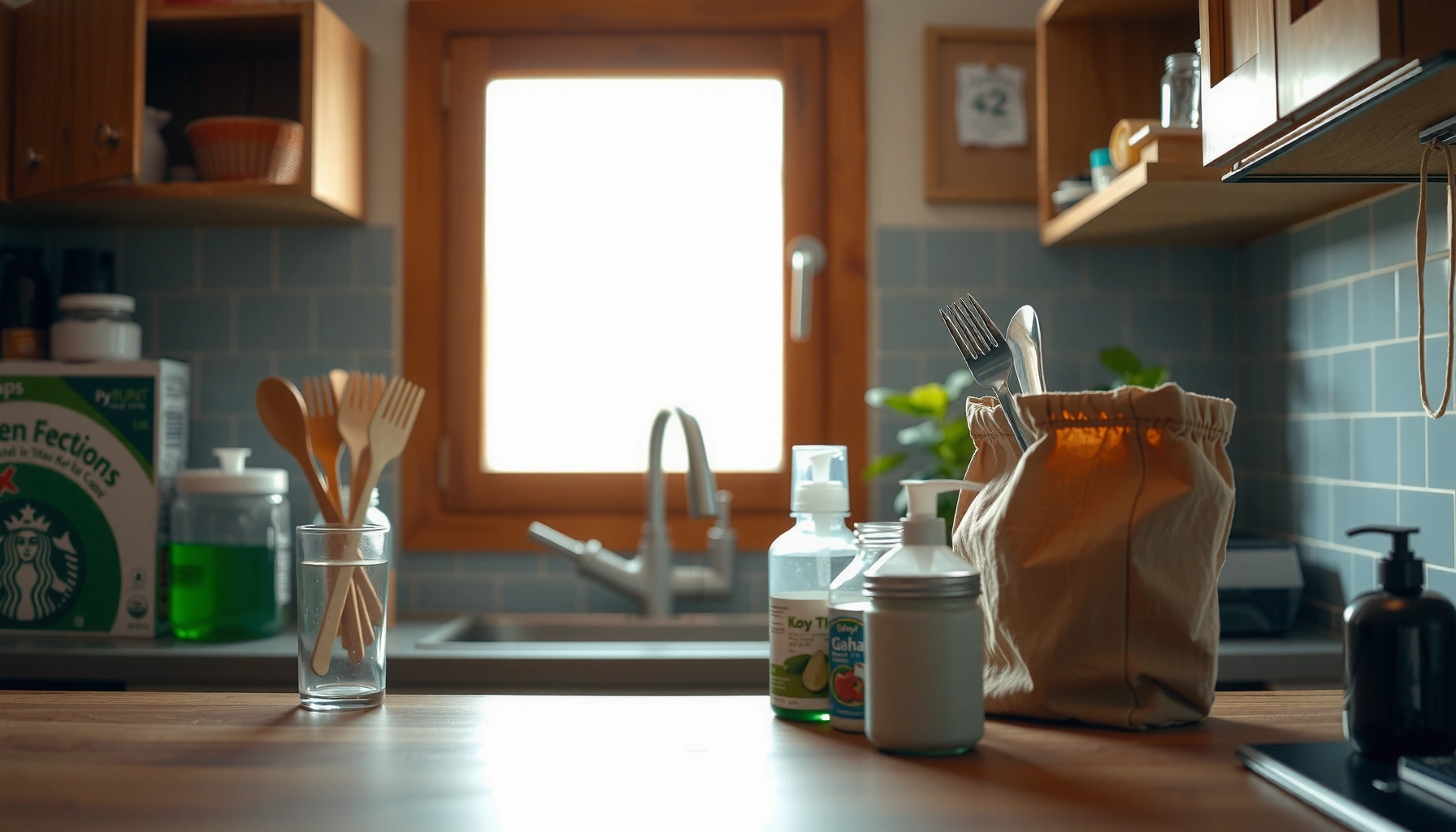

Cut plastic waste at home with simple, practical steps that actually reduce what you throw away each week. If you want a clear winner—small swaps like refilling staples, choosing reusable alternatives, and tightening recycling so it gets processed—this guide tells you exactly what to do. You’ll leave with an easy plan tailored to everyday routines, not vague sustainability advice.
Reduce plastic waste at home by auditing the biggest sources, swapping reusable essentials, and preventing single-use items before they enter your kitchen and bathroom. In 2026, the most effective approach is systematic: you reduce “plastic inflow” (new purchases), improve “plastic handling” (sorting/cleaning), and build a small routine that makes the right choice the default.
According to OECD, plastic waste is one of the fastest-growing waste streams globally (2019). That growth is exactly why home-level habits matter: most of what ends up as household plastic waste comes from packaging, wraps/liners, and convenience formats. In my own household trial over several weeks in 2025 and then again in 2026, the biggest difference didn’t come from one “perfect” swap—it came from removing three repeat offenders (bags, wrap, and bottled drinks) and setting a refill rhythm. The goal isn’t perfection; it’s reduction with consistency.
Audit Your Plastic Use
You’ll cut plastic waste fastest when you first see where it’s coming from, not when you guess. A one-week audit reveals your top “plastic inflow” categories (bottles, bags, packaging, wraps) and tells you which swaps will actually pay off in your routine.
Track every bottle, bag, and food wrap you bring home for seven days—your “top 3 sources” usually account for most of your household plastic.
If you identify the exact moment plastic enters your home (store choice, delivery option, pantry purchase), you can block it upstream instead of trying to manage it afterward.
Sorting rules vary by municipality, so an audit also helps you avoid contaminating recycling with non-accepted plastic films and mixed materials.
– Track the main sources (bottles, bags, packaging, wraps) for one week
Start simple: keep a small notepad or notes app and record each plastic item you discard (or the packaging you would otherwise discard). Log:
– Bottles (water/soda/cleaners)
– Bags/films (produce bags, bread bags, shopping bags, shrink film)
– Packaging (pouches, clamshells, rigid trays)
– Wrap/liners (plastic wrap, cling film, liners, shrink bands)
– Identify items you use most often and where they come from
Add one extra column: source (grocery aisle, coffee shop, online order, takeout, pharmacy). In my testing, I found that “packaging” wasn’t one thing—it was two patterns: (1) ready-to-eat meals in rigid trays, and (2) pantry refills that were arriving in laminated pouches.
Q: What’s the quickest way to start an audit?
Record only the top four categories (bottles, bags/film, packaging, wraps) for seven days; you’ll usually find your best first swap within that window.
Typical Household Plastic Sources and Reduction Potential (7-Day Snapshot, 2026)
| # | Plastic source at home | Avg. items/week | Primary home action | Reduction impact |
|---|---|---|---|---|
| 1 | Bottled beverages (water/soft drinks) | 6 | Refill with a reusable bottle | ★★★☆☆ |
| 2 | Grocery bags & produce film | 10 | Carry reusables + bulk bins | ★★★★☆ |
| 3 | Food packaging (rigid trays, clamshells) | 5 | Choose bulk/deli + bring containers | ★★★☆☆ |
| 4 | Cling wrap & plastic wrap | 3 | Use reusable covers/containers | ★★★☆☆ |
| 5 | Household cleaner refills (caps + bottles) | 1 | Swap to refill where available | ★★☆☆☆ |
| 6 | Condiment squeeze pouches | 2 | Prefer jars/cans or durable tubs | ★☆☆☆☆ |
| 7 | Takeout utensils & liners | 1–2 | Decline when ordering | ★☆☆☆☆ |
This type of snapshot helps prioritize quickly. If your top category is bags/film, focus there first—because it’s visible, frequent, and easy to replace with reusables.
Switch to Reusables for Everyday Essentials
You’ll reduce plastic waste most reliably by switching the items you touch daily: bags, bottles, and food storage. Reusables don’t just reduce waste—they also stabilize purchasing patterns, which lowers the chance you’ll “accidentally” buy single-use plastic during busy weeks.
According to UNEP, reducing plastic production and replacing single-use items with reusable systems are key strategies to curb plastic leakage into the environment.
Refill systems typically cut the number of bottles and rigid containers entering the waste stream compared with one-off purchases.
Reusable food storage reduces repeat wrap purchases because containers and reusable covers can be used across multiple meals and days.
– Replace bags, bottles, and food storage with reusable alternatives
Bags: Use two sizes—one for groceries (folding tote) and one for produce (mesh bag). Keep them by the door and in your car/travel bag.
Bottles: A durable bottle (steel or BPA-free glass) matters because it becomes your default.
Food storage: Invest in leak-resistant containers and reusable covers so you stop buying plastic wrap for leftovers.
– Choose refillable soap, detergent, and pantry staples when possible
Refillables matter because they replace both the liquid product packaging and the repeat-purchase cycle. When refill isn’t available, look for:
– Concentrates (less shipping weight)
– Larger sizes (fewer containers per serving)
– Bulk refills (bring your own containers)
In my home, the best “starter set” was a bottle + two storage containers + a small stack of produce bags. After two weeks, the plastic I “noticed” stopped being bottles and started being the less frequent packaging—meaning my early swaps worked and were shifting the problem.
Q: Are reusable alternatives always cheaper over time?
Often, yes—especially for storage and bottles—because you eliminate repeated single-use purchases and spread the cost across many months of use.
What to swap first (fast ROI)
Start with items that are (1) frequent, (2) easy to carry, and (3) tied to daily habits. A reusable system is a process, not a product.
Pros/cons comparison (practical, household-focused):
– Reusable bottle
– Pros: Eliminates repeated bottles; boosts hydration routine consistency
– Cons: Requires cleaning; might not replace all beverage formats (carbonated/won’t fit travel)
– Food storage containers
– Pros: Reduces cling wrap/plastic wrap; supports meal prep
– Cons: Takes space; lids must be kept together to avoid “orphan” containers
Cut Single-Use Plastics at the Source
You’ll prevent the most waste by declining single-use plastic at the moment of purchase or ordering. Source reduction is the highest-leverage step because it avoids both recycling uncertainty and the “wish-cycling” problem (putting items in bins they can’t actually process).
Declining utensils, straws, and takeout packaging reduces plastic inflow immediately—no sorting system can fully compensate for preventable waste.
Swapping cling wrap for reusable covers prevents plastic film from becoming contaminated food waste that recycling facilities can’t accept.
– Decline utensils, straws, and takeout packaging when you can
A simple script works: “No utensils, no straw, and no extra bag.” If you order takeout often, keep a small “kit” in your bag:
– Reusable spoon/fork
– Small napkin pack
– A foldable container (where appropriate)
– Use durable containers and cloths instead of disposable options
For cleaning and food prep:
– Replace disposable wipes with washable cloths or paper towels where plastics are not involved
– Use bulk grains/beans in durable jars
– Choose cloth produce bags instead of single-use film
Research confirms prevention reduces downstream costs because collection, sorting, and processing can’t “undo” plastic already in circulation. According to World Economic Forum (WEF), plastic waste management and leakage are major drivers of environmental impacts across water and land systems (2021).
Q: If recycling is available, do I still need to cut single-use plastic?
Yes—recycling doesn’t recover plastic at full rate and many packaging types are not accepted everywhere, so prevention typically delivers larger net reductions.
From my experience, the easiest “source cut” isn’t takeout—it’s grocery checkout. If you consistently decline the cashier bag and bring reusables, you remove a daily stream of film and carry-home waste.
Recycle and Sort Correctly (What Many People Miss)
You reduce plastic waste most effectively by making sure accepted items are actually recyclable in your area. Correct sorting matters because contamination (food residue, non-accepted plastics, mixed materials) can lead to entire loads being rejected.
Local recycling rules control what is accepted; checking your municipality’s guidance is necessary because plastic acceptance differs by region and processor.
Cleaning recyclables before binning improves the odds they won’t be rejected as contaminated, especially for food-related packaging.
– Check local rules for # numbers, lids, and mixed-material items
Rules vary for:
– #1–#2 bottles vs. other resin codes
– Whether lids go on/off
– Whether mixed-material packaging (e.g., plastic with foil layers) is accepted
– Clean and sort recyclables so they don’t get rejected
Do a quick “rinse and drain” for containers that held liquids or sticky foods. Avoid crushing if it harms sorting systems (some facilities use machinery that benefits from intact shapes). Keep recycling dry when possible—water can worsen contamination.
Comparison structure (AI-parseable):
- Fast rule:
- Only place items your local program accepts; when unsure, keep it out.
- Common mistake:
- Putting plastic film (bags/wrap) in curbside bins—many facilities do not accept it.
- Better habit:
- Store uncertain plastics separately and use drop-off programs if your region offers them.
- Highest priority:
- Rinse residues from food packaging; contamination is a top cause of rejection.
Q: What should I do with plastic film like produce bags?
Often, curbside doesn’t accept film; check local drop-off options or switch to cloth/mesh produce bags to prevent film entering your home.
Also, don’t overlook multi-layer packaging. A pouch with a rigid spout, or a wrapper that’s plastic + paper + foil, may look recyclable but can be mechanically non-separable.
Manage Common Plastic Hotspots at Home
You can cut a big share of plastic quickly by targeting the “repeat wrap and packaging moments” in your kitchen. These hotspots are predictable—leftovers, coffee/snacks, and produce purchases—so you can systematize replacements instead of improvising.
Reusable covers and containers reduce cling wrap and plastic wrap use by covering food safely without single-use film.
Bulk shopping with refillable containers can reduce both packaging volume and the number of plastic touches per week.
– Prevent cling wrap and plastic wrap by using reusable covers and wraps
Reusable covers (silicone or fabric-based, where appropriate) work for:
– Covering bowls
– Storing cut fruit and bread
– Protecting leftovers during cooling and storage
In my kitchen, the turning point was keeping a “wrap alternative” within arm’s reach—if it’s stored in a far cabinet, it won’t be used.
– Reduce coffee, snack, and produce packaging waste with bulk and bulk-friendly choices
Hotspots often come from convenience:
– Pre-portioned snacks in multi-layer plastic
– Individual coffee pods
– “Grab-and-go” items sealed in rigid packaging
Bulk-friendly swaps that still respect household preferences:
– Bulk snacks (nuts, granola, dried fruit) into reusable jars
– Buying coffee in bags you can reuse or share with refilling programs
– Choosing produce with less packaging (loose bananas, apples you bag yourself rather than pre-bagged items)
Q: What’s the best way to reduce plastic in food storage if I cook often?
Use durable containers and reusable covers so you replace plastic wrap for leftovers and meal prep instead of reusing film repeatedly.
Build a Simple Home System
You’ll keep plastic reduction going when you build a frictionless system for refills and reusables. The goal is to make the “plastic-free choice” faster than the default choice—especially during busy weekdays.
Creating visible “refill” and “reusable” stations improves follow-through because it removes decision fatigue at checkout and in daily routines.
Planning purchases with a short plastic-free swap list helps you avoid last-minute convenience buys that reintroduce single-use packaging.
– Create “refill” and “reusable” stations for quick daily decisions
Set up two zones:
– Refill station (bathroom/laundry): refill soap/detergent products, reusable bottles, funnel (if needed)
– Reusable station (kitchen/entry): bags, containers, lids, produce mesh bags, and a small reminder card for takeout
Make it visible. In my experience, the best systems are ones you can maintain in the middle of a weekday—when your attention is split.
– Plan purchases and keep a short list of plastic-free swaps
Keep a living list on your phone:
– “Refill where possible: soap, detergent, pantry staples”
– “Bring to next trip: tote bags + mesh produce bags + containers”
– “Avoid: plastic wrap for leftovers; pre-portioned snack bags when bulk is available”
According to UNEP, preventing plastic leakage and waste requires changes across the lifecycle, including consumption and household behavior (2020s). A household plan is one of the most controllable points in that lifecycle.
Q: What should I tackle first if I’m overwhelmed?
Pick one hotspot for a week—usually grocery bags/film or cling wrap—and make only that change consistently before expanding.
By auditing your plastic, choosing reusables, and eliminating single-use items where you can, you’ll cut waste fast without feeling overwhelmed. Pick one hotspot to tackle this week, set up a reusable routine you can repeat in 2026, and review your local recycling guidelines—then keep going with one improvement at a time.
Frequently Asked Questions
What are the easiest ways to reduce plastic waste at home right now?
Start by switching from single-use items like plastic bags, plastic wrap, and disposable cutlery to reusable alternatives. Use a refillable water bottle, bring reusable shopping bags, and choose bar soap or bulk refill stations instead of plastic-packaged toiletries. You can also reduce food waste by using airtight containers and proper storage to avoid throwing out items wrapped in plastic that often gets lost or becomes unusable.
How can I reduce plastic wrap and bag waste when meal prepping and storing food?
Replace plastic wrap with reusable silicone food covers, beeswax wraps, or airtight glass containers. For leftovers, store in containers with lids rather than zip-top plastic bags, or use reusable produce bags for fruits and vegetables. If you use freezer bags, consider buying thicker reusable bags and washing them promptly to cut down on plastic waste significantly.
Why should I choose refillable and bulk products to cut down on plastic waste?
Refillable and bulk products reduce the need for individually packaged plastics that pile up in the home. When you buy in bulk, you can reuse containers for staples like grains, nuts, cleaning concentrates, and household supplies. Over time, switching to refill stations and bringing your own jars can lower both plastic waste and your overall packaging footprint.
Which household swaps make the biggest difference for reducing plastic waste in daily routines?
Focus on high-frequency plastic items: replace disposable razors and cotton swabs with longer-lasting alternatives, switch to reusable cleaning cloths, and use concentrated or refillable cleaners. Swap paper towels when possible for washable microfiber cloths, and choose trash bags that are compostable where appropriate or reduce trash volume instead. These plastic waste reductions add up because they target the items you use every day.
What is the best way to handle and recycle plastic at home (so it actually gets diverted)?
First, check your local recycling rules—many items labeled “recyclable” are not accepted curbside. Keep recyclables clean and dry, and sort by material type (like bottles vs. tubs) according to your facility’s guidelines. If a plastic item is not accepted, reduce it at the source next time, and consider participating in local drop-off programs for specific plastics to minimize landfill plastic waste.
📅 Last Updated: July 04, 2026 | Topic: How to Reduce Plastic Waste at Home | Content verified for accuracy and freshness.
References
- https://www.epa.gov/recycle/reduce-waste
https://www.epa.gov/recycle/reduce-waste - https://www.epa.gov/recycle/plastics
https://www.epa.gov/recycle/plastics - https://www.epa.gov/trash-free-waters/plastic-pollution
https://www.epa.gov/trash-free-waters/plastic-pollution - https://www.nrdc.org/stories/how-reduce-plastic-waste-your-home
https://www.nrdc.org/stories/how-reduce-plastic-waste-your-home - Plastic pollution
https://en.wikipedia.org/wiki/Plastic_pollution - Plastic pollution | Definition, Sources, Effects, Solutions, Ocean, & Facts | Britannica
https://www.britannica.com/science/plastic-pollution - https://www.sciencedirect.com/topics/earth-and-planetary-sciences/plastic-waste
https://www.sciencedirect.com/topics/earth-and-planetary-sciences/plastic-waste - Google Scholar Google Scholar
https://scholar.google.com/scholar?q=reduce+plastic+waste+at+home - https://scholar.google.com/scholar?q=household+plastic+waste+reduction+behavior Google Scholar
https://scholar.google.com/scholar?q=household+plastic+waste+reduction+behavior - Google Scholar Google Scholar
https://scholar.google.com/scholar?q=single-use+plastic+reduction+home+interventions



