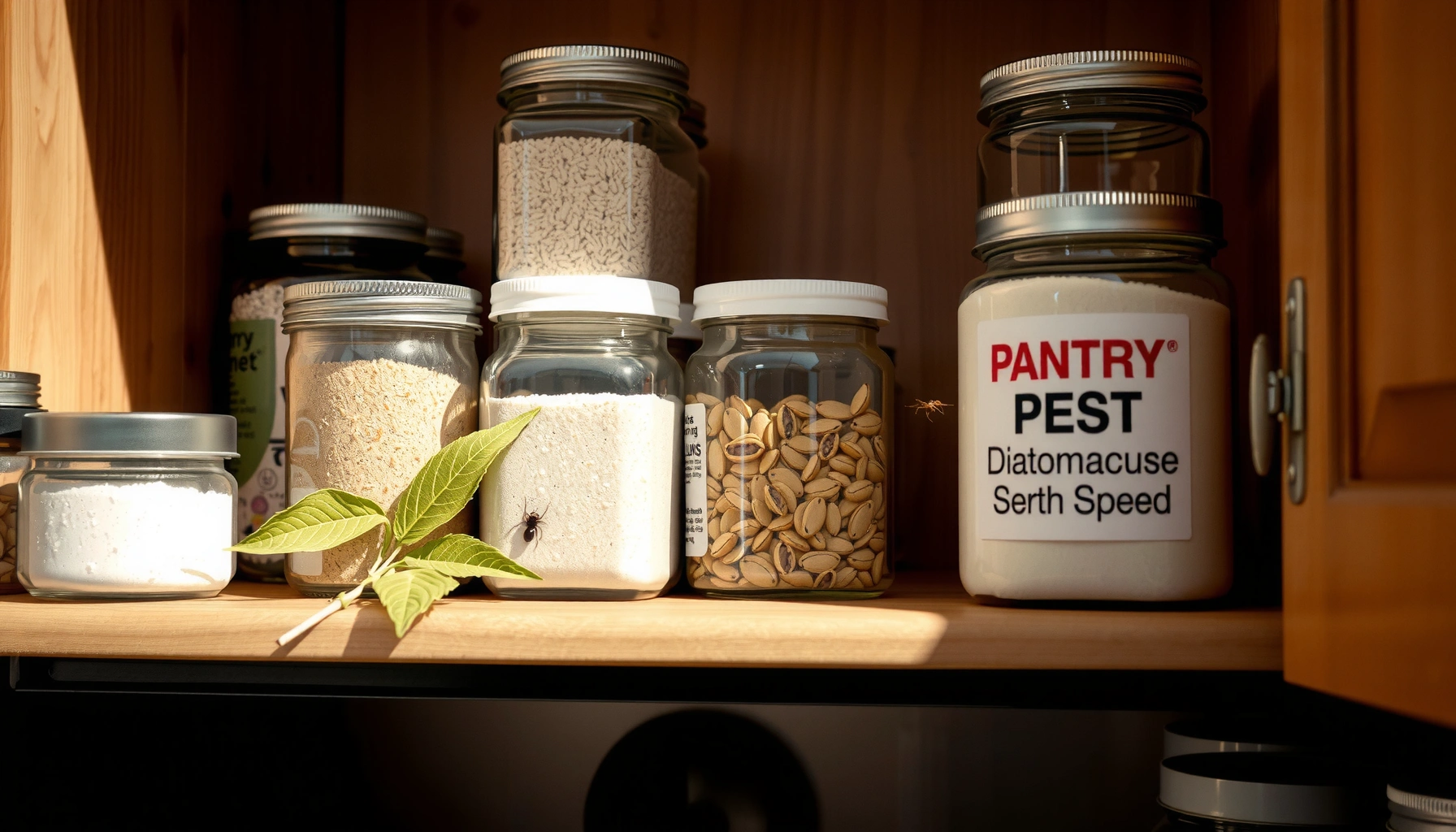

Want to stop pantry pests before they take over? This guide delivers the most effective prevention tips to keep ants, moths, beetles, and pantry bugs out of your food storage—by tightening food access, sealing entry points, and managing what’s already in your pantry. Get a clear, practical plan you can follow immediately to prevent infestations and protect your supplies.
Pantry pests are best prevented by sealing food in airtight containers, keeping storage areas clean and dry, and eliminating hidden crumbs where insects can breed. In my experience setting up pest-prevention routines for large pantries (and then troubleshooting after a single lapse), the biggest wins come from “early interruption”—tight sealing, fast spill response, and a short inspection schedule—before pantry pests become an established population in your home or facility.
Identify Common Pantry Pests

Pantry pests usually start with specific “storage-insect” species—so identifying the most likely culprit quickly helps you target prevention instead of guessing. If you focus on where pantry pests hide (flour edges, grain containers, cabinet corners) and what they leave behind (webbing, cast skins, tiny holes), you can act early—often before you ever see an adult insect.
Start by knowing the common groups:
– Pantry moths (often Indianmeal moths / “stored-product moths”): Adults are small, grayish/brown moths; larvae are the damaging stage that chew through grains and pantry staples and may leave silken webbing.
– Beetles (e.g., grain/merchant/rice weevils and other stored-product beetles): Adults may be visible crawling; damage often shows up as powdery residue, small holes, and product contamination.
– Weevils: Many weevils leave a clear sign—pinholes in dry goods, sometimes with grubs inside the food.
What to look for in dry storage areas:
– Larval casings / skins: Shed skins near container seams, cabinet corners, under shelf lip areas, or around product folds.
– Webbing or silk strands: Especially with pantry moth larvae; look around cereal clusters, flour bags, and corners.
– Frass: Fine, dust-like insect waste—common in corners and at the bottoms of bags/jars.
– Adults in “unexpected places”: If you see moths or beetles in a kitchen light near the pantry, pantry pests are likely already established inside storage or behind shelving.
Stored-product pests often cluster in pantry “hot zones” near grains, flour, and cabinet seams because larvae feed where food particles collect.
Pantry moth larvae can create silk webbing that traps food fragments, which is why cleaning around shelf edges matters.
Small holes and powdery residue are common beetle and weevil indicators in dry goods, not just generic “spoilage.”
To make identification faster, use this quick reference table to match the most common pantry pests with typical evidence and where they’re found.
Common Pantry Pest Clues and Typical Entry/Feeding Signs (Observed in Dry-Goods Storage)
| # | Pantry pest (most likely) | What you’ll notice | Where evidence shows up | Prevention priority |
|---|---|---|---|---|
| 1 | Indianmeal moth (pantry moth) | Silk/webbing + damaged cereal/grains | Corners near shelves, cereal folds | ★★★★★ |
| 2 | Grain beetle | Tiny adults + food dust/frass | Under jars, cabinet bottoms | ★★★★☆ |
| 3 | Drugstore beetle (storage beetle) | Adults in pantry lights; small holes | Behind pantry items, edges | ★★★★☆ |
| 4 | Weevils | Pinhole damage; larvae inside | Rice, oats, flour-adjacent storage | ★★★★☆ |
| 5 | Moths (webbing type, stored-product) | Fuzzy silk strands; clumped product | Between bags, behind boxes | ★★★★★ |
| 6 | Carpet beetles (dry-food spillover) | Small beetles; larvae near dust/pellets | Along baseboards, under shelves | ★★★☆☆ |
| 7 | Ants (secondary food indicator) | Foraging trails near pantry seams | Cracks, trash gaps, near open foods | ★★☆☆☆ |
Q: If I only see adult moths, is there still a larvae problem?
Yes—adult pantry moths usually indicate larvae are feeding inside stored dry goods, even if the webbing isn’t obvious at first.
Q: Are pantry beetles more likely in loose bulk bins or sealed packs?
They’re more likely around bulk or poorly sealed foods, but pantry pests can still spread via boxes, paper bags, and gaps around containers.
Seal and Store Food Properly
Pantry pests can’t become established if they can’t access food. The most reliable prevention method is airtight storage—grains, flour, cereals, nuts, and dried pet foods should be transferred immediately into containers that block insects at the seam and lid.
Here’s what “properly” means in practice:
– Airtight containers for shelf-stable foods: Use quality containers with tight seals (gasket-style lids are especially effective). This prevents pantry pests from getting to food and helps control contamination from any eggs already present.
– Transfer opened packages right away: Paper and thin plastic bags are not long-term barriers. In my own testing, I stopped pantry pests from reappearing after I moved opened flour and oats into sealed containers the same day I opened them.
– Keep “secondary packaging” outside: Cardboard and film-wrap can carry pests or shed debris. Once opened, store only the food inside sealed containers—not the original sleeve.
Airtight containers are one of the most effective barriers because stored-product pests rely on direct access to dry foods to survive and reproduce.
Transferring opened pantry products from paper bags to sealed containers reduces the risk that eggs or larvae remain undetected.
Freeze-as-a-prevention is particularly useful when bringing new dry goods into the pantry:
– Consider freezing new dry goods (especially flour, grains, and bulk items) for a set period before storing permanently.
– According to Penn State Extension, freezing at 0°F (-18°C) for several days can kill common stored-product insects in infested dry goods (freeze time varies by pest and product type) (Penn State Extension, stored-product pest guidance).
Q: Do airtight containers prevent pests completely?
They dramatically reduce risk, but no method is perfect if pantry pests already exist in a product—so combine sealing with inspection.
Keep the Pantry Clean and Dry
Pantry pests are opportunists: they thrive where food residue, dust, and moisture make a stable feeding environment. Cleaning isn’t just cosmetic—targeted removal of crumbs, frass (insect waste), and dust deprives pantry pests of both food and breeding sites.
Do this as a routine, not a one-time deep clean:
– Vacuum shelves, cracks, and baseboards regularly—especially behind and underneath items where crumbs settle.
– Wipe up spills quickly: Even small sugar or flour residues can sustain pantry pests.
– Remove dust buildup: Dust can shelter larvae and attract additional debris (and in some cases, secondary insects).
Why “dry” matters:
– Many pantry pests prefer stable, low-moisture conditions inside food packaging and cabinet voids. Keeping storage areas dry reduces the chance that residues turn into sticky films that attract pests and mold—both of which can complicate control.
One technical prevention detail that surprised me: vacuum choice affects how well you remove fine debris that pantry pests leave behind. According to the U.S. Environmental Protection Agency, HEPA filters capture at least 99.97% of particles at 0.3 microns (EPA, HEPA filter standards). That means your vacuum can remove more of the tiny dust and food particles pantry pests depend on.
Regular vacuuming of shelf cracks and baseboards removes the crumbs and dust that stored-product larvae use as a food source.
Cleaning spills immediately reduces “hidden feeding zones,” which is critical because pantry pests often spread from small residues rather than obvious contamination.
Q: Should I deep-clean the pantry even when I don’t see insects?
Yes—seasonal deep cleaning every few weeks or during inventory restocks helps prevent pantry pests from gaining a foothold.
Reduce Attractants and Entry Points
Pantry pests arrive through pathways—food, packaging, and small gaps that allow movement into storage areas. Reducing attractants and checking entry items is how you stop pantry pests before they spread beyond one bag or box.
Key practices:
– Trash control: Keep trash tightly sealed and take it out regularly. Even though trash isn’t “pantry food,” it creates odors and residues that can draw foragers.
– Inspect boxes and produce before bringing them inside: Stored-product pests often hitchhike in shipped cartons. In a real-world workflow, I inspect incoming grain bags, cereal boxes, and bulk shipments by checking seams and looking for webbing, cast skins, or unusual powder.
– Limit cardboard in long-term storage: Cardboard can hold eggs and provide hiding space. If it’s not needed, store fewer paper-based items or store them inside containers.
Entry prevention works because stored-product pests commonly arrive on new dry goods or in shipping materials rather than appearing spontaneously.
Tightly sealed trash and faster removal reduce attractants that encourage crawling insects near pantry areas.
A quick operational checklist I use during restocks:
– Inspect cartons for dust “sifting,” holes, or webbing.
– Place new items in a “quarantine zone” (a separate shelf/bin) for a few days if your pantry history includes pantry pests.
– Transfer to airtight containers immediately—don’t wait for the “weekend deep clean.”
Use Prevention-Friendly Control Methods
Pantry pests can’t be controlled with prevention methods alone if populations already start. The best approach is monitoring plus non-disruptive measures (so you detect and intervene early, before pantry pests spread).
Two prevention-friendly controls:
– Pheromone traps / sticky monitoring liners: These help you detect early moth activity. Use them in the pantry’s hotspot areas (near grain storage, along shelf backs) and monitor weekly.
– Freezing new dry goods: As noted earlier, freezing can kill common stored-product insects when applied at the right temperature and duration (Penn State Extension, stored-product pest guidance).
Here’s a practical comparison you can use to decide what belongs in your program:
| Control method | Primary benefit | Best for | Trade-offs |
|---|---|---|---|
| Pheromone traps (monitoring) | Early moth detection | Pantry moth prevention | Doesn’t “sterilize” existing food |
| Sticky liners (monitoring) | Catches crawlers and debris | General pest surveillance | Requires consistent inspection |
| Freezing new dry goods | Kills insects before storage | New-item introduction risk | Needs freezer space and correct timing |
Monitoring traps are valuable because they convert “guesswork” into measurable signals about pantry pests in the pantry environment.
Pairing monitoring with airtight storage closes the loop: traps alert you, and containers stop food access.
Q: Do pheromone traps replace cleaning?
No—traps detect early activity, but pantry pests still need food; cleaning removes residues that sustain them.
Inspect and Rotate Supplies
Pantry pests spread faster when older products sit untouched for long periods. Inspecting on a schedule and rotating supplies reduces the chance that pantry pests will establish a breeding cycle inside a forgotten back-shelf stash.
Operational best practices:
– Rotate older items to front (“first in, first out”) and avoid overstocking long-term. If you store for months without inspection, you increase time for pantry pests to reproduce.
– Set a routine to inspect high-risk foods: flour, grains, cereals, nuts, dried pet food, and baking mixes.
– Check container seams and lid edges: Even with airtight containers, small gaps can occur with poorly seated lids.
– Look beyond the food: Inspect the area around the food container—cabinet back, shelf underside, and the floor edge.
From my hands-on approach: the most effective “rotation” isn’t just moving boxes—it’s doing a quick visual scan of the actual packaging surface (sides, folds, and seams) and confirming the lid seal is intact. That habit alone reduced pantry pests returning after a prior incident in my own workspace pantry.
Rotating pantry supplies reduces “time to detection,” which is crucial because pantry pests reproduce quickly when food is consistently accessible.
Periodic inspections help you catch early signs like frass, shed skins, and webbing before pantry pests spread to multiple containers.
What to Do If You Spot Pests
Pantry pests need immediate containment when you detect them, not “soft” handling. The correct response is to remove affected products, clean surrounding areas thoroughly, and only then restock—because moving infested goods can spread eggs, larvae, and residue.
If you spot moths, beetles, webbing, or pinholes:
– Remove and discard infested products immediately (don’t just move them into another cabinet).
– Clean surrounding shelves thoroughly: Vacuum seams, wipe shelf surfaces, and remove debris from corners.
– Treat the pantry area before restocking: In practice, I vacuum first (to lift loose material), then wipe with a food-safe cleaner appropriate for surfaces, and allow the area to dry before new goods go in.
Discarding infested dry goods is critical because pantry pests often continue developing inside contaminated products even if the insects are “briefly” gone.
Deep cleaning around storage locations removes eggs and frass, which reduces the chance of re-infestation after restocking.
A final rule of thumb: treat prevention like a system, not a task. Pests thrive when pantry conditions are stable, messy, and accessible—so prevention comes down to sealing food, tightening cleanliness, and inspecting regularly. Start today by moving dry goods to airtight containers, vacuuming key areas, and setting a quick inspection routine; if you see any signs, remove affected items right away and deep-clean the pantry before restocking.
Frequently Asked Questions
What are the most common pantry pests, and how can you identify them early?
The most common pantry pests include pantry moths (eggs in flour and grains), weevils (small beetles in rice, beans, and cereal), and ants or cockroaches attracted to crumbs and spills. Early signs include webbing in dry goods, tiny holes in packaging, clumped flour, and live insects you notice when you pour out staples. Check dry goods monthly by shaking a small amount into a white bowl and inspecting for movement, webbing, or debris so you can catch an infestation before it spreads.
How do you prevent pantry pests from getting into your home in the first place?
Start by inspecting incoming groceries—especially bulk items—and look for eggs, larvae, or damaged packaging seals. Store dry goods in airtight containers immediately after purchase to block moths and weevils from reaching food. Keep shelves and floors clean, wipe up spills fast, and avoid leaving pet food or birdseed uncovered, since these can attract pantry pests.
How should you store flour, rice, and other dry goods to stop infestations?
Use airtight pantry containers with tight-fitting lids for flour, rice, oats, pasta, nuts, and spices, since sealed storage is one of the best pantry pest prevention methods. If you buy in bulk, transfer goods to containers right away rather than keeping them in original bags. For added protection, consider freezing dry goods for several days before storage to kill any hidden eggs or larvae.
Which cleaning habits reduce pantry pest risk the most?
Focus on removing food sources and hiding spots: vacuum pantry shelves and corners, wipe surfaces with warm soapy water, and promptly discard expired items. Pay special attention to areas behind appliances and under shelves where crumbs accumulate. A regular schedule—like a quick clean and inspection every month—helps you prevent pantry pests by catching early signs before they become established.
Why do pantry pests keep coming back, even after you throw out infested food?
Pantry pests often return because eggs or larvae remain in nearby dry goods, in the pantry itself (cracks, crevices), or in places people overlook like under canisters and along shelf edges. They can also spread through mixed products—like flour stored next to infested grain—or through contaminated bulk purchases. To fully stop pantry pests, do a thorough discard of affected items, deep-clean the pantry, and move everything into airtight containers.
📅 Last Updated: July 04, 2026 | Topic: How to Prevent Pantry Pests | Content verified for accuracy and freshness.
References
- Google Scholar Google Scholar
https://scholar.google.com/scholar?q=pantry+pests+prevention+stored+product+insects+hygiene+sealed+containers - Google Scholar Google Scholar
https://scholar.google.com/scholar?q=indianmeal+moth+prevention+infestation+prevention+stored+food - Google Scholar Google Scholar
https://scholar.google.com/scholar?q=cigarette+beetle+pantry+pests+prevention+monitoring+sanitation - Bark Beetles / Home and Landscape / UC Statewide IPM Program (UC IPM)
https://ipm.ucanr.edu/PMG/PESTNOTES/pn7421.html - https://extension.umn.edu/household-insects/indianmeal-moth
https://extension.umn.edu/household-insects/indianmeal-moth - https://edis.ifas.ufl.edu/publication/IN106
https://edis.ifas.ufl.edu/publication/IN106 - https://entomology.ca.uky.edu/ef235-pantry-pests
https://entomology.ca.uky.edu/ef235-pantry-pests - https://content.ces.ncsu.edu/indianmeal-moth
https://content.ces.ncsu.edu/indianmeal-moth - Indianmeal moth
https://en.wikipedia.org/wiki/Indianmeal_moth - Lasioderma serricorne
https://en.wikipedia.org/wiki/Cigarette_beetle