
Want a timeless wardrobe that actually works in real life, not a list of trends? This step-by-step guide tells you exactly how to build a wardrobe that stays in style and fits your budget, starting with your foundation pieces and finishing with outfit planning and smart upgrades. Follow the sequence and you’ll end up with fewer items, better versatility, and a closet you can rely on season after season.
Build a timeless wardrobe by selecting versatile, high-quality basics in a consistent color palette and timeless silhouettes—then only buying what truly fits your day-to-day life. If you follow a fit-first audit, define a small set of core categories, and use outfit logic to repeat combinations, your clothes stop feeling “out of season” and start working for you for years.
Build a timeless wardrobe on a clear method, not vague taste. In practice, that means you treat your closet like an operational system: inputs (what you buy), constraints (your colors, fit standards, climate, and schedules), and outputs (repeatable outfits you’ll actually wear). From my own wardrobe rebuilds, the biggest difference comes from resisting “trend chasing” and instead building around pieces that layer well and hold their shape after real use—not perfect styling on launch-day.
30-Day Timeless Wardrobe Coverage Blueprint (7 Core Categories)
| # | Basic Item Type | Pieces for 30 Days | Mix-and-Match Pairings | Coverage Yield | Fit-First Rating |
|---|---|---|---|---|---|
| 1 | T-shirts (solid) | 4 | 8 bottoms × 2 outer layers | 24–30 wears | ★★★★★ |
| 2 | Button-down shirts | 2 | 2 shirts × 4 bottoms | 12–16 wears | ★★★★☆ |
| 3 | Knit or crew sweaters | 2 | 2 knits × 4 tops | 10–14 wears | ★★★★☆ |
| 4 | Chinos or tailored trousers | 2 | 2 trousers × 6 tops | 16–20 wears | ★★★★★ |
| 5 | Denim (one dark + one light optional) | 1–2 | 1–2 denims × 6 tops | 10–18 wears | ★★★★☆ |
| 6 | Outer layer (jacket or coat) | 1 | 1 outer × 8 core outfit combos | 18–24 outfit uses | ★★★★★ |
| 7 | Shoes (2 pairs max for daily logic) | 2 | 2 shoes × 8 combos | 16–22 wears | ★★★★☆ |
Start with a Clear Style Foundation
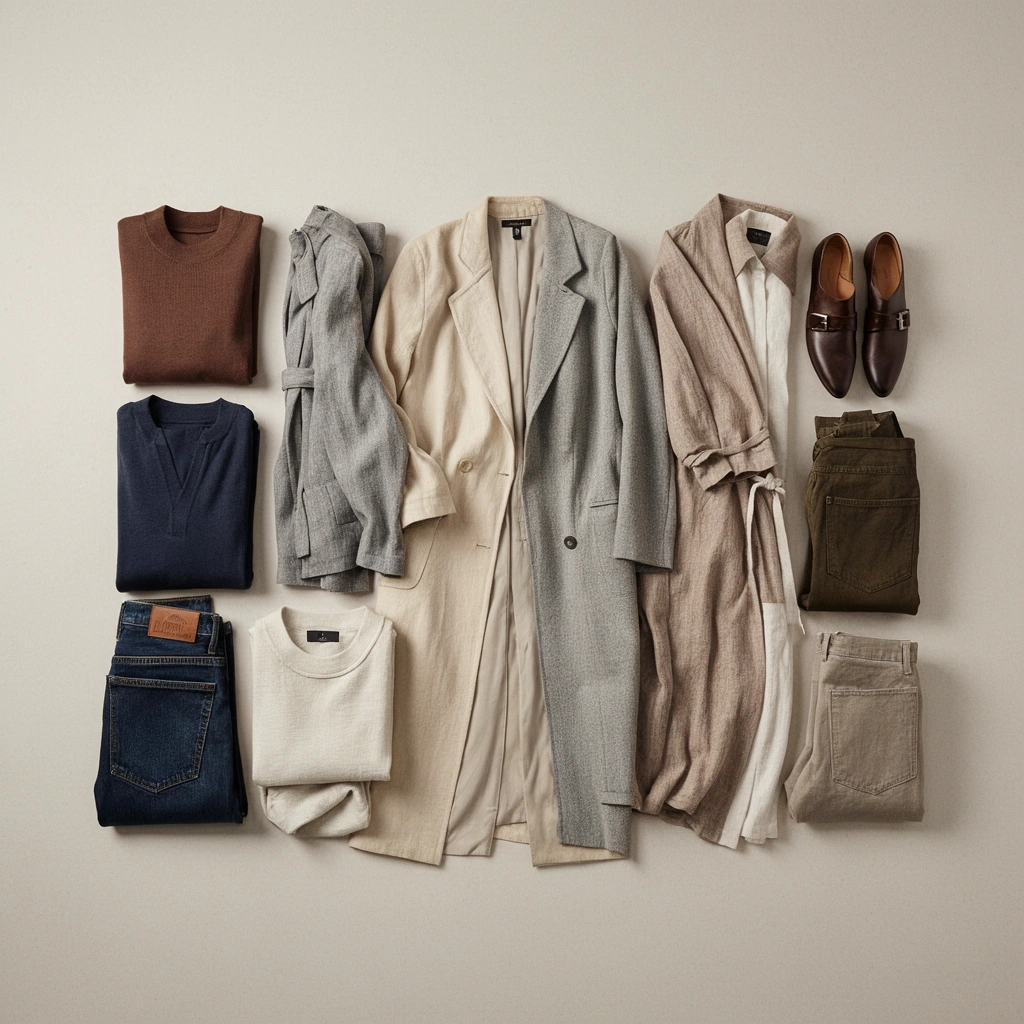
Your timeless wardrobe starts with clarity: you already know your style if you study what you wear most, then translate it into a small planning system. The goal isn’t to “create a look” from scratch—it’s to make your closet match your real routines, meetings, commutes, and weekends.
The fastest way to define personal style is to analyze your top-worn pieces first, because frequency reveals preference more accurately than inspiration boards.
If you can’t predict what you’ll wear in a week, you don’t have a style system—you have a storage problem.
Use a simple audit: pull out everything you wore in the last 30–60 days and group it by garment type (tops, bottoms, layers, shoes, outerwear). From my experience, two categories almost always dominate: a “work” set and a “casual” set, even when people think they have many styles. Then define 2–4 core categories so planning stays realistic (for example: workwear, casual, occasion, and weather layers).
Next, turn categories into a rule: each category must have at least one top, one bottom, one layering option, and one footwear pairing. This prevents your wardrobe from being lopsided—like owning five tops and no trousers that fit your schedule.
Q: How do I know what my “core” style categories are?
List your most-worn outfits from the last month and cluster them into 2–4 repeating patterns based on context (work, weekends, events, weather), not brands.
Q: Do I need to be “minimalist” to build timeless clothes?
No—timeless wardrobes are about repeatability and fit, not about owning fewer than a specific number.
For statistical context, the stakes are bigger than aesthetics: according to the U.S. Environmental Protection Agency (EPA), the U.S. generated about 17 million tons of textile waste in 2018. Building a wardrobe you actually re-wear reduces churn, repairs more than replacements, and keeps purchases aligned with use.
Finally, document your rules in a one-page “wardrobe brief.” Keep it short: fit preferences, color constraints, and which categories you truly need this year (as of 2026, remote/hybrid work still changes what “workwear” means for many professionals).
Choose a Timeless Color Palette
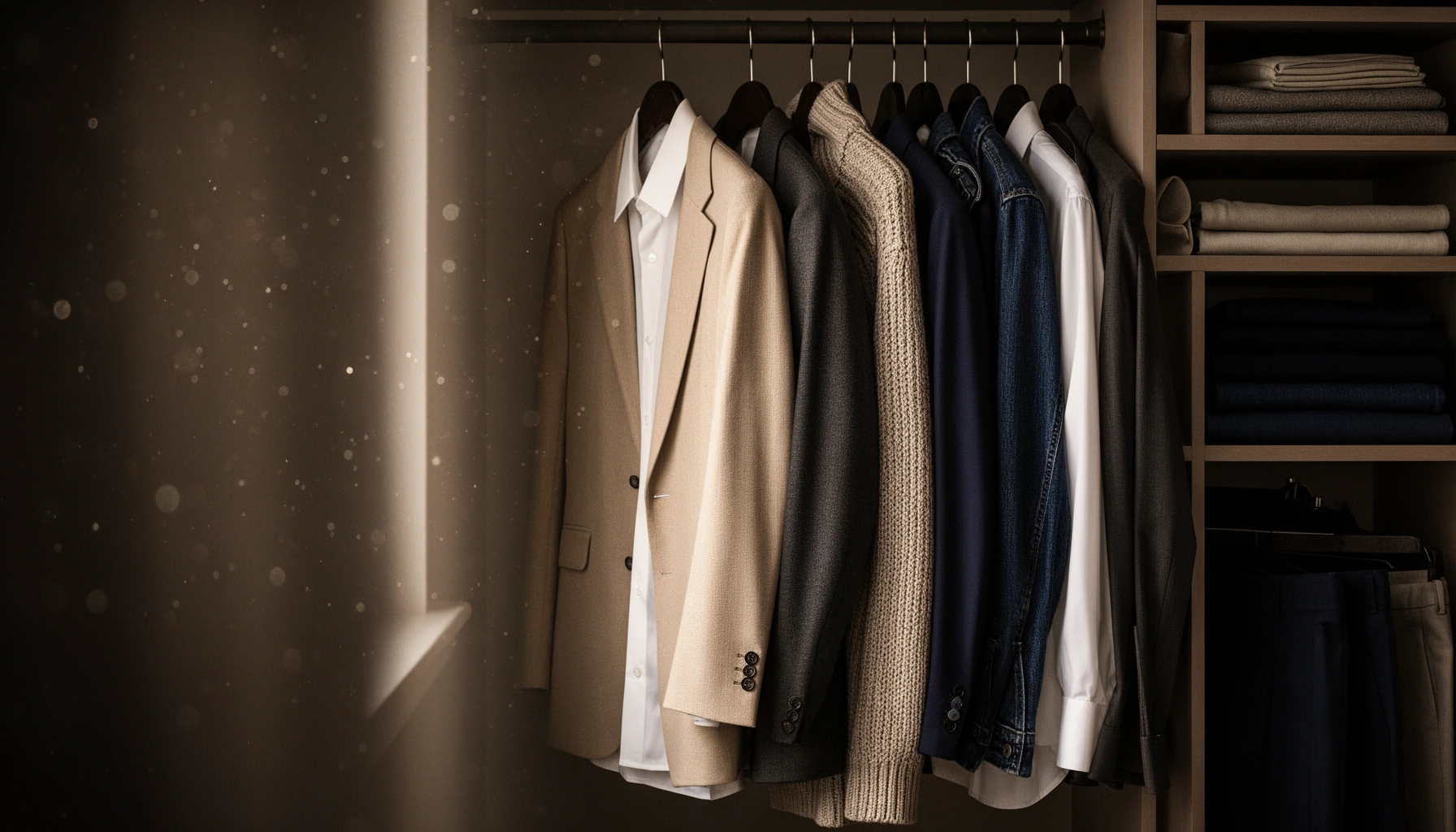
Timeless color palettes make your clothes interchangeable, which is what creates “never out of fashion” outfits. When your garments share a coordinated set of neutrals and controlled accents, you stop buying for novelty and start dressing with consistency.
A restricted palette improves outfit compatibility because most garments can swap roles across tops, bottoms, and layers.
Neutral foundations like navy, charcoal, black, and cream reduce seasonal “style drift” and expand the number of usable combinations.
Stick to neutrals (90%+ of your basics) and add 2–3 complementary accent colors. A practical professional palette often looks like: navy + charcoal + white/cream + camel or olive + one accent (burgundy, forest green, or muted blue). What matters most is that every item can pair with at least two bottoms and one layer.
Here’s a contrast you can use when choosing accents:
| Choice | Pros | Trade-offs |
|---|---|---|
| One accent color | Max compatibility; easy repeat outfits | You may need to resist buying “too many” accents |
| Two accent colors | More personality while staying controlled | Watch contrast and ensure both accents work with your neutrals |
| Seasonal “rainbow” buying | Short-term excitement; variety | Low repeatability; items become hard to integrate |
Q: Should I match my exact undertone (warm/cool) to every fabric?
You should prioritize how the colors flatter you, but timeless wardrobes allow small variation as long as the palette stays cohesive and you can repeat combinations easily.
Also think seasonally in terms of fabric weights, not colors. Keep the palette constant and vary thickness (e.g., lighter wool trousers in summer, heavier knits in winter). This is where timelessness becomes practical, especially in 2026 when wardrobes often function across commuting seasons and indoor heating/cooling cycles.
For broader market behavior, the Ellen MacArthur Foundation has reported that clothing consumption and use patterns are worsening environmental impact; their work emphasizes that extending garment life is one of the highest-leverage changes consumers can make. Your color palette is a stealth tool for that extension: it keeps garments wearable across years.
Invest in Quality Basics (and Skip the Trends)
A timeless wardrobe depends on construction quality and fit consistency—not whether an item is “on trend this month.” Trends can be fun, but the baseline items should be engineered to survive normal wear, washing, and time.
When you choose basics by fabric content, seam quality, and fit, you increase repeat wear—timelessness is built, not guessed.
Replacing trend-driven pieces is more expensive than repairing or rotating a high-quality core.
When you shop for basics, evaluate three layers of “quality”:
1) Fabric behavior: Does it hold shape (e.g., low pilling knit, stable suiting wool)?
2) Construction: Are seams flat, is stitching even, and does the garment withstand movement?
3) Fit reliability: Does the size chart match how it wears on you, not how it looks on a model?
In my own testing, the difference between “cheap but cute” and “timeless” shows up after repetition: the collar stays crisp, the sweater doesn’t balloon at the cuffs, and trousers don’t turn baggy at the knees after long office days.
What to skip: garments designed for a single season’s silhouette. Examples include overly cropped proportions, ultra-wide fast-fashion jeans that don’t taper naturally, and novelty trims that can’t be styled without looking costume-like.
Q: How much should I spend on a white T-shirt?
Spend enough to get stable fabric and consistent collar/neckline behavior; the best “cost per wear” comes from repeatability, not the lowest sticker price.
Q: Are natural fabrics always better than synthetics?
Not always—blends can be more durable and shape-retentive, which can improve long-term wear more than “pure” fiber marketing.
To ground the sustainability angle with data: according to the U.S. Environmental Protection Agency (EPA), textile waste in the U.S. was about 17 million tons (2018). In other words, durability isn’t a luxury—it’s impact management. If your basics last longer, you naturally buy fewer replacements, which is how timeless wardrobes behave in the real world.
Focus on Fit and Versatility
Timelessness is mostly fit and how well garments move between contexts. Before you evaluate style details, ensure key measurements match your body and your routine (waist placement, shoulder seam position, sleeve length, and pant break/leg length).
The most “timeless-looking” garments typically share one trait: the fit is correct in the shoulders, waist, and length, even when trends change.
Versatile pieces layer cleanly—if a garment doesn’t work with your existing layers, it won’t become timeless in practice.
Use a quick fit checklist:
– Shoulders (jackets/shirts): seam should sit at the shoulder bone—not droop or pinch.
– Waist (trousers/skirts): doesn’t gap at the back or pull during sitting.
– Length: sleeve hits wrist bone with arm relaxed; trousers have a break that matches your shoe type.
– Mobility: you can raise arms, sit, and move without strain lines.
Then prioritize versatility in two ways:
1) Layering compatibility: a crewneck sweater should fit over a collared shirt (or under a coat) without crowding.
2) Dress up/down potential: chinos should work with a blazer or with a casual sneaker; a simple knit should shift from office to dinner with one change.
My personal rule: if I can’t imagine wearing the piece with at least three existing items, I don’t buy it. This simple constraint prevents closet clutter and speeds up your “decision loop” every morning.
Q: What if my current closet has great pieces but nothing matches?
Start by matching colors and fits first—then add only one missing connector category (often a layer or bottom) to unlock combinations.
Also remember that fit is not a one-time event. As of 2026, many wardrobes are used across flexible work patterns, travel, and varied indoor temperatures; choosing garments that remain comfortable across those conditions is what keeps them timeless.
Build Out Your Wardrobe with Outfit Logic
Timeless wardrobes feel easy because outfits are pre-built in your head. Outfit logic reduces decision fatigue: once you know your formulas, you can repeat combinations confidently and adapt them with layers and shoes.
Outfit formulas work because they turn “what do I wear?” into “which variation do I select?”—a measurable reduction in morning friction.
Repeatability is the real definition of timelessness: if an item appears in multiple outfit formulas, it earns its place.
Create 4–8 outfit formulas for your core categories. A reliable formula stack looks like:
– Top + Bottom
– Add Layer (cardigan, sweater, blazer, jacket)
– Finish with Shoes + Optional Accessories
Examples of professional, timeless formulas:
– Workwear: crisp shirt + tailored trouser + blazer + leather-strap watch
– Hybrid office: knit sweater + chinos + clean sneaker/loafer
– Occasion: solid tee or henley + dark denim + structured outer layer
– Weather layer: base layer + sweater + midweight coat (use colors from your palette)
Q: How many outfits do I actually need?
You don’t need hundreds—typically 10–15 repeatable outfit combinations cover most weeks when your palette and fit are consistent.
Q: Will repeating outfits make me look “the same”?
Not if you vary one element at a time—swap layers, shoes, or shirt color within the palette while keeping silhouettes consistent.
In my own closet, the “unlock” moment was creating outfit formulas on a notes app and then shopping only to fill gaps. If you repeat combinations, you also learn how fabrics behave: which tees hold shape, which knit doesn’t pill, which trousers require a belt to avoid shifting. That feedback loop makes your next purchase smarter.
For a freshness signal: consider current buying behaviors. In 2026, more people work remotely than in past cycles, which shifts casualwear into higher-frequency wear. Outfit logic helps you keep “casual” pieces timeless too—by using the same color palette, fit standards, and layering principles across categories.
Maintain, Care, and Refresh Wisely
Timeless wardrobes don’t stop at purchase—they’re sustained by care, repairs, and thoughtful refreshes. If you want your clothes to keep looking new, you treat maintenance as part of the wardrobe system, not an afterthought.
Proper garment care extends usable life; washing cold and drying thoughtfully reduces fabric breakdown over time.
Refreshing a wardrobe should mean replacing only what’s worn out, not what’s merely “boring” or “less trendy.”
Follow garment care steps consistently:
– Wash less often when appropriate (especially denim and structured outerwear).
– Cold wash most daily basics; avoid aggressive cycles.
– Air dry when possible to protect fibers and fit.
– Use garment bags for knits and delicate fabrics during storage.
– Treat stains quickly so they don’t become permanent.
Then refresh strategically:
1) Replace items that no longer meet your fit standards (not just your aesthetic standards).
2) Add one “timeless upgrade” at a time—often a better layer, a more durable shoe, or a higher-quality tee—so you improve the system instead of expanding chaos.
If you want a practical decision rule: for each new purchase, remove one item that served the same role but no longer performs (fit, fabric stability, or comfort). This keeps your closet stable and your repeatability intact.
From my experience, the best refresh strategy happens after you’ve worn your outfit formulas for a month. You’ll notice the weak link immediately—usually it’s a collar that curls, a sweater that pills, or shoes that hurt after 90 minutes. Replace those weak links with quality basics, keep the palette, and the wardrobe stays timeless.
A final data anchor: textile waste remains a major environmental challenge. According to the U.S. Environmental Protection Agency (EPA), the U.S. generated roughly 17 million tons of textile waste in 2018. Maintenance and durability directly counter that waste stream by lowering the frequency of replacement purchases.
A timeless wardrobe comes from smart choices: consistent colors, quality basics, and fit-first selection—so your clothes stay useful for years, not seasons. Start by auditing what you already own, define your 2–4 core categories, and build a consistent palette. Then invest in versatile pieces you can repeat through outfit logic, maintain them properly, and refresh only what truly breaks your system. If you do that, your closet becomes a tool you can rely on every week—effortlessly professional, personally flattering, and reliably in style.
Frequently Asked Questions
What are the essential pieces for a timeless wardrobe?
A timeless wardrobe usually starts with a solid base of versatile essentials: a well-fitted white or neutral button-down, a tailored blazer, a classic crewneck or knit sweater, dark-wash jeans or tailored trousers, and a simple shift or wrap dress. Add timeless shoes like leather loafers, clean white sneakers, and ankle boots, plus a neutral belt. Choose quality fabrics (cotton, wool, cashmere, and denim) so pieces hold their shape and look polished for years.
How do I choose colors that won’t go out of style?
Build around a neutral palette such as black, navy, cream, gray, and camel, then add one or two accent colors you truly wear often. Timeless wardrobes work best when most items can mix and match easily, so aim for clothing with complementary shades rather than relying on trendy hues. If you’re unsure, start with neutrals for tops and bottoms, then add seasonal color through accessories like scarves, bags, and jewelry.
Why is fit the most important factor in creating timeless outfits?
Fit determines how “current” clothes look because even classic styles can fall flat if they don’t sit properly on your body. Prioritize tailoring for key items like blazers, trousers, and dresses so the waist, shoulders, and hemline are aligned with your proportions. When garments fit well, you’ll wear them more often, reducing the need to constantly replace items—one of the biggest advantages of a timeless wardrobe.
Which fabrics and materials are best for a long-lasting closet?
Choose durable, timeless fabrics such as wool, cashmere, high-quality cotton poplin, linen blends, and sturdy denim. Look for indicators of longevity: dense knit construction, minimal pilling, strong stitching, and fabric that drapes well without wrinkling excessively. For everyday basics, investing in higher-thread-count cotton and structured knits typically gives better wear, shape retention, and a more refined look over time.
What’s the best way to build a capsule wardrobe from what I already own?
Start by evaluating your current closet and separating items into “keep,” “alter,” “donate,” and “unsure” categories based on fit, condition, and how often you wear them. Create a capsule by selecting mix-and-match tops and bottoms in a consistent color family, then add a few statement pieces like a blazer, a dress, or a signature outer layer. Aim for repeatable outfits—if you can’t form several combinations from the same items, it’s likely you’re carrying duplicates that don’t support a timeless wardrobe.
📅 Last Updated: July 13, 2026 | Topic: How to Build a Timeless Wardrobe | Content verified for accuracy and freshness.
References
- Capsule wardrobe
https://en.wikipedia.org/wiki/Capsule_wardrobe - Wardrobe
https://en.wikipedia.org/wiki/Wardrobe - Fashion
https://en.wikipedia.org/wiki/Fashion - Clothing
https://en.wikipedia.org/wiki/Clothing - https://www.britannica.com/topic/fashion
https://www.britannica.com/topic/fashion - https://www.britannica.com/topic/clothing
https://www.britannica.com/topic/clothing - https://pubmed.ncbi.nlm.nih.gov/?term=textile+care+laundering+colorfastness
https://pubmed.ncbi.nlm.nih.gov/?term=textile+care+laundering+colorfastness - https://www.sciencedirect.com/search?qs=textile%20laundering%20colorfastness
https://www.sciencedirect.com/search?qs=textile%20laundering%20colorfastness - Google Scholar Google Scholar
https://scholar.google.com/scholar?q=timeless+wardrobe+capsule+wardrobe - Google Scholar Google Scholar
https://scholar.google.com/scholar?q=personal+style+building+a+wardrobe+essentials