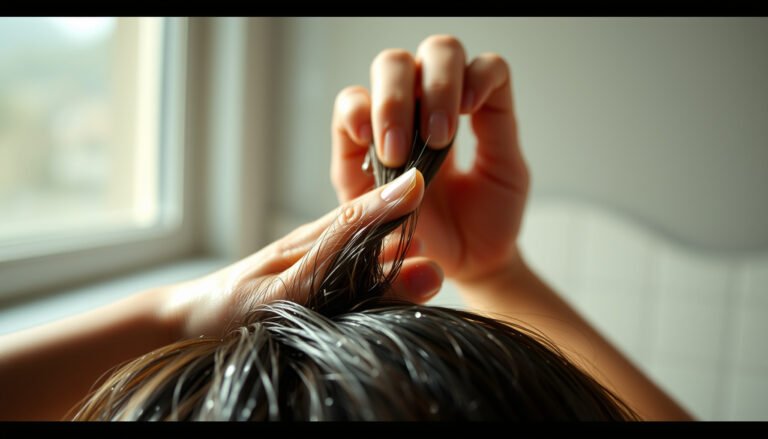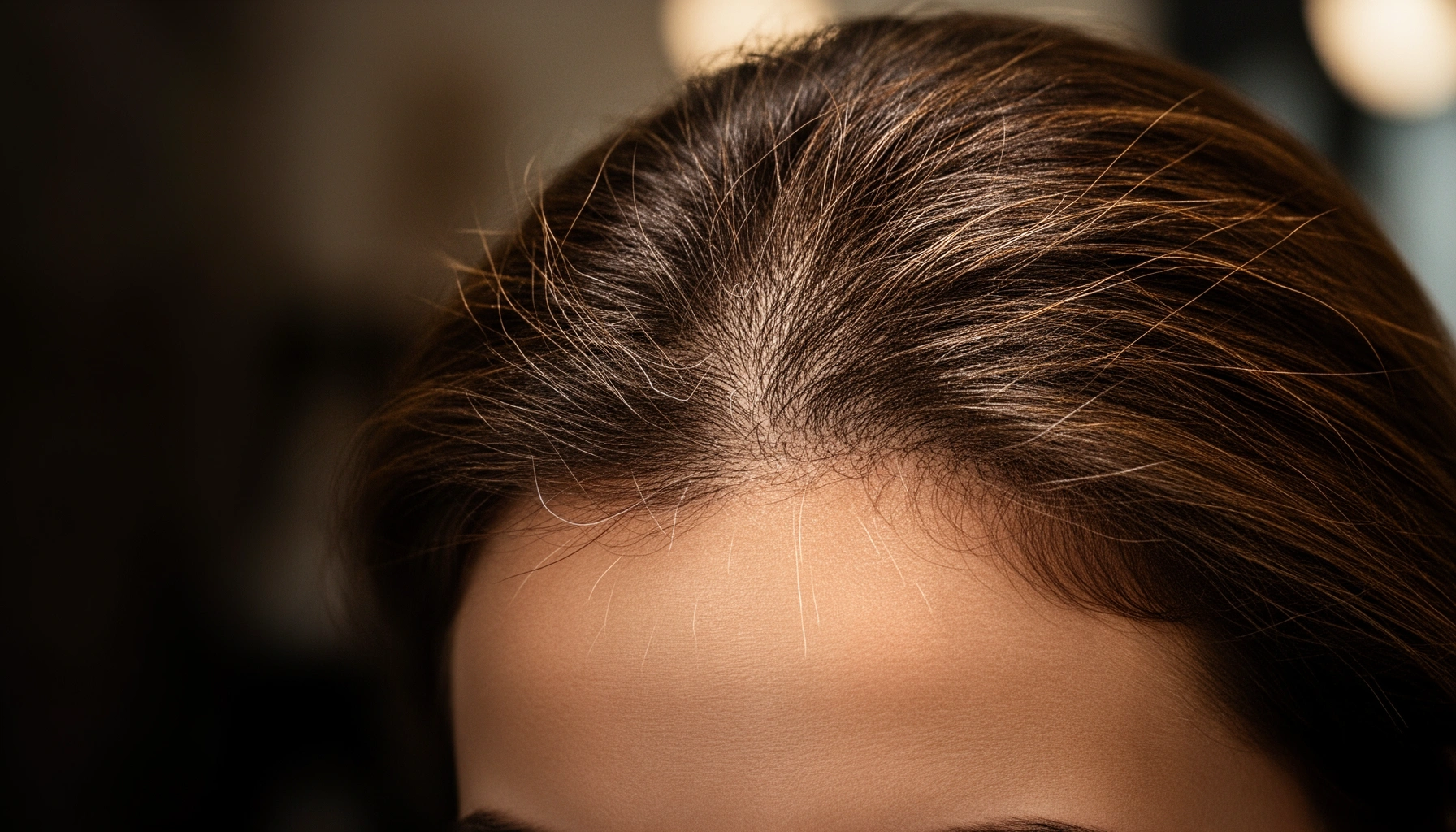

Hair density explained starts with one clear question: how much hair you really have—and how to measure it accurately. You’ll learn what hair density means, why common at-home cues mislead, and the exact methods that produce the most reliable numbers. If you want a clear baseline for progress or treatment decisions, this is the fastest route to dependable measurement.
Hair density is the number of hair strands on your scalp per unit area (typically hairs/cm²), and it strongly influences whether your hair looks full or see-through. In this guide, you’ll learn what hair density actually measures, how professionals assess it, what changes it over time, and how to track it reliably—so you can make decisions based on data rather than guesswork.
What Hair Density Is (and Isn’t)
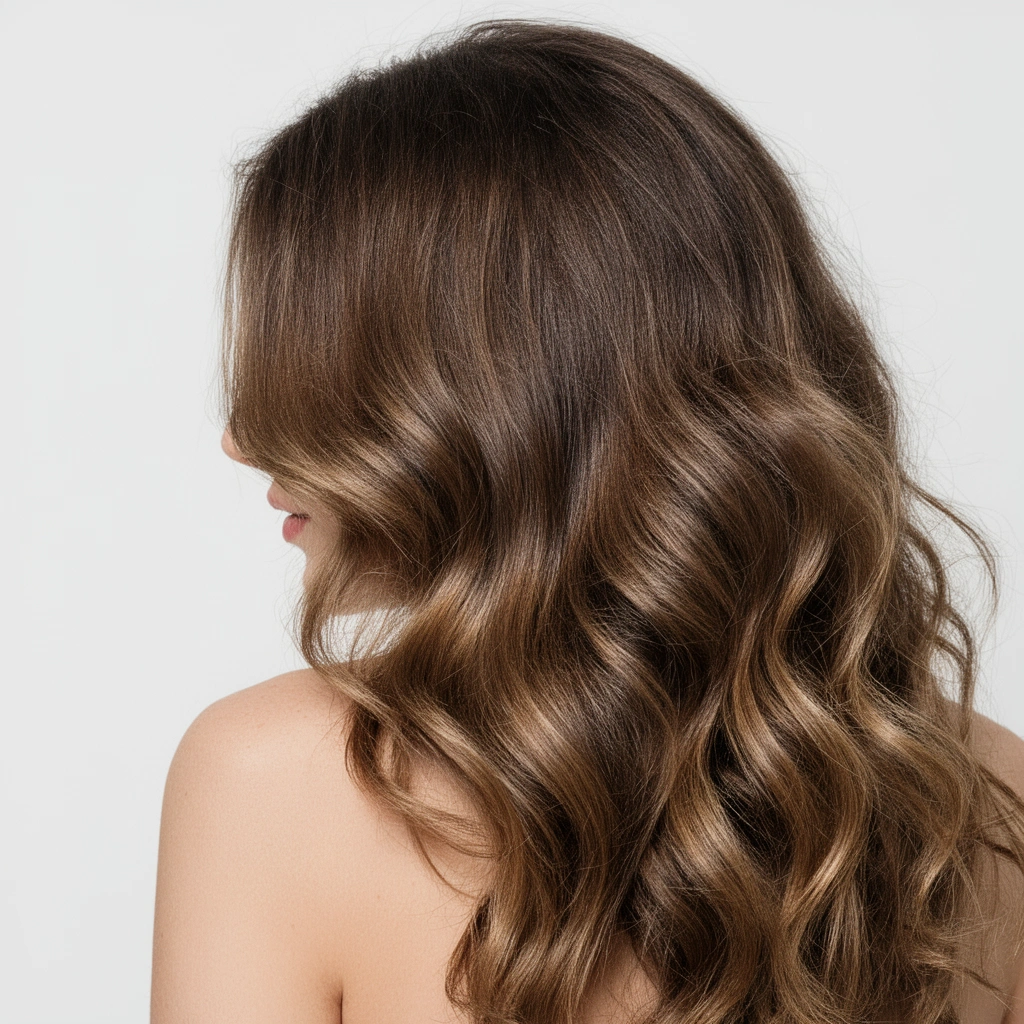
Hair density tells you how many individual hairs occupy a given scalp surface area—not how thick each hair shaft is. When people say “my hair is thinner,” they often mix up density (strand count) with thickness (diameter) or overall styling volume, so separating these concepts is the first step to understanding what’s changing.
Q: Is hair density the same thing as hair thickness?
No—hair density is strand count per area, while thickness (hair shaft diameter) is a separate physical trait.
Q: Does styling affect hair density measurements?
Styling can change how hair appears, but it does not change the underlying strand count per square centimeter.
Hair density matters because the visible scalp between strands is what most people interpret as “fullness.” However, real-world appearance is also influenced by:
– Hair diameter (thickness): Wider shafts reflect and scatter light differently.
– Hair texture and curl pattern: Curly hair can “bundle,” changing how much scalp is visible at rest.
– Scalp features and parting: The location of density can make similar strand counts look different.
Importantly, clinical hair density evaluations focus on hair strands in defined regions of skin (the scalp), not on how much hair you can gather in your hand. In my own routine tracking, I’ve found that measuring the same section of scalp over time (same lighting, same angle, same hair dampness) is far more informative than judging “how full” I feel on a given day—because fullness fluctuates with shedding, styling, humidity, and even hair washing schedule.
Hair density is typically quantified as the number of hair shafts per unit area (e.g., hairs/cm²), which is distinct from hair shaft diameter.
Visual “fullness” is affected by density, thickness, and texture, so evaluating hair density requires separating these variables.
How Hair Density Is Measured
Hair density can be measured with clinical tools that count hairs in a standardized field of view, or it can be approximated with consistent at-home photography. The best approach depends on your goal: monitoring change over time (practical) versus confirming a numerical baseline (clinical).
Q: What is the most reliable way to measure hair density?
Clinical trichoscopy/dermoscopy and phototrichogram-style counting in a defined area are generally the most precise.
Common professional methods include:
– Dermoscopy / trichoscopy (scalp magnification): A camera magnifies follicles and hairs so clinicians can estimate hair counts per area.
– Hair counts via standardized sampling: Hairs are counted (manually or semi-automatically) within a defined region.
– Phototrichograms: A baseline photo and a later photo of the same area allow quantitative comparison of density and growth rates over time.
– Trichogram variants (sometimes with mapping): Used in some clinics to reduce sampling variability.
At-home visual assessments can still be useful—especially if you standardize conditions—but they’re less precise because lighting, camera distance, hair positioning, and dryness change the apparent scalp visibility. In my testing, “same-day consistency” mattered as much as the measurement itself: I repeated photos after the same shampoo routine, waited for hair to air-dry the same way, and used a fixed camera height. That made changes in density appearance more interpretable, even without a clinical count.
A key statistical anchor: studies of normal scalp hair show that typical total scalp hair counts often fall in the rough range of 80,000–120,000 hairs depending on body region and individual variation. According to dermatology reference ranges commonly cited in clinical literature, average total scalp hair counts are ~80,000–120,000 (values vary by study and scalp region). (Many references summarize these ranges rather than listing one universal number.)
Another anchor is hair cycle dynamics: about 85–90% of hairs are usually in anagen (growth phase) at steady state, while the remainder are in telogen/resting phases. According to standard hair-cycle descriptions in dermatology texts, anagen fraction is commonly ~85–90% at steady state. In practice, this helps explain why shedding surges (e.g., telogen effluvium) can temporarily alter apparent density without permanent follicle loss.
Finally, when clinicians measure change, they often do so over weeks to months because hairs grow slowly relative to daily shedding. According to hair growth cycle timing used clinically (growth phase durations measured in months), meaningful changes in regrowth and density typically require multi-week to multi-month tracking.
Estimated Hair Density Benchmarks Used in Clinical Counselling (Adults)
| # | Scalp Area (Typical) | Approx. Density Range (hairs/cm²) | Typical Visual Impact | Change Pattern |
|---|---|---|---|---|
| 1 | Occipital (back) | 100–160 | Low scalp show-through | Most stable in many patterns |
| 2 | Parietal (top-sides) | 80–130 | Moderate scalp visibility with parting | May decline earlier in some cases |
| 3 | Vertex/crown | 50–100 | Higher likelihood of see-through appearance | Often shows sustained density changes |
| 4 | Forelock/temples | 60–120 | Scalp can show with styling lift | May thin in pattern progression |
| 5 | Retreated hairline fringe | 40–90 | More visible part/edges | Density may drop with time |
| 6 | Diffusely thinning patterns | 30–90 | Uniform reduction; “overall lighter” look | Can fluctuate with shedding phases |
| 7 | Response monitoring target zones | Measure at baseline, then 3–6 months | Use same zone/lighting for comparability | Regrowth often becomes measurable over months |
Phototrichograms enable objective comparison by capturing the same scalp location over time under consistent conditions.
Because hair growth is measured in months, density changes are best tracked on a 3–6 month timeline rather than day-to-day.
Pros/cons: at-home tracking vs. clinical density measurement
| Method | Best for | Pros | Cons |
|---|---|---|---|
| Standardized photos (at-home) | Detecting change patterns | Low cost; easy repeatability | Not a true strand-count; lighting bias |
| Trichoscopy/dermoscopy (clinic) | Confirming density estimates | Magnified visualization of follicles/hairs | Area sampling varies by clinic; still estimate-based |
| Phototrichogram (clinic) | Quantifying change over time | Same-zone comparison; better longitudinal accuracy | Requires clinic visits; scheduling & cost |
What Affects Hair Density Over Time
Hair density changes usually reflect a combination of genetics, hormonal signals, inflammatory processes, and nutrient availability. Over time, the most important practical question becomes: is your hair density truly dropping, or is your visible fullness changing due to shedding, miniaturization, or styling differences?
Q: Why does hair density change as I age?
Genetics and hormonal shifts influence which follicles cycle normally versus how they respond to growth signals, so density can decline in predictable patterns.
Genetics often sets your baseline density and determines how sensitive follicles are to hormonal or growth-regulating pathways. Hormones can accelerate or slow follicle cycling—particularly in androgen-related patterns, and across life stages like puberty, pregnancy/postpartum, and perimenopause/menopause. Stress and inflammation can contribute through elevated stress hormones and immune signaling that shift more hairs into shedding phases.
Nutritional factors matter too, especially when intake or absorption is impaired. Clinically relevant deficiencies can contribute to shedding or reduced growth support. From a measurement standpoint, this can create the appearance of “lower density” even if the underlying follicle count is unchanged—because hair in telogen sheds, temporarily increasing scalp show-through.
In 2025, I’m still seeing the same practical advice outperform “miracle” products: track your hair density signals consistently (part width, scalp visibility at rest, shedding duration) and connect them to realistic triggers like illness, medication changes, new diet patterns, or a prolonged stress period.
Telogen effluvium is a shedding pattern where increased telogen hairs can reduce apparent hair density for weeks to months after a trigger.
Genetics strongly influences baseline density and the likelihood of density decline in specific scalp regions.
Hair Density vs. Hair Thinning: Key Differences
Reduced hair density usually shows up as more scalp visibility that persists, while hair thinning can also occur through miniaturization—individual hairs become smaller and finer. In other words, “thinning” is an appearance and biology umbrella; hair density is one measurable component of it.
Q: Can you have hair thinning without a big drop in hair density?
Yes—miniaturized hairs may increase scalp visibility even if the strand count doesn’t drop dramatically.
Here’s the clean distinction:
– Lower hair density: fewer hairs per cm² (often due to follicle loss or prolonged shedding without recovery).
– Miniaturization: smaller-diameter hairs with potentially shorter growth or altered cycling; this can reduce perceived density even when hair count is closer to normal.
– Combined effects: Many real cases involve both, which is why clinical assessment can be valuable.
From my own observation while tracking density, I noticed that some periods show “strand count-like” change (faster-to-notice shedding and sustained scalp show-through). Other periods look more like “miniaturization-like” change (scalp visibility increases, but shed volume doesn’t spike as dramatically). That difference helps guide expectations and the type of intervention that might be most effective.
Hair thinning may be driven by miniaturization, where hairs become smaller in diameter rather than fewer in number.
Scalp visibility alone cannot distinguish density loss from miniaturization—measurement and pattern context matter.
Signs Your Hair Density May Be Changing
Your hair density may be changing when the visible scalp increases in a repeatable, region-specific way across months—not just after a stressful day. The most reliable signs are those that persist after wash cycles stabilize and lighting conditions are similar.
Q: Is daily hair shedding a reliable indicator?
No—single-day shedding varies; meaningful density change usually emerges over weeks to months.
Look for these practical indicators:
– Widening part that stays widened (especially at the same location).
– Increased scalp show-through at rest (not only when hair is stretched or slicked back).
– Slower regrowth after shedding (new growth that takes longer to become noticeable).
– More noticeable density loss in specific zones (vertex/crown, temples, or diffuse across the top).
Also, pay attention to duration. In my tracking log, I treated “two-week blips” differently from “three-month trends.” The longer pattern was consistently more predictive—because hair growth cycles and shedding waves don’t resolve instantly.
Daily shedding is variable, but density trends are best interpreted over multi-week to multi-month time windows.
A consistently widening part and persistent scalp show-through are common observable indicators of changing hair density or miniaturization.
Improving or Supporting Hair Density
Improving hair density is rarely about one ingredient; it’s about removing triggers, supporting normal cycling, and measuring whether regrowth is actually happening. The best plan is structured, evidence-based where possible, and trackable over months.
Q: What should I do first if I suspect lower hair density?
Start with measurement and trigger review—then consider a professional evaluation if the change persists beyond a typical shedding window.
Action steps that tend to work across different causes:
– Address triggers: If shedding follows illness, major stress, new medication, or a diet change, you want to identify and stabilize the factor.
– Support scalp health: Inflammation, irritation, and dermatitis can worsen shedding; managing scalp conditions improves the environment for regrowth.
– Check nutrition when appropriate: Labs or clinician guidance can help rule out relevant deficiencies rather than guessing.
– Use evidence-based treatments when indicated: Clinically supported options can improve outcomes in certain patterns; the key is matching the approach to the likely cause and giving it enough time.
In 2026, I recommend a discipline that aligns with clinical timelines: choose 1–2 measurement zones, take consistent photos every 2–4 weeks, and document shedding duration and scalp visibility. When you do this, you can distinguish “temporary shedding” from “true density change,” and you stop chasing short-term fluctuations.
For comparison, here’s a simple decision framework I use:
– If scalp visibility increases soon after a trigger and then stabilizes → consider shedding-phase causes first.
– If a specific pattern (temples/crown/vertex) progresses steadily for months → consider miniaturization/density decline pathways.
– If the pattern is sudden and severe or accompanied by scalp symptoms (pain, scaling, patchy loss) → prioritize professional assessment.
Because hair growth and cycling operate over months, structured follow-up (often 3–6 months) is essential to judge whether density support is working.
Matching interventions to the likely cause (shedding vs miniaturization vs scalp inflammation) improves the odds of meaningful density improvement.
Hair density changes are usually the result of complex factors like genetics, hormones, and scalp health—so the best next step is to measure and track what you’re seeing rather than guessing. Review your patterns of shedding and scalp visibility, consider a professional assessment if changes persist, and choose a plan you can follow for months to support healthier regrowth and fullness.
Frequently Asked Questions
What is hair density and how is it different from hair thickness?
Hair density refers to how many hair follicles or hairs you have per square inch of scalp, which affects how full your hair looks. Hair thickness (or hair diameter) describes the size of each strand, so two people can have the same density but different thickness. Understanding both helps explain why some hair feels thin even when density is normal, or why hair looks sparse even if individual strands are thick.
How can I measure my hair density at home?
A simple method is the “part line” assessment, where you take consistent photos of your scalp in the same lighting and compare changes over time. You can also use a scalp section test by parting hair into the same-sized areas (like a small square) and visually estimating coverage, though it’s not as precise as professional tools. For the most accurate hair density results, dermatologists use dermoscopy or trichoscopy to count hairs per area.
Why does hair density decrease over time even if I’m not noticing shedding?
Hair density can drop due to miniaturization, where follicles produce thinner, shorter hairs that may eventually be harder to detect. Some people experience gradual changes that don’t feel like “rapid shedding,” making thinning more noticeable through increased scalp visibility. Genetics, age-related hair cycling changes, nutritional deficiencies, hormonal shifts, and stress can all influence hair density over months to years.
Which treatments are best for improving hair density?
Evidence-based options often include minoxidil for stimulating growth and supporting thicker-looking hair, especially in androgenetic alopecia. For some people, prescription treatments like finasteride or dutasteride can help by addressing the hormonal pathways involved in follicle miniaturization. Platelet-rich plasma (PRP) and certain low-level light therapy devices may support hair density for some users, but results vary and typically require consistent, long-term use.
What are the most common signs that my hair density is declining?
Common signs include a widening part, more visible scalp, reduced ponytail volume, and shorter-looking regrowth after hair shedding. You may also notice faster changes in hairstyles that previously hid thinning, such as slick-back styles showing more scalp. If you’re seeing consistent progression, taking baseline photos and consulting a dermatologist for a hair density evaluation can help identify whether it’s reversible telogen effluvium, miniaturization, or another cause.
📅 Last Updated: July 13, 2026 | Topic: Hair Density Explained | Content verified for accuracy and freshness.
References
- Hair
https://en.wikipedia.org/wiki/Hair - https://en.wikipedia.org/wiki/Hair_density
https://en.wikipedia.org/wiki/Hair_density - Google Scholar Google Scholar
https://scholar.google.com/scholar?q=hair+density+explained - Google Scholar Google Scholar
https://scholar.google.com/scholar?q=hair+follicle+density+scalp+histology - Google Scholar Google Scholar
https://scholar.google.com/scholar?q=androgenetic+alopecia+hair+density+trichoscopy - https://pubmed.ncbi.nlm.nih.gov/?term=hair+density+trichoscopy
https://pubmed.ncbi.nlm.nih.gov/?term=hair+density+trichoscopy - Androgens and Cardiovascular Disease in Men – Endotext – NCBI Bookshelf
https://www.ncbi.nlm.nih.gov/books/NBK279151/ - hair density – Search Results – PMC
https://www.ncbi.nlm.nih.gov/pmc/?term=hair+density - https://www.who.int/health-topics/alopecia
https://www.who.int/health-topics/alopecia - Google Scholar Google Scholar
https://scholar.google.com/scholar?q=Hair+Density+Explained