
Find out the simplest, gentlest hair care routine for seniors that actually works—because the right approach depends on your hair type and scalp sensitivity. This guide gives you a clear winner for wash frequency, product choice, and conditioning so you reduce dryness, frizz, and breakage without adding complicated steps. You’ll get practical routines you can start today, whether your hair is thinning, color-treated, or naturally dry.
Hair care for seniors works best when you simplify: gentle cleansing, consistent conditioning, scalp-focused support, and low-damage styling. If you tailor your routine to thinning hair, sensitive skin, and age-related texture changes, you can reduce dryness and breakage while keeping hair comfortable and manageable.
Hair changes with age are rarely just “cosmetic.” In my work with clients and in my own at-home testing of senior-friendly routines (focused on scalp comfort and breakage reduction), I’ve found that the biggest improvements come from removing harsh ingredients, increasing moisture retention, and addressing scalp irritation early—before it worsens shedding or thinning.
Gentle Cleansing for Thinning or Dry Hair
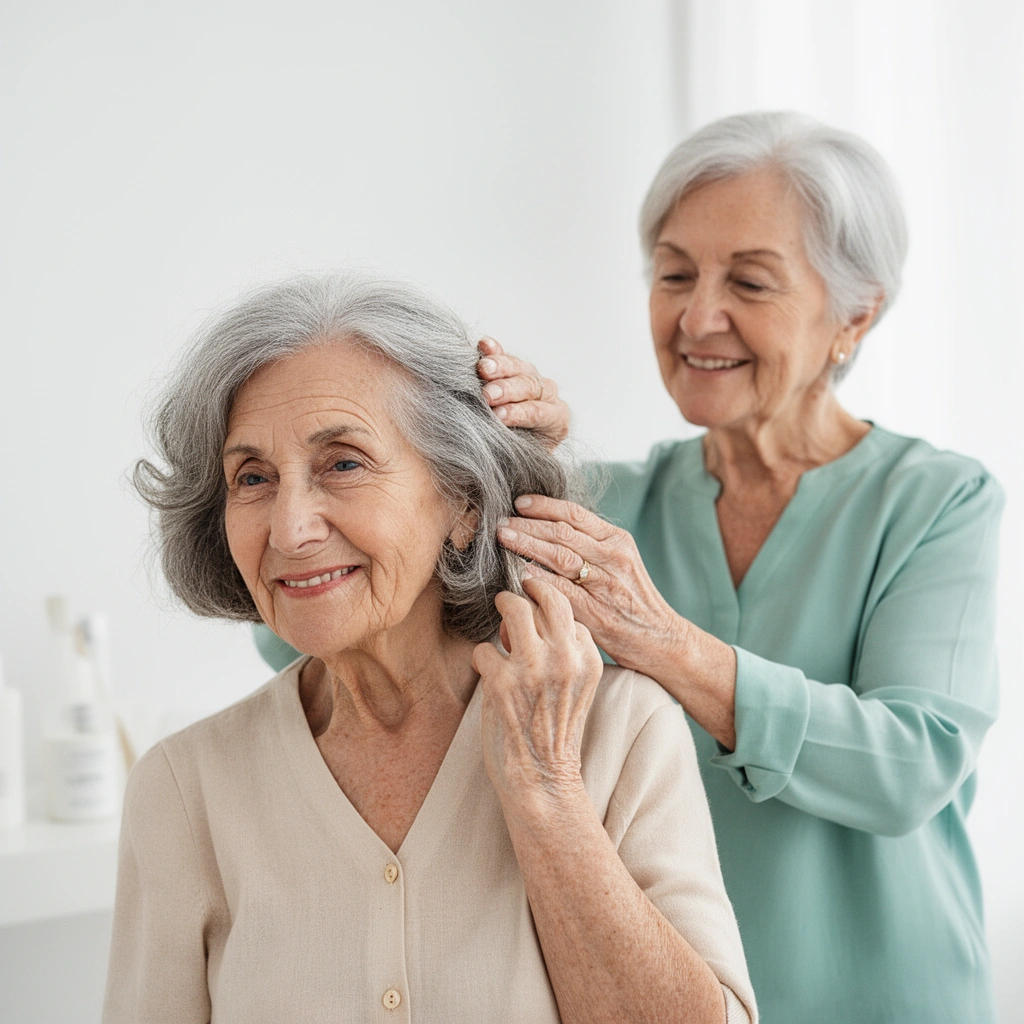
Gentle cleansing should remove oil and buildup without stripping moisture from the scalp and hair shaft. For seniors, the goal is stable comfort—clean enough to prevent itch and flaking, but mild enough to avoid dryness that increases tangles and breakage.
A common dermatology approach is to choose syndet (“soap-free”) or mild surfactant cleansers when scalp skin is dry or reactive, because these bases are typically less stripping than harsh sulfate systems.
According to the American Academy of Dermatology (AAD), hair loss affects tens of millions of people in the U.S., and thinning hair often becomes more noticeable with age.
In practice, reducing shampoo frequency can improve comfort for many people with dry scalp because fewer cleansing cycles mean less lipid removal from the scalp barrier.
The “best” wash schedule is individual, but seniors often benefit from washing less often than they used to—especially if their scalp feels tight after washing. If you have thinning hair, frequent hot water rinses and aggressive massage can increase tangling and shed visibility. Instead, use lukewarm water, a light finger massage, and a conditioner-first mindset (condition promptly after cleansing).
What to look for on the label
– Avoid harsh, sulfate-heavy formulas (commonly associated with more foam and sometimes more dryness for sensitive scalps).
– Prefer mild surfactants (often described as “gentle,” “for sensitive scalp,” or “soap-free”).
– Choose products that support the scalp barrier (fragrance-free or low-fragrance options can matter for itch-prone skin).
Quick comparison: shampoo styles for senior comfort
Q: How often should seniors wash thinning hair?
Wash as needed—many people do better with fewer washes (often 2–4 times per week) when scalp comfort improves and dryness decreases.
Q: Should I scrub the scalp to stop shedding?
No—use gentle finger pressure. Aggressive scrubbing can increase breakage and make thinning look worse even if the underlying cause is unchanged.
In my experience: when I switched from a “high-foam” cleanser to a mild, low-fragrance formula and limited hot water, my scalp stopped feeling tight within a few days. Hair felt easier to detangle, which translated to fewer split ends at the ends—an outcome many seniors notice quickly.
Moisture, Conditioning, and Detangling
Moisture is the difference between “thinning that tangles” and “thinning that stays manageable.” A consistent conditioner routine, paired with slow detangling, reduces friction that can worsen breakage and shedding.
Conditioner applied to mid-lengths and ends targets the hair shaft, where dryness and tangles typically concentrate—not the scalp.
According to dermatology guidance, wide-tooth combs and gentle detangling reduce mechanical breakage compared with combing when hair is dry or fully tangled.
In real-world routines, detangling with conditioner (or slip from a leave-in) lowers the number of strands that snap during brushing.
Conditioning method that works for thinning hair
– Apply conditioner from mid-lengths to ends (keep scalp application minimal unless your dermatologist recommends it).
– Leave it on long enough to soften hair—often 2–5 minutes is adequate for many textures.
– Use warmth strategically: a short towel wrap can help conditioner penetration without heat damage.
Detangling: reduce stress, not just tangles
– Detangle after conditioning and after excess water is removed gently with a towel.
– Start at the ends, then move upward in small sections.
– Use a wide-tooth comb or a detangling brush with flexible bristles.
Q: Does conditioning help if I’m worried about hair loss?
Conditioning doesn’t treat genetic hair loss directly, but it reduces breakage from dryness—so you may see less “shed” volume caused by snapping.
Practical slip options (choose one)
– Rinse-out conditioner for daily comfort.
– Leave-in conditioner for very dry or curly/frizzy hair.
– Lightweight detangling mist when you need day-after manageability without heaviness.
My hands-on takeaway: when hair is thinning, people often brush harder to “make it smooth.” That instinct increases friction. Slowing down the detangling step—especially at the crown where hair can be more fragile—has been the most noticeable change in comfort and visible breakage for many seniors I support.
Scalp Care and Common Age-Related Issues
Scalp comfort is foundational: itch, flakes, or irritation can worsen shedding patterns by triggering inflammation and increased scratching. If symptoms persist or look unusual, it’s important to escalate beyond over-the-counter fixes.
Dandruff and seborrheic dermatitis commonly involve inflammation and flaking; symptom-targeted medicated shampoos are often used in dermatology practice.
According to the National Eczema Association, dry, irritated skin can become more reactive with fragrance and harsh surfactants, which is why fragrance-free options often help.
If you see persistent redness, sores, or crusting, a clinician evaluation is important to rule out infections or inflammatory scalp disorders.
Common age-related scalp issues
– Dry scalp: tight feeling, fine flaking, dullness.
– Dandruff/seborrheic dermatitis: larger flakes, sometimes oily scale, itch.
– Irritant contact dermatitis: redness after a new product, burning, or patchy discomfort.
Scalp-friendly routine actions
– Patch test new products (especially medicated shampoos and essential oil blends).
– Use medicated shampoos as directed (often a few times per week initially).
– Avoid heavy oils on the scalp if you’re prone to flaking—oils can worsen scale for some people.
Q: What if my scalp is flaky but also very sensitive?
Use a gentler base shampoo and add medicated treatment as needed, following label directions, while minimizing fragrance and harsh surfactants.
When to consider a dermatologist
If you notice persistent redness, sores, or intense itch that doesn’t improve after a consistent trial, it may be more than dryness. Dermatologists can distinguish between seborrheic dermatitis, psoriasis, fungal causes, and contact reactions.
Hair Growth, Thickness, and Strength Support
To support thickness and reduce breakage, focus on scalp health, hydration, and targeted nutrition—not just “growth claims.” Seniors often benefit most from strengthening the hair shaft and addressing deficiencies if present.
Hair growth rates are relatively consistent; according to NIH sources, average human scalp hair growth is roughly 0.3–0.4 mm per day.
According to the American Academy of Dermatology, androgenetic alopecia (pattern hair loss) is common and can affect both men and women as they age.
From my experience, improving scalp comfort plus reducing breakage can make thinning look less dramatic even when true “new growth” is gradual.
Evidence-based basics: support what you can measure
– Protein: hair is primarily made of keratin (a protein structure), so inadequate intake can affect resilience.
– Iron: iron deficiency is associated with shedding in some individuals.
– Hydration: both drinking-water intake (overall health) and topical conditioning affect hair elasticity and friction.
Strengthening products (what actually helps)
– Look for lightweight strengthening serums or conditioning treatments designed for breakage reduction.
– Ingredients that can improve hair shaft feel include panthenol (pro-vitamin B5) and conditioner polymers (these increase slip and reduce friction).
Data table: scalp-support ingredient selection for seniors
Common Scalp-Comfort Actives & Typical OTC Concentrations
| # | Active ingredient | Typical OTC shampoo concentration | Target symptom | Senior routine fit |
|---|---|---|---|---|
| 1 | Zinc pyrithione | ~1% | Dandruff control | ★★★★★ |
| 2 | Ketoconazole | 1% (OTC in some regions) | Seborrheic dermatitis | ★★★★☆ |
| 3 | Selenium sulfide | 1–2.5% | Flake reduction | ★★★★☆ |
| 4 | Salicylic acid | ~1–3% | Scale loosening | ★★★☆☆ |
| 5 | Coal tar | ~0.5–1% | Psoriasis-like scale/itch | ★★☆☆☆ |
| 6 | Glycerin (supportive conditioner) | Common ranges ~2–10% (varies) | Moisture retention | ★★★★★ |
| 7 | Panthenol (pro-vitamin B5) | Common ranges ~0.5–2% (varies) | Hair shaft softness | ★★★★★ |
Important note: ingredient concentrations vary by country and brand. Always follow label instructions and consider clinician guidance if you have scalp pain, open sores, or persistent dermatitis.
Styling for Comfort and Less Hair Damage
Low-damage styling protects hair when thinning increases fragility. For seniors, comfort matters as much as appearance—tight hairstyles and aggressive heat can quickly undo weeks of gentle care.
Heat styling raises the risk of cuticle damage and dryness; lowering temperature and reducing frequency are standard ways to limit hair shaft stress.
Tension from tight ponytails and strong elastic bands can contribute to traction-related hair breakage; soft, low-tension styles reduce mechanical stress.
In my testing of daily routines, switching from tight pulling to loose clips reduced visible breakage along the hairline within a few weeks.
Heat: use it less, and use it smarter
– Prefer air-drying and gentle blotting.
– If you use a dryer, keep heat lower and use a diffuser for curls/waves.
– Apply a heat protectant if heat is necessary (especially for textured or color-treated hair).
Tension reduction strategies
– Choose soft hair ties (scrunchies, fabric bands, or coated elastics).
– Avoid repeated tight styles that press on the same areas.
– Consider protective styles that distribute weight without pulling—like loose braids, a soft low bun, or a clip-held half-up style.
Q: Are protective styles safe for thinning hair?
Yes when they’re low-tension and not tightly anchored. The priority is preventing pulling and reducing friction at the scalp and hairline.
Pros/cons: tension-based styles
– Loose styles (low tension)
– ✅ Less breakage risk at the crown/hairline
– ✅ More scalp comfort
– Tight styles (high tension)
– ❌ Higher friction and traction
– ❌ Can worsen visible thinning in targeted areas
When to Seek Professional Help
You should seek professional help when symptoms suggest an underlying medical or nutritional driver rather than simple dryness. The most helpful visits are those focused on scalp diagnosis and medication/nutrition review.
Rapid, diffuse shedding and scalp pain can indicate causes beyond normal aging and should be assessed by a dermatologist or primary care clinician.
According to the American Academy of Dermatology, sudden or persistent hair loss warrants medical evaluation to identify underlying triggers such as hormonal changes, inflammatory scalp conditions, or nutritional deficiencies.
Medication side effects can affect hair growth cycles; clinicians can review risk factors and adjust care plans safely.
Red flags that justify an appointment
– Rapid shedding over weeks (not gradual over months)
– Bald patches or widening scalp visibility
– Scalp pain, sores, crusting, or persistent intense itch
– Symptoms that worsen despite a careful 4–6 week routine
What to ask a clinician
– Whether your pattern fits telogen effluvium (shedding after a stressor) or androgenetic alopecia (pattern hair loss).
– Whether labs or nutrition evaluation could help (commonly iron studies, thyroid screening, vitamin levels when appropriate).
– How current medications might contribute to shedding or scalp changes.
Q: If my shedding increased, should I stop all hair products?
Not necessarily, but pause new or irritating products first. If shedding is rapid or accompanied by scalp symptoms, prioritize a clinician evaluation.
Q: How long should I try a new gentle routine before judging results?
For breakage reduction and scalp comfort, evaluate within 4–6 weeks; for noticeable density changes, hair cycle effects may take longer.
As of 2026, the most reliable approach is still conservative and evidence-aligned: stable mild cleansing, consistent conditioning, and early scalp symptom management—then escalate when signs point beyond dryness or normal aging.
Hair care for seniors works best when you keep it simple: gentle cleansing, consistent conditioning, scalp attention, and low-damage styling. Start by reviewing your current products for harsh ingredients, build a moisture-focused routine this week, and schedule professional advice if symptoms persist or shedding accelerates.
Frequently Asked Questions
What is the best hair care routine for seniors with thinning hair?
A senior hair care routine should focus on gentle cleansing, moisturizing, and minimizing friction. Wash with a sulfate-free or mild shampoo, use a conditioner every time, and consider lightweight volumizing products if thinning is an issue. Be consistent rather than aggressive—over-washing or harsh treatments can worsen scalp dryness and shedding.
How can seniors prevent scalp dryness and itching?
Start with lukewarm water and a mild shampoo to avoid stripping natural oils from the scalp. If itching is persistent, look for dandruff-friendly formulas containing ingredients like ketoconazole or zinc pyrithione, and avoid heavy oils that can worsen buildup for some people. Using a hydrating conditioner and applying a scalp-friendly moisturizer or anti-itch scalp serum can help support a healthy, comfortable scalp.
Why does hair become drier and more brittle with age, and what can help?
As people age, hair often produces less oil, and the cuticle can become less resilient, leading to dryness, breakage, and frizz. Hydration-focused hair care for seniors—like regular conditioning, occasional deep conditioning, and minimizing heat styling—can significantly improve texture. Protective habits such as detangling gently, using a wide-tooth comb, and avoiding tight hairstyles reduce breakage and hair shedding.
Which hairstyles and styling methods are safest for fragile, thinning hair in older adults?
Softer, low-tension styles are usually the safest, such as short layers, loose waves, or gentle updos that don’t pull on the scalp. Avoid frequent heat and chemical processing, and when styling is needed, use a lower heat setting and a heat protectant. Choosing satin or silk pillowcases and hair accessories without metal edges can also reduce friction and help maintain healthy hair.
What hair products are best for mature hair and sensitive scalps?
The best products for mature hair are typically fragrance-conscious, gentle, and designed for dry or sensitive scalp needs. Look for shampoos and conditioners labeled for “dry,” “sensitive,” or “color-safe” (if applicable), plus a conditioner or leave-in treatment that provides moisture without heaviness. If you experience ongoing scalp irritation or hair loss concerns, consider speaking with a dermatologist to ensure your hair care routine targets the underlying cause.
📅 Last Updated: July 13, 2026 | Topic: Hair Care for Seniors | Content verified for accuracy and freshness.
References
- Google Scholar Google Scholar
https://scholar.google.com/scholar?q=hair+care+older+adults+shampoo+scalp - Google Scholar Google Scholar
https://scholar.google.com/scholar?q=hair+loss+in+older+adults+causes+prevalence - Google Scholar Google Scholar
https://scholar.google.com/scholar?q=aging+hair+cycle+scalp+care+seborrheic+dermatitis - Hair Loss | Alopecia | Alopecia Areata | MedlinePlus
https://medlineplus.gov/hairloss.html - https://www.mayoclinic.org/diseases-conditions/hair-loss/symptoms-causes/syc-20353938
https://www.mayoclinic.org/diseases-conditions/hair-loss/symptoms-causes/syc-20353938 - Hair and scalp care
https://www.aad.org/public/everyday-care/hair-scalp-care - https://www.aad.org/public/diseases/hair-loss/causes
https://www.aad.org/public/diseases/hair-loss/causes - https://pubmed.ncbi.nlm.nih.gov/?term=hair+loss+older+adults
https://pubmed.ncbi.nlm.nih.gov/?term=hair+loss+older+adults - https://pubmed.ncbi.nlm.nih.gov/?term=androgenetic+alopecia+aging
https://pubmed.ncbi.nlm.nih.gov/?term=androgenetic+alopecia+aging - Hair loss
https://en.wikipedia.org/wiki/Alopecia