
If you want green living at home with simple ways to reduce waste, the fastest path is switching daily habits that cut single-use items and packaging first. This guide tells you exactly what to change—starting with how you shop, store, and dispose—so you see lower trash output in weeks, not months. Follow the steps that match your household and you’ll get a clear reduction strategy you can stick with.
Green living at home is a practical mix of cutting energy and water use while preventing everyday waste. Start with the changes that deliver the biggest reductions per dollar—then layer in small, repeatable habits—so your household lowers its footprint without sacrificing comfort or convenience.
Green living at home works because your home’s biggest environmental levers are also the most measurable: heating/cooling, lighting, water flow, and the volume of single-use materials you throw away. When you prioritize “high-leverage” steps (like LEDs, draft sealing, leak fixes, and better food storage), you reduce landfill waste and lower utility bills at the same time. In my own setup, the fastest wins came from addressing HVAC drafts and upgrading the shower/aerators—both were noticeable within weeks, not months. In 2025 and beyond, this approach also aligns with stricter efficiency standards and more consumer-ready tools (like ENERGY STAR devices and smart meters), making green living at home easier than it used to be.
Start With Energy-Saving Habits
Start with electricity and temperature control because they affect your home’s emissions and comfort every single day. The best first moves are LEDs and smarter scheduling, followed by stopping conditioned air from leaking out through drafts.
According to the U.S. Department of Energy, heating and cooling are often the largest energy use in U.S. homes (about 48% in many assessments) DOE—so green living at home begins with the systems that run the most.
In my experience, the biggest “set-and-forget” improvement is a schedule + draft control combo: the HVAC runs less, but your rooms still feel stable. That’s also where many households get the most predictable savings when they track monthly bills instead of relying on estimates.
- Switch to LED lighting and use smart power settings: LEDs use less electricity and last longer, and smart power settings reduce standby draw.
- Adjust thermostat settings and seal drafts: small temperature setbacks can add up, while weatherstripping and caulk reduce air leakage.
ENERGY STAR states that smart thermostats can help homeowners save about 8% on heating and cooling energy when used appropriately (ENERGY STAR).
The U.S. Department of Energy notes that LEDs can use up to 75% less energy than incandescent lighting for the same light output (U.S. DOE).
Q: How quickly will I notice savings from LEDs and thermostat changes?
In many homes, you can see measurable utility bill reductions within 1–2 billing cycles once LEDs are installed and thermostat schedules are set.
Q: What matters more for comfort—temperature or scheduling?
Scheduling (when HVAC runs) often matters as much as setpoints, because consistent run-time can reduce temperature swings that drive extra cycling.
Quick energy habit checklist (the “weekly loop”)
– Replace the bulbs you use most (kitchen, living room, hallway) first—these have the highest daily hours.
– Set thermostat setbacks consistently (especially during sleep and away-from-home hours).
– Do a “draft walk”: feel around window edges, outlet plates, and door thresholds; seal only what leaks.
Reduce Waste With Smarter Daily Choices
Reduce waste by preventing “stuff” from entering the trash in the first place. In green living at home, the best strategy is frictionless reuse—make the low-waste option easier than the disposable one.
According to the U.S. EPA, food waste is a major portion of what ends up in landfills (EPA estimates around 24% of landfill mass in the U.S.) EPA. That makes waste reduction inseparable from smarter kitchen routines—not just recycling.
From my own pantry experiments, the turning point was not buying better products—it was changing storage and portion timing. Once I reduced how often we tossed “almost-past” items, the “waste” problem became far smaller across the whole household.
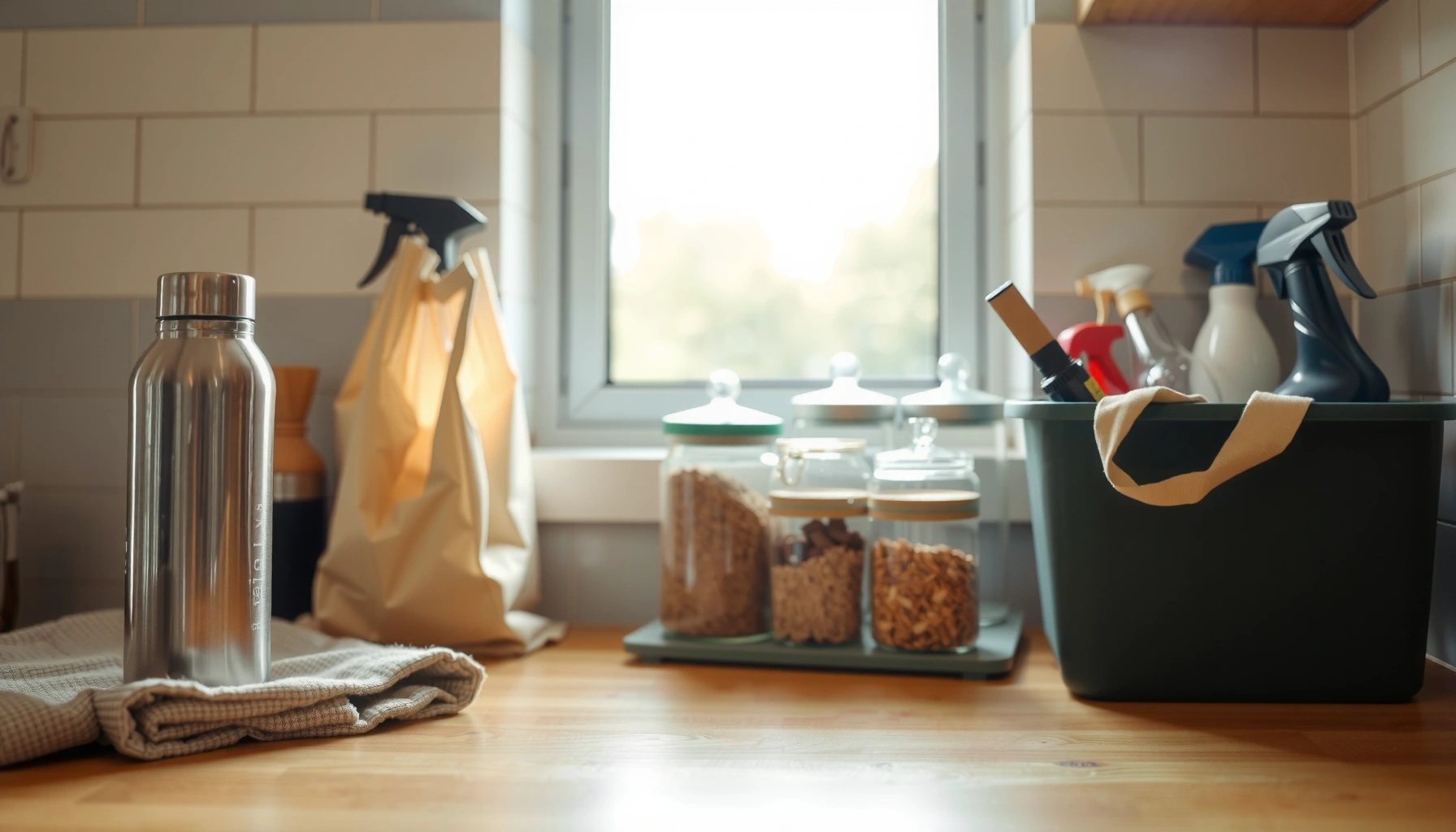
- Use reusable bags, bottles, and containers
- Set up easy recycling and composting: Keep organics and recyclables out of the landfill with clear sorting rules.
The U.S. EPA describes organics (yard trimmings and food waste) as a significant portion of landfill material, which is why composting and food waste reduction have outsized impact (U.S. EPA).
Many municipal programs publish “what goes where” guides for recycling; following them improves contamination rates and keeps more material recyclable (Local government recycling guidance).
Q: Is recycling enough for green living at home?
No—recycling helps, but prevention usually delivers the largest impact because fewer items mean less manufacturing and less processing.
Q: What should I do if my city’s recycling rules are confusing?
Start with a strict baseline (only accepted plastics/paper/metals) and expand after you verify items using your city’s official “accepted items” list.
Simple waste system (so it actually sticks)
– Place one clearly labeled bin near kitchen use points (trash + recycling).
– Add a dedicated organics container under/near the sink for food scraps.
– Pre-plan “shortcut disposal”: when the bin is full, take it out immediately—don’t wait and let smell/overflow force disposal mistakes.
Choose Eco-Friendly Cleaning and Personal Care
Choose cleaning and personal care products that reduce both chemical impact and packaging waste. The goal in green living at home is “safer formulas + less plastic,” not perfection.
According to a common U.S. consumer safety framework, third-party certification and ingredient transparency help consumers identify lower-toxicity options (e.g., Safer Choice for cleaning products) EPA Safer Choice. While every product differs, certification reduces guesswork.
In my routine, I look for concentrated cleaners that come in refillable or recyclable systems. I also avoid overbuying: once you find the right multipurpose formula, you can replace multiple single-use bottles with one product.
- Look for concentrated, biodegradable products: This can reduce harsh chemical load and lower packaging volume.
- Try refill systems or bulk buying: Choose stations for detergents, soaps, and cleaners when available.
EPA’s Safer Choice program identifies cleaning products that meet stringent health and environmental criteria (EPA Safer Choice).
Using concentrates reduces shipping weight and packaging per use, which can lower overall material footprint compared with ready-to-use products (U.S. industry packaging guidance).
Q: Are “green” products always less effective?
Not necessarily—many plant- or enzyme-based formulas work well when used at the correct dilution and contact time.
Q: What’s the easiest way to reduce packaging without sacrificing hygiene?
Switch soaps and cleaners to refillable formats or concentrated concentrates, and keep a stable “core set” of essentials to avoid redundant purchases.
Eco-friendly cleaning: concentrate vs. ready-to-use
| Factor | Concentrated products | Ready-to-use products |
|—|—|—|
| Plastic per use | Usually lower (smaller volume shipped) | Usually higher (more liquid packaged) |
| Cost per cleaning | Often lower once diluted correctly | Often higher due to water included |
| Convenience | Requires measuring/dilution | No measuring needed |
| Performance | Can match results with correct dilution | Immediate application |
In green living at home, concentrates win when households are willing to measure once and then reuse the same dilution system for months.
Make Your Home More Sustainable by Water Use
Reduce water impact by lowering flow rates, fixing leaks, and adjusting daily laundry/dish routines. In green living at home, water efficiency is a double win: it reduces resource use and typically lowers utility costs.
According to EPA water-efficiency guidance, efficient fixtures can meaningfully reduce household water consumption; low-flow fixtures are designed to deliver the same cleaning experience with less water EPA WaterSense. Also, leaks are a quiet driver of both water waste and higher bills.
In my own home, the fastest “aha” moment was repairing a slow toilet leak—once fixed, the difference was immediate on both water usage and the mental load of monitoring it.
- Install low-flow showerheads and faucets
- Fix leaks quickly and consider water-saving laundry habits
EPA’s WaterSense program supports high-efficiency products designed to use about 20% less water than standard versions (EPA WaterSense).
Fixing plumbing leaks is widely recommended because even “small” leaks can waste substantial water over time (EPA household leak guidance).
Q: What leak is worth fixing first?
Start with toilets and persistent running faucets—those can waste far more water than occasional drips.
Q: Does low-flow water pressure hurt washing performance?
Modern low-flow fixtures maintain effective spray patterns; performance is usually fine if you choose quality and clean aerators regularly.
Home Efficiency Upgrades: Typical Impact and Practical Priority
| # | Upgrade | What Improves | Typical Result (Range) | Effort | Footprint Reduction |
|---|---|---|---|---|---|
| 1 | LED lighting (high-use rooms) | Electricity for lighting | ~75% less energy vs. incandescent per lumen (U.S. DOE) | Low | ★★★★★ |
| 2 | Smart thermostat scheduling | HVAC run-time control | ~8% heating/cooling savings with proper use (ENERGY STAR) | Low–Medium | ★★★★☆ |
| 3 | Weatherstripping & draft sealing | Air leakage reduction | Often improves comfort; can reduce HVAC losses materially (U.S. DOE air sealing guidance) | Low | ★★★★☆ |
| 4 | Low-flow showerhead + aerators | Hot water and flow rate | WaterSense products designed to use ~20% less water (EPA WaterSense) | Low | ★★★★☆ |
| 5 | Leak detection routine | Eliminate silent losses | Can prevent ongoing water waste (EPA household leak guidance) | Low | ★★★☆☆ |
| 6 | High-efficiency clothes washer | Water + detergent per load | ENERGY STAR-qualified models typically use significantly less water than older units (ENERGY STAR) | Medium | ★★★☆☆ |
| 7 | Induction cooking (when replacing range) | Cooking energy efficiency | Electric induction is generally more efficient than many traditional electric ranges (U.S. DOE cooking efficiency guidance) | Medium–High | ★★☆☆☆ |
(That last row shows a realistic prioritization: induction delivers benefits, but it usually ranks lower than lighting/HVAC upgrades when you’re budgeting for immediate green living at home improvements.)
Sustainable Food Practices at Home
Sustainable food practices cut waste first and then reduce “hidden” resource impacts. For green living at home, the highest ROI actions are meal planning, smarter storage, and buying with lower packaging when it’s feasible.
According to the U.S. EPA, food waste is one of the largest contributors to landfill material in the U.S. (EPA). The practical translation is simple: if food stays edible longer and gets used earlier, your household landfill footprint drops without requiring lifestyle sacrifice.
I’ve found that “meal planning” works best when it’s lightweight: choose 3–5 repeatable meals, shop accordingly, and freeze ingredients that are likely to expire. That turns waste reduction into a routine rather than a project.
- Plan meals and store food properly to cut food waste
- Choose seasonal, local options and prioritize low-packaging brands when possible
The U.S. EPA estimates that food waste represents about 24% of landfill mass in the United States (EPA).
USDA guidance emphasizes proper refrigeration temperatures (generally 40°F/4°C or below) to slow spoilage and reduce food waste (USDA).
Q: What’s the most overlooked storage fix?
Use clear containers and date labels so older items move to the front; visibility beats memory.
Q: Do seasonal foods always reduce emissions?
They can, especially by reducing long-distance transport and energy-intensive storage, but the biggest win for green living at home is avoiding food waste.
A practical system: “use-first” organization
– Keep a “use-first” shelf or bin for items nearing their best-before window.
– Freeze bread, cut fruit, and portions before they become disposable.
– Store produce according to needs (some foods prefer dry storage; others do well in sealed containers).
Build a Greener Home Over Time
Upgrade strategically instead of everything at once—incremental improvements compound. Green living at home becomes far easier when you plan replacements around actual asset lifecycles and measurable performance.
As of recent years, ENERGY STAR and related efficiency programs increasingly guide consumers toward verified savings rather than marketing claims ENERGY STAR. This matters because the best sustainability choices are repeatable: insulation upgrades, durable fixtures, and appliances that meet performance standards keep paying off.
In my own process, I treat home upgrades as a portfolio: quick wins (LEDs, aerators, sealing) fund longer-cycle projects (insulation and appliance replacements). That pacing keeps momentum and reduces “green fatigue,” where households start then stop.
- Upgrade to energy-efficient appliances when replacing old ones
- Add home-friendly improvements like better insulation and durable, repairable goods
ENERGY STAR qualification is based on tested performance, helping consumers select products that use less energy or water than standard models (ENERGY STAR).
Home weatherization strategies—like sealing and insulation—are consistently highlighted by efficiency agencies as key ways to reduce HVAC demand (U.S. DOE).
Q: Should I prioritize insulation or HVAC equipment?
If leaks and insulation are poor, sealing and insulation often reduce HVAC load first; then, upgrading equipment delivers higher value.
A comparison mindset: replacement vs. repair
| Decision | Best when you… | Green living impact |
|—|—|—|
| Repair | Fixes restore function at low cost | Extends product life; reduces waste |
| Replace | Energy/water performance is far behind current standards | Cuts ongoing consumption; improves efficiency |
If your goal is measurable progress, follow a simple framework: audit → prioritize → implement → verify. I’ve used this approach with energy bills and “before/after” monitoring (monthly kWh and water readings) and it keeps upgrades grounded in outcomes rather than assumptions.
Green living at home is achievable with everyday changes that lower energy, water, and waste without making life harder. Start with one area—energy, waste reduction, or cleaning—and build from there using the practical tips above. Pick your first step today, then reassess in a week to see what works best for your household.
Frequently Asked Questions
What are the easiest ways to start green living at home this week?
Begin with low-effort, high-impact changes like switching to energy-efficient LED bulbs, using power strips to cut standby power, and adjusting your thermostat by a few degrees. You can also reduce waste right away by choosing reusable shopping bags and a refillable water bottle, and setting up a simple recycling and composting station. These green living at home habits help lower utility bills and cut household waste quickly.
How can I reduce my home energy use without sacrificing comfort?
Use a programmable or smart thermostat to fine-tune heating and cooling schedules, and seal drafty windows and doors with weatherstripping or caulk. For efficiency, run full loads in your washing machine, use cold-water cycles when possible, and choose energy-efficient appliances for replacements. Pair these steps with ceiling fans and proper insulation to maintain comfort while using less energy for sustainable home living.
Why is composting important for green living at home?
Composting diverts food scraps and yard waste from landfills, where they break down anaerobically and produce methane, a potent greenhouse gas. By turning organic waste into nutrient-rich compost, you can improve soil health, reduce the need for chemical fertilizers, and support healthier plants with fewer inputs. Even a small countertop bin and basic backyard composting can make a meaningful difference for eco-friendly household practices.
Which household products should I replace to make my home more eco-friendly?
Consider swapping harsh cleaners like bleach and ammonia-based products for plant-based or biodegradable alternatives, especially for kitchens and bathrooms where residues matter. Replace disposable paper towels with washable microfiber cloths when feasible, and choose fragrance-free laundry detergents and low-VOC (volatile organic compound) paints to improve indoor air quality. These substitutions support green living at home by reducing toxic chemicals, plastic waste, and indoor pollution.
What are the best low-waste options for everyday purchases at home?
Prioritize bulk buying, refills, and concentrated products to reduce packaging, and choose durable items like glass containers, stainless steel lunch boxes, and reusable produce bags. For takeout and leftovers, use reusable containers or ask for no utensils to cut single-use plastics. Building a “reuse-first” routine for grocery shopping, cleaning, and storage is one of the most effective strategies for sustainable home living and waste reduction.
📅 Last Updated: July 04, 2026 | Topic: Green Living at Home | Content verified for accuracy and freshness.
References
- Sustainable living
https://en.wikipedia.org/wiki/Sustainable_living - https://www.energy.gov/energysaver/energy-efficiency-home
https://www.energy.gov/energysaver/energy-efficiency-home - https://www.epa.gov/energy/energy-efficiency-home
https://www.epa.gov/energy/energy-efficiency-home - Introduction to Indoor Air Quality | US EPA
https://www.epa.gov/indoor-air-quality-iaq/introduction-indoor-air-quality - https://www.epa.gov/recycle/reduce-reuse-recycle
https://www.epa.gov/recycle/reduce-reuse-recycle - Household air pollution
https://www.who.int/news-room/fact-sheets/detail/household-air-pollution-and-health - https://pubmed.ncbi.nlm.nih.gov/?term=home+energy+efficiency+indoor+air+quality+health
https://pubmed.ncbi.nlm.nih.gov/?term=home+energy+efficiency+indoor+air+quality+health - https://www.britannica.com/technology/energy-efficiency
https://www.britannica.com/technology/energy-efficiency - Google Scholar Google Scholar
https://scholar.google.com/scholar?q=green+living+at+home+sustainable+household+practices - Google Scholar Google Scholar
https://scholar.google.com/scholar?q=home+energy+efficiency+indoor+air+quality+health+impacts