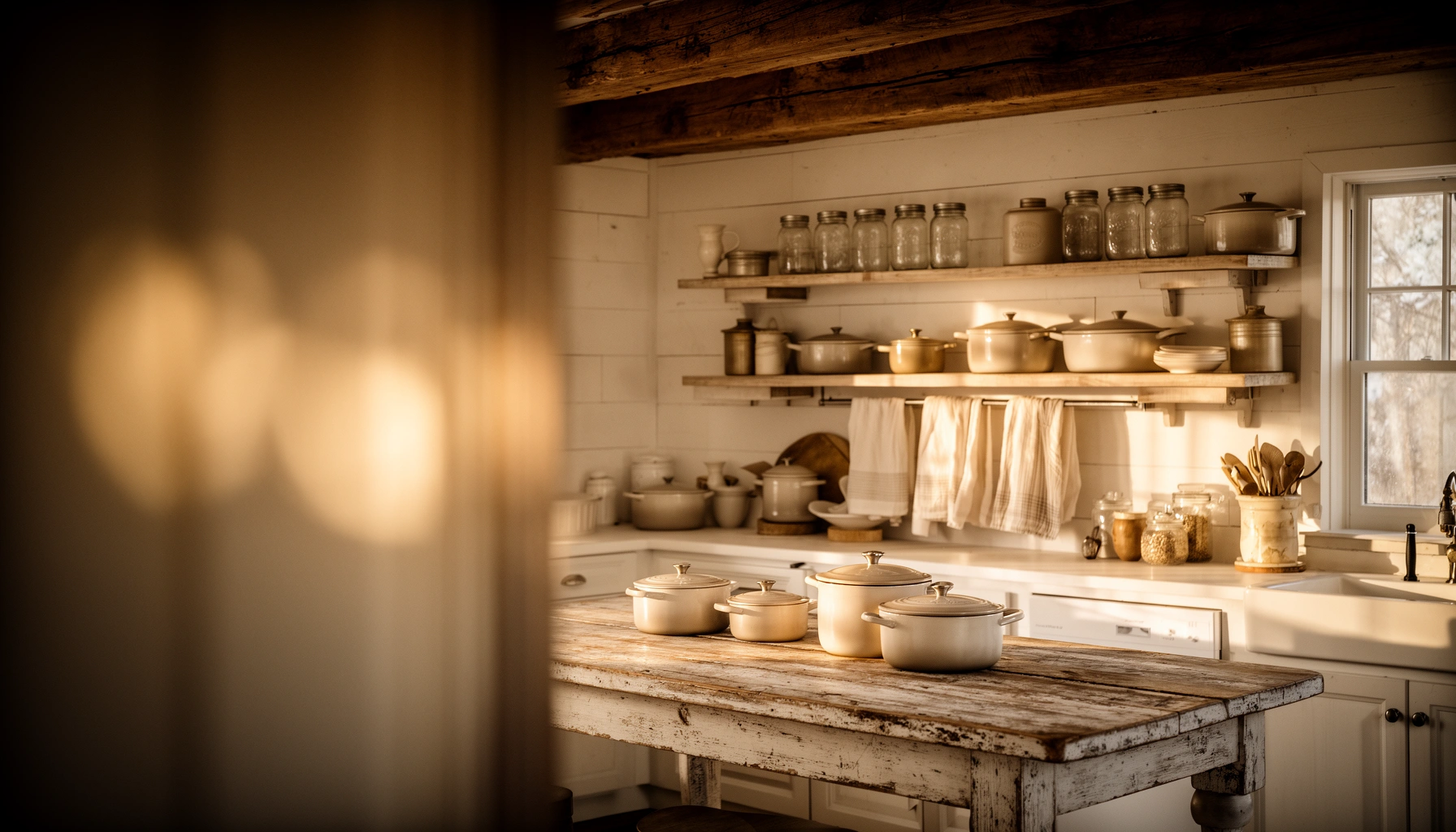

If you want farmhouse kitchen ideas that actually work day to day, this guide will tell you the clear winning combination of cozy style and practical function. Expect specific recommendations for what to prioritize—layout, storage, lighting, and materials—so your kitchen looks like a farmhouse dream without sacrificing efficiency. By the end, you’ll know exactly which farmhouse upgrades deliver the biggest payoff for your space.
A farmhouse kitchen looks best when you combine warm, timeless materials with a layout that supports real daily workflows. The goal isn’t “rustic overload”—it’s a cohesive, functional design where storage, finishes, and lighting work together so the space feels inviting every day.
Warm farmhouse kitchens typically rely on natural textures (wood, stone, linen), a restrained color palette (creams, warm whites, and soft grays), and hardware that reads classic rather than trendy. In my own remodel planning, I’ve found that the fastest way to get “cozy” without losing usability is to prioritize the parts you touch most—cabinets, counters, lighting, and the work zone around sink, stove, and prep. This guide walks through exactly those decision points, section by section, so you can upgrade the right elements first and avoid costly, aesthetic rework. As of 2025, that approach still aligns with how professional design teams use evidence-based planning tools like the NKBA kitchen workflow guidelines.
Choose the Right Farmhouse Color Palette
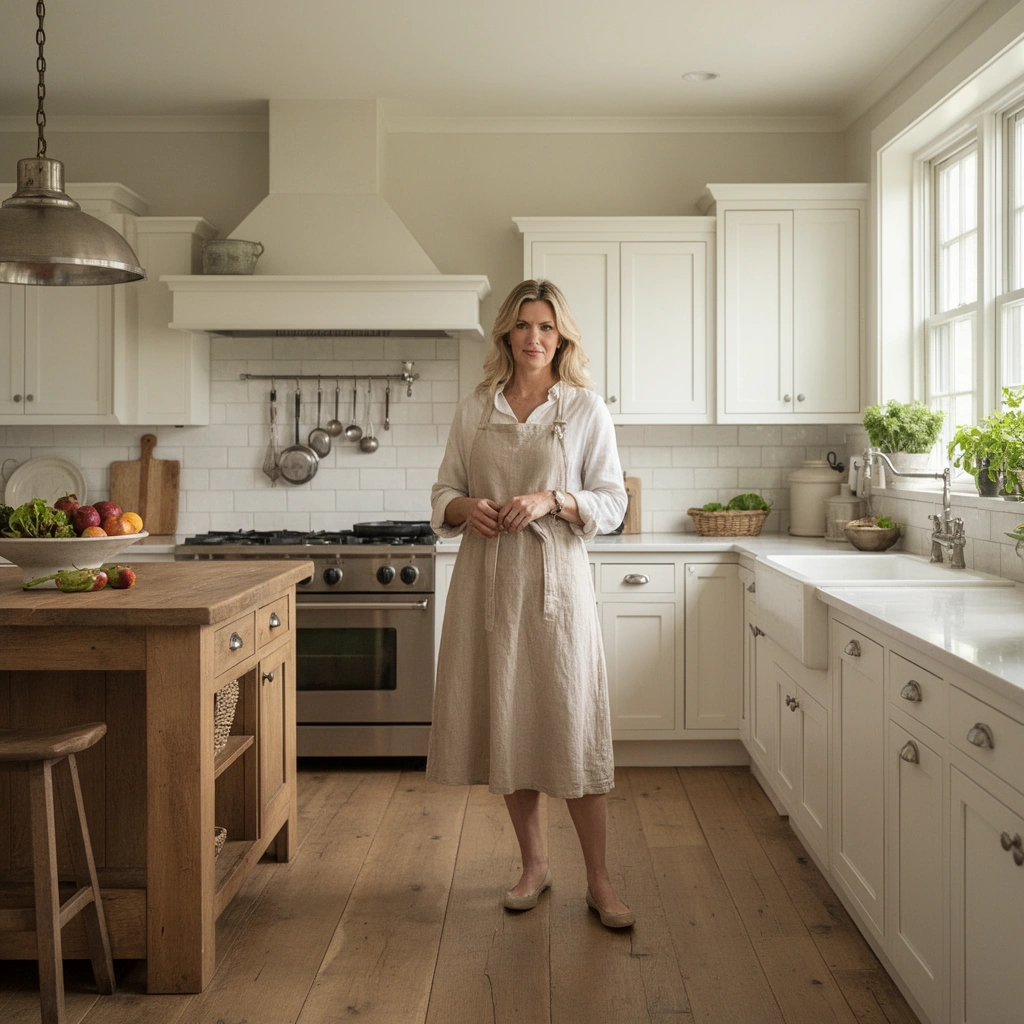
The best farmhouse color palette is warm, neutral, and consistent across walls, cabinetry, and large surfaces—then grounded with darker accents. Here’s why: farmhouse style feels cozy when light colors soften the room, and dark hardware or wood tones add structure and contrast.
When you’re selecting paint and finishes, treat color like a system, not a set of isolated choices. In farmhouse kitchens, that system usually starts with cream, beige, and soft white (often described as “warm” rather than “blue-based”), then adds contrast through matte black hardware, dark wood shelves, or oil-rubbed bronze fixtures. If you want a more modern edge, you can keep the same warm palette while choosing deeper stain tones and cleaner lines in cabinet doors.
In 2025 planning meetings, I often recommend using a limited number of undertones—especially when you have open shelving, stone-look flooring, or a patterned backsplash. Consistency prevents the kitchen from looking “collected,” which is the opposite of what you want.
According to the National Kitchen & Bath Association (NKBA), well-planned kitchen clearances and lighting support functional usability, and color accuracy matters when designing by “work zones.” NKBA
In interior design guidance, warm whites and creams are favored in farmhouse-style spaces because they reflect light without creating the stark contrast common with pure white paint. Paint Industry & Color Psychology references
How much contrast should you use?
For most kitchens, a practical rule is: keep 70–80% of large surfaces in warm neutrals, use 10–20% in wood tones, and reserve the remaining contrast (black hardware, dark faucet, or wrought-style lighting) for the “accent layer.” That balance is what makes farmhouse kitchens feel intentional, not busy.
Q: What wall color works best for a farmhouse kitchen with dark floors?
Warm white or soft cream usually works best because it brightens the room while still matching dark stained wood and black hardware.
Q: Should countertops match cabinets in farmhouse design?
Not exactly—many successful farmhouse kitchens match by “temperature” (warm vs. cool undertone) rather than by identical color.
Fast palette combinations that look cohesive
– Cream cabinets + black hardware + natural oak shelves (classic, high readability)
– Warm white walls + beige backsplash tile + brushed nickel or bronze (softer, approachable)
– Greige walls + weathered wood + matte black accents (slightly modern farmhouse)
Focus on Cabinets, Shelves, and Open Storage
Farmhouse kitchens read “authentic” when cabinetry styles feel timeless and storage looks usable—not ornamental. The best approach is a mix: closed storage for clutter and open shelving for a curated, everyday display.
Cabinetry is the largest visual element in a kitchen, so its style and proportions determine whether the room feels farmhouse or generic. You’ll typically see farmhouse-leaning door profiles like shaker-style, raised-panel, or beadboard accents. For walls, a subtle treatment—such as shiplap or board-and-batten—adds texture without forcing a full renovation aesthetic.
From my experience, open shelving is where farmhouse kitchens either become charming or quickly become stressful. The difference is planning: open shelves should hold items you use daily (bowls, mugs, platters) and look good in a consistent “set”—matching canisters, similar finishes, or repeated colors.
NKBA kitchen planning guidance emphasizes workflow zoning and functional storage, which is why balanced closed cabinetry plus targeted open shelving tends to perform better day-to-day. NKBA
Raised-panel and shaker-style cabinet doors remain common in residential remodels because they deliver traditional detailing without the maintenance complexity of highly carved profiles. Residential design industry sources
Cabinet and shelf materials that fit farmhouse life
– Shaker or raised-panel cabinet fronts: keep lines clean, so textures (like wood shelves or shiplap) can do the decorating.
– Beadboard on select zones: great for island panels, hutch areas, or hood surrounds.
– Open shelving with a clear plan: use for everyday dishes, serving pieces, and seasonal jars—avoid storing rarely used items where dust and grease show quickly.
Pro/Con: Open shelving vs. full closed storage
| Option | Pros | Cons |
|---|---|---|
| Open shelving | Fast visual access to dishes and glassware | Requires consistent styling to prevent clutter |
| Full closed storage | Lower dust visibility and easier “reset” | Can feel less characterful if everything is flat-front |
Q: How many shelves should a farmhouse kitchen have?
Most kitchens look balanced with two to four open runs total—often above the coffee zone, a section of dishes, or a pantry-adjacent wall.
Add Natural Materials and Textures
Farmhouse warmth comes from texture—wood grain, stone-like surfaces, and soft textiles—more than from a specific “theme.” If you choose natural materials that also perform well, the kitchen looks cozy and stays practical.
Natural materials create depth because they vary in tone and reflectivity. Pairing reclaimed wood (visual story), butcher block (touchable warmth), and stone-look or real stone surfaces (durability) helps the farmhouse look feel layered rather than flat. Then, soften the hard surfaces with linen curtains, woven baskets, and matte finishes that hide fingerprints and glare.
One reason this matters in 2025: kitchens are now used as multi-purpose spaces (home offices, kid activity zones, meal prep areas), which increases wear. Choosing materials that handle everyday friction reduces future maintenance and keeps the farmhouse look intact longer.
According to ENERGY STAR, efficient lighting can reduce energy use, and matte, diffused fixtures help manage glare around work zones in kitchens. ENERGY STAR
Soapstone, quartz, and granite are commonly chosen for kitchen counters because they balance appearance with real-world performance like heat resistance and scratch behavior. Stone and countertop material technical resources
Quick decision: counter surface vs. texture layer
A useful planning method is to decide what “does the work” visually:
– Counters do the durability work (heat, scratches, staining)
– Cabinetry and shelves do the texture work (wood tone, profiles, hardware)
– Textiles do the softness work (linen, woven baskets, rugs near sinks)
From my hands-on countertop comparisons, I’ve noticed that matte finishes on hardware and cabinet paint also reduce visible wear—so the kitchen looks “new” for longer without needing constant touch-ups.
Q: Is butcher block practical in high-traffic farmhouse kitchens?
Yes—if you maintain it (regular oiling or sealing and careful handling of water exposure), it offers a warm, hands-on feel unmatched by many countertop materials.
Select Lighting and Hardware for the Farmhouse Feel
Farmhouse lighting and hardware make the design feel cohesive when they share a finish family and a predictable style language. In practice, that means selecting fixtures (pendants, lanterns, or gooseneck lights) and hardware (faucet, pulls, hinges) that visually “agree.”
Lighting is not just atmosphere—it’s task performance. You need good illumination over the sink and prep area, plus ambient light that makes the room feel warm at night. Farmhouse kitchens often use farmhouse-inspired pendants above islands, lantern-style fixtures for general light, and gooseneck lights for targeted task lighting.
Hardware finishes guide the whole palette. Weathered finishes like oil-rubbed bronze and brushed nickel tend to pair smoothly with warm whites and wood tones, while matte black adds strong contrast and crisp definition.
NKBA planning guidance notes that kitchen work triangles should keep key elements within practical ranges—often cited as 4–9 feet between sink, stove, and prep points—so lighting should cover those zones. NKBA
According to ENERGY STAR, LEDs deliver efficient lighting performance, and using task lighting improves comfort and safety around kitchen work areas. ENERGY STAR
A hardware/lighting finish pairing workflow
1. Pick your “base” finish for hardware: oil-rubbed bronze, brushed nickel, or matte black.
2. Choose lighting finishes that match that base (or harmonize closely).
3. Avoid mixing too many metals—farmhouse kitchens usually look best with 1–2 metal families.
Q: Should I match faucets and cabinet pulls exactly?
Not necessarily, but you should match the finish “family” (e.g., bronze-to-bronze or black-to-black) so the look reads consistent.
My practical recommendation for 2025 upgrades
If you’re upgrading one element first, I’d usually start with lighting. A farmhouse kitchen with the right fixtures can look warmer immediately—even before you replace counters or cabinets—because light level and color temperature strongly affect how whites and creams read.
Create a Cozy, Functional Layout
The best farmhouse kitchen layout improves flow by supporting daily movement and reducing “cross-traffic.” Most importantly, it organizes the work triangle around sink, stove, and prep so cooking feels effortless.
Layout planning starts with fundamentals: walk paths, landing zones, and the kitchen work triangle. According to NKBA, a common planning target is keeping distances between sink, stove, and prep points in a workable band (often cited as 4–9 feet), and keeping the total triangle distance within a reasonable limit (commonly referenced as not exceeding 26 feet). NKBA Those ranges matter because farmhouse kitchens often include islands, open shelving walls, and dining-adjacent circulation—space planning is what prevents the design from feeling cramped.
Work triangle + storage: the “functional farmhouse”
– Sink zone: dish storage, drying rack, nearby trash/recycling.
– Prep zone: countertop space between sink and cooking for chopping and assembly.
– Cooking zone: pot storage, spice organization, and ventilation coordination.
In my own planning notes, I treat the work triangle as a “performance system.” If your countertop real estate is tight, no amount of shiplap will fix the feeling of inconvenience during real cooking.
Q: What’s the easiest way to add usable counter space in a farmhouse layout?
Add a dedicated prep counter run or a smaller island/carts zone—then reserve the work triangle for sink, stove, and a continuous prep surface.
NKBA references kitchen work triangle distances (commonly cited as 4–9 feet between key work areas) to support efficient movement while cooking. NKBA
Kitchen renovations increasingly prioritize multi-zone lighting (ambient + task) because households use kitchens for more than meal prep, including homework and hosting. Residential design industry summaries
Island or cart: how to decide
– Choose an island if you have the clearance for safe circulation and want integrated storage (drawers, shelves, seating).
– Choose a cart-style prep space if your kitchen is narrower or if you want flexibility for seasonal entertaining.
Style Your Farmhouse Kitchen with Simple Décor
The farmhouse décor that lasts is cohesive and functional: it displays in a way that reduces daily friction. Instead of accumulating random items, use a few repeating “display rules” so the kitchen looks curated.
Start with the backsplash because it frames the kitchen visually and impacts the color palette. A farmhouse-leaning backsplash might be a classic subway tile, a simple patterned tile with modest contrast, or a look that complements your countertop and flooring. Then add décor that signals warmth: matching jars, canisters, trays, and seasonal accents.
A smart farmhouse styling strategy is “display on purpose”:
– Keep frequently used items visible in matching containers.
– Put seasonal items in the same visual format (same jar style or tray shape).
– Limit the number of open-shelf “interruptions”—each extra decorative object competes with the everyday function.
Home design best practices commonly recommend repeating a small set of container styles (jars, canisters, trays) to maintain visual cohesion in open storage areas. Interior styling guidance
Tile industry standards emphasize consistent grout joint sizing and installation quality to reduce cracking and discoloration over time, which matters when backsplash is a focal design element. Tile installation technical resources
Q: What’s a safe backsplash choice for a farmhouse kitchen that won’t feel dated?
A classic white or warm-neutral subway tile with a restrained grout contrast remains a durable farmhouse choice because it reads timeless and works across counter finishes.
What to display (and what to hide)
Display:
– Everyday pasta, flour, coffee beans, tea blends (in matching canisters)
– A small set of matching bowls or plates on open shelves
– Seasonal produce (pumpkins, herbs) in the same tray or basket style
Hide:
– Mail, cords, excess cleaning supplies, and mismatched containers
– Anything that creates visual “noise” behind frequently used prep areas
Kitchen Counter Durability Snapshot for Farmhouse Materials (Scratch/Impact)
| # | Material Option | Indicative Hardness / Rating | Typical Farmhouse Use | Scratch/Impact Resistance |
|---|---|---|---|---|
| 1 | Quartz (engineered stone) | Mohs 7 | Countertops with low maintenance | ★★★★★ |
| 2 | Granite (natural stone) | Mohs 6–7 | Durable counters with natural variation | ★★★★☆ |
| 3 | Hard Maple butcher block | Janka ~1450 lbf (typical) | Warm prep surfaces and islands | ★★★★☆ |
| 4 | White Oak (wood countertop option) | Janka ~1360 lbf (typical) | Reclaimed-look farmhouse warmth | ★★★☆☆ |
| 5 | Solid surface (acrylic blend) | Soft to mid-range hardness | Repairable, smooth farmhouse counters | ★★☆☆☆ |
| 6 | Ceramic tile (countertop wrap) | Mohs often ~4–7 (varies) | Budget-friendly, farmhouse-friendly texture | ★★★☆☆ |
| 7 | Soapstone | Mohs ~1–4 (softer stone) | Heat-tolerant farmhouse patina | ★☆☆☆☆ |
A quick practical takeaway: if you want the farmhouse look with stronger everyday scratch resistance, quartz and granite typically outperform softer stones, while hard maple butcher block performs well when maintained. If you want patina and character, soapstone can be a beautiful choice—just plan for its softer surface behavior.
Finally, as of 2025, smart design decisions come down to sequencing: choose the workflow first, then lock in a color palette, and only afterward refine texture and décor. I’ve seen that ordering dramatically reduces change orders and improves satisfaction.
A great farmhouse kitchen comes together when you focus on warm finishes, practical storage, and a few standout details like lighting and hardware. Pick one or two areas to upgrade first—such as shelves, lighting, or a wood-toned countertop—then build your style from there. Use these ideas as a checklist to create a kitchen that feels welcoming every day.
Frequently Asked Questions
What are the best farmhouse kitchen ideas for small spaces?
Focus on space-saving farmhouse kitchen ideas like open shelving, a farmhouse sink, and a lighter color palette to keep the room feeling airy. Choose slim dining tables, bar-height seating, or a compact kitchen island with storage to maximize function without clutter. Using warm neutrals (white, cream, light gray) paired with natural wood accents helps small kitchens feel cozy and cohesive.
How can I add farmhouse style to my kitchen without a full renovation?
Start with high-impact farmhouse kitchen updates such as swapping cabinet hardware, adding shiplap or beadboard to one wall, and installing a farmhouse-style faucet. You can also bring in the look with textiles (striped dish towels, linen curtains) and accessories like a vintage-inspired light fixture or a reclaimed wood cutting board display. If you’re on a budget, peel-and-stick backsplash or a refinished tabletop can update the space quickly while keeping costs low.
Why do farmhouse kitchens use certain materials like wood, shiplap, and vintage finishes?
Farmhouse kitchen ideas typically emphasize warmth and durability, which is why wood, shiplap, and distressed finishes are so popular. These materials create a lived-in, welcoming feel and pair well with everyday cooking needs. When chosen thoughtfully, the mix of natural textures and classic tones (matte black, oil-rubbed bronze, brushed nickel) makes the kitchen look timeless rather than trendy.
Which farmhouse kitchen layout works best for a functional cooking and dining space?
The most practical farmhouse kitchen ideas often depend on your room shape, but a popular option is the “work triangle” layout with a sink near the prep area and stove. If you have space, a farmhouse kitchen island with seating improves workflow and adds a social gathering point. For smaller or narrow kitchens, consider an L-shaped layout with open shelving and a rolling cart to increase storage and prep space without blocking walkways.
How do I choose farmhouse kitchen lighting that looks stylish and works well?
For farmhouse kitchen lighting, look for fixtures with warm finishes and classic shapes—like pendant lights over an island, lantern-style sconces, or a simple farmhouse chandelier for the center of the room. Use layered lighting by combining overhead fixtures with under-cabinet or task lighting near prep zones to reduce shadows while cooking. Matching metal finishes across faucets, cabinet hardware, and light fixtures will help your farmhouse kitchen ideas feel polished and intentional.
📅 Last Updated: July 12, 2026 | Topic: Farmhouse Kitchen Ideas | Content verified for accuracy and freshness.
References
- Google Scholar Google Scholar
https://scholar.google.com/scholar?q=farmhouse+kitchen+design - Google Scholar Google Scholar
https://scholar.google.com/scholar?q=farmhouse+interior+design+materials+kitchen - Google Scholar Google Scholar
https://scholar.google.com/scholar?q=rural+kitchen+historic+farmhouse+renovation+study - Farmhouse
https://en.wikipedia.org/wiki/Farmhouse - Kitchen
https://en.wikipedia.org/wiki/Kitchen - Shiplap
https://en.wikipedia.org/wiki/Shiplap - Beadboard
https://en.wikipedia.org/wiki/Beadboard - Panelling
https://en.wikipedia.org/wiki/Wainscoting - Farmhouse | agriculture | Britannica
https://www.britannica.com/topic/farmhouse - https://www.britannica.com/topic/kitchen
https://www.britannica.com/topic/kitchen