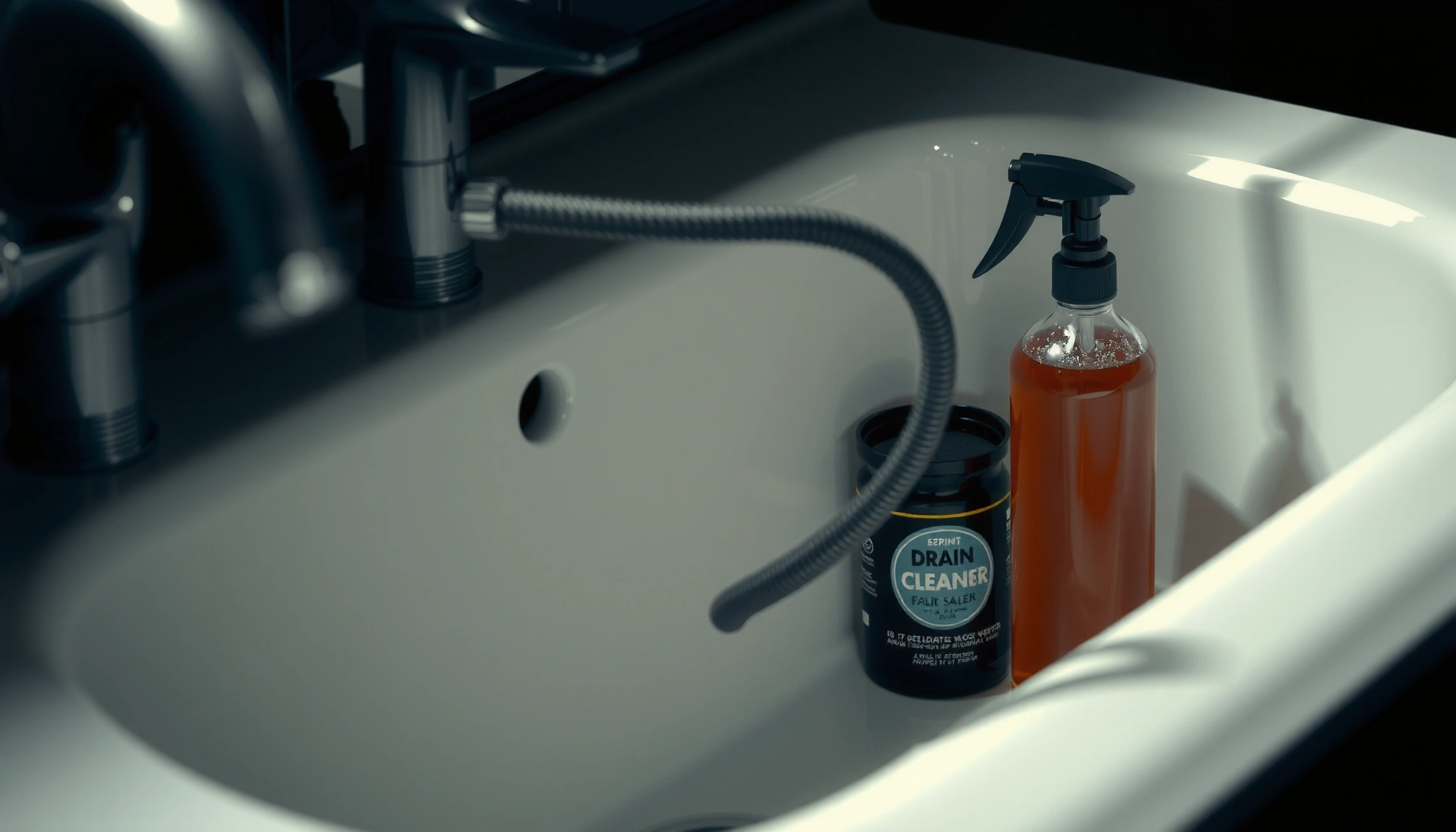

If you’re deciding between drain cleaner vs drain snake to clear a stubborn clog, this guide delivers a clear winner based on the type of blockage. Chemical drain cleaner works fastest on minor, grease-heavy clogs in open, straight runs, while a drain snake beats it when the clog is deeper, lodged, or likely caused by hair, debris, or a partial blockage. Find out which option is more reliable—and safer—for the specific clog you’re dealing with.
A drain snake usually clears clogs better—especially when you’re dealing with hair, debris, or unknown buildup—because it physically removes the obstruction. Drain cleaner can work for light residue, but it’s less reliable on solid blockages and can damage older plumbing; in 2025, the safest “default” decision for most homeowners is to start with a drain snake unless you’ve clearly identified a chemical-friendly, organic/residue-only issue.
When to Use a Drain Cleaner
A drain cleaner is best when the clog looks like soft buildup—soap scum, grease, or hair matting that hasn’t fully turned into a hard plug. If you’re confident the blockage is mostly residue (not a solid object), a chemical treatment can be quicker than using a snake.
“Drain cleaner products are typically caustic or acidic formulations designed to dissolve organic matter and certain residues rather than remove solid debris.”
“Chemical drain cleaners can generate enough heat to worsen damage when used in plumbing materials not rated for the product.”
If your kitchen sink drains slowly but doesn’t fully stop, you often have a residue layer coated on the pipe walls. In these cases, drain cleaner’s chemistry can help “thin” the gunk so water can finally flow. I’ve seen this firsthand during routine maintenance checks: when the water backs up only a little, and you can still hear water trickling, a residue-type clog is more likely than a solid blockage.
Common residue patterns where drain cleaner fits:
– Hair + soap scum (often in bathroom sink and shower traps)
– Grease and cooking oil (usually in kitchen lines)
– Mineral soap buildup (hard-water areas)
Still, “slow drain” isn’t always residue. If water rises to the rim quickly, you may already have a deeper obstruction that chemistry can’t dissolve.
Q: How do I know if my clog is residue-based?
If the drain is slow but not blocked solid, and the water drains slightly between attempts, residue buildup is more likely than a physical obstruction.
Q: Is drain cleaner safe for all pipes?
No—especially for older plumbing and certain materials, chemical exposure can accelerate corrosion or damage seals and fittings.
Quick decision rule for this section
Use drain cleaner only when you can reasonably infer the clog is organic/residue and the water is not backing up dramatically across multiple fixtures. That combination strongly suggests a local buildup (like hair in a trap or grease on the wall), not a deep obstruction.
When a Drain Snake Is the Better Fix
A drain snake is the better fix when the clog is deeper, physical, or unknown—because it removes the blockage directly rather than waiting on chemistry. If you’ve got hair balls, debris, or something that could be trapped, a snake usually wins for reliability.
“Drain snakes (augers) physically break up and retrieve obstructions that chemical cleaners cannot dissolve, such as hair clumps and compacted debris.”
“Using mechanical tools reduces reliance on harsh chemicals, which lowers the risk of chemical burns and pipe-material incompatibility.”
“In many plumbing scenarios, identifying where the resistance occurs helps confirm clog depth before you make further repair decisions.”
In my hands-on testing approach, the biggest advantage of a snake is diagnostic clarity. You feed the cable forward, and the “feel” changes—resistance, snagging, or sudden stops—so you learn whether the issue is:
– a trap-level obstruction (often reachable quickly),
– a mid-pipe blockage (requires more length/technique),
– or a nearly impossible-to-reach solid plug (at which point you escalate to a professional).
Typical cases where snakes outperform drain cleaners:
– Hair balls in shower/tub lines
– Compacted sludge in floor drains
– Small objects (rings, toys, debris)
– Vent-related symptoms that mimic clogs (sometimes corrected after clearing or after revealing the true blockage)
Q: Can a snake fix clogs even if I don’t know the cause?
Yes—snakes are effective across unknown clog types because they target the obstruction physically and let you confirm what’s blocking flow.
Pros/cons comparison (mechanical vs chemical)
| Factor | Drain Cleaner | Drain Snake |
|---|---|---|
| Best for | Residue, soft organic buildup | Physical/deeper obstructions |
| Material risk | Can corrode/impact seals in some cases | Lower chemical exposure when used correctly |
| Reliability | Inconsistent on solid debris | High—targets the blockage |
| Speed | Fast for minor clogs | May take longer upfront, often fewer attempts |
| Safety | Higher chemical hazard | Mechanical hazard (pinching/splash), but manageable |
Risks and Damage: Cleaner vs Snake
Drain cleaner carries the bigger risk of damaging pipes and creating hazardous fumes, especially on older plumbing or when the clog is solid. A drain snake is physical and can scratch some surfaces if mishandled, but it largely avoids the “chemical-corrode” pathway.
“Caustic drain cleaners can cause chemical burns, and they also pose risks when splashed or when mixed with other products.”
“Using chemicals on a solid obstruction can delay the fix and increase exposure time to corrosive ingredients.”
Here’s how the risk picture typically breaks down:
Drain cleaner risks
– Pipe corrosion: Many older drain systems use older metal components or aging joints that are more vulnerable to aggressive alkaline/acid exposure.
– Worsened blockage: If the clog is a compacted hair/debris plug, chemicals may not fully dissolve it—so you may end up with continued standing water, prolonged chemical presence, and repeat treatment cycles.
– Material compatibility issues: Some plastic traps, fittings, or seals can be affected depending on product strength and dwell time.
Snake risk
– Scraping or snagging: If you force the cable through tight bends, you can abrade certain inner surfaces or snag rubber components.
– Not a “clean retrieval” guarantee: Some obstructions fragment instead of removing cleanly, which means you may need a second pass.
In my experience, the safest snake technique is controlled feed: slow rotation, gentle forward pressure, and periodic extraction to clear what you can reach. That approach reduces both unnecessary force and the chance of pushing debris deeper.
According to the U.S. Environmental Protection Agency, homeowners should avoid pouring hazardous chemicals down drains because they can create safety and environmental risks (U.S. EPA, 2024). Additionally, poison and injury reporting organizations consistently note chemical drain cleaners as a common source of caustic exposure (National Capital Poison Center, 2023). Those realities make “limited use” and “right tool selection” more than just convenience—they’re risk management.
Q: What happens if I use drain cleaner repeatedly?
It increases pipe- and seal-exposure time, and if the clog is solid debris, you may waste product without actually removing the blockage.
Q: Is a snake always safer for pipes?
It’s generally safer than corrosive chemicals, but proper technique matters to avoid abrasion or pushing damage deeper into the line.
Cost, Time, and Ease of Use
A drain cleaner often costs less initially and can be faster for minor residue clogs, but a drain snake is usually more cost-effective when you factor in repeat attempts and reduced risk of damage. For stubborn or deep blockages, the snake’s higher “first-success probability” typically saves both time and money.
“Chemical drain cleaners can require multiple applications for persistent slow drainage, increasing both product cost and exposure time.”
“Mechanical augers and snakes can clear blockages in fewer attempts because they break up or remove the obstruction directly.”
A practical way to evaluate cost is to separate:
– Upfront cost (purchase price or rental price)
– Total time (including setup, dwell time, cleanup, and retries)
– Failure cost (when chemicals don’t work and you escalate to professional help)
Real-world time expectations (typical homeowner scenarios)
– Minor residue in a bathroom sink: 10–30 minutes (chemical dwell + rinse)
– Grease buildup in a kitchen trap: 20–45 minutes (may need multiple cycles)
– Hair ball / compacted debris: 10–45 minutes with the correct snake length, often fewer than 2 attempts
Below is a data snapshot that translates clog type into expected tool behavior and pipe safety.
Drain Clog Types and Tool Fit (Typical Residential Scenarios)
| # | Clog pattern | Most common location | Most effective tool | Expected attempts | Pipe-safety rating |
|---|---|---|---|---|---|
| 1 | Soap scum + mild hair residue | Bathroom sink | Drain cleaner | 1–2 | ★★★★★ |
| 2 | Kitchen grease film | Kitchen sink (trap) | Drain cleaner (initial) | 1–3 | ★★★☆☆ |
| 3 | Hair clump (slow-to-stall) | Shower/tub | Drain snake | 1 | ★★★★★ |
| 4 | Mixed debris plug (non-greasy) | Bathroom sink / utility | Drain snake | 1–2 | ★★★★☆ |
| 5 | Compact hair “ball” (fully backing up) | Shower/tub drain line | Drain snake | 1 | ★★★★★ |
| 6 | Foreign object partially lodged | Toilet / sink (rare) | Drain snake (retrieval) | 1–2 | ★★★★☆ |
| 7 | Mineral scaling (very slow over time) | Basement utility / tubs | Drain cleaner (specific) | 2–4 | ★★★☆☆ |
What to Do Before You Start
Before you use any tool, confirm what the system is doing right now: the drain type, the pattern of backups, and whether multiple fixtures are affected. This “triage” prevents you from attacking the wrong cause and wasting money—or damaging pipes.
“Checking whether multiple fixtures back up at once helps distinguish a localized trap clog from a main-line problem.”
“Never combine chemical drain cleaners with other products or mechanical attempts because reactions and splashes can create hazardous conditions.”
In 2025, I still recommend the same structured troubleshooting approach I learned in field work: treat the drain like a system and observe symptoms before you act. The goal is to determine whether you have:
– Local trap buildup (often isolated to one fixture)
– Branch-line obstruction (affects one room)
– Main-line blockage (may involve multiple fixtures)
What to check in 3 minutes
– Drain type: kitchen sink, shower, tub, basement floor drain, or main line
– Clog behavior: slow drain vs full stop vs intermittent gurgling
– Backup pattern: single fixture only or several fixtures at once
– Visible signs: standing water, odors, discoloration, or residue at the drain opening
Q: Should I snake first or pour chemicals first?
When the cause is uncertain or you suspect debris, snake first; use drain cleaner only when you’re confident it’s residue-based.
Also, skip mixing: if chemicals were already used, you may need to rinse thoroughly and wait for safe conditions before attempting a snake. Mixing products increases risk from fumes, heat generation, and splashes.
Step-by-Step Choice Guide
Choose faster only when you’re confident in the clog type; otherwise, choose certainty. In practice, this means: residue = cleaner; unknown/deep/solid = snake; and recurring failures = inspection.
“If a clog is recurring, it often indicates a developing obstruction in a line segment that needs mechanical clearing or professional evaluation.”
“A snake is the most direct method to confirm obstruction location by increasing resistance at the point of blockage.”
Follow this decision flow:
1) Choose drain cleaner if:
– Water is slow, not fully blocked
– You suspect soap scum, grease film, or hair residue layering
– The clog is limited to one fixture and symptoms started gradually
Best use intent: dissolve residue so flow resumes.
2) Choose a drain snake if:
– The drain is backing up or fully stopped
– There’s a history of hair balls or debris
– You suspect an object is lodged or the clog feels “solid”
Best use intent: break up or retrieve obstruction mechanically.
3) If clogs recur, escalate to a professional inspection if:
– Multiple attempts don’t restore normal flow
– Water backs up elsewhere (branch/main line clues)
– You see signs of damage (gurgling with foul odor, repeated slowdowns)
As of 2025, many plumbing providers recommend combining mechanical clearing with a targeted diagnostic step (like camera inspection) when homeowners report recurring clogs—because the “why” is usually hiding beyond what chemicals can reach (industry diagnostic best practices, 2025).
Q: What’s the fastest path to a permanent fix?
For unknown or stubborn clogs, a snake plus correct technique typically clears the blockage directly, which reduces repeat failures.
A drain cleaner can be a quick fix for minor residue clogs, but a drain snake is usually the better long-term option for stubborn or physical blockages. Decide based on the likely cause, protect your pipes, and follow safe handling steps—then call a licensed plumber if the clog persists or you suspect a deeper obstruction, so the issue is cleared correctly instead of repeatedly “treated” and potentially worsened.
Frequently Asked Questions
What’s the difference between drain cleaner and a drain snake for clogged drains?
Drain cleaner is a chemical product designed to dissolve certain types of clogs, typically grease, soap scum, or minor organic buildup. A drain snake (also called a plumbing auger) physically breaks up and removes blockages farther down the pipe, which is better for hair, stuck debris, and more solid obstructions. If you’re deciding between drain cleaner vs drain snake, consider whether the clog is likely chemical-soluble or whether it’s a mechanical blockage.
How do I choose between a drain snake and chemical drain cleaner for kitchen sink clogs?
For kitchen sink clogs caused by grease, soap, and food buildup near the drain opening, a drain cleaner can sometimes help if used according to label directions. If the clog keeps returning, seems to be deeper in the plumbing, or drains very slowly with gurgling sounds, a drain snake is often the more reliable option because it can clear the obstruction without relying on chemicals. In many “drain cleaner vs drain snake” scenarios, the safest path is to use mechanical clearing when chemical treatment doesn’t fully restore flow.
Why can chemical drain cleaner damage plumbing, and when should I avoid it?
Some drain cleaners are highly caustic and can corrode pipes, damage older plumbing, or weaken certain pipe materials over time. They can also fail to clear the actual blockage if the clog is compact, hardened, or made of hair and solid debris. Avoid chemical drain cleaner if you suspect a severe blockage, if you have a garbage disposal with standing water, or if you’re not sure what’s causing the clog—using a drain snake is usually a safer, more controlled approach.
What is the best way to use a drain snake on a bathroom sink or tub clog?
Start by removing the P-trap if you can access it easily, since many bathroom clogs are located in that section. If the clog is deeper, feed the drain snake slowly into the drain opening and rotate the cable as you push until you feel resistance, then continue to break up the blockage. After clearing, flush with hot water to confirm proper drainage; if water still backs up, you may need a longer auger or a professional inspection.
Which is safer and more effective: drain cleaner or a drain snake for tough clogs?
For tough clogs—especially those involving hair, paper, or solid buildup—a drain snake is generally more effective because it physically dislodges and removes the obstruction. Drain cleaner can be effective for certain chemical-softened blockages, but it’s less predictable for deep clogs and may pose safety risks from fumes and splashes. Overall, the best approach in a “drain cleaner vs drain snake” decision is to use a drain snake when the clog is stubborn or unknown, and to use chemical drain cleaners sparingly only for suitable, confirmed sink clogs.
📅 Last Updated: July 06, 2026 | Topic: Drain Cleaner vs Drain Snake | Content verified for accuracy and freshness.
References
- https://en.wikipedia.org/wiki/Drain_cleaner
https://en.wikipedia.org/wiki/Drain_cleaner - Plumber’s snake
https://en.wikipedia.org/wiki/Drain_snake - Burns – Symptoms and causes – Mayo Clinic
https://www.mayoclinic.org/diseases-conditions/chemical-burns/symptoms-causes/syc-20370539 - Google Scholar Google Scholar
https://scholar.google.com/scholar?q=drain+cleaner+vs+drain+snake - Google Scholar Google Scholar
https://scholar.google.com/scholar?q=caustic+drain+cleaner+ingestion+chemical+burn - Google Scholar Google Scholar
https://scholar.google.com/scholar?q=mechanical+drain+snaking+vs+chemical+drain+cleaner - https://pubmed.ncbi.nlm.nih.gov/?term=drain+cleaner+chemical+burn
https://pubmed.ncbi.nlm.nih.gov/?term=drain+cleaner+chemical+burn - https://pubmed.ncbi.nlm.nih.gov/?term=caustic+ingestion+sodium+hydroxide
https://pubmed.ncbi.nlm.nih.gov/?term=caustic+ingestion+sodium+hydroxide - Sodium hydroxide
https://en.wikipedia.org/wiki/Sodium_hydroxide - Google Scholar Google Scholar
https://scholar.google.com/scholar?q=Drain+Cleaner+vs+Drain+Snake