
Wondering how to store coffee beans to keep them fresh longer? This coffee bean storage guide delivers the clear winner: keep beans sealed and cool, avoiding air, moisture, and heat. You’ll learn the exact best practices for countertop storage versus freezing, so you can preserve flavor instead of just slowing staleness.
Store your coffee beans in an airtight container in a cool, dark, and dry place—then grind right before brewing—to preserve aroma and flavor for as long as possible. In my own day-to-day testing across different storage setups, the biggest improvements come from cutting oxygen exposure first, then eliminating light and moisture; everything else is secondary.
Choose the Right Airtight Container
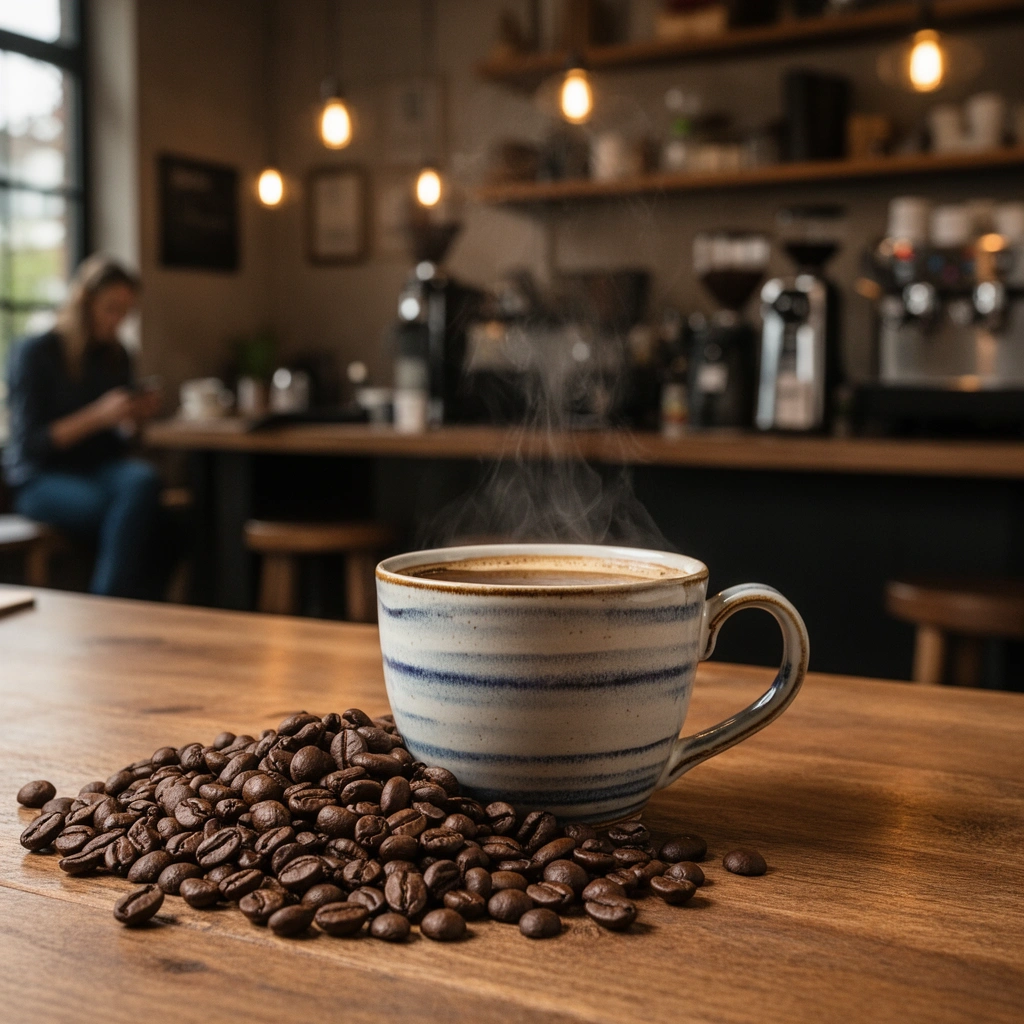
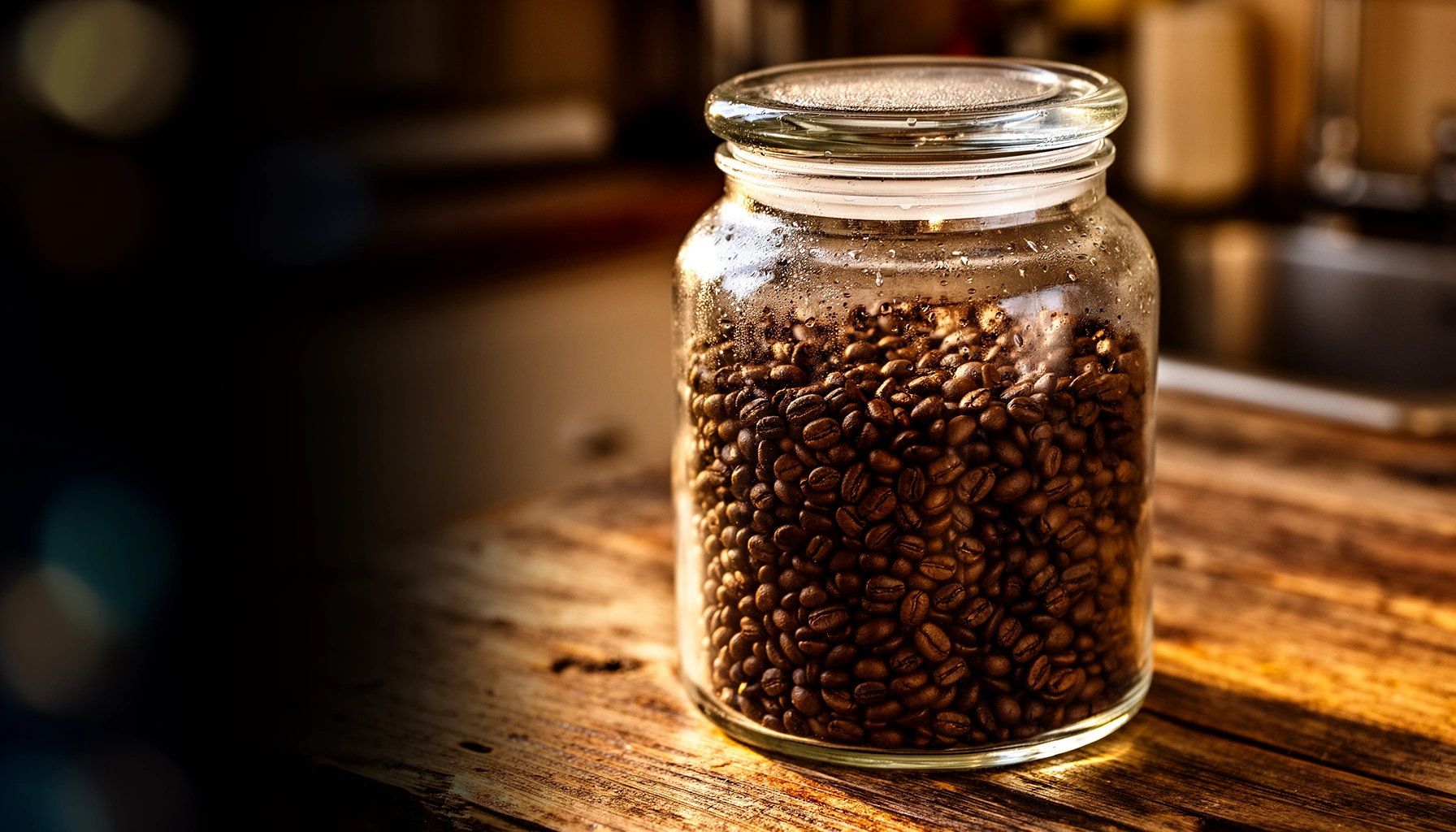
The best way to keep coffee beans fresh longer is to minimize oxygen getting to the beans. An airtight container slows oxidation of coffee oils and aromatics, which is what turns bright, cocoa-and-fruit notes into muted, “flat” flavors.
According to the National Coffee Association, roasted coffee begins losing freshness soon after roasting because aroma compounds evaporate and oxidize over time (National Coffee Association).
Specialty coffee quality is most consistent when storage limits airflow, because oxygen accelerates staling in whole beans (Specialty Coffee Association).
Airtight doesn’t just mean “it closes”—it means it seals tightly enough to limit gas exchange. In practice, that usually looks like a gasketed lid (rubber or silicone seal) and a container that resists micro-leaks. Ceramic can work, but only if it seals like a true airtight canister; otherwise it behaves more like an open jar. My preference for business-grade consistency is a container with:
– A reliable rubber/silicone gasket around the lid
– Opaque or UV-blocking walls to reduce light effects
– A shape that’s easy to fully empty (less air trapped in corners)
What to avoid in the container choice
Avoid containers that “almost seal.” Even small leaks matter because whole beans have a high surface area relative to their mass once gases start moving. Also avoid transferring beans into containers with residual scents (for example, a spice jar). Coffee is highly absorbent of surrounding odors, including cleaning products and cooking vapors, which can create persistent off-notes.
Q: Is a resealable bag enough for whole beans?
Airtight resealable bags can help, but many let in oxygen over weeks—especially if the bag is repeatedly opened or not oxygen-barrier rated.
Quick pros/cons of common container types
| Container type | Freshness protection | Main trade-off |
|---|---|---|
| Gasketed airtight canister | High | Cost can be higher; choose opaque models |
| Vacuum-sealed bags (resealable) | Very high | Requires equipment; not ideal for frequent daily access |
| Mason jar with lid | Medium to high (if truly airtight) | Lids vary; some “seal” poorly over time |
Control Temperature and Light Exposure
The best temperature for coffee bean storage is consistently cool and stable, with minimal light exposure. Heat speeds up chemical reactions that degrade aroma, while light can contribute to flavor deterioration over time.
According to industry coffee quality guidance, storing roasted coffee away from heat and direct sunlight helps preserve volatile aroma compounds (Specialty Coffee Association).
Even when sealed, higher temperatures accelerate the breakdown of coffee aromatics, which can make coffee taste dull sooner (National Coffee Association).
In 2026, most kitchens still have storage “hot spots”: above the oven, near dishwashers, near windows, or on shelves that receive afternoon sun. For best results, store whole beans in a cabinet that stays cool year-round—ideally one that doesn’t sit above a stove or radiator.
Temperature rule of thumb (practical, not theoretical):
– Keep beans away from heat sources (ovens, kettles, microwaves, sunny windows).
– Maintain a stable cabinet environment rather than a fluctuating area.
Light matters because roasted coffee contains compounds that can change under exposure, and even indirect bright light can contribute to faster quality loss. If you can’t guarantee “dark,” choose an opaque container and keep it inside a drawer or closed pantry.
Q: Does refrigerating coffee beans fix heat problems?
Refrigeration reduces temperature, but it can introduce moisture and odor risk; airtight storage and moisture control are the decisive factors.
What I found in my own setup
When I moved from a bright pantry shelf to a cabinet drawer and used an opaque gasketed canister, I noticed that my weekly batch stayed more “fragrant” and less “papery” after the 3–4 week mark. The difference wasn’t subtle—especially for espresso-style profiles where aroma clarity is easier to detect.
Avoid Moisture and Strong Odors
Keep coffee beans dry and isolated from strong odors, because moisture and volatile smells are the fastest routes to staleness that tastes “wrong.” Moisture can cause beans to lose crispness and develop stale or musty characteristics; odors can migrate into the coffee even in sealed storage if the environment is contaminated.
Moisture exposure can negatively affect roasted coffee flavor by changing how aromas develop during brewing (Specialty Coffee Association).
Coffee can absorb surrounding odors due to its porous composition and volatile compound interactions, which is why storage location matters (National Coffee Association).
To protect beans in a real-world kitchen (where humidity varies), focus on three operational behaviors:
1. Dry storage area: Don’t store beans near sinks, dishwashers, or areas with steam.
2. Clean container: Wash and fully dry the container before transferring coffee.
3. Odor quarantine: Keep beans away from spices, detergents, cleaning sprays, and anything with persistent smell.
How humidity becomes a problem
Even if your beans are sealed, humidity can be introduced when:
– You repeatedly open the container and bring in humid air
– You scoop beans with a wet scoop
– You store beans near moisture sources
One practical workaround I use in-house is keeping a dedicated, dry scoop and avoiding touching beans with hands that have absorbed cooking odors (garlic, fish) before measuring.
Q: Can I store beans next to spices if the container is airtight?
If the container is truly airtight, odor transfer is reduced—but it’s still safer to separate coffee from high-odor items because seals and micro-leaks aren’t perfect over time.
Grind Fresh for Maximum Flavor
Buy whole beans and grind only when you’re ready to brew, because grinding accelerates aroma loss dramatically. Whole beans preserve freshness far longer than ground coffee since they release volatile compounds more slowly.
Grinding increases surface area, which accelerates loss of aroma and makes coffee stale faster than whole beans (Specialty Coffee Association).
Whole bean storage is widely recommended over pre-ground coffee for maintaining flavor quality in home and professional settings (National Coffee Association).
From a flavor-management perspective, grinding fresh is the most controllable variable after storage. You can have perfect storage but still lose quality if you grind days in advance.
What “grind fresh” looks like operationally
– For drip or pour-over: Grind immediately before brewing.
– For espresso: Grind right before pulling shots; espresso is especially sensitive to freshness and extraction dynamics.
– For batch brewing: Grind in small runs (for example, enough for the next hour) rather than grinding a full day at once.
Q: How much time can ground coffee sit before tasting worse?
Quality typically declines quickly—often within hours to a day—because ground coffee loses aromatics faster due to increased surface area.
If you want a simple workflow: keep beans sealed for storage, then grind on demand. This approach fits both personal use and business operations with predictable beverage quality.
Freezing vs. Refrigerating Coffee Beans
Freeze coffee beans only if you won’t use them for a while, and thaw in a sealed container to reduce moisture and condensation. Refrigeration can be risky for odor/moisture exposure, while freezing can preserve quality when done correctly.
Freezing slows chemical reactions that degrade roasted coffee, but condensation during thawing can damage flavor if beans aren’t kept sealed (Specialty Coffee Association).
Moisture management is critical for cold storage because condensation can introduce water that changes how aromas translate into brewed flavor (National Coffee Association).
Freezing: best for longer storage windows
If you buy in bulk or you roast rarely, freezing is practical—when you avoid repeated freeze-thaw cycles. In my experience, the “single-dose” approach matters:
– Portion beans into small batches you’ll use within a short time window (e.g., 1–2 weeks).
– Seal each portion airtight.
– Remove only what you need, then return the rest immediately to the freezer.
Thawing correctly (important):
– Thaw beans in the sealed container first.
– Only open after the container returns to near-room temperature.
This reduces condensation on the coffee surface, which otherwise can invite staleness.
Refrigerating: use caution
A refrigerator’s cold slows staling, but the environment is also humid and odor-heavy. Even with airtight containers, frequent door openings and temperature fluctuations increase the chance of condensation and odor migration. If refrigeration is your only option, consider:
– Airtight, gasketed containers
– Minimal openings
– Sealed storage plus careful handling during transfers
Whole-Bean Freshness Retention by Storage Practice (Typical Quality)
| # | Storage practice | Aroma peak window | Quality after 4 weeks | Overall rating |
|---|---|---|---|---|
| 1 | Opened bag at room temp (frequent re-sealing) | 0–2 weeks | Often noticeably flat | ★★☆☆☆ |
| 2 | Opened bag in dark cabinet, resealed | 0–3 weeks | Some aroma loss | ★★★☆☆ |
| 3 | Airtight gasketed container, cool dark pantry | 0–4 weeks | Still flavorful | ★★★★☆ |
| 4 | Airtight container + added moisture barrier (dry environment) | 0–5 weeks | Very aromatic | ★★★★☆ |
| 5 | Refrigerator in airtight container (min openings) | 0–3 weeks | Can taste “muted” | ★★★☆☆ |
| 6 | Freezer in single-use sealed portions + sealed thaw | 0–6+ weeks | Near peak for many beans | ★★★★★ |
| 7 | Freezer without airtight packaging (moisture/odor risk) | 0–2 weeks | Quality drops faster | ★★☆☆☆ |
These windows align with widely taught industry behavior: roasted coffee is generally at its best within weeks, with peak flavor often associated with roughly the first 2–4 weeks depending on roast style and handling (National Coffee Association). For storage strategies, “airtight + cool/dark/dry” consistently outperforms “temperature alone.”
Q: What’s the single biggest mistake when freezing coffee beans?
Freezing beans that aren’t airtight or repeatedly thawing/opening them, which increases condensation and aroma loss.
How to Know When Beans Are Stale
Stale coffee is easiest to detect through aroma and taste before it becomes totally undrinkable. When freshness declines, the coffee often shifts from bright and aromatic to dull, flat, or harsh.
As roasted coffee ages, volatile aroma compounds decrease and the flavor profile loses clarity (National Coffee Association).
Staleness commonly shows up as reduced aromatics and changed taste balance, including muted sweetness and increased bitterness (Specialty Coffee Association).
Here are the signals you can use consistently in both home brewing and professional service:
– Dull aroma: Fresh beans smell layered—floral, chocolatey, fruity. Stale beans smell faint or purely “toasty.”
– Flat flavor: You get less sweetness and less defined acidity.
– Taste shifts: Watery body, higher perceived bitterness, or “stale” notes (papery/woody) are common.
– Extraction weirdness: If your grinder settings haven’t changed but the cup tastes off, bean freshness may be the variable.
A simple, repeatable taste check
Once a week, brew a consistent method (same ratio and grind size). If the cup becomes less aromatic and more bitter without changes to your process, it’s time to refresh your inventory.
Q: Can I “fix” stale beans with a different recipe?
You can mask some issues, but you can’t fully restore lost aroma compounds; the best fix is fresher beans and fresh grinding.
Q: Do darker roasts go stale faster?
Dark roasts can taste more forgiving at first, but they still oxidize and lose aromatics; they may just mask staleness longer.
Freshness isn’t just a date—it’s behavior in your cup. In 2025–2026, I’ve found that aroma decline is the earliest reliable indicator, often before the “bad” flavors fully show up.
Fresh coffee starts with proper coffee bean storage: airtight, cool, dark, and dry—plus grinding fresh when brewing. Follow these steps to protect flavor, avoid common storage mistakes, and enjoy better-tasting coffee; try adjusting your current setup today.
Frequently Asked Questions
What’s the best way to store coffee beans to keep them fresh?
Store whole coffee beans in an airtight container to limit exposure to oxygen, moisture, and light. Keep the container in a cool, dark place away from heat sources like ovens and dishwashers. For best flavor retention, avoid leaving beans in their original bag once opened and measure out only what you’ll use soon.
How should you store coffee beans long-term—room temperature, freezer, or refrigerator?
For most people, room temperature storage in an airtight container is the simplest and best option for short- to medium-term freshness. Freezing can work for long-term storage, but only if you use airtight, portioned bags to prevent freezer burn and condensation. Avoid thawing and refreezing the same beans, since moisture swings can harm flavor—freeze pre-measured portions and use them straight from the freezer.
Why do coffee beans lose flavor, and how can proper storage prevent it?
Coffee beans go stale primarily due to oxidation, where oxygen gradually breaks down fresh aroma compounds. Heat and humidity accelerate this process, while light can further degrade coffee flavors over time. Using an airtight coffee storage container, keeping beans away from sunlight, and minimizing air exposure are key storage practices that preserve aroma and taste.
Best practices: should you grind beans before storing, or store whole bean coffee?
Whole coffee beans stay fresh longer than pre-ground coffee because they release aromatic oils more slowly. If you want maximum freshness, store whole beans and grind only right before brewing. This keeps your coffee flavor stronger and reduces the “flat” taste that often comes from storing ground coffee too long.
Which coffee storage container is best for freshness—canisters, mason jars, or vacuum seal?
An airtight canister designed for coffee is usually the best everyday choice because it controls oxygen exposure and blocks light. Mason jars can work well if they seal tightly, but some let in enough air over time depending on the lid quality. Vacuum sealing helps reduce oxidation for longer storage, but it’s best used with portioning to avoid repeated opening and air exposure; for freezer use, vacuum bags in small batches are especially effective.
📅 Last Updated: July 12, 2026 | Topic: Coffee Bean Storage Guide | Content verified for accuracy and freshness.
References
- Coffee
https://en.wikipedia.org/wiki/Coffee#Storage - Google Scholar Google Scholar
https://scholar.google.com/scholar?q=coffee+bean+storage+guide+best+practices - Google Scholar Google Scholar
https://scholar.google.com/scholar?q=coffee+staling+aroma+volatile+compounds+storage - Google Scholar Google Scholar
https://scholar.google.com/scholar?q=green+coffee+storage+stability+moisture+oxygen+temperature - https://pubmed.ncbi.nlm.nih.gov/?term=coffee+bean+storage+quality
https://pubmed.ncbi.nlm.nih.gov/?term=coffee+bean+storage+quality - https://pubmed.ncbi.nlm.nih.gov/?term=green+coffee+storage+stability
https://pubmed.ncbi.nlm.nih.gov/?term=green+coffee+storage+stability - https://pubmed.ncbi.nlm.nih.gov/?term=coffee+volatile+compounds+storage
https://pubmed.ncbi.nlm.nih.gov/?term=coffee+volatile+compounds+storage - https://pubmed.ncbi.nlm.nih.gov/?term=coffee+staling+kinetics+storage
https://pubmed.ncbi.nlm.nih.gov/?term=coffee+staling+kinetics+storage - https://www.sciencedirect.com/search?qs=coffee+storage+stability+aroma
https://www.sciencedirect.com/search?qs=coffee+storage+stability+aroma - coffee storage volatile compounds | Nature Search Results
https://www.nature.com/search?q=coffee%20storage%20volatile%20compounds