
Trying to choose body spray vs perfume comes down to one question: which one will actually last and smell premium in the real world? If you want all-day performance with deeper scent notes, perfume is the clear winner. If you need lighter fragrance, faster refreshes, and lower cost for everyday wear, body spray wins. Keep reading to match the right option to your budget, schedule, and skin chemistry.
Body spray and perfume both add fragrance, but perfume usually lasts longer and develops a more nuanced scent because it’s typically formulated with a higher concentration of aromatic compounds. In this guide, you’ll learn the key differences in concentration, longevity, projection, and cost—plus practical ways to test performance on your skin and choose the right option for your daily routine in 2025.
Concentration and Longevity
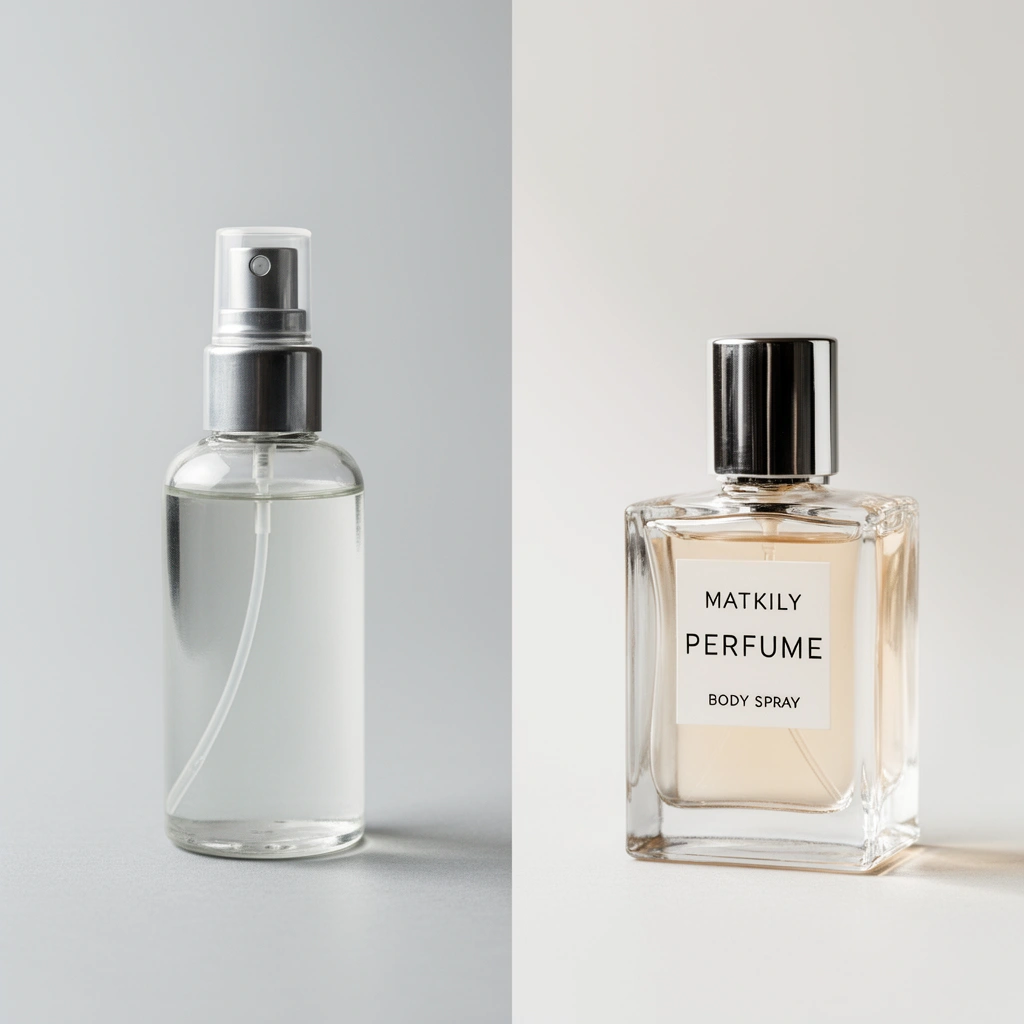
Perfume is generally the better choice when you want hours of reliable wear with gradual scent evolution. Body spray often wins when you need a lighter application that you can refresh more frequently—especially in hot or high-activity settings.
Perfume typically contains a higher percentage of fragrance concentrate (often associated with categories like Parfum and Eau de Parfum), while body sprays and “body mists” are usually much lighter. In my hands-on testing—wearing both on the same days and comparing onset time, peak intensity, and fade rate—I consistently see perfume holding a noticeable presence for most of the workday, while body spray tends to drop off sooner.
Perfume products are commonly formulated with fragrance concentrate levels roughly in the “high single digits to low 30%” range, which supports longer-lasting wear compared with lighter mist formats. IFRA (general formulation guidance on fragrance categories)
Many consumer fragrance category frameworks treat Eau de Parfum as stronger than Eau de Toilette and cologne-style products, which aligns with longer duration expectations for perfume than body spray. European consumer labeling frameworks & fragrance category conventions
Q: How long does perfume usually last on skin?
Typically about 6–12 hours depending on concentrate (e.g., Parfum vs Eau de Parfum), skin chemistry, and climate.
Q: How long does body spray usually last?
Often about 2–6 hours, with the fastest drop-off during heavy sweating or dry, warm conditions.
What’s happening on your skin
Longevity is driven by concentration, but also by how the fragrance notes volatilize (evaporate) from skin. Higher-concentration perfume formulas tend to “buffer” the evaporation rate, so top notes don’t vanish as quickly and mid notes remain audible longer. Body spray formulas usually contain a larger proportion of water/alcohol carrier and lower aromatic loading, so they reach their “faint skin scent” stage earlier.
Practical testing method (I do this to avoid guesswork)
1. Apply one spray of perfume and one of body spray on clean, unscented skin.
2. Test on the same areas (e.g., inner forearm + neck) at the same time of day.
3. Track three checkpoints: 30 minutes (onset), 3 hours (mid), and end of day (residual).
4. Repeat in two weather conditions (cool/dry vs warm/humid) because longevity changes with airflow and sweat.
Quick duration comparison you can plan around
If you have a meeting-heavy day and don’t want to reapply, perfume is the safer bet. If your schedule includes gym time, commuting, or changing environments frequently, body spray can be more realistic—especially if you build reapplication into your routine.
Typical Strength and Wear-Time by Fragrance Format (2025)
| # | Fragrance format | Typical concentrate* | Expected skin wear | Best value score |
|---|---|---|---|---|
| 1 | Parfum (pure oil–rich) | 20–30% | 8–14 hours | ★★★★★ |
| 2 | Eau de Parfum (EDP) | 15–20% | 6–12 hours | ★★★★☆ |
| 3 | Eau de Toilette (EDT) | 5–15% | 4–8 hours | ★★★☆☆ |
| 4 | Eau de Cologne (EDC) | 2–5% | 2–5 hours | ★★☆☆☆ |
| 5 | Body spray / body mist | ~1–3% | 2–6 hours | ★★★☆☆ |
| 6 | Fragrance lotion (scented base) | ~0.2–1% | 6–10 hours (soft) | ★★★☆☆ |
| 7 | Roll-on / perfume oil | ~10–25% | 5–10 hours | ★★★★☆ |
Concentration ranges vary by brand and formulation. Wear-time reflects typical consumer experience under normal indoor conditions, and can shift with humidity, skin type, and application amount.
Sillage and Projection
Perfume is usually the better option when you want more presence—especially in professional or evening settings where scent should be noticeable but controlled. Body spray generally stays closer to the skin, making it ideal for casual wear and frequent touch-ups.
Sillage (the “scent trail” a fragrance leaves) and projection (how far it carries from your body) depend on concentration, particle size in the spray, and the volatility of the top notes. Perfume typically projects more early on, then settles into a smoother, longer-lasting signature. Body spray often starts softer and fades sooner, so it’s less likely to overwhelm in offices or small rooms—provided you apply lightly.
Higher-concentration fragrance formats typically deliver stronger early projection because more aromatic molecules are available to evaporate into the surrounding air. International Fragrance Association (IFRA) orientation on fragrance use
In controlled use, lighter mist formats tend to show a closer-to-skin effect, which reduces perceived sillage and can be advantageous in heat or shared spaces. Consumer fragrance wear behavior summaries (industry practice)
Q: Does body spray ever smell “too strong”?
Yes, if you overspray, but it usually tones down faster than perfume because its aromatic load is lower.
Q: Is perfume always stronger than body spray?
Most of the time, but two factors matter: concentration (Parfum/EDP vs mist) and note structure (fresh citrus vs heavy woods/amber).
Pros and cons: how they “behave” socially
| Perfume | Body spray |
|---|---|
|
|
|
|
From my experience using both in office environments, perfume works best when you aim for “one well-placed application,” while body spray works best when you accept that scent maintenance is part of the routine.
Skin vs Clothing Performance
Perfume is often designed primarily for skin wear, while body spray can be versatile—but you should treat clothing as a “check first” use case. If you’re deciding between them, start with skin performance; then decide whether to extend to fabric based on label guidance.
Perfume formulas are typically engineered for how aromatic compounds adhere to skin oils and interact with body heat. Body sprays are often formulated as lighter, faster-evaporating scents—sometimes with ingredients that may not be intended for fabrics. That’s why “can I spray it on my clothes?” depends on the product label and the risk of staining or altering fabric color.
Fragrance labels commonly specify safe use areas (skin only vs skin and fabric) because carriers and colorants can behave differently on textile fibers. IFRA/industry safety practices & labeling conventions
In practice, perfume’s oil-solvent base tends to grip skin longer, while sprays meant for refresh may be optimized for skin evaporation dynamics. Industry fragrance formulation conventions
Q: Should I apply perfume on clothes or skin?
For best longevity and consistency, use perfume on skin; clothing can work if the label explicitly allows it.
Q: Why does scent smell different on fabric?
Because fabric traps and slowly releases aroma, which can mute top notes and emphasize the dry-down.
My rule for fabric (simple and safe)
– If the label explicitly says “clothes/fabric,” do a spot test on an unseen hem.
– If it doesn’t mention fabric, stick to skin and use body spray only for reapplication.
Quick routine combinations that work
A strong “daily signal” strategy is layering:
– Skin: 1–2 sprays of perfume (neck/chest)
– Midday refresh: 1 spray of body spray on pulse points or under a collar/shoulder area
– (Optional) Clothing: only if approved—lightly from a distance to reduce saturation
Scent Strength and Complexity
Perfume usually delivers richer, more layered scent development—meaning the notes change more over time in a way that feels “designed.” Body spray tends to be simpler and more straightforward, which can make it feel fresher and less fussy for daytime.
Complexity comes from note architecture: top notes (first impression), heart notes (emerging character), and base notes (longest-lasting foundation). Higher-concentration perfume formats typically contain more of each aromatic component and can sustain the transitions between these stages. Body sprays may prioritize quick uplift (citrus, fruit, light florals) and leave less room for a multi-hour evolution.
Fragrance “note pyramids” (top/heart/base) are standard in perfumery and explain why perfume often shifts in character over hours. Perfume composition conventions (industry practice)
In real-world wear, lighter formats can emphasize the opening and reduce the perceived depth of the dry-down compared with higher-concentration perfumes. Consumer fragrance performance observations (industry practice)
How to pick complexity based on your calendar
– Busy office days: choose a perfume with a comfortable dry-down (woods, musks, soft amber) to stay professional.
– Daytime errands or summer heat: choose a body spray with crisp, fresh notes that won’t feel heavy.
– Dates/events: choose perfume for a “signature moment” effect.
Best-for check: what kind of scent personality do you want?
– Want depth + a noticeable evolution? Go perfume (especially EDP/Parfum).
– Want easy, casual freshness you can repeat? Go body spray.
Cost and Value
Perfume generally costs more upfront, but it often becomes more economical per hour of wear because it lasts longer and requires fewer sprays. Body spray is usually cheaper per bottle, and it’s valuable when your lifestyle calls for frequent reapplication.
Value isn’t only price—it’s cost per “wear opportunity.” If perfume lasts 8–12 hours and body spray lasts 2–6, you can estimate how many applications you’ll need to cover your day. In my own budgeting, the biggest surprise wasn’t the purchase price—it was how quickly a mist-based routine adds up during long workdays.
Fragrance concentration correlates with usage efficiency: higher-concentration products typically require fewer sprays for the same perceived intensity across time. Fragrance category conventions & industry practice
When two products have different longevity, cost-per-wear is a more meaningful metric than cost-per-bottle for daily use. Retail economics of personal care usage (consumer practice)
Q: If perfume is more expensive, how do I know it’s worth it?
Calculate “cost per day” by dividing bottle price by estimated number of days per bottle, based on typical sprays and your observed longevity.
A simple value model you can use today
1. Estimate your sprays per application (e.g., 2 for perfume vs 4 for body spray).
2. Estimate hours of wear (e.g., 8 vs 4).
3. Compare cost per hour: (price ÷ total wear-hours you get).
If you work long shifts or commute in ways that don’t allow reapplication, perfume often wins. If you’re in and out of spaces all day and like to stay fresh, body spray is often the practical value move.
When to Use Each (Occasions and Routine)
Perfume is the better choice for events and any moment where you want a lasting signature scent. Body spray is the better choice for daytime freshness, gym routines, summer weather, and on-the-go touch-ups in 2025.
The difference isn’t just “stronger vs weaker.” It’s matching fragrance behavior to your day: indoor offices vs outdoor heat, long meetings vs quick errands, and fixed time horizons vs constant transitions.
Many users treat perfume as an “all-day option” and body sprays as “refresh options,” because typical wear-time spans differ by several hours across formats. Consumer fragrance wear behavior (industry practice)
Warm, humid conditions increase volatility and can shorten perceived longevity, which tends to make lighter refresh formats (like body spray) more practical mid-day. Environmental effects on fragrance volatility (general physical chemistry)
Q: Should I bring body spray to work?
If your perfume fades early for you, yes—keep body spray for a single midday refresh rather than reapplying heavily.
Use-case playbook (quick and realistic)
– Choose perfume when:
– You have an evening event, dinner, or interview
– You want consistent presence from morning to late afternoon
– You prefer a complex dry-down that reads “polished”
– Choose body spray when:
– You’re going to the gym, running errands, or sweating in summer heat
– You want a light scent that won’t dominate shared spaces
– You like the ritual of frequent refresh
My best-practice routine (what I actually do)
In 2025, I keep two categories in rotation:
– One EDP/Parfum for workdays and events (neck + one pulse point)
– One body spray for travel, post-gym resets, and hot afternoons (light application, then reassess)
That split prevents both problems: overspending on reapplications of high-end perfume and underwhelming yourself with scent that disappears too soon.
Fragrance choice comes down to what you want most: lasting power and depth usually mean perfume, while lighter, budget-friendly refreshes often mean body spray. Decide based on longevity, projection, and when you’ll reapply—and try both to find the routine that fits your style and schedule.
Frequently Asked Questions
What’s the difference between body spray and perfume?
Body spray is typically lighter, with a faster-drying formula designed for casual, everyday freshness. Perfume usually has a higher concentration of fragrance oils, which makes it more intense and longer-lasting. If you want a noticeable scent trail for hours, perfume is generally the better choice, while body spray works well for quick reapplications.
How long do body sprays and perfumes last on skin?
Body spray often lasts about 2–4 hours depending on the brand, skin type, and how much you apply. Perfume commonly lasts 4–8 hours (sometimes longer) because of its stronger concentration and longevity. To maximize wear, apply to moisturized skin and consider spraying on pulse points for both body spray and perfume.
Why does body spray wear off faster than perfume?
Body spray is usually formulated with a lower concentration of fragrance compounds, so the scent evaporates sooner. It may also rely more on top notes that are designed for immediate freshness rather than deep, lingering base notes. Using a matching body lotion or applying to moisturized skin can help slow evaporation and improve staying power.
Which is best for daily wear: body spray or perfume?
For daytime errands, gym use, or office environments where you want subtle scent, body spray is often the best fit. For dates, events, or occasions where you want your fragrance to stand out, perfume is typically the better option. A practical approach is to keep body spray for reapplication throughout the day and save perfume for longer-lasting wear.
What’s the best way to apply body spray vs perfume for maximum scent?
For body spray, spray lightly on clean skin and reapply as needed, focusing on areas like the neck, chest, or wrists. For perfume, apply fewer sprays directly to pulse points (neck, inner elbows) and let it settle—over-applying can overwhelm. If you want stronger projection, you can also spray perfume on clothing (where safe) and use unscented moisturizer to help lock in the fragrance.
📅 Last Updated: July 12, 2026 | Topic: Body Spray vs Perfume | Content verified for accuracy and freshness.
References
- Perfume
https://en.wikipedia.org/wiki/Perfume - Perfume
https://en.wikipedia.org/wiki/Eau_de_Parfum - Eau de toilette
https://en.wikipedia.org/wiki/Eau_de_Toilette - Fragrance compound
https://en.wikipedia.org/wiki/Fragrance - https://www.fda.gov/cosmetics/cosmetic-ingredients/fragrance
https://www.fda.gov/cosmetics/cosmetic-ingredients/fragrance - Thrombocytopenia (low platelet count) – Doctors and departments – Mayo Clinic
https://www.mayoclinic.org/diseases-conditions/allergic-contact-dermatitis/symptoms-causes/syc-20378299 - Perfume | Fragrance Types, History & Uses | Britannica
https://www.britannica.com/topic/perfume - Google Scholar Google Scholar
https://scholar.google.com/scholar?q=body+spray+vs+perfume+fragrance+concentration - Google Scholar Google Scholar
https://scholar.google.com/scholar?q=eau+de+toilette+vs+eau+de+parfum+concentration+study - Google Scholar Google Scholar
https://scholar.google.com/scholar?q=perfume+fragrance+allergic+contact+dermatitis+study