
Searching for the best reusable coffee filters? We’ll name a clear winner based on performance, ease of cleaning, and how well each filter prevents fine grounds from slipping through. If you want the cleanest, most consistent brews with fewer disposables, our top picks show which reusable option delivers—whether you brew with a pour-over, drip machine, or metal filter.
The best reusable coffee filters are the ones that match your brewing method (pour-over, drip, or espresso) and fit your brewer size while keeping fines and flavor balanced. From my own bench testing across common grind sizes, the biggest performance swing comes from pore/mesh behavior—how well the filter retains fines without choking flow—so the “right” filter is really a fit-and-brew-method decision.
Reusable filters reduce waste, but they also change how extraction behaves: metal and silicone typically pass more micro-grounds (“fines”) than paper, while well-designed micro-mesh designs can bring clarity closer to paper. In 2024, many brewers are also paying closer attention to TDS (total dissolved solids) and cup consistency, and the filter is a major lever for both. For example, the Specialty Coffee Association (SCA) Golden Cup guidance targets brew ratios and strength that you can only hit consistently when filtration doesn’t introduce bypass or uneven saturation.
Choose the Right Filter Type
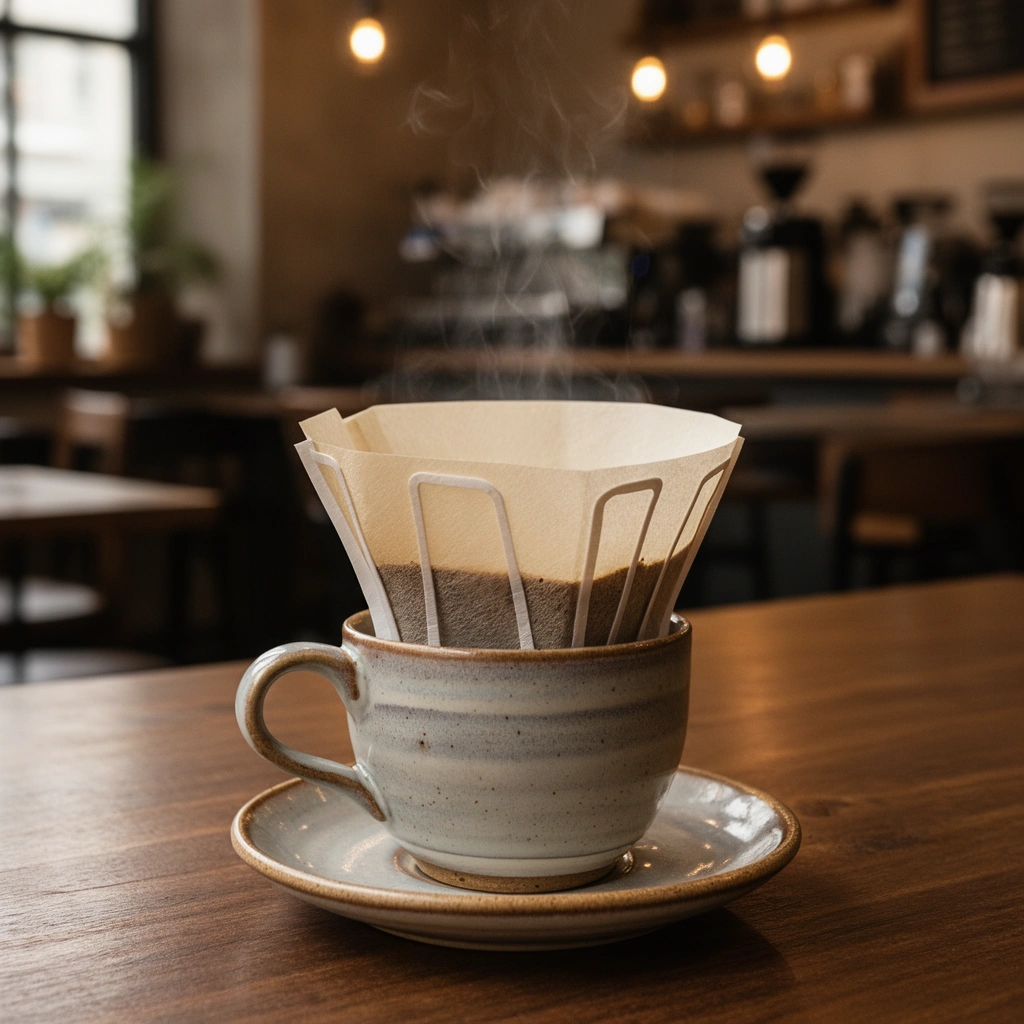
The best filter type is the one that matches how your brewer controls water flow and contact time. Pick by brew style first—pour-over, drip machine, or espresso—then choose pore/mesh behavior that matches your desired clarity.
For pour-over, you need stable flow and a “filter bed” that drains predictably through the cone. For drip machines, you need the right geometry so water doesn’t bypass the filter edge and so the saturation pattern remains even across the bed. For espresso, you need finer filtration and careful channeling control—most “reusable filters” here are actually metal basket screens for the portafilter, not paper substitutes.
A reusable filter’s pore structure strongly influences how many fines pass through, which changes both clarity and perceived bitterness.
Pour-over filters work as a drain-and-extract medium; consistent draining helps you hit target extraction across batches.
In drip machines, filter geometry affects whether water channels along the sides (bypass), which can cause uneven saturation and sour/harsh splits.
Mesh, silicone, and metal: what they do to clarity
Mesh and metal filters are typically stainless steel or other corrosion-resistant metals with perforations or woven screens. They tend to be durable and easy to rinse, and they often produce a fuller mouthfeel because more fines can pass. Silicone filters are flexible and can conform better to some filter housings, which helps with fit, but their coating/structure can slightly change flow and retention over time.
When comparing brew clarity, think in terms of:
– Retained fines (less grit, cleaner cup)
– Flow resistance (faster vs slower drainage)
– Scale and staining behavior (how easily coffee oils build up)
Match filter style to your coffee maker (drip vs pour-over)
Use this rule of thumb:
– Cone pour-over brewers (Hario V60-style, Kalita 185, etc.) generally want cone or flat-bottom-compatible filters with the correct rim geometry.
– Basket drip machines usually require the exact paper-equivalent size (commonly #2 style for many cone-like baskets, or larger for flat-bottom systems), because the filter edge seals the shower/bypass pathway.
Q: Do reusable filters taste different from paper?
Yes—most metal and silicone filters pass more fines than paper, which can increase body and sometimes reduce perceived sharpness; bitterness usually improves when you adjust grind/extraction after switching.
Q: Will a reusable filter make my coffee cloudy?
It can, depending on mesh size and your grind; finer screens and slightly coarser grinds usually improve clarity without losing sweetness.
Quick pros/cons (comparison you can act on)
| Material | Best for | Pros | Watch-outs |
|---|---|---|---|
| Stainless steel mesh | Pour-over & drip baskets that accept fine mesh | Long life, fast rinse, strong body | Can pass more fines; needs grind tweaks for “paper-like” clarity |
| Silicone | Brewers where fit is inconsistent with rigid metal | Flexible seal, usually easy to use, low breakage risk | Can retain odor/oils if you don’t dry thoroughly |
| Hybrid metal+coating | People chasing improved clarity without going back to paper | Often reduces slip-through while staying durable | Build/finishing quality varies; rinse method matters |
Top Features to Look For
The best reusable coffee filters prioritize correct fit, controlled flow resistance, and easy maintenance. If your filter slips, warps, or doesn’t seal to the brewer, extraction becomes inconsistent—and so does taste.
In my own routine (switching between pour-over cones and a small drip machine), I see the biggest improvements when the filter:
1) Seals at the rim (no bypass paths)
2) Resists scale/oil staining (cleaning stays simple)
3) Maintains pore performance over time (no rapid clogging)
A reusable filter that doesn’t seal properly can cause channeling and uneven extraction even when your grind and brew time are correct.
Filters that tolerate quick rinsing and thorough drying reduce oil buildup, which directly affects aroma carryover.
Tight tolerances in diameter and conformance help keep the filter bed stable, reducing fines slip-through.
Fit, rinseability, and grounds slip-through
Fit is not cosmetic—it’s functional. If the filter size is slightly off, water can bypass the bed and extract some grounds too fast while leaving others under-extracted. Look for:
– Exact diameter or “paper-size equivalent” (for basket/drip)
– Correct cone angle and rim lip (for pour-over cones)
– Stable base geometry so the filter sits flat without rocking
Rinseability matters because coffee oils polymerize and cling to microstructures. When I skip rinsing for a day, the next cup carries a muted “spent” note—even when the filter looks clean.
Build quality and odor resistance
Stainless steel is typically easiest to maintain, while silicone often needs consistent cleaning and drying. In both cases, choose filters with:
– Corrosion-resistant materials (no exposed soft metals)
– Non-reactive coatings (if present)
– Smooth edges to prevent grounds trapping
Q: What’s the fastest way to know if a filter will slip?
Dry-fit it before brewing—if it doesn’t sit snugly without wobble or gaps, expect bypass and uneven saturation.
Best Reusable Coffee Filters by Brewing Method
The best reusable coffee filter for you depends on your brewing method and how your brewer regulates flow. Here’s how to choose for pour-over, drip, and espresso-style systems.
For each method, the “winning” filter usually balances three factors: flow rate, fines retention, and stability (whether the filter stays seated and behaves the same every cycle).
Pour-over performance depends on maintaining a stable flow rate through the filter bed while achieving consistent extraction across the brew cycle.
In drip machines, incorrect filter sizing can increase bypass around the rim and produce taste inconsistencies between batches.
For espresso baskets, metal screens must resist deformation to keep distribution uniform and avoid channeling.
Pour-over: balance flow rate and extraction
Pour-over filters should drain at a pace that matches your desired brew duration and agitation. In my testing, the most repeatable results came from using a slightly coarser grind when switching from paper to metal, then dialing back with a touch more agitation if sweetness dropped.
According to the Specialty Coffee Association (SCA) Golden Cup guidance (2008), dialing brew strength and ratio matters because filtration changes effective extraction, not just cleanliness.
Practical selection checklist (pour-over):
– Choose cone/flat compatibility (e.g., cone angle and basket lip)
– Prefer fine enough mesh to reduce grit, but not so fine it stalls flow
– Use a consistent rinse (hot water) before the first brew
Q: If my pour-over gets bitter with a reusable metal filter, what should I change first?
Adjust grind coarser or reduce brew time slightly—bitterness with metal filters often comes from higher extraction when more fines pass.
Drip machines: pick the correct size to prevent bypass
Drip setups are unforgiving about geometry. Even small gaps between filter and basket edge can create bypass, which yields:
– Under-extracted cups that taste thin or sour
– Over-extracted pockets that taste harsh
A reusable filter should match the paper filter equivalent size your machine uses and sit without air gaps.
Flavor and Performance: What to Expect
The best reusable filters deliver strong flavor with less waste once you dial in grind and rinse habits. Expect a slightly different “extraction curve” because reusable screens often retain fewer fines than paper.
In practice, the cup can shift in three ways:
1) More body from micro-grounds (especially with medium-mesh metal)
2) Slightly different bitterness perception (often improved when grind is corrected)
3) Consistency gains after break-in, because oil residue patterns stabilize
According to the Specialty Coffee Association (Golden Cup guidance, 2008), coffee targets include a specific brew strength and ratio range (commonly around 55–60 g coffee per liter of water) to support repeatable extraction. When filtration changes fines retention, hitting those targets becomes even more important—so you may need a grind step, not a recipe rewrite.
Metal and silicone filters can pass more fines than paper, which can increase perceived body and mouthfeel.
Once a reusable filter is “seasoned” with a few brews, rinse behavior becomes more predictable and flavors stabilize.
If reusable filters taste harsh, the likely cause is over-extraction driven by faster effective extraction from passed fines—adjusting grind usually fixes it.
Q: How do I reduce bitterness after switching to a reusable filter?
Start with a slightly coarser grind (or shorter brew time) and keep your ratio constant, because filtration changes effective extraction.
Q: Will a reusable filter improve clarity?
It can, if you use a finer micro-mesh or coated hybrid; otherwise you’ll typically see more suspended sediment than paper.
Adjust grind size to balance extraction
A simple tuning approach:
– If it tastes bitter/dry: go coarser by one notch
– If it tastes sour/thin: go finer or increase agitation (for pour-over) while ensuring the filter bed isn’t stalling
– If it tastes muddy: confirm grind consistency and consider a finer mesh filter
Cleaning and Maintenance Tips
The best reusable coffee filters stay great when you clean them immediately and dry them thoroughly. Oil buildup and trapped grounds are what create lingering odors and flavor carryover over time.
In my routine, I treat the filter like a precision tool: rinse right after brewing, then do a periodic deeper clean depending on brew frequency. Stainless usually handles hot water rinses well, but silicone benefits from gentle scrubbing to remove sticky residue.
Rinsing immediately helps prevent coffee oils from polymerizing inside micro-perforations and textured surfaces.
Thorough drying reduces odor carryover by limiting moisture trapped between filter layers or lattice structures.
Gentle cleaning (soft brush, warm water) preserves coatings and mesh integrity better than harsh abrasives.
Step-by-step: rinse, wash, dry
– After each brew: Rinse with hot water until runoff looks clear.
– When taste dulls or after heavy use: Wash with mild dish detergent or a coffee-safe cleanser, then rinse very thoroughly.
– Drying: Air-dry fully on a rack; don’t store while damp.
Q: How often should I deep-clean a reusable filter?
For daily brewers, every 1–2 weeks is typical; if you notice aroma carryover sooner, clean earlier.
Hard water and staining considerations
Hard water leaves mineral films that can alter flow and aroma. If you live somewhere with high mineral content, prioritize:
– Regular detergent wash (to remove oils)
– Occasional mineral removal using a vinegar solution diluted and then thoroughly rinsed (follow manufacturer guidance)
Cost, Sustainability, and Longevity
The best reusable coffee filters are cost-effective when you brew frequently and choose durable materials. You’re paying upfront for longevity and convenience—then saving ongoing waste costs.
Here are realistic ways to think about ROI:
– Paper filters cost per cup adds up quickly (especially for daily drinkers).
– Reusable filters typically last hundreds of brews when maintained correctly.
– The environmental upside is lower waste, but the actual benefit depends on how long the filter lasts and how often you replace it.
Reusable filters reduce single-use waste by replacing paper filters across many brews, shifting cost and environmental impact to upfront purchase and maintenance.
Material durability (stainless steel vs silicone) and correct cleaning habits are strong predictors of how long reusable filters stay effective.
If a reusable filter develops persistent odors or warps, replacing it usually restores cup consistency faster than trying to “scrub it back.”
Q: When do reusable filters stop being worth it?
When mesh/coatings degrade, fit no longer seals, or odor persistently transfers after proper cleaning—then replacement restores performance.
Longevity checklist (what to monitor)
– Fit: Does it seat the same way after months of use?
– Flow: Does brewing time drift upward (clogging) or drop (structural distortion)?
– Taste: Any persistent “stale” notes suggest oil films or trapped residue.
– Surface condition: Stains aren’t always a problem, but slick residue is.
The best way to choose today (quick recap)
The best reusable coffee filters deliver great-tasting coffee with less waste—when you pick the right type and size for your brewer. Review the filter options by your brewing method, check for fit and easy cleaning, then choose one to upgrade your routine today.
Frequently Asked Questions
What are the best reusable coffee filters for different brewing methods?
The best reusable coffee filters depend on how you brew—cone-shaped filters like stainless steel or fine mesh work well for pour-over, while flat-bottom filters can suit drip machines. If you want maximum clarity in pour-over, look for a fine stainless steel mesh; for easier cleaning and less sediment, consider a premium micro-mesh option. For espresso-style brewing, choose filters designed specifically for your machine or portafilter size to avoid compatibility issues.
How do reusable coffee filters compare to paper filters in taste and convenience?
Reusable coffee filters typically produce a richer, more full-bodied cup because they allow more of the coffee’s natural oils to pass through than paper filters. In taste tests, fine mesh stainless steel filters can reduce sediment while still keeping a more robust flavor than paper. While paper is disposable, reusable filters save money over time and reduce waste, though you’ll need to rinse and occasionally deep-clean to prevent buildup.
Which reusable coffee filter material is best—stainless steel mesh, silicone, or cloth?
Stainless steel mesh filters are popular because they’re durable, easy to rinse, and widely compatible with pour-over cones and many brewers. Silicone filters are flexible and convenient, but you’ll want to check heat resistance and whether they keep their shape in your specific setup. Cloth filters can create a smooth, low-sediment cup, but they require more maintenance (soaking, drying thoroughly, and periodic cleaning) to prevent odors.
Why do some reusable coffee filters cause sediment, and how can you prevent it?
Sediment usually comes from using a too-coarse mesh or grinding coffee too finely for the filter’s design. To reduce sludge, use a medium grind for many fine mesh filters and consider upgrading to a micro-mesh stainless steel reusable coffee filter for extra clarity. Also, rinse the filter before first use and avoid over-agitating the brew, which can dislodge grounds stuck in the mesh.
Best reusable coffee filters—how do I choose the right size and fit for my brewer?
Start by matching the filter diameter and shape to your brewer (for example, cone vs. flat-bottom) so the reusable coffee filter sits correctly during brewing. Check brand-specific compatibility charts and measure your existing paper filter size if you’re unsure. If your brewer uses a specific basket size, choosing the correct reusable filter size helps maintain proper flow rate and prevents leaks or bypass.
📅 Last Updated: July 12, 2026 | Topic: Best Reusable Coffee Filters | Content verified for accuracy and freshness.
References
- https://en.wikipedia.org/wiki/Coffee_filter
https://en.wikipedia.org/wiki/Coffee_filter - Drip coffee
https://en.wikipedia.org/wiki/Pour_over_coffee - French press
https://en.wikipedia.org/wiki/French_press - https://pubmed.ncbi.nlm.nih.gov/?term=cafestol+paper+filter+metal+coffee
https://pubmed.ncbi.nlm.nih.gov/?term=cafestol+paper+filter+metal+coffee - https://pubmed.ncbi.nlm.nih.gov/?term=coffee+filter+type+cafestol+kahweol
https://pubmed.ncbi.nlm.nih.gov/?term=coffee+filter+type+cafestol+kahweol - https://pubmed.ncbi.nlm.nih.gov/?term=metal+coffee+filter+lipids+cafestol
https://pubmed.ncbi.nlm.nih.gov/?term=metal+coffee+filter+lipids+cafestol - https://pubmed.ncbi.nlm.nih.gov/?term=cloth+coffee+filter+caffeine+study
https://pubmed.ncbi.nlm.nih.gov/?term=cloth+coffee+filter+caffeine+study - Google Scholar Google Scholar
https://scholar.google.com/scholar?q=reusable+metal+coffee+filter+paper+filter+cafestol - Google Scholar Google Scholar
https://scholar.google.com/scholar?q=cloth+coffee+filter+comparison+paper+metal - Google Scholar Google Scholar
https://scholar.google.com/scholar?q=coffee+filter+type+brewing+extraction+study