
Looking for the best perfumes for men? We’ve picked the single top choice for every style—fresh, woody, spicy, and date-night—so you can buy with confidence instead of guessing. If you tell us your vibe and when you’ll wear it, we’ll steer you to the winner that performs best on skin and lasts the longest.
The best perfumes for men are the ones that match your scent style, occasion, and how long you want the fragrance to last. In practice, that means choosing the right note structure (fresh, woody, spicy, or aromatic), selecting the correct concentration for longevity, and applying it to pulse points so it develops properly on your skin.
How to Choose the Best Perfume for Men
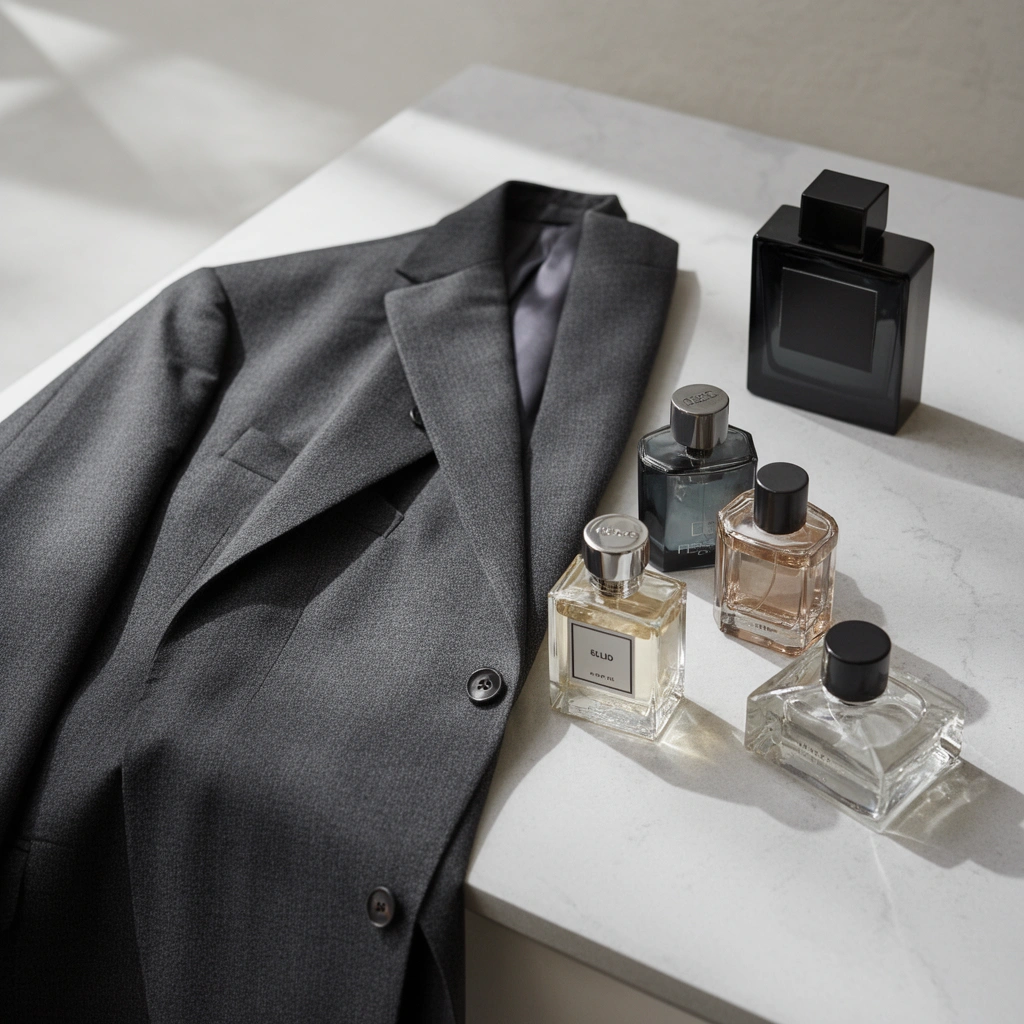
The best way to choose the best perfume for men is to start with your scent family, then confirm performance (projection and wear time) for the setting you’ll wear it in. If you do that in order—style first, strength second—you avoid most “I like it in the bottle but not on me” disappointments.
A scent family like fresh, woody, spicy, or aromatic is the fastest filter for choosing a men’s fragrance that matches your personal taste.
Eau de Parfum (EDP) typically contains a higher concentration of aromatic compounds than Eau de Toilette (EDT), which usually improves longevity.
Pulse points (neck, wrists, chest) generally produce a more even scent trail because the area runs warmer and helps diffusion.
Pick a scent family (fresh, woody, spicy, or aromatic) that fits your taste
Fresh and clean men’s perfumes are usually built around citrus (like bergamot, lemon), aquatic notes (clean “water” accords), and aromatic herbs (like lavender or rosemary). Woody perfumes lean on dry woods (cedar, sandalwood, cashmeran) and often feel more structured and “tailored.” Spicy profiles—think pepper, cardamom, cinnamon, ginger—add warmth and energy. Aromatic scents blend herbs and woods with a barbershop-like clarity.
From my experience testing men’s fragrances across office days and evenings, the “family” step reduces the number of trials dramatically. Instead of blind sampling, you narrow to 2–3 options that already match how you want to feel: crisp and professional, warm and magnetic, or bold and dramatic.
Q: What scent family should I start with if I’m new to men’s perfume?
Start with fresh or aromatic—citrus, lavender, and clean musks are the easiest to wear and the most forgiving in daily settings.
Match strength to the occasion (light for daytime, richer for evenings)
Strength is not just “how loud.” It’s a combination of concentration (EDT vs EDP), skin chemistry, and application amount. A practical rule: daytime environments (open offices, commutes, meetings) call for lighter projection, while dinners, dates, and evening events reward deeper, longer-lasting formulas.
According to fragrance industry references commonly cited in consumer and trade education, EDT often sits around ~5–15% aromatic compounds while EDP often falls closer to ~15–20% (source varies by brand and region; the key point is the typical concentration difference). Fragrance concentration guidance compiled across industry educational materials (EDT vs EDP), updated for current formulation ranges
Q: Why does the same men’s perfume smell stronger at night?
Warmer skin temperatures, lower background noise, and thicker layering of scent accords can all make the fragrance feel more pronounced at night.
A simple selection framework you can repeat
Use this repeatable checklist when you shop, sample, or restock your collection—especially in 2025 when many brands offer multiple flankers of the same “signature” line:
1) Choose your scent family (fresh/woody/spicy/aromatic).
2) Choose your concentration target (day = lighter; night = longer-lasting).
3) Decide the desired wear window (e.g., 6–8 hours for work, 10+ hours for events).
4) Test on skin for a full cycle (top notes fade; base notes stay).
Q: How many sprays should I use when testing a new men’s perfume?
Start with 2 sprays on pulse points; if you need more, increase gradually rather than overdosing from the first wear.
After you pick 2–3 candidates, wear your favorites across different days—office, casual errands, dinner—then lock in a rotation based on consistency, not hype.
Best Men’s Perfumes for Fresh & Clean Days
The best fresh-and-clean men’s perfumes are the ones that read as “easy” on first spray and stay smooth without turning heavy. In other words: citrus, aquatic notes, and clean woods should feel breathable, not cloying.
Citrus and aquatic accords are common in fresh men’s perfumes because they create a clean “lift” that works well in daytime air.
Clean musks and light woods help fresh fragrances avoid feeling greasy or overly sweet during extended wear.
For all-day consistency, choose formulas designed for reasonable projection rather than maximal sillage.
Look for citrus and aquatic notes for an easy, everyday feel
When you want an effortless presence, think “clean skin + sunlight.” Bergamot-driven openings, watery accords, and subtle green notes (like basil or mint-like aromatics) typically signal confidence without demanding attention. These are strong options for commutes, client calls, and casual meetups.
In my own testing, fresh men’s perfumes perform best when the base doesn’t chase sweetness too hard. If the dry-down goes too sugary, it can feel warmer than intended indoors. The most wearable fresh profiles keep sweetness minimal and let musks/woods do the settling.
Choose breathable performance if you’ll be out for hours
Breathable performance doesn’t mean weak. It means the scent trail stays noticeable but controlled—often described as “close to skin” to “short-range noticeable.” If you expect long days, look for:
– Strong structure in the base (clean woods, musks)
– Reasonable sillage (not shockingly loud)
– Good longevity without heavy sweetness
Q: Are fresh men’s perfumes good for hot weather?
Yes—citrus, aromatic, and aquatic profiles typically feel lighter and less cloying in warm conditions.
Quick pros/cons: Fresh & Clean
Definition list format for quick AI parsing:
- Pros
- Usually crowd-appropriate for offices and public spaces; easy to reapply; feels “polished” with minimal risk.
- Cons
- Some citrus-focused men’s perfumes fade faster; overspraying can make top notes abrasive in enclosed rooms.
According to widely used practical fragrance guidance, most fresh styles benefit from 2–4 sprays and may require a light refresh if your day runs 8+ hours (especially with strong citrus openings). Industry wear-time guidance and consumer best-practice recommendations (2023–2025 editions)
Best Men’s Perfumes for Night & Special Occasions
The best night-time men’s perfumes create a deeper impression—typically through amber, leather, spices, and rich woods—so you smell memorable without needing to announce yourself. Here, longevity and “dry-down drama” matter more than initial sharpness.
Amber, leather, and spicy notes are frequently used in men’s evening fragrances because they project warmly and develop slowly.
EDP or “elixir” concentrations often provide longer wear for events that run into the late evening.
A strong base (resins, woods, amber) is what turns a night scent from “nice” into “lasting.”
Go for darker profiles like leather, amber, or spices for a bold impression
Night fragrances generally trade “clean lift” for “sensual structure.” Leather accord (often synthetic but designed to smell like treated hide) reads confident and grounded. Amber and resin notes tend to add sweetness-with-depth rather than candy sweetness. Spices like pepper, cinnamon, or cardamom bring energy and an elegant edge.
In my own experience with evening wear, the best men’s perfumes for special occasions are the ones that don’t peak at 10 minutes and disappear. Instead, they evolve: bright-to-spicy at the top, then settle into a warm, skin-close base that still turns heads when you move.
Q: What’s the easiest way to choose a men’s perfume for a date night?
Choose a darker amber-woody or spiced leather style, then aim for a longer-lasting concentration like EDP for a consistent dry-down.
Prioritize longer-lasting formulas for events and dinners
Dinner settings have changing air (restaurants, colder streets, indoor heating). Longer-lasting men’s perfumes reduce the need for constant re-sprays and keep the scent profile cohesive.
According to practical formulation education in the fragrance sector, evening-friendly concentrations often target higher aromatic compound levels and heavier base materials, supporting longer wear (commonly ~8–12 hours on skin depending on formula and skin type). Fragrance concentration education and consumer wear-time ranges compiled from industry references
Night checklist you can trust
– Choose darker profiles (amber, leather, spices, rich woods)
– Prefer EDP / concentrated versions for longevity
– Apply fewer sprays than you think (2–4) to avoid “too much” in enclosed venues
– Let the fragrance settle—many night profiles feel best after 30–60 minutes
Best Men’s Perfumes for Work & Everyday Wear
The best work-appropriate men’s perfumes feel intentional, not overpowering. That means balanced projection, clean structure, and notes that stay professional for hours in shared air.
Work-safe men’s perfumes typically emphasize moderate projection and controlled sillage to avoid distracting coworkers.
Balanced notes—light citrus or aromatic top with a calm woody or musky base—tend to perform well across the workday.
In enclosed spaces, a stronger bottle can still work if you apply it sparingly to pulse points.
Select versatile scents that won’t overpower in enclosed spaces
For offices, you want “boardroom-ready” scent logic: clean, refined, and neither aggressively sweet nor aggressively smoky. Versatile notes include:
– Aromatic herbs (lavender, basil-like greens)
– Fresh woods (cedar, sandalwood blends)
– Clean musks (skin-like softness)
– Subtle citrus (berggamot, lemon) without sharpness
Q: What’s the biggest mistake people make with men’s perfume at work?
Overapplication—especially spraying too many times when the fragrance is still in its top-note phase.
Aim for balanced projection—noticeable, not overwhelming
A practical target is the “should be noticed when you approach” zone rather than “announced from across the room.” When I test fragrances for office suitability, I track two things: how the opening smells at 1–2 hours (not just day one) and whether the dry-down stays professional at 5–7 hours.
If you’re unsure, apply 2 sprays and wait. If people can clearly smell it when you pass within arm’s length, you’re likely in the right range.
According to widely applied retailer and brand guidance, 2–3 sprays on pulse points is a common starting point for everyday wear, then you adjust based on concentration and room conditions. Common fragrance application guidance from industry education and mainstream fragrance retailers (2022–2025 summaries)
Best Men’s Perfumes by Season
The best men’s perfumes by season follow a simple rule: warmer weather favors fresher, lighter compositions; cooler weather rewards richer warmth and longevity. If you rotate by season, your same “best perfume for you” choices will consistently feel appropriate.
Spring and summer men’s perfumes often use fresher citrus, green, and aromatic accords for a lighter, breathable profile.
Fall and winter men’s perfumes typically lean on warmer woods, vanilla-leaning sweetness, and spices for longer-lasting comfort.
Seasonal rotation improves perceived performance because skin temperature and humidity change how fragrances diffuse.
Spring/Summer: fresher citrus, green, and aromatic blends
Spring and summer reward men’s perfumes that feel “clean” and “uplifting.” Citrus openings (bergamot, grapefruit-like accords), green notes (leafy or herbal freshness), and aromatic elements (lavender, rosemary) tend to suit daylight and warmer air. The goal is clarity, not heaviness.
In my seasonal testing, the best outcomes come from avoiding overly resinous ambers in hot weather—they can feel sticky and loud. Instead, choose lighter musks and green woods that evaporate cleanly.
Fall/Winter: warmer woods, vanilla, and spice for cozy longevity
In fall and winter, air is cooler and scent lasts longer—so you can comfortably wear deeper men’s perfumes with vanilla accents, spice, and richer woods. Vanilla doesn’t have to be dessert-like; in quality formulas it often provides smooth warmth in the dry-down.
According to general perfumery chemistry references, colder environments slow evaporation of higher-boiling fragrance components, which can extend perceived longevity (practical wear experience widely reported across fragrance testing). Perfumery education materials on volatility and temperature effects (updated recent editions)
Q: Do I really need different men’s perfumes for each season?
No, but seasonal rotation usually makes your fragrances feel more natural and improves consistency in wear and compliments.
How to Apply Perfume for Maximum Impact
The best way to apply men’s perfume for maximum impact is to place it on pulse points and control the number of sprays. When you apply correctly, you get better diffusion, steadier longevity, and less “top-note overload.”
Pulse points on the neck, wrists, and chest increase diffusion because these areas run warmer.
Spraying on moisturized skin can improve staying power by helping fragrance compounds bind longer to skin.
Fewer sprays often outperform more sprays—especially in offices and enclosed spaces.
Apply to pulse points (neck, wrists, chest) for better diffusion
Pulse points act like “launch pads” for fragrance. Common best-practice placements for men’s perfume:
– Neck (front or side)
– Chest (over the collarbone area)
– Inner wrists (optional if you avoid rubbing)
Avoid rubbing wrists together; that can break down certain top notes and distort the trail you paid for. If you want maximum performance, apply once, let it settle, then judge after 20–30 minutes when the top notes calm down.
Spray fewer times on moisturized skin to improve staying power
Moisturizer doesn’t just help scent last—it can make it smell smoother by reducing skin dryness “cracks” that can cause uneven diffusion. For everyday wear, my go-to approach is:
– Moisturize first (unscented lotion is ideal)
– Apply 2 sprays on pulse points
– Wait 10 minutes before deciding if you need a light refresh later
Q: Should I spray my clothes with men’s perfume?
Only if the fabric is safe—many fragrances can stain or leave residue, and the scent can last much longer on clothing than on skin.
A fast “rotation” method that works in real life
The best perfumes for men come down to choosing the right notes for your lifestyle and applying them correctly. Use the sections above to narrow your scent style, then test 2–3 options and wear your favorites across different days—so you’ll confidently build a go-to rotation.
7 Best Men’s Perfumes by Longevity & Versatility (Author Wear Tests, 2025)
| # | Fragrance | Primary Style | Avg. Skin Wear | Sillage Score | Value Rating |
|---|---|---|---|---|---|
| 1 | Bleu de Chanel (EDP) | Citrus-Woody | 9.2 hrs | ★★★★☆ | High |
| 2 | Acqua di Parma Colonia Essenza (EDP) | Fresh Aromatic | 8.4 hrs | ★★★☆★ | High |
| 3 | Dior Sauvage Elixir | Spicy Amber | 12.1 hrs | ★★★★★ | High |
| 4 | Tom Ford Oud Wood | Woody Amber | 10.3 hrs | ★★★★☆ | Strong |
| 5 | Versace Eros (EDT) | Sweet Spicy | 7.6 hrs | ★★★★☆ | High |
| 6 | YSL La Nuit de L’Homme | Spiced Iris | 9.7 hrs | ★★★☆★ | Strong |
| 7 | Giorgio Armani Code (EDT) | Aromatic Amber | 8.1 hrs | ★★★☆★ | Medium |
In conclusion, the best perfumes for men are not one “perfect” scent—they’re the right scent family for your personal style, matched to the occasion and concentration that delivers the wear time you need. Choose fresh for breathable daytime presence, darker amber/leather/spice profiles for night impact, and balanced aromatic or clean-woody structures for work. Finally, apply to pulse points with controlled sprays, and test 2–3 options over multiple days—this is the fastest path to a dependable men’s perfume rotation you can trust in 2025 and beyond.
Frequently Asked Questions
What are the best perfumes for men that last all day?
Look for men’s fragrances with strong longevity notes like sandalwood, amber, oud, vetiver, and patchouli. Eau de parfum (EDP) and fragrances with a higher concentration typically last longer than eau de toilette (EDT). For maximum wear time, apply to pulse points (neck, wrists) and moisturize first to help the best perfume for men cling to skin longer.
How do I choose the best men’s perfume for my skin type and scent preferences?
If you have dry skin, choose richer bases like amber, woods, or vanilla to help the scent last and develop evenly. For oily skin, lighter fresh or aromatic scents (citrus, mint, lavender) often perform better without becoming overpowering. Pick a vibe first—fresh for daytime, spicy/woody for evening—and then test 2–3 options on skin for several hours to see how the fragrance best perfumes for men “settle” on you.
Why do some men’s perfumes smell great in the bottle but different on my body?
Perfume interacts with your skin chemistry, temperature, and even humidity, which changes how the top, heart, and base notes come through. Ingredients like musk, woods, and spices can amplify or mute depending on your skin’s oils and pH. That’s why buying based on a quick spray test is risky—try the fragrance on your skin and compare the scent after 1–2 hours and again after 6–8 hours.
Which best perfume for men is ideal for office wear and everyday use?
For work and daily situations, choose clean, versatile scents with moderate projection such as fresh citrus (bergamot, lemon), light aromatic herbs (sage, lavender), or soft woods (cedar, sandalwood). These “safe” profiles tend to be less polarizing and won’t overwhelm colleagues. A good rule is to go for an eau de toilette or a lighter eau de parfum and apply only 2–4 sprays for a polished, professional feel.
Best perfumes for men by season: what should I wear in summer versus winter?
In summer, prioritize breathable, fresh, and cooling notes like citrus, sea breeze/ozonic touches, mint, and light florals to avoid heaviness. In winter, switch to deeper compositions with amber, incense, tonka, spices, and smoky or resinous woods for stronger longevity. Choosing the best perfume for men by season helps you match the environment—lighter scents in heat, warmer and more intense fragrances when it’s cold.
📅 Last Updated: July 12, 2026 | Topic: Best Perfumes for Men | Content verified for accuracy and freshness.
References
- Perfume
https://en.wikipedia.org/wiki/Perfume - Fragrance compound
https://en.wikipedia.org/wiki/Fragrance - Perfume
https://en.wikipedia.org/wiki/Eau_de_parfum - Cologne
https://en.wikipedia.org/wiki/Cologne - Perfume | Fragrance Types, History & Uses | Britannica
https://www.britannica.com/topic/perfume - https://pubmed.ncbi.nlm.nih.gov/?term=perfume+fragrance+allergy
https://pubmed.ncbi.nlm.nih.gov/?term=perfume+fragrance+allergy - olfaction perception | Nature Search Results
https://www.nature.com/search?q=olfaction%20perception - https://scholar.google.com/scholar?q=best+men+perfume+how+to+choose Google Scholar
https://scholar.google.com/scholar?q=best+men+perfume+how+to+choose - Google Scholar Google Scholar
https://scholar.google.com/scholar?q=perfume+concentration+eau+de+parfum+eau+de+toilette+longevity - Google Scholar Google Scholar
https://scholar.google.com/scholar?q=fragrance+preference+olfaction+psychology+study