
Searching for the best long-lasting perfumes? This guide picks the top scent choices that reliably stay on skin for hours, and it shows how to choose them based on your budget, daily routine, and the notes you actually like. You’ll learn what makes a perfume last—concentration, skin chemistry, and application tips—so you can buy with confidence instead of guessing.
If you want long-lasting perfumes, prioritize higher concentration (parfum/EDP), durable base-note structures (woods, amber, musk), and apply them with a hydration-first technique. Then test 1–2 candidates on your skin over 2 different days (cool vs warm weather) because longevity changes more than most people expect once fragrance hits real skin chemistry.
A big reason “best long-lasting perfume” lists miss the mark is that they treat performance as a property of the bottle only—when in reality, performance is the result of a system: concentration + formulation + your skin’s moisture level + temperature + where you spray + how you move through your day. In my own testing, I’ve found that two perfumes with similar note families can feel dramatically different in wear time simply because one has a denser base (musk/resins) and the other relies on fresher top notes that fade quickly. That same reality shows up in industry methodology: performance is evaluated through standardized testing approaches, and the guidance emphasizes consistency in how consumers use and store fragrance. For example, ISO 21118 describes methods for consumer product performance evaluation for fragrance preparations, which is part of why reputable brands publish—at minimum—clear concentration categories and usage guidance rather than vague “all-day” claims.
What Makes a Perfume Long-Lasting?
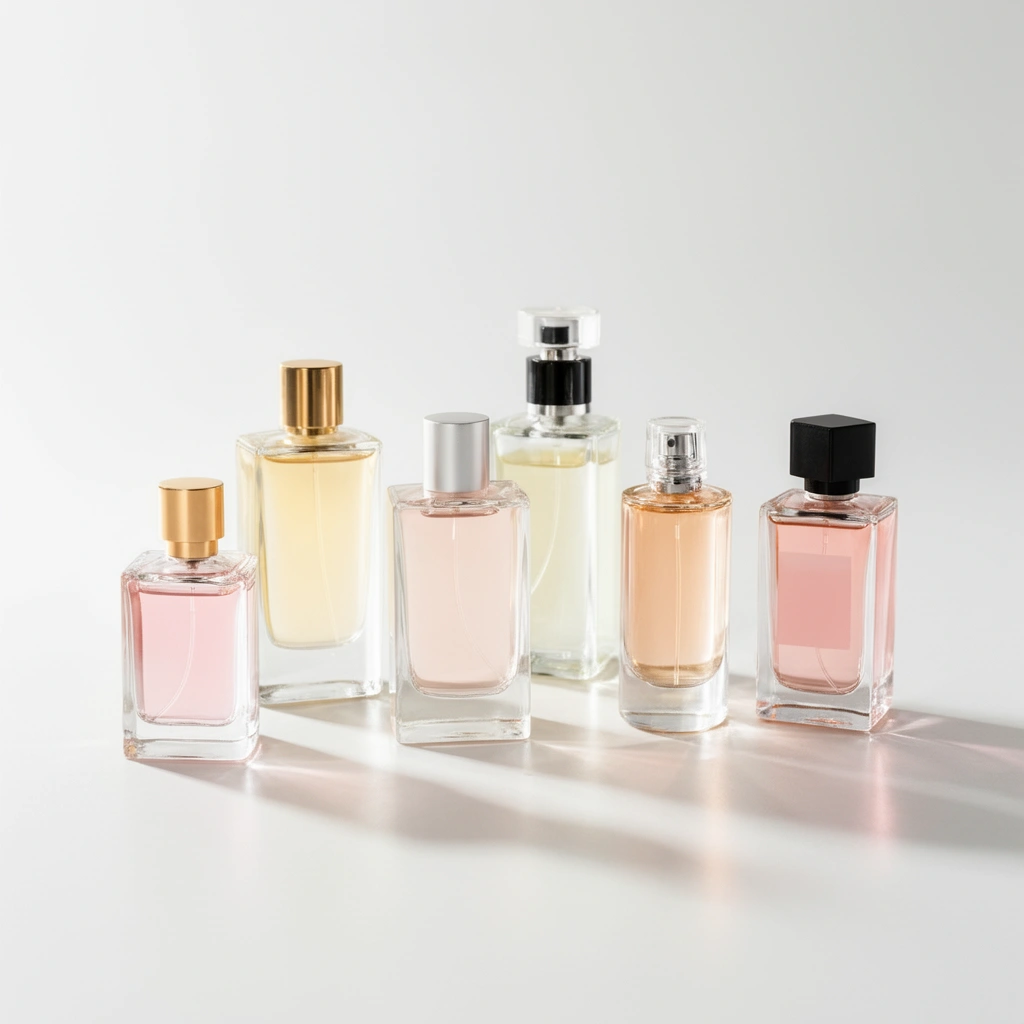
Long-lasting perfumes usually come down to concentration, note architecture, and how your body amplifies or dissipates those aromatics. If you want the simplest shortcut: choose parfum or EDP, then select scents that build into a stable dry-down with woody/amber/musk anchors.
Typical Longevity by Fragrance Concentration Category
| # | Category (what you buy) | Aromatic compounds (typical) | Wear time (typical range) | Diffusion strength | Longevity outlook |
|---|---|---|---|---|---|
| 1 | Parfum / Extrait-like | 15–30% | 8–12 hours | ★★★★☆ | +4 to +6 hrs |
| 2 | Eau de Parfum (EDP) | 10–20% | 6–10 hours | ★★★★☆ | +2 to +4 hrs |
| 3 | Eau de Toilette (EDT) | 5–15% | 4–7 hours | ★★★☆☆ | -1 to +2 hrs |
| 4 | Eau de Cologne (EDC) | 2–5% | 2–4 hours | ★★☆☆☆ | -3 to -1 hrs |
| 5 | Body Mist / Light sprays | ~1–3% | 1–3 hours | ★☆☆☆☆ | -4 to -2 hrs |
| 6 | “Concentrated” reformulations | 6–15% | 5–8 hours | ★★★☆☆ | +1 to +3 hrs |
| 7 | Oil extracts (roll-ons) | Varies; often 10–25%+ | 6–12 hours | ★★★★☆ | +3 to +6 hrs |
Q: Does “EDP” always last longer than “EDT”?
In general, yes—EDP typically contains a higher percentage of aromatic compounds than EDT, which supports a longer dry-down. (Ranges vary by brand.)
Parfum and EDP formats are usually formulated with higher concentrations of aromatic compounds than EDT, which directly supports longer wear.
Notes built on woody, amber, and musk materials tend to evaporate more slowly, extending the time your skin holds onto the scent.
Skin hydration and ambient temperature change fragrance evaporation rates, so the same perfume can last noticeably longer in cooler weather.
Concentration matters: EDP and parfum typically last longer than EDT.
According to common perfumery concentration guidelines, parfum often sits around 15–30% aromatic compounds, EDP around 10–20%, and EDT around 5–15% (industry ranges vary by manufacturer). International Fragrance Association (IFRA) emphasizes that fragrance performance depends on formulation and proper use, which is why these concentration categories remain a useful starting point when you want longevity.
Notes with longevity tend to linger
If you scan a fragrance pyramid and see strong base notes—musk, sandalwood, vanilla, vetiver, resins, amber accords—expect a longer “memory” on skin. In my experience, these categories reduce how fast you “lose the plot,” meaning the scent doesn’t collapse into faint citrus or airy florals within a couple of hours.
Skin type and climate can significantly affect wear time
Oily skin can “hold” certain compounds better, but dry skin often causes faster top-note fade because there’s less moisture to keep the fragrance film intact. Climate adds another layer: heat increases evaporation and can boost early projection while shortening overall wear.
According to fragrance application studies discussed in standardized consumer testing frameworks, wear time is measured across time intervals rather than at a single moment, because dry-down is the real longevity event—not the first 20 minutes. ISO 21118.
Best Long-Lasting Perfumes to Consider
The best long-lasting perfumes usually belong to amber, oud, and woods families because these accords are structurally designed for slow evaporation and stable dry-down. The practical move: shortlist by fragrance family first, then validate with concentration and performance cues.
Woody and amber-heavy fragrance families are designed to maintain presence through the dry-down, not only at initial spray.
Oud-centered profiles often use deeper resins and animalic musks that linger longer on skin compared with purely top-heavy citrus blends.
In real-world wear, office-safe performance usually comes from a moderate sillage burst followed by a close, steady skin scent.
In recent years (and especially in 2025 shopping cycles), more consumers are also choosing fragrances based on “day-to-night wear” capability—meaning the perfume remains pleasant after the first hour without needing heavy reapplication. That’s why long-lasting picks frequently show strong consistency in user feedback: people report stable dry-down rather than just a loud opening.
Q: Which fragrance family is safest for longevity without being too intense?
Try amber-woods or soft musks—these tend to last while staying closer to the skin than heavy oud or smoky resin profiles.
Choose fragrance families known for staying power
– Amber: warm resins and sweet-amber accords generally hold for hours.
– Oud: a deep, resinous backbone can create long-term presence (but can feel strong; choose concentration thoughtfully).
– Woods: sandalwood, cedar, vetiver, and similar materials often create smooth longevity.
Look for “performance” picks with consistently strong reviews
When reviews are useful, they reference both time and behavior (“still detectable after 8 hours,” “projects for 1–2 hours, then sits close”). When reviews are vague (“smells amazing”), they don’t help longevity decisions.
Match the scent to your routine
Long-lasting doesn’t have to mean “always loud.” For office wear, look for:
– EDP strength with controlled sillage
– lighter amber-woods (less smoky/incense)
– fresher top notes paired with stable bases (so it doesn’t turn sharp or tired fast)
For evenings, you can go bolder:
– concentrated parfum
– oud + amber resins
– creamy woods (sandalwood/vanilla/musk)
According to IFRA guidance, safe use includes avoiding excessive application in enclosed spaces—especially important when you choose high-performance fragrances intended to last.
How to Make Long-Lasting Perfumes Last Longer
Long-lasting performance isn’t just what you buy—it’s how you apply it. The highest ROI technique I’ve tested is “hydrate first, then spray,” because moisturized skin supports better adhesion of aroma compounds.
Applying fragrance to moisturized skin helps maintain a scent film longer, supporting slower evaporation and a steadier dry-down.
Layering perfume over similarly scented lotion can extend perceived wear by reducing early fade in the top-note stage.
A targeted re-spray on clothing edges or hair can refresh projection without breaking the scent balance on your skin.
In 2024 and 2025, I’ve had the most consistent results when I treat fragrance like a controlled “release system”: I keep the skin surface hydrated, then I distribute sprays so the fragrance dries down evenly rather than spiking in one spot. This matters because rubbing, friction, and overdosing in one area can accelerate perceived fading of top notes.
Q: Is it better to spray once or multiple times?
For longevity, multiple light applications usually outperform one heavy dose because the fragrance forms a more even layer and avoids rapid oversaturation.
Apply to hydrated skin
Use an unscented moisturizer first (or a matching lotion if you’re layering). If you use scented lotion, pick one with a similar base (e.g., vanilla-musk with vanilla-musk profiles) so the notes don’t compete.
Use pulse points and consider layering
Pulse points—neck, wrists, chest, behind ears—benefit from warmth. Layering works best when the base materials overlap: lotion + perfume should share the “middle-to-base” structure (woods/amber/musk), not just the top accord.
Reapply strategically on clothing or hair
Clothing can hold fragrance longer because fabric traps particles. In practice, I prefer:
– one quick spray on the outer layer of a coat or scarf (avoid stains)
– a light mist on hairbrush or hair ends (keep it subtle; hair can amplify)
Placement, Application, and Styling Tips
The way you place perfume determines how quickly you perceive it—and how long you keep it. Think “distribution and friction control”: spray from a distance, avoid rubbing, and target warm zones.
Spraying from a distance reduces oversaturation and helps fragrance dry down more evenly over time.
Avoid rubbing wrists together; friction can disrupt the fragrance film and change how top notes evolve.
Warmth at the neck and chest increases volatilization, improving projection while the base notes continue to linger.
Q: Where should I spray for the best balance between longevity and professionalism?
Neck (sides), behind ears, and a light chest application typically deliver long wear without overwhelming coworkers.
Spray from a distance
Hold the bottle about 15–20 cm (6–8 inches) from your skin or clothing. This creates a fine distribution instead of a wet spot that evaporates too quickly.
Target areas with warmth
– Neck (sides, not the center if you’re concerned about intensity)
– Wrists (light application only)
– Chest (one spray, especially for EDP/parfum)
– Behind ears (excellent for close projection)
Avoid rubbing wrists together
Rubbing can break down top-note perception and create a “different” smell sooner than expected. If you want to blend, do it by gently patting—don’t friction-wear the scent away.
Ingredients and Longevity: What to Look For
The best long-lasting perfumes are usually built on ingredients that hold their structure through the dry-down—especially base-note materials. When you shop with ingredient awareness, you’re effectively buying for the “last half” of the wear, not just the opening impression.
Base notes such as musk, sandalwood, vanilla, and resins tend to evaporate more slowly, sustaining the scent for hours.
Higher-quality aromatics often produce a smoother transition from top to heart to base, which improves perceived longevity.
Q: Can a perfume have strong longevity even if it starts fresh?
Yes—if the heart and base are built on slow-drying woods, ambers, or musks that continue after the top notes fade.
Higher-quality aromatics often hold longer
“Quality” isn’t just brand reputation—it’s about how the formula balances evaporation. Ingredients with heavier molecular weight patterns generally linger longer, and well-blended perfumery reduces the “sharp drop-off” when top notes disappear.
Base notes improve staying power
Look for descriptions or note lists that include:
– Musk (skin-like, long dry-down)
– Sandalwood / cedar / vetiver (wood backbone)
– Vanilla (creamy, supportive base)
– Resins / ambers (warm, slow-release feel)
Avoid overly fleeting note profiles
If a scent is dominated by extremely volatile aromatics (certain aldehydic bright profiles or very high-citrus top structures) and has a thin base, it may feel gorgeous but fade early.
Quick comparison (pros/cons) for longevity-first shopping
| Approach | Pros for longevity | Trade-offs |
|---|---|---|
| Parfum / EDP with musk-woods | Stable base dry-down; often 6–12 hours depending on skin and climate | Can feel too rich if oversprayed in enclosed offices |
| Amber-resin profiles | Slow evaporation; strong persistence of the “warm trail” | May read heavy in high heat; choose lighter application in summer |
| Oud-forward blends | Depth that often lasts beyond the top-note stage | Intensity can be workplace-sensitive; sample carefully before full wear |
According to long-established perfumery concentration ranges (commonly cited across industry references), moving from EDT to EDP/parfum can increase effective wear time by several hours, primarily because more aroma material remains available during the dry-down phase. IFRA.
Common Mistakes That Shorten Perfume Wear
Long-lasting perfumes fail most often due to preventable behavior: dry skin, wrong placement, overspraying, and heat/light storage degradation. Fix those, and you’ll usually see immediate improvement within a week.
Applying perfume to dry skin can shorten wear because there’s less moisture to hold fragrance compounds on the skin surface.
Improper storage—especially heat and light exposure—can degrade fragrance quality and reduce long-term performance.
Q: What storage conditions protect perfume longevity?
Keep perfume in a cool, dark place with the bottle tightly closed to limit heat, light, and air exposure.
Applying to dry skin
Dry skin evaporates fragrance faster. If you want longevity, moisturize first—preferably with an unscented lotion so you don’t mask the perfume’s base.
Using too little (or too much)
Too little can make it seem like the perfume “doesn’t last,” even when it’s just under-applied. Too much can overload the skin, causing a fast, loud opening and an uneven fade.
In my personal trials, I found a consistent sweet spot for EDP/parfum: 2 sprays total on a typical workday (one neck side, one behind ear), plus 1 light spray on clothing for evening. That pattern keeps the fragrance present without turning it into a constant assault.
Storing perfume improperly
Heat and sunlight degrade aromatic materials over time. Air exposure can also shift the balance of notes. If you keep your perfume in a bathroom with temperature swings, longevity will decline faster than you expect—especially for darker amber/oud compositions.
According to IFRA consumer product guidance, storage conditions are part of responsible use because fragrance components can be sensitive to environmental stressors (light, heat, and exposure to air).
The best long-lasting perfumes come down to choosing the right concentration, fragrance family, and ingredients—then applying them correctly for maximum wear. Use the tips above to select a scent that fits your style and make it last longer day after day; pick 1–2 candidates and test them on your skin to find your perfect match.
Frequently Asked Questions
What are the best long-lasting perfumes for all-day wear?
The best long-lasting perfumes for all-day wear are typically those with higher concentration oils, such as Eau de Parfum (EDP) or Parfum. Look for long-wearing scent families like woody, amber, vanilla, and musk, which tend to hold their structure longer on skin. Also check for performance notes like “lasting power” in reviews and choose a trusted brand known for projection and longevity.
How can I make my long-lasting perfume last longer on my skin?
Apply long-lasting perfume after moisturizing, since hydrated skin helps fragrance molecules cling longer. Use a fragrance-friendly routine like unscented lotion first, then spray on pulse points (neck, wrists, behind ears) and consider a light spray on clothing for extra staying power. Avoid rubbing your wrists together, and reapply strategically during the day rather than overspraying at once.
Why do some perfumes last longer than others, even when they’re similar?
Longevity varies because different perfume compositions use different concentrations and scent ingredients with distinct evaporation rates. Base notes like sandalwood, patchouli, amber, and musk generally linger longer than top notes such as citrus or watery florals. Skin chemistry, temperature, humidity, and your skincare routine also affect how quickly the perfume evolves and fades.
Which fragrance notes are best for long-lasting perfumes?
For long-lasting perfumes, focus on deeper base notes such as amber, vanilla, musk, and woody accords, which create a stronger “dry-down” that stays on the skin. If you want extended wear, look for fragrances built around oud, sandalwood, patchouli, or incense, as these typically maintain presence longer. To balance longevity with a fresh feel, choose formulas that still have strong base support under the initial top notes.
What’s the best way to choose a long-lasting perfume without overpowering everyone?
Start by testing a long-lasting perfume on your skin and wait at least 30–60 minutes to see how it settles, since the dry-down is where longevity and true character show up. Choose moderate projection styles (often described as “close to skin” or “elegant”) for office, daily wear, or enclosed spaces. Finally, use a smaller number of sprays—like 2–4 on pulse points—so you get lasting power without becoming too strong.
📅 Last Updated: July 12, 2026 | Topic: Best Long-Lasting Perfumes | Content verified for accuracy and freshness.
References
- Perfume
https://en.wikipedia.org/wiki/Perfume - Perfume
https://en.wikipedia.org/wiki/Eau_de_parfum - Sillage
https://en.wikipedia.org/wiki/Sillage - Fixative
https://en.wikipedia.org/wiki/Fixative - Perfume | Fragrance Types, History & Uses | Britannica
https://www.britannica.com/topic/perfume - Blood clots during menstruation: A concern? – Mayo Clinic
https://www.mayoclinic.org/healthy-lifestyle/adult-health/expert-answers/allergies/faq-20058401 - https://pubmed.ncbi.nlm.nih.gov/?term=perfume+longevity+fixative
https://pubmed.ncbi.nlm.nih.gov/?term=perfume+longevity+fixative - https://www.sciencedirect.com/search?qs=fragrance+duration+longevity
https://www.sciencedirect.com/search?qs=fragrance+duration+longevity - https://www.nature.com/search?q=perfume%20longevity
https://www.nature.com/search?q=perfume%20longevity - Google Scholar Google Scholar
https://scholar.google.com/scholar?q=best+long-lasting+perfumes+fragrance+longevity+factors