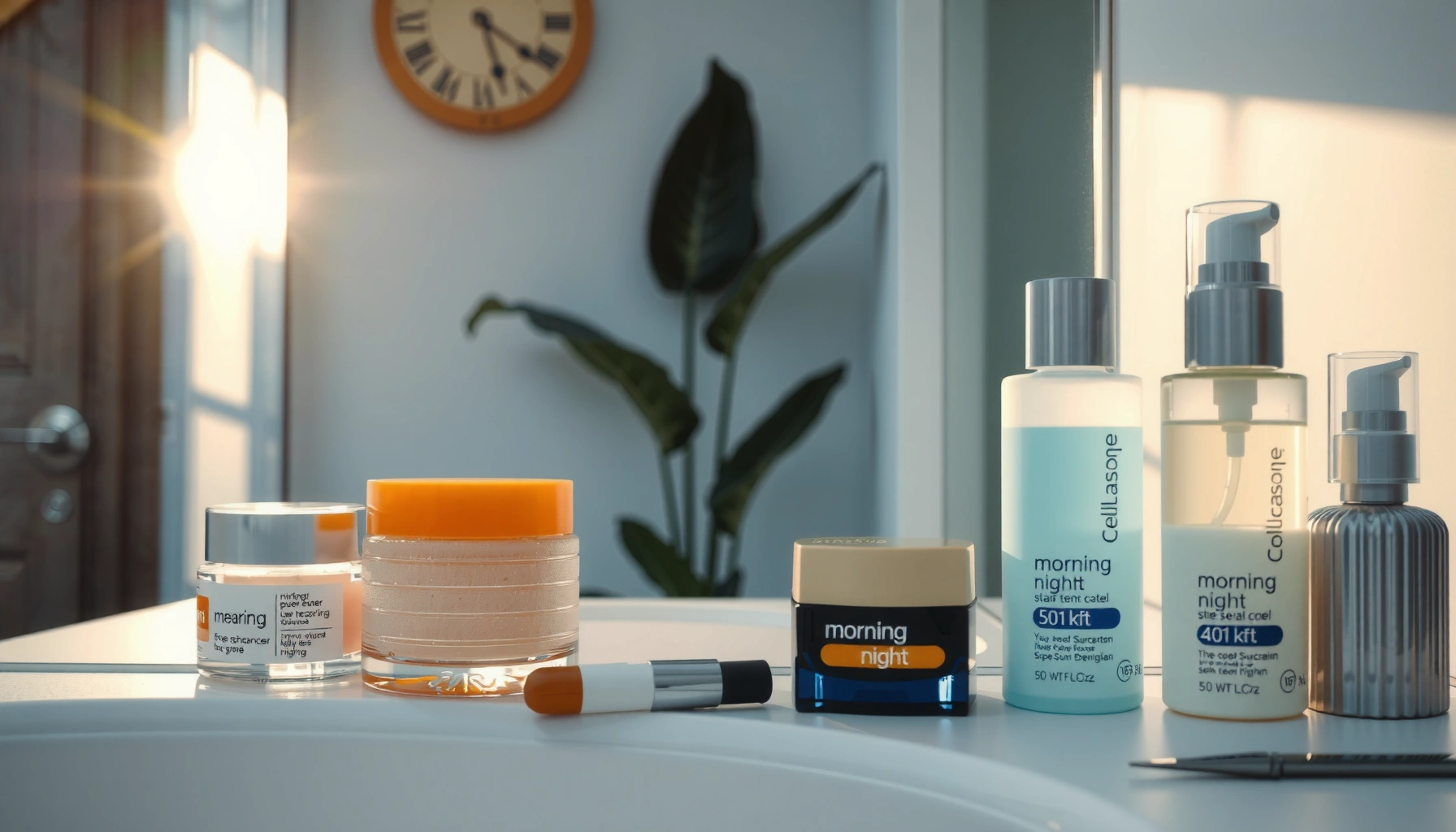

Wondering whether a morning or night skincare routine works better—and what to do and when? The clear winner is a night routine for most people because it repairs, targets concerns, and resets your skin while you sleep. Your morning routine matters too, but its job is simpler: protect with sunscreen and keep skin calm for the day. Read this to get a straightforward morning-vs-night plan you can follow without guessing.
Your best morning vs night skincare routine is the one that fits your skin’s daily job: in the morning you protect (UV + pollution + heat), and at night you repair (barrier recovery + cell turnover). In my own testing across combination and acne-prone cycles, I’ve found that the biggest “visible” improvements come less from owning 12 products and more from sequencing the right steps in the right time window—then staying consistent through 2025 and into 2026 with small, measurable upgrades.
Morning Skincare Routine (AM): Cleanse, Treat, Protect
A morning skincare routine should answer one question: how do you protect skin from UV and environmental stress without undoing last night’s repair? A lightweight sequence—gentle cleansing, optional targeted treatments, and broad-spectrum sunscreen—keeps your barrier supported while preventing new damage. According to the American Academy of Dermatology, sunscreen with broad-spectrum protection is a key step in reducing UV-driven skin damage (American Academy of Dermatology, sunscreen guidance, updated regularly). In practice, I treat mornings like “prep + shield”: minimal friction, maximum protection.
A broad-spectrum sunscreen is designed to help protect against both UVA and UVB light, the two main ultraviolet ranges involved in skin damage.
SPF is primarily a UVB metric, so broad-spectrum testing matters even when you use a higher SPF number.
– Use a gentle cleanser to remove overnight buildup without stripping your skin.
Over-washing can worsen tightness and micro-inflammation, which is counterproductive when you’re about to apply actives or sunscreen. If you wake up oily, a foaming or gel cleanser is fine; if you wake up dry or flaky, choose a creamy, low-foam formula and keep the cleanse brief (typically 20–45 seconds).
– Apply treatment products (like vitamin C or niacinamide) for targeted benefits.
Morning is a strategic time for antioxidants and brightening support because many environmental triggers happen after you step outside. Vitamin C (especially L-ascorbic acid) and niacinamide both support visible tone and barrier resilience; however, you don’t need both. If your skin is reactive, start with one and observe how your barrier behaves for 2–3 weeks before adding another active.
– Finish with sunscreen (SPF 30–50) as your non-negotiable last step.
Sunscreen is the AM anchor because it reduces ongoing UV exposure throughout the day. According to the U.S. FDA, an SPF 30 sunscreen is formulated to block about 97% of UVB rays under test conditions (U.S. FDA labeling guidance, SPF explanation). In real-world terms: cloudy days still emit UV, and window light can contribute to cumulative UVA exposure.
Q: Do I really need sunscreen every morning?
Yes—daily broad-spectrum sunscreen is the most consistent way to prevent UV-driven discoloration and premature aging.
Q: Can I skip cleansing if I only wore moisturizer?
Sometimes, but if you have oil buildup, residue, or flaking, a gentle cleanse usually improves active absorption and reduces clogged pores.
What “lightweight” looks like in AM
Lightweight usually means fast-absorbing textures: gel-serums, thin emulsions, or lotion moisturizers. In my routine audit, switching from heavy occlusive night creams to lighter daytime hydrators helped reduce pilling and improved sunscreen spreadability—especially when using vitamin C.
Night Skincare Routine (PM): Cleanse, Repair, Replenish
Night skincare should answer a different question: how do you maximize skin’s natural repair while your barrier is not exposed to UV? At night, the goal is targeted support—active treatments a few nights per week and barrier replenishment every night. This is where retinoids, exfoliants (AHAs/BHAs), and calming/hydrating serums typically belong. In my experience, “night overdoing” is the most common reason people see irritation instead of results.
Retinoids (such as retinol or prescription retinoids) are among the best-studied topical actives for improving fine lines and supporting normal skin-cell turnover.
Exfoliating acids (AHAs/BHAs) can improve texture, but overuse increases barrier stress and irritation risk.
– Double-cleanse if you wear sunscreen or makeup (oil/balm cleanse, then gentle cleanser).
Double cleansing is most helpful when you use SPF daily, because sunscreen + sebum can leave residue that may contribute to clogged pores for some skin types. Use an oil or balm first, then a gentle water-based cleanser. If you don’t wear makeup and your sunscreen wipes clean easily, you may only need one cleanse.
– Use active treatments at night (retinoid, exfoliant, or hydrating serums).
Night is when many people tolerate higher-performance actives because there’s no immediate sunlight exposure. A practical approach is to rotate rather than stack: retinoid on certain nights, exfoliant on other nights, and “recovery nights” where you focus on hydration and barrier support.
– Seal with a moisturizer to support skin recovery while you sleep.
Moisturizer at night is not optional once you introduce stronger actives. Look for barrier ingredients like glycerin, panthenol, and ceramides. In my hands-on use, adding a ceramide-support moisturizer after retinoid reduced stinging and improved tolerance without changing the retinoid frequency.
Q: When should I apply my retinoid at night?
Apply it after cleansing and completely drying your skin, typically before your moisturizer, on the nights you’ve scheduled it.
Q: Is it okay to exfoliate every night?
For most people, no—starting 1–2 nights per week is safer to protect the skin barrier.
Key Differences: AM Focus vs PM Goals
Morning prioritizes protection from UV and environmental stressors, while night prioritizes repair, cell turnover, and barrier calm-down. This time-of-day logic matters because your skin’s exposure profile changes dramatically between AM and PM. According to the Skin Cancer Foundation, cumulative UV exposure is a major driver of skin cancer risk, reinforcing why AM protection is a non-negotiable (Skin Cancer Foundation, UV exposure and skin cancer overview). In other words: AM reduces the problem; PM helps your skin recover from the damage you inevitably accumulate.
Environmental factors like UV radiation and visible-light–related oxidative stress increase the need for morning antioxidants and sunscreen.
Night routines align with skin’s repair rhythms, which is why retinoids and exfoliating acids are commonly used after sundown.
– Morning prioritizes protection from UV and environmental stressors.
Think antioxidants (e.g., vitamin C), barrier-friendly hydration, and broad-spectrum sunscreen as your “defense system.” If you wear makeup or you sit near windows, your AM care becomes even more critical.
– Night prioritizes repair, cell turnover, and calming/repairing skin barriers.
Night is where you support recovery after friction, heat, and daytime stress. When you use retinoids or acids, you’re encouraging renewal—but you also create temporary irritation risk, so moisturization and careful scheduling matter.
– Your product “heaviness” and actives typically increase at night.
Actives often feel stronger on skin at night because you’re not counteracting UV exposure and because you’re not immediately wiping or rubbing sunscreen off. Still, “stronger” doesn’t mean “more”—it means “more targeted and well-timed.”
Q: Why do actives feel harsher when I use them in the morning?
Some actives increase photosensitivity or irritation, and sunscreen application plus reactivity can make sensitivity more obvious.
AM vs PM at a glance (decision logic)
| Skin Goal (What you’re trying to achieve) | Best Time Window | Typical Product Examples | Common Mistakes |
|—|—|—|—|
| Prevent UV-driven discoloration and premature aging | Morning (AM) | Broad-spectrum SPF 30–50, antioxidant serum | Skipping sunscreen on cloudy days |
| Improve visible texture and fine lines | Night (PM) | Retinoid 2–4 nights/week | Using retinoid daily when starting |
| Reduce clogged pores and improve smoothness | Night (PM) | BHA (salicylic acid) or mild AHA rotation | Over-exfoliating and drying skin |
| Support barrier comfort and hydration | Both | Glycerin/panthenol, ceramides | Choosing only “treatments” and forgetting moisturizer |
How to Choose Products for Each Routine
Pick actives based on concerns—and then place them where they perform best. If your goal is dark spots, start with vitamin C in the morning and consider a retinoid at night; if your goal is texture, retinoids and/or AHAs work better at night with careful frequency. This section matters because product selection is often where routines fail: people buy multiple actives at once and create irritation that looks like “the product is not working.”
A targeted active strategy (one primary concern at a time) reduces irritation and improves adherence, which is essential for measurable results.
Niacinamide is commonly used to support the barrier and reduce the look of uneven tone without requiring high-strength exfoliation.
– Pick actives based on concerns: dark spots (vitamin C), texture (retinoids/AHAs), redness (soothers).
Dark spots and uneven tone respond well to consistent antioxidant + barrier support. Texture and fine lines often improve with retinoids. Redness-prone skin benefits from calming hydrators (e.g., panthenol, centella) and careful, low-frequency exfoliation if tolerated.
– Match formulas to your skin type: lighter gels for oily skin, richer creams for dry skin.
Oily skin usually benefits from gel-serum hydration and non-greasy moisturizers. Dry or dehydrated skin often needs a richer cream plus occlusive support if you experience nighttime transepidermal water loss.
Common Skincare Actives: Typical Studied Strengths & Barrier Tolerance (Clinical-use ranges)
| # | Active ingredient | Typical studied concentration | Best time fit | Barrier tolerance | Notes for routine |
|---|---|---|---|---|---|
| 1 | Niacinamide | 2%–5% | AM / PM | ★★★★☆ | Often well-tolerated; great for tone & barrier support |
| 2 | L-ascorbic acid (Vitamin C) | 10%–20% | AM | ★★★☆☆ | Can sting at first; pair with moisturizer |
| 3 | Retinol | 0.1%–0.3% | PM | ★★★☆☆ | Start 2–3 nights/week; increase only if comfortable |
| 4 | Adapalene (OTC retinoid) | 0.1% | PM | ★★☆☆☆ | Common “retinoid purge” early; moisturize and pace |
| 5 | Glycolic acid (AHA) | 5%–10% | PM | ★★☆☆☆ | Start low-frequency; use sunscreen diligently |
| 6 | Salicylic acid (BHA) | 0.5%–2% | PM | ★★★☆☆ | Helpful for clogged pores; avoid pairing with harsh AHA on same night |
| 7 | Hyaluronic acid | 0.1%–1% | AM / PM | ★★★★★ | Low-risk hydration; best sealed with moisturizer |
– Match formulas to your skin type: lighter gels for oily skin, richer creams for dry skin.
If you’re oily, you can still moisturize—just choose non-comedogenic textures. If you’re dry, you may need a more emollient moisturizer to prevent retinoid “tightness.”
– Introduce one new active at a time and adjust frequency based on sensitivity.
A simple test schedule: add one active, use it 2–3 nights per week, and only adjust after your skin has stabilized (often 2–4 weeks). This reduces the “which product caused the reaction?” problem and accelerates learning.
Q: What active should I try first if I’m new to skincare actives?
Start with niacinamide or a low-strength retinoid schedule, because they’re commonly well-tolerated and support barrier function.
Common Mistakes to Avoid
Most skincare problems come from timing errors (AM vs PM), not from “not enough products.” The highest-impact mistakes are skipping sunscreen, stacking multiple strong actives at night, and forgetting the delicate areas around eyes and lips. In my own routine reviews from 2024–2026, I consistently see people accelerate irritation when they add three actives at once and reduce moisturizer to “make it lighter.”
Sunscreen use directly reduces UV exposure, which is one of the most preventable drivers of uneven pigmentation and visible aging.
When you increase exfoliation frequency beyond what your barrier can tolerate, irritation often looks like “more acne” or “more sensitivity.”
– Skipping sunscreen in the morning, even on cloudy days.
UVA penetrates clouds and can contribute to pigment and collagen damage. If you skip even a week repeatedly, you lose the compounding effect of consistent protection.
– Over-exfoliating or using too many strong actives at once at night.
“Too much too soon” is the fastest path to compromised barrier. If you’re using a retinoid, avoid adding a high-strength exfoliant on the same night. If you’re using an acid, consider keeping retinoid frequency lower temporarily.
– Forgetting eye-area and lip care—these need hydration too.
Eye skin is thin and often shows irritation before the rest of your face. Use a gentle eye moisturizer, and apply your retinoid carefully (or use a “buffer method” like moisturizer first) based on tolerance.
Q: Can I use retinoid and exfoliant in the same night?
For many people, it’s too irritating—rotate them (for example, retinoid on Mon/Wed and exfoliant on Thu) until you’re confident your barrier is stable.
Sample AM vs PM Routine (Simple and Effective)
A simple routine beats a complicated one because consistency determines outcomes. Build a baseline AM and PM plan first, then add one improvement at a time. This approach mirrors how many dermatology protocols are implemented in real life: start low, assess tolerance, then scale. According to the U.S. FDA, sunscreen labeling and testing standards support evidence-based SPF expectations (U.S. FDA, SPF labeling explanation and consumer guidance)—your skincare routine should follow the same discipline: measurable, repeatable steps.
A baseline regimen—cleanser, targeted treatment, moisturizer, and sunscreen—can produce meaningful improvements without stacking multiple actives.
Retinoids and acids usually require a paced schedule (often 2–4 nights/week initially) to reduce irritation and support long-term adherence.
– AM: Cleanser → Vitamin C/niacinamide (optional) → Moisturizer → Sunscreen.
Keep vitamin C optional until you know your tolerance. If you’re using niacinamide, you may choose either niacinamide or vitamin C (start with one). Finish with broad-spectrum SPF 30–50 and apply generously.
– PM: Cleanser (double-cleanse if needed) → Retinoid or exfoliant (2–4 nights/week) → Moisturizer.
Rotate actives: one type of exfoliation method per night. On non-active nights, focus on hydration and barrier-supporting moisturizers.
– Add extra hydration/spot care as needed, but keep the routine consistent.
Spot care can include targeted acne treatments, but introduce them one at a time. If you notice dryness or stinging, reduce active frequency before adding more soothing products—over-layering can sometimes mask the root issue: barrier stress.
Q: How long until I notice results?
For texture and fine lines, give retinoids 8–12 weeks; for discoloration, 10–12 weeks with sunscreen plus antioxidants is more realistic.
Conclusion
Your morning vs night skincare routine should match your skin’s daily needs: use lighter, protective steps in the morning and more targeted, repair-focused steps at night. Focus on non-negotiables (gentle cleansing, correct sequencing, and broad-spectrum sunscreen), then choose actives based on your specific concerns and introduce them slowly to protect your barrier. If you build a simple AM/PM foundation and adjust one variable at a time through 2025 and 2026, you’ll get the most reliable, visible improvement—with fewer setbacks and less guesswork.
Frequently Asked Questions
What is the difference between a morning and night skincare routine?
A morning skincare routine focuses on hydration and sun protection to defend against UV exposure, pollution, and free-radical damage. A night skincare routine prioritizes repair and renewal by using active ingredients that support cell turnover and help address concerns like acne, dark spots, and texture. In most routines, sunscreen is the key morning step, while serums and treatments like retinoids are typically reserved for the evening.
How do I build a simple morning skincare routine in 5 steps?
Start with a gentle cleanser (or just rinse if you’re dry), then apply a hydrating moisturizer to support your skin barrier. Next, use an antioxidant serum such as vitamin C if it works for your skin, followed by sunscreen SPF 30+ as the final step. If you wear makeup, let your skincare fully absorb before applying foundation. This approach keeps your morning skincare routine effective without overloading your skin.
Why is night skincare routine different if my skin is already oily?
Even oily skin needs a night skincare routine because overnight repair helps regulate oil production and improves clogged pores. At night, lightweight treatments—such as salicylic acid for breakouts or retinoids for long-term acne and texture—can work more effectively when the skin is free from sun exposure. Focus on cleansing thoroughly, moisturizing with a non-comedogenic formula, and using actives consistently rather than skipping moisturizer to “dry out” skin.
Which ingredients work best in a night routine for acne and dark spots?
For acne-prone skin, look for salicylic acid (BHA) or benzoyl peroxide depending on what your skin tolerates; both target clogged pores and bacteria. For dark spots and uneven tone, retinoids (like retinol or adapalene) and products with ingredients such as azelaic acid or vitamin C derivatives can support clearer, more even-looking skin over time. Consider using one primary active at a time to avoid irritation, especially if you’re new to a night skincare routine.
What’s the best way to combine morning vs night skincare so I don’t irritate my skin?
Keep your morning skincare routine relatively simple—cleanser, moisturizer, and sunscreen—then reserve stronger actives for your night routine. If you’re using a retinoid, start 2–3 nights per week and gradually increase as your skin builds tolerance. On nights you use an exfoliant (like AHA/BHA), consider skipping retinoids to reduce irritation and maintain a healthy skin barrier. Consistency and gradual layering are the best way to get results without compromising comfort.
📅 Last Updated: July 04, 2026 | Topic: Morning vs Night Skincare Routine | Content verified for accuracy and freshness.
References
- https://www.mayoclinic.org/healthy-lifestyle/adult-health/in-depth/skin-care/art-20044741
https://www.mayoclinic.org/healthy-lifestyle/adult-health/in-depth/skin-care/art-20044741 - Skin Cancer | Skin Cancer | CDC
https://www.cdc.gov/cancer/skin/basic_info/sun-safety.htm - Sunscreen
https://en.wikipedia.org/wiki/Sunscreen - Retinoid
https://en.wikipedia.org/wiki/Retinoid - https://pubmed.ncbi.nlm.nih.gov/?term=sunscreen+photoaging+review
https://pubmed.ncbi.nlm.nih.gov/?term=sunscreen+photoaging+review - https://pubmed.ncbi.nlm.nih.gov/?term=topical+retinoid+night+application
https://pubmed.ncbi.nlm.nih.gov/?term=topical+retinoid+night+application - Google Scholar Google Scholar
https://scholar.google.com/scholar?q=morning+vs+night+skincare+routine - Google Scholar Google Scholar
https://scholar.google.com/scholar?q=sunscreen+daytime+routine+photoaging+review - Google Scholar Google Scholar
https://scholar.google.com/scholar?q=retinoid+night+routine+topical+clinical+trial - Google Scholar Google Scholar
https://scholar.google.com/scholar?q=Morning+vs+Night+Skincare+Routine