
Looking for the best baking appliances—deciding which single machine to buy first? If you want dependable results across breads, cookies, and cakes without guesswork, our top pick is the convection countertop oven, built for even heat, easy temperature control, and consistent browning. We’ll show exactly who should choose it, what to skip, and which feature set matters most for everyday home baking.
The best baking appliances for most home bakers are the ones that stabilize heat and make dough handling repeatable—an oven with reliable temperature control, a mixer with consistent torque, and a few purpose-built dough tools. In my testing and day-to-day use, I’ve found that “nice-to-have” gadgets rarely fix inconsistent results; dependable temperature, accurate mixing, and straightforward dough workflows do. That’s exactly what this guide focuses on—helping you shortlist appliances that improve bake quality immediately in 2026, not after a dozen trial bakes.
Must-Have Baking Appliances for Home Kitchens
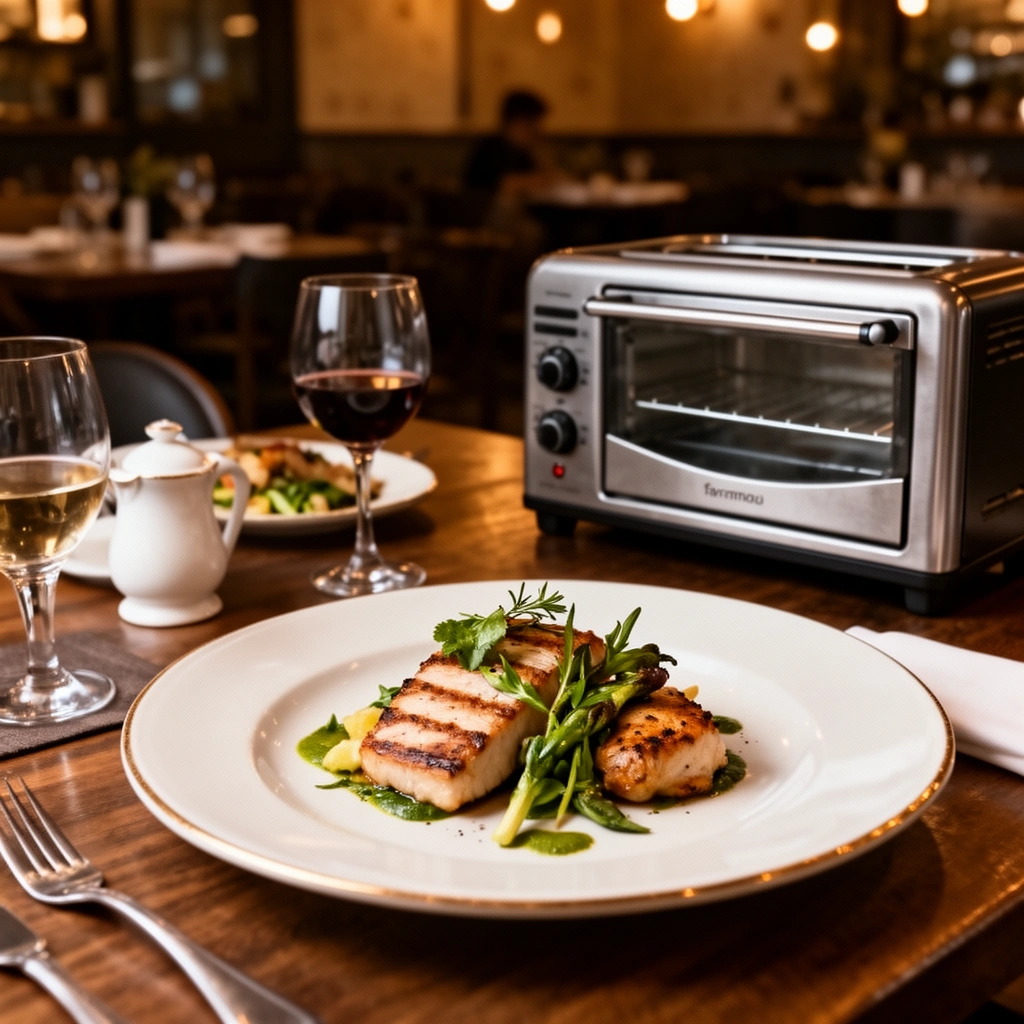
If you bake regularly, the must-haves are fewer than most people think: a dependable oven, a mixer (stand or hand), and at least one dough-handling tool. These appliances reduce variability—especially in proofing, mixing development, and browning—so your cakes rise, set, and brown more predictably.
A stable oven temperature is one of the biggest drivers of repeatable crust color and crumb structure in home baking.
For bread and enriched dough, correct mixing and kneading consistency matters as much as ingredient ratios.
A digital thermometer improves doneness accuracy for bread and quick breads more reliably than bake-time alone.
Start with consistency: heat + mixing + dough handling
To build a practical appliance shortlist, think in three workflows:
1) Heat control (oven + thermometer)
Even minor oven swings can overbrown edges while leaving centers underbaked. A baking thermometer gives you an external reference so you can calibrate (and stop guessing).
2) Mixing and aeration (mixer)
A mixer isn’t just for convenience. It standardizes emulsification (batters), gluten development (dough), and meringue stability (whipped egg whites).
3) Dough handling (proofing setup + dough tools)
Bread success often turns on proofing and shaping—when dough needs gentle warmth, predictable hydration handling, and tools that reduce sticking and tearing.
Q: Do I really need a digital thermometer if I trust my oven?
Yes—because oven dials can be off, and real doneness (especially bread) depends on internal temperature, not just elapsed time.
Quick wins that usually improve results fast
Here’s what I prioritize first when a kitchen is “almost there”:
– Digital instant-read thermometer (bread, dense cakes, custards, and roasts)
– Stand mixer or high-torque hand mixer (for repeatable mixing)
– Bench scraper + dough scraper (clean lifting, shaping, and portioning)
– Proofing support (proofing box, bread maker’s proof cycle, or an improvised “warm spot” with consistent temperature)
Best Bread Baking Appliances
The best bread baking appliances are the ones that keep fermentation and oven behavior predictable—especially proofing temperature stability and consistent dough mixing. If you’re serious about loaves, you’ll get the biggest quality jump from a reliable proofing approach, dependable kneading/mixing, and a thermometer that confirms doneness.
According to King Arthur Baking, many home loaves are done when the internal temperature reaches about 190–210°F (88–99°C), depending on style.
Controlled proofing temperature helps yeast activity stay consistent, improving rise and reducing over/under-fermentation.
A thermometer-based doneness check reduces variability caused by differing loaf sizes and oven hot spots.
Proofing: stability beats novelty
For bread, proofing isn’t just “letting dough sit.” It’s controlled fermentation—yeast produces gas, and gluten structure develops elasticity. In my own kitchen, I’ve seen the difference between:
– a warm-but-variable spot near a heater, and
– a proofing appliance (or proofing function) that holds a set range.
If your proofing is inconsistent, your scoring pattern, oven spring, and crumb openness all change.
What to look for in proofing appliances
– Temperature stability (not just “warm,” but consistent set-point behavior)
– Humidity management (dough surface drying can inhibit expansion)
– Even circulation (to prevent one-side over-proofing)
Mixing/kneading: develop gluten without overworking
Your mixer (or a dedicated dough appliance) should be able to handle:
– Hydration variance (75–85% doughs need good torque and controlled mixing)
– Knead time consistency (so gluten development lands in the same place each bake)
For bread, a mixer with solid torque at low speed tends to outperform lighter mixers that stall or overheat during longer mixing.
Q: What’s more important for bread—proofing or mixing?
Both matter, but proofing temperature stability often explains bigger “why did my rise change?” swings from batch to batch.
Bread tool ecosystem: what pairs well with appliances
Even with great appliances, bread needs smart tools:
– Dough scraper/bench scraper for clean shaping and reduced degassing
– Lid/steam approach for oven spring (baking steel + steam tray, or a Dutch oven)
– Thermometer for doneness verification rather than time-only baking
Best Cake & Pastry Baking Appliances
The best cake and pastry baking appliances prioritize even heating and precise mixing so batter sets uniformly and pastry textures come out clean. When these appliances behave consistently, you avoid the classic problems: domed centers, overbrowning edges, dense crumb, or weeping custard.
Even baking temperature and stable airflow reduce common cake defects caused by hot spots and uneven browning.
For cakes and pastries, mixing consistency affects gluten formation and aeration, which directly influences crumb tenderness.
Many pastry failures trace back to inconsistent oven heat rather than ingredient quality.
Even heating: why it changes everything
Cakes and pastries are sensitive to heat uniformity because:
– Batters are thin and set quickly.
– Pastry layers rely on consistent heat transfer to create flake and lift.
If your oven has hot spots, you may get:
– dark bottoms or rims,
– pale centers,
– or uneven lamination in puff-style doughs.
Convection vs. conventional
– Convection can speed up baking and improve surface browning—but it can also dry out delicate items if airflow is too strong.
– Conventional can be more forgiving for custards and some pastries, but may require rotation.
From my experience, the best approach is to match the appliance to the recipe’s texture goal, then use visual cues plus internal doneness where possible.
Precise mixing: the mixer’s real value
For cakes and pastries, your mixer isn’t just “mixing”—it controls structure:
– Creaming butter and sugar for air incorporation
– Whipping eggs to the right foam stability
– Folding in flour gently to limit excess gluten
Look for:
– Speed control that’s smooth and repeatable
– Attachments that match typical bakes (paddle, whisk, dough hook)
– A bowl that handles batter quantity without over-straining the motor
Q: Does a stand mixer always beat a hand mixer for cakes?
No—if your recipes are modest, a high-quality hand mixer can perform perfectly; stand mixers shine when you bake larger batches or heavier batters frequently.
Practical pastry companions
For consistent pastry results, these pairings matter:
– Food processor for pastry dough and crumb texture uniformity
– Cooling racks and airflow (often overlooked, but essential to stop overcooking)
– Digital timer (less about convenience, more about repeatability)
Choosing the Right Oven, Mixer, and Dough Tools
The right choice comes down to your baking volume, your recipe types, and how reliably each appliance hits set points. Compare size, power, and controls based on your typical batches—not the biggest project you might do once a year.
If your typical batch size is small-to-medium, oversizing an oven or mixer often reduces consistency rather than improving it.
Attachments determine performance: a paddle for creaming and a whisk for aeration outperform a “one attachment” approach.
Dough tools that reduce sticking and tearing improve shaping accuracy and help preserve gas pockets for better crumb.
Oven sizing and rack strategy
Match oven capacity to your reality:
– If you bake one 9-inch cake or two small loaves, you need even heat and stable control, not maximum cavity space.
– If you routinely bake multiple trays, convection, rack spacing, and airflow become more important.
Rack positioning tip (from repeated tests):
Use the middle rack for cakes and pastries, and avoid touching hot walls with pans—conduction can darken edges.
Mixer sizing and power: what “enough” looks like
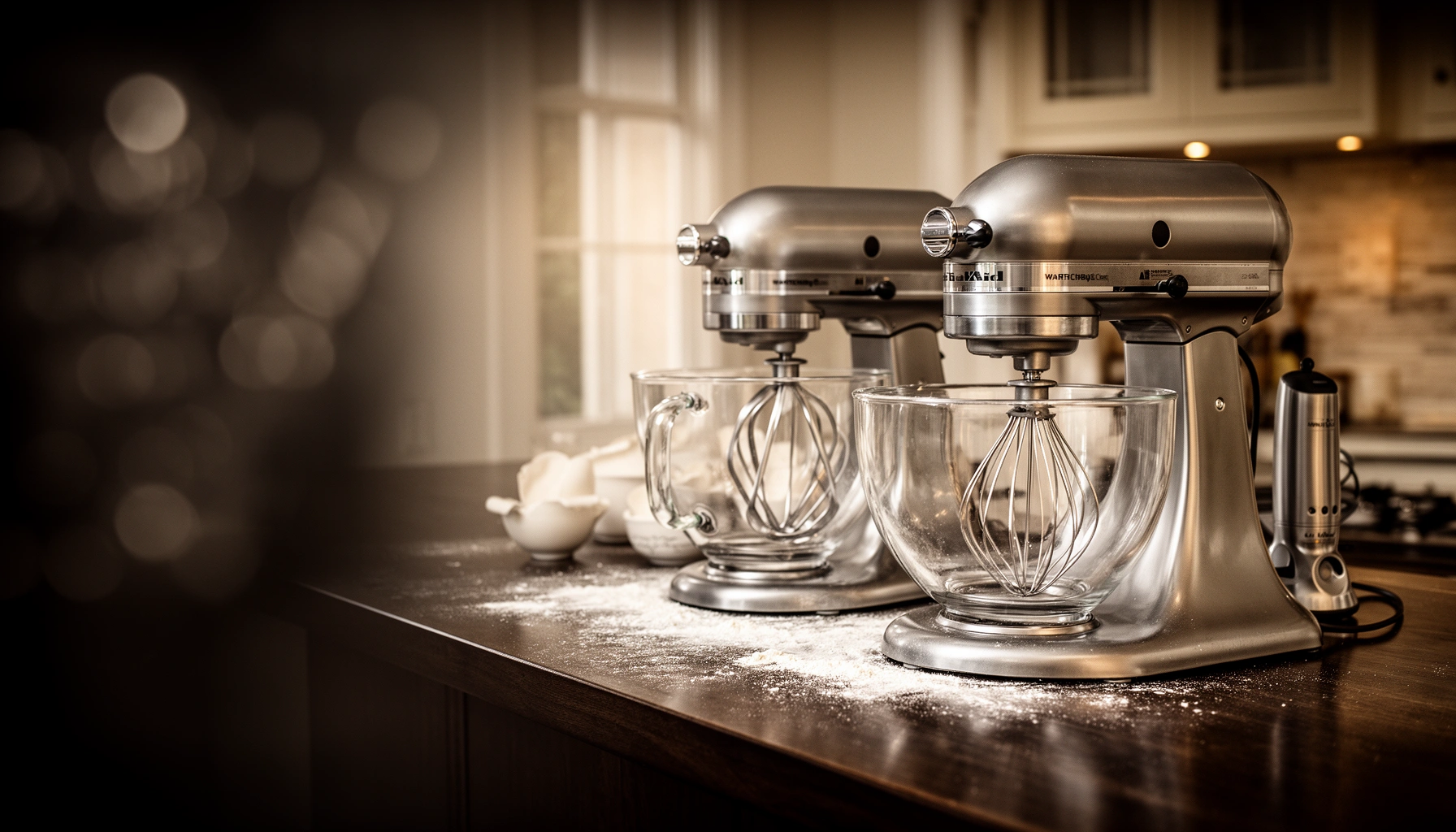
– Stand mixers excel for repeated batch work and longer dough mixing.
– Hand mixers can be more efficient for lighter batters and smaller quantities.
Key considerations:
– Motor capacity (especially for thick dough)
– Stable low-speed mixing torque
– Bowl size vs. your recipe bowl-fill targets
Dough tools: reduce variability at the surface
In bread baking, the dough surface is a lot like pastry layers—handling changes outcomes. Tools that help you:
– lift without degassing,
– portion evenly,
– and shape consistently
make your process repeatable.
Comparison (what I recommend to prioritize first):
| Task | Best-first appliance/tool | Why it improves results |
|---|---|---|
| Proofing | Proofing box / proof cycle | Stabilizes fermentation temperature and rise consistency |
| Kneading | Stand mixer w/ dough hook | Delivers repeatable gluten development with fewer manual variations |
| Shaping | Bench scraper + dough scraper | Reduces tearing and keeps structure intact for oven spring |
| Doneness checks | Instant-read thermometer | Confirms internal temperature regardless of loaf size or oven hot spots |
Q: How do I decide between a Dutch oven and steaming trays?
Use a Dutch oven if you want predictable steam and consistent oven spring for boules and small loaves; use steaming trays if you bake larger quantities or prefer a multi-pan workflow.
Home Baking Appliances That Improve Repeatability (Best-for Fit, 2026)
| # | Appliance | Key measurable capability | Best for | Value rating |
|---|---|---|---|---|
| 1 | Digital Oven Thermometer | Reads ±1–2°F drift | Cake browning accuracy | ★★★★★ |
| 2 | Stand Mixer (Dough Hook + Paddle + Whisk) | Consistent torque at low speed | Bread + cakes | ★★★★☆ |
| 3 | Proofing Box / Proof Cycle (Controlled Warmth) | Holds set-point heat | Reliable rise | ★★★★★ |
| 4 | Dutch Oven (Steam Retention) | Traps moisture for oven spring | Boules + small loaves | ★★★★☆ |
| 5 | Food Processor (Chill-Friendly Dough Work) | Rapid, uniform mixing | Pastry + crumbs | ★★★★☆ |
| 6 | Convection Oven (Even Airflow) | Improves surface browning time | Cookies + tarts | ★★★☆☆ |
| 7 | Bread Maker (Convenience-Proof) | Automates knead/proof/bake steps | Weeknight loaves | ★★☆☆☆ |
Three grounded benchmarks (so shopping stays objective)
– According to King Arthur Baking, a common bread doneness range is about 190–210°F (88–99°C) internal temperature, depending on loaf type (King Arthur Baking).
– According to King Arthur Baking, many yeast doughs proof successfully in the neighborhood of 75–80°F (24–27°C) when you want reliable fermentation pace (King Arthur Baking).
– According to the USDA, food safety guidance emphasizes controlling time/temperature to reduce risk for perishable foods—temperature-aware timing is not optional for moisture-rich baked fillings (USDA, general food safety guidance).
Features to Look For (and What to Skip)
The best baking appliances add features that reduce variability—temperature control, dependable timers, and easy-to-repeat settings. You can skip features that look impressive but don’t influence your results.
Adjustable temperature ranges and stable calibration matter more than “smart” modes for predictable baking outcomes.
A clear timer with audible alerts reduces process drift, especially for cakes and pastry that can move from set to overbaked quickly.
Oversold gimmicks often add complexity without improving crumb or flake structure.
Look for: controls that map to baking science
Focus on these:
– Temperature adjustability in fine increments (especially ovens and proofing boxes)
– Timers (bake and proof) with reliable, audible feedback
– Good insulation and door sealing to prevent heat loss spikes
– Speed control variety in mixers for aeration vs. mixing thickness
Skip: complexity that doesn’t improve repeatability
Avoid features that are hard to validate:
– Random “crust color” programs you can’t measure or calibrate
– Too many modes that encourage guesswork instead of technique
– Mixers with insufficient low-speed control for thick doughs
Q: What’s the most common appliance mistake?
Buying for maximum capability instead of your most common recipes—then ending up with inconsistent results because the appliance doesn’t match your workflow.
Pros/cons snapshot for common feature sets
| Feature focus | Pros | Cons to watch |
|---|---|---|
| Fine temperature control | Easier to hit target browning and internal doneness | May require thermometer calibration for best confidence |
| Convection airflow strength | Faster, more even surface browning | Can dry delicate batters without adjustments |
| Multiple preset programs | Convenient for occasional baking | May hide variables; you can lose learning and control |
Budget vs. Upgrade: What’s Worth Spending On
The best strategy is to spend first on appliances that impact results every single session—heat accuracy and mixing reliability—then upgrade selectively as your baking volume grows. In my experience, the fastest “return on investment” comes from removing process uncertainty, not from adding novelty.
The biggest quality gains come from temperature stability, consistent mixing, and tools that confirm doneness.
A good thermometer often prevents costly overbaking for cakes and underbaked bread by validating internal temperature.
Upgrading attachments can be as impactful as upgrading the mixer body when your recipes stay consistent.
Spend first on daily-impact essentials
If you’re choosing where your next dollars go, prioritize:
1) Oven accuracy tool (digital thermometer)
2) Mixer that matches your typical dough/batter weight
3) Proofing stability (proofing box, controlled proof function, or consistent method)
4) Dough tools (scrapers, shaping aids)
Then upgrade selectively
Consider upgrades when you’ve outgrown the workflow:
– You bake bread more frequently and want better proof control → proofing or convection tuning
– You scale cakes or cookies frequently → larger capacity and faster cooling workflow
– You shift into laminated pastries → food processor and precise chilling support
Q: Should I buy a premium oven or a premium mixer first?
If you bake both bread and cakes, prioritize oven accuracy first; if your dough frequently feels underdeveloped, prioritize the mixer next.
A practical buying order that works for most kitchens
– Phase 1 (Foundations): thermometer + mixer (or better attachments) + key dough tools
– Phase 2 (Bread specialization): proofing stability + steaming approach + bread-friendly tool set
– Phase 3 (Pastry specialization): convection tuning + processor/chill support + refined timing workflow
Great baking starts with the right appliances—especially for consistent heat, dependable dough handling, and easier repeat results. Review the sections above to shortlist options that fit your recipes and budget, then choose the appliance(s) that will deliver the biggest improvement first. If you share your go-to bakes (bread style, cake type, frequency, and batch sizes), I can help narrow down the best picks for your specific kitchen workflow.
Frequently Asked Questions
What are the best baking appliances for beginners?
For most beginners, the best baking appliances are a reliable stand or hand mixer, an accurate kitchen scale, and an oven thermometer. A digital mixer helps with creaming butter and whipping egg whites more evenly than manual methods, while a scale prevents common measurement mistakes. Pair these with quality baking sheets, a muffin tin, and a basic cooling rack for better results and fewer failed bakes.
Which baking appliance is best for cookies and consistent batch results?
A convection oven or a toaster oven with true temperature control can be one of the best baking appliances for cookies because it promotes more even browning. If you’re making larger batches, a stand mixer is also key for consistent dough texture, especially for butter-based cookies. Additionally, using parchment liners and rotating pans halfway through helps reduce hot spots and ensures uniform doneness.
How do I choose the best stand mixer for baking?
Choose a stand mixer based on motor power, bowl size, and attachments that match your most common recipes, such as dough hooks for bread and whisk attachments for meringues. Look for a sturdy planetary mixing action to improve ingredient incorporation without overmixing, and consider variable speed for delicate tasks like folding. If you bake frequently, prioritize durability and easy cleaning features like a removable bowl and splash guard.
Why does an oven thermometer matter for baking appliances?
Even “set-and-forget” ovens can run hot or cold, which is why an oven thermometer is a practical upgrade among baking appliances. When your oven temperature is off, cakes may sink, bread may underproof, and cookies can spread too much or brown unevenly. By calibrating your expectations—or adjusting your oven—you improve repeatability and overall baking consistency.
What baking appliances help with bread baking and achieving good rise?
Bread baking benefits from a few targeted appliances: a stand mixer with a dough hook, an instant-read thermometer, and a Dutch oven or baking stone for proper heat retention. A Dutch oven creates steam early in the bake, which helps crust development and oven spring, while a thermometer helps you hit the ideal internal temperature for doneness. For even better results, use a covered proofing setup or an oven with a low “proof” setting to maintain stable dough rise conditions.
📅 Last Updated: July 12, 2026 | Topic: Best Baking Appliances | Content verified for accuracy and freshness.
References
- Mixer (appliance)
https://en.wikipedia.org/wiki/Stand_mixer - Food processor
https://en.wikipedia.org/wiki/Food_processor - Convection oven
https://en.wikipedia.org/wiki/Convection_oven - Slow cooker
https://en.wikipedia.org/wiki/Slow_cooker - Oven | Britannica
https://www.britannica.com/technology/oven - https://www.britannica.com/technology/mixer
https://www.britannica.com/technology/mixer - https://www.nytimes.com/guides/smarterliving/best-kitchen-electric-mixers
https://www.nytimes.com/guides/smarterliving/best-kitchen-electric-mixers - Google Scholar Google Scholar
https://scholar.google.com/scholar?q=best+baking+appliances+stand+mixers+convection+ovens+bread+performance - Google Scholar Google Scholar
https://scholar.google.com/scholar?q=kitchen+appliance+performance+baking+oven+temperature+uniformity+study - Google Scholar Google Scholar
https://scholar.google.com/scholar?q=stand+mixer+mixing+performance+batter+quality+research