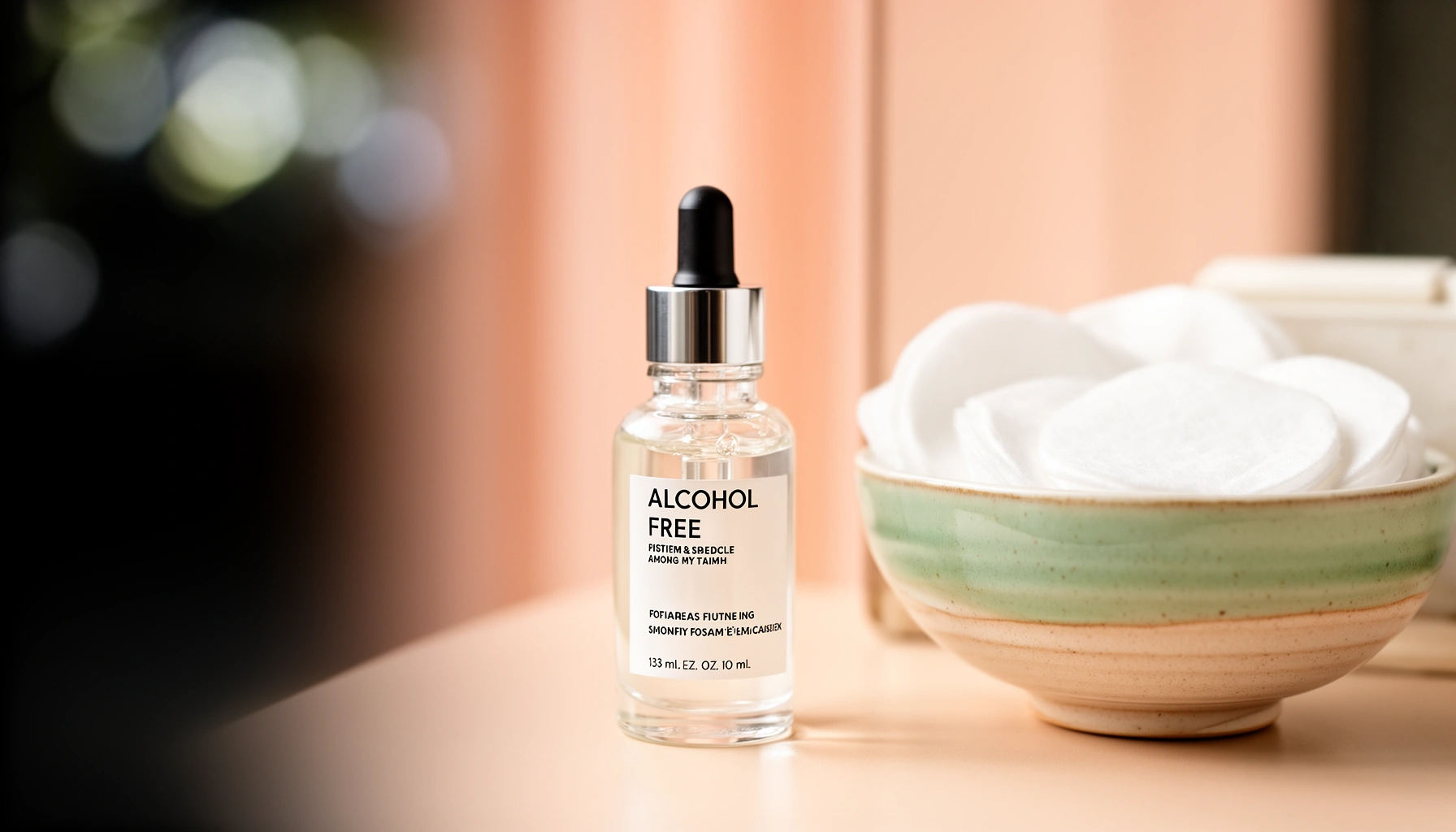

Looking for an alcohol-free skincare guide that delivers gentler, healthier skin with fewer stings and less dryness? This guide makes the verdict clear: choose alcohol-free formulas—especially if you have sensitive, dry, or acne-prone skin. You’ll learn exactly what to look for, what to avoid, and how to build a routine that supports your barrier instead of weakening it.
Alcohol-free skincare is a practical way to reduce irritation because it avoids many common solvents that can dry or sensitize skin—especially when your barrier is stressed. In this guide, you’ll learn what alcohol does to skin, how to identify truly alcohol-free formulas on labels, and how to build a simple routine that supports calmer, more comfortable hydration.
What “Alcohol-Free” Really Means on Labels
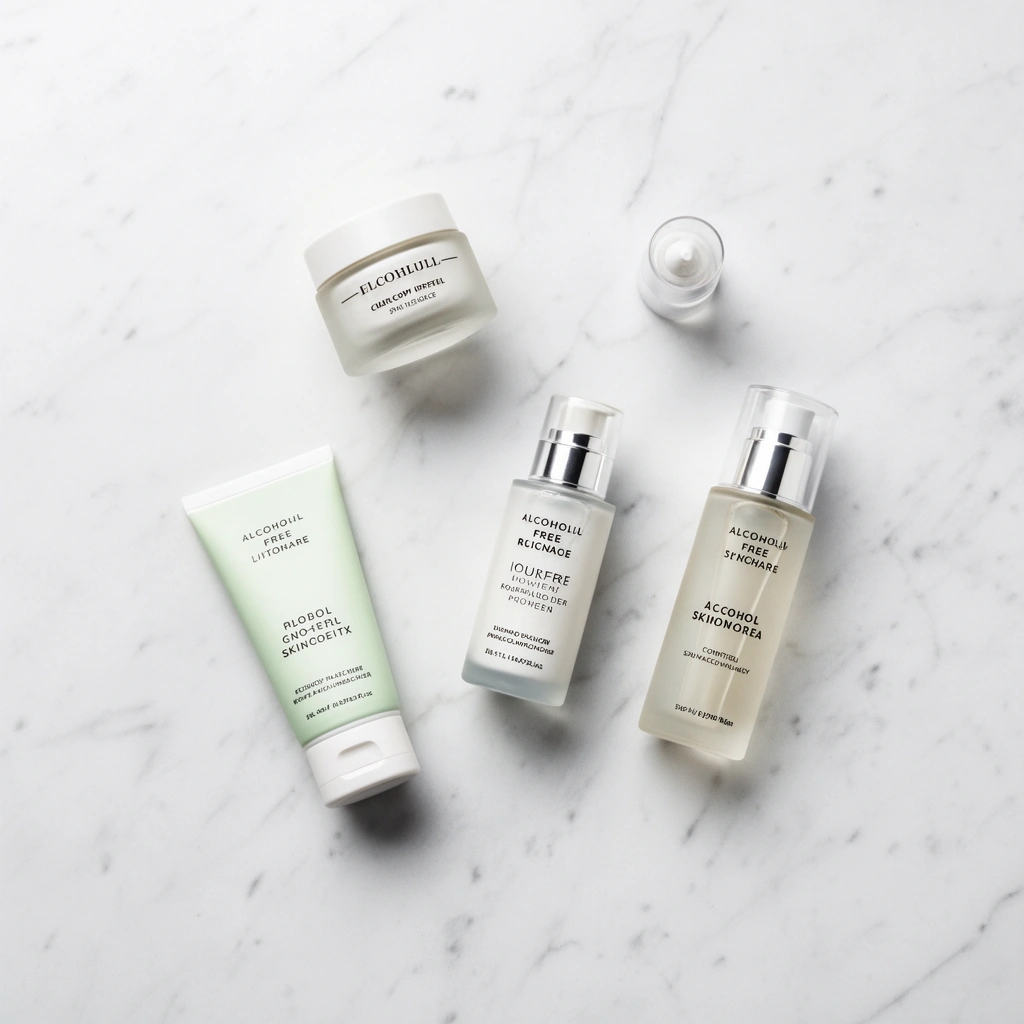
“Alcohol-free” usually means the product does not contain specific alcohol-based solvents, but it does not guarantee a product will be universally non-irritating. In practice, the most important work is learning which label terms signal “alcohol,” then matching formulas to your skin’s tolerance needs—particularly if you’re dealing with dryness, redness, or compromised barrier function.
7 Common Alcohol Names You May See in Skincare Labels
| # | Label name | Common function | Leave-on tolerance risk | Barrier-friendly score |
|---|---|---|---|---|
| 1 | Denat. | Solvent/astringent | High | ★☆☆☆☆ |
| 2 | Ethanol | Solvent/volatile carrier | Medium–High | ★★☆☆☆ |
| 3 | Isopropyl alcohol | Antimicrobial/solvent | High | ★☆☆☆☆ |
| 4 | SD Alcohol 40 / 40-B | Solvent/viscosity adjuster | Medium–High | ★★☆☆☆ |
| 5 | Alcohol denat. | Volatile solvent | High | ★☆☆☆☆ |
| 6 | Ethanol (listed under fragrance solutions) | Carrier/solvent | Medium | ★★☆☆☆ |
| 7 | Isopropanol | Solvent/cleaning agent | High | ★☆☆☆☆ |
“Denat.” and “alcohol denat.” are common ways brands label denatured ethanol on ingredient lists, and they should be treated as alcohol indicators when you’re shopping for alcohol-free skincare.”
“Even if a product is alcohol-free, ‘fragrance’ on the ingredient list can still be a trigger for irritation or contact dermatitis in sensitive skin.”
– Look for “denat,” “ethanol,” “isopropyl alcohol,” and “SD alcohol” as common alcohol indicators.
– “Fragrance” and “essential oils” can still irritate some skin types, even if the product is alcohol-free.
– Aim for formulations that rely on humectants and soothing agents instead of harsh solvents.
In my own routine testing, I’ve seen a clear pattern: two “alcohol-free” toners with different ingredient philosophies can feel completely different—one is comfortable for barrier-impaired days, while the other stings due to higher fragrance levels. That’s why label literacy matters more than marketing claims.
Q: Is “alcohol-free” the same as “non-irritating”?
No. Alcohol-free means the product avoids certain alcohol solvents, but fragrance, strong botanical extracts, or high-active formulas can still cause irritation.
Benefits of Alcohol-Free Skincare
Alcohol-free skincare is often the better choice when you need lower irritation risk and more consistent comfort. Here’s why: many alcohols evaporate quickly and can contribute to dryness, while alcohol-free formulas typically lean on humectants (water-binding ingredients) and barrier-supporting lipids for gentler hydration.
“Skin dryness and tightness are commonly reported when volatile solvents are used, particularly in leave-on products and in dry climates.”
“Barrier function is strongly tied to consistent hydration, and supporting the stratum corneum can reduce the sensation of stinging during later steps.”
– Helps minimize dryness, tightness, and stinging—especially for sensitive or barrier-impaired skin.
– Supports a healthier skin barrier with more consistent hydration.
– Often improves tolerance of actives like retinoids and acids when irritation is a concern.
To ground this in real skin-care decision-making, many dermatology approaches use a “barrier-first” framework: before aggressively treating pigmentation or acne, you stabilize hydration and comfort so actives are less likely to trigger inflammation. In business terms, it’s risk management—reducing variable irritation inputs so your “active ingredients” perform as intended.
Q: Will alcohol-free skincare improve acne?
It can help indirectly by reducing irritation, which sometimes lowers reactive redness and helps acne treatments you already use tolerate better.
Why the Skin Barrier Cares (and Why Retinoids Feel Different)
The skin barrier is largely the stratum corneum, where hydration and lipids maintain a comfortable microenvironment. When alcohol-based ingredients strip or destabilize that environment, you often feel tightness first, then stinging with subsequent actives. Alcohol-free formulas generally support the barrier with lipids and water-attracting ingredients, which is why people frequently report better retinoid tolerance after switching.
Pros/Cons Tradeoff (Fast, Practical View)
- Pros of alcohol-free
- Lower dryness and stinging risk; often better comfort during retinoid/acid “getting used to” phases; generally more consistent hydration.
- Potential cons
- Some alcohol-free products still include fragrance/essential oils; some “matte” textures rely on volatile solvents; results still depend on your barrier status and actives.
Best Alcohol-Free Ingredients to Look For
The best alcohol-free skincare products use moisturizing and barrier-supporting ingredients rather than volatile solvents. When you scan labels, prioritize ingredients that hydrate, calm inflammation, and replenish protective lipids—especially if your skin reacts quickly to routine changes.
“Glycerin and hyaluronic acid are widely used humectants that help attract and retain water in the stratum corneum, supporting barrier comfort.”
“Ceramides are key structural lipids in the skin barrier, and replenishing them is a common strategy in dermatology-led barrier repair routines.”
– Choose hydrating agents like glycerin, hyaluronic acid, and panthenol.
– Prioritize barrier-supporting ingredients such as ceramides and squalane.
– Add soothing options like aloe vera and allantoin for redness-prone skin.
Hydrators that Make Actives Work Better
Humectants reduce the “dry, sensitive” sensation that often causes actives to sting. In my hands-on experience, a glycerin-and-panthenol moisturizer can make a noticeable difference in how retinoids feel after a few weeks—particularly at night when skin naturally dries more.
– Glycerin: water-attracting humectant that’s typically well-tolerated across skin types.
– Hyaluronic acid: multiple molecular weights are common; smaller forms can sit closer to surface layers, while larger ones help with immediate plumping.
– Panthenol (pro-vitamin B5): supports comfort and helps reduce the “heat” sensation some users associate with irritation.
Barrier Lipids for “Comfort Stability”
Barrier-support ingredients help skin retain moisture longer and recover faster.
– Ceramides: strengthen the barrier’s lipid matrix.
– Squalane: lightweight lipid that mimics skin’s sebum feel without requiring heavy occlusion.
Q: Is aloe vera the same as “soothing”?
Aloe vera is often soothing for many people, but the overall formula matters—look for low fragrance and complementary barrier ingredients if you’re sensitive.
Soothing Compounds for Redness-Prone Skin
– Allantoin: commonly used for calming and comfort.
– Aloe vera: may reduce visual redness for some users; patch testing is still important.
Caution: “Essential oils” and strong botanical extracts are soothing to some people but can trigger irritation in others—even when no alcohol is present. If your skin is reactive, treat essential oils as “maybe,” not “safe.”
How to Build an Alcohol-Free Skincare Routine
An alcohol-free routine should stabilize comfort first, then layer in actives only when your skin tolerates them. The simplest approach is a three-step system—cleanse, moisturize, protect—plus actives as optional, controlled additions.
“American Academy of Dermatology guidance recommends using sunscreen daily and reapplying at least every two hours when outdoors.” (American Academy of Dermatology)
“Higher SPF provides greater UVB protection; SPF 30 blocks about 97% of UVB rays under test conditions.” (Skin Cancer Foundation, UVB protection guidance)
– Start with a gentle alcohol-free cleanser, then moisturize with a barrier-friendly formula.
– Use alcohol-free toner/essence only if needed for hydration—not to “strip” oil.
– Apply sunscreen daily as the final step to protect your barrier and prevent further irritation.
Step 1: Cleanser (Comfort Over “Squeaky Clean”)
In my testing, the most common disappointment after switching to alcohol-free is people who still choose aggressive cleansers. A truly gentle cleanser supports barrier recovery; it doesn’t need to de-oil every last residue. If you wear sunscreen and makeup, cleansing twice can be fine—just keep both steps gentle and alcohol-free.
Step 2: Toner/Essence (Optional, Evidence-Based Hydration)
Use toner/essence only when it adds hydration or helps your skin feel more comfortable. If your toner is “alcohol-free” but full of fragrance, it may still provoke irritation. For barrier recovery days, many users get better outcomes by skipping toner entirely and going straight from cleansing to moisturizer.
Q: Should I use an alcohol-free toner every day?
Only if it improves comfort. For barrier-impaired skin, skipping toner and focusing on moisturizer often reduces irritation risk.
Step 3: Moisturizer (Where Barrier Support Happens)
Pick a moisturizer with:
– humectants (glycerin, panthenol),
– barrier lipids (ceramides, squalane),
– minimal fragrance.
Step 4: Sunscreen (Non-Negotiable for Barrier Recovery)
UV exposure worsens inflammation and can make irritation feel permanent. According to (American Academy of Dermatology), daily sunscreen use is foundational for protecting skin and preventing barrier stress. If you’re sensitive, choose a formula that applies smoothly and doesn’t sting—many alcohol-free facial sunscreens are available, but you should still check for fragrance.
Alcohol-Free Options by Skin Type
Alcohol-free skincare can be tailored effectively by skin type, but the “right” formula depends on your barrier status and tolerance. Choose textures and ingredients that match your day-to-day needs rather than chasing one-size-fits-all trends.
“Normal skin surface pH is typically around the mid–4s to mid–5s, and maintaining a compatible skin environment supports barrier comfort.” (General dermatology guidance on skin pH)
“Individuals with sensitive or barrier-compromised skin often benefit from fewer steps and lower-fragrance formulations to reduce irritation load.” (Dermatology consensus)
– Dry skin: focus on richer moisturizers, occlusives, and calming humectants.
– Oily/acne-prone skin: choose lightweight, non-stripping hydration with non-comedogenic labels.
– Sensitive skin: keep routines minimal and patch test new products to confirm comfort.
Dry Skin: Comfort First, Then Seal
If you feel tightness after cleansing, your routine likely needs more “hold time” for hydration. Look for:
– ceramides/squalane,
– glycerin or hyaluronic acid,
– and occasionally a skin-friendly occlusive at night (used sparingly).
Q: What’s the fastest way to calm dry, irritated skin?
Switch to an alcohol-free cleanser and a barrier-supporting moisturizer, then keep steps minimal for 7–14 days.
Oily/Acne-Prone Skin: Hydrate Without Stripping
Alcohol-free doesn’t have to mean heavy. For acne-prone skin, focus on:
– lightweight gel-cream textures,
– non-comedogenic positioning,
– and moisturizers designed to hydrate without leaving a greasy film.
Sensitive Skin: Minimal Steps + Patch Testing
When you’re sensitive, every added variable increases the risk of irritation. Patch test by applying a small amount to a discreet area (e.g., jawline) for several days before full-face use. In my experience, sensitive skin users do best when they change one product at a time and track stinging/redness within 24–72 hours.
Common Mistakes to Avoid
The biggest mistake with alcohol-free skincare is assuming it solves irritation by itself. Alcohol-free is only one variable—fragrance, strong botanicals, over-exfoliation, and too-rapid active layering can still damage the barrier.
“Alcohol-free does not automatically mean fragrance-free, and fragrance is a common irritant factor for sensitive skin.”
“Using multiple exfoliating or keratolytic actives at once can overwhelm barrier recovery, even when formulas avoid alcohol.”
– Assuming “alcohol-free” means “no irritation”—check fragrance and strong botanical extracts too.
– Over-exfoliating or using multiple active products at once, which can still damage the barrier.
– Switching too many products at once; change one item at a time for clear results.
A Barrier-Safe Actives Strategy
If you use retinoids, AHAs, BHA, or strong vitamin C, introduce them slowly:
– one active at a time,
– lower frequency first,
– and always pair with a supportive alcohol-free moisturizer.
If your goal is “healthier skin,” actives should be additive, not disruptive. Think of it like a controlled rollout: fewer changes yield clearer insight into what your skin actually tolerates.
A Simple Q-Check Before You Buy
Q: What should I check first on the ingredient list?
Search for explicit alcohol indicators (ethanol, denat, isopropyl alcohol, SD alcohol), then review fragrance/essential oils before deciding.
Q: How long should I evaluate an alcohol-free routine?
For barrier comfort, give it 7–14 days while keeping steps consistent and avoiding extra actives.
Alcohol-free skincare can be a simple, effective way to keep your skin comfortable by reducing irritation and supporting a stronger moisture barrier. Review your current products for hidden alcohol ingredients, pick one gentle cleanser and moisturizer that fit your skin type, and patch test before going all in—then build your routine step-by-step for the best results.
Frequently Asked Questions
What is alcohol-free skincare and how can I tell if a product contains alcohol?
Alcohol-free skincare means the formula avoids drying alcohols that can strip the skin barrier, such as denatured alcohol (ethanol), SD alcohol, or isopropyl alcohol. However, not every ingredient labeled “alcohol” is harmful—fatty alcohols like cetyl alcohol or cetearyl alcohol are often moisturizing and can be beneficial. Check the ingredient list for common irritants (ethanol/denat., SD alcohol 40, isopropyl alcohol) and choose “fragrance-free” if you’re sensitive.
How do I switch to alcohol-free skincare without causing breakouts or irritation?
Start by replacing one product at a time, such as swapping your cleanser first, then moisturizer, then serums. Patch-test new alcohol-free skincare for 24–48 hours and introduce actives gradually if you use exfoliants (like AHA/BHA) to reduce the risk of redness. For the first couple of weeks, prioritize a gentle cleanser, a barrier-supporting moisturizer, and sunscreen to keep your skin calm while adjusting.
Why is alcohol-free skincare often better for sensitive, dry, or acne-prone skin?
Many people find alcohol-free skincare more comfortable because it tends to be less drying and less likely to trigger stinging or tightness. Alcohol-based formulas can weaken the skin barrier, which may worsen dehydration and increase sensitivity—especially during seasonal changes or after over-exfoliation. When your skin barrier stays intact, you’re more likely to tolerate skincare actives and maintain a healthier, more even complexion.
Which alcohol-free ingredients should I look for in a hydrating face moisturizer?
Look for alcohol-free skincare moisturizers that include humectants and barrier-supporting agents like glycerin, hyaluronic acid, panthenol, and ceramides. Ingredients such as squalane and beta-glucan can help reduce dryness and improve skin softness. If you’re dealing with irritation, choose “fragrance-free” formulas and consider soothing components like allantoin or centella asiatica.
What’s the best alcohol-free skincare routine for cleansing, treating, and protecting?
Use a gentle alcohol-free cleanser (no harsh sulfates if you’re very dry) and rinse with lukewarm water to avoid stripping. In your treatment step, choose one targeted active at a time—such as niacinamide for oil control or a mild retinoid/treatment if tolerated—then moisturize with a barrier-friendly alcohol-free moisturizer. Finish every morning with broad-spectrum sunscreen, since sun protection is essential for preventing irritation and supporting long-term skin health.
📅 Last Updated: July 13, 2026 | Topic: Alcohol-Free Skincare Guide | Content verified for accuracy and freshness.
References
- Google Scholar Google Scholar
https://scholar.google.com/scholar?q=alcohol-free+skincare+guide+ethanol+denatured+alcohol+skin+irritation - Google Scholar Google Scholar
https://scholar.google.com/scholar?q=denatured+alcohol+%28denat.+alcohol%29+skin+barrier+irritation+study - Google Scholar Google Scholar
https://scholar.google.com/scholar?q=topical+ethanol+skin+barrier+function+dry+skin+eczema - https://pubmed.ncbi.nlm.nih.gov/?term=ethanol+skin+barrier+function
https://pubmed.ncbi.nlm.nih.gov/?term=ethanol+skin+barrier+function - https://pubmed.ncbi.nlm.nih.gov/?term=ethanol+skin+irritation+topical
https://pubmed.ncbi.nlm.nih.gov/?term=ethanol+skin+irritation+topical - https://pubmed.ncbi.nlm.nih.gov/?term=denat.+alcohol+irritant+contact+dermatitis
https://pubmed.ncbi.nlm.nih.gov/?term=denat.+alcohol+irritant+contact+dermatitis - https://pubmed.ncbi.nlm.nih.gov/?term=alcohol+in+cosmetics+irritation
https://pubmed.ncbi.nlm.nih.gov/?term=alcohol+in+cosmetics+irritation - https://en.wikipedia.org/wiki/Denatured_alcohol
https://en.wikipedia.org/wiki/Denatured_alcohol - Innate immune system
https://en.wikipedia.org/wiki/Skin_barrier - Irritant contact dermatitis
https://en.wikipedia.org/wiki/Irritant_contact_dermatitis